Posted in Food, Photography Art, Stories Around the World

Shape in Style

“Life is a cake and love is the icing on top of it. Without love, it becomes difficult to swallow life.” Mehek Bassi

Accompanying my cousin to the bakery was an enlightening event yesterday. With the twins birthday approaching in two weeks time, it was time for the placing the order for the cake. Like all to-be-four year old minds, they had very specific ideas for their cake; from the “Cars” based theme to the Disney’s “Frozen” theme, the possibility of getting one big cake design was the heart of the discussion with the main baker.

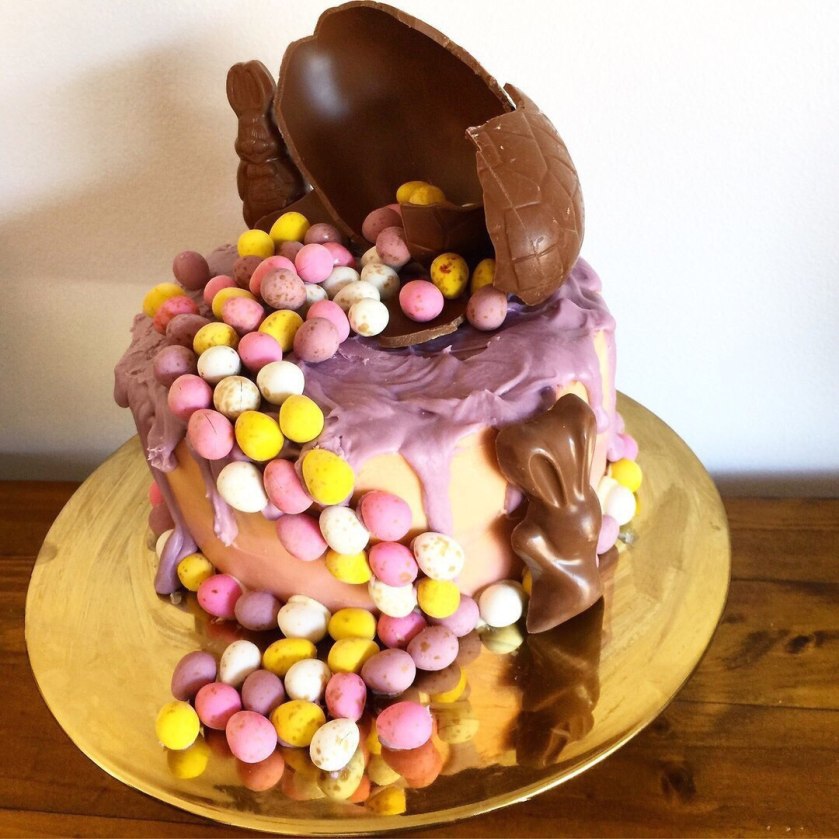
While waiting, scanning through the cake design books and available cakes on display was a feast for the artistic eye. While my childhood consisted mostly of cream with icing birthday cakes, these days fondant designed and themed cakes are the rage. Today, the early methods akin to construction of a structure by cutting shapes out of cake and piecing them together have been superseded by preformed character based designs and the shaping of cakes out of fondant and different forms of marzipan. From fondant (sugar paste or ready roll icing), royal icing, marzipan, modeling chocolate, gum paste and latest of few, edible ink printing, the design over cake has been transformed greatly.

Cake decorating had originated in Europe around the 17th century. With the production of baking powder and temperature controlled ovens (1840s), baking cakes became easy and the presentation more elaborate. The exact origins of cake decorating was believed to from a French bakery (1840s) when prices were increased on their cakes as the latter were decorated. With decorative shapes, cakes were adorned with icing, formed into patterns, flowers and food colouring was used to accent the frosting or layers of cake. Over the years depending on the occasions, cake decorating styles have been enhanced along with the ornamentation being more artistic.

These days even homemade cakes are being embellished with something simple as powdered icing, chocolate layer with sprinkles or the good old coloured icing. With the numerous designs and models of 2-D or 3-D made, no wonder that cake shows and related artistry are the all time rage not just for the special occasions or celebrations but also for avid dessertarian, dessert chefs or simply for the love of baking and art. 

“Whether you’re a bride or a birthday boy, your options are much the same. Cake comes in chocolate, yellow, or white. Frosting comes in chocolate or vanilla buttercream, or you can opt for whipped cream. Fillings are either chocolate or vanilla custard, fresh bananas, or strawberries or raspberries in season. For birthday cakes, you can have either flowers or balloons in your choice of colors. For wedding cakes, you can add either fondant or marzipan covering, or either smooth or basket-weave buttercream, in white or ivory, with either pearl-like dots or ribbony swags made of frosting, and fondant faux flowers are extra.” Stacey Ballis ( author of Wedding Girl)

Posted in Daily, Food, Photography Art, Stories Around the World

Of Cheese and Blue Streaks

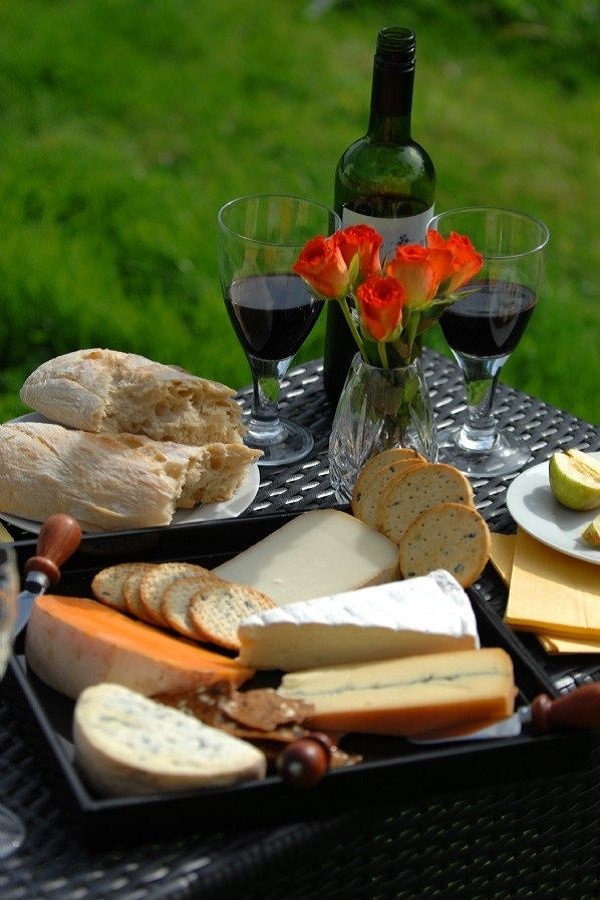
While cleaning out the larder over last weekend, I had chanced upon a blue veined gooey stuff enclosed tight in a packet. On closer inspection, apparently it was a piece of cheese misplaced post the local grocery shopping and was out of sight for a month, resulting in the mold setting in. Seeing the blue green veins streaking across the white; what came to mind was the difference between blue and bad cheese.

Blue cheese was believed to be an accidental discovery. As legend says of the making of Roquefort cheese by a young boy who had abandoned his meal of bread and ewes’ milk cheese (on seeing a beautiful girl) returned back months later to find his old cheese soft, crumbly, blue veined and with a tangy flavour transformed so by the mold (Penicillium roqueforti). Similar legends have been heard with the drunken man and his cheese. The early years saw that cheeses were stored in natural temperatures and moisture-controlled caves which happen to be favorable environments for many varieties of harmless mold.

Over the years, many varieties of blue cheese have been created with few having their own stories. For instance, the Gorgonzola one of the oldest known blue cheeses, having been created around AD 879, is said that to have its blue veins only around the 11th century. Stilton cheese, an English cheese (popular since the 1700s) was set in the modern shape and style by Frances Pawlett (or Paulet), a “skilled cheese maker” of Wymondham, Leicestershire. Thus with strict codes, only the three counties of Derbyshire, Leicestershire and Nottinghamshire had market the cheese as Stilton. Later varieties(20th century) of blue cheese like the Danablu and Cambozola (cow’s milk cheese of a combination in style of a French soft-ripened triple cream cheese and Italian Gorgonzola) were made with few variations from the original. Danablu was made from full fat cow’s milk and homogenized cream with copper wires or rods used to pierce the formed curds to distribute the mould (Penicillium roqueforti) evenly through the cheese and then the cheese is aged for eight to twelve weeks.

With blue cheese varieties, one must know to differentiate between the good and bad mold. If mold grows on soft cheeses like cottage cheese, cream cheese or ricotta; or on shredded, crumbled and sliced cheese, it is best to be discarded. As far as hard and semi-soft cheese like cheddar, Colby, Parmesan or Swiss are concerned, the moldy part with an inch extra around it can be removed and the rest of the cheese can be used. With moldy cheese one has to be careful with its’ use and storage.

For foodimentarians with a special love of desserts, home food or for that quick added or unique touch to the regular meals, cheese (be it from cow, goat or sheep milk or homemade, local store bought, cheese market special or blue cheese varieties) is a pantry must. With a change from the regular, cheese gives an option of taking Stilton sandwiches to work, Gronozola on toast, shredded Brie or Danablu on salads, dressings or crumbled and used in cheesecake recipes, cheese themed parties or simply the change from the sweet dessert to the cheese platter with wine for afters.

Posted in Daily, Food

Of Colours and Flavours, Simple and Sweet

One of the necessities of having a good meal family, besides sitting down together and enjoying home cooking is to close the meal with the “sweet finish”. Preparing the big family luncheon, even though it may be a pot luck dinner at times; getting the final finish right is what makes the meal complete. With a big joint family, dessert includes something sweet for the children, sweet and healthy for the adults, balanced dessert for the diabetics, health conscious and the ultimate dish for the professed dessertarian.

“Dessert is probably the most important stage of the meal, since it will be the last thing your guests remember before they pass out all over the table.” William Powell

Originating from the French word “desservir” ( means to clear the table), dessert as a term was in known use in the 1660s. Although this term may have been in use from the 14th century, the present meaning may have arose around the beginning of the 20th century as the setting a variety of dishes on the table at the same time (service à la françaisee) was replaced with the serving of a meal in courses (service à la russe). As described in A History of Dessert (2013), Krodnl states that dessert was served after the table had been cleared of other dishes. While sweet were a part of the Mesopotamian era, Persian Empire, the Greeks, ancient India and other civilizations; dried fruits and honey were perhaps the first sweeteners used. With the spread of sugar and trade, the modern dessert dishes slowly began taking shape.

“I am starting to think that maybe memories are like this dessert. I eat it, and it becomes a part of me, whether I remember it later or not.” Erica Bauermeister

Contrary to expectations, desserts doesn’t necessary have to be of very high standards or made of expensive ingredients. Neither does it always need to indulged in with the sense of guilt and foreboding. Desserts can be had not just to statisfy the sweet cravings or close a meal, but also to enjoy the right mix of sugar, nutrients and taste at the end of the meal. From cheese board, parfait of berries, nuts and yogurt, cinnamon on ice cream and biscuits or bananas slices and covered in dark chocolate and crushed nuts to the elaborate fairy cakes or mousse; desserts can be had elaborate or whipped out of thin air with basic ingredients, creativity and an artistic eye. At times, desserts need to sticky sweet and loaded with calories for that little bit of sugar high or as basic as fruits with a sprinkling of the sweet stuff. Either way, there is always plenty of variety to choose from.

“There is no better way to bring people together than with desserts.” Gail Simmons

With the colours of autumn slowly setting in, what better way to ring in October than to get the sweet tooth going in a healthy manner. With the National Dessert Month setting in and the fall harvest closing in, it would be easy to stock on the fruit preserves, enlist creative ideas and set a traditional family dessert trend.

Posted in Daily, Food, Stories Around the World

Of Chocolate

“Can I offer you a slice of this amazing caramelized white chocolate apricot brioche made by my favorite granddaughter?” “You may indeed.”
When you slice the rich, buttery bread topped with crunchy bits of pearl sugar, you get a swirl of white chocolate, which now also has hints of caramel flavor from having been roasted, and chunks of apricot. ” ? Stacey Ballis ( Author of Wedding Girl)

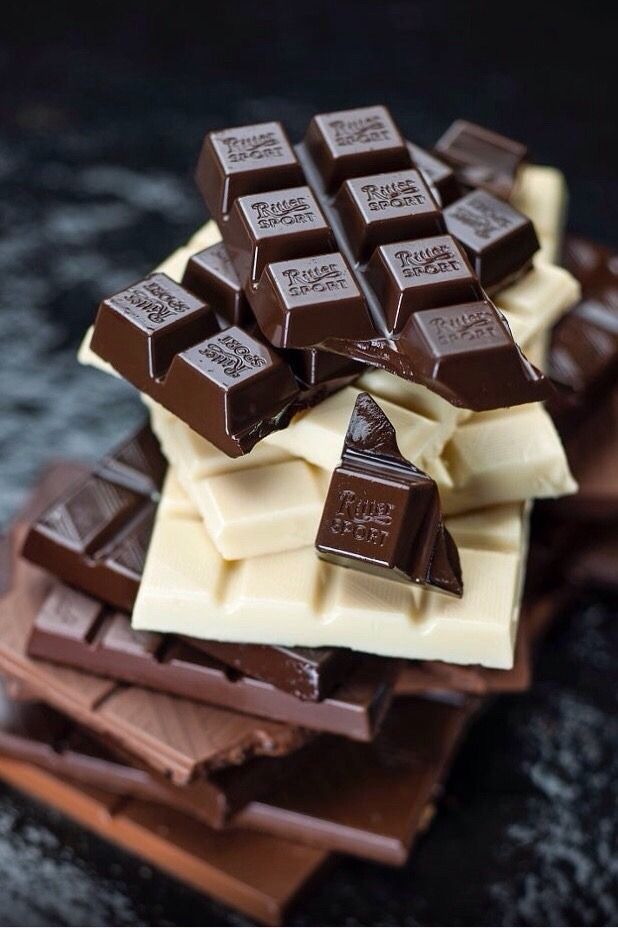
One of the drawbacks of reading books revolving or having a bit of the food factor, is the sudden trigger for that particular dish or meal. Using this as a justifiable excuse to dig into my toddler’s stash of white chocolate, would satisfy the sudden craving for the chocolate, creamy and white.

Interestingly white chocolate isn’t exactly chocolate. Made from cocoa butter, milk solids, sugar, lecithin and flavorings (most commonly, vanilla); it doesn’t include chocolate liquor. The latter beside s giving the bitter flavour and dark colour to chocolate, by the FDA Guidelines state that chocolate liquor has to be present in a product to be known as “chocolate”. Though today as per the US Guidelines (2004), white chocolate (by weight) should have at least 20% cocoa butter, 14% total milk solids, 3.5% milk fat with maximum of 55% sugar or other sweeteners. On a plus point, white choclate has very minimum caffeine as compared to the regular chocolate.


On tracing to the exact origin of chocolate being white, no definite person or country can be given credit. While the Swiss company Nestlé takes almost sole claim to being the initial source of marketable white chocolate (1930s, Milkybar) in Europe; rumours exist of a New Hampshire man producing white chocolate shortly after World War I. Other records state of Kuno Baedeker, who had developed white chocolate (1945) and is widely considered the first creator of the same in North America. Though as records mostly show that Nestlé was the heart of creation and development of the modern white chocolate.

All said and done, one can melt it, chip it in, drink it or just have it like that. Like the regular choclate, white choclate has become a very prominent add on in the cookie dough, cake mix, quick desserts, melted with hot choclate and a regular combination with ice cream. Which is why, a bar of white chocolate has it’s own role of cheering up the depressing bits of life, no matter how old one grows.

“I like caramel flavors; some people prefer a lighter taste, like rose, at least to start with. The chocolate-flavored ones are lovely, of course…” I am rambling; it is like choosing a favorite child, practically impossible. “What’s in this one then?” She points at my newest creation, a pale, creamy white with soft flecks of yellow, like glints of gold in white marble.
“Reve d’un Ange. It means ‘dream of an angel.'” She tilts her head, interested, and I shrug. “Hopelessly romantic name, I know. Couldn’t help myself.” “What’s in it?” she asked, lowering her voice.
“It’s my white chocolate macaron. Ganache, that’s a kind of chocolate cream, sandwiched in the middle. I’ve added a little lemon rind and cinnamon.”
-Hannah Tunnicliffe ( author of The Color of Tea)


Posted in Daily, Food

Of Apples, Pastry and Sugar

“It looked like the world was covered in a cobbler crust of brown sugar and cinnamon.” Sarah Addison Allen, First Frost

Peel the apples, uncore the slices and lay them on pastry crusts. The hole from the core may be filled with cinnamon, butter and sugar and sometimes dried fruit such as raisins, sultanas, or currants. Wrap the pastry crust around the apples and seal the seams to form them as dumplings. Place the dumplings on the pan, pour the spiced sauce over it and bake it in the oven. Voila, baked dumplings.
Lack of time or power outage for the electricity run oven.
Boil the dumplings and serve with brown sugar, cinnamon, berry preserve, maple syrup, honey, cottage cheese, chocolate syrup or any toppings of choice. That’s boiled dumplings for dessert.

These pastry-wrapped apple were among the earliest fruit puddings, being a popular add on at major social gatherings and had at all social levels. Served as breakfast, main side dish or dessert, there were popular and could be had cold, hot or just as it was. Although the boiled versions were the initial recipes, it was the baked ones that were more popular across the menus of established restaurants.

“A man cannot have a pure mind who refuses apple dumplings.” Charles Lamb

While the Austrians have their apfelnockerln (“large, soft” apple dumplings), Czech cuisine have their fruit dumplings, including apple known as ovocné knedlíky and are eaten with quark or tvaroh cheese, often served as a complete meal. The German Apfelklöße (1801) are elaborate “small pudding of apples,” cored and filled with jam or marmalade, sometimes raisins or nuts, wrapped in pastry, boiled, and topped with a sweetened sauce containing raisins, sugar, cinnamon, and wine. While in the United Kingdom, these apple dumplings were referred to as form of suet puddings with the prepared dumplings tied in cloth and boiled. On the other side of the western sphere, apple dumplings were considered as cultural staples (United States).

Seasonal fruits were used similarly to make fruit dumplings. Like the Austrian and Hungarian Knödel ( dumplings stuffed with plums), Crotian Knedle sa šljivama (dessert dish of plum dumpling with a potato dough), Austrian Marillenknödel (apricot dumplings) and the traditional Czech recipes of dumpling filled with plums, apricots, strawberries or blueberries. A similar dish is baked apples (minus the pastry shell). Unpeeled apples are cored (some preparations remove only the top part of the core leaving a half-inch at the bottom) and stuffed with fillings such as butter, brown sugar, currants, raisins, nuts, oatmeal, spices and other ingredients.

Made any way, boiled or baked, pastry covered or not, these perfect pocket sized simple desserts are perfect add-ons for simple, elaborate or too tired to cook days. With imagination running riot, what better way is there to make perfect use of the cold weather, indulge the sugar cravings with apples and sweet and make way for this traditional recipe not just simple and wholesome but a treat for the artistic eye and creative cooking.

Posted in Daily, Food

Ice, Cream and Coffee

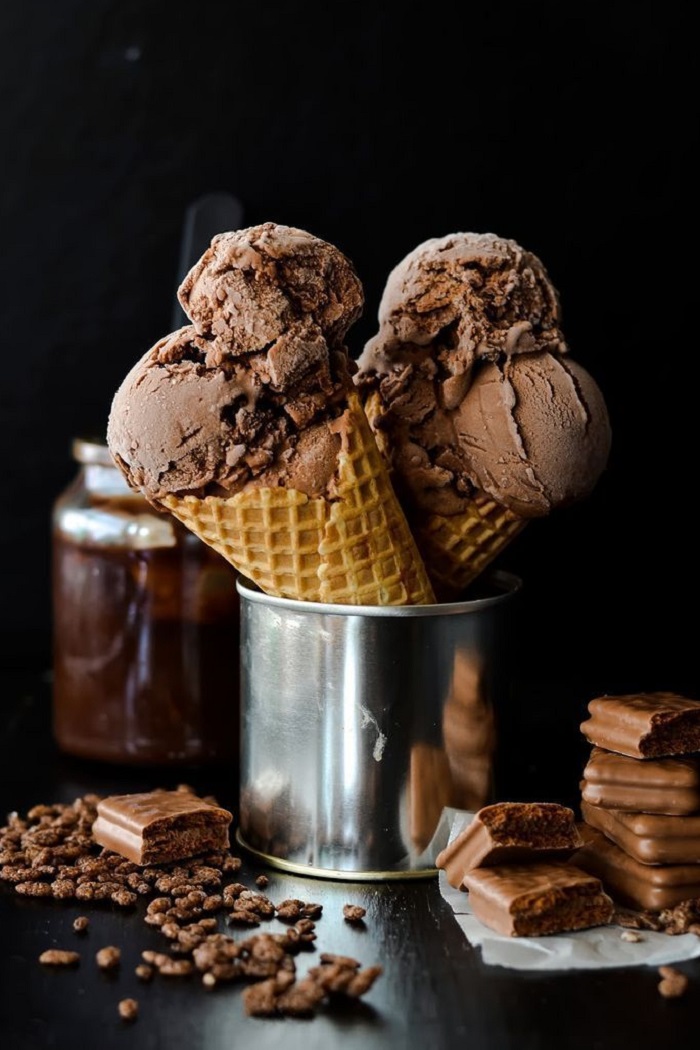
An impromptu get-together of classmates and families over the weekend, makes for a memorable time. With potluck lunch being the norm, cooking was never a hassle. Though the matter of settling the desserts takes up more time. Considering the higher proportion of sweet tooth among the adults and children alike, there was a huge batch of ice-cream, not just any but homemade coffee ice-cream to follow.

“There were some problems only coffee and ice cream could fix.” Amal El-Mohtar

There are few recipes and tricks that are handed down from one generation to the next. Among them desserts, especially those which can be made with regular ingredients; coffee ice cream along with the regular tarts, puddings, gulab jamuns and the like which require basic ingredients or minimum preparatory time are saved for the “dessert quandary“.

Interestingly, early records show that coffee ice cream (1869) was first used in the making of parfait. Few cookbooks (1919) had the recipe of an Egg Coffee consisting of cream, crushed ice and coffee syrup. By late 1900s, coffee ice-cream slowly rose to fame having it’s own secure place on the menu in the ice cream parlours.

While vanilla still is the most popular ice cream, with a regular supply often stocked up in the freezer; coffee ice cream makes way for a delicious change. With many recipes found online, subtle changes like adding beaten egg yolks to the cooling coffee/milk/cream mix and using dark-roast beans makes for the changing flavours each time coffee ice-cream is made at home. Though the longer the ice cream is frozen, the better it is; morning preparations are ready by noon with a minimum freeze time of four hours. The next time an impromptu meet is there, sprucing up the regular ice cream can make for more deliciously happy and fun memories.

“Personally, I like to mix and match–I prefer to get a couple of milk shakes, a banana split … a sundae or two. Then I top it off with a mocha chip in a cone. I don’t know why. I guess that’s like the dinner mint at the end of a meal to me. Know what I mean?” J.R. Ward, The Beast

Posted in Daily, Food, Stories Around the World

Of “Petit Pots”

“Heat the milk and cream. Make it a bit bubbly. Add the flavours, mix it into the whisked eggs and egg yolks. Strain the mixture and pour into cups. Bake these cups in a water bath at low heat. Depending on taste, one can flavour this dessert with pieces of broken or melted choclate, rum, add a base of crunchy texture or garnish with almond slivers, sliced berries, cinnamon, colorful sugar or sprinkles; all leading to a piece of art as well as of delectable taste.”

The above simple dessert similar to a lightly set baked custard, known as “Pot de crème” or “petit pots” was believed to have originated from France during the 17th century. While the name means “pot of custard” or “pot of cream”,referring to the porcelain cups which were used to make and serve the dessert; the latter concept may have evolved from the from English Syllabub.

Usually looser than other custards, crème brulee, flans or crème caramel; it requires minimal preparatory time and can be made with the ingredients at hand. Such that it can be prepared without milk or had frozen. Hardly surprising that, this delight has got its’ own special place and day (August 27th) in the foodimentarian’s heart. For all the dessert connoisseurs, it would be time to experiment the taste buds with the varieties of preparations. While for the experimental chefs, let the steps to make an artful and palatable creation begin.