Posted in Daily, Food, Stories Around the World

The “Meringue” Way

“To make white bisket bread.
Take a pound & a half of sugar, & an handfull of fine white flower, the whites of twelve eggs beaten verie finelie, and a little annisseed brused, temper all this together, till it be no thicker than pap, make coffins with paper, and put it into the oven, after the manchet is drawen.”
– Recipe for the “white biskit bread” in the book of recipes started (1604) by Lady Elinor Poole Fettiplace (c.1570 – c.1647) of Gloucestershire.
(Fettiplace, Eleanor Poole (1994). Hilary Spurling (ed.). Elinor Fettiplace’s Receipt Book. Translated by John Spurling. Bristol (U.K.): Stuart Press. Volume 1, page 23) noted by Muster (ref.)

Made from egg whites and sugar, whipped up to a finesse with a binding agent (salt, cornstarch or gelatin) and an occasional acidic ingredient (lemon, vinegar or cream of tartar) or flavorings of vanilla, coconut or almond; meringue had graced the dessert menu especially to highlight a special occasion or simply enjoy the pleasures of an exquisite delight. The origin till date, is a point of contention for food historians.

The name “meringue” had first appeared in cookbook by François Massialot (1692) (“XXVIII: Des Meringues & Macarons”. Nouvelle instruction pour les confitures, les liqueurs et les fruits (in French). Paris: Charles de Sercy. pp. 186–188). While the word “meringue” had first appeared in English in an English translation of Massialot’s book (1706); two considerably earlier seventeenth-century English manuscript books of recipes give instructions for confections known as “white bisket bread” and “pets” of what are today are recognizable as meringue. The other claim was that meringue was invented in the Swiss village of Meiringen and improved by an Italian chef named Gasparini between the end of the 17th century and the beginning of the 18th century.

“To make Pets
Take a pownd of Drye fine searsed [sifted] suger, & beat the whites very wel then take off froutgh [froth] & put your suger, bye litle & litle in to it — contineually stiring it & beating it with a spoone ore laydle, and when it is exceedingly well beaten, then have some pye plates ready buttred & wipe the buter of because the lesse buter it hath the beter, then drope them upon the plate & put in to every drope a carieway seede or coriander then let your oven be very temparate and watch them with a candle all the while & if they be right they will rise and looke very white, it is good at the first to set a scilet [skillet] of water, with them in to the oven,& when they be thowrow [thoroughly] drye then take them out, you must in the mixing of them put 12 graines of muske & 12 of Abergrisse [Ambergris] which you must bruse with suger before you stire it in to the egge & suger.”
– Recipe for a baked beaten-egg-white-and-sugar confection (1630) is given in a manuscript of collected recipes written, by Lady Rachel Fane (1612/13 – 1680) of Knole, Kent. (Barry, Michael (1995). Old English Recipes. Jarrod (archived at the Centre for Kentish Studies, Maidstone, Kent). p. 64f.)

The faster they are beaten, the better is the flavour. The key to the formation of a good meringue is the formation of stiff peaks by denaturing the protein of egg whites by pure mechanical shear force. Today these light, airy and sweet confections are made at home (more chewy and soft, and crisp exterior), though the commercial ones still thrive. Interestingly, meringues were traditionally shaped between two large spoons (still done so at the home kitchens) till Antonin Carême piped the “meringue through a pastry bag”.

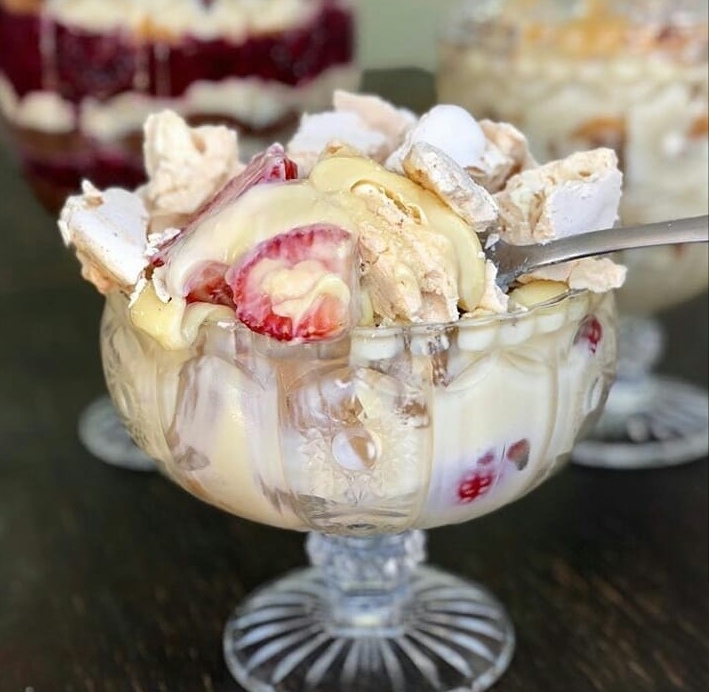
Over the years, various techniques have been improvised to bring forth the French or basic meringue, Italian, Swiss and even the vegan meringue. From biscuits, desserts to embellishment, each meringue based recipe like the lemon meringue pie, baked Alaska, dacquoise, Esterházy torte to mention a few, all have a story and art of their own to tell. With meringue taking the form of whimsical shapes such as mushrooms; or piped into a crisp basket that is baked and filled with cake, fruit, or flowers are few of the many reasons why these delicacies are here to stay and transform the art and flavours of dessert.

Posted in Daily, Food

Flavoured, Creamy and Soft

“My idea of a perfect day is a frozen custard at Shake Shack and a walk in the park.” Nora Ephron, I Remember Nothing: and Other Reflections

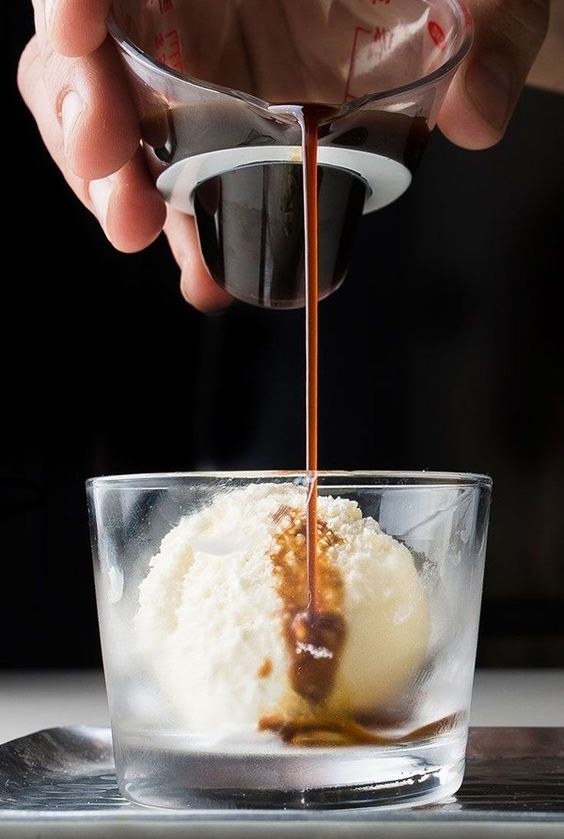
Similar to ice cream, but denser and containing higher percentage of egg in addition to cream and sugar; frozen custard has been of late in rage, especially when one wants a break from the regular cold dessert of ice-cream.

Since the 1690s, experimentally egg yolks were tried for the ice cream recipe, the percentage was very low and the popularity stayed strong with ice-cream as such. Yet when vendor Archie C. Kohr had increased the concentration of egg yolk to the regular ice cream; not only was the texture improved, it became more denser and didn’t melt quickly. Thus, “frozen custard” was invented in Coney Island (1919). Later this frozen custard was introduced at the Chicago World’s Fair. From then on, it had gained the hearts of dessert lovers. As this silky product is extruded through the huge metallic contraptions (sometimes known as “iron lungs”), into the bucket and then scooped into cups or wafer cones; the smooth, cream coloured texture is rich but not cloying on the taste buds.

As per the U.S. FDA, the distinction between ice-cream and frozen custard is very fine with the latter to consist of at least 10 percent milk fat and 1.4 percent egg yolk solids. The true or original frozen custard is a very dense dessert. Air is not pumped into the mix, nor is it added as an “ingredient” but gets into the frozen state by the agitation of liquid similar to whisking a meringue. The high percentage of butterfat and egg yolk gives frozen custard a thick, creamy texture and a smoother consistency than ice cream.

For the experimenters, there is always homemade frozen custard to be made with the added fun of an ice-cream social. Also the store bought or a good deli frozen custard can spice up the regular Sunday brunch desserts as add-ons to cake, regular shakes or prepped up with nuts, crushed almonds or m&m’s. All said, with foodimentarians gearing up to celebrate the National Frozen Custard Day(August 8th), it would be a good time to try out this cold dessert.

Posted in Daily, Food, Stories Around the World

Add “Milk” to “Chocolate”

Although this sweet, brown food preparation of roasted and ground cacao seeds have had their earliest evidence of use traced to the Olmecs of Mexico (1900 BC); adding milk to this creation has been a much later development, believed to be around the 19th century.

“Anything is good if it’s made of chocolate.” Jo Brand

Around the mid-17th century, milk was sometimes used as an addition to chocolate beverages. With drinking choclate gaining momentum and the Cadbury brothers (1820) had widely marketed it. In order to tackle the flood of chocolate that was entering the UK mainly from Switzerland and France, Fry and Son (1847) started to make tablets of roasted and ground beans, mixed with sugar which were sold as eating chocolate. With expansion of the new “eating chocolate market”, the Swiss chocolatier Daniel Peter (1876) working in conjunction with Nestlé, (who had a creamery was next door to his factory), formulated the first commercial milk chocolate recipe. Only a minuscule amount of moisture was used “condensed” milk. The final major manufacturing technique to produce the “modern milk” chocolate was developed three years later by Lindt (1879). He had discovered that when choclate was repeatedly rolled from side to side (in a stone vessel) a much smooth,er textured product could be made. This process, known as “conching” can go on for as long as five days. With the invention of the “conching machine”, the chocolate industry had grown further. Milk chocolate today has 20% cocoa solids as per the British regulations, while for the rest of the European Union, the minimum is 25%. In the US, concentration of chocolate liquor of ten percent is required.

Though proof of later historical details are present, there still exists some confusion as to the first use of milk in chocolate. As legend goes, it was believed that Sir Hans Sloane, founder of the British Museum and physician to Queen Anne and George II, had the brainwave of adding milk to drinking chocolate (1672). While on his travels to Jamaica, Sir Hans had recognized the therapeutic qualities of chocolate. On seeing malnourished, sickly babies being revived after being given a mixture of cocoa, spices and water; it was thought that he had introduced milk with cocoa, recognizing that milk had complimentary nutritional qualities. This recipe was regarded as purely for medicinal purposes.

“There are four basic food groups: plain chocolate, milk chocolate, dark chocolate, and white chocolate.” Jill Shalvis

While chocolate is for something special, the making of “milk chocolate” is a labour of love, with three main stages. First is to blend milk ingredients and sugar and gently mix them with chocolate liquor and cocoa powder. Secondly is to dry the mixture where it becomes a milk chocolate crumbly powder. The final stage is where milk chocolate gets its smooth and velvety taste and texture is by ‘conching’, which involves carefully mixing all the ingredients together. The traditional long conching process guarantees a rich, subtle flavour development. While this process starts at a low temperature; as the mixing starts, the temperature is raised very slowly to help it dry and develop new delicate flavours from the heat. Delicate care is taken to gently mix for long enough to full develop the chocolate flavours, to get the most silky way possible.

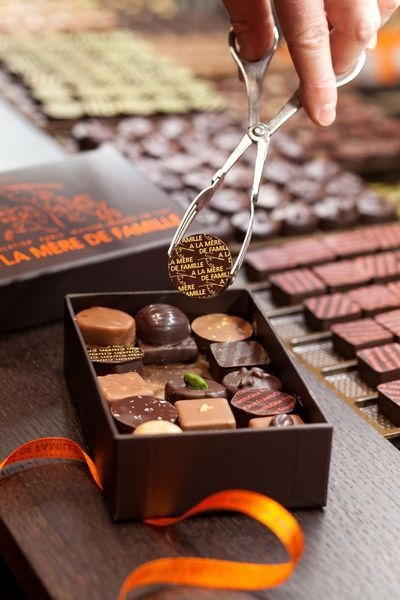
Besides being a ready indulgence for any time, milk chocolate when melted can add the exotic flavours of sweet and bitter, to the regular dessert, be it from ice cream and coffee, marshmallows, cupcakes, mousse, wafer biscuits or even a chocolate pizza; the list is endless. Little wonder then, that National Milk Chocolate Day (July 28th) is being celebrated by connoisseurs of chocolate, chocolatiers as well as chocolate lovers, both young and the old worldwide. Just like sugar, salt and spice, a little bit of “milk choclate” goes a long way.

Posted in Daily, Food, Stories Around the World

From Sundae to “Cones”

With the Ice cream month of July, coming to a near end; indulging in the various combinations and food innovations with ice cream being a primary ingredient is a must. Although summer was never an excuse to indulge in the delights of ice cream, the latter is a good enough reason to beat the intermittent summer heat as well as the monsoon blues.

“Always serve too much hot fudge sauce on hot fudge sundaes. It makes people overjoyed, and puts them in your debt.” Judith Olney

Going creative to serve and enjoy ice cream was what lead to the origin of the ice cream sundae as well as the ice cream cone. Regarding the legends leading to the creation of the ice cream sundae, the frequent underlining factor was that, it was a variation of the popular ice cream soda. Made towards the 20th century, one factor that played a role in it’s creation was the banning of soda on Sundays in Illionis. Quite soon, it’s popularity took over with ice cream sundae becoming the weekend semi-official confection. As accounted by the Ice Cream Trade Journal (1909) along with plain or French sundae, other exotic varieties were listed like Robin Hood sundae, Cocoa Caramel sundae, Black Hawk sundae, Angel Cake sundae, Cinnamon Peak sundae, Opera sundae, Fleur D’Orange sundae, Tally-Ho Sundae, Bismarck and George Washington sundaes, to list a few.

Besides the ice cream, partially what lures some, is the fascinating cone that comes with it. The soft crunchiness adds to the flavours of the ice cream. The ice cream cone, poke (Ireland and Scotland) or cornet is usually made of a wafer similar in texture to a waffle, as a dry pastry which enables ice cream to be had held in the hand. From wafer (or cake) cones, waffle cones to sugar cones, there are different types of ice cream cone; styled also as pretzel cones, chocolate-coated cones or even double wafer cones. From the regular conical, pointed base to flat shaped base, cones can be shaped as the latter to stay upright by self.

As early as 1825, edible cones were mentioned in the French cookbooks with Archambault’s description of rolling a cone from little waffles. Towards the 19th century, English cook A.B.Marshall’s (1888) recipe for “Cornet with Cream” said that “the cornets were made with almonds and baked in the oven, not pressed between irons”. While edible cones were patented independently by two Italian entrepreneurs(1902-03), the fashion of the ice cream cone had gained momentum at the St. Louis World’s Fair (1904). There Arnold Fornachou, a concessionaire who was running an ice cream booth had ran short on paper cups. Buying waffles from Ernest Hamwi, a waffle vendor nearby; Fornachou rolled the waffles into cones to hold the ice cream.

Although this was the most widely circulated story, much dispute is still laid as to where ice-cream cones became mainstream. Credit for the ice cream cone was also claimed by Abe Doumar and the Doumar family can also claim credit for the ice cream cone. Likewise Doumar had also created rolled up the waffles with a scoop of ice cream on top. He began by selling the cones at the St. Louis Exposition which became an instant success. In fact he had set up the Doumar’s Drive In, Norfolk, Virginia (1907). Even today it operates at the same location established initially, making it a Hampton Roads landmark.

“I doubt whether the world holds for anyone a more soul-stirring surprise than the first adventure with ice cream.” Heywood Broun

To complete the ice cream experience; mixing the different styles of ice cream soda, sundae, toppings, flavours served in waffles or cones would add to the fun as well as palatable experimentation, bringing delight not just to the taste cravings or as comfort food, but also as an artistic rendering to the eye. After all ice cream lifts not just the taste cravings but the mood as a whole experience, which is what a part of life is about.

Posted in Daily, Food, Stories Around the World

Of Ice-cream, Soda and Evolution…

“Summer would not be summer without Ice-cream. Ice-cream is the favorite currency of love.” Puck

For my kids, summer translates into picnics, beaches, barbecues and of course, never to forget it, “the ice-cream“. Being in the National Ice cream Month (July) with the end of the week marking the National Ice cream Day (third Sunday of July), the truce between the “young ones” and their “veggies” was an ice cream a day for dessert. As a part of improvisation of the existing recipes and combinations, delving into the evolution and progress of ice cream makes for an interesting read.

Although the origins of this “summer dessert” have been rough traced back to the 4th century B.C.; the modern day versions with the wide variety of flavours as well as presentations were made feasible only by the 18th century. Early records of it’s popularity include the Roman emperor Nero (37-68 CE) who ordered ice to be brought from the mountains and combined with fruit toppings and King Tang (618-97 CE) of Shang, China who had a method of creating ice and milk concoctions. While “Ice cream” may have been likely brought to Europe from China. As legends go, when Italian duchess Catherine de’ Medici married the Duke of Orléans (1533), the French court had few Italian chefs who had recipes for flavored ices or sorbets. A century later, Charles I of England was impressed by the “frozen snow” that he offered his own ice cream maker a lifetime pension in return for keeping the formula a secret, so that ice cream could be a royal prerogative. While there is no historical evidence to support these legends, the recipes for ices, sherbets and milk ices had evolved gradually over time and were usually served in the fashionable royal courts or in the upper class society.

“Without ice cream, there would be darkness and chaos.” Don Kardong

As recipes for flavoured ices began to be published for the household cooks and ice storing became more feasible, flavoured ices were enjoyed by the middle class society. Towards the early 19th century, Augustus Jackson had created several popular ice cream flavours, packed them into tin cans and distributed them to the ice cream parlours of Philadelphia. Credited with inventing an improved method for manufacturing of ice cream, he is technically considered as the modern day father of ice cream.

Going years ahead, the Franklin’s Institute semi-centennial celebration (1874) saw the creation of the ice cream float by Robert McCay Green, Pennsylvania. The traditional account was on that particularly hot day, Mr. Green ran out of ice for the flavored drinks he was selling and used vanilla ice cream from a neighboring vendor, thereby inventing a new drink. As published by his own account in the Soda Fountain magazine (1910), states that after some experimenting (after effect of competition with nearby vendors), he had decided to combine ice cream and soda water. During the celebration, he sold vanilla ice cream with soda water and a choice of 16 flavored syrups. Although there are at least three other claimants for the invention of ice cream float, namely Sanders, Mohr and Guy; wherein the latter is said to have absentmindedly mixed ice cream and soda (1872), to his customer’s delight. However may the legends go, the combination of ice cream and soda have stayed on.

“Sometimes life is just what it is, and the best you can hope for is ice cream.”  Abbi Waxman

From being in a boxed container to served with soda, sprinkles, toppings and more, ice cream has evolved from being a simple street or roadside treat to an artistic rendering for functions. Ice cream with its’ many variants like ice lolly, Malyasian Ais kacang, Turkish dondurma, gelato, kulfi and the like; are all here to stay and evolve, changing the “sweet trends” of dessert over time.


Posted in Daily, Food, Photography Art

Cooking to Culinary Arts

“Tell me what you eat, and I will tell you what you are.” Jean Anthelme Brillat-Savarin

For most gastronomes, culinary specialists, chefs, nutritionists as well as home cooks, food being cooked, served or even eaten reflects a lot of the “mood within”. For instance, if one is extremely tired after a long day, the easiest meal to make in a jiffy for a home cook is pasta and cheese followed by ice cream for the sweet end. On the other hand, to mark any special occasion, the requirement of a full three course meal (salad or appetizer, main course and meat) completed by a splendid (if not necessarily elaborate) dessert is a must. When in an angry mood, every chef at heart will go with their inner basic meal, not tuning to art of the eye, but just ensuring that the basic taste is palatable. Too irritated or bothered to cook, it will be pizza or “Chinese order” on the house. And when the mood is sad, it will be the comfort food , homemade, with a striking resemblance to one’s childhood or mother’s style, or the fast food version.

“The preparation of good food is merely another expression of art, one of the joys of civilized living.” Dione Lucas

Essentially, cooking is a very sensitive art. While one mayn’t have the intensive training or qualification to be a chef of Michelin three or five star rated restaurant, but if one can make a complete wholesome meal for self, family and friends, that alone is enough. In fact, cooking is an expression of love. For every ingredient which balances the meal, it is a reflection of the care, precision and the basics of science behind it.

“Anybody can make you enjoy the first bite of a dish, but only a real chef can make you enjoy the last.” Francois Minot

The “effective cooking” of today, is a balance of food and fun, of taste, experimentation and readily available ingredients. While baking involves following the written or “handed down” instructions to the point; cooking involves a little experimentation of ingredients, spices as well as art. The evolution of cooking into “culinary arts” over the years, has resulted in a whole new range of varied dishes blended together with taste, nutrition, quality, tradition, serving, managing as well as visual presentation to complete the effect.
“The discovery of a new dish confers more happiness on humanity, than the discovery of a new star.” Jean Anthelme Brillat-Savarin

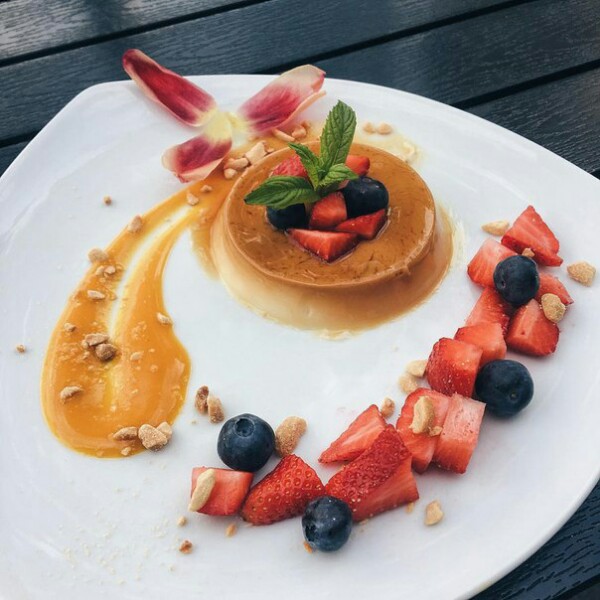
Entering into the month of “culinary arts” (July); the professional cooks and chefs who bring innovative cuisine from their kitchens to our tables every day are being recognized not just for their talent but devotion as well as contribution to cooking as an art form. For the home cook to experiment with technique and style, vast differences can be made by the order of adding the ingredients, plating as well as trying and blending the new recipes with the old ones. To start off, experimenting in small amounts can be tried. While most of the time, home cooking involves the regular, to celebrate this month, it would be good to plate the regular different or try something new altogether. For every cook, is indeed a chef with a hidden artistic side.

“Culinary tradition is not always based on fact. Sometimes it’s based on history, on habits that come out of a time when kitchens were fueled by charcoal.” Alton Brown

“In the abstract art of cooking,
ingredients trump appliances,
passion supersedes expertise,
creativity triumphs over technique,
spontaneity inspires invention,
and wine makes even the worst culinary disaster taste delicious.”
Bob Blumer

Posted in Daily, Food

Puddings..of Chocolate and More

[1730]
“Chocolate Puddings. To a Pint of Cream take eight Eggs, the Whites of four, beat them well together, and mingle with your Cream; put in some Nutmeg, Cinnamon, and Ginger, a quarter of a Pound of Naples Bisket, and a quarter of a Pound of Chocolate grated very fine, put in a little Orange-Flower Water, and a little Citron minc’d; mingle it mighty well together, and if you bake it, put a Sheet of Puff-paste in your Dish, and raise a little Border in the Rim, put in your Pudding and cross-bar it, and ice it with thick Butter and Sugar, and bake it in a gentle Oven, and when bak’d serve it away, or you may boil it if you please.”
—The Complete Practical Cook, Charles Carter, facsimile 1730 edition [Gale Ecco Print Edition:Detroit] (p. 106)

One of the highlights of having warm weather is when impromptu visits are possible, especially on chance meeting of old friends or neighbours. With plenty of delivery services available at ” the fingertips or touch of thumb pads”; it’s often the desserts that need to be made or created in a jiffy. Which is why, certain desserts especially custard, ice cream, puddings to name few easy ones are one of the necessary knows for every “fledgling” cook.


One of the easiest desserts to make with the ingredients of cornstarch or flour, cream, milk, butter and vanilla for the most simple and basic puddings. Adding in cocoa, bananas, battered breadcrumbs and even eggs are the small variations that make an entirely new recipe and flavour of the “new pudding”. Few “pudding pointers” to keep in mind include:

  • Although easy to make, complete and whole attention is required from making the batter to setting it to chill or baking it.
  • Constant stirring is needed while cooking the pudding to avoid lumps or burning.
  • The flavours, texture and consistency is very adaptable, so don’t be afraid of experimenting.
  • Make sure the flour is sieved properly because no matter how it is whisked, if the flour is not smooth it will give you a lumpy texture.
  • To store it, cover it with a plastic wrap to avoid the formation of a layer. The same applies while chilling the pudding too.
  • For baked puddings, grease the tin with butter and then refrigerate it for few minutes. This will form a layer and avoid it from sticking to the base.


With National Chocolate Pudding Day tomorrow, one can go a step further with whole or shots of “pudding cakes” or “pudding shakes” with whipped cream, sprinkles and M &M’s to add on; not to forget the ice cream too.

“Life’s a pudding full of plums.” 
W.S. Gilbert (1836-1911)