Posted in Daily, Food

Jelly with the Beans

“You can tell a lot about a fellow’s character by his way of eating jelly beans.”  Ronald Reagan

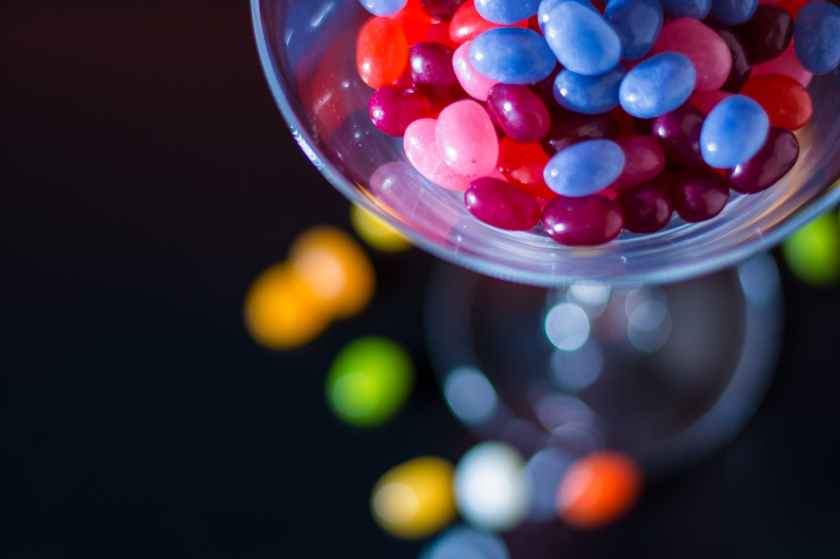
What happens on hybridization of Turkish Delights ( sweet, chewy candy with powdery sugar coating) and Jordan almonds ( almonds encased in a crunchy sugar shell) ? Possibly it may lead to the creation of “the classic candy with a soft chewy center and thin crunchy coating” , famously known as “jelly beans”. For avid Harry Potter readers, “Bertie Botts” may sound familiar with flavours of Banana, Black Pepper, Blueberry, Booger, Candyfloss, Cherry, Cinnamon, Dirt, Earthworm, Earwax, Grass, Green Apple, Marshmallow, Rotten Egg, Sausage, Lemon, Soap, Tutti-Frutti, Vomit and Watermelon.

The exact origins of jelly beans aren’t known. While the Mid Eastern confection of Turkish delight has been there since B.C.; the shell coating process known as “panning” can be traced to the cooks of the Royal Court in 17th century France. Over time, as the two process made its’ way to the Americas and the earliest known appearance of Jelly Beans has been credited there. One commonly cited but unconfirmed proof was an advertisement (1861) for William Schrafft (Boston) promoting the delivery of jelly beans to soldiers in the Union Army duting the Civil War.

Initially, (late 1800s, early 1900’s) jelly beans were sold by weight as penny candy in general stores and taken home in paper bags. By 1930s, jelly beans became part of the Easter holiday partially as it fit in well with its’ round egg-like shape, which was a symbol of the renewal of spring.

Why “jelly” and “bean” ? With candy-makers trying out novelty shapes for candy, the Goelitz family candy-makers has archive lists with candies as vegetables, chestnuts, carrots and turnips as well as bunnies for Easter. Once the bean shaped soft jelly came with shell that won’t let them stick, the name “Jelly beans” have stayed on.

Ever since 1976, there have been two types of jelly beans, gourmet (smaller, softer with shell and middle both flavoured) and traditional (only shells are flavoured). Their basic ingredients include sugar, tapioca or corn syrup, pectin or starch with relatively minor amounts of the emulsifying agent lecithin, anti-foaming agents, an edible wax (carnauba wax, beeswax), salt, confectioner’s glaze and flavouring agents. Depending on the type and flavours, jelly beans take approximately six to ten days to be made. National Jelly Bean Day has been celebrated (April 22nd) by foodimentarians worldwide. With endless flavour possibilities available as well as satisfying the palate and creating edible works of modern art, their popularity still holds true today.

“Jelly beans! Millions and billions of purples and yellows and greens and licorice and grape and raspberry and mint and round and smooth and crunchy outside and soft-mealy inside and sugary and bouncing jouncing tumbling clittering clattering skittering fell on the heads and shoulders and hardhats and carapaces of the Timkin works, tinkling on the slidewalk and bouncing away and rolling about underfoot and filling the sky on their way down with all the colors of joy and childhood and holidays, coming down in a steady rain, a solid wash, a torrent of color and sweetness out of the sky from above, and entering a universe of sanity and metronomic order with quite-mad coocoo newness. Jelly beans!” ? Harlan Ellison (“Repent, Harlequin!” Said the Ticktockman)

Posted in Daily, Food

“Cobble” it Together

“Cherry cobbler is shortcake with a soul.” Edna Ferber

With summer round the corner and plenty of fruits to go around, desserts are always the reason why the meal gets completed in the twinkling of an eye, especially for the children. Even with the lack of time or frozen products over, dessert can be done soon, especially when bits of fruit over biscuit dough, batter or dumpling are baked to give the warm “cobbler” feel of the spring and summer skies.

Believed to have originated from the archaic word “cobeler” (recorded from 1859) meaning wooden bowl, cobblers were essentially a byproduct of the early years of European settlement in the Americas, especially by the English and the Dutch. They had initially emerged as a makeshift version of the popular pie recipes as a trail-modified desert.

“My earliest memory is making peach cobbler with my grandmother. A wonderful memory. I grew up in a restaurant family – B.B.Q. restaurant.” Rick Bayless

Unable to make the traditional puddings or pies, due to lack of ingredients or equipment as the settlers moves westward, modifications were made to the original methods. Consequently various ingredients were “cobbled together” with the available fruit, more common as peaches, plum or cherries, which were dried, preserved or canned, leavened dough (using baking powder) and an open fire. The initial cobbler were being made with a covered stewed filling with a layer of uncooked plain biscuits or dumplings, fitted together.

“Chocolate’s okay, but I prefer a really intense fruit taste. You know when a peach is absolutely perfect… it’s sublime. I’d like to capture that and then use it in a dessert.” Kathy Mattea

Cobblers were meant to be more palatable and sweet than pretty. Fruit, however it came, was dumped into a Dutch oven, topped with globs of biscuit dough and baked over an open fire until golden brown. Soon cobblers were quickly integrated into the settler diet, with the sweet dish being eaten for breakfast, as first course or as a main dish. Towards the late 19th century, the cobbler was officially labeled as a dessert.

“My earliest memory is making peach cobbler with my grandmother. A wonderful memory. I grew up in a restaurant family – B.B.Q. restaurant.” Rick Bayless

With modern technology of preservation, trade and transport; cobblers today have been vastly modified to include many fruit varieties including raspberries, blackberries as well being topped with cinnamon or vanilla essence, adding colours and flavours to the original version. Variants like grunts, pandowdy and slumps are Canadian Maritimes and New England varieties of cobbler are labelled when they are typically cooked on the stove-top or in an iron skillet or pan, with the dough on top in the shape of dumplings. The name originates from the grunting sound they make while cooking. Other popular variants include the apple pan dowdy (an apple cobbler whose crust has been broken and perhaps stirred back into the filling), the Betty or Brown Betty ( made with breadcrumbs or bread pieces or graham cracker crumbs and fruit, usually diced apples, in alternating layers, baked covered with a consistency of bread pudding) and the buckle (made with yellow batter like cake batter with the filling mixed in with the batter) among many others.

On the other hand, the scone-topped cobbler predominates in the UK where they are made both as sweet or savoury. While the common sweet fillings include apple, blackberry or peach; the savoury ones consists of beef, lamb or mutton as a casserole filling, sometimes with a simple ring of cobbles around the edge, rather than a complete layer, to aid cooking of the meat. The savoury versions may be topped with cheese or herb scones.

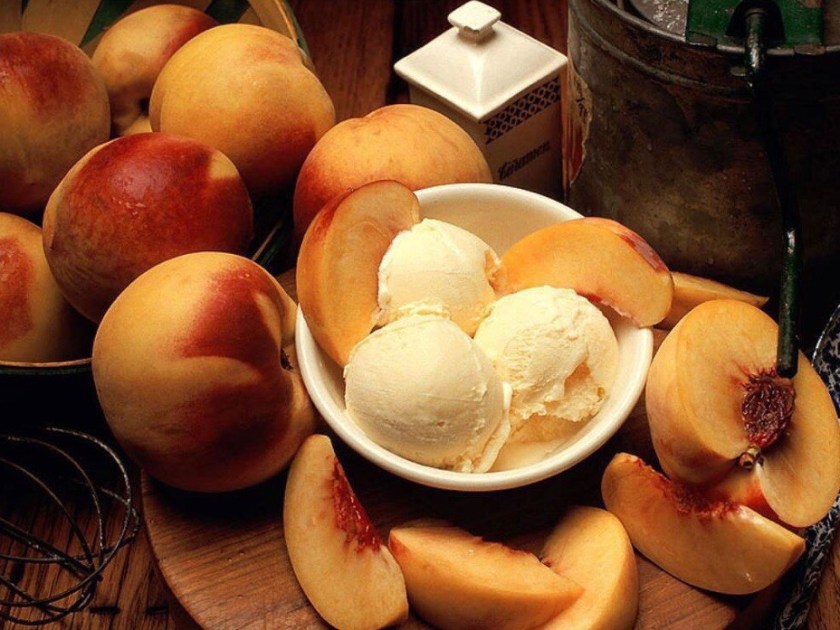
Over the years, cobblers have remained popular especially as they were quick to make for the luncheons and brunches. Little wonder then that the Georgia Peach Council declared April 13th National Peach Cobbler Day. Taking a bite of the rosy fruit cradled in warm pillows of cinnamon-scented dough and blanketed with the melted vanilla ice cream brings rich splendor to the senses, giving warmth and happiness all the way. For all the foodists at heart, have a little bite of cobbler to revel in the taste of sunny skies and warm sunshine.

“There are a couple of different types of food I eat a lot. I was raised in the South, in Tennessee, so I’m going to go with comfort food, soul food. I would probably start with collard greens and candied baby carrots and then have some biscuits and white gravy – and for dessert, probably blackberry cobbler.” Megan Fox

Posted in Daily, Food

Little “Bits” of Cake

“Cake on stick, once in a while, never hurts the diet.”

Baking a cake involves getting the right ingredients, weighing them and mixing them in the right proportions. For the more elaborate cakes, the icing, food colouring as well as the shapes of the base cakes needs to be set right. Ever tried making a “football field” cake without leftover crumbs. No matter how accurate and sharp the knife is, there are still inevitable crumbs of cake left behind.

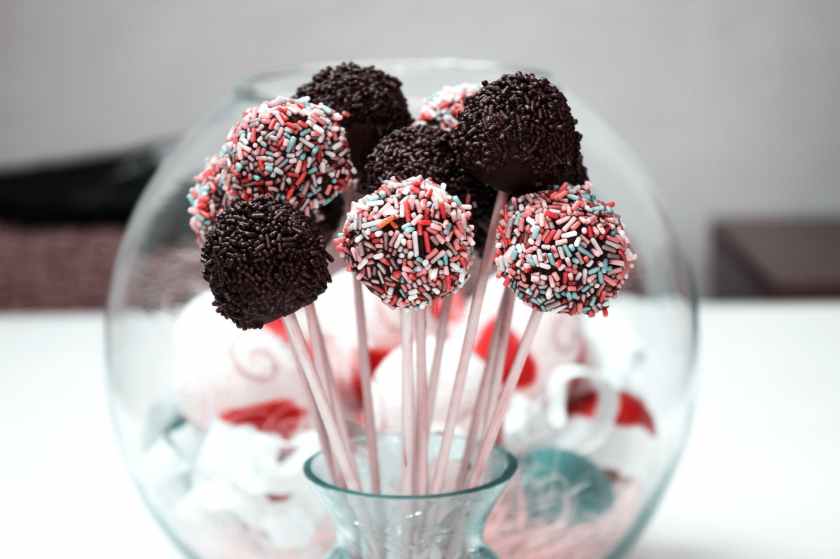
Gather all the crumbs, crush them and mixed them with the leftover icing and chocolate, shape them and coat them with sprinkles or gems depending on one’s choice. put them on sticks like lollipops and freeze. Voila, cake on sticks like candy or more popularly known as “cake pops” are ready.

Although there is no recorded date for the creation of cake pops, this confectionery craze took over the industry from 2009 to 2011. Often credited to “Bakerella” a baking blog, “cake pops” rose in popularity. While the regular “round or spherical shapes” of cake pops are easy to make, tools are needed for making various cartoon cake pops, cubes or emoticons. Add little notes or messages on them makes the routine more interesting and surprising, something like the fortune cookies. Variations of cake pops are cake balls, cakesicles (cake sand Popsicle), cupcake pops and cake-on-a-stick. The evidence of their popularity is globally felt with March 25th celebrated by foodimentarians as “National Cake Pops” Day. 

With the changing diet trends and necessity of sticking to “little dose of sugar”; the possibility of having these tiny delicacies puts the strong cravings to rest.

Posted in Daily, Food

Delights of “Oreo”daphne

The first week of March is awaited by foodimentarians globally, from peanut butter to banana cream pie and ending with pound cake, cheese doodles, Oreo and cereal; there is absolutely nothing better to start and end the week with. At least one favourite of each person is there to indulge in, as part of observing the food holidays.

“Health food may be good for the conscience but Oreos taste a hell of a lot better.” Robert Redford

One of the most favored foods (for comfort or mini-sized treats) Nabisco’s “Oreo” have taken the world by storm. Interestingly, the origin of the word “oreo” (cookies or biscuits) can be traced to the French word “or” (means gold) or “ωραίο” from Greek meaning tasty, beautiful, nice or well done. Or from the Latin Oreodaphne, a genus of the laurel family evidenced by the design of “the laurel wreath” on the cookies, as noted by food writer Stella Parks.

From the on, Oreo biscuits to pancakes, cakes, sandwiches and ice-cream have been on the food trends, landing its’ own special place on the table, ranging from breakfast, snacks to desserts.

For an interesting “kid or adult” twist to the routine, add oreo crumbs and cheese doodles to pancake batter, cereal or cake, ice-cream or simply milk and enjoy a “foodimentarian” week of desserts or mini-treats and splurge.

Posted in Daily, Food, Photography Art, Quotes

Hot, Dark and Chocolaty

Watch the sunrise at least once a year, put a lot of marshmallows in your hot chocolate, lie on your back and look at the stars, never buy a coffee table you can’t put your feet on, never pass up a chance to jump on a trampoline, don’t overlook life’s small joys while searching for the big ones.” H. Jackson Brown, Jr.

First believed to have been created by the Mayans 3000 years ago, this drink has been popularized across the world transitioning from religious or medicinal purposes to being a luxurious and recreational or comfort concoction. Popularly known as hot chocolate or cocoa, (aka drinking chocolate and chocolate tea in Nigeria); it would be a grave error for any chocolate fan to give this drink a miss.

“Love is like swallowing hot chocolate before it has cooled off. It takes you by surprise at first, but keeps you warm for a long time.” Henri Frederic Amiel

Hot chocolate comes in multiple variations including the Latin American spiced chocolate para mesa, the very thick Italian cioccolata calda, Spannish chocolate a la taza to the thinner hot cocoa consumed in the United States. The distiction between “hot cocoa” (from powder made by removing most of the rich cocoa butter from the ground cacao beans) and “hot chocolate” ( melt bar chocolate, already rich in cocoa, sugar and cocoa butter) lies in the cocoa butter, the absence of which makes hot cocoa significantly lower in fat than hot chocolate while still preserving all the antioxidants found in chocolate.

“Some days you get up and you already know that things aren’t going to go well. They’re the type of days when you should just give in, put your pajamas back on, make some hot chocolate and read comic books in bed with the covers up until the world looks more encouraging. Of course, they never let you do that.” Bill Watterson

Add a higher percentage of cocoa solids and cocoa butter, eliminate or decrease the sugar and voila, dark chocolate (also known as black chocolate, plain chocolate, or bitter chocolate) is ready. Although the percentages may vary as per brand, government and industry regulations; dark chocolate has taken the 21st century by storm. Either way, hot or cold; dark or light, bitter or milky; chocolate still reigns supreme among the desserts, gifts, treats and moments of deliciousness and is here to stay.

“You take dark chocolate, you mix it with white milk, and it becomes a delicious drink. That is the chocolate I am talking about.” Ray Nagin

Posted in Daily, Food

Of Crescent and Croissants

“You are going to have to take the rest of these croissants to work with you, I cannot be trusted alone in the house with a half-dozen buttery, crispy pillows of deliciousness.” Stacey Ballis

These fluffy, light and inviting goodness has now and then replaced the regular doughnut or bagel sessions with coffee or tea, often earning themselves a very special spot on most cafe’ menus. The croissant, a buttery, flaky, viennoiserie pastry although most popularized through the French cuisine, is of Austrian origin, named for its historical crescent shape. Made of a layered yeast-leavened dough by a technique known as laminating almost similar to the making of a puff pastry.

Most culinary experts declare the ancestor of the croissant to be “the kipferl”, a traditional Austrian yeast based roll made as early as 13th century in varied shapes, plain or filled with nuts and the like. Although the true origin of “kipferl” is not known, it is believed to be based on the “feteer halali”, a flaky crescent-shaped Egyptian pastry that is a version of the “feteer meshaltet” pastry known since their ancient times. Essentially it all boils down to dough and yeast, one of the better versions of the good old bread.

“Good bread is the most fundamentally satisfying of all foods; and good bread with fresh butter, the greatest of feasts.” James Beard

As with most popular food fads of today, croissants have their own culinary legends surrounding it. One legend was that they were invented to celebrate the defeat of the Umayyad forces by the Franks at the Battle of Tours in 732 in Europe, with the shape representing the Islamic crescent. Whereas some say that it was invented in Buda; or, according to other sources, in Vienna in 1683 to celebrate the defeat of the Ottomans by Christian forces as they laid siege of the city. The shape of croissants was a tribute by the bakers as a reference to the crescents on the Ottoman flags, for these bakers staying up all night heard the tunneling operation and sounded the alarm.

“”Croissant”: However you choose to pronounce it at home, it is perhaps worth nothing that outside the United States, the closer you can come to saying “kwass-ohn,” the sooner you can expect to be presented with one.” Bill Bryson

Croissants has their own family of cousins with the Italian cornetto or brioche, Spanish cuerno, the Turkish ay çöregi to list a few. Handmade or readily available in the grocery, croissants have made their mark. As the years progressed, their fillings grew more interesting leading to the birth of “croissan’wich”. As time goes on, so will the art of croissants be more diverse and varied.

Posted in Daily, Food, Photography Art, Quotes

Chocolate to Cake

“Part of life and part of the enjoyment of life is a croissant and a chocolate cake and eggs and milkshakes and oatmeal. There’s so many things, you have to learn to appreciate it all. When I don’t eat as much as I should, I’m not fun to be around; I’m fussy.” — Nina Dobrev

Almost like development of civilization, chocolate cake or chocolate gâteau made an entrance around late 1800s. Retrospectively that’s a long time considering that chocolate drink was there around the times of the Mayans and Aztecs. Chocolate cake lovers’ need to thank Coenraad van Houten (1828) for extraction of cacao butter and “rock cacao”. With Rodolphe Lindt (1879) developing “conching” for silky smooth chocolate; slowly the experimentation of chocolate began from fillings and glazes to the cake batter.

“Let’s face it, a nice creamy chocolate cake does a lot for a lot of people; it does for me.” Audrey Hepburn

Chocolate decadence took on full swing with molten chocolate cakes with liquid chocolate centers. Furthermore the cakes were infused chocolates with exotic flavors such as tea, red pepper, passion fruit and champagne were popular. Chocolate lounges and artisanal chocolate makers took on the show.

“I had a little epiphany when I was a writer at ‘Chicago’ magazine. I sat down to dinner at the Ritz-Carlton. Somebody poured a white dessert wine with chocolate cake. It was a wine I would never have expected to make sense. The idea of any wine tasting fabulous with chocolate cake was fascinating to me.”  Ted Allen

There are many varieties and variants of chocolate cake especially chocolate layer cake, fudge cake, Joffre cake and Devil’s food cake to list a few. When one feels like celebrating or enjoying the feel of “breaded chocolate”, it triggers the memories and anticipation of delving into that piece of cake of chocolaty goodness. Besides it would be quite remiss for a chocolate lover to crush the taste buds on “National Chocolate Cake Day”. So here’s to that little splurge of calories but irresistible goodness.

“I like quinoa. I like gingerbread. I feel they should be kept separate. I’m not in favor of this thing of making kind of raw, vegan chocolate cake and saying it’s as good as chocolate cake. I mean, just eat cake and be done with it. And then have a separate meal of quinoa.” Bee Wilson