Posted in Food, Stories Around the World

Of Simplicity, Elegance and Canapés

Entering into the football and cricket season, weekends involve having the family and friends for the collective cheer and match-viewing. While for the first few days, quick snacks like crisps, fried pakoras, fritters, tater-tots provided immediate sustenance during the game hours; alternatives were required for the semi-finals and final game nights. Consequently it was tiny sandwiches and canapes for the remaining days.

One of the types of hors d’œuvre, a canapé is a small, prepared and often decorative food consisting of a small piece of bread (sometimes toasted), puff pastry or a cracker topped with some savoury food, held in the fingers and often eaten in one bite. The technical composition includes a base (bread, pancake, fresh vegetables or even crackers), the spread (compound butter, flavoured cream cheese, thick cream); the main item (meat, cheese, fish, relish, purees, caviar, foie gras) and topped with garnish of choice. The latter can be varied, from finely chopped vegetables, scallions, herbs or even truffle oil).

Quiet interesting is the fact that canapes weren’t an overnight invention. Savory protein on bread or pastry combinations (croutons, crustades) were a gradual adaption and evolution of the cuisine through Middle Ages. Though the “Canapes” of today, had originated in France. They were initially offered to the guests of the French fêtes (18th century) and this practice was adopted by the other cuisines around the world especially the English. Although the concept of making canapes have evolved, today they are also known as finger foods (not vice versa) or savouries. Though the larger canapes often border close to being labelled as open sandwich.

The beauty of making canapés is that subtle variations can affect a distinct difference in taste and style. For instance, the base can be changes to crackers, toasted bread pieces or even flat vegetables seasoned, deep fried or sauted cut into interesting shapes and sizes. For the kids, canapés can be decorated with sugar sprinkles, gems or even different coloured icing for an added touch of colour.

[1869:Paris]
“Anchovy canapes.
Cut some slices of crumb of bread, 1/4 inch thick; cut these in pieces 2 1/2 inches long, 1 1/2 inch wide; and fry them in clarified butter, till a nice golden colour; When cold, spread the pieces with Anchovy Butter; Steep some anchovies in cold water; drain, open, and trim them; Place 4 fillets of anchovies, lengthwise, on each piece of bread, leaving three small spaces between the fillets; fill the first space with chopped hard-boiled white of egg; fill the middle space with chopped parsley, and the third with chopped hard-boiled yolk of egg; Dress the canapes in a flat china boat, or small dish, generally used for all these cold Hors d’oeuvre.”
—The Royal Cookery Book, Jules Gouffe, translated and adapted for English use by Alphonse Gouffe [Sampson Low, Son & Marston:London] 1869 (p. 409)
[NOTE: This source also contains recipes for shrimp canapes, caviar canapes, crayfish tails canapes, lobster canapes, and smoked salmon canapes.]

Posted in Food

More than Nuts and Chocolate…

Trying to get a stubborn toddler or a pre-teen to have breakfast is worse than negotiating a board meeting. In fact, getting the latter going is way easier than the former. For every parent, guardian or care-giver who has to battle this, there are plenty of antics up our sleeves.

Which is why every year, there is a rigorous scanning for coupons, online discounts and offers on the first week of February. Yes, it is the month for the best buys and hoard on Nutella. Be it an elder or the young one, Nutella can get most of them to get start and moving onto the breakfast table in the morning hours.

Though, Italian in origin, Nutella has put itself on the world map, may be because of it’s easy acceptability among the young and old. Though many similar brands and spreads have cropped up, there is something about this one that gets the most stubborn young mind to grace the breakfast table. More than the nutritional value it is the morning calorie intake, for the growing bones that one is worried about.

In order to stretch the tiny amount of Nutella, various indigenous methods have been attempted by yours truly. The sole purpose was to just get the flavour in, for the breakfast feel to kick in. From adding it to pancake (or even dosa) batter, including it in minimal amounts along with the sandwich filing, waffle mix, potato pancakes, idli (fermented rice cakes), cereals as well as oats; new indigenous methods are still underway like the nutella lasagna, nutella pasta or even the nutella burgers, rice and chicken. As for quick desserts (nutella mug cakes), a zing to the coffee, icing to the homemade cakes, impromptu anniversary or celebration cakes, doughnut dips and fillings; this hazelnut and choclate spread makes life a wee bit easier. Little wonder why this chocolate and hazelnut spread is till making waves in the kitchens and off the shelves.


Posted in Daily, Food

Basic, Staples and Gluten-free..

During childhood years, school breaks were one of the most awaited days. Not just for the fact that schools were closed, but also for the reason was that our parents would enroll us in the various extra-curricular activities or we could stay at our cousins’ place (on both sides of the family lines) for a part of the break. Staying with them was huge fun, not just for the camaraderie of cousins but also to be a part of various experimentation especially when one of my close-knit cousins was diagnosed with inflammatory bowel disease. So for a period of time, we were off wheat based diet and that is when the experimentation started. After all the salads and rice got tedious, my aunt had made few of the first gluten-free pancakes, of them one was the “potato pancake”.

Known as boxties, latkes, raggmunkar or simply potato pancakes, these are shallow-fried pancakes of grated or ground potato, matzo meal or flour (rice based or wheat) mixed with egg or applesauce (binding ingredient) and flavored with grated garlic or onion and seasoning. They can be had as savoury (with sour cream or cottage cheese), sweet dessert (with apple sauce, maple syrup or sugar), topped with spice condiments or just had plain. From mashing the potatoes to making pancake-shaped croquettes, there are plenty of variations with this basic meal. Interestingly with change of place, country or cuisine; these “potato pancakes” have a history of their own.

“Boxty on the griddle; boxty on the pan. If you can’t make boxty, you’ll never get a man!” (an old Irish rhyme)

One of the traditional potato pancakes, is the Irish boxty. The essence of the recipes (with regional variations) are the potatoes, finely grated and served fried. Recipe of the common version is of finely grated raw potato or mashed potato with flour (gluten-free in our case), baking soda, buttermilk, and sometimes egg. While the grated potato may be strained to remove some starch and water, it isn’t necessary. The mixture is fried on a griddle pan for a few minutes on each side, similar to a normal pancake.

When the flour is removed, one of the recipes is the Rösti or rööschti, a Swiss dish consisting mainly of potatoes, in the style of a fritter. Originating as a breakfast dish of the farmers (Bern), it has now become a Swiss favourite with plenty of European and trans-Atlantic variations. Rösti dishes are made with coarsely grated potato, either cooked or raw. With the potatoes being parboiled or grated raw, oil, butter or another fat may be added with salt and pepper. The potato mix is then shaped into rounds or patties (five inches to half inch thickness) and more commonly had pan-fried than baked. While the basic rösti consists of nothing but potato, a number of additional ingredients like bacon, onion, cheese, apple or fresh herbs are added, depending on the regional variations.

Keeping the consistency to a batter type, the Korean Gamja-jeon (or potato pancakes) is a variety of jeon (Korean style pancake), made by pan-frying finely grated potato on a frying pan with any type of vegetable oil until golden brown. Traditionally Gamjajeon is made with only potato, salt, and oil; though the grated potato may be enriched with slivers of carrots, onions or scallions, sliced mushrooms, or garlic chives, which adds color and crunchy texture to the dish. Had garnished with shredded fresh red and green chili pepper or served with a dipping sauce of soy sauce and vinegar.

There are numerous more variations to these recipes, like the Brigand’s pancake, Swedish raggmunkar, potatisplättar, rårakor and potatisbullar or the Polish placki ziemniaczane to name a few. If not for these simple changes, my cousin would have had a trying gluten-free diet. In fact, these traditional recipes make for an interesting variation from the regular cuisine. If one is not a fan of potatoes, sweet potatoes are an option. Though if one wants more gluten-free recipes, there are many others to choose from. With all these delectable variations, it is quite surprising that a bit of potatoes can bring out a lot of fun.

Posted in Food, Stories Around the World

A Slice of Crust, Filling and History

“Things that really matter are the things that gold can’t buy, so let’s have another cup o’ coffee and let’s have another piece o’ pie.” Irving Berlin

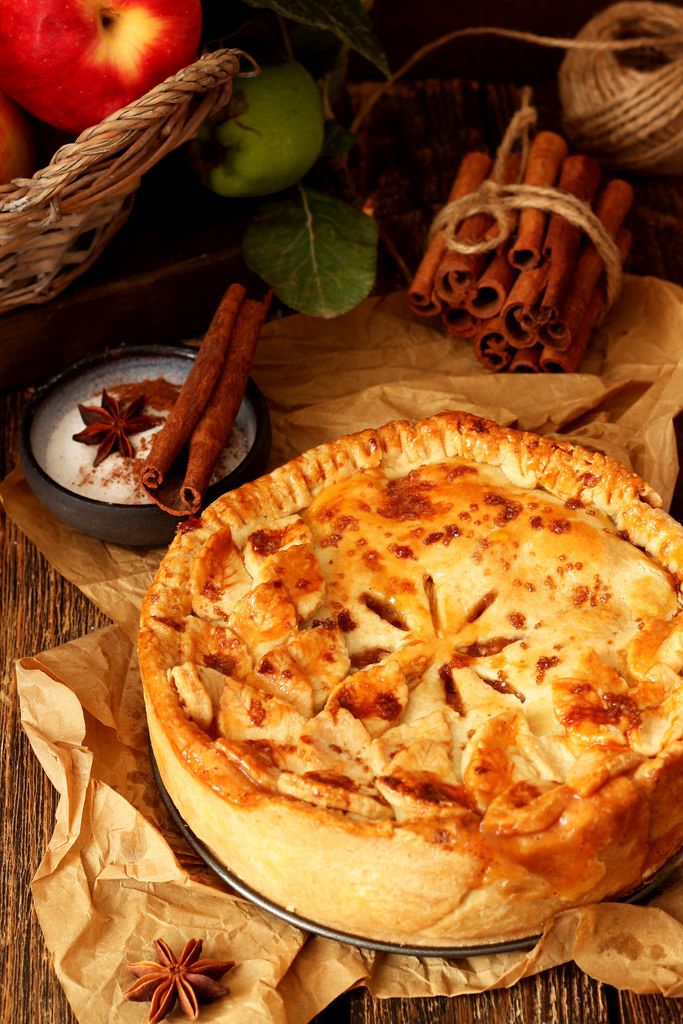
In the initial years of domestication, life in the kitchen revolved around one step meals. From casseroles to pasta and pie, homemade food was simple, basic and hassle free. One of the first recipes to attempt with the oven were the pie recipes, something that our grandmother used to to do on a weekend basis. Today with dessert pies being the classic in any restaurant, it makes for a welcome change from the usual simple desserts for the weekend lunch.

Interestingly the concept of pie making can be traced to as early as the Neolithic era of Egyptians. Pie essentially meant anything edible encased in a tough pastry shell mainly served as a baking dish, storage container or serving vessel, initially too hard to actually eat. As historical evidence points out, these early forms of pies are known as galettes, which essentially are rustic free-form pies. These pie-like treats were made with oat, wheat, rye or barley; then filled with honey and the dish was baked over hot coals. As Egyptian hieroglyphics and drawings show that the bakers to the pharaohs incorporated nuts, honey, and fruits in bread dough, a primitive form of pastry.

As the Greeks carried over the tradition of galettes; they had modified the pies during their period by making a flour-water paste wrapped around the meat, which served to cook the latter and seal their juices. When the Romans had conquered Greece, they had used various types of meat including oysters, mussels, lampreys, fish in every course of meal, sometimes even dessert . As written in the records of De Agricultura by the Roman Statesman Marcus Porcius Cato (234-149 B.C.), the recipe most popular during his era was known as the “Placenta” or “libum”. They were made more like a cheesecake, baked on or sometimes inside a pastry base, these were the initial pie/cake.

Through the gateways of the Roman cuisine, the trend of pie making made it’s inroads into the European cuisine, adapting itself to the local customs and imbibing itself with the traditional cuisine. The initial pies were known as “coffins” or “coffyns” (the word actually meant a basket or box). There were savory meat pies with the crusts or pastry being tall, straight-sided with sealed-on floors and lids. The open-crust pastry (no tops or lids) were known as “traps.” Holding an assortment of meat and sauce components, these pies were baked more like a modern casserole with the crust being the pan, its pastry tough and inedible. The crust was often made several inches thick to withstand many hours of baking. The initial pie prototypes were more savoury than sweet and were a mix of top-cased than open ones (known as tarts today). The sweet pies were more of the “tart” variety.

“Tak gode Applys and gode Spycis and Figys and reysons and Perys and wan they are wel brayed colourd wyth Safroun wel and do yt in a cofyn and do yt forth to bake wel.” (Recipe for apple tart, 1379) Source:The Forme of Cury, A Roll Of Ancient English Cookery, Compiled, about A.D. 1390, by the Master-Cooks of King Richard II.

As to the etymology of the word “pie”, the source may be traced to the magpie, a bird that was known for collecting odds and ends especially the shiny ones and storing them in it’s nest (visualize the similarity). Considering that the Medieval pies also contained many different animal meats including chickens, crows, pigeons and rabbits, the possibility rests on that similarity for the modern word of “pie”.

The modern pies are baked dish, with a pastry dough casing that completely contains a filling of various sweet or savoury ingredients and meant to be eaten. From sweet pies with fillings of fruit, nuts, brown sugar or sweetened vegetables like rhubarb or the savoury pies like the steak pie, Jamaican patty with plain meat, eggs and cheese (quiche) or a mix of the vegetables and meat (pot pie(, pies today are meant to be edible as a whole. And the crusty cover can be made from the typical shortcrust pastry meant for pies or even substituted by powdered biscuits, mashed potatoes, bread crumbs to give a soft or strong edible base or cover.

Modern pies carry a whole lot of tradition and history behind each dish typical of a particular cuisine. Knowing that and adding on to those ingredients, giving the pie making a special flavour and zing tot he final dish. After one of the best places to experiment, experience and recreate the flavours of history is the kitchen.

Posted in Food, Stories Around the World

From Spaghetti-o-iei’s

The noon drive from work during the last week day entitles picking up the kids from school. Once they are in the car, the ride then on is interspersed with narratives ranging from the classes, to “mom did you know that she/he” to playground falls, teacher praises, peer comments and the like. Among the narratives was their home science classes wherein the primary classes as well as kindergarten were taught about basic stuff like hand-washing, making cookies, tending the garden and sorting the recyclables. With detailed descriptions of how spaghetti was made in class, the three of us had trooped into the ice-cream parlour for the weekend scoop. Imagine to my surprise when the “today’s special” held the title “spaghettieis”. On clarification, the waitress told me that we serve ice cream only and spaghettieies was just noodle ice-cream.

Spaghettieis (German pronunciation: [ʃpaˈɡɛtiˌaɪs]) is a German ice cream dish made to look like a plate of spaghetti.

Created by Dario Fontanella, “spaghettieis” was a dish of vanilla ice cream extruded through a modified Spätzle press or potato ricer, giving it the appearance of spaghetti( late 1960s, Mannheim, Germany). The entire ice-cream spaghetti is then placed over whipped cream and topped with strawberry sauce (to simulate tomato sauce) with coconut flakes, grated almonds, or white chocolate shavings added over it (similar to the Parmesan cheese). Fontanella had served this innovative creation to tearful children and had received the Bloomaulorden, a medal bestowed by the city of Mannheim (2014).

As this innovation makes it’s rounds in popular gelaterias, ice cream parlours as well as special events; various variations have been experimented with. Popular among these simulations include the different flavours of the “ice-cream shaped like spaghetti” with dark chocolate ice cream, nuts, sprinkles, icing sugar and the like. To be a “spaghettiei” dessert, the simulation has to be one of the varied spaghetti versions like Spaghetti Carbonara, Spaghetti Bolognese, Spaghetti cacio e pepe (cheese and pepper) or the Spaghetti alle vongole appearance. With simple “mini-variations” a simple bowl of vanilla ice-cream can be turned into something decadent and delightfully elaborate but exquisite and simple.

Posted in Food, Stories Around the World

From Muffin to Cruffin

“You don’t get tired of muffins. But you don’t find inspiration in them.” George Bernard Shaw, Man and Superman

While the busy mornings may start off with a muffin, a regular dose of the latter may inspire a change from the regular. What happens when the dough of the muffin is not poured but moulded in with something different? Voila, then is the cruffin, the brainchild of Kate Reid of Lune Croissanterie in Melbourne (2013). The “cruffin” is a hybrid of the croissant and the muffin. The pastry is made by proofing, shaping the laminated dough which is then baked in a muffin mould.

Although the entire procedure may sound quite simple, the delight of the cruffin lies in the filling and the garnishing. From the double choclate chip to caramel flavoured choclate or salty flavoured cream or rich strawberry jam, cruffins can be filled with a variety of creams, jams, crème pâtissières, curds and garnished with slivered almonds, pine nuts, glazed cherries, candied fruits, honey, maple syrup and the like. The entire cruffin, though a bit messy, is worth the long queue at the bakery. As far s homemade baking is concerned, cruffins are perfect for weekend or holiday baking and as far as fillings are concerned, let the favourites rule.

Extrapolating the idea over to the other morning regular, the donut; adding a little spice by making the donut dough a bit more pastry like, the cronut was born. The cronut, a croissant-doughnut pastry was invented by pastry chef Dominique Ansel of Dominique Ansel Bakery based in New York City(2013).

Made from croissant-like dough which was filled with flavored cream and fried in grape seed oil, this pastry doughnut had caught the flavour and imagination across the globe. So much so that these cronuts with flavoured cream were listed as one of the best “extremely fun” inventions by TIME Magazine (2013).

With the cronut and the cruffin, various combinations like cookie shots, zonuts have been seen. For the home chef, whether it be the standard regular recipe or not, the kitchen is a place to mix and match. As for dessert lovers, the change of taste, flavours and art are what makes the tasty moments of the day.

Posted in Daily, Food, Stories Around the World

Madeleine for holidays

Entering into the last month of the year, the delight of enjoying the twilight mornings with the warm cup of tea in the bitter chill of the air, would be better with a little of the small crunchy or tiny delights to add to the tea. In fact with holidays round the corner, a regular stock of the ready homemade sweet dry desserts especially cakes, cookies and biscuits would come in handy.

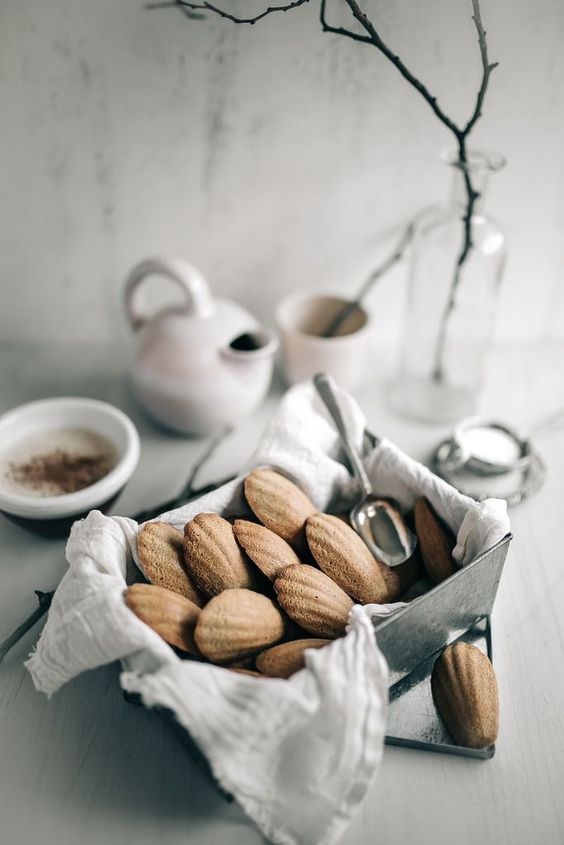
Among them are the treats of small sponge cakes with their distinctive shell-like shape, baked in pans and can be made with the basic ingredients. Known as the madeleine or petite madeleine, these traditional small cakes trace their origins to the Lorraine region in northeastern France. By legend these cakes have been there in the 17th century French cusine, although the increased use of metal moulds (18th century) had led to their increased use. By the end of the 19th century, the madeleine is considered a staple of the diet of the French bourgeoisie.

By etymology, the term madeleine describes “a small cake”. Made from génoise cake batter (with the suspended air in the mixed batter giving the volume to the cake) with traditional recipes adding on finely ground almonds, nuts or lemon zest for their special lemony flavour. In Britain, similar cakes are baked in dariole molds, they are coated in jam, desiccated coconut and topped with glacé cherry.

“On a pound of flour, you need a pound of butter, eight egg whites & yolks, three fourths of a pound of fine sugar, a half glass of water, a little grated lime, or preserved lemon rind minced very finely, orange blossom praliné; knead the whole together, & make little cakes, that you will serve iced with sugar.”
“Cakes à la Madeleine”. Menon, Les soupers de la Cour ou L’art de travailler toutes sortes d’aliments, p.282 (1755)

The madeleine has been mentioned by the culinary writers during the Napoleonic era, especially in the recipe books of Antonin Carême and Grimod de la Reynière. One record of the first recipe traces to the “cakes à la Madeleine and other small desserts” (1758) of a French retainer of an Irish Jacobite refugee, Lord Southwell. Tracing the roots of “Madeleine”, there are several interesting legends pertaining to the origin of the cake. While one considers the name centered from a female character of Lorraine, probably a chef with the patron being Paul de Gondi (17th century cardinal), owner of a castle in Commercy. Another legend consider the inventor to be Madeleine Paulmier, cook for Stanislaus I, duke of Lorraine and exiled King of Poland (18th century). As the legend goes, Louis XV (son-in-law of the duke) charmed by the little cakes prepared by Madeleine Paulmier (1755), named them after her and Maria Leszczyńska, his wife had introduced them soon afterward to the court in Versailles which soon became a favoured French recipe. Two legends link the cake with the pilgrimage to Compostela (Spain) where Madeleine, a pilgrim is said to have brought back the recipe from her voyage or a cook named Madeleine is said to have offered little cakes in the shape of a shell to the pilgrims passing through Lorraine. While another legend states that Madeleine was the creation from the kitchens of Prince Talleyrand by the pastry chef Jean Avice (19th century) who is said to have baked little cakes in Aspice moulds.

Not just in the kitchen, but Madeleine have made their significant impact in literature with Proust’s “episode of the madeleine” as an instance of involuntary memory in his book In Search of the Lost Time. Similar to the madeleine are the “financiers” or the Malaysian Bahulu. One of the benefits of getting down to making Madeleine for the holidays is the ease in its’ preparation, variability of ingredients as well as the versatility of it being a part of the small and the large holiday get-togethers. As for the simplicity in style, a little of “food art” will make the difference. Adding to the festive spirit, madeleine can indeed spice up the holiday season this year.