Posted in Daily, Food, Stories Around the World

“Canna” with the “petite duchesse”

Ever had “flashes of lighting” alongside “tubes of rich goodness” ? If the answer is in the negative or a query; with the month of June nearing to an end, it would be a good time to take up on the celebratory days of the éclair (choclate éclair, to be very specific, June 22nd) as well as the cannoli (June 16th), respectively. With the local deli’s and bakers’ going on full swing of celebratory discounts as well as interesting combinations to mark these days for foodists; delving a little bit into their food history would be quite interesting.

Originating from the 19th century France, also known as sweet baguette, an éclair was an oblong pastry made with choux dough filled with a cream and topped with chocolate icing. Typically piped into an oblong shape, the dough is baked until it becomes crisp and hollow within. When cooled, the pastry can be filled with a wide range of flavours, like vanilla, coffee or chocolate-flavoured custard (crème pâtissière), with whipped or chiboust cream and then iced with fondant icing. More exotic fillings include pistachio and rum flavoured custard, fruit-flavoured fillings or chestnut purée. If the icing is of caramel, the dessert is known as “a bâton de Jacob.”

Etymology speaking, the pastry title comes from French éclair “flash of lightning”, named so because it is eaten quickly (in a flash). Initially known as “pain à la Duchesse” or “petite duchesse” til the 1850. Towards the 1860s the word eclair took over, both in English and French. Historically the speculation was that this little delight was first made by Antonin Carême (1784–1833), the famous French chef of grande cuisine.

“Leave the gun. Take the cannolis.” Clemenza, in ‘The Godfather’

Moving across to the Sicilian and the Italian-American cuisine, delicate “tube-shaped shells of fried pastry dough”, usually with a sweet, creamy filling (most commonly containing ricotta) have been quite popular especially in the island of Sicily. Known as “cannoli”, they range from sizes of cannulicchi (smaller than finger sized) to the fist-sized proportions typically found south of Palermo, Sicily, in Piana degli Albanesi.

With its roots tracing back to the Middle Ages; this best known Sicilian pastry takes its’ name “cannolo (cannoli in English)” from the long tubular shape, as a diminutive of canna (a cane like reed) like sugar cane stalk. Back in the ninth centruy, Arabs had introduced sugar cane into the Sicilian cooking, thereby replacing honey as the sweetener of Sicilian confectionary to sugar. Similar desserts from the Middle East include Zainab’s fingers (filled with nuts) and qanawāt which were deep fried dough tubes filled with various sweets.

During the medieval years, the tubular shell shape was formed by rolling the paste into a flat, circular shape, then wrapping it around a sugar cane stalk. Legends abound but among them, most lead to the origin from western Sicily, probably in Palermo or nearby. Made often as a springtime item, most commonly associated when sheep produced more milk for ricotta around the Fat Tuesday (Carnevale).

Summer still going strong and picnics in full swing, for the first timers it would be a good time to experiment the sweet delicacies for a change. As for the kitchen experimenters and part time chefs, getting creative with homemade eclairs and cannoli would be a good change from the routine desserts.


Posted in Daily, Food, Stories Around the World

Of “Catchup” and Origins…

“Three tomatoes are walking down the street – a papa tomato, a mama tomato and a little baby tomato. Baby tomato starts lagging behind. Papa tomato get angry, goes over to Baby tomato and squishes him…..and says ‘Ketchup!”
-Uma Thurman in ‘Pulp Fiction’ (1994)

Sweet and tangy, often used as a condiment for the “hot or fried, greasy” dishes and at times, as an add on for dressings, sauces or flavouring for the main course dishes; “ketchup” or “catchup” has evolved into being almost a must in every household. In fact, to flavour the most mundane or for a quick scratch meal; ketchup is the answer. Little wonder then with hoards of “tomato sauce” enthusiasts around, a whole day has been dedicated as National Ketchup Day (June 5th).

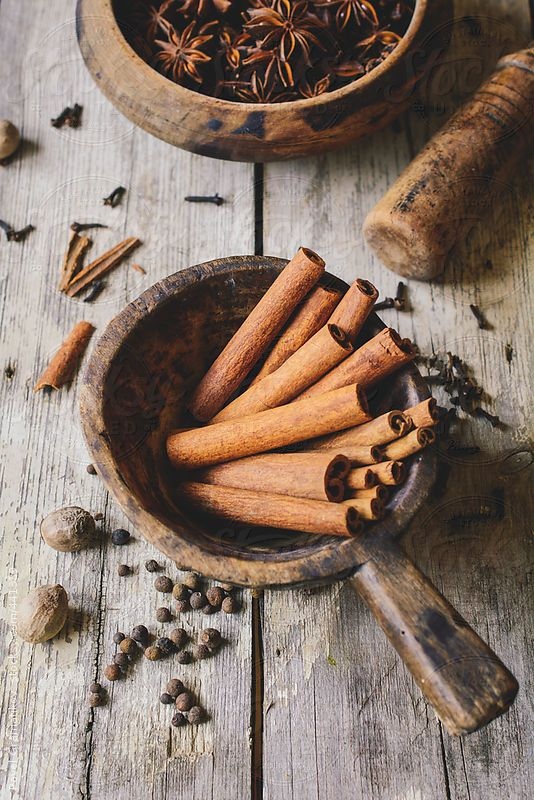
Typically made from tomatoes, sugar, vinegar, assorted seasonings and spices; this sauce had initial recipes of egg whites, mushrooms, oysters, mussels, or walnuts, among other ingredients. Some of these ingredients have been modified and labelled under other sauces; such that the term “ketchup” (earlier known as catsup, catchup, red sauce, ketsup) refers to the unmodified tomato ketchup (not the mushroom ketchup). While the specific spices and flavors may vary; most commonly include onions, allspice, coriander, cloves, cumin, garlic, mustard and sometimes celery, cinnamon or ginger.

“You know, you really can’t beat a household commodity – the ketchup bottle on the kitchen table.” Adlai Stevenson

Condiments and sauces have been an accompaniment for main course meals a s well as snacks from the very early days of civilizations. Delving into the origins and roots of “ketchup”, this concoction of the Orient had been passed on to the colonists. The 17th century Chinese cuisine included a concoction of pickled fish and spices; known as kôe-chiap (Amoy dialect) or kê-chiap meaning the brine of pickled fish (like salmon juice) or shellfish. Seen in the Malay States (Malaysia and Singapore) of early 18th century; as kicap or kecap (pronounced “kay-chap”) English colonists had first tasted it. The English settlers had taken it back with them, later to their American colonies. Over time “kecap” had evolved into catchup” or “ketchup”. From an etymological point of view, multiple competing theories offer explanations for the name “ketchup”, yet the most widely believed is the Malay or Chinese origin.

“I mix mayonnaise, ketchup and brandy and a little bit of mustard. This is a heck of a good sauce for seafood.” Jose Andres

Originally and historically, the initial preparations of the English ketchup had mushroom (sometimes even walnuts) rather than tomatoes as primary ingredient(1750 to 1850). While many variations of ketchup were created, the tomato-based version appeared a century later after other types. The early versions had anchovies placing its’ roots to fish-sauce ancestry. The mid-1850s saw anchovies being dropped from the ingredients.

Gather a gallon of fine, red, and full ripe tomatoes; mash them with one pound of salt.
Let them rest for three days, press off the juice, and to each quart add a quarter of a pound of anchovies, two ounces of shallots, and an ounce of ground black pepper.
Boil up together for half an hour, strain through a sieve, and put to it the following spices; a quarter of an ounce of mace, the same of allspice and ginger, half an ounce of nutmeg, a drachm of coriander seed, and half a drachm of cochineal.
Pound all together; let them simmer gently for twenty minutes, and strain through a bag: when cold, bottle it, adding to each bottle a wineglass of brandy. It will keep for seven years. – Recipe for “Tomato Catsup” from 1817
(Source: Wikipedia and Apicius Redivivus: Or, The Cook’s Oracle: Wherein Especially the Art of …)

“I can fry hollandaise, I can fry ketchup, I can fry mustard.” Wylie Dufresne

Besides the primary use as a condiment, add on to the marinade or to the minced mix as well as converting it sauces like brown ( barbeque) sauce, sweet and sour sauce or red remoulade; ketchup has its’ own special uses too.

  • Shine copper and silverware with ketchup, with the latter being a very effective cleaning agent. At times, mixing it with Worcestershire Sauce enhances the cleaning effect. Ketchup can be used to clean up the tarnish from the car parts, as well as a great agent to shine up alloy based metals; though it won’t clean up the dirt. The technique would be to first clean and remove the dirt, then use ketchup to add the shine.
  • To correct green highlights in bleached hair, ketchup can be used. Besides ketchup acts as a great conditioner, bringing back the natural oils into the hair.
  • Last but the most creative use of ketchup is its’ use as fake theatrical blood. Additionally ketchup as well as its’ bottle acts as a great base for food based paints and dyes for “toddler art and paint fun”.

With more than the “food” factor for ketchup, this condiment will continue to remain as an essential part of the pantry and the household, whatever may come.  For every food experimenter, getting creative and adding a bit of sweet, sour and tangy flavours to the routine recipes can lead to entertaining and surprising new flavours, combinations as well as artistic renderings ( like Eureka!!).  


Posted in Daily, Food, Musique, Stories Around the World

“Rocky Road” When On the Go

“I am not plain, or average or – God forbid – vanilla. I am peanut butter rocky road with multicolored sprinkles, hot fudge and a cherry on top.” Wendy Mass

Imagine a sewing scissors, ice cream and the whole house to oneself. As per one source, when William Dreyer of Oakland, California ( March 1929) had eyed these items on a spring day; he had cut up some walnuts and marshmallows and added them to his chocolate ice cream; similar to his friend Joseph Edy’s chocolate candy creation with walnuts and marshmallows. Later walnuts were replaced by pieces of toasted almonds. Variations of this combination with add on of nuts, whole or diced and even flavoured marshmallows with chocolate ice cream ( no choclate chips in the original one) had led to the creation of “rocky road ice cream”.

Post the era of the Wall Street Crash of 1929, Dreyer and Edy gave the flavor its current name “to give folks something to smile about in the midst of the Great Depression.” Another claim to this creation was by Fentons Creamery, Oakland who stated that Dreyer based his recipe on a Rocky Road-style ice cream flavor invented there by George Farren. The latter had blended his own Rocky Road-style candy bar into ice cream which Dreyer had modified.

“I hope your only rocky road is chocolate.” Amanda Mosher

While in Australia (1853), the “rocky road” was created. Rocky road was a type of cake made up of milk chocolate and marshmallow which is usually served in individual portions such as a cupcake or brownie. With exact origins debatable, the rocky road was created as a way to sell confectionery which had lost it’s flavour during the long trip from Europe and was mixed with locally-grown nuts and cheap chocolate to enhance the taste. As per this account, the name “rocky road” comes from the rocky road that travelers had to take to reach the gold fields. Although, many companies based in the Americas have laid claim to this creation as well.

Rocky road has it’s own variations as per the local flavour. With the traditional Australian rocky road being made of glace cherries, milk chocolate (sometimes dark or white chocolate), desiccated coconut, nuts (mostly peanuts) and marshmallow; Bahrain’s rocky road has milk chocolate, Nutella and pistachios. Moving west ward bound, the traditional British Rocky Road (1971) contains dried fruit, biscuit, milk chocolate ( rarely substituted by dark or white chocolate) with a light dusting of icing sugar over it.

Regardless of the type of Rocky road, whether as store bought or homemade cake, brownies, ice cream or served as topping over coffee, hot chocolate, sundaes or other sweet combinations; missing out on this delight before the summer comes to an end would be sinful. With foodimentarians celebrating tomorrow as National Rocky Road Day ( June 2nd); it would be fun, creative as well as a palatal delight to indulge in this delectable dessert for a change.

“I hear those ice cream bells and I start to drool,
Keep a couple quarts in my locker at school
Yeah, but chocolate’s gettin’ old,
And vanilla just leaves me cold,
There’s just one flavor good enough for me, yeah me,
Don’t gimme no crummy taste spoon, I know what I need, baby
I love rocky road,
So won’t you go and buy a half gallon baby
I love rocky road,
So have another triple scoop with me, OW!”

Lyrics of “I Love Rocky Road” by “Weird Al” Yankovic (1983)

Posted in Food, Life, Quotes, Reflections

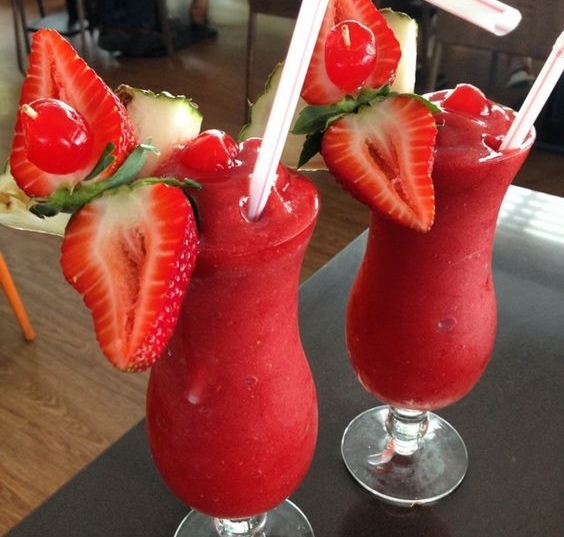
Slices of “Strawberry” Summer

“Happiness, I have grasped, is a destination, like strawberry fields. Once you find the way in, there you are, and you’ll never feel low again.” Rachel Simon

With the scent of summer still in the air, one wouldn’t miss the scent of wild strawberries in the fields. With lazy weekends beckoning a walk, it would be a perfect time for some family bonding as well as strawberry picking.

“You can pick wild strawberries with your eyes closed, locating them by smell, for they are two parts perfume to one part taste. An hour of searching might yield a handful if you’re lucky. Wild strawberries can’t be encouraged, nor can they be discouraged: They come to you unbidden and unearned. They appear, or do not, by the grace of the sun.” Hope Jahren

During this impromptu excursion, certain moments get engraved silently in the mind. The rapid passing of time, children growing up fast as well as hectic weeks leaving very less time to unwind, converse as well as simply relax; all highlight the significance in shutting down the media and heading back to nature.

“Each moment is just what it is. It might be the only moment of our life; it might be the only strawberry we’ll ever eat. We could get depressed about it, or we could finally appreciate it and delight in the preciousness of every single moment of our life.” Pema Chodron

With plenty of fresh strawberries to go around, it would be fun to go artsy, creative and add some sweetness to the regular meals as well as desserts. Browsing through the old recipes and brushing them with some “taste of summer” would make the strawberries as well as moments and memories to capture for the later years.

“As our lives speed up more and more, so do our children’s. We forget and thus they forget that there is nothing more important than the present moment. We forget and thus they forget to relax, to find spiritual solitude, to let go of the past, to quiet ambition, to fully enjoy the eating of a strawberry, the scent of a rose, the touch of a hand on a cheek…” Michael Gurian

“It is the sweet, simple things of life which are the real ones after all.” — Laura Ingalls Wilder