Posted in Daily, Food, Musique, Stories Around the World

Evolution of the “Accidental Fudge”

“Sandra turned to the page with the title “Toklas’ Hashich Fudge.” The original hashish brownies. ‘Peppercorns, nutmeg, cinnamon, coriander, stone dates, dried figs, shelled almonds, peanuts,… A bunch of canibus sativa can be pulverized. This along with the spices should be dusted over the mixed fruit and nuts… it should be eaten with care. Two pieces are quite sufficient…” – Allegra Goodman, The Cookbook Collector

Like most of the “delectable sweet pleasures of the palate “, this sugar candy made flavoured with choclate, fruits, nuts and other flavours; had hot or cold has made its’ own mark in the sweet world. These days, various flavours of “fudge” are made, giving them a vibrant as well as visual appeal to the eyes and the palate.

Technically, fudge is made by mixing sugar, butter and milk, heating it to the soft-ball stage and then beating the mixture while it cools down to get a smooth, creamy consistency with fruits, nuts, chocolate, caramel, candies and other flavoring agents being added either inside or on top. Yet the true origins of “fudge” can’t be exactly traced, though it’s believed to have been originated and gained popularity in late 19th century America. However popular belief among food historians was that the first batch was an accidental “fudged” batch of caramels; hence the name “fudge”.


A letter in the archives of Vasser College (1921) written by Emelyn Battersby Hartridge reveals the first documentation of “fudge”. Emelyn wrote that her schoolmate’s cousin made fudge in Baltimore (1886) and sold it for 40 cents a pound. This was the first known sale of fudge. In 1888, Miss Hartridge asked for the fudge recipe, and made 30 pounds of fudge for the Vassar Senior Auction. The recipe was very popular at the school from that point forward. The diary of another student mentions making “fudges” in 1892.

What is it that we love the best,
Of all the candies east or west,
Although to make them is a pest?
Fudges. **


An 1893 letter from another Vassar College student describes “fudges” as containing sugar, chocolate, milk and butter. “Fudges at Vassar” was a recipe printed in The Sun (1895) describing the confections as “Vassar chocolates”, which comprises of sugar, milk, butter and vanilla extract. Fudge became a new confection after word spread to other women’s colleges of the tasty delight. Later, Smith and Wellesley schools each developed their own recipe for fudge. Later fudge-making evolved a variety of flavors and additives as it grew beyond its popularity at colleges.

What perches us upon a chair
To stir a sauce-pan held in air,
Which, tipping, pours upon our hair —
Fudges. **

While the first recipe specified butter, milk and sugar, today, American fudge often differs with whipped cream instead of butter and the addition of chocolate flavouring. There are different types of similar recipes to “fudge” across the globe with the Indian “Barfi”, Polish “Krówki” ( Polish fudge, semi-soft milk toffee candies), the Italian “Penuche” which is a fudge-like candy made from brown sugar, butter, milk and vanilla flavouring; as well as the Scottish “Tablet” (taiblet in Scots). Tablet is a medium-hard, sugary confection made from sugar, condensed milk and butter, brought boiled to a soft-ball stage and allowed to crystallise. It is often flavoured with vanilla or whisky, and sometimes has nut pieces in it.

The versatility of fudge is that it can be had alone cold, or served on top of sundaes,  ice cream and even cakes as hot fudge. With various assortment, variety and fun in the process of fudge making; little wonder then that “a set of ditties”  (**) were made by the college girls during and for the “fudge making process”. On the occasion of National Fudge Day (June 16th), it would be time for some fun, rhymes and sweet cooking for all the “home kitchen chefs” or tasting for the food connoisseurs.

What needs more stirring than oat-mush,
And more still when we’re in a rush,
But what’s e’en sweeter than a “crush”?
Fudges.

What subtle odor doth recall,
To artless minds that “long-owed call,”
On the sweet maiden up the hall?
Fudges. **


Posted in Daily, Food

Of “Burger” and Origins

“Fashion is like food! Some people like sushi, others think hamburgers are divine! People like different things!” Michael Kors

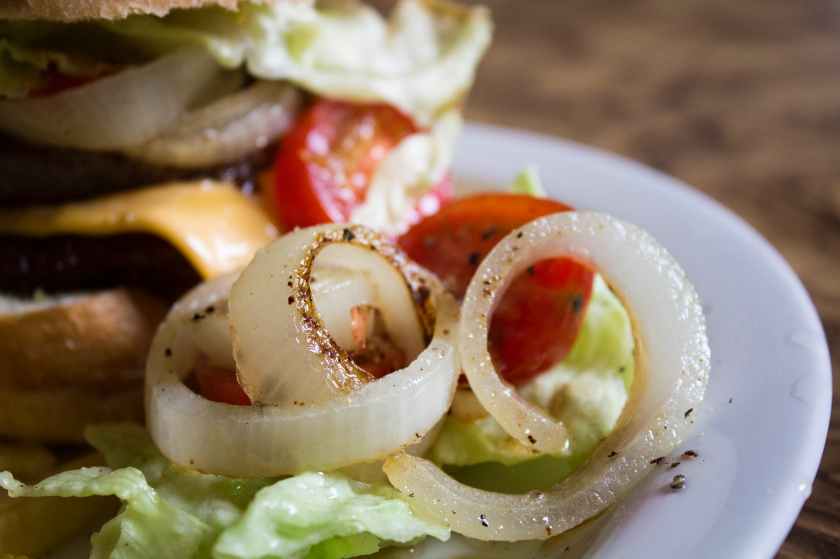
One of the most popular comfort foods, snack foods or a complete meal to splurge occasionally, or for fun and festive, is the hamburger or burger. Essentially a sandwich consisting of one or more cooked patties (pan fried, grilled or flame broiled) of meat placed inside a sliced bread roll or bun and often served with cheese, lettuce, tomato, onion, pickles and other adds ons, as well as condiments like ketchup, mayonnaise, mustard, relish, or “special sauce”, these sandwiches or “burgers” have stormed the food industry ever since their introduction. While today, the patties can range from meat, fish, egg or vegan; hamburgers or burgers have evolved from being that of fast food joints or the regular diners to specialty or high end restaurants. Like all sandwiches, its’ what goes in and the entire taste and texture that counts.

“It requires a certain kind of mind to see beauty in a hamburger bun.” ~ Ray Kroc


Although the term, “hamburger” is originally derived from Hamburg, Germany’s second-largest city; its’ origins have been subject to much dispute, claim and uncertainty. Before the “disputed invention” of the hamburger in the United States, similar foods already existed in the culinary tradition of Europe. As recorded in The Apicius cookbook, a collection of ancient Roman recipes that may date to the early 4th century, “isicia omentata” preparation is detailed as a baked patty in which meat is mixed with pine kernels, black and green peppercorns, and white wine, considered to be the earliest precursor to the hamburger. Later on with various conquests, civilizations and trade, similar recipes were made with various varieties of the meat available then, like the “steak tartare” made of minced horse-meat of the 12th century.

The evolution of the name “Hamburg” came as the town was known for its’ ports famous for trade with the “New World” as well as then ” Old Europe”. With immigrants reminiscing about home, various dishes made with steak came to known with the name “Hamburg” added along side the dish name on the various menus especially when at sea or the ports, like the Hamburg-style American fillet.


However the exact origin of the hamburger may never be known with any certainty. While most historians believe it was invented by a cook who placed a Hamburg steak between two slices of bread in a small town in Texas; few others credit the founder of White Castle for developing the “Hamburger Sandwich.” With records being scarce, the stories and claims still remain as “legends”. With most claims for the invention occurring towards the early 19th century, common factors include large crowds like fairs, festivals, amusement parks as well as street vendors, who for simplicity, ease and increased sales had placed the steak between two buns filed with few vegetables to get the taste and the sales” going.

Yet by whichever origin, the “burgers” have been evolved across the globe adapting to the taste, local ingredients, culture and essence of the locality like the Vietnamese rice-burger. Varied experimentation with the ingredients can be made with ease, to give rise to a style or art with home cooking the “burgers” especially on the International Burger Day (May 28th). Depending on the mood or scene, from barbecues to cook-outs various combinations can be made, traded and shared with fun memories to treasure. Or one can ordering the good old regular “burger” for not just satisfying the hunger pangs but also for comfort in the memories of the good old times. As the old saying goes, “moderation is the key to having fun while eating”.


Posted in Daily, Food

Hummus: From “Then” to “Now”

From parties to the routine meals or for the dieters as well as snack food for the cravings time after work or before the ” big meal”, this dip has been popular across the world. Little wonder then that with International Hummus Day ( May 13th) gone by, one mayn’t know enough about this dip.

Known as “Hummus” or “hummus bi tahini”, this Levantine dip or spread, is made from cooked or mashed chickpeas or other beans, blended with tahini, olive oil, lemon juice, salt and garlic. The word “Hummus” comes from the Arabic word meaning “chickpeas”. However likely from the Greek origins, hummus a part of the local cuisine in both Turkish Cypriot and Greek Cypriot communities, it is known as “humoi” . While originally placed in the Middle East and Mediterranean cuisine, today it has been featured in many local cuisine and recipes around the globe.

While there are a number of different theories and claims of origins in various parts of the Middle East and the Mediterranean, there is insufficient evidence to determine the exact or precise details. The basic ingredients of chickpeas, sesame, lemon, and garlic have been combined and eaten in their local cuisine over centuries. While some food historians believe that variations of this recipe were there during the ancient Egyptian civilizations where then chickpeas were widely eaten as cooked in stews and other hot dishes; they had also been a part of the Greek cuisine and cooking. However records of pureed chickpeas eaten cold with tahini do not appear before the Abbasid period in Egypt and the Levant.

Cookbooks of 13th century Cairo record recipes for dish resembling hummus bi tahina; like the recipe of a cold puree of chickpeas with vinegar and pickled lemons with herbs, spices, and oil, but no tahini or garlic.  Over the years variations exists in the amount of ingredients of the beans, chickpeas pureed as well as mixing of vinegar or olive oil, tahini as well as different spices, herbs or nuts, with or without garlic; made or served by rolling it out and letting it sit overnight. With trade playing a significant role in the spread and share of cuisines, hummus may be one among the numerous foods that had crossed over during the historical periods across the Middle East and the Mediterranean.

Being used as an appetizer or dip, or served with meals; hummus can be had in an numerous ways. It can be scooped with flatbread, such as pita or served as part of a meze (selection of appetizers) or as an accompaniment to falafel, grilled chicken, fish or eggplant as well as with tortilla chips or crackers. Hummus can be garnished with numerous available ingredients like chopped tomato, cucumber, coriander, parsley, caramelized onions, sautéed mushrooms, whole chickpeas, olive oil, hard-boiled eggs, paprika, sumac, olives, pickles and pine nuts. It can also be topped by a mixture of fava beans or can be made with yogurt, butter and topped with pieces of toasted bread ( Jordan and Palestine areas).

There are many variations to the preparation of “hummus” with the various changes of civilizations, culture mixing as well as immigration. Variations like hummus with fried eggplant and boiled eggs, as a chickpea soup or hummus with traditional skhug hot sauce to name a few, are popular in their locale areas. Of recent, African cuisine have brought specialties such as Sudanese Hummus Darfur with eggs, tomatoes, and grated cheese. Many restaurants offer varieties of warm hummus which may be served as chick peas softened with baking soda along with garlic, olive oil, cumin and tahini or as “msabbaha” made of whole chick peas garnishing the tahini (lemon spiked) with a drizzle of olive oil and sprinkling of paprika.

With hummus being gluten free, nut-free, dairy free as well as a perfect spread or dip for snacks, fresh fruits, bread, meat, pita chips and the like; it has gained widespread acceptance across many cultures and cuisines as well for the weight watchers, medical reasons or just for its’ own unique taste and blend. Making hummus isn’t just a work of ingredients but also of art and creativity. With its’ quick and easy preparation with locally available ingredients; “hummus” is something that everyone should try at least once in a lifetime.

Posted in Daily, Family and Society, Food

“Food Fun”: Mix , Match and Experiment

“One cannot think well, love well, sleep well, if one has not dined well.”  Virginia Woolf

Imagine a menu planned by kids. This was one of the tasks allotted to my child in his kindergarten class. On first hearing this; for all parents, this plan may set off alarm bells of the aftermath of a mass gastric upsets, whereas secretly many among us crave these foods on certain or many occasions. 


Imagine a list that ranges from Cheetos to ice cream, pancakes, sandwiches and all the sweet as well as the “street food” in the world. While this may sound too good to be true, some of these combinations though weird actually taste good.

Oreos and Orange Juice
Frosted Flakes and Cheese
Soya Sauce on Ice Cream
Apples with Salt, Pepper and Chilli Flakes
Cake of “Banana Pancakes with Nutella, Cream and Honey”
Avocados and Chocolate
Peanut Butter and Pickle Sandwiches
Bananas on Cheese Toastie
Butter and Sugar Sandwiches
Peanut Butter in Burgers
Rice and Ketchup
Grape Jelly on Scrambled Eggs or Omelettes ..and the list goes on, up to one’s choice of taste, artistic eye and palatable combinations.


Though everyday food involves eating healthy as well enjoying food that we love guilt free, the daily meals get a bit of livening up when we get free with the mix and match, go creative as well as enjoy surprising the taste senses.
With “Eat What You Want Day” (May 11th) is being celebrated today, which was initially started to enjoy a guilt free “indulge in your favourite food” day; this is one of the best days to try weird combinations or have breakfast for dinner, break the routine and let the young ones plan one meal for the day (few of us can tolerate Doritos, pizza and ice cream only to an extent).

Whether one wants to have sweet or sour, or indulge in the “mood for something different to taste” for the day; having fun while eating is the first along with being healthy, wise, happy and creative too.


Posted in Daily, Food

Of Pretzels, Origin and Evolution

When facing an unexpected situation, the first emotion that one comes across is the “feeling of something happening, of being twisted and knotted” or the most popular feeling of “butterflies in the stomach”. With the month of April drawing to a close, it would be remiss if one would miss this month of “poetry, jazz, soft pretzels and humour” without experiencing the feeling of being in “pretzels”.

Originating in Europe, possible among the monks of the Middle Ages, “pretzel” were baked bread products made from dough, commonly shaped twisted into a knot. With the traditional pretzel in distinctive non-symmetrical loops; the modern pretzels comes in a varied range of shapes with exotic and common seasonings like chocolate, glazed, with nuts, seeds or with the flavours of several varieties of cheese. Today pretzels can be had “soft”, eaten shortly after preparation or “hard-baked” with a long shelf life.

“My mother always said, ‘When you’re eating pretzels, chew before you swallow’. Always listen to your mother.” George W. Bush

The true origin of pretzels have been traced to numerous accounts, though not verified. From the very early Italian monks making pretzels as rewards to children who learn their prayers or as a derivation of communion bread. In Germany, legends state that pretzels were the invention of desperate bakers held hostage by local dignitaries whereas, other legends elsewhere believe that pretzels were substitute for the heathen baking traditions of “sun cross” and the like.

Either way, the popularity of pretzels in the early years where evidenced as their use as an emblem by the various baker guilds. With the “knot of the pretzel” believed to be hands folded in prayer, pretzels had a religious significance in the Church based on their ingredients and shape. Additionally the three holes of the pretzels signified the Holy Trinity. As pretzels could be made by simply using flour and water (no eggs or lard were permitted during Lent); they provided a proper substitute during the Lent. Over the years, no Lent or Easter would be complete without pretzels, with them being sometimes substituted as Easter eggs. (https://tasty.co/recipe/homemade-soft-pretzels)

“Between evening and bedtime, Night is on the prowl for pretzels….” Rajat Kanti Chakrabarty

Despite the insignificant size and knotted shape, pretzels have an extensive influence on landscape architecture and sculpture (Pretzel Park, Philadelphia), in culture (pretzel dance move in swing dancing), furniture design inspired pretzel chairs and adoption of “pretzel logo” by Municipal government of City of Freeport, Illinois. Fashion, photography and the entertainment industry too have adapted the “pretzel” in a variety of styles, ranging from clothing to ecosystem techniques as well being a part of the literature, poetry and music. Although pretzels are no longer in fashion like the initial days, looks like they will still be around.

Posted in Daily, Food

Learning the “Animal Cracker’s” Way

Eyes closed with eagerness, a tiny little hand dives into a box. Grabbing one bit and clenching the fist so as not to lose that precious little thing, the little hand comes out and palm up, its’ a bear. With a gleeful shout, that little bear is raised up and chomped down. And the hunt for the next “animal cracker” begins.

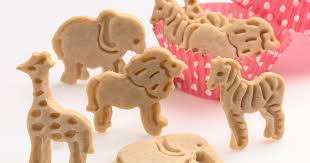
Almost every childhood has been marked by animal crackers or cookies and milk. These particular type of small cookies have been baked in the shape of animals ( zoo or circus), slightly sweet, made by a single layered dough like crackers.

Although the initial varieties were light coloured and slightly sweet; today darker chocolate flavoured or coloured frosted variants have made their way into the supermarket shelves. From the initial “Stauffer’s Biscuit Company produced animal crackers and Nabisco’s “Barnum’s Animals”, today other animal shaped crackers or cookies have gained popularity like Teddy Grahams, Goldfish, Hello Panda and Koala’s March. These differ from traditional animal crackers in flavor and assortment.

“Animal crackers, and cocoa to drink
That is the finest of suppers, I think
When I’m grown up and can have what I please,
I think I shall always insist upon these.”
-Christopher Morley (Founder of ‘Saturday Review’, 1924-1941)

Around 6th to 7th century, the custom of shaping cookies to resemble animals began from the Yule Tribe. During their times, it was common to sacrifice animals to the gods during the Julfest ceremonies, in hope that such offerings would bring a mild winter and an early spring. As the poor people couldn’t afford to kill any of their animals, they gave token sacrifices in the form of animal-shaped breads and cookies. Over the years, animal crackers became household or local bakery goods.

Yet the crisp animal crackers came from the 19th century Victorian England as attractive cookies or biscuits. The “crisp biscuits” (sweet and cookie-like biscuit) were very popular and the English called the ones that shaped like animals “Animals”. During the late 19th century, these “Animals” were imported from England to the United States. Due to their local popularity and high demand, local manufacture also began their own “Animals” making business. American businesses like Stauffer’s Biscuit Company, which still exists today, made their first animal crackers in 1871 York, Pennsylvania.

Around 1889 in England, animal crackers were manufactured as marketing promotions for popular entertainment, P.T. Barnum’s Circus. In 1902 animal cracker boxes designed for “Barnum’s Animals” (became “Barnum’s Animal Crackers” in 1948) were also designed for the Christmas season. The initial cracker boxes had a piece of string to hang them from the Christmas Trees as ornaments.

Almost 54 different animals crackers’ have been created in total, with 37 different animals have been featured into Animal Crackers ( Nabisco’s Barnum’s). The only ones survived the entire lifetime of the product are bears, elephants, lions and tigers. Interestingly among all their “cracker animals”, it’s only the monkey that wears pants. Also rabbits have never been a part of them even today (unlike portrayed in the Shirley Temple Song of 1935). Commemorating the 100th anniversary of Animal Crackers, the “name-our-next animal” contest in 2002 saw the koala bear became the latest addition by beating out the penguin, walrus and cobra in the customer survey.

Thus on National Animal Cracker Day (April 18th) it would remiss not to include the animal crackers on the menu. The range is varied from mini-sized treats to additions into soups, crunchy salads or even with ice-cream, fruit salads, custards or just with tea, having them the old, simple way. For a break from the “adult-life” going back into the childhood treats can be good physical and mental “calorie” breaks.

“Animal crackers in my soup Monkeys and rabbits loop the loop Gosh oh gee but I have fun Swallowing animals one by one In every bowl of soup I see Lions and Tigers watching me I make ’em jump right through a hoop Those animal crackers in my soup When I get hold of the big bad wolf I just push him under to drown Then I bite him in a million bits And I gobble him right down When their inside me where it’s dark I walk around like Noah’s ark I stuff my tummy like a goop With animal crackers in my soup.” Shirley Temple

Posted in Daily, Food

“Cobble” it Together

“Cherry cobbler is shortcake with a soul.” Edna Ferber

With summer round the corner and plenty of fruits to go around, desserts are always the reason why the meal gets completed in the twinkling of an eye, especially for the children. Even with the lack of time or frozen products over, dessert can be done soon, especially when bits of fruit over biscuit dough, batter or dumpling are baked to give the warm “cobbler” feel of the spring and summer skies.

Believed to have originated from the archaic word “cobeler” (recorded from 1859) meaning wooden bowl, cobblers were essentially a byproduct of the early years of European settlement in the Americas, especially by the English and the Dutch. They had initially emerged as a makeshift version of the popular pie recipes as a trail-modified desert.

“My earliest memory is making peach cobbler with my grandmother. A wonderful memory. I grew up in a restaurant family – B.B.Q. restaurant.” Rick Bayless

Unable to make the traditional puddings or pies, due to lack of ingredients or equipment as the settlers moves westward, modifications were made to the original methods. Consequently various ingredients were “cobbled together” with the available fruit, more common as peaches, plum or cherries, which were dried, preserved or canned, leavened dough (using baking powder) and an open fire. The initial cobbler were being made with a covered stewed filling with a layer of uncooked plain biscuits or dumplings, fitted together.

“Chocolate’s okay, but I prefer a really intense fruit taste. You know when a peach is absolutely perfect… it’s sublime. I’d like to capture that and then use it in a dessert.” Kathy Mattea

Cobblers were meant to be more palatable and sweet than pretty. Fruit, however it came, was dumped into a Dutch oven, topped with globs of biscuit dough and baked over an open fire until golden brown. Soon cobblers were quickly integrated into the settler diet, with the sweet dish being eaten for breakfast, as first course or as a main dish. Towards the late 19th century, the cobbler was officially labeled as a dessert.

“My earliest memory is making peach cobbler with my grandmother. A wonderful memory. I grew up in a restaurant family – B.B.Q. restaurant.” Rick Bayless

With modern technology of preservation, trade and transport; cobblers today have been vastly modified to include many fruit varieties including raspberries, blackberries as well being topped with cinnamon or vanilla essence, adding colours and flavours to the original version. Variants like grunts, pandowdy and slumps are Canadian Maritimes and New England varieties of cobbler are labelled when they are typically cooked on the stove-top or in an iron skillet or pan, with the dough on top in the shape of dumplings. The name originates from the grunting sound they make while cooking. Other popular variants include the apple pan dowdy (an apple cobbler whose crust has been broken and perhaps stirred back into the filling), the Betty or Brown Betty ( made with breadcrumbs or bread pieces or graham cracker crumbs and fruit, usually diced apples, in alternating layers, baked covered with a consistency of bread pudding) and the buckle (made with yellow batter like cake batter with the filling mixed in with the batter) among many others.

On the other hand, the scone-topped cobbler predominates in the UK where they are made both as sweet or savoury. While the common sweet fillings include apple, blackberry or peach; the savoury ones consists of beef, lamb or mutton as a casserole filling, sometimes with a simple ring of cobbles around the edge, rather than a complete layer, to aid cooking of the meat. The savoury versions may be topped with cheese or herb scones.

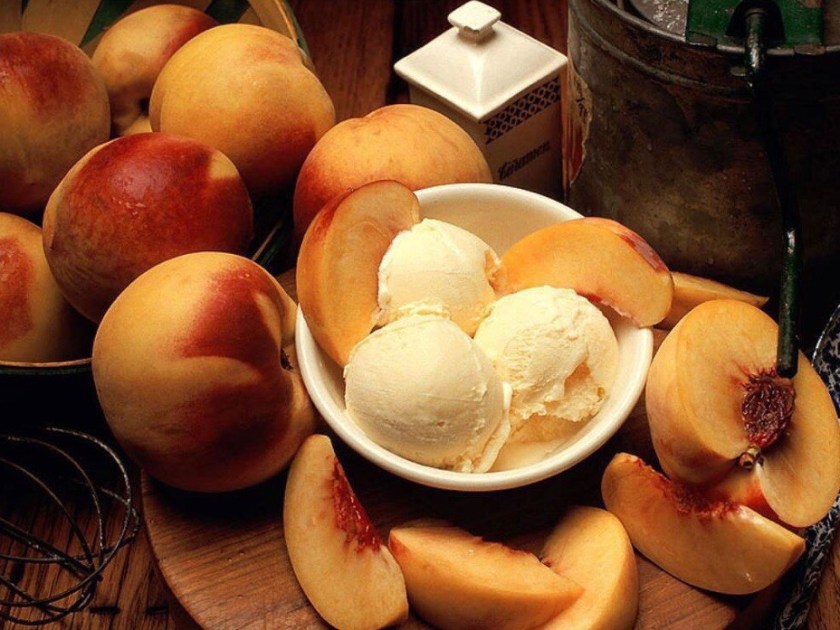
Over the years, cobblers have remained popular especially as they were quick to make for the luncheons and brunches. Little wonder then that the Georgia Peach Council declared April 13th National Peach Cobbler Day. Taking a bite of the rosy fruit cradled in warm pillows of cinnamon-scented dough and blanketed with the melted vanilla ice cream brings rich splendor to the senses, giving warmth and happiness all the way. For all the foodists at heart, have a little bite of cobbler to revel in the taste of sunny skies and warm sunshine.

“There are a couple of different types of food I eat a lot. I was raised in the South, in Tennessee, so I’m going to go with comfort food, soul food. I would probably start with collard greens and candied baby carrots and then have some biscuits and white gravy – and for dessert, probably blackberry cobbler.” Megan Fox