
Posted in Daily, Food

Of Macaron and Macaroon

“Orange pekoe flavor, with that gold confection dust on the top.” She holds one up to demonstrate. “Mascarpone filling.” She bites it clean in half and shows me the middle. “Rose jelly in the center.”
“Sounds good to me. What shall we call it?”
“I don’t know.”
I reach over and pick up a macaron, the texture, weight, and balance all perfect. Symmetry, lightness, both shells with excellent feet, wedded together with a smooth filling. Nodding with approval, I place it on my tongue. She is right; the orange and rose flavors melt lustily in your mouth. It’s just like Mama- all bright and full of surprises.” – Hannah Tunnicliffe, The Color of Tea

Known as “macaron” or “French macaroon”, this sweet meringue-based confection is made with egg white, icing sugar, granulated sugar, almond powder or ground almond and food coloring. Typically served with a ganache, buttercream or jam filling sandwiched between two such cookies (similar to a sandwich cookie), macarons have been one of the little delights gaining wide popularity globally. Mildly moist, melting when eaten; this confection is characterized by a smooth squared top, a ruffled circumference, referred to as the “crown” (or “foot” or “pied”) and a flat base. Macarons can be made in a wide variety of flavors that range from the traditional vanilla, raspberry, chocolate to the unusual flavours of foie gras, matcha and so on. There is some variation in whether the term macaron or macaroon is used, and the related coconut macaroon is often confused with the macaron.


Macarons are a little different from macaroons, wherein both start off with a base of egg whites and sugar. But macaroons are with the base is typically whipped into a stiff meringue , like meringue cookies. Whereas, for macarons after the meringue is whipped, a combination of powdered sugar and finely ground almonds gets folded in, not too much or too little. The resulting semi-liquid batter is piped into exact rounds and baked.

The origin of the macarons are quite debatable. Although macarons today are credited to France, the first known appearance of the macaron in Europe was believed to be back in the Middle Ages. In those times, the macaron was a small sweet made of almonds, egg white and sugar, crunchy on the outside and soft on the inside. As some food historians believe that, these “macarons” were initially made in Italy as a consequence of the Arab troops from modern Tunisia ( around 9th century AD), landing in Sicily. They had brought new foods along with them like lemons, rice, pistachios as well as a rich repertoire of nut-based sweets like almond paste candies wrapped in dough. In fact, the term “macaron” shares similarity to the Italian macaroni, which puts a shadow of doubt over it being a French creation.


Since the 8th century, Macarons have been produced in the Venetian monasteries. Yet they gained wide popularity in the French court, when the Italian pastry chef who were brought by Catherine de’ Medici when she had married King Henry II of France, during the Renaissance Era. During those years of the 16th century, macarons were known as ‘priest’s bellybuttons,’ due to the pastry’s shape. Yet as per Larousse Gastronomique, the macaron was created in 1791 in a convent near Cormery. Legend says that two Carmelite nuns, seeking asylum in Nancy during the French Revolution (1792), baked and sold the macaron cookies in order to pay for their housing. Later these nuns were known as the “Macaron Sisters”. These early years saw macarons being served without special flavors or fillings.

Towards the early 1990s, the modern day macarons had began to take shape. Largely credited to Pierre Desfontaines, the pastry chef and owner of the Parisian café, Ladurée; the modern day macaron was made when he had decided to take two macarons and fill them with ganache. The result was an instant success. These original “Gerbet” or “Paris Macaron” were composed of two almond meringue discs filled with a layer of buttercream, jam, or ganache filling. Similar styles were also claimed to be started by another baker, Claude Gerbet.

By the 1930s, macarons were served in two’s with the addition of jams, liqueurs, and spices. Since then macarons have evolved from a humble almond cookie to a versatile treat, coming in a variety of colours and flavours; alluring both to the taste buds, the experimenters’ kitchen as well as the creative mind. Towards the 21st century, confectioners started offering macarons with a difference in flavor between filling and cookie, in both savoury (Basil mint or Thai curry) and sweet styles. Little wonder that there are two days devoted to macarons with Macaron Day (March 20th) and National Macaroon Day ( May 31st) being celebrated across the world. Explore this little treat to enter another world of desserts, more than sandwich cookies, little delights both flavour some and edible art.


Posted in Daily, Food

Of “Burger” and Origins

“Fashion is like food! Some people like sushi, others think hamburgers are divine! People like different things!” Michael Kors

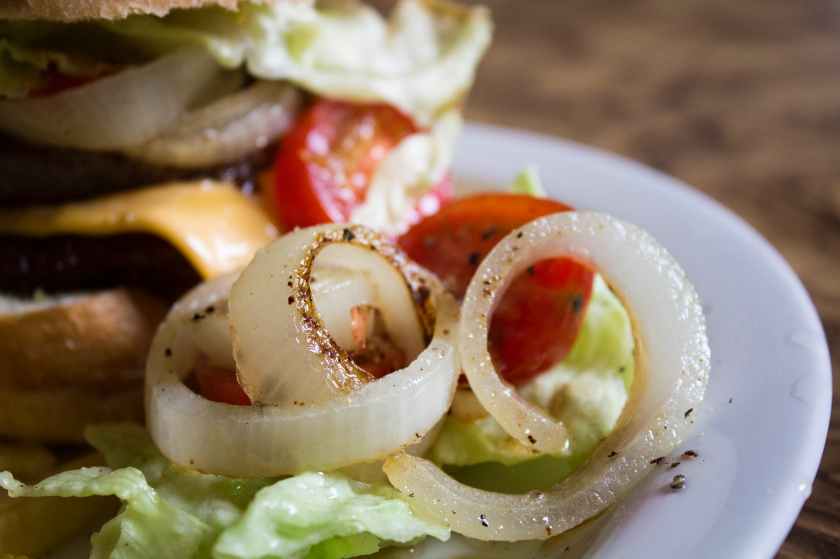
One of the most popular comfort foods, snack foods or a complete meal to splurge occasionally, or for fun and festive, is the hamburger or burger. Essentially a sandwich consisting of one or more cooked patties (pan fried, grilled or flame broiled) of meat placed inside a sliced bread roll or bun and often served with cheese, lettuce, tomato, onion, pickles and other adds ons, as well as condiments like ketchup, mayonnaise, mustard, relish, or “special sauce”, these sandwiches or “burgers” have stormed the food industry ever since their introduction. While today, the patties can range from meat, fish, egg or vegan; hamburgers or burgers have evolved from being that of fast food joints or the regular diners to specialty or high end restaurants. Like all sandwiches, its’ what goes in and the entire taste and texture that counts.

“It requires a certain kind of mind to see beauty in a hamburger bun.” ~ Ray Kroc


Although the term, “hamburger” is originally derived from Hamburg, Germany’s second-largest city; its’ origins have been subject to much dispute, claim and uncertainty. Before the “disputed invention” of the hamburger in the United States, similar foods already existed in the culinary tradition of Europe. As recorded in The Apicius cookbook, a collection of ancient Roman recipes that may date to the early 4th century, “isicia omentata” preparation is detailed as a baked patty in which meat is mixed with pine kernels, black and green peppercorns, and white wine, considered to be the earliest precursor to the hamburger. Later on with various conquests, civilizations and trade, similar recipes were made with various varieties of the meat available then, like the “steak tartare” made of minced horse-meat of the 12th century.

The evolution of the name “Hamburg” came as the town was known for its’ ports famous for trade with the “New World” as well as then ” Old Europe”. With immigrants reminiscing about home, various dishes made with steak came to known with the name “Hamburg” added along side the dish name on the various menus especially when at sea or the ports, like the Hamburg-style American fillet.


However the exact origin of the hamburger may never be known with any certainty. While most historians believe it was invented by a cook who placed a Hamburg steak between two slices of bread in a small town in Texas; few others credit the founder of White Castle for developing the “Hamburger Sandwich.” With records being scarce, the stories and claims still remain as “legends”. With most claims for the invention occurring towards the early 19th century, common factors include large crowds like fairs, festivals, amusement parks as well as street vendors, who for simplicity, ease and increased sales had placed the steak between two buns filed with few vegetables to get the taste and the sales” going.

Yet by whichever origin, the “burgers” have been evolved across the globe adapting to the taste, local ingredients, culture and essence of the locality like the Vietnamese rice-burger. Varied experimentation with the ingredients can be made with ease, to give rise to a style or art with home cooking the “burgers” especially on the International Burger Day (May 28th). Depending on the mood or scene, from barbecues to cook-outs various combinations can be made, traded and shared with fun memories to treasure. Or one can ordering the good old regular “burger” for not just satisfying the hunger pangs but also for comfort in the memories of the good old times. As the old saying goes, “moderation is the key to having fun while eating”.


Posted in Daily, Food, Stories Around the World

“Grill or Barbecue” Summer

With the scent of summer and warm weather, there’s nothing more fun than having an outdoor cooking session. Open space, vegetables and meat or fish with lots of sauces, condiments, rice as well as firewood or outdoor grills and everyone is getting set for the weekend family cookout. Interestingly one may be naturally guess that the concept of outdoor cooking has been there since the time of the prehistoric man. While in the early years, it was more of a necessity than leisure; over time it became an occasion for gatherings, mass cooking as well as festive or season celebrations.

“If summer had one defining scent, it’d definitely be the smell of barbecue.” Katie Lee

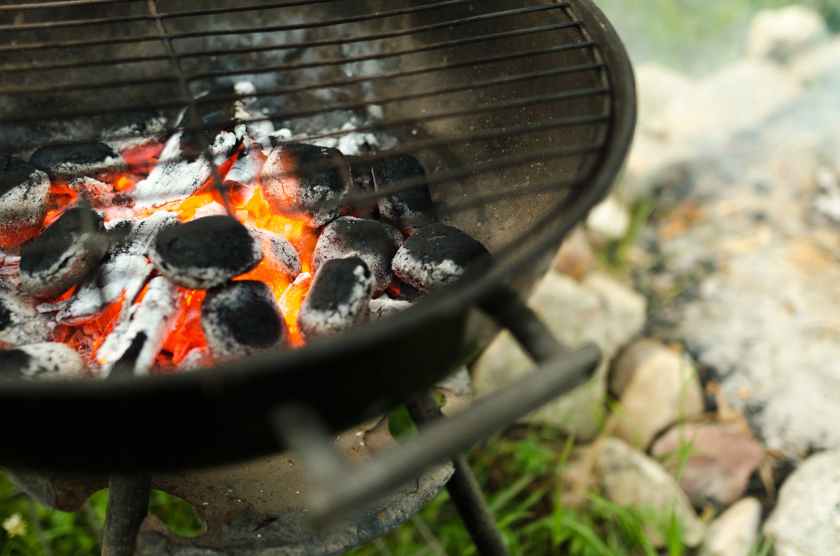
Contrary to popular notion, grilling and barbecue aren’t the same. The initial years had seen majority of outdoor or open fire cooking where in the art of getting vegetables and meat well done were perfected. Slowly there were distinct methods and styles as well as flavours of getting food well done over fire were learnt and modified, like smoking, roasting or baking, braising and grilling. While these may be largely encompassed under the banner of barbecue, there subtle distinctions by the manner each is done. Each technique by which it is named so involves cooking using smoke at low temperatures and the duration of cooking hours from few to several. While baking uses an oven to convection cook with moderate temperatures for an average cooking time of about an hour; braising combines direct, dry heat charbroiling on a ribbed surface with a broth-filled pot for moist heat. Grilling is done over direct, dry heat, usually over a hot fire for a few minutes. Technically barbecue is a method as well as an apparatus for cooking meat, poultry and occasionally fish with the heat and hot smoke of fire, smoking wood or hot coals of charcoal.

“There are two different things: there’s grilling, and there’s barbecue. Grilling is when people say, ‘We’re going to turn up the heat, make it really hot and sear a steak, sear a burger, cook a chicken.’ Barbecue is going low and slow.” Guy Fieri

Since the pre-colonization era, grilling had existed in the Americas. However, the origin of the term “barbecue” can’t be exactly determined. The earliest records were that when the Spanish, upon landing in the Caribbean, had seen the natives like the Arawak people of South America or the Caribbean Taino Indians (accounts vary) who had a method of slow-cooking meat over a wooden (or green sticks) structure known as “barbacoa” in Spanish. For centuries, the term barbacoa referred to the wooden structure and not the act of grilling, but it was eventually modified to “barbecue”.

As per the records of the earliest English tales of barbecue as written by Edward Ward ( 18th century) in his travel accounts, “The Barbacue Feast: or, the three pigs of Peckham, broil’d under an apple-tree.” As per his story, the social aspects of “cooking food over fire” for several hours while enjoying the evening was a new and noteworthy experience. Later on this techniques had caught on and with the spread of colonies, civil wars and later, as festive or celebratory occasions, the technique, art, style and precision of cooking by “barbecue” were perfect and made into an enjoyable social as well as family occasion.

“Cooking and eating food outdoors makes it taste infinitely better than the same meal prepared and consumed indoors.” Fennel Hudson

Across the globe, similar techniques were being practiced like the Korean barbecue features thin slices of beef or pork cooked and served with rice, Argentinian “asado” or marinade-free meat cooked in a smokeless pit and the Indian “tandoor” cooking. The “tandoor” is a large pot, typically buried in the ground up to its neck with hot coals added to the bottom. Made of ceramic, the Tandoor holds in the heat and focuses it on the food cooked inside. With the “true barbecue” has evolved into its’ distinct style over the years; summer evenings and holidays turned into occasions of fun, beating the heat and humid season. With a range of styles from open pit or fire cooking to grills or barbecue, outdoor cooking of summer is indeed an experience to try as well as appreciate.

Posted in Daily, Food

“Quiche” on the Menu

Fill the pastry crust with cheese, tomatoes, egg custard and smoked meat or mushrooms or any ingredient by choice, bake it without covering the pastry and viola’ the “homemade quiche’ ” is ready for the get-together with the extended family, friends, colleagues, neighbours or for a quiet light meal for two.

This savoury open flan consisting of pastry crust filled with eggs, milk or cream with cheese, meat, seafood or vegetables, quiche is one of the popular dishes of the French cuisine which has reached over to various parts and countries of the world albeit with or without modifications.

While the word “quiche” was first attested in French (1805) and the first English usage as “quiche Lorraine” was recorded in the Indiana Evening Gazette in 1925; the origins of this dish may be traced to the German roots. For the word “quiche” may originate from the German “Kuchen” meaning “cake” or “tart”. Food historians have traced the roots of “quiche” to the medieval kingdom of Lothringen, under German rule, which the French later renamed as Lorraine.

Although this may be debatable as using eggs and cream in pastry was practiced in most cuisines as early as the 13th century. In fact the ” Forme of Cury” and the “Italian Libro de arte coquinaria” of the 13th and 14th century cookbooks have references of recipes known as ” Crustardes of flesh” or ” Crustade” which spell out steps for eggs and cream baked in pastry containing meat, fish and fruit. Since then, these recipes have caught on.

“I do not like a quiche with wet, undercooked pastry underneath, and that is that.” Mary Berry

Quiche can be made with a variety of ingredients with the variants often named descriptively in French like the quiche au fromage ( with cheese), quiche aux champignons (with mushrooms) or conventionally like florentine (spinach) and provençale (tomatoes) to list a few. Although there are many variants of quiche, one of the most popular and famous one is the ” Quiche Lorraine”, which has its’ own National Day as per the foodimentarians ( May 20th).

The authentic Quiche Lorraine originated from the German culture in which the “quiche” was an egg custard pie baked in a brioche pastry (and not in the typical French pie dough). Over the years this recipe had evolved into its’ classical form containing heavy cream, eggs and bacon or chopped ham, but no cheese. This mouth-watering wintry dish is baked until the pastry crust is browning. It can be served as a starter with a dressed crisp salad or as a brunch dish, often enjoyed at room temperature or little warm to keep the pie still crunchy. While the most popular Quiche recipe, includes French soft cheese (emmenthal or gruyere); many modern variations like the Alsatian-style including onions to modern versions with goat cheese, salmon, leek or even broccoli are made today.

So for a quick change from the regular, trying this simple recipe after a busy day may be fun. For the lack of ovens, this dish works fine on cooking with “instant pot” or ” by double boiling” techniques too . As often said, cooking is all about ” experimentation, cuisine mixing with modifications keeping it simple, tasty and artsy as well as fun”.

Posted in Daily, Food, Stories Around the World

Of Origin and Evolution…”Soufflé”

“You can’t make a souffle rise twice.” Alice Roosevelt Longworth

One of the main dishes that declares one’s success in the kitchen is the “souffle'”. Although records have traced its’ appearance to the early eighteenth century in France, soufflés may have been around ever since flour, milk, eggs and butter have been whipped up into different concoctions to please the palate. Essentially a soufflé is a baked egg-based dish made with egg yolks and beaten egg whites combined with various other ingredients and served as a savory main dish or sweetened as a dessert. “Soufflé” is the past participle of the French verb souffler which means “to blow”, “to breathe”, “to inflate” or “to puff”.


While, few food historians state that the first appearance is by the French master cook Vincent de la Chappelle in the early 1700s; the popularization of souffle perfected to an art was credited to the French chef, Marie-Antoine Carême, who was “a product of post-revolutionary Paris.” As per Antoine Beauvilliers, who is credited with the “first grand restaurant of Paris, had described the soufflé in “The Art of the Cook” (L’Art du Cuisinier, 1814) as,

“Put in the size of an egg of good butter, a little nutmeg and the yolks of four fresh eggs, the white of which must be whipped apart as for biscuit; mix them by little and little into the puree though hot, mix all well, and pour it into a silver dish or paper mould, put it in the oven. When the soufflé is well risen, touch it lightly, if it resist a little it is enough; it must be served immediately, as it is apt to fall.”

Baked in individual ramekins or typical dishes, soufflés are typically prepared from two basic components; the base as a flavored crème pâtissière, cream sauce (or béchamel) or a purée and the egg whites beaten to a soft peak. While the base provides the flavor, the egg whites provide the “lift” or puffiness to the dish. The base can be flavored with varied ingredients including herbs, cheese and vegetables for savory varieties or jam, fruits, berries,chocolate, banana or lemons and the like, for dessert soufflés. In fact, the savory soufflés can incorporate poultry, bacon, ham or seafood for a more substantial dish.

“The only thing that will make a souffle fall is if it knows you’re afraid of it.” James Beard


One of the main defaults while preparing a souffle’ is when it fails to rise. Yet as most chefs will say, one thing to keep in mind in soufflé preparation is that it really doesn’t matter how high the bubbly mixture poufs up while it bakes as long as the ingredients hidden inside should taste heavenly and cloud-like.

“If a dish doesn’t turn out right, change the name and don’t bat an eyelid. A fallen souffle is only a risen omelette. It depends on the self-confidence with which you present it.” Lionel Blue

For avid movie watchers as well as fans of the movies of the black and white era, one may have seen “Sabrina”, the 1954 film starring Audrey Hepburn. One of the scenes is where Hepburn is humiliated at the Parisian culinary school when the master chef humiliates her (and almost everyone) and critiqued their failed efforts at soufflé from “Too low; too high; too heavy; sloppy”. Hepburn sighs to her French baron friend (whose soufflé is perfect) “I don’t know what happened.”
He explains to her that she forgot to turn on her oven. “Your mind has not been on the cooking,” he says. “It has been elsewhere. A woman happy in love, she burns the soufflé. A woman unhappy in love she forgets to turn on the oven.”

While “the fallen soufflés” may be depicted in cartoons, comedies and children’s programs as a source of humor; the process of making it will be easy and fun if one learns to proportionate the ingredients and time the baking right. As they always say “Practice makes perfect”, trying a souffle’ for the National Cheese Souffle’ (May 18th) or Chocolate Souffle’ (February 28th) Day would be a first step towards mastering this art. If not to master, then at least experimenting to make one can result in some “kitchen fun” and good use of leftovers; or simple have and enjoy the “heavenly and light as air” experience.


Posted in Daily, Food

Hummus: From “Then” to “Now”

From parties to the routine meals or for the dieters as well as snack food for the cravings time after work or before the ” big meal”, this dip has been popular across the world. Little wonder then that with International Hummus Day ( May 13th) gone by, one mayn’t know enough about this dip.

Known as “Hummus” or “hummus bi tahini”, this Levantine dip or spread, is made from cooked or mashed chickpeas or other beans, blended with tahini, olive oil, lemon juice, salt and garlic. The word “Hummus” comes from the Arabic word meaning “chickpeas”. However likely from the Greek origins, hummus a part of the local cuisine in both Turkish Cypriot and Greek Cypriot communities, it is known as “humoi” . While originally placed in the Middle East and Mediterranean cuisine, today it has been featured in many local cuisine and recipes around the globe.

While there are a number of different theories and claims of origins in various parts of the Middle East and the Mediterranean, there is insufficient evidence to determine the exact or precise details. The basic ingredients of chickpeas, sesame, lemon, and garlic have been combined and eaten in their local cuisine over centuries. While some food historians believe that variations of this recipe were there during the ancient Egyptian civilizations where then chickpeas were widely eaten as cooked in stews and other hot dishes; they had also been a part of the Greek cuisine and cooking. However records of pureed chickpeas eaten cold with tahini do not appear before the Abbasid period in Egypt and the Levant.

Cookbooks of 13th century Cairo record recipes for dish resembling hummus bi tahina; like the recipe of a cold puree of chickpeas with vinegar and pickled lemons with herbs, spices, and oil, but no tahini or garlic.  Over the years variations exists in the amount of ingredients of the beans, chickpeas pureed as well as mixing of vinegar or olive oil, tahini as well as different spices, herbs or nuts, with or without garlic; made or served by rolling it out and letting it sit overnight. With trade playing a significant role in the spread and share of cuisines, hummus may be one among the numerous foods that had crossed over during the historical periods across the Middle East and the Mediterranean.

Being used as an appetizer or dip, or served with meals; hummus can be had in an numerous ways. It can be scooped with flatbread, such as pita or served as part of a meze (selection of appetizers) or as an accompaniment to falafel, grilled chicken, fish or eggplant as well as with tortilla chips or crackers. Hummus can be garnished with numerous available ingredients like chopped tomato, cucumber, coriander, parsley, caramelized onions, sautéed mushrooms, whole chickpeas, olive oil, hard-boiled eggs, paprika, sumac, olives, pickles and pine nuts. It can also be topped by a mixture of fava beans or can be made with yogurt, butter and topped with pieces of toasted bread ( Jordan and Palestine areas).

There are many variations to the preparation of “hummus” with the various changes of civilizations, culture mixing as well as immigration. Variations like hummus with fried eggplant and boiled eggs, as a chickpea soup or hummus with traditional skhug hot sauce to name a few, are popular in their locale areas. Of recent, African cuisine have brought specialties such as Sudanese Hummus Darfur with eggs, tomatoes, and grated cheese. Many restaurants offer varieties of warm hummus which may be served as chick peas softened with baking soda along with garlic, olive oil, cumin and tahini or as “msabbaha” made of whole chick peas garnishing the tahini (lemon spiked) with a drizzle of olive oil and sprinkling of paprika.

With hummus being gluten free, nut-free, dairy free as well as a perfect spread or dip for snacks, fresh fruits, bread, meat, pita chips and the like; it has gained widespread acceptance across many cultures and cuisines as well for the weight watchers, medical reasons or just for its’ own unique taste and blend. Making hummus isn’t just a work of ingredients but also of art and creativity. With its’ quick and easy preparation with locally available ingredients; “hummus” is something that everyone should try at least once in a lifetime.

Posted in Daily, Food

Evolution of the “Salad”

“A salad is not a meal, it is a style.” Fran Lebowitz

Originating from the Latin sal (means salt) to the Provençal “salada”, later as the Old French salade to finally the late Middle English “sallet” of 14th century or the modern day “salad” which it is now known by, salads have gradually evolved over the years. From simply starting a meal to being the main meal by itself, salads have been redefined both in content, style and flavours. With summer in full swing, fresh produce available and kids at home, salads can be both fun, entertaining and creative.

“Salad can get a bad rap. People think of bland and watery iceberg lettuce, but in fact, salads are an art form, from the simplest rendition to a colorful kitchen-sink approach.” Marcus Samuelsson

Salads were favored since the early Babylonian Era, where the greens were dressed with oil and vinegar. Likewise Egyptians made salad dressed with oil, vinegar and Asian. Even the Romans and ancient Greek Era saw mixed greens with dressing, a type of mixed salad. With imperial expansions, these layered and dressed salads were favourites in the menus of the European courts. Royal chefs often combined many ingredients in one enormous salad bowl including exotic greens as well as flower petals. The favourite salad of King Henry IV was a tossed mixture of new potatoes (boiled and diced), sardines and herb dressing, where as Mary, Queen of Scots, preferred boiled celery root diced and tossed with lettuce, creamy mustard dressing, truffles, chervil and hard-cooked egg slices.

“To make a good salad is to be a brilliant diplomatist – the problem is entirely the same in both cases. To know exactly how much oil one must put with one’s vinegar.” Oscar Wilde

Today salads are made in two classical manners of being artfully arranged or “composed” to ingredients being mixed with dressings or “tossed”. At any point of time on the meal salads may be served; as appetizers or side salads, as well as main course salads with high protein foods (like meat, eggs or fish), or as dessert salads. The latter version is one of the most popular with these sweet versions containing fruit, gelatin, sweeteners or whipped cream.

“It takes four men to dress a salad: a wise man for the salt, a madman for the pepper, a miser for the vinegar, and a spendthrift for the oil.” Anonymous

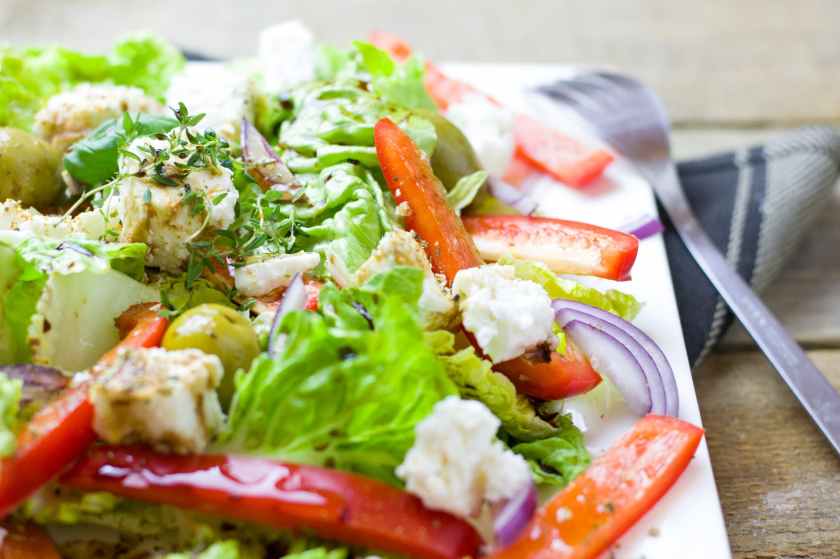
Technically there are five types of salads. Starting with the green salad or garden salad, consisting mostly of leafy greens with a healthy mix of coloured vegetables. If the latter are more, it is termed as a “vegetable salad”. From olives, artichokes as well as beans, celery or nuts, berries and seeds; these salads can be made in a colourful array. When made on a lettuce leaf, the “wedge salad” is created. When thick sauces are added to salads, they become “bound salads”, the second category of salads. Most types include those with mayonnaise like tuna salad, chicken salads, potato salad or egg salad, which can be served as “scoops” or sandwich fillers, making it a popular necessity for picnics and barbecues.

“As long as mixed grills and combination salads are popular, anthologies will undoubtedly continue in favor.” Elizabeth Janeway

The remaining three types include the “dinner salads” or main course salads, fruit and dessert salads. The former is made with meat, seafood or even eggs like the Cobb salad, Caesar salad and the Chinese chicken salad. With culinary fruits, a quick “fruit salad” can be made to complete the meal or a more elaborate “dessert salad” like jello salad, pistachio salad or ambrosia can answer the sweet cravings. Fancier creations like cookie salads, rice crispies salad, snickers salad or glorified rice salad. Finally topping the salads are the dressings which can be vinaigrette, creamy dressings as well as honey mustard or Italian dressing to mention a few. Dressing a salad depends on the final flavour that one wants to have.

Either for fun or for hunger, salad making can be an entertaining as well creative art, giving ample pleasure for both the taste buds, hunger pangs and health goals. With June being the foodimentarian ” National Month of Salads”, it would be fun to give few fancy salads a try.

“Kids in aprons appeared, putting tureens of vegetable soup on the tables and plates of boiled eggs, potatoes and lentils, bowls of endive-and-radish salad, small rounds of cheese and loaves of brown bread, all looking quite delicious, in Zoe’s opinion.” Christine Brodien-Jones, The Glass Puzzle