Posted in Food, Stories Around the World

Chocolate for the Holidays

As the holiday season grows near and school is closed till the next year has set into it’s first week, the official holiday snacks and treats season has begun. Young or old, age has never been a bar for the holiday favourites. With the very basic ingredients of crushed cake or biscuit mix, cocoa, sugar (and a little of the rum for that extra holiday spice for the “adults only” time); can result in the favourite holiday treat of the “romkugle, trøffel or sputnik” or simply, the rum balls.

A truffle-like confectionery flavoured with chocolate and rum, these rum balls complete every holiday season. Often coated in chocolate sprinkles, desiccated coconut, icing sugar or cocoa, these cookie, cake or biscuit based treats can be made in a jiffy with no baking required. With the festive preparation in full swing, the less complicated it is, the more popular the recipe.

Making these chocolate balls is an event, for more than the different regional variations, many a time it is a family tradition passed down form one generation tot he next. The basic ingredient is the choclate and as for the rum, that may be replaced by similar rum flavouring or any flavoring of non-alcoholic variant. The basic step is to crush the cake (or biscuit) material, mix it with fat, cocoa, a moist binding ingredient like jam or condensed milk and optional ingredients like chopped nuts, raisins, sultanas, ground walnuts, white chocolate or even peanut butter. Once the mix holds together, it can be rolled into small balls and coated with flavouring of choice. Regional variations as well as names exist for these chocolate rum balls. From the Dansk Romkugl or Trøffel, Deutsch Rumkugel or the Polski Bajadera, each regional recipe has a subtle variation. The Hungarian kókuszgolyó are made with whole cherries placed inside the balls and then rolled in coconut flakes.

Going for a healthy twist from the regular, the Danish Havregrynskugle or the “Oatmeal Ball” may be another new holiday recipe to work on. Slightly smaller than a ping pong ball and made of oatmeal, sugar, cocoa, vanilla, butter with a small amount of coffee mixed to a compact mass, these balls are formed and then rolled in shredded coconut, nib sugar, sprinkles or toppings of choice. Similar to this confectionery is the Israeli Kadur Shokolad, where these chocolate balls are made with Petit Beurre crumbs.

Although these treats are holiday favourites, they are in no way confined to it. More than “just desserts”, they become a part of the family tradition as all hands, the tiny ones as well as the experienced hands join in for the holiday memories. As for alterations and combinations, chocolate for the year end would be loved in any form or any manner, liquid or solid, elaborate or simple; the year end sugar and choclate rush is the norm. As for gifts, there is nothing like a gift of choclate covered rum balls or cakes to bring the present year to a delightful and delicious end.

Posted in Daily, Food, Photography Art, Uncategorized

Tea with a Difference

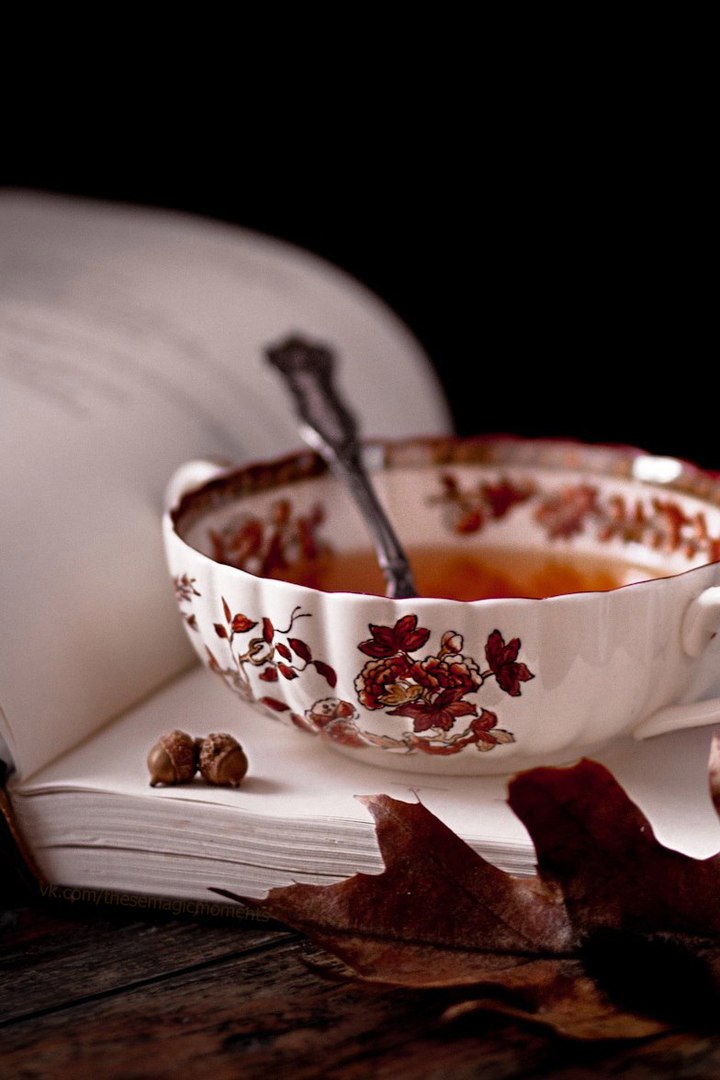
Catching up with the extended family cousins who have been seriously bitten by the “travel bug” leads to often enlightening conversations and interesting accounts. In the course of discussion was their recent rove into the Tibetan lands. Asides the details of their stay and visits, what caught the curiosity of yours truly was their tea culture.

“When tea becomes ritual, it takes its place at the heart of our ability to see greatness in small things. Where is beauty to be found? In great things that, like everything else, are doomed to die, or in small things that aspire to nothing, yet know how to set a jewel of infinity in a single moment?” Muriel Barbery (author of The Elegance of the Hedgehog)

Interestingly the Tibetan tea culture primarily includes the butter tea and the sweet milk tea. Other varieties include the Pu’er Tea, green tea, milk tea and boiled black teas. The most favoured tea is the butter tea, known as po cha (Tibetan, Wylie: bod ja, “Tibetan tea”) or cha süma ( Eastern Tibet, Wylie: ja srub ma, “churned tea”) or suyóu chá (Mandarin Chinese) or gur gur (Ladakhi language). Made from tea leaves, yak butter, water, and salt in the traditional way, wherein the butter, milk and salt are added to the brewed tea. Although the variation today is to use the butter made from cow’s milk based on the latter’s wider availability and lower cost.Had by itself or used as an accompaniment for eating tsampa by pouring onto it or dipping the tsampa into it and mixing well.

The quality of the butter tea is enhanced by boiling the tea leaves to achieve a dark brown colour (takes almost half a day) or turns black (steep the tea leaves). One method involves skimmed the dark brown tea, pouring into a cylinder filled with fresh yak butter and salt and then the whole mix is shaken. The resulting thick liquid is then poured into tea pots or jars. Another method is to add salt to the steeped black tea, stirring the mix through the horse air (or reed) colander into the wooden butter churn with a large lump of butter then added to it. Then it is churned (or rapid stirring in wooden bowl) till the proper consistency of the tea is achieved and then transferred to copper pots kept warmed on a brazier. Modern day alternatives include tea bags, butter and blender.

Like the detailed preparation of butter tea, the Tibetan tea drinking culture has many rules. As per their custom, butter tea is drunk in separate sips. After each sip, the host refills the bowl to the brim. As a rule the guest never drains his bowl, instead it is to be constantly topped up. If the guest doesn’t wish to drink, the best thing to do is leave the tea untouched until the time comes to leave and then drain the bowl. This signifies the observance of etiquette, without any offense to the host. Another set of rules to follow is when one is invited to a house for tea. The host will first pour some highland barley wine. The guest must dip his finger in the wine and flick some away, which is done so three times to represent respect for the Buddha, Dharma and Sangha. Then the cup will be refilled two more times and on the last time it must be emptied or the host will be insulted. After this the host will present a gift of butter tea to the guest, who will accept it without touching the rim of the bowl. The guest will then pour a glass for himself, and must finish the glass or be seen as rude.

Not just limited to drinking but also serving butter tea has it’s own special set of tea-ware. From special porcelain cups to wooden bowls set with gold, silver or copper, or made from these metals as well jade, the Tibetan tea-ware is an art by itself. Interestingly like Tibet, most of the East Asian countries have their own special tea customs, so much so that the tea culture of each country has a rich and varied history behind it. That for tea connoisseurs is the beauty of tea, in itself and being a part of rich vibrant cultures, their customs and traditions, lending the subtle depth and significance to the art and concept of tea.

“The first cup moistens the throat;
The second shatters all feelings of solitude;
The third cleans the digestion, and brings to mind the wisdom of 5,000 volumes;
The fourth induces perspiration, evaporating all of life’s trials and tribulations;
With the fifth cup, body sharpens, crisp;
And the sixth cup is the first on the road to enlightenment;
The seventh cup sits steaming – it needn’t be drunk, as from head to feet one rises to the abode of the immortals.”
–Lu Tong, 9th century

Posted in Food, Stories Around the World

From Muffin to Cruffin

“You don’t get tired of muffins. But you don’t find inspiration in them.” George Bernard Shaw, Man and Superman

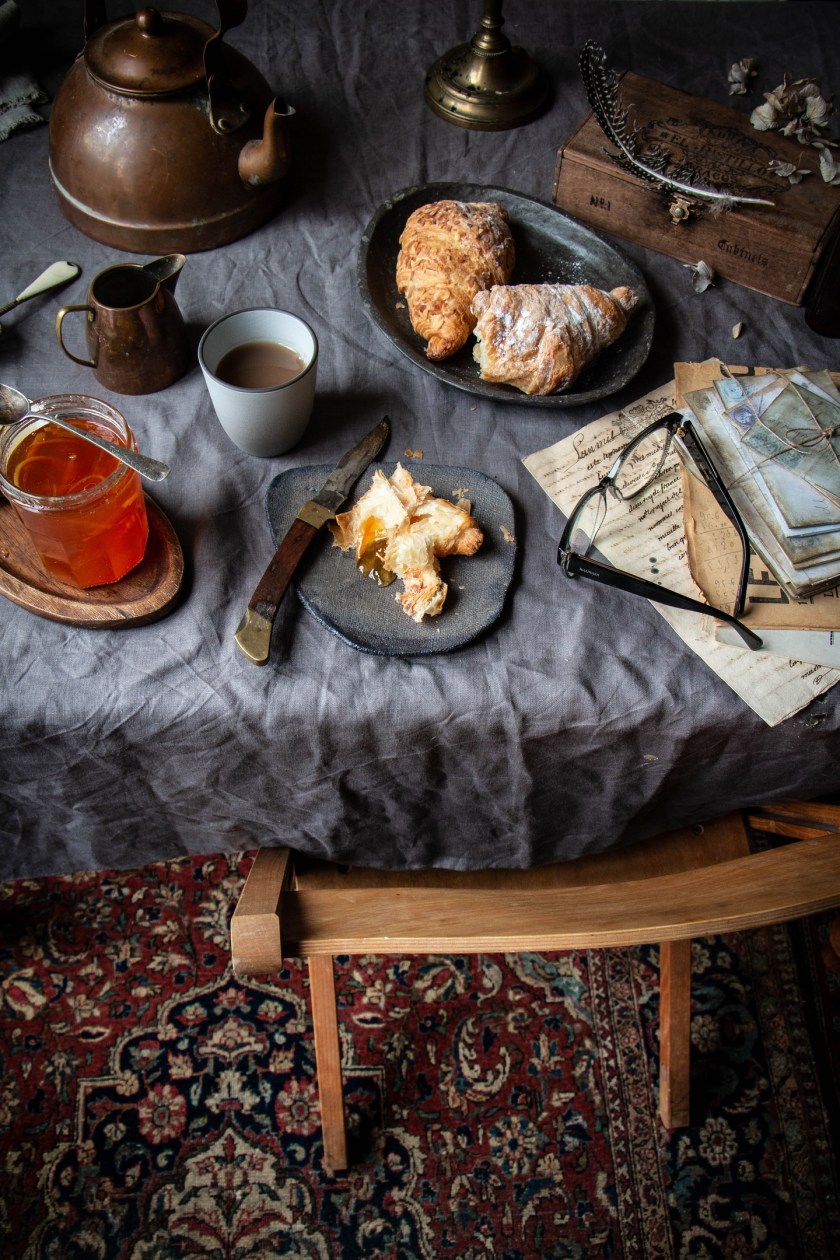
While the busy mornings may start off with a muffin, a regular dose of the latter may inspire a change from the regular. What happens when the dough of the muffin is not poured but moulded in with something different? Voila, then is the cruffin, the brainchild of Kate Reid of Lune Croissanterie in Melbourne (2013). The “cruffin” is a hybrid of the croissant and the muffin. The pastry is made by proofing, shaping the laminated dough which is then baked in a muffin mould.

Although the entire procedure may sound quite simple, the delight of the cruffin lies in the filling and the garnishing. From the double choclate chip to caramel flavoured choclate or salty flavoured cream or rich strawberry jam, cruffins can be filled with a variety of creams, jams, crème pâtissières, curds and garnished with slivered almonds, pine nuts, glazed cherries, candied fruits, honey, maple syrup and the like. The entire cruffin, though a bit messy, is worth the long queue at the bakery. As far s homemade baking is concerned, cruffins are perfect for weekend or holiday baking and as far as fillings are concerned, let the favourites rule.

Extrapolating the idea over to the other morning regular, the donut; adding a little spice by making the donut dough a bit more pastry like, the cronut was born. The cronut, a croissant-doughnut pastry was invented by pastry chef Dominique Ansel of Dominique Ansel Bakery based in New York City(2013).

Made from croissant-like dough which was filled with flavored cream and fried in grape seed oil, this pastry doughnut had caught the flavour and imagination across the globe. So much so that these cronuts with flavoured cream were listed as one of the best “extremely fun” inventions by TIME Magazine (2013).

With the cronut and the cruffin, various combinations like cookie shots, zonuts have been seen. For the home chef, whether it be the standard regular recipe or not, the kitchen is a place to mix and match. As for dessert lovers, the change of taste, flavours and art are what makes the tasty moments of the day.

Posted in Food, Stories Around the World

The “Brownie” Way

“And I’ve just pulled a new brownie out of the oven: a deep, dark chocolate base with a praline pecan topping, sort of a marriage of brownie and that crispy top layer of a good pecan pie.” Stacey Ballis (author of Wedding Girl)

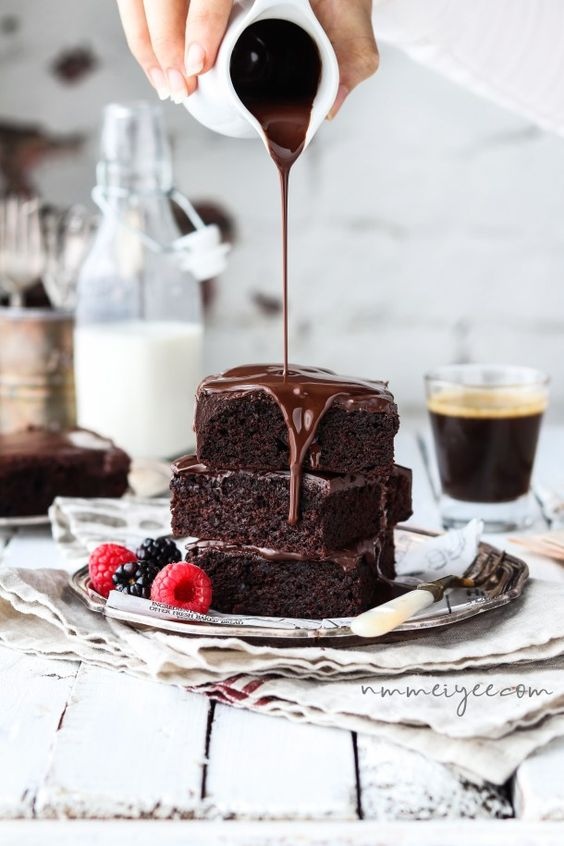
Something quick, easy and delectable are few of the pre-requisites required for adding to the list of holiday baking. If chocolate is added in, the better. It would be something that blend in with other well loved and basic desserts. That something would be square, baked or frozen cut choclate cake pieces, more popularly known as the “brownie”. Coming in a variety of forms, from fudgey to cakey with nuts, fudge, frosting, cream cheese, chocolate chips and the favourites included in the batter; the brownie is an all-time favourite of many. Like sheet cookies, they may eaten by self or with milk, ice cream (a la mode), topped with whipped cream or sprinkled with powdered sugar and fudge.

Like all delectable treats, brownies have their own share of legends. As one legend credits the brownie to the creative ingenuity of Palmer House Hotel pastry chef (1893) for the Palmer House Brownie with walnuts and an apricot glaze made for the Chicago World’s Columbian Exposition on the request of the owner’s socialite wife Bertha Palmer. The first-known printed use of the word “brownie” was to describe a dessert in the Boston Cooking-School Cook Book by Fannie Farmer (1896 version) in reference for a cookie-type confection that was colored and flavored with molasses and made in fluted marguerite molds. Later further publications like The Boston Cooking-School Cook Book (1906) edited by the same Fannie Merritt Farmer records a recipe brownie as an adaptation of her chocolate cookie recipe to a bar cookie baked in a rectangular pan. Another well record as written in the Baking Classics (Betty Crocker) is of a housewife who was making a chocolate cake but forgot to add baking powder. When her cake didn’t rise properly, instead of tossing it out, she cut and served the flat pieces (Bangor, Maine) which would probably account for the Bangor Brownies.

As food historians try to still trace the exact inventor of the “brownie” while the legends credit it to added melted chocolate to a batch of biscuits (added by mistake) or the cook who didn’t have enough flour while baking a cake; brownie are one of the simple things that can be made quite elaborate for the festive season. For instance consider the sandwich brownie (with an ice-cream, cream, icing sugar, meringue or peanut butter as the filling in the middle) or the layered brownie with double chocolate chip at the base, then the layer of Oreos and finally brownie batter on billows of cream cheese, a delight for the wintry holidays. As for the mix, add a scent of cinnamon, essence of the vanilla (blondie twist), sprinkle of the flavours of star-anise, honey or even a little of the cayenne for that extra “hot” to the sweet; brownie can be made as to own choice, flavours and twists. A platter of homemade special brownie can give an extra zest to the holidays. So set, get and go experimenting for a new family festive tradition.

1907
Lowney’s Cook Book
Boston, Massachusetts

Bangor Brownies (p 261)
¼ cup butter
1 cup brown sugar
3 squares chocolate
1 egg
½ to ¾ cup flour
1 cup nut meats
¼ teaspoon salt

“cut in strips”
Source: New England Recipes 

Posted in Daily, Food, Stories Around the World

Madeleine for holidays

Entering into the last month of the year, the delight of enjoying the twilight mornings with the warm cup of tea in the bitter chill of the air, would be better with a little of the small crunchy or tiny delights to add to the tea. In fact with holidays round the corner, a regular stock of the ready homemade sweet dry desserts especially cakes, cookies and biscuits would come in handy.

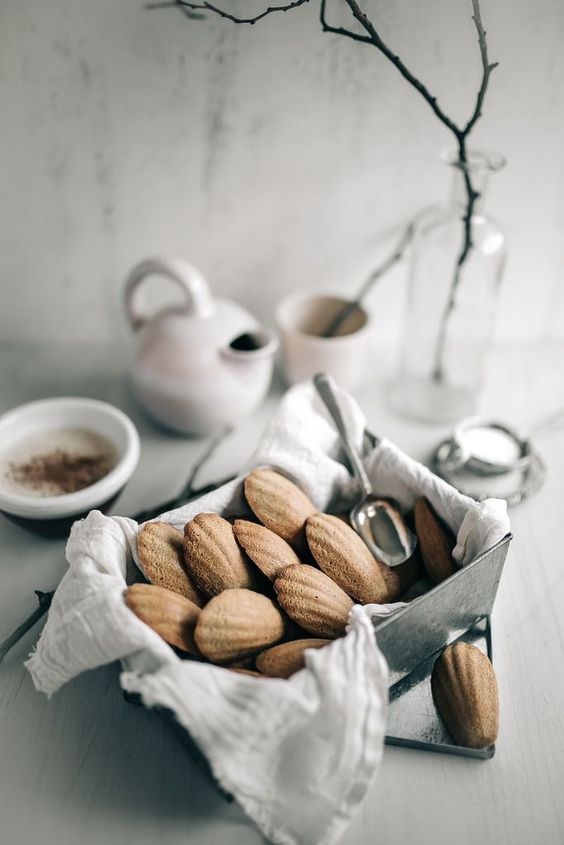
Among them are the treats of small sponge cakes with their distinctive shell-like shape, baked in pans and can be made with the basic ingredients. Known as the madeleine or petite madeleine, these traditional small cakes trace their origins to the Lorraine region in northeastern France. By legend these cakes have been there in the 17th century French cusine, although the increased use of metal moulds (18th century) had led to their increased use. By the end of the 19th century, the madeleine is considered a staple of the diet of the French bourgeoisie.

By etymology, the term madeleine describes “a small cake”. Made from génoise cake batter (with the suspended air in the mixed batter giving the volume to the cake) with traditional recipes adding on finely ground almonds, nuts or lemon zest for their special lemony flavour. In Britain, similar cakes are baked in dariole molds, they are coated in jam, desiccated coconut and topped with glacé cherry.

“On a pound of flour, you need a pound of butter, eight egg whites & yolks, three fourths of a pound of fine sugar, a half glass of water, a little grated lime, or preserved lemon rind minced very finely, orange blossom praliné; knead the whole together, & make little cakes, that you will serve iced with sugar.”
“Cakes à la Madeleine”. Menon, Les soupers de la Cour ou L’art de travailler toutes sortes d’aliments, p.282 (1755)

The madeleine has been mentioned by the culinary writers during the Napoleonic era, especially in the recipe books of Antonin Carême and Grimod de la Reynière. One record of the first recipe traces to the “cakes à la Madeleine and other small desserts” (1758) of a French retainer of an Irish Jacobite refugee, Lord Southwell. Tracing the roots of “Madeleine”, there are several interesting legends pertaining to the origin of the cake. While one considers the name centered from a female character of Lorraine, probably a chef with the patron being Paul de Gondi (17th century cardinal), owner of a castle in Commercy. Another legend consider the inventor to be Madeleine Paulmier, cook for Stanislaus I, duke of Lorraine and exiled King of Poland (18th century). As the legend goes, Louis XV (son-in-law of the duke) charmed by the little cakes prepared by Madeleine Paulmier (1755), named them after her and Maria Leszczyńska, his wife had introduced them soon afterward to the court in Versailles which soon became a favoured French recipe. Two legends link the cake with the pilgrimage to Compostela (Spain) where Madeleine, a pilgrim is said to have brought back the recipe from her voyage or a cook named Madeleine is said to have offered little cakes in the shape of a shell to the pilgrims passing through Lorraine. While another legend states that Madeleine was the creation from the kitchens of Prince Talleyrand by the pastry chef Jean Avice (19th century) who is said to have baked little cakes in Aspice moulds.

Not just in the kitchen, but Madeleine have made their significant impact in literature with Proust’s “episode of the madeleine” as an instance of involuntary memory in his book In Search of the Lost Time. Similar to the madeleine are the “financiers” or the Malaysian Bahulu. One of the benefits of getting down to making Madeleine for the holidays is the ease in its’ preparation, variability of ingredients as well as the versatility of it being a part of the small and the large holiday get-togethers. As for the simplicity in style, a little of “food art” will make the difference. Adding to the festive spirit, madeleine can indeed spice up the holiday season this year.

Posted in Daily, Food, Uncategorized

Of Parfait, Choice and Style

For any meal, the finale is marked by that delightful bit of sweetness. With the rising awareness of eating healthy and right, the right balance has to be struck at times between the temptation of the sugar craving to close the meal and to stay on the low healthy calorie counter too. Which is why “parfait” has evolved since it’s inception to the present day.

The oldest known recipe can be traced to 1894, of French origin where it had started off as a frozen dessert. While the French prefer to make the base from cream, egg, sugar and syrup creating a perfect custard-like puree, known as “the parfait”; whereas the American counterpart includes an artful layering of varied ingredients like granola, nuts, yogurt, liqueurs with a topping of fruits or whipped cream layered and served in a tall glass.

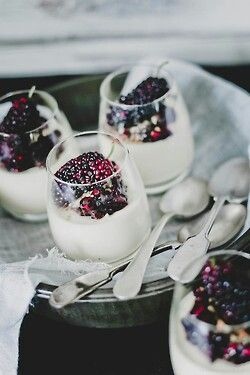
Of recent, with new trends and various experimentation, parfaits have been introduced without the cream and liqueurs. Instead they are made by simply layering the fresh fruits ranging from berries, cut peaches, strawberries with yogurt , granola or nuts; served as a healthy snack, breakfast option or a light meal, as a change from the regular. Which ever way it may be, the popularity of the parfait lies not only in it’s ease of preparation and the delectable indulgence but also in the appealing art it holds in itself.

Posted in Food, Stories Around the World

Of Milk, Flour and Flavours

With the sweet tooth running pretty strong in the family genes, the question “what’s for dessert?” comes first, even before the table is laid. When the baking comes to a lull, the ever ready alternative comes as long as milk is plenty and available. From the Spanish Arroz Con Leche to the Muhalabieh of the Middle East or malabi (Israeli milk pudding), French Teurgoule, British Blancmange to the Indian Kheer or Persian Firni, there are countless variations and possibilities to the regular recipes of milk based puddings and desserts. Interestingly each dish in this vast list has their own history and legend behind them.

Milk. Rice flour ( of recent cornstarch). Sugar. Rosewater. Vanilla extract. Chopped nuts.

With legendary origins dating to Sassanid Persia (224-651), the milk based pudding Mhallabiyeh ( or Muhalabieh in Middle East, Israeli malabi) has been often made with the basic ingredients of rice, sugar, rice flour and milk. Although in the Middle Ages, muhallebi and blancmange (European counterpart) were made with shredded chicken.

As the legend goes, Muhallebi was first served by a Persian cook (late seventh century) to an Arab general, Al-Muhallab ibn Abi Sufra who had liked the dish and named it after him. Thereby this dish had entered the Arab cuisine. The initial recipes (10th century) were based on three versions of the basic dish: milk thickened with ground rice, milk with rice grains and chicken and an egg custard (without rice). Records from two 13th-century Arab cookbooks (one by al-Baghdadi, another from Andalusia) have recipes of a spiced pudding variation made with mutton instead of chicken. The Ottoman Empire has written records of two versions of muhallebi: a version with shredded chicken (tavuk gögsü) served during the reign of Mehmed the Conqueror and a later recipe(1530) for a meatless version flavored with rose water. Later records give a recipe for muhallebi named as “Ramazan cakes” (19th century English cookbook). This recipe records of boiling milk together with rice flour and sugar until the mixture reduces followed by which the pudding is then flavored with rose or jasmine extract and allowed to cool before it is sprinkled with powdered sugar.

Modern variations of the initial recipe has been seen in the substitution of the rice flour (or addition at times) by cornstarch or wheat starch depending on the thickness, consistency and creaminess required. The Israeli “malabi” is made from cream and milk cooked with corn starch and rose syrup, the latter being used primarily for flavouring. It is often topped with chopped pistachios, desiccated coconut, almond slivers as well as orange water flavorings. On the other hand, the Cyprian mahalebi (or mahalepi or muhallebi) is devoid of milk. Instead it is made from water, sugar, nisete flour ( or cornstarch/corn flour), rose water and when it is set, they add. When the muhallebi is set the Cypriots add rose called triantafyllo (rose squash /cordia/syrup) on top of it.

While making Muhallebi at home, various alternatives and add-ons to the classical recipe may be tried. More elaborate concoctions can be tried, like layering this pudding on a biscuit base for a chewy feel to balance out the sweet milky taste; or modify it as a drink based dessert. No matter what, with the sweetness of the milk (cream added as per preference) to balance out the taste of cereal and additional flavourings with various toppings and garnishes, this dessert will be a well loved addition to the list of no bake desserts.