Posted in Daily, Food

Evolution of the “Salad”

“A salad is not a meal, it is a style.” Fran Lebowitz

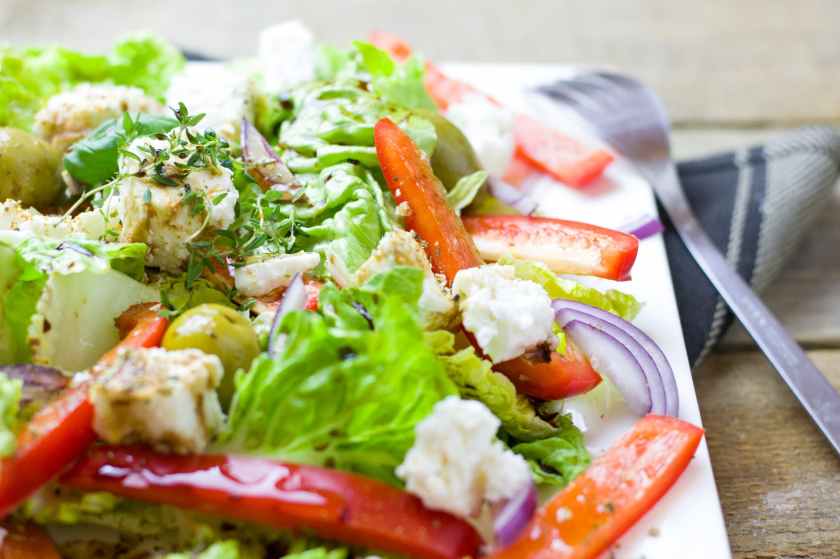
Originating from the Latin sal (means salt) to the Provençal “salada”, later as the Old French salade to finally the late Middle English “sallet” of 14th century or the modern day “salad” which it is now known by, salads have gradually evolved over the years. From simply starting a meal to being the main meal by itself, salads have been redefined both in content, style and flavours. With summer in full swing, fresh produce available and kids at home, salads can be both fun, entertaining and creative.

“Salad can get a bad rap. People think of bland and watery iceberg lettuce, but in fact, salads are an art form, from the simplest rendition to a colorful kitchen-sink approach.” Marcus Samuelsson

Salads were favored since the early Babylonian Era, where the greens were dressed with oil and vinegar. Likewise Egyptians made salad dressed with oil, vinegar and Asian. Even the Romans and ancient Greek Era saw mixed greens with dressing, a type of mixed salad. With imperial expansions, these layered and dressed salads were favourites in the menus of the European courts. Royal chefs often combined many ingredients in one enormous salad bowl including exotic greens as well as flower petals. The favourite salad of King Henry IV was a tossed mixture of new potatoes (boiled and diced), sardines and herb dressing, where as Mary, Queen of Scots, preferred boiled celery root diced and tossed with lettuce, creamy mustard dressing, truffles, chervil and hard-cooked egg slices.

“To make a good salad is to be a brilliant diplomatist – the problem is entirely the same in both cases. To know exactly how much oil one must put with one’s vinegar.” Oscar Wilde

Today salads are made in two classical manners of being artfully arranged or “composed” to ingredients being mixed with dressings or “tossed”. At any point of time on the meal salads may be served; as appetizers or side salads, as well as main course salads with high protein foods (like meat, eggs or fish), or as dessert salads. The latter version is one of the most popular with these sweet versions containing fruit, gelatin, sweeteners or whipped cream.

“It takes four men to dress a salad: a wise man for the salt, a madman for the pepper, a miser for the vinegar, and a spendthrift for the oil.” Anonymous

Technically there are five types of salads. Starting with the green salad or garden salad, consisting mostly of leafy greens with a healthy mix of coloured vegetables. If the latter are more, it is termed as a “vegetable salad”. From olives, artichokes as well as beans, celery or nuts, berries and seeds; these salads can be made in a colourful array. When made on a lettuce leaf, the “wedge salad” is created. When thick sauces are added to salads, they become “bound salads”, the second category of salads. Most types include those with mayonnaise like tuna salad, chicken salads, potato salad or egg salad, which can be served as “scoops” or sandwich fillers, making it a popular necessity for picnics and barbecues.

“As long as mixed grills and combination salads are popular, anthologies will undoubtedly continue in favor.” Elizabeth Janeway

The remaining three types include the “dinner salads” or main course salads, fruit and dessert salads. The former is made with meat, seafood or even eggs like the Cobb salad, Caesar salad and the Chinese chicken salad. With culinary fruits, a quick “fruit salad” can be made to complete the meal or a more elaborate “dessert salad” like jello salad, pistachio salad or ambrosia can answer the sweet cravings. Fancier creations like cookie salads, rice crispies salad, snickers salad or glorified rice salad. Finally topping the salads are the dressings which can be vinaigrette, creamy dressings as well as honey mustard or Italian dressing to mention a few. Dressing a salad depends on the final flavour that one wants to have.

Either for fun or for hunger, salad making can be an entertaining as well creative art, giving ample pleasure for both the taste buds, hunger pangs and health goals. With June being the foodimentarian ” National Month of Salads”, it would be fun to give few fancy salads a try.

“Kids in aprons appeared, putting tureens of vegetable soup on the tables and plates of boiled eggs, potatoes and lentils, bowls of endive-and-radish salad, small rounds of cheese and loaves of brown bread, all looking quite delicious, in Zoe’s opinion.” Christine Brodien-Jones, The Glass Puzzle

Posted in Food, Life, Quotes, Reflections

Slices of “Strawberry” Summer

“Happiness, I have grasped, is a destination, like strawberry fields. Once you find the way in, there you are, and you’ll never feel low again.” Rachel Simon

With the scent of summer still in the air, one wouldn’t miss the scent of wild strawberries in the fields. With lazy weekends beckoning a walk, it would be a perfect time for some family bonding as well as strawberry picking.

“You can pick wild strawberries with your eyes closed, locating them by smell, for they are two parts perfume to one part taste. An hour of searching might yield a handful if you’re lucky. Wild strawberries can’t be encouraged, nor can they be discouraged: They come to you unbidden and unearned. They appear, or do not, by the grace of the sun.” Hope Jahren

During this impromptu excursion, certain moments get engraved silently in the mind. The rapid passing of time, children growing up fast as well as hectic weeks leaving very less time to unwind, converse as well as simply relax; all highlight the significance in shutting down the media and heading back to nature.

“Each moment is just what it is. It might be the only moment of our life; it might be the only strawberry we’ll ever eat. We could get depressed about it, or we could finally appreciate it and delight in the preciousness of every single moment of our life.” Pema Chodron

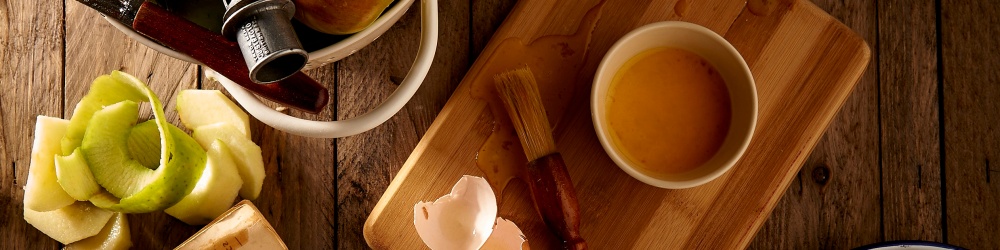
With plenty of fresh strawberries to go around, it would be fun to go artsy, creative and add some sweetness to the regular meals as well as desserts. Browsing through the old recipes and brushing them with some “taste of summer” would make the strawberries as well as moments and memories to capture for the later years.

“As our lives speed up more and more, so do our children’s. We forget and thus they forget that there is nothing more important than the present moment. We forget and thus they forget to relax, to find spiritual solitude, to let go of the past, to quiet ambition, to fully enjoy the eating of a strawberry, the scent of a rose, the touch of a hand on a cheek…” Michael Gurian

“It is the sweet, simple things of life which are the real ones after all.” — Laura Ingalls Wilder

Posted in Daily, Food, Stories Around the World

“Hoagie” from Scratch

“I love a sandwich that you can barely fit in your mouth because there’s so much stuff on it. The bread should not be the main thing on a sandwich.” Adrianne Palicki

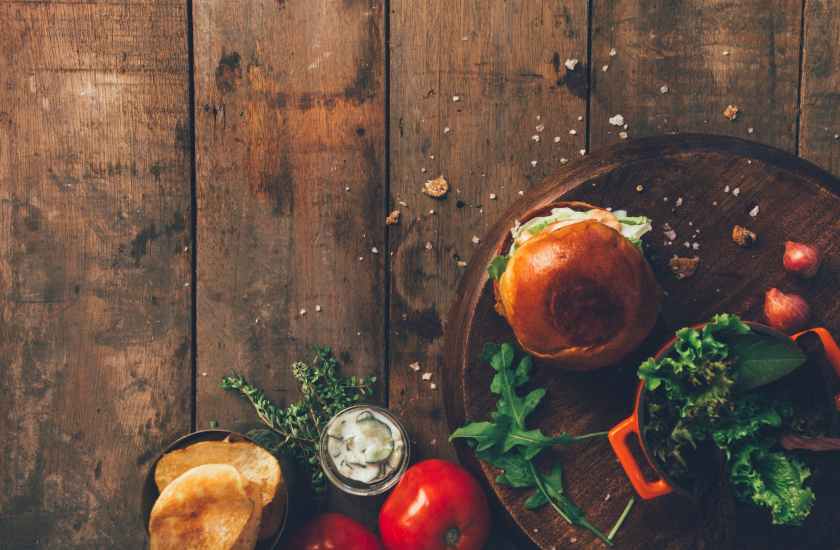
Little did John Montagu, the fourth Earl of Sandwich (1718-92) realize that his “sandwich” invention would become even bigger, longer and filled up with more varieties than before. Known popularly by the name of sub, hoagie, hero, grinder or Italian sandwich, the “submarine sandwich” has become one of the fastest growing sandwiches, adapted by many into a complete meal for the busy days or a healthier diet. Consisting of a length of bread or roll split lengthwise, filled with a variety of meats, cheeses, vegetables and condiments, this sandwich has no standardized name and has a dozen varieties and combinations globally. In fact those submarine sandwiches longer in length or filled with greater quantities of ingredients than usual, are known as battleship, flattop or destroyer sandwiches.

This sandwich is believed to have originated in the various Italian American communities from the late 19th to mid-20th centuries. The most widespread term of term “submarine” or “sub” is believed to have been after the resemblance of the roll to the shape of a submarine. Various theories have been put forward to the origin of the name. While one theory states that “the submarine” was brought by Dominic Conti (1874–1954), an Italian immigrant who came to New York (1900s) named it after seeing the recovered 1901 submarine called Fenian Ram in the Paterson Museum of New Jersey in 1928.

As per his granddaughter had accounted : “My grandfather came to this country circa 1895 from Montella, Italy. Around 1910, he started his grocery store, called Dominic Conti’s Grocery Store, on Mill Street in Paterson, New Jersey where he was selling the traditional Italian sandwiches. His sandwiches were made from a recipe he brought with him from Italy, which consisted of a long crust roll, filled with cold cuts, topped with lettuce, tomatoes, peppers, onions, oil, vinegar, Italian herbs and spices, salt, and pepper. The sandwich started with a layer of cheese and ended with a layer of cheese (this was so the bread wouldn’t get soggy).”

Eventually while the “submarine” had caught on; it would seem that the “hoagie” was already in vogue. Originating in the World War I era shipyard in Philadelphia known as Hog Island, where emergency shipping was produced for the war effort; Italians working there introduced the sandwich by putting various meats, cheeses, and lettuce between two slices of bread. This later was known as the “Hog Island” sandwich; shortened to “Hoggies”, then the “hoagie”.

“It’s like making a sandwich. I start with the bread and the meat. That’s the architecture. Add some cheese, lettuce and tomato. That’s character development and polishing. Then, the fun part. All the little historical details and the slang and the humor is the mayonnaise. I go back and slather that shit everywhere. The mayo is the best part. I’m a bit messy with the mayo.” Laini Giles

However, the Philadelphia Almanac and Citizen’s Manual states attributed this creation to the early-twentieth-century street vendors called “hokey-pokey men”. They had sold antipasto salad, meats, cookies and buns with a cut in them. When bakeries produced a long loaf called the pinafore(1879); Entrepreneurial “hokey-pokey men” sliced the loaf in half, stuffed it with antipasto salad, and sold the world’s first “hoagie”. Whereas another explanation is that the word “hoagie” arose in the late 19th to early 20th century, among the Italian immigrant community in South Philadelphia. Deli owners would give away scraps of cheeses and meats in an Italian bread-roll known as a “hokie”, but pronounced by the Italian immigrants as “hoagie”. After the WWII, the term “hoagie” had caught on and stayed.

There are numerous variants of these “submarine sandwiches” which have been named so based on the mix of ingredients or bread type like the New York “Hero”, New England “grinder” (a hot submarine sandwich (meatball; sausage; etc.) or a oven toasted hoagie) or Gatsby of Cape Town, South Africa. Come by whichever name, “submarine” or “hoagies” are here to stay. With National Hoagie Day (May 5th), it would be a time for some food fun.

Posted in Daily, Food

Of Pretzels, Origin and Evolution

When facing an unexpected situation, the first emotion that one comes across is the “feeling of something happening, of being twisted and knotted” or the most popular feeling of “butterflies in the stomach”. With the month of April drawing to a close, it would be remiss if one would miss this month of “poetry, jazz, soft pretzels and humour” without experiencing the feeling of being in “pretzels”.

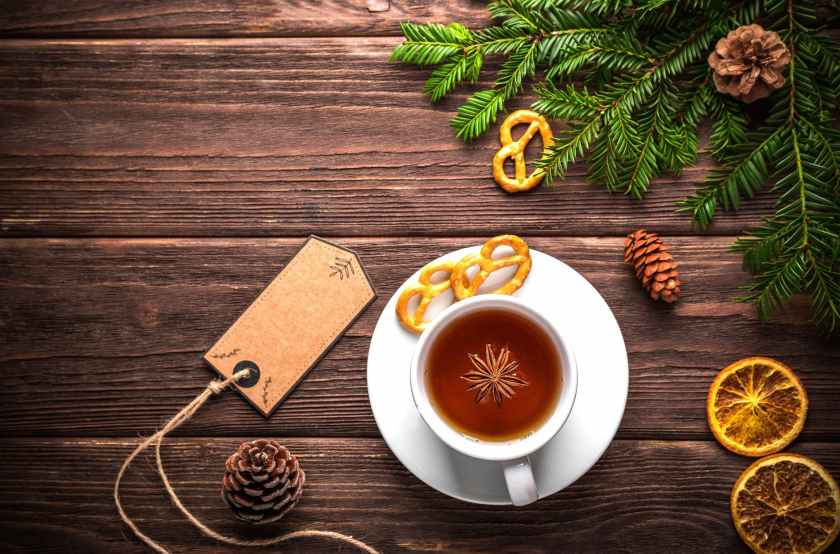
Originating in Europe, possible among the monks of the Middle Ages, “pretzel” were baked bread products made from dough, commonly shaped twisted into a knot. With the traditional pretzel in distinctive non-symmetrical loops; the modern pretzels comes in a varied range of shapes with exotic and common seasonings like chocolate, glazed, with nuts, seeds or with the flavours of several varieties of cheese. Today pretzels can be had “soft”, eaten shortly after preparation or “hard-baked” with a long shelf life.

“My mother always said, ‘When you’re eating pretzels, chew before you swallow’. Always listen to your mother.” George W. Bush

The true origin of pretzels have been traced to numerous accounts, though not verified. From the very early Italian monks making pretzels as rewards to children who learn their prayers or as a derivation of communion bread. In Germany, legends state that pretzels were the invention of desperate bakers held hostage by local dignitaries whereas, other legends elsewhere believe that pretzels were substitute for the heathen baking traditions of “sun cross” and the like.

Either way, the popularity of pretzels in the early years where evidenced as their use as an emblem by the various baker guilds. With the “knot of the pretzel” believed to be hands folded in prayer, pretzels had a religious significance in the Church based on their ingredients and shape. Additionally the three holes of the pretzels signified the Holy Trinity. As pretzels could be made by simply using flour and water (no eggs or lard were permitted during Lent); they provided a proper substitute during the Lent. Over the years, no Lent or Easter would be complete without pretzels, with them being sometimes substituted as Easter eggs. (https://tasty.co/recipe/homemade-soft-pretzels)

“Between evening and bedtime, Night is on the prowl for pretzels….” Rajat Kanti Chakrabarty

Despite the insignificant size and knotted shape, pretzels have an extensive influence on landscape architecture and sculpture (Pretzel Park, Philadelphia), in culture (pretzel dance move in swing dancing), furniture design inspired pretzel chairs and adoption of “pretzel logo” by Municipal government of City of Freeport, Illinois. Fashion, photography and the entertainment industry too have adapted the “pretzel” in a variety of styles, ranging from clothing to ecosystem techniques as well being a part of the literature, poetry and music. Although pretzels are no longer in fashion like the initial days, looks like they will still be around.

Posted in Daily, Food

Of Rice, Steam and Cake

Add four parts uncooked rice (or parboiled rice) to one part whole white lentil (urad dal) are soaked separately overnight (at least four hours to six hours). Optionally spices like fenugreek seeds can be added at the time of soaking for additional flavour. After being soaked, the lentils are ground to a fine paste and the rice is separately coarsely ground and then combined. The mixture is left to ferment overnight during which its volume will more than double. The finished batter is put into trays of greased perforated moulds for steaming. The trays are held above the level of boiling water in a pot, and the pot is covered until done (about 10–25 minutes, depending on size).

Idli or idly are a type of savoury rice cake, originating from the Indian subcontinent, popular as breakfast foods. Made primarily from steaming a batter of fermented black lentils (de-husked) and rice, idlis are can be had at any time, most popularly with condiments like chutney and sambhar. Other variations include rava (semolina) idli, ragi idli, “tatte” idli varying to the local ingredients and flavour.

Several ancient Indian works mention the precursor of modern idli. Initial records mention soaking black gram in buttermilk, ground to a fine paste and mixed with the clear water of curd and spices. The three key aspects of the modern idli recipe; the use of rice (not just urad dal), the long fermentation of the mix and the steaming for fluffiness are left out. Popular belief is that the Indonesian influence on the cooks of those times may have let to the development of the modern idli. As of 2015, March 30 is celebrated as World Idli Day.

Besides known for its’ versatility of flavours and on the streets, idlis are nutritionally smart. In a single idli, one consumes 2 grams of protein, 2 grams of dietary fiber and 8 grams of carbohydrates, approximately 39 calories. In addition, it contains iron with trace amounts of calcium, folate, potassium and vitamin A. Spices like fenugreek, mustard seeds, chili peppers, cumin, coriander, ginger or sugar may be added to make them sweet instead of savory. Stuffed idli with filling of potato, beans, carrot and masala are popular. Leftover idlis can be cut-up or crushed and sauteed for a dish called idli upma. Creative fusion recipes like idly chicken, idly manchurian, idly fry, chilly idly and a lot of different ideas have been successfully experimented and recreated.

From the huge plate sized “thatte idlis” to the “Mangalorean Muday Idli” in steamed leaves or Goan Sannas and mini Sambhar idli, these dishes are travelling miles from the subcontinent and gaining popularity globally.


Posted in Daily, Food, Stories Around the World

Of Green, Blue and Irish

“May your heart be light and happy, may your smile be big and wide, and may your pockets always have a coin or two inside!”- Irish Proverb

Although the Lá Fhéile Pádraig, “the Day of the Festival of Patrick”, or more commonly known as St. Patrick’s Day, an Irish cultural and religious celebration was observed worldwide on 17 March, (the traditional death date of Saint Patrick (c. AD 385–461)), celebrations are still afoot at most restaurants. One of the official Christian feast day, the day commemorates Saint Patrick, the arrival of Christianity in Ireland, celebrating the heritage and culture of the Irish in general. While going “green” coloured marks St. Patrick’s Day (although the Order of St. Patrick, an Anglo-Irish chivalric order (1783) adopted blue as its colour), indulging in Irish cuisine would be an added bonus, besides savouring the difference in flavours and style.

“Only Irish Coffee provides in a single glass all four essential food groups: alcohol, sugar, caffeine and fat.” Alex Levine

As a part of the celebrations, representative traditional Irish dishes like Irish stew, bacon and cabbage (with potatoes), boxty (potato pancake), coddle (sausage, bacon, and potato), colcannon, drisheen (a type of black pudding) or goody (A dessert dish made by boiling bread in milk with sugar and spices.) and gur cake have been on the menu in select restaurants and cafes. Yet the best of all, Irish Coffee, Irish Whiskey and Irish beer have been one of the favourite for many. For a weekend or weekday break from the routine cuisine, “going Irish” would be a welcome change.

“Bless us with good food, the gift of gab and hearty laughter. May the love and joy we share, be with us ever after!” Irish Kitchen Prayer

The Irish has evolved over the ancient times, largely based on the cereals and dairy products with meat cooked fresh, stewed (at times flavoured with honey) or used “purple berries” to colour the meal. Largely the cuisine has been modified by the English conquest in early 17th century followed by the migration of the Irish to the Americas. With the development of technology and media, Irish recipes gained its’ own level of global popularity. For the cuisine experimenter, trying out the barmbrack (leavened bread with sultanas and raisins) with colcannon (mashed potatoes with kale or cabbage) or the traditional Irish stew (of lamb or mutton with potatoes, carrots, parsnips, onions and seasoning) with gur cake (a confectionery made of a dark brown paste, containing a mixture of cake or bread crumbs, dried fruits (sultana raisins etc.) with a sweetener, put as a thick filling between two layers of thin pastry. Not to forget, the Irish Coffee or beer as a go along.

However basic and simple the Irish cuisine may sound, they never fail to please the taste buds with the different flavours. As the Irish often say, “Bíonn blas ar an mbeagán” (Bee-on bloss err on myah-gon) translated as “Though a small amount, it’s tasty.”

Sláinte (Pronounced Slawn-che, Health! (Cheers)) !!!

Posted in Daily, Food

Basics, Creativity and Flour

“Your bread assumes the shape of the pan you use to bake your flour. Therefore stand still and know that you can’t use a rounded pan and ever get squared bread. Change the pan and change the shape of the bread!” Israelmore Ayivor

One of the items landing a place on the “weekly shopping list” is flour and the like. Whether the principal cereal we take be cassava or wheat, rice, corn or chickpea; flour is the necessity of any home cooking or kitchen experimentation.

While the earliest archaeological evidence for wheat seeds crushed between simple millstones to make flour dates to 6000 BC; other types of flour have been in use in various countries. With the Industrial Revolution, mills as well preservation techniques of flour were drastically modified and improved. As flour began to be enriched and trade and transport options increased; flour trading became prosperous. Throw in the green revolution and flour of all types began to be available in any places.

“I love using rice as a flour; I’ll grind roasted rice and dip fish in that. It gives a beautiful, crunchy texture.” Marcus Samuelsson

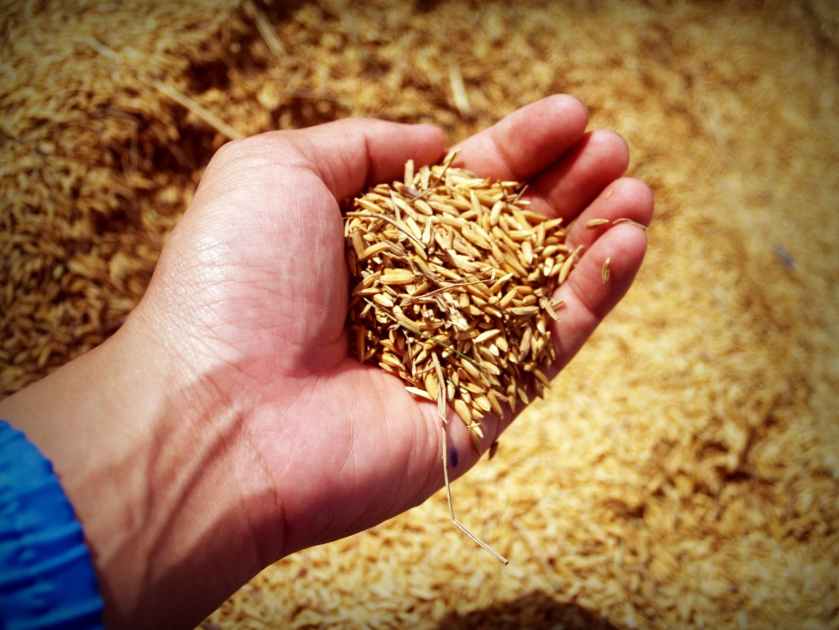
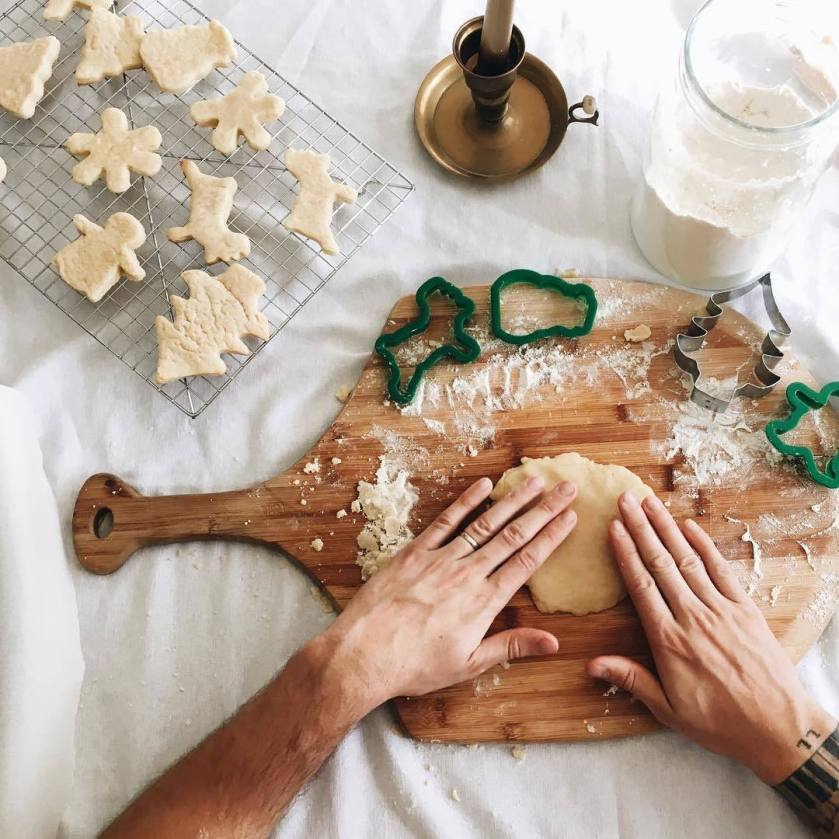
Being in the National Flour month (as per most foodimentarians), for those of us with gluten problems can resort to rice flour, chickpea flour as well as banana flour. There are many replacements for wheat in the recipes. More fascinating aspects is that non cereal flours like soybean, arrowroot, quinoa are other options to look into. And flour doesn’t restrict itself to being in the meal or as desserts but can also be a part of the gravy as well. With all varieties being available in most supermarkets and groceries; trying new recipes ( all time favourite of rice flour vadais or besan laddoos) can be fun for family, friends as well as a break from the busy world of work, entertainment and schedules.

Gravy is the simplest, tastiest, most memory-laden dish I know how to make: a little flour, salt and pepper, crispy bits of whatever meat anchored the meal, a couple of cups of water or milk and slow stirring to break up lumps.” Dorothy Allison