Posted in Daily, Food

Of Crescent and Croissants

“You are going to have to take the rest of these croissants to work with you, I cannot be trusted alone in the house with a half-dozen buttery, crispy pillows of deliciousness.” Stacey Ballis

These fluffy, light and inviting goodness has now and then replaced the regular doughnut or bagel sessions with coffee or tea, often earning themselves a very special spot on most cafe’ menus. The croissant, a buttery, flaky, viennoiserie pastry although most popularized through the French cuisine, is of Austrian origin, named for its historical crescent shape. Made of a layered yeast-leavened dough by a technique known as laminating almost similar to the making of a puff pastry.

Most culinary experts declare the ancestor of the croissant to be “the kipferl”, a traditional Austrian yeast based roll made as early as 13th century in varied shapes, plain or filled with nuts and the like. Although the true origin of “kipferl” is not known, it is believed to be based on the “feteer halali”, a flaky crescent-shaped Egyptian pastry that is a version of the “feteer meshaltet” pastry known since their ancient times. Essentially it all boils down to dough and yeast, one of the better versions of the good old bread.

“Good bread is the most fundamentally satisfying of all foods; and good bread with fresh butter, the greatest of feasts.” James Beard

As with most popular food fads of today, croissants have their own culinary legends surrounding it. One legend was that they were invented to celebrate the defeat of the Umayyad forces by the Franks at the Battle of Tours in 732 in Europe, with the shape representing the Islamic crescent. Whereas some say that it was invented in Buda; or, according to other sources, in Vienna in 1683 to celebrate the defeat of the Ottomans by Christian forces as they laid siege of the city. The shape of croissants was a tribute by the bakers as a reference to the crescents on the Ottoman flags, for these bakers staying up all night heard the tunneling operation and sounded the alarm.

“”Croissant”: However you choose to pronounce it at home, it is perhaps worth nothing that outside the United States, the closer you can come to saying “kwass-ohn,” the sooner you can expect to be presented with one.” Bill Bryson

Croissants has their own family of cousins with the Italian cornetto or brioche, Spanish cuerno, the Turkish ay çöregi to list a few. Handmade or readily available in the grocery, croissants have made their mark. As the years progressed, their fillings grew more interesting leading to the birth of “croissan’wich”. As time goes on, so will the art of croissants be more diverse and varied.

Posted in Daily, Food, Photography Art, Quotes

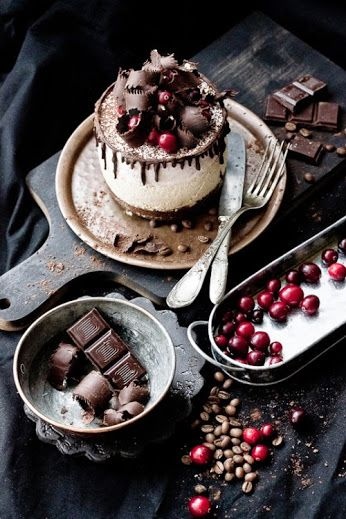
Chocolate to Cake

“Part of life and part of the enjoyment of life is a croissant and a chocolate cake and eggs and milkshakes and oatmeal. There’s so many things, you have to learn to appreciate it all. When I don’t eat as much as I should, I’m not fun to be around; I’m fussy.” — Nina Dobrev

Almost like development of civilization, chocolate cake or chocolate gâteau made an entrance around late 1800s. Retrospectively that’s a long time considering that chocolate drink was there around the times of the Mayans and Aztecs. Chocolate cake lovers’ need to thank Coenraad van Houten (1828) for extraction of cacao butter and “rock cacao”. With Rodolphe Lindt (1879) developing “conching” for silky smooth chocolate; slowly the experimentation of chocolate began from fillings and glazes to the cake batter.

“Let’s face it, a nice creamy chocolate cake does a lot for a lot of people; it does for me.” Audrey Hepburn

Chocolate decadence took on full swing with molten chocolate cakes with liquid chocolate centers. Furthermore the cakes were infused chocolates with exotic flavors such as tea, red pepper, passion fruit and champagne were popular. Chocolate lounges and artisanal chocolate makers took on the show.

“I had a little epiphany when I was a writer at ‘Chicago’ magazine. I sat down to dinner at the Ritz-Carlton. Somebody poured a white dessert wine with chocolate cake. It was a wine I would never have expected to make sense. The idea of any wine tasting fabulous with chocolate cake was fascinating to me.”  Ted Allen

There are many varieties and variants of chocolate cake especially chocolate layer cake, fudge cake, Joffre cake and Devil’s food cake to list a few. When one feels like celebrating or enjoying the feel of “breaded chocolate”, it triggers the memories and anticipation of delving into that piece of cake of chocolaty goodness. Besides it would be quite remiss for a chocolate lover to crush the taste buds on “National Chocolate Cake Day”. So here’s to that little splurge of calories but irresistible goodness.

“I like quinoa. I like gingerbread. I feel they should be kept separate. I’m not in favor of this thing of making kind of raw, vegan chocolate cake and saying it’s as good as chocolate cake. I mean, just eat cake and be done with it. And then have a separate meal of quinoa.” Bee Wilson

Posted in Daily, Food

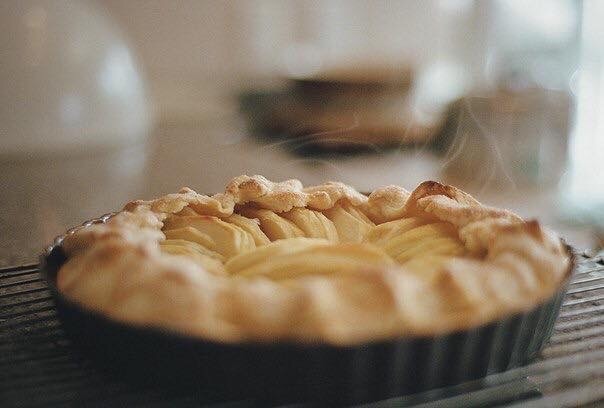
Of Pie and Beyond

“Sing a song of sixpence,
A pocket full of rye.
Four and twenty blackbirds,
Baked in a pie.”….Sing a Song of Sixpence (Roud Folk Song Index 13191)

On the basis of etymology, “Pie” came from “pastry” of middle 14th century or older “piehus” referring to bakery (12th century) or the Medieval Latin of pie or pia of meat or fish enclosed in pastry. The popularity of pie can be attested by its’ use in nursery rhymes to popular holiday or pot luck dinners as well as references to slap stick humour, pie-throwing contests and the like.

“Georgie Porgie, pudding and pie,
Kissed the girls and made them cry,
When the boys came out to play,
Georgie Porgie ran away.”….Georgie Porgie ( Roud Folk Song Index number 19532)

From the very early days of man’s existence, With long travels, difficult storage and introduction of baking, reliable food sources were needed. This lead to the Egyptians “dhourra cake” (flat brittle bread loaf of millet bread) and Romans biscuit known as “buccellum” being in popular use especially among the sailors. Yet the Ancient Greeks were believed to have first made use of the pie pastry concept. From then on, Romans slowly evolved the art of pie making which later spread over to Medieval Europe and hence has stayed on.

“Little Jack Horner
Sat in the corner,
Eating his Christmas pie…” from Little Jack Horner ( Roud Folk Song Index number 13027)

From being savory or sweet, pies were the answer for middle, working class people for besides being easy to make, they can be made with the locally available ingredients based on the locality, weather and the time of the year. For pie enthusiasts, any filling can be put into a pie from meat fillings to fruits, cheese and even the basic vegetables. Sometimes, porcelain ornaments have graced the top of pies, primarily to release steam, identify the contents as well being an eye-catcher. With the lack of time and need for quick homemade meals and ready made pie pastry, pies are an answer for quick, healthy, nutritious meals or delectable desserts. Above all, pies encompass feelings of homeliness, togetherness and experimentation laced with traditions, experiences and nostalgia.

Doing projects really gives people self-confidence. Nothing is better than taking the pie out of the oven. What it does for you personally, and for your family’s idea of you, is something you can’t buy. Martha Stewart

Posted in Daily, Food

To Say “Cheese”

The early bird may get the worm, but its the second mouse that gets the cheese. Jeremy Paxman

Cheese is one of the oldest foods of man, existed since the domestication of animals began. It was used in the ancient times of Egyptians as evidenced in their tombs and hieroglyphics. The Romans had built up “cheese making” as a very profitable industry. Besides being a rich source of calories, proteins and minerals as well as a great supplement to meals, certain types of cheese(Roquefort blue cheese) have benefits for cardiovascular health as well anti stress benefits of tryptophan.

The word cheese comes from Latin “caseus”, from which the modern word casein is also derived. The word cheese can be traced to chese (in Middle English) and ciese or cese (in Old English). Similar words are shared by other West Germanic languages—West Frisian tsiis, Dutch kaas, German Käse, Old High German chasi—all from the reconstructed West-Germanic form *kasi, which in turn is an early borrowing from Latin.

For every pound of cheese, ten pounds of milk are required. On the record the biggest and heaviest cheese produced weighed 57,518 pounds and was 32 feet long. It was cheddar and came from a Canadian cheese maker who used 540,000 pounds of milk to make it.With different ways of making cheese, there are around 500 different varieties recognized by the International Dairy Federation although there are more than 1,000 varieties approved by Sandine and Elliker. There is no single method to classify or group cheese. Various criteria like length of ageing, texture, methods of making, fat content, animal milk, country or region of origin, etc. are used either singly or in combination.

Nothing says holidays, like a cheese log. Ellen DeGeneres

Cheese has its’ own share of history and legends. By legend, blue cheese was invented when a young boy was eating a sandwich near a cave and abandoned his lunch to pursue her. When he returned a few days later, the sandwich was covered with mold, but he still ate it and well, the rest is blue cheese history. People who love cheese are called turophiles. Yet cheese was relatively unheard of or less popular in east Asian cultures and pre-Columbian Americas to name a few. With the spread of European imperialism, and later of Euro-American culture and food, cheese has gradually become known and increasingly popular worldwide.

Culture and tradition have to change little by little. So ‘new’ means a little twist, a marriage of Japanese technique with French ingredients. My technique. Indian food, Korean food; I put Italian mozzarella cheese with sashimi. I don’t think ‘new new new.’ I’m not a genius. A little twist. Masaharu Morimoto

Posted in Daily, Food

Flavoured Hot and Spicy

“Great cooking is about being inspired by the simple things around you – fresh markets, various spices. It doesn’t necessarily have to look fancy.” G. Garvin

The Latin root “spec” became Old French of espice or epice, what we now commonly call as “spice”. Add to it the original Nahuatl “chilli” of today and voila, we are ready for the International Hot and Spicy Food Day tomorrow. The origins of both happened quite exclusive of each other, although when we blend the hot and spicy, a whole new palatal feast is experienced.

“Once you get a spice in your home, you have it forever. Women never throw out spices. The Egyptians were buried with their spices. I know which one I’m taking with me when I go.” Erma Bombeck

Spice trade had developed in Middle East, South and East Asia as early as 2000 BCE with predominant use of cinnamon, black pepper and herbs. As the Egyptians practised mummification, the constant demand for imported spices and herbs kept the “spice trade” alive. The earliest written records from the Egyptian, Chinese and Indian cultures connect spices with magic, medicine, religion and tradition. On the other hand, capsicum and chilli peppers were originally in wide spread use in the Americas primarily, Central and South America as well as Mexico around 6000 to 7500 years ago. With the advent of Portuguese trade and spread of the chilli peppers to Asia around the 15th century, the cooking of hot and spicy food took onto newer shores.

“A good spicy challenge strikes a balance between flavour and fear.” Adam Richman

For every food enthusiast, celebrating ” International Hot and Spicy Food Day” ( January 16th) is different every year as each spicy cuisine ranging from the Indian masala to spicy Mexican tortas or Vietnamese Bun bo Hue to Cajun cooking and so on; no cuisine mimics the taste of the other. As for those who have been challenged to enter the hot and spicy waters on this day, keeping the spice to low numbers as per the Scoville scale ( the spiciness or heat scale) helps to ace the test. An additional tip would be to keep starch rich food like bread or “naan” with cold water to combat the heat and spice. Hot and spicy can be tuned to one’s own taste bud, for the beauty lies in experience, experimentation, fun and art of cooking and dining.

“From a young age, I understood the idea of balanced flavor – the reason you put ketchup on a hamburger. I was that kid who wouldn’t eat something if there was something missing. I never really understood it until I began cooking professionally, balancing acids, sweets, spicy flavors and fat.” Michael Mina

Posted in Daily, Food

Origin of “Curry”

On experimenting with various recipes, one interesting fact I had realized that there are so many things about “curry” that we take for being true or ascertained facts, when they may not be so.

Curry applies to dishes with gravy, spicy origins and can range to a variety of South Asian as well as South East Asian dishes, based on the type of spices. Curry technically is not a word actually used in most vernacular Indian languages. Each of the Indian states have their own terminology for “curry” ranging from “shaak” of Gujarat to “saaru” in Karnataka and “jhol” of Bangal. Historians noted that the word had been into common use when the British had tasted and brought the South Asian dishes to the west.

Curry is not a spice but a mixture of spices (often sold grounded as curry powder, mostly of turmeric, cumin, coriander, chilli and ginger) which can used with a variety of vegetables or meat, even seafood to make a variety of dishes, each having their own name in the region. Depending on the addition of water, milk or even curd, the base can be liquid or kept dry.

Curry powder has been one of the world’s oldest medicinal and cooking mixtures ranging back to Mesopotamian era (1700 BC). Although the roots of curry powder may be traced to Asia, documents and books on English cooking as early as 1300s mention the use of this concoction.

“Curreier” vs. “kari” The word “curry” has different meanings when used as a verb and noun. The Vulgar Latin “conredare”, Middle English “currayen” or Old French word “correier” had given roots to the Anglo-French “curreier” which later gave rise to the verb of “currying” meaning to seek favour by flattery or attention. Whereas, the noun “curry” was derived from Tamil “kari” (or a cognate word in a Dravidian language) as states in the Marrian-Webster dictionary. Another derivation I had read online was that the word curry was derived from a South-Asian word “Kori”; a sauce with cooked meat or fish.

Another reasoning behind everything “stew based being called curry” was based on the first English cookbook. In the 1300?s, King Richard II had summoned several cooks and philosophers to produce the first English cookery book known as ‘The Forme of Cury’ (1390). The old English word “Cury” was used to describe cuisine based on French ‘cuire’ meaning: to cook, boil or grill. The word “Cury” became associated with stew.

Either way, “curry” has come a long way especially with the advent of trade and later on travel, led to the exchange of cuisines, culinary ideas as well mixing of flavours with local available ingredients. Soon the indigenous recipes became globalized. Whichever dish it may be especially today as National Curried Chicken Day (January 12th); for an exotic, spicy and different blend of curried chicken; try making the sauce with ghee (clarified butter), onions, garlic, cumin, coriander, cinnamon and turmeric powder with a dash of ginger or just add the right amount of “curry powder” and get the taste buds going.

Posted in Daily, Food, Personal Musings

All in Moderation

“If we could give every individual the right amount of nourishment and exercise, not too little and not too much, we would have the safest way to health.” – Hippocrates

One of the most conflicting emotions that often run in the mind, especially the woman’s mind is whether one is fat or thin ? To be honest, fat is essential to diet and all products or diets that state to eliminate fat is dangerous. Besides being good energy sources and cushioning the internal body organs, certain fats are essential to the brain cells, nerves as well as to fight infection and inflammation. The key lies in moderation and to recognize the bad fats namely “trans-fat” and “saturated fats”. Besides these highlights to look for in the food labels, remember that the more processed, the more sparingly we should eat it. Yet that doesn’t mean we have to avoid the occasional splurge once in a while, not daily.

“These small things – nutrition, place, climate, recreation, the whole casuistry of selfishness – are inconceivably more important than everything one has taken to be important so far.” – Friedrich Nietzsche

When the USDA declared January as the “fat free living month”, it was a little weird decision to make as we can’t live without fats. Yet we can regulate the fat intake especially the bad types. Unfortunately weight loss, fad diets and abstinence from fat doesn’t solve our problems unless we find out what makes us unhappy or dissatisfied or triggers the emotional eating binge.

“Weight loss is not the key to your dreams. The truth is there is no lock and the door is flimsy.” Golda Poretsky

We are all beautiful the way we are. Healthy doesn’t mean thin sized nor does it mean running between the goalposts of diet and binge eating. The easiest way to healthy eating is to be mentally happy and enjoy the food. Food serves to sustain and to revel in the tastes offered, but too much of anything honey or salt spoils the beauty.