Posted in Food

Simple, Boxed and Wholesome

Living the life of a college student teaches one many of the practicalities of life. Shuffling between books, part-time jobs for that extra inflow of cash, managing expenses on a very stringent budget and encountering unexpected emergencies, be it on the social, academic or family fronts; teaches one to gear up for many situations. On a personal note, it was the budget which had lead to the culinary experimentation at a very basic level.

“You don’t have to cook fancy or complicated masterpieces—just good food from fresh ingredients.” Julia Child

After too many peanut-butter and jelly sandwiches, repeated lunches of sandwiches or rice lead to a search for recipes with basic and minimal ingredients and plenty of experimentation. One of the first attempts was to make kathi rolls for lunch. Essentially a kathi roll is a skewer-roasted kebab wrapped in a paratha bread. Homemade variants essentially imply any wrap containing a filling enfolded in an Indian flatbread (roti). With the fillings being highly varied from chutney, vegetable salad, roasted or sauteed vegetables, egg or chicken, one can be extremely creative and go with whatever is available at hand. Though similar to the burrito, the difference lies essentially in the bread that is used.

Technically the burrito is a flour tortilla wrapped into a sealed cylindrical shape with various fillings. The former may be lightly grilled or steamed, softening it or making it more pliable. Often eaten by hand as the tight wrapping keeps the filling together. As for the fillings, they are usually savoury with ingredients ranging from cooked rice or beans, vegetables (especially the salad types like lettuce, tomatoes), condiments like salsa or guacamole, meat of choice (as salad mix or diced and curried) or simply cheese. Newer styles of serving burritos include the wet style (covered with savoury sauces), spicy types, or even a mix of both. The only catch is they are all had with the cutlery at hand. .

“You don’t have to eat less, you just have to eat right.” Unknown

Turning towards the adult years, especially when rapidly approaching the two scores; counting calories becomes the norm. Which is why the morning melee doesn’t simply involve packing lunch for the kids, but also two additional lunch boxes grace the counter. While packing lunch for the two of us, the setting is kept simple and basic with plenty of protein to kill the hunger pangs and care is taken to keep the meals less greasy, fussy or spicy. Besides it is a good change from the elaborate dinner preparations. Having lunch at the work-space beats heading out for the midday meal on many levels. Not only does one get to portion out the calorie intake; the swapping of recipes, sharing of simple meals and a chance to interact beyond the work-front provides a soothing touch to the hectic or mundane tune of the morning hours. As for getting creative, this is the best opportunity to charge ahead with experimentation and palatability; keeping things simple, rich and enticing. For any food connoisseur, these are the challenges which perk up the recipe corner and discovering the fun and joy of simple and balanced meals.

Posted in Food, Stories Around the World

Nuts, Caramel and Snack

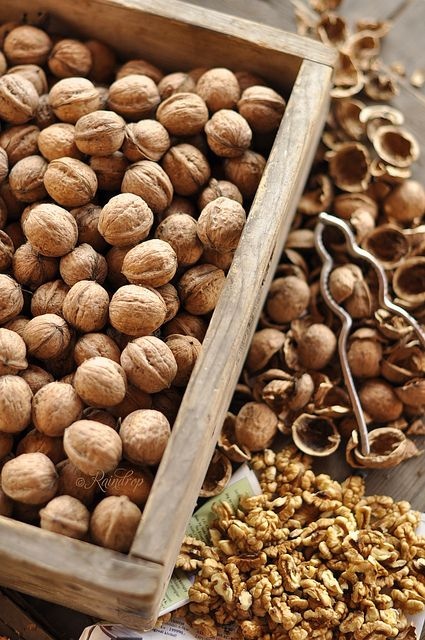
Nearing the end of the first month of the 2020s, the constant battle between sugar cravings, snacking and healthy leads one to explore alternative options. Keeping the sugar, sodium and fats intake to a limit isn’t always an easy task. As for all those health snacks, keeping the hidden sugars in the range is always the catch. Exploring the healthy snack recipes, adding a little sugar to the nuts makes the traditional brittle a healthy snack, especially for the cold hungry wintry evenings.

One of the earliest confectionery types, brittle is essentially flat broken pieces of hard sugar candy embedded with pecans, almonds or peanuts, or simply a mixed range of nuts. Depending on the local availability, the mix can be of walnuts, pistachios (Middle Eastern) or even sesame seeds. While peanut brittle still stays high on the radar, variations and mixes are a local delight. To name a few variations include the French croquant, Greek pasteli, Punjabi chikki or Indian gachak, Chinese Huasheng tang to name a few. 

“An Excellent Receipt for Groundnut Candy
To one quart or molasses add half a pint of brown sugar and a quarter of a pound of butter; boil it for half an hour over a slow fire; then put in a quart of groundnuts, parched and shelled; boil for a quarter of an hour, and then pour it into a shallow tin pan to harden.” —The Carolina Housewife, Sarah Rutledge, facsimile copy 1847 edition, with an introduction by Anna Wells Rutledge [University of South Carolina Press:Columbia] 1979 (p. 219) (1847)

Most of the traditional recipes calls for first caramelizing the sugar, corn syrup or honey and then the nuts are mixed with the caramelized sugar with the spices or leavening agents added last. While some result in a liquid like consistency which is poured out and troweled to uniform thickness; other recipes may have a grainy consistency of which the brittle is then prepared into tiny balls. When the brittle is cooled, it can be had as tiny bite sized snacks.

An interesting variation is the Paraguayan “Ka’í Ladrillo”, a typical dessert made mainly with peanuts and molasses. This high protein snack needs toasted peanuts and molasses. Few varieties include a tinge of sour orange or grapefruit juice to give a bittersweet taste to diminish the excessive sweetness.

Keeping the sugar and fat content in sights, sometimes modifying the good old traditional mixes gives an easy, pack-able as well as feasible options. For life in bite-sized portions saves for some memorable experiences.

“Peanut Brittle I
Sugar, 2 cups
Water, 2/3 cup
Cream of tartar, 1/4 teaspoon
Molasses, 2 tablespoons
Salt, 1/2 teaspoon
Cream, 2 tablspoons
Baking soda, 1/2 teaspoon
Peanuts, shelled, 1 cup
Combine sugar, water and cream of tartar in a heavy saucepan. Plce over low heat and stir until sugar is dissolved; cook without stirring to 280 degrees F. (brittle). Wipe down crystals from sides of pan with a damp cloth wrapped around the tines of a fork. Add molasses, salt and cream. Cook slwoly to 290 degrees F., stirring slowly but constantly. Remove from stove. Quickly stir in soda and peanuts. (Be sure that soda is free from lumps. Pour onto an oiled surface–a shallow pan or marble slab–in a very thin layer. When cool enough to handle, the brittle may be grasped at the edges and stretched into a very thin sheet. When cold break into medium-sized pieces. Note: If peanuts are raw, add a sirup at 250 degrees F. instead of at the end. Makes about 1 pound.”
—Woman’s Home Companion Cook Book [P.F. Collier & Son:New York] 1942 (p. 788-789) [NOTE: Peanut Brittle II consists of sugar, baking soda and peanuts only. This book also offers recipes for coconut brittle, Chocolate-Nut Brittle and Bran-Nut Brittle.]

Posted in Life, Personal Musings, Quotes, Random Thoughts, Stories Around the World

Weave of the Ribbon

“It’s not the years in your life that count. It’s the life in your years.” Abe Lincoln

Unexpected news or shockers from what was previously imagined as real can give a jolt to the person when understanding hits the surface. Yet when it does happens, how one reacts or rather how all of us react, makes the biggest difference.

35 years male. Single. Known case of thalassemia major. On blood transfusions since age of six years. Recurrent infections. HIV ELISA positive.

40 years female. Recurrent infections since the past year. Atypical pneumonia. Disease profiles variable. HIV ELISA positive.

7 year old male.  Recurrent oral candidiasis. Recent diagnosed pulmonary tuberculosis. HIV ELISA and PCR positive.

These above cases are not even close to the tip of the iceberg of the damage caused by what was originally believed to be the mutated form of the wild virus in non-human primates. Rising to global pandemic proportions, the origins are traced to as early as 1910 wherein probably the wild virus underwent mutations to the present form by series of changes ranging from suppression of the innate and internal immune response, high-risk transmission channels as well as social and environmental changes leading to the rapid spread of the mutated virus form. Though the earliest well-documented case of HIV in a human was done in 1959, the clinical cluster of cases (1981) in the United States with rare types of pneumonia (symptoms of Pneumocystis carinii pneumonia (PCP)) and rise of previously rare skin cancer called Kaposi’s sarcoma (KS) prompted the CDC to develop a task force to control the outbreak. With these opportunistic infections being more prevalent in the hemophiliacs, drug users, certain endemic areas and social or sexual preferences; the task force stepped up the ante and the term AIDS was coined and brought to the forefront of the mass public.

From Ryan White to Greg Louganis or Magic Johnson and many numerous people, each of them had fought their battle with the disease of HIV/AIDS. Whether it was by their circumstances or series of unfortunate events, the questions and chaotic thoughts every person or loved one goes through on hearing the positive confirmation is the plenty of “why me’s” and the uncertainty of the future, disease progress and implications on the personal, professional as well as mental front. None of us realize the reality behind the scene, unless we step into the other’s shoes and walk a couple of miles. Only then the false pictures get morphed with those little details that help one to realize the truth was far from what was initially perceived.

“You cannot hope to build a better world without improving the individuals. To that end,each of us must work for our own improvement and, at the same time, share a general responsibility for all humanity, our particular duty being to aid those to whom we think can be most useful.” Marie Curie

As the global battle continues on multiple fronts, from raising awareness to finding solutions and reparative measures for the ongoing myriad of symptoms and disease complex, society in general as to sit up and take note. Ignorance may be bliss for now, but it always comes at a heavy price. Neither does guilt, accusations or pointing fingers help any. But awareness doesn’t hurt anyone. Instead it helps to build for a better tomorrow. The resilience of mankind lies in the ability to pick the battle and choose wise. Linking the goals for the common future would help for the days of tomorrow.

“A man only begins to be a man when he ceases to whine and revile, and commences to search for the hidden justice which regulates his life. And he adapts his mind to that regulating factor, he ceases to accuse others as the cause of his condition, and builds himself up in strong and noble thoughts; ceases to kick against circumstances, but begins to use them as aids to his more rapid progress, and as a means of the hidden powers and possibilities within himself.” James Allen (As a Man Thinketh)

6 pics

Posted in Daily, Food, Uncategorized

Of Parfait, Choice and Style

For any meal, the finale is marked by that delightful bit of sweetness. With the rising awareness of eating healthy and right, the right balance has to be struck at times between the temptation of the sugar craving to close the meal and to stay on the low healthy calorie counter too. Which is why “parfait” has evolved since it’s inception to the present day.

The oldest known recipe can be traced to 1894, of French origin where it had started off as a frozen dessert. While the French prefer to make the base from cream, egg, sugar and syrup creating a perfect custard-like puree, known as “the parfait”; whereas the American counterpart includes an artful layering of varied ingredients like granola, nuts, yogurt, liqueurs with a topping of fruits or whipped cream layered and served in a tall glass.

Of recent, with new trends and various experimentation, parfaits have been introduced without the cream and liqueurs. Instead they are made by simply layering the fresh fruits ranging from berries, cut peaches, strawberries with yogurt , granola or nuts; served as a healthy snack, breakfast option or a light meal, as a change from the regular. Which ever way it may be, the popularity of the parfait lies not only in it’s ease of preparation and the delectable indulgence but also in the appealing art it holds in itself.

Posted in Daily, Life, Random Thoughts, Stories Around the World, Work

Find the Lighter Side

“I think the next best thing to solving a problem is finding some humor in it.” Frank A. Clark

Time was running to the final minutes at the end of the shift, as one was rushing to complete the daily plans or work scheduled for the day. With barely few minuted left, imagine a quick pop up messages or call, resulting in the loss of those precious minutes. Consequently by the time the “urgent call or task” ends, the daily work scheduled is still yet to be completed.

Amidst all the melee’ there is one person that occasionally arises from the entire crowd, who asks the most obvious question; like the listener who asks the speaker at the end of the story, who was “X” where the latter was the central character all along. On some days, the question might irritate the running mood; on other days it lightens the load and provides a much needed stress breaker. Such questioners may arise on purpose to diffuse the stress of the crowd. Those times, when taken in the right spirit and manner, can provide a heavy dose of hearty humour.

“Through humor, you can soften some of the worst blows that life delivers. And once you find laughter, no matter how painful your situation might be, you can survive it.” Bill Cosby

Finding the lighter side of life is a necessity for survival in today’s world. While one may be bogged down by the lists of to-do’s or must-have’s; finding humour on cloudy days may provide the gap for the scarce sun rays to shine through. After all, life is a never ending game. Learning to not forfeit but being a sporty loser as well as a gracious winner is what makes the days, moments and seconds count.

“A sense of humor… is needed armor. Joy in one’s heart and some laughter on one’s lips is a sign that the person down deep has a pretty good grasp of life.” Hugh Sidey

A barber Shop was filled with customers when a little boy walks into the shop. Looking at the little boy, the barber whispers to his customer, “This is the most foolish kid in the world. Watch while I prove it to you.” The barber puts a dollar bill in one hand and two quarters in the other, then calls the boy over and asks, “Which do you want, son?” The boy takes the quarters and leaves. “What did I tell you?” said the barber. “That kid never learns!” the barber said laughing. Later, when the customer leaves the shop, he sees the same young boy coming out of the ice cream store.
“Hey, son! May I ask you a question? Why did you take the quarters instead of the dollar bill?” asked the man. The boy licked his favorite ice-cream and replied,“Because the day I take the dollar, the game is over.”

“A person without a sense of humor is like a wagon without springs. It’s jolted by every pebble on the road.” Henry Ward Beecher

Posted in Daily, Food, Stories Around the World

Mix Them as “Mock” or “Cocktails”

One of the social necessities of being a part of a bigger, corporate or franchise based workforce, is attending the social or business social networking, popularly under the banner of “cocktail” evenings. At times, the conversations are silently laced with hunger pangs after a long day or the stress of the day filtering through the thoughts, which can be quite dangerous especially when thoughts and words don’t really gel well with the situation. While primarily the whole purpose is to extend the social “work based” or business connections, one can hardly ignore the “hors d’oeuvre” or appetizers as well as the baseline of the gathering, “cocktails or mocktails”.

“If it’s a cocktail party, I generally make five or six different things, and I try to choose recipes that feel like a meal: a chicken thing, a fish or shrimp thing, maybe two vegetable things, and I think it’s fun to end the cocktail party with a sweet thing.” Ina Garten


While the inventor of the cocktail evenings is quite a controversial topic, with some believing it to be Alec Waugh of London or Mrs. Julius S. Walsh Jr. of St. Louis, Missouri (May 1917). The former had detailed that the Alec Waugh noted that the first cocktail party in England was hosted by war artist Christopher Nevinson (1924) while Mrs. Walsh invited 50 guests to her house on a Sunday at high noon for a one-hour affair. The St. Paul’s Pioneer Press newspaper had declared that “The party scored an instant hit,” and stated that within weeks cocktail parties had become “a St. Louis institution”.

“A cocktail done right can really show your guests that you care.” Danny Meyer

Whether purely alcoholic or fruit based, a cocktail is essentially both palate satisfying as well as a work of “art”. As defined, “cocktail” is an alcoholic mixed drink, which is either a combination of spirits, or one or more spirits mixed with other ingredients such as fruit juice, lemonade, flavored syrup, or cream. Technically it contains alcohol, sugar and a bitter or citrus. While there are various types of cocktails, based on the number and kind of ingredients added; their origins are debated.


Also, when a mixed drink contains only a distilled spirit and a mixer, such as soda or fruit juice, it is a highball. When it contains only a distilled spirit and a liqueur, it is a duo. On adding a mixer to the duo, it becomes a “trio”. The additional ingredients may be sugar, honey, milk, cream, and various herbs. Mixed drinks without alcohol that resemble cocktails are known as “mocktails” or “virgin cocktails”.

“A cocktail can be made by the bartender. But the cocktail also can be made by the chef.” Jose Andres

The first use of the term “cocktail” is highly debatable. As per The London Telegraph, a satirical newspaper article (March 20, 1798) about what must have been a hell of a party had accounted the drinks imbibed by William Pitt (the younger) which included “L’huile de Venus,” “parfait amour,” and “‘cock-tail (vulgarly called ginger.)’” The challenge was whether “cocktail” in this article truly referred to an alcoholic drink, or something else. Another record was the article from The Farmer’s Cabinet ( Vermont, April 28, 1803), where to drink a cocktail was claimed to be “excellent for the head.” By 1806, the word “cocktail” had reached it’s current meaning as defined by the newspaper, Balance and Columbian Repository( May 13, 1806), the editor defined a cocktail as: “a stimulating liquor composed of spirits of any kind – sugar, water, and bitters.”


The exact derivation is attributed to multiple origins. One origin of “cocktail” is as a mispronunciation of the French word for eggcup “coquetier” (said as cocktay in English). In the late 18th century, apparently Antoine Amédée Peychaud, a New Orleans apothecary and inventor of Peychaud bitters had served brandy mixed with his bitters in eggcups. The second belief states that the name is derived from the term “cock tailings,” which was the practice of tavern owners combining the dregs (tailings) of nearly empty barrels together into a single elixir that was sold at bargain prices. In those days, the spigot of a barrel was sometimes referred to as a “cock.” Another reference was from the “cock tail” of regular “adulterated” horses entered into the races with the thoroughbred horses of docked tails, which during the early 17th century. As Liquor and races go hand in hand, this theory states that “mixed or adulterated drinks” were likened to the “cocktail” of the regular ( non-thoroughbred) horses in the race.

Whatever and however the origin may be, from mocktail to cocktails, the evenings for social or business purposes need them to keep the conversations flowing, mixing work with comparatively less stress of the regular work schedule. With summer in full swing, it would make these occasions more entertaining as well as in demand.


Posted in Daily, Food, Stories Around the World

Of Falafel, Vada and Beyond…

Soak the raw chickpeas (with or without baking soda) overnight. Ground them with parsley, scallions, garlic as batter and add spices coriander or cumin, if needed. Instead of chickpeas, dried fava beans can be used similarly. They are stone ground and mixed with leek, parsley, coriander, cumin and dry coriander. Shape the mixture into balls or patties. Serve deep fried or oven baked. Falafel from the original Levantine cuisine is ready. Have them alone, wrapped (within lafa) or stuffed (into a hollow pita) with tahini and garnishes of tomatoes, cucumber, lettuce or even pickles.

One of the basic things of life, that brings together different cultures, places, and origins to a common area of interest is “food”. As one explores the different resources and basic ingredients; varieties are made, experienced and experimented with subtle differences across the cultures and cuisines. With International Falafel Day being held tomorrow (June 12th), it would be quite interesting to learn of similar recipes and try a few in the home kitchens or experiment with local ingredients making subtle changes.

Soak the legumes in water. Ground them for the batter. Season the batter with cumin seeds, onions, curry leaves ( sauteed or plain), salt, chillies, black pepper with or without minced or sauteed vegetables for more taste or nutrition. Add ginger or baking soda for large batch fermentation or more fluffiness respectively. Shape the mixture and deep fry. The Indian “Vada” is ready. Alternatives to legumes (pigeon pea, chickpea, black or green gram) are sago or potatoes. Serve hot or crunchy with or without dip.

Served as savoury fried snacks or even for breakfast; “Vada” also known as wada, vade, vadai, wadeh or bara have been a staple of South Indian cuisine as early as 12th century. There are varied types of vadas described as fritters, cutlets, doughnuts or dumplings. Popular ones include the medu vada of South India, batata vada of West India or mixed as food preparations like dahi vada or vada pav.

Season cooked and mashed black eyed peas with salt and chopped onions. Mould the mix as a large scone and deep fry in palm oil. Serve split in half and stuff with spicy pastes of vatapa, caruru made of shrimps, ground cashew, palm oil, okra, coconut milk and more. For vegans, serve with paste of hot peppers and green tomatoes. Acarje of West African and Brazilian cuisine are ready. Boil the basic ingredients (instead of frying) and abara is ready.

Derived from the Yoruba language, Àkàrà is a generic word meaning “bread” or “pastry” or the dish itself. “Acarajé” (brazilian) is derived from either the Yoruba word combinations “àkàrà” (bread) and “onje” (food) or “àkará” (a round pastry) and “je” (to eat). Popular in West Africa and a part of their culture; akara (rice flour, mashed banana, baking powder, sugar) was often fried and prepared for major occasions like childbirth, weddings, parties or funerals. When sold on the street with addition of ingredients like fried beef, mutton, dried shrimp, coconut among others; acarje was created and struck mass popularity since then on. Various similar combinations like acaca (steamed corn mush) have also coexisted.

Thus for a break from the “known dishes”, it would be fun to attempt newer simple recipes for a little different, spicy and healthy combination to keep the palate as well as “the kitchen experimentation spirit” going. With varied and subtle variations of familiar ingredients, it would be interesting to create a new family or home masterpiece or tradition to carry over to the next generations.