Posted in Food, Life, Quotes, Reflections

Slices of “Strawberry” Summer

“Happiness, I have grasped, is a destination, like strawberry fields. Once you find the way in, there you are, and you’ll never feel low again.” Rachel Simon

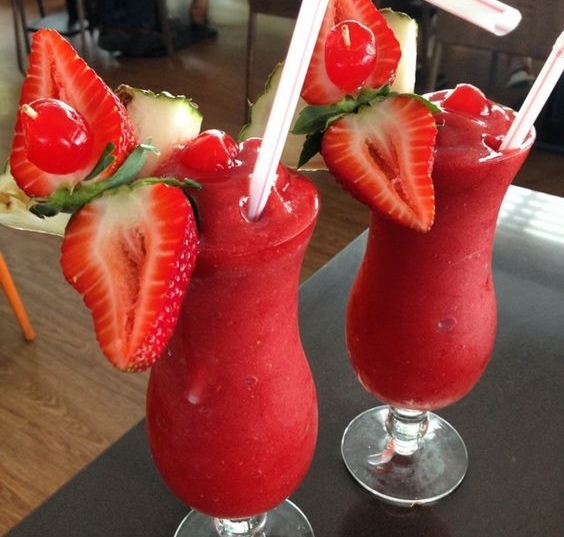
With the scent of summer still in the air, one wouldn’t miss the scent of wild strawberries in the fields. With lazy weekends beckoning a walk, it would be a perfect time for some family bonding as well as strawberry picking.

“You can pick wild strawberries with your eyes closed, locating them by smell, for they are two parts perfume to one part taste. An hour of searching might yield a handful if you’re lucky. Wild strawberries can’t be encouraged, nor can they be discouraged: They come to you unbidden and unearned. They appear, or do not, by the grace of the sun.” Hope Jahren

During this impromptu excursion, certain moments get engraved silently in the mind. The rapid passing of time, children growing up fast as well as hectic weeks leaving very less time to unwind, converse as well as simply relax; all highlight the significance in shutting down the media and heading back to nature.

“Each moment is just what it is. It might be the only moment of our life; it might be the only strawberry we’ll ever eat. We could get depressed about it, or we could finally appreciate it and delight in the preciousness of every single moment of our life.” Pema Chodron

With plenty of fresh strawberries to go around, it would be fun to go artsy, creative and add some sweetness to the regular meals as well as desserts. Browsing through the old recipes and brushing them with some “taste of summer” would make the strawberries as well as moments and memories to capture for the later years.

“As our lives speed up more and more, so do our children’s. We forget and thus they forget that there is nothing more important than the present moment. We forget and thus they forget to relax, to find spiritual solitude, to let go of the past, to quiet ambition, to fully enjoy the eating of a strawberry, the scent of a rose, the touch of a hand on a cheek…” Michael Gurian

“It is the sweet, simple things of life which are the real ones after all.” — Laura Ingalls Wilder

Posted in Daily, Food, Stories Around the World

“Hoagie” from Scratch

“I love a sandwich that you can barely fit in your mouth because there’s so much stuff on it. The bread should not be the main thing on a sandwich.” Adrianne Palicki

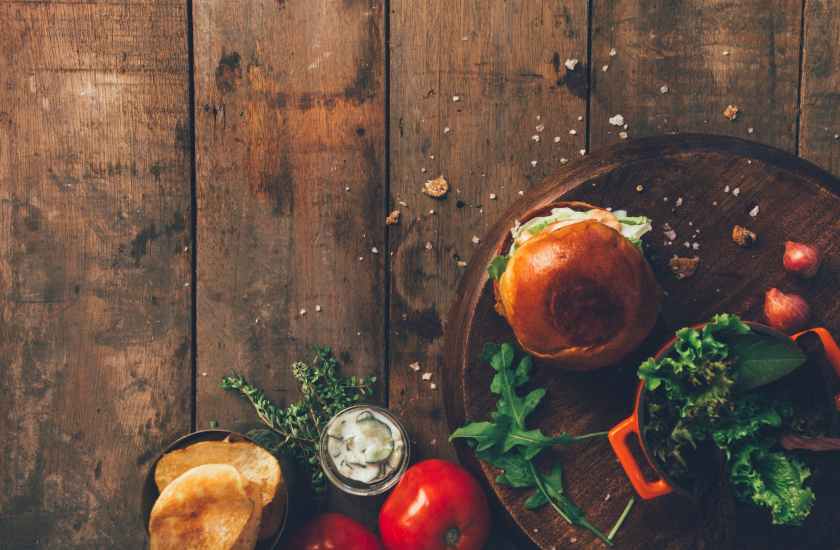
Little did John Montagu, the fourth Earl of Sandwich (1718-92) realize that his “sandwich” invention would become even bigger, longer and filled up with more varieties than before. Known popularly by the name of sub, hoagie, hero, grinder or Italian sandwich, the “submarine sandwich” has become one of the fastest growing sandwiches, adapted by many into a complete meal for the busy days or a healthier diet. Consisting of a length of bread or roll split lengthwise, filled with a variety of meats, cheeses, vegetables and condiments, this sandwich has no standardized name and has a dozen varieties and combinations globally. In fact those submarine sandwiches longer in length or filled with greater quantities of ingredients than usual, are known as battleship, flattop or destroyer sandwiches.

This sandwich is believed to have originated in the various Italian American communities from the late 19th to mid-20th centuries. The most widespread term of term “submarine” or “sub” is believed to have been after the resemblance of the roll to the shape of a submarine. Various theories have been put forward to the origin of the name. While one theory states that “the submarine” was brought by Dominic Conti (1874–1954), an Italian immigrant who came to New York (1900s) named it after seeing the recovered 1901 submarine called Fenian Ram in the Paterson Museum of New Jersey in 1928.

As per his granddaughter had accounted : “My grandfather came to this country circa 1895 from Montella, Italy. Around 1910, he started his grocery store, called Dominic Conti’s Grocery Store, on Mill Street in Paterson, New Jersey where he was selling the traditional Italian sandwiches. His sandwiches were made from a recipe he brought with him from Italy, which consisted of a long crust roll, filled with cold cuts, topped with lettuce, tomatoes, peppers, onions, oil, vinegar, Italian herbs and spices, salt, and pepper. The sandwich started with a layer of cheese and ended with a layer of cheese (this was so the bread wouldn’t get soggy).”

Eventually while the “submarine” had caught on; it would seem that the “hoagie” was already in vogue. Originating in the World War I era shipyard in Philadelphia known as Hog Island, where emergency shipping was produced for the war effort; Italians working there introduced the sandwich by putting various meats, cheeses, and lettuce between two slices of bread. This later was known as the “Hog Island” sandwich; shortened to “Hoggies”, then the “hoagie”.

“It’s like making a sandwich. I start with the bread and the meat. That’s the architecture. Add some cheese, lettuce and tomato. That’s character development and polishing. Then, the fun part. All the little historical details and the slang and the humor is the mayonnaise. I go back and slather that shit everywhere. The mayo is the best part. I’m a bit messy with the mayo.” Laini Giles

However, the Philadelphia Almanac and Citizen’s Manual states attributed this creation to the early-twentieth-century street vendors called “hokey-pokey men”. They had sold antipasto salad, meats, cookies and buns with a cut in them. When bakeries produced a long loaf called the pinafore(1879); Entrepreneurial “hokey-pokey men” sliced the loaf in half, stuffed it with antipasto salad, and sold the world’s first “hoagie”. Whereas another explanation is that the word “hoagie” arose in the late 19th to early 20th century, among the Italian immigrant community in South Philadelphia. Deli owners would give away scraps of cheeses and meats in an Italian bread-roll known as a “hokie”, but pronounced by the Italian immigrants as “hoagie”. After the WWII, the term “hoagie” had caught on and stayed.

There are numerous variants of these “submarine sandwiches” which have been named so based on the mix of ingredients or bread type like the New York “Hero”, New England “grinder” (a hot submarine sandwich (meatball; sausage; etc.) or a oven toasted hoagie) or Gatsby of Cape Town, South Africa. Come by whichever name, “submarine” or “hoagies” are here to stay. With National Hoagie Day (May 5th), it would be a time for some food fun.

Posted in Daily, Food

Beyond the “C”

What connects Camellia sinensis, Coffea seeds, Kola nuts as well as the yaupon holly leaves, Amazonian holly guayusa leaves. The common factor is a simple but bitter, white crystalline purine, a methylxanthine alkaloid compound popularly consumed globally as “Caffeine”. The growing role of “caffeine” related beverages is evidenced by the celebration of March as the National Caffeine Awareness Month” by foodimentarians globally.

Like the two sides of a coin, caffeine has its’ own merits and demerits. Primarily playing its’ role as a central nervous stimulant as well as inhibitor of two major enzymes, phophodiesterase and adenosine; caffeine of coffee, tea as well as the medically available pure form has its’ indicated uses and merits.

From treating to preventing major diseases in neonates (like bronchopulmonary dysplasia, apnea of prematurity) as well aiding asthmatics in reducing their exacerbation; caffeine aids in reducing fatigue, drowsiness and improving coordination and reaction time. Imagine the endless night shifts, cramming before exams, pulling all nighters before the term exams in university and aiding to stay awake during classes after late night events; caffeine was always a life saver. In moderation, caffeine aids in reducing depressive symptoms as well as suicide idealizations.

“It was a pleasant cafe, warm and clean and friendly, and I hung up my old water-proof on the coat rack to dry and put my worn and weathered felt hat on the rack above the bench and ordered a cafe au lait. The waiter brought it and I took out a notebook from the pocket of the coat and a pencil and started to write.” Ernest Hemingway

Not just students or night shift workers, for the gym goers, caffeine helps in improving their endurance, aids weight loss as well as increase the training or exercise volume. Moderate consumption of caffeine reduces dementia and Alzheimer’s risk, neuroprotective for Parkinson’s patients, reduces liver fibrosis and cirrhosis as well decreases risk of throat, mouth, colon and skin cancer.

On the other hand, more than 400 milligrams of caffeine intake has been associated with health risks ( Health Canada limitations) while toxic doses are in the range of ten grams or more of caffeine (50 -100 coffee cups with 80-175 mgs of caffeine per cup). Adverse effects of caffeine have a physical as well as psychological manifestation. In the former group would include raised blood pressure, headaches, increase gastrointestinal motility, increase bone loss in postmenopausal women, stained teeth, increased eye pressure in glaucoma patients, loss of essential minerals like iron and calcium as well as decreasing collagen synthesis i.e. more wrinkles.

“As long as there was coffee in the world, how bad could things be?” Cassandra Clare, City of Ashes

From a psychological viewpoint, increase caffeine can lead to addiction, mood swings, dependency, anxiety disorders, tremors as well as irritability and sleep less nights. For the pregnant women, balancing the daily intake to two or less cups of coffee ( less than 200mg ) helps to reduce the caffeine induced pregnancy complications.

Caffeine consumption, highly depends on the way and reason we take it. From a simple homemade coffee to the “calorie laden coke” (laced with additional compounds) or the simple morning and evening ritual of tea, caffeine intake can be regulated. The more carefully we regulate the caffeine intake, the longer we can enjoy the merits than be affected by their demerits.

“Adventure in life is good; consistency in coffee even better.” Justina Chen, North of Beautiful

Posted in Family and Society, Food

Culture of Fast Food

The rise of the urban development has been directly proportional to the growth of fast food culture.

In 1951 Merriam-Webster had recognized the term “Fast food” as “of, relating to or specializing in food that can be prepared and served quickly” or ” designed for ready availability, use or consumption and with little consideration given to quality or significance (adj.)(noun)”. Although contrary to popular belief, fast food has been there since the times of the Romans. The cities of the Roman empire had marketplaces like the Forum with food vendors who sold baked goods and cured meats to the urban population living in “the insulae” (similar to multi-story apartment blocks). Functioning more or less like a simple eating establishment, bread soaked in wine, cooked vegetables and stews later on were available. The trends continued through the ages and the civilizations as seen in China of the 12th century where fried dough, soups and stuffed buns were snack foods. Meanwhile the markets of their contemporaries in Persia (now Baghdad) sold processed legumes, purchased starches and even ready-to-eat meats. Moving ahead during the Middle Ages, large towns and major urban places like London and Paris had numerous vendors with stalls of ready to eat dishes such as pies, pasties, flans, waffles, wafers, pancakes and cooked meats. With the rapid industrial revolution, booming of towns, progresses in the food and science industry, the ready to eat meals underwent rapid changes, for better then but worse now. Along with the era of colonization, wars, immigration and emigration , the fast paced food industry had picked up in leaps and bounds.

Not everyone necessarily needs new things all the time and creative designs. It’s good to have luxury restaurants and fast-food restaurants. You need both. Rei Kawakubo

From prepackaged food sold at convenience stores, street vendors, filling stations to fast food outlets, the entire scenario revolves around quick service when “on the go” preferring finger food to “the cutlery food”. “Take-away” or “take-out” with “drive-through” options, all started off as the fast-paced life took over with people working two to three jobs, lack of provisions or money or time to cook the regular meals. Of late, the development of technology has allowed one to order food through the smart phone applications.

You can do good work simply staying up all night and eating nothing but junk food, but probably not in the long term. John Mulaney

Despite the popular assumption that fast food and junk food are the same, they are not. True although there is an overlap between the terms, they are not entirely substitute terms. Fast food refers to the fast assembly process for the preparation of the food, where food is ready in a matter of minutes. Junk food is labelled based on the little nutritional value of the food which is high calorie, high sodium with or without high saturated fat, sugar or salt content.

I follow my own advice: eat less, move more, eat lots of fruits, vegetables, and grains, and don’t eat too much junk food. It leaves plenty of flexibility for eating an occasional junk food. Marion Nestle

While the taste buds are tempted and cravings are fulfilled, on the downside the price to pay on the long run with risk of colorectal cancer, obesity, high cholesterol and depression to list a few. As good things always come in small packages, to downsize the portions, space out the intake and nutritionally substitute the fast food as well as retaining the taste are the few of the tricks to tackle the constant pull to it.

“The problem is when that fun stuff becomes the habit. And I think that’s what’s happened in our culture. Fast food has become the everyday meal.” Michelle Obama

As we mark any occasion or dining out with fast or junk food, keeping it in moderation makes us guilt-free to enjoy the pleasures once in a while. As been proven time and again, too much of anything spoils the fun.