Posted in Daily, Family and Society, Food

“Food Fun”: Mix , Match and Experiment

“One cannot think well, love well, sleep well, if one has not dined well.”  Virginia Woolf

Imagine a menu planned by kids. This was one of the tasks allotted to my child in his kindergarten class. On first hearing this; for all parents, this plan may set off alarm bells of the aftermath of a mass gastric upsets, whereas secretly many among us crave these foods on certain or many occasions. 


Imagine a list that ranges from Cheetos to ice cream, pancakes, sandwiches and all the sweet as well as the “street food” in the world. While this may sound too good to be true, some of these combinations though weird actually taste good.

Oreos and Orange Juice
Frosted Flakes and Cheese
Soya Sauce on Ice Cream
Apples with Salt, Pepper and Chilli Flakes
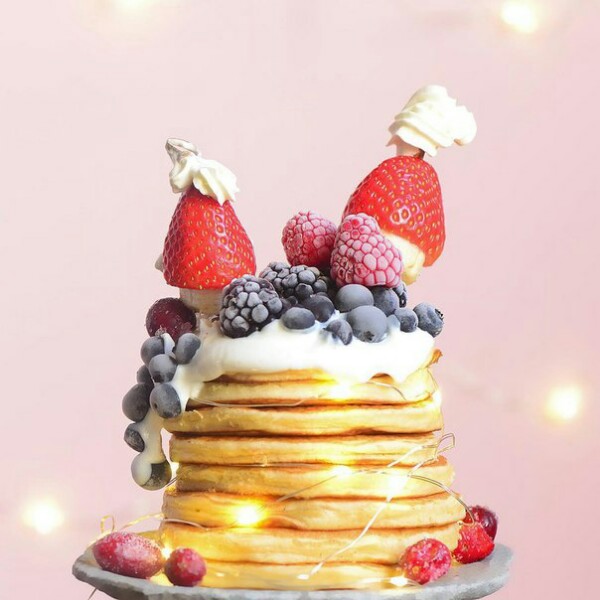
Cake of “Banana Pancakes with Nutella, Cream and Honey”
Avocados and Chocolate
Peanut Butter and Pickle Sandwiches
Bananas on Cheese Toastie
Butter and Sugar Sandwiches
Peanut Butter in Burgers
Rice and Ketchup
Grape Jelly on Scrambled Eggs or Omelettes ..and the list goes on, up to one’s choice of taste, artistic eye and palatable combinations.


Though everyday food involves eating healthy as well enjoying food that we love guilt free, the daily meals get a bit of livening up when we get free with the mix and match, go creative as well as enjoy surprising the taste senses.
With “Eat What You Want Day” (May 11th) is being celebrated today, which was initially started to enjoy a guilt free “indulge in your favourite food” day; this is one of the best days to try weird combinations or have breakfast for dinner, break the routine and let the young ones plan one meal for the day (few of us can tolerate Doritos, pizza and ice cream only to an extent).

Whether one wants to have sweet or sour, or indulge in the “mood for something different to taste” for the day; having fun while eating is the first along with being healthy, wise, happy and creative too.


Posted in Food, Life, Quotes, Reflections

Slices of “Strawberry” Summer

“Happiness, I have grasped, is a destination, like strawberry fields. Once you find the way in, there you are, and you’ll never feel low again.” Rachel Simon

With the scent of summer still in the air, one wouldn’t miss the scent of wild strawberries in the fields. With lazy weekends beckoning a walk, it would be a perfect time for some family bonding as well as strawberry picking.

“You can pick wild strawberries with your eyes closed, locating them by smell, for they are two parts perfume to one part taste. An hour of searching might yield a handful if you’re lucky. Wild strawberries can’t be encouraged, nor can they be discouraged: They come to you unbidden and unearned. They appear, or do not, by the grace of the sun.” Hope Jahren

During this impromptu excursion, certain moments get engraved silently in the mind. The rapid passing of time, children growing up fast as well as hectic weeks leaving very less time to unwind, converse as well as simply relax; all highlight the significance in shutting down the media and heading back to nature.

“Each moment is just what it is. It might be the only moment of our life; it might be the only strawberry we’ll ever eat. We could get depressed about it, or we could finally appreciate it and delight in the preciousness of every single moment of our life.” Pema Chodron

With plenty of fresh strawberries to go around, it would be fun to go artsy, creative and add some sweetness to the regular meals as well as desserts. Browsing through the old recipes and brushing them with some “taste of summer” would make the strawberries as well as moments and memories to capture for the later years.

“As our lives speed up more and more, so do our children’s. We forget and thus they forget that there is nothing more important than the present moment. We forget and thus they forget to relax, to find spiritual solitude, to let go of the past, to quiet ambition, to fully enjoy the eating of a strawberry, the scent of a rose, the touch of a hand on a cheek…” Michael Gurian

“It is the sweet, simple things of life which are the real ones after all.” — Laura Ingalls Wilder

Posted in Daily, Food, Stories Around the World

“Hoagie” from Scratch

“I love a sandwich that you can barely fit in your mouth because there’s so much stuff on it. The bread should not be the main thing on a sandwich.” Adrianne Palicki

Little did John Montagu, the fourth Earl of Sandwich (1718-92) realize that his “sandwich” invention would become even bigger, longer and filled up with more varieties than before. Known popularly by the name of sub, hoagie, hero, grinder or Italian sandwich, the “submarine sandwich” has become one of the fastest growing sandwiches, adapted by many into a complete meal for the busy days or a healthier diet. Consisting of a length of bread or roll split lengthwise, filled with a variety of meats, cheeses, vegetables and condiments, this sandwich has no standardized name and has a dozen varieties and combinations globally. In fact those submarine sandwiches longer in length or filled with greater quantities of ingredients than usual, are known as battleship, flattop or destroyer sandwiches.

This sandwich is believed to have originated in the various Italian American communities from the late 19th to mid-20th centuries. The most widespread term of term “submarine” or “sub” is believed to have been after the resemblance of the roll to the shape of a submarine. Various theories have been put forward to the origin of the name. While one theory states that “the submarine” was brought by Dominic Conti (1874–1954), an Italian immigrant who came to New York (1900s) named it after seeing the recovered 1901 submarine called Fenian Ram in the Paterson Museum of New Jersey in 1928.

As per his granddaughter had accounted : “My grandfather came to this country circa 1895 from Montella, Italy. Around 1910, he started his grocery store, called Dominic Conti’s Grocery Store, on Mill Street in Paterson, New Jersey where he was selling the traditional Italian sandwiches. His sandwiches were made from a recipe he brought with him from Italy, which consisted of a long crust roll, filled with cold cuts, topped with lettuce, tomatoes, peppers, onions, oil, vinegar, Italian herbs and spices, salt, and pepper. The sandwich started with a layer of cheese and ended with a layer of cheese (this was so the bread wouldn’t get soggy).”

Eventually while the “submarine” had caught on; it would seem that the “hoagie” was already in vogue. Originating in the World War I era shipyard in Philadelphia known as Hog Island, where emergency shipping was produced for the war effort; Italians working there introduced the sandwich by putting various meats, cheeses, and lettuce between two slices of bread. This later was known as the “Hog Island” sandwich; shortened to “Hoggies”, then the “hoagie”.

“It’s like making a sandwich. I start with the bread and the meat. That’s the architecture. Add some cheese, lettuce and tomato. That’s character development and polishing. Then, the fun part. All the little historical details and the slang and the humor is the mayonnaise. I go back and slather that shit everywhere. The mayo is the best part. I’m a bit messy with the mayo.” Laini Giles

However, the Philadelphia Almanac and Citizen’s Manual states attributed this creation to the early-twentieth-century street vendors called “hokey-pokey men”. They had sold antipasto salad, meats, cookies and buns with a cut in them. When bakeries produced a long loaf called the pinafore(1879); Entrepreneurial “hokey-pokey men” sliced the loaf in half, stuffed it with antipasto salad, and sold the world’s first “hoagie”. Whereas another explanation is that the word “hoagie” arose in the late 19th to early 20th century, among the Italian immigrant community in South Philadelphia. Deli owners would give away scraps of cheeses and meats in an Italian bread-roll known as a “hokie”, but pronounced by the Italian immigrants as “hoagie”. After the WWII, the term “hoagie” had caught on and stayed.

There are numerous variants of these “submarine sandwiches” which have been named so based on the mix of ingredients or bread type like the New York “Hero”, New England “grinder” (a hot submarine sandwich (meatball; sausage; etc.) or a oven toasted hoagie) or Gatsby of Cape Town, South Africa. Come by whichever name, “submarine” or “hoagies” are here to stay. With National Hoagie Day (May 5th), it would be a time for some food fun.

Posted in Christian, Family and Society, Food, Life, poetry, Stories Around the World

Of Easter,Tradition and Trends

“I still believe in Santa, the Easter Bunny, the Tooth Fairy and true love. Don’t even try to tell me different.” Dolly Parton

With Easter Sunday being celebrated tomorrow, preparations are quietly underway which would make the day special tomorrow primarily keeping the children in mind. Easter Sunday is the day signifying the love of God for man, a time for hope, renewal and resurrection through His Son. With the season of Lent coming to a close and breaking the Lenten fast involves special significance, especially when one has abstained from something dear to them through this period. Sacrificing something that one is fond of is never easy, but a whole new meaning and character is acquired when we abstain from the “materialistic” pleasure that we being man, often crave every now and then. Which is why, every Easter Sunday meal is something that the entire family and friends look forward to. Besides being a time for togetherness, it also signifies the breaking of the Lenten Fast.

“The blessing of food for the Easter Sunday meal is especially popular among people of Eastern European descent, especially those from Poland. Families prepare baskets with the food they will eat on Easter morning – decorated eggs, sausage, ham, bacon, a loaf of bread with a cross cut into the crust, cheese, salt, horseradish, and butter carved in the shape of a lamb.” Ken Untener, The Little White Book for Easter

Around the world, various traditions are there on Easter. While initially they were modeled after the spring celebrations, later the trends were modified to give new relevance with the basis of the last supper or “Passover” or “Passove Sedar” in mind. Among the Easter Lunch, the fast is often broken by the “star of Easter”; painted, dyed, gilded in various hues, hidden or hung on trees, found on the treasure hunt, bough to church or given as gifts are the “Easter Eggs”. Most of the legends state them to be “symbol of life”.

“I agree. You don’t want it to look boring. It’s [the Easter egg] got to look good otherwise it’s just like every other chocolate. And size does matter when it comes to the egg, as that’s what Easter eggs are all about.” Liam Tomassi

Previously believed by the Egyptian and few Persian civilization of the early times, eggs were considered to be symbolic of after life. Few traditions believe that Mary Magdalene and the Virgin Mary held eggs during the crucifixion or that they were eaten at the first meal after the Resurrection. In the Eastern Orthodox churches, the hard shell of the egg represents the stone walls of Jesus’ tomb, with the egg itself representing the new life of the Resurrection. Eggs also were the easiest, most economical and available foods to eat while breaking the Lenten Fast. This popularity has lead in the presence of “the Easter Egg” predominate every Easter celebration.

“The Easter eggs symbolizes our ability to break out of the hardened, protective shell we’ve surrounded ourselves with that limits our thoughts and beliefs. As we break open our hearts and minds we discover a transformation to new, life enhancing thoughts and beliefs.” Siobhan Shaw

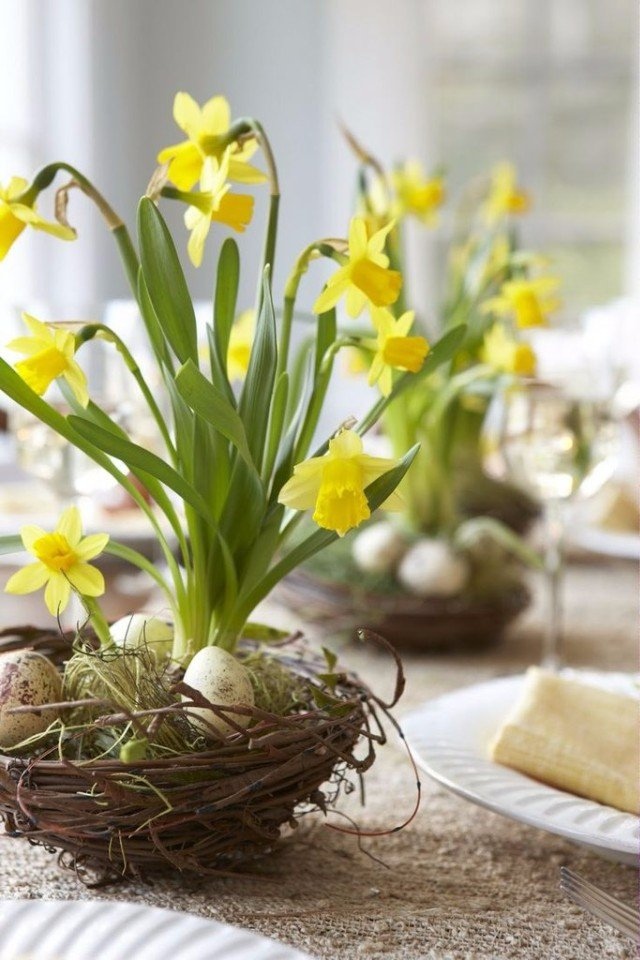
Another popular tradition was the Easter Basket, which was an “Easter Nest” originally. Arising from the concepts of fertility and springtime, Eastern basket was a German tradition which had gained mass popularity. Initially children would make “nests,” filled with grass, in hopes that Peter Cottontail would fill the nest with eggs. Later these nests evolved into baskets, which were bigger, less messier and easy to carry.

Amidst the Easter Eggs in the basket would be the “hollow chocolate bunnies”. While there is no historical or religious documentation on why the bunny represents Easter, the association would be more by the calendar. With Easter mostly during Spring, the month of April showered not only spring flowers but also signals the birth of baby rabbits. Thus spring time and bunnies symbolize birth and renewal. Coat the bunnies with chocolate and hollow them out to fill them with candies; voila the treat is irresistible for every kid in the block.

Other Easter traditions include eating ham or meat to the making of “Hot cross buns” and other breads marked with an X to symbolize the cross are a tradition on many Easter tables. From the “Choreg” of Armenia, Ukranian “Paska”, Polish “Babka” to Tsoureki of Greece, a wide varied variety of sweet breads are made around the world. With eggs being baked in most, these are conspicuously risen breads, quite different from the Passover tradition of unleavened bread.

As we get ready to break the Lenten Period and celebrate Easter, with all the food to be made ready, decorations to put up, church to be readied and tables to be set, the core message of renewal, togetherness and love shouldn’t be forgotten. One of the best ways to spread the message of love would be to share the delectable creations of Easter around.

The Easter Bunny came by today
and left surprises along his way.
Colorful eggs are all around.
With baskets in hand we search the ground.
Hiding in places here and there
Easter eggs are everywhere.
-Author Unknown

Posted in Daily, Food

“Cobble” it Together

“Cherry cobbler is shortcake with a soul.” Edna Ferber

With summer round the corner and plenty of fruits to go around, desserts are always the reason why the meal gets completed in the twinkling of an eye, especially for the children. Even with the lack of time or frozen products over, dessert can be done soon, especially when bits of fruit over biscuit dough, batter or dumpling are baked to give the warm “cobbler” feel of the spring and summer skies.

Believed to have originated from the archaic word “cobeler” (recorded from 1859) meaning wooden bowl, cobblers were essentially a byproduct of the early years of European settlement in the Americas, especially by the English and the Dutch. They had initially emerged as a makeshift version of the popular pie recipes as a trail-modified desert.

“My earliest memory is making peach cobbler with my grandmother. A wonderful memory. I grew up in a restaurant family – B.B.Q. restaurant.” Rick Bayless

Unable to make the traditional puddings or pies, due to lack of ingredients or equipment as the settlers moves westward, modifications were made to the original methods. Consequently various ingredients were “cobbled together” with the available fruit, more common as peaches, plum or cherries, which were dried, preserved or canned, leavened dough (using baking powder) and an open fire. The initial cobbler were being made with a covered stewed filling with a layer of uncooked plain biscuits or dumplings, fitted together.

“Chocolate’s okay, but I prefer a really intense fruit taste. You know when a peach is absolutely perfect… it’s sublime. I’d like to capture that and then use it in a dessert.” Kathy Mattea

Cobblers were meant to be more palatable and sweet than pretty. Fruit, however it came, was dumped into a Dutch oven, topped with globs of biscuit dough and baked over an open fire until golden brown. Soon cobblers were quickly integrated into the settler diet, with the sweet dish being eaten for breakfast, as first course or as a main dish. Towards the late 19th century, the cobbler was officially labeled as a dessert.

“My earliest memory is making peach cobbler with my grandmother. A wonderful memory. I grew up in a restaurant family – B.B.Q. restaurant.” Rick Bayless

With modern technology of preservation, trade and transport; cobblers today have been vastly modified to include many fruit varieties including raspberries, blackberries as well being topped with cinnamon or vanilla essence, adding colours and flavours to the original version. Variants like grunts, pandowdy and slumps are Canadian Maritimes and New England varieties of cobbler are labelled when they are typically cooked on the stove-top or in an iron skillet or pan, with the dough on top in the shape of dumplings. The name originates from the grunting sound they make while cooking. Other popular variants include the apple pan dowdy (an apple cobbler whose crust has been broken and perhaps stirred back into the filling), the Betty or Brown Betty ( made with breadcrumbs or bread pieces or graham cracker crumbs and fruit, usually diced apples, in alternating layers, baked covered with a consistency of bread pudding) and the buckle (made with yellow batter like cake batter with the filling mixed in with the batter) among many others.

On the other hand, the scone-topped cobbler predominates in the UK where they are made both as sweet or savoury. While the common sweet fillings include apple, blackberry or peach; the savoury ones consists of beef, lamb or mutton as a casserole filling, sometimes with a simple ring of cobbles around the edge, rather than a complete layer, to aid cooking of the meat. The savoury versions may be topped with cheese or herb scones.

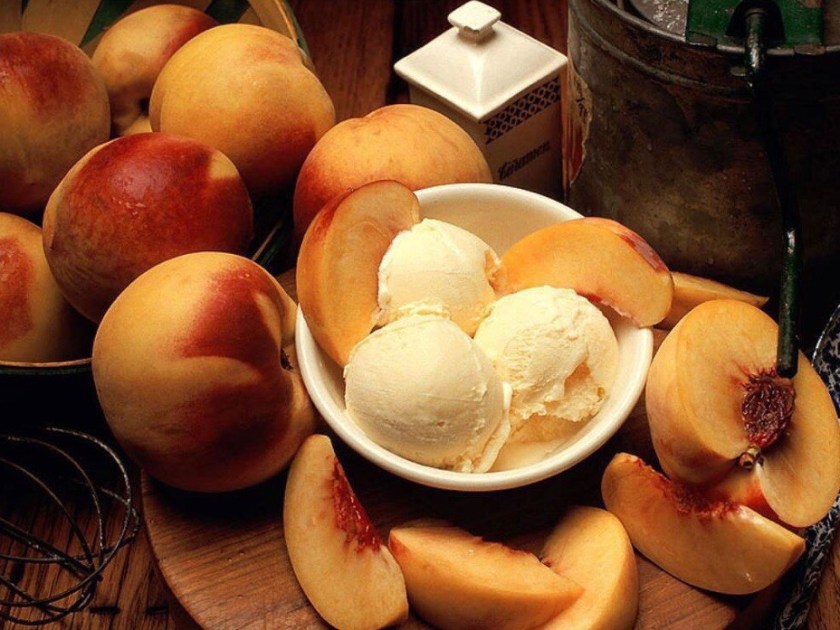
Over the years, cobblers have remained popular especially as they were quick to make for the luncheons and brunches. Little wonder then that the Georgia Peach Council declared April 13th National Peach Cobbler Day. Taking a bite of the rosy fruit cradled in warm pillows of cinnamon-scented dough and blanketed with the melted vanilla ice cream brings rich splendor to the senses, giving warmth and happiness all the way. For all the foodists at heart, have a little bite of cobbler to revel in the taste of sunny skies and warm sunshine.

“There are a couple of different types of food I eat a lot. I was raised in the South, in Tennessee, so I’m going to go with comfort food, soul food. I would probably start with collard greens and candied baby carrots and then have some biscuits and white gravy – and for dessert, probably blackberry cobbler.” Megan Fox

Posted in Daily, Random Thoughts, Stories Around the World, Work

To Believe It or Not !!

” “Coca-Cola is launching three flavours of its Zero Sugar brand featuring avocado, sourdough and charcoal.”

Imagine the consequences of the taste buds and the senses after an episode of experimentation with these flavours. And here’s how the flavours were described.
• Coca-Cola Zero Sugar Avocado – Forget smashed or blended, this new flavour infuses the subtle, creamy undertones of amazing avocado with that great Coca-Cola Zero Sugar taste. Both delicious and nutritious, this gorgeously green pick-me-up is guaranteed to make your socials grow.
• Coca-Cola Zero Sugar Charcoal – Cleanse, refresh and revitalise with a Zero Sugar supercharge. Loaded with activated charcoal, creating a smooth and rich flavour, this miracle in-a-can pairs-perfectly with your favourite Instagram filter.
• Coca-Cola Zero Sugar Sourdough – Crafted with care, superbly sour and bursting with fermented flavours. Packed with crumbly goodness – so you can start the day in the right way with a mouth-wateringly good snap of this wild-yeast infused Zero Sugar treat. “

For the readers of the above news on the Daily Mirror online version last year, had resulted in a frenzy of whether this was true or was it an “All Fools Day Prank”. Being mixed with the “true news” of the society, food, travel and living sections; it wasn’t easy to ascertain whether one was going to really taste avocado, sourdough or charcoal in their drink.

“The first of April, some do say
Is set apart for All Fool’s Day;
But why the people call it so
Nor I, nor they themselves, do know,
But on this day are people sent
On purpose for pure merriment.” (Poor Robin’s Almanac, 1790)

One of the days dreaded the most, especially at work, school or neighbourhood, is the first day of April, where the day is pretty confusing for each hour goes by the wait of “being pranked”. Each day this year, from social media to official meetings, one is always second guessing everything. As for pranksters, its’ a day of freedom, fun and revelry.

Yet when the prank is actually the truth, one may feel a bit razzed. For instance people who celebrate their birthdays on April First have always been questioned, even though they are speaking the truth. Remember the headlines that state “the African continent can split into two” after an enormous crack appears. Well, it’s actually true for a large crack, several miles long and growing accompanied with seismic activity had appeared in south-western Kenya causing the Nairobi-Narok highway to collapse. Researchers have attributed this to activity between the tectonic plates in Earth’s crust and upper mantle. Today the rift still continues to grow and an expert says it’s evidence that the continent is breaking apart.

Yet news like this, practical jokes and hoaxes especially on All Fools’ Day or April Fools’ Day spreads mass confusion (which was or wasn’t the purpose all along). Why this particular day ? The origin behind this day is quite interesting, with various versions and tales trending around the world.

As per Geoffrey’s Chaucer’s “The Cantebury Tales”, New Years’ Day used to be celebrated around April. With the Gregorian Calendar (1582, France) being introduced by Pope Gregory XIII with January 1st to be celebrated as “New Years’ Day.” For those who refused to support this,; they were mocked and sent on fools’ errands on April 1st.

Another disputed association between April 1st and foolishness also comes from Geoffrey Chaucer’s The Canterbury Tales (1392). In the “Nun’s Priest’s Tale”, a vain cock Chauntecleer is tricked by a fox on “Syn March bigan thritty dayes and two.” While readers apparently understood this line to mean “32 March”, i.e. April 1, it wasn’t clear if this was the correct inference. The scholars of today, believe that there is a copying error in the extant manuscripts and that Chaucer actually wrote, “Syn March was gon.” Then the passage would have originally meant 32 days after March ( i.e. May 2nd), the anniversary of the engagement of King Richard II of England to Anne of Bohemia (1381).

French poet Eloy d’Amerval (1508) had referred to “a poisson d’avril” (April fool, literally “Fish of April”), possibly the first reference to the celebration in France. In France, January 1st as New Year’s Day became common only by the mid-16th century and the date was adopted officially as per the Edict of Roussillon (1564). Likewise Flemish poet Eduard de Dene (1539) had written about a nobleman who sent his servants on foolish errands on April 1st.

The origin of April Fools’ Day is different in Netherlands, where it’s often attributed to the Dutch victory at Brielle in 1572, where the Spanish Duke Álvarez de Toledo was defeated (“Op 1 april verloor Alva zijn bril”). Another citation in history was on April 1, 1698 when several people were tricked into going to the Tower of London to “see the Lions washed”.

Few authors have expressed the belief that the origins of April Fool’s Day may go back to the Genesis flood narrative, although this hasn’t been verified by Biblical scholars or historians. As written by the Harper’s Weekly cartoonist Bertha R. McDonald (1908), ” Authorities gravely back with it to the time of Noah and the ark. The London Public Advertiser of March 13, 1769, printed: “The mistake of Noah sending the dove out of the ark before the water had abated, on the first day of April, and to perpetuate the memory of this deliverance it was thought proper, whoever forgot so remarkable a circumstance, to punish them by sending them upon some sleeveless errand similar to that ineffectual message upon which the bird was sent by the patriarch”.

Festivals celebrating a day for pranks has been there since the early Roman times, where “Hilaria” a Roman festival was celebrated. As the name suggests, it was a festival of laughter and hilarity where people would dress up in disguises to fool others and enjoy the spring season. Various countries have different ways to celebrate this day. While across Italy, France, Belgium, and French-speaking areas of Switzerland and Canada, people celebrate April Fools’ Day by trying to stick a paper fish on someone (without being noticed); in Iran jokes were played on each other on ‘Sizdah Be-dar'(the 13th day of the Persian New Year, falling on April 1st or 2nd). On the other hand Spanish speaking countries celebrate similar festivity on the ‘Day of the Holy Innocents’ (December 28 or 29) and in Denmark, this day is celebrated on’Maj-Kat’, which means ‘May-cat’ (May 1st).

Either way the chance to play practical jokes and hoaxes on this day has promoted this trend to continue. For there’s nothing more enriching than genuine innocent fun and laughter for the day.

“The maple syrup’s full of ants.
A mouse is creeping on the shelf.
Is that a spider on your back?
I ate the whole pie by myself.
The kitchen sink just overflowed.
A flash flood washed away the school.
I threw your blanket in the trash.
I never lie—I—
April Fool!” (Myra Cohn Livingstone)

Posted in Christian, Daily, Family and Society, Life, Stories Around the World

Of Candlemas and New Beginnings

“When Jesus spoke again to the people, he said, “I am the light of the world. Whoever follows me will never walk in darkness, but will have the light of life.” (John 8:12)
With Candle-mas service and celebration all over the world, the end of the Christmas season has been officially marked. Candlemas (or Candlemass) is known as the Feast of the Presentation of Our Lord Jesus and the Feast of the Purification of the Blessed Virgin Mary, commemorating the presentation of Jesus at the Temple as based on the Jewish custom. It falls on February 2, which is traditionally the 40th day of the Christmas–Epiphany season. For those who of us who haven’t removed the Christmas decorations on Twelfth Night (Epiphany Eve), Candlemas is the day when one can take them down.

In pre-Christian times, this day was known as the ‘Feast of Lights’ and celebrated the increase strength of the life-giving sun as winter gave way to spring. Later during the Christian era, this date marked the presentation of Christ to the temple. It was the day of the year when all the candles, that were used in the church during the coming year, were brought and blessed; thereby marking it as the Festival Day (or ‘mass’) of the Candles. In those days, candles were important not only because there was no electric lights; but were thought to be of protection against plague and illness and famine. As the years progressed; on Candlemas, the service is led by prayers and the candles used are blessed; serving as a symbol of Christ, who referred to himself as the Light of the World.

Falling almost in the middle of Winter Solstice and Spring Equinox, Candlemas is considered to be time for fresh start. Each country has their own set of customs, celebrations and service. One can decide to honour this day by the beginning of doing something new, breaking an old habit, spending quality time and care for dear ones or devoting energy, time and steps for self-improvement.
For This is a simple way to make life a little better for one and for those touching our life in one aspect or other.

Candlemas Verse 

When New Year’s Day is past and gone;
Christmas is with some people done;
But further some will it extend,
And at Twelfth Day their Christmas end.
Some people stretch it further yet,
At Candlemas they finish it.
The gentry carry it further still
And finish it just when they will;
They drink good wine and eat good cheer
And keep their Christmas all the year.

– From Colonial Williamsburg, 18th century