Posted in Daily, Food, Photography Art, Uncategorized

Tea with a Difference

Catching up with the extended family cousins who have been seriously bitten by the “travel bug” leads to often enlightening conversations and interesting accounts. In the course of discussion was their recent rove into the Tibetan lands. Asides the details of their stay and visits, what caught the curiosity of yours truly was their tea culture.

“When tea becomes ritual, it takes its place at the heart of our ability to see greatness in small things. Where is beauty to be found? In great things that, like everything else, are doomed to die, or in small things that aspire to nothing, yet know how to set a jewel of infinity in a single moment?” Muriel Barbery (author of The Elegance of the Hedgehog)

Interestingly the Tibetan tea culture primarily includes the butter tea and the sweet milk tea. Other varieties include the Pu’er Tea, green tea, milk tea and boiled black teas. The most favoured tea is the butter tea, known as po cha (Tibetan, Wylie: bod ja, “Tibetan tea”) or cha süma ( Eastern Tibet, Wylie: ja srub ma, “churned tea”) or suyóu chá (Mandarin Chinese) or gur gur (Ladakhi language). Made from tea leaves, yak butter, water, and salt in the traditional way, wherein the butter, milk and salt are added to the brewed tea. Although the variation today is to use the butter made from cow’s milk based on the latter’s wider availability and lower cost.Had by itself or used as an accompaniment for eating tsampa by pouring onto it or dipping the tsampa into it and mixing well.

The quality of the butter tea is enhanced by boiling the tea leaves to achieve a dark brown colour (takes almost half a day) or turns black (steep the tea leaves). One method involves skimmed the dark brown tea, pouring into a cylinder filled with fresh yak butter and salt and then the whole mix is shaken. The resulting thick liquid is then poured into tea pots or jars. Another method is to add salt to the steeped black tea, stirring the mix through the horse air (or reed) colander into the wooden butter churn with a large lump of butter then added to it. Then it is churned (or rapid stirring in wooden bowl) till the proper consistency of the tea is achieved and then transferred to copper pots kept warmed on a brazier. Modern day alternatives include tea bags, butter and blender.

Like the detailed preparation of butter tea, the Tibetan tea drinking culture has many rules. As per their custom, butter tea is drunk in separate sips. After each sip, the host refills the bowl to the brim. As a rule the guest never drains his bowl, instead it is to be constantly topped up. If the guest doesn’t wish to drink, the best thing to do is leave the tea untouched until the time comes to leave and then drain the bowl. This signifies the observance of etiquette, without any offense to the host. Another set of rules to follow is when one is invited to a house for tea. The host will first pour some highland barley wine. The guest must dip his finger in the wine and flick some away, which is done so three times to represent respect for the Buddha, Dharma and Sangha. Then the cup will be refilled two more times and on the last time it must be emptied or the host will be insulted. After this the host will present a gift of butter tea to the guest, who will accept it without touching the rim of the bowl. The guest will then pour a glass for himself, and must finish the glass or be seen as rude.

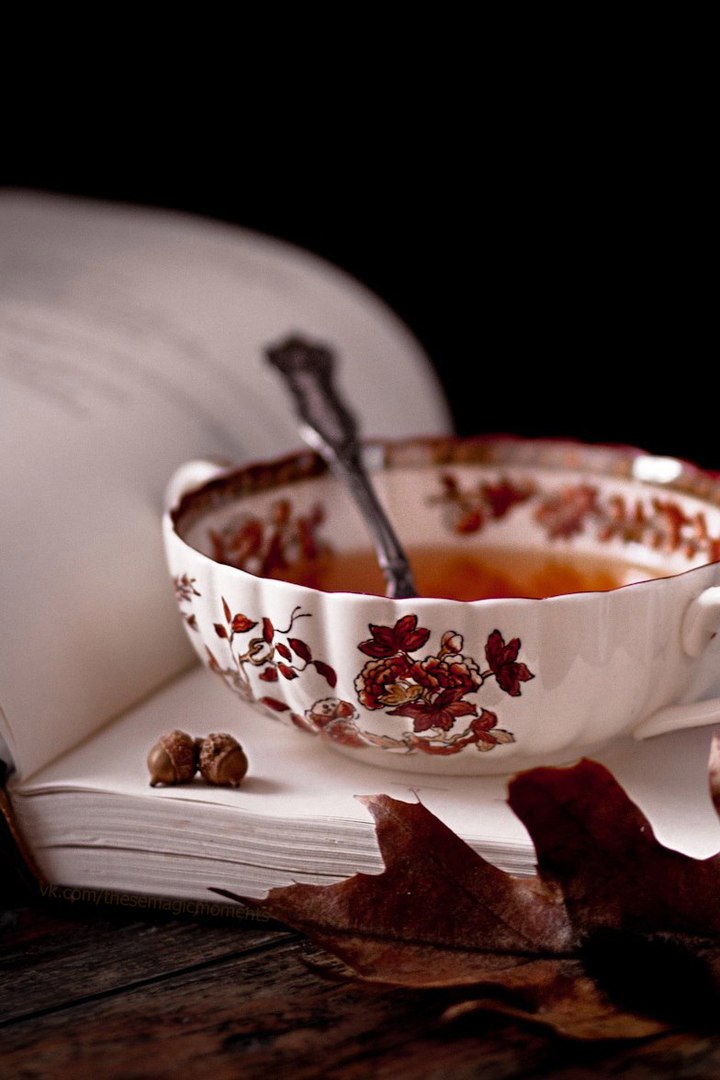
Not just limited to drinking but also serving butter tea has it’s own special set of tea-ware. From special porcelain cups to wooden bowls set with gold, silver or copper, or made from these metals as well jade, the Tibetan tea-ware is an art by itself. Interestingly like Tibet, most of the East Asian countries have their own special tea customs, so much so that the tea culture of each country has a rich and varied history behind it. That for tea connoisseurs is the beauty of tea, in itself and being a part of rich vibrant cultures, their customs and traditions, lending the subtle depth and significance to the art and concept of tea.

“The first cup moistens the throat;
The second shatters all feelings of solitude;
The third cleans the digestion, and brings to mind the wisdom of 5,000 volumes;
The fourth induces perspiration, evaporating all of life’s trials and tribulations;
With the fifth cup, body sharpens, crisp;
And the sixth cup is the first on the road to enlightenment;
The seventh cup sits steaming – it needn’t be drunk, as from head to feet one rises to the abode of the immortals.”
–Lu Tong, 9th century

Posted in Family and Society, Life, poetry, Quotes, Reflections

Gain the “Happy Feet”

“Memphis: Whatcha doing there, boy?
Mumble: I’m happy, Pa.
Memphis: Whatcha doing with your feet?
Mumble: They’re happy, too.”
(Dialogue, Happy Feet (2006))

With the weekend gone by, the after effect of movie night saw a number of penguins popping up as cartoons, drawings, flapping of wings and the tapping of feet, all done by the toddler in the house. The current penguin fascination was the consequence of “Happy Feet (2006)” night, a story revolving around penguins, tap dancing, music, fishing and humans.

What struck in the heart, as the movie scenes flashed intermittently in the mind, was the potential of what one can do as long as we find our feet and let it carry us through the path. For every step that the foot places, it takes us somewhere; but when the feet stay idle time moves on and the path is never travelled.

“A journey of a thousand miles must begin with a single step.” Lao Tzu

As one looks over the years, true potential can never be realized only by speculating but by taking the first step as well. While for every step, there may be a thousand doubts, fears, worries and anxiety of the future; it is taking that first step and doing what one loves that makes all the difference.

To find one’s true form, one has to learn to dance, walk, run, fall down and climb out; all done so as a part of life. It may take time to attain the perfect dream, but going ahead in small steps with feet firm on ground, along the path would help us find the dreams and above all, be contented from within. Dreams do make a big part of life, but finding them and losing out on the happiness, peace, love and contentment doesn’t make way for happy days. As the pictures of penguins and waddle walks are doing their rounds in the house, one is reminded of being happy and finding contentment in life of the present.

“The mind can go in a thousand directions, but on this beautiful path, I walk in peace. With each step, the wind blows. With each step, a flower blooms.” Thich Nhat Hanh

What Have I Done With My Feet
Melissa Bachara

What have I done with my feet?

They have been here as long as I remember
Carrying me soundly
To Kindergarten when I was only five
Despite my fear and tight black patent leather shoes.

What have I done with my feet?

Soft and strong,
They frolicked with me across summertime grass
Until they blended into the hues of green
They cleaned up just fine in a Mr. Bubble bath
Despite what my mother said.

What have I done with my feet?

They danced in my first shiny high-heeled shoes
With a boy whose face I vaguely remember
Who held me close and made me feel beautiful
Despite stepping on my feet now and then.

What have I done with my feet?

In white canvas Converse All-Stars
They boarded a plane to Texas
Ready to help me walk down bigger roads
Despite my small town roots and the $200 in my pocket.

What have I done with my feet?

Nails polished to perfection,
They carried me down the white aisle
Never tripping over my fears
Despite their knowledge that I was trading
My independence for a compromise

What have I done with my feet?

I stand at the beginning of a new and foreign road,
Baggage up to my ears and looking for my feet
Immobile, I wait for those reliable feet to move me forward
Despite my doubts and reservations
Knowing I will move forward

If only I could find my feet.

(Poetry Forum, December 29, 2003)


Posted in Family and Society, Musique, Personal Musings, Random Thoughts, Reflections

More than Paper Chains

Although winter is approaching, the autumn flowers still linger in the fields. As a part of the Sunday church community service, the youth group along with the children had visited the old-age centre in the nearest town. While spending time with the elderly age group; among the reading aloud to them, unraveling the knitting and helping in general, few children had taken with them crepe paper to start on the Christmas decorations. As paper chains of flowers and simple artwork were being done, the Lyrics of the “Chain of Love” came to mind, one of the popular songs during my school years.

“‘You don’t owe me a thing
I’ve been there too
Someone once helped me out
Just the way I’m helping you
If you really wanna pay me back
Here’s what you do
Don’t let the chain of love end with you'”…
( “The Chain of Love” is the third single from American country music singer Clay Walker’s album Live, Laugh, Love (January 2000). Lyrics were written by Rory Feek and Jonnie Barnett.)

This mid-tempo song , “The Chain of Love” narrates the story of three characters who, by helping each other in some way, form a “chain of love” amongst them. While hanging up the paper chains, each design was a reminder of the chains of love that we build amongst ourselves. One can chose not to make any chain, repair the torn chains with glue or make new designs everyday. Yet as the chains grow, they connect each one of us in a special way. While it may true that “what goes around, comes around”; know that life is not lived as a lone island. The gift of life, involves finding beauty in the world around us, sharing the joy and laughter and lending a helping hand, when felt or as required. As the chains connect us along the years, it brings to mind what life, time, love and kindness are all about.

The Chain Of Love
Clay Walker

He was driving home one evening
In his beat-up Pontiac
When an old lady flagged him down
Her Mercedes had a flat

He could see that she was frightened
Standing out there in the snow
‘Til he said ‘I’m here to help you, ma’m
By the way, my name’s Joe’

She said ‘I’m from St. Louis
And I’m only passing through
I must’ve seen a hundred cars go by
This is awful nice of you’

When he changed the tire
And closed her trunk
And was about to drive away
She said ‘How much do I owe you?’
Here’s what he had to say

‘You don’t owe me a thing
I’ve been there too
Someone once helped me out
Just the way I’m helping you
If you really wanna pay me back
Here’s what you do
Don’t let the chain of love end with you’

Well, a few miles down the road
The lady saw a small cafe
She went in to grab a bite to eat
And then be on her way

But she couldn’t help but notice
How the waitress smiled so sweet
She must have been eight months
Along and dead on her feet

No, she didn’t know her story
And she probably never will
When the waitress went to get her
Change from a hundred dollar bill

The lady slipped right out the door
And on a nakpin left a note
There were tears in the waitress’ eyes
When she read what she’d wrote

‘You don’t owe me a thing
I’ve been there too
Someone once helped me out
Just the way I’m helping you
If you really wanna pay me back
Here’s what you do
Don’t let the chain of love end with you’

That night when she got
Home from work
The waitress climbed into bed
She was thinking about the money
And what the lady’s note had said
As her husband lay there sleeping
She whispered soft and low
‘Everything’s gonna be alright
I love you, Joe’
(Source: Internet) 

Posted in Food, Stories Around the World

The “Brownie” Way

“And I’ve just pulled a new brownie out of the oven: a deep, dark chocolate base with a praline pecan topping, sort of a marriage of brownie and that crispy top layer of a good pecan pie.” Stacey Ballis (author of Wedding Girl)

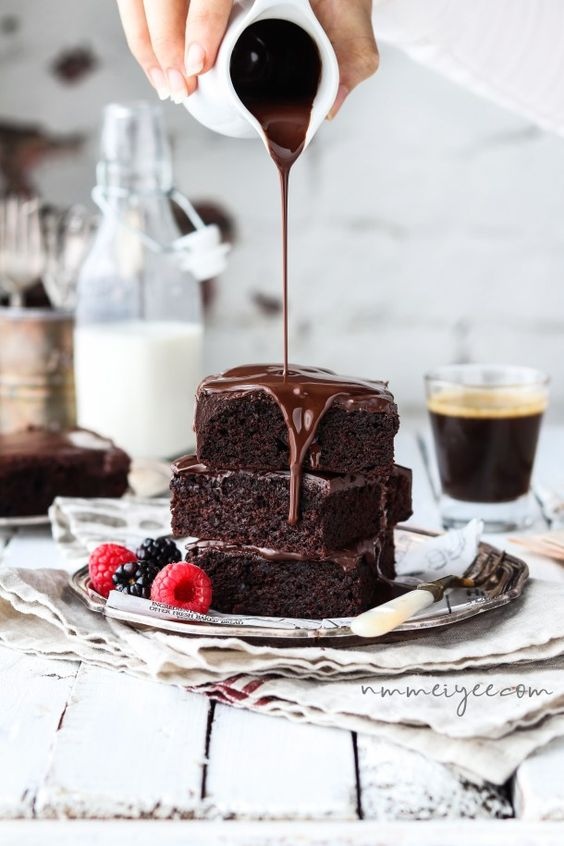
Something quick, easy and delectable are few of the pre-requisites required for adding to the list of holiday baking. If chocolate is added in, the better. It would be something that blend in with other well loved and basic desserts. That something would be square, baked or frozen cut choclate cake pieces, more popularly known as the “brownie”. Coming in a variety of forms, from fudgey to cakey with nuts, fudge, frosting, cream cheese, chocolate chips and the favourites included in the batter; the brownie is an all-time favourite of many. Like sheet cookies, they may eaten by self or with milk, ice cream (a la mode), topped with whipped cream or sprinkled with powdered sugar and fudge.

Like all delectable treats, brownies have their own share of legends. As one legend credits the brownie to the creative ingenuity of Palmer House Hotel pastry chef (1893) for the Palmer House Brownie with walnuts and an apricot glaze made for the Chicago World’s Columbian Exposition on the request of the owner’s socialite wife Bertha Palmer. The first-known printed use of the word “brownie” was to describe a dessert in the Boston Cooking-School Cook Book by Fannie Farmer (1896 version) in reference for a cookie-type confection that was colored and flavored with molasses and made in fluted marguerite molds. Later further publications like The Boston Cooking-School Cook Book (1906) edited by the same Fannie Merritt Farmer records a recipe brownie as an adaptation of her chocolate cookie recipe to a bar cookie baked in a rectangular pan. Another well record as written in the Baking Classics (Betty Crocker) is of a housewife who was making a chocolate cake but forgot to add baking powder. When her cake didn’t rise properly, instead of tossing it out, she cut and served the flat pieces (Bangor, Maine) which would probably account for the Bangor Brownies.

As food historians try to still trace the exact inventor of the “brownie” while the legends credit it to added melted chocolate to a batch of biscuits (added by mistake) or the cook who didn’t have enough flour while baking a cake; brownie are one of the simple things that can be made quite elaborate for the festive season. For instance consider the sandwich brownie (with an ice-cream, cream, icing sugar, meringue or peanut butter as the filling in the middle) or the layered brownie with double chocolate chip at the base, then the layer of Oreos and finally brownie batter on billows of cream cheese, a delight for the wintry holidays. As for the mix, add a scent of cinnamon, essence of the vanilla (blondie twist), sprinkle of the flavours of star-anise, honey or even a little of the cayenne for that extra “hot” to the sweet; brownie can be made as to own choice, flavours and twists. A platter of homemade special brownie can give an extra zest to the holidays. So set, get and go experimenting for a new family festive tradition.

1907
Lowney’s Cook Book
Boston, Massachusetts

Bangor Brownies (p 261)
¼ cup butter
1 cup brown sugar
3 squares chocolate
1 egg
½ to ¾ cup flour
1 cup nut meats
¼ teaspoon salt

“cut in strips”
Source: New England Recipes 

Posted in Daily, Food, Photography Art

Art in the Jar

“The wonder of imagination is this: It has the power to light its own fire.” John Landis Mason

Rummaging through the church sale, there were numerous purchases, not just the clothes and books sections, but also collectibles ranging from the funny shaped lanterns to glass bottles and finally the mason jars. Speaking of the latter, these were a staple of the kitchens during the prime years of my grandmother and the generations before her. Without the existence of modern day refrigerators, the winter supply was primarily contributed by canning and preservation techniques.

Though the technique of preservation of food were in many rudimentary forms, it was the French chef Nicolas Appert who had brought about the method of preserving food by enclosing it in sealed containers. Among the earliest glass jars used for home canning were wax sealers (named so as attributed to the sealing wax poured into a channel around the lip to secure the tin lid). Although this process was complicated and error-prone, the wax sealing process was largely in popular use. As this method got slowly modified with screw on cap, till John Landis Mason took over with his innovative twist.

For every canning enthusiast, antique collector or simply any collector, the Mason Jar is a must on the list. A Mason jar, named after John Landis Mason, is a molded glass jar used in home canning to preserve food. From the first patented form of 1857, to the present, Mason jars have had hundreds of variations in shape and cap design. Although the collector’s treasure is the “Patent Nov 30th 1858,” signifying the date of Mason’s patent, as embossed on thousands of jars, which were made in many shapes, sizes, and colors well into the 1900s.

Today mason jar aren’t confined to the “canning section” alone, but form a big part of many aspects. From the aesthetic turn to food art, serving jars as well as “healthy shakes”, party essentials to leaflet holder, coin jars or quote jars, gift ideas and many more, owning the original one is a collector’s dream. Over the years though technology as well as modern science has progressed in leaps and bounds; there are certain “antique” things in life which still remain in the personal favourite or choice list.

Posted in Daily, Food, Uncategorized

Of Parfait, Choice and Style

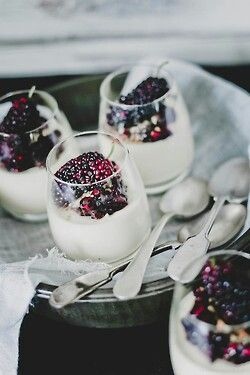
For any meal, the finale is marked by that delightful bit of sweetness. With the rising awareness of eating healthy and right, the right balance has to be struck at times between the temptation of the sugar craving to close the meal and to stay on the low healthy calorie counter too. Which is why “parfait” has evolved since it’s inception to the present day.

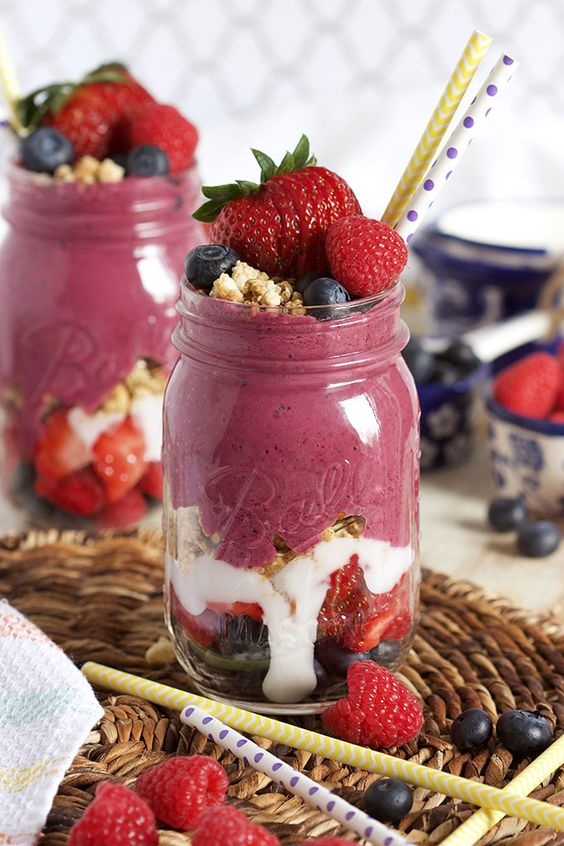
The oldest known recipe can be traced to 1894, of French origin where it had started off as a frozen dessert. While the French prefer to make the base from cream, egg, sugar and syrup creating a perfect custard-like puree, known as “the parfait”; whereas the American counterpart includes an artful layering of varied ingredients like granola, nuts, yogurt, liqueurs with a topping of fruits or whipped cream layered and served in a tall glass.

Of recent, with new trends and various experimentation, parfaits have been introduced without the cream and liqueurs. Instead they are made by simply layering the fresh fruits ranging from berries, cut peaches, strawberries with yogurt , granola or nuts; served as a healthy snack, breakfast option or a light meal, as a change from the regular. Which ever way it may be, the popularity of the parfait lies not only in it’s ease of preparation and the delectable indulgence but also in the appealing art it holds in itself.

Posted in Food, Stories Around the World

Of Milk, Flour and Flavours

With the sweet tooth running pretty strong in the family genes, the question “what’s for dessert?” comes first, even before the table is laid. When the baking comes to a lull, the ever ready alternative comes as long as milk is plenty and available. From the Spanish Arroz Con Leche to the Muhalabieh of the Middle East or malabi (Israeli milk pudding), French Teurgoule, British Blancmange to the Indian Kheer or Persian Firni, there are countless variations and possibilities to the regular recipes of milk based puddings and desserts. Interestingly each dish in this vast list has their own history and legend behind them.

Milk. Rice flour ( of recent cornstarch). Sugar. Rosewater. Vanilla extract. Chopped nuts.

With legendary origins dating to Sassanid Persia (224-651), the milk based pudding Mhallabiyeh ( or Muhalabieh in Middle East, Israeli malabi) has been often made with the basic ingredients of rice, sugar, rice flour and milk. Although in the Middle Ages, muhallebi and blancmange (European counterpart) were made with shredded chicken.

As the legend goes, Muhallebi was first served by a Persian cook (late seventh century) to an Arab general, Al-Muhallab ibn Abi Sufra who had liked the dish and named it after him. Thereby this dish had entered the Arab cuisine. The initial recipes (10th century) were based on three versions of the basic dish: milk thickened with ground rice, milk with rice grains and chicken and an egg custard (without rice). Records from two 13th-century Arab cookbooks (one by al-Baghdadi, another from Andalusia) have recipes of a spiced pudding variation made with mutton instead of chicken. The Ottoman Empire has written records of two versions of muhallebi: a version with shredded chicken (tavuk gögsü) served during the reign of Mehmed the Conqueror and a later recipe(1530) for a meatless version flavored with rose water. Later records give a recipe for muhallebi named as “Ramazan cakes” (19th century English cookbook). This recipe records of boiling milk together with rice flour and sugar until the mixture reduces followed by which the pudding is then flavored with rose or jasmine extract and allowed to cool before it is sprinkled with powdered sugar.

Modern variations of the initial recipe has been seen in the substitution of the rice flour (or addition at times) by cornstarch or wheat starch depending on the thickness, consistency and creaminess required. The Israeli “malabi” is made from cream and milk cooked with corn starch and rose syrup, the latter being used primarily for flavouring. It is often topped with chopped pistachios, desiccated coconut, almond slivers as well as orange water flavorings. On the other hand, the Cyprian mahalebi (or mahalepi or muhallebi) is devoid of milk. Instead it is made from water, sugar, nisete flour ( or cornstarch/corn flour), rose water and when it is set, they add. When the muhallebi is set the Cypriots add rose called triantafyllo (rose squash /cordia/syrup) on top of it.

While making Muhallebi at home, various alternatives and add-ons to the classical recipe may be tried. More elaborate concoctions can be tried, like layering this pudding on a biscuit base for a chewy feel to balance out the sweet milky taste; or modify it as a drink based dessert. No matter what, with the sweetness of the milk (cream added as per preference) to balance out the taste of cereal and additional flavourings with various toppings and garnishes, this dessert will be a well loved addition to the list of no bake desserts.