
Posted in Daily, Family and Society, Life, Quotes, Reflections, Stories Around the World, Work

Of Choices, Time and Priorities

“Things which matter most must never be at the mercy of things which matter least.” Johann Wolfgang von Goethe

No matter how hard one tries to stretch the allotted time of twenty hours each day; there are bound to be a few things from the mental task list, still left undone. One of the earliest habits drilled during the school days was to prioritize and get the tasks completed for the day. While the initial years saw the assigned tasks being prioritized from somewhere around middle school onward; later on it became a daily must for most days of high school, college and later on in the adult world.

Prioritize.

Almost the whole of the adult lives revolve around prioritizing events scheduled around the planners, from big ones to the small ones. The scales have to be struck in a very fine manner between work, relationships, personal growth, hobbies or interests, family life and personal time. Too much of one focus results in the undermining of the others which may or mayn’t have consequences in the later years.

“Most of us spend too much time on what is urgent and not enough time on what is important.” Stephen R. Covey

Prioritizing is as much an art, dependent on the way how one perceives the important facets of life. When one realizes that the focus has been on certain direction for quite some time, it may be too late to turn things around as time has already run out in those spheres. Learning not to step into those lines is a special talent. Priorities are shaped by the choices, desires, interests as well as the purpose that we grow within ourselves. Until one defines what they want out of their respective lives, the prioritization mayn’t work out right. One’s priorities should eventually bring completeness as well as pleasant emotions in life. Once when those aspects are met, the time spent for the prioritized tasks is time well spent; worth the treasure chest of memories, lessons and happiness that it brings along.

“Desires dictate our priorities, priorities shape our choices, and choices determine our actions.” Dallin H. Oaks

Priorities
So many things to do, I’m always rushing ’round
I wish that I had time to just sit still
I’ll get done all the things I need to do today
I promise then I’ll stop a while, I will

And so I start to tackle the list of chores I made
I’ll make this house look really spick and span
I’ll tidy up and wash the floor and vac and dust as well
Clean the bathrooms, clean the house – I know I can

A friend rings up. She’s feeling down. She wants to come around
She asks if I have time to talk a while
I stop to make a coffee and lend a listening ear
I have nothing to give except my smile

Then, when she’s feeling better and she knows that she’s been heard
She thanks me and then she goes on her way
I look around my house and continue with my chores
For I am going to get somewhere today

The telephone then rings. My son’s teacher’s on the phone
She wants me to come down and get him now
I go down to the school and I bring my sick child home
I’ll clean this house up later on somehow

And later when the kids are home; ‘Mum, I need to talk’
And so I stop to listen for a while
My daughter tells me how she feels, she opens up her heart
Then, when she knows I’ve heard her, she can smile

When the night has come, I wonder, ‘what did I achieve?’
And, then I look back on all I have done
The house is still not tidy and there’s still so much to do
Just like it was when I had first begun

But, then I stop and realise my priorities are right
For when someone’s in need then, I am there
I give to them the time they need and help them where I can
I let them know how much I really care

For when the years have passed and my kids have all moved out
They will feel the love and warmth I had to give
And I know that they’ll remember the lessons that they learnt
In self-worth and in how they choose to live

Written by Michelle Tetley
©2005

Posted in Daily, Food

Sweet, Flavoured and Iced

“After scalding the teapot, put into it one quart of boiling water and two teaspoonfuls green tea. If wanted for supper, do this at breakfast. At dinner time, strain, without stirring, through a tea strainer into a pitcher. Let it stand till tea time and pour into decanters, leaving the sediment in the bottom of the pitcher. Fill the goblets with ice, put two teaspoonfuls granulated sugar in each, and pour the tea over the ice and sugar. A squeeze of lemon will make this delicious and healthful, as it will correct the astringent tendency.” (Marion’s recipe for “Ice Tea” (1879))
– The oldest sweet tea recipe (ice tea) in print from the community cookbook “Housekeeping in Old Virginia”, by Marion Cabell Tyree (1879 publication)

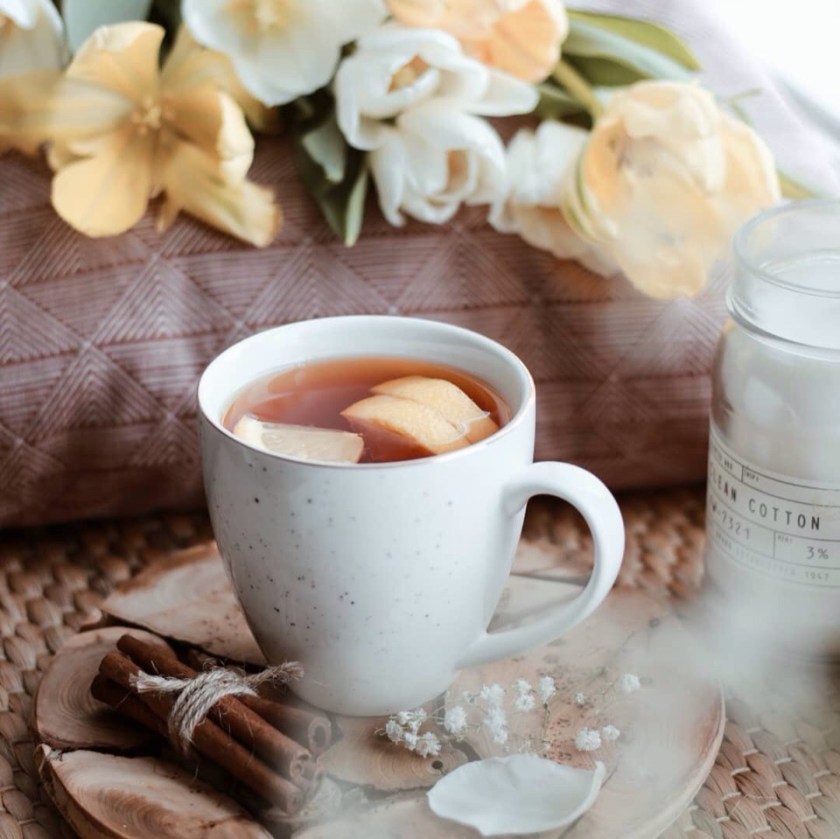
Although summer heat has given way to the rain, tea especially the iced and sweetened versions have almost a year round presence. Despite the rains, each week has it’s fair share of afternoon heat, best felt when one spends the muggy hours on foot. While iced or cool water has their benefits, there is the something about iced tea and sweet tea that prompts every cool drink enthusiast to indulge in them once a while.

With trade and colonial conquests, tea was introduced to Europe and then on to the Americas, where it had gained widespread popularity especially in the southern parts. By the 1900s, black tea became more accepted than green tea, especially when taken with ice. With scorching heat, the sweetened and iced version had more support than simply the iced version. Yet it was the World Fair (1904) that had made iced tea a popular summertime drink. This popularity had catapulted with the Prohibition ( 1920-1933) wherein beer, wine and alcohol was declared illegal then.

The technical difference between “sweet” and “iced tea” lies in the sugar. The former is taken as “sweetened and iced” whereas the latter i.e. iced tea, may be served unsweetened or black. Either way, learning to make sweet tea is a must for any afternoon social especially when the age of soft drinks may have been passed. With National Sweet Tea Day tomorrow (August 21st), it’s time to go recipe hunting and come with a flavoured and tacky sweet tea recipe.

Posted in Daily, Food, Stories Around the World

The “Meringue” Way

“To make white bisket bread.
Take a pound & a half of sugar, & an handfull of fine white flower, the whites of twelve eggs beaten verie finelie, and a little annisseed brused, temper all this together, till it be no thicker than pap, make coffins with paper, and put it into the oven, after the manchet is drawen.”
– Recipe for the “white biskit bread” in the book of recipes started (1604) by Lady Elinor Poole Fettiplace (c.1570 – c.1647) of Gloucestershire.
(Fettiplace, Eleanor Poole (1994). Hilary Spurling (ed.). Elinor Fettiplace’s Receipt Book. Translated by John Spurling. Bristol (U.K.): Stuart Press. Volume 1, page 23) noted by Muster (ref.)

Made from egg whites and sugar, whipped up to a finesse with a binding agent (salt, cornstarch or gelatin) and an occasional acidic ingredient (lemon, vinegar or cream of tartar) or flavorings of vanilla, coconut or almond; meringue had graced the dessert menu especially to highlight a special occasion or simply enjoy the pleasures of an exquisite delight. The origin till date, is a point of contention for food historians.

The name “meringue” had first appeared in cookbook by François Massialot (1692) (“XXVIII: Des Meringues & Macarons”. Nouvelle instruction pour les confitures, les liqueurs et les fruits (in French). Paris: Charles de Sercy. pp. 186–188). While the word “meringue” had first appeared in English in an English translation of Massialot’s book (1706); two considerably earlier seventeenth-century English manuscript books of recipes give instructions for confections known as “white bisket bread” and “pets” of what are today are recognizable as meringue. The other claim was that meringue was invented in the Swiss village of Meiringen and improved by an Italian chef named Gasparini between the end of the 17th century and the beginning of the 18th century.

“To make Pets
Take a pownd of Drye fine searsed [sifted] suger, & beat the whites very wel then take off froutgh [froth] & put your suger, bye litle & litle in to it — contineually stiring it & beating it with a spoone ore laydle, and when it is exceedingly well beaten, then have some pye plates ready buttred & wipe the buter of because the lesse buter it hath the beter, then drope them upon the plate & put in to every drope a carieway seede or coriander then let your oven be very temparate and watch them with a candle all the while & if they be right they will rise and looke very white, it is good at the first to set a scilet [skillet] of water, with them in to the oven,& when they be thowrow [thoroughly] drye then take them out, you must in the mixing of them put 12 graines of muske & 12 of Abergrisse [Ambergris] which you must bruse with suger before you stire it in to the egge & suger.”
– Recipe for a baked beaten-egg-white-and-sugar confection (1630) is given in a manuscript of collected recipes written, by Lady Rachel Fane (1612/13 – 1680) of Knole, Kent. (Barry, Michael (1995). Old English Recipes. Jarrod (archived at the Centre for Kentish Studies, Maidstone, Kent). p. 64f.)

The faster they are beaten, the better is the flavour. The key to the formation of a good meringue is the formation of stiff peaks by denaturing the protein of egg whites by pure mechanical shear force. Today these light, airy and sweet confections are made at home (more chewy and soft, and crisp exterior), though the commercial ones still thrive. Interestingly, meringues were traditionally shaped between two large spoons (still done so at the home kitchens) till Antonin Carême piped the “meringue through a pastry bag”.

Over the years, various techniques have been improvised to bring forth the French or basic meringue, Italian, Swiss and even the vegan meringue. From biscuits, desserts to embellishment, each meringue based recipe like the lemon meringue pie, baked Alaska, dacquoise, Esterházy torte to mention a few, all have a story and art of their own to tell. With meringue taking the form of whimsical shapes such as mushrooms; or piped into a crisp basket that is baked and filled with cake, fruit, or flowers are few of the many reasons why these delicacies are here to stay and transform the art and flavours of dessert.

Posted in Daily, Food

Of Panini, Origin and Evolution

Meaning small bread or bread rolls as derived from the Italian panini [paˈniːni] or panino; these sandwiches are made with Italian bread (such as ciabatta and michetta), usually served by grilling or toasting. While the modern panini may have baguette as the bread; the deli ingredients of the horizontally cut bread can be filled with one’s own choice. From salami, cheese, ham, vegetables sliced or pickled; the choices are aplenty.

“[Panini] are said to have originated in Lombardy, Italy, in response to the demand among Milanese office workers for a quick lunch without sacrifice in flavor and quality. In both Italy and the United States, panini are eaten for lunch and as snacks and appetizers. In Italy, sandwich shops traditionally wrap the bottom of the panino in a crisp white paper napkin, providing a practical solution to drips while enhancing aesthetics. Quality Italian bread is an absolute must for a killer panini, and most sandwich chefs will opt for a relatively thin artisan bread like grooved focaccia or ciabatta, slicing it in half horizontally. Panini are always grilled, so most restaurants and cafes have invested in professional grooved sandwich presses that flatten and heat the sandwich while creating a crunch, buttery outer crust.” -American Sandwich: Great Eats from all 50 States, Becky Mercuri [Gibbs Smith:Salt Lake City UT] 2004 (p. 81)

The earliest precursor of panini was believed to be in the 16th century Italian cookbook; food historians have traced these sandwiches to the trendy Milanese bars, called paninoteche (1960s). As their popularity had crossed the Atlantic in the mid-1970s, the first American reference to panini dates to 1956. With each city having their own distinctive version of panini, variation were developed in plenty. During the 1980s, “paninaro” had evolved which was the youngsters’ culture typical of teenagers to enjoy a meet and eat place like the sandwich bars, such as Milan’s Al Panino. These had later evolved to the initial style of fast food restaurants opened in Italy.

Over time, panini had evolved to more flavours and texture with the bread changing type along with the mix. As their popularity spread across the seas to the Asian continent and the Orient, the portability, easy preparatory, individual taste and choice have contributed to their fair share in the menus across the globe. Little wonder, why then August had been dedicated as the month of the panini  by experimental foodimentarians, for every kitchen of theirs would have made or had the “panini” at some point of time.

Posted in Daily, Food

Flavoured, Creamy and Soft

“My idea of a perfect day is a frozen custard at Shake Shack and a walk in the park.” Nora Ephron, I Remember Nothing: and Other Reflections

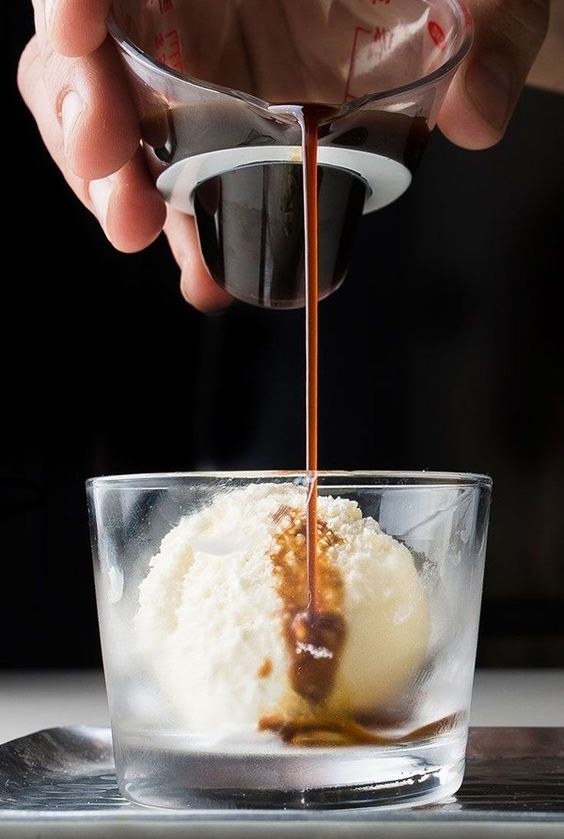
Similar to ice cream, but denser and containing higher percentage of egg in addition to cream and sugar; frozen custard has been of late in rage, especially when one wants a break from the regular cold dessert of ice-cream.

Since the 1690s, experimentally egg yolks were tried for the ice cream recipe, the percentage was very low and the popularity stayed strong with ice-cream as such. Yet when vendor Archie C. Kohr had increased the concentration of egg yolk to the regular ice cream; not only was the texture improved, it became more denser and didn’t melt quickly. Thus, “frozen custard” was invented in Coney Island (1919). Later this frozen custard was introduced at the Chicago World’s Fair. From then on, it had gained the hearts of dessert lovers. As this silky product is extruded through the huge metallic contraptions (sometimes known as “iron lungs”), into the bucket and then scooped into cups or wafer cones; the smooth, cream coloured texture is rich but not cloying on the taste buds.

As per the U.S. FDA, the distinction between ice-cream and frozen custard is very fine with the latter to consist of at least 10 percent milk fat and 1.4 percent egg yolk solids. The true or original frozen custard is a very dense dessert. Air is not pumped into the mix, nor is it added as an “ingredient” but gets into the frozen state by the agitation of liquid similar to whisking a meringue. The high percentage of butterfat and egg yolk gives frozen custard a thick, creamy texture and a smoother consistency than ice cream.

For the experimenters, there is always homemade frozen custard to be made with the added fun of an ice-cream social. Also the store bought or a good deli frozen custard can spice up the regular Sunday brunch desserts as add-ons to cake, regular shakes or prepped up with nuts, crushed almonds or m&m’s. All said, with foodimentarians gearing up to celebrate the National Frozen Custard Day(August 8th), it would be a good time to try out this cold dessert.

Posted in Daily, Food, Stories Around the World

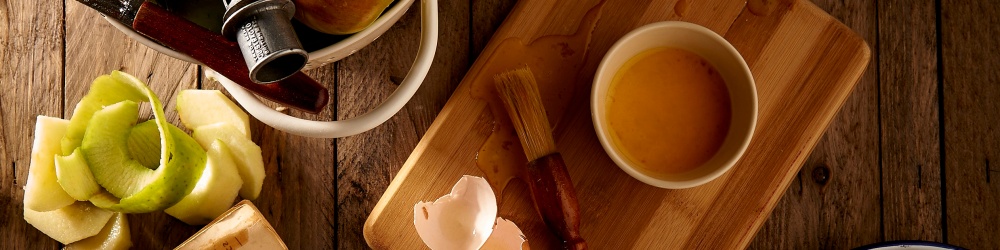
Chip it In, Bake It

Whitman, Massachusetts, 1938

“We had been serving a thin butterscotch nut cookie with ice cream. Everybody seemed to love it, but I was trying to give them something different. So I came up with Toll House cookie. Add up chopped up bits from from a Nestlé semi-sweet chocolate bar into a cookie. The original recipe is called “Toll House Chocolate Crunch Cookies.”
– American Chef Ruth Graves Wakefield, Toll House Inn
(Wakefield, Ruth Graves (1942). Ruth Wakefield’s Toll House Tried and True Recipes. M. Barrows & Company, Inc.)

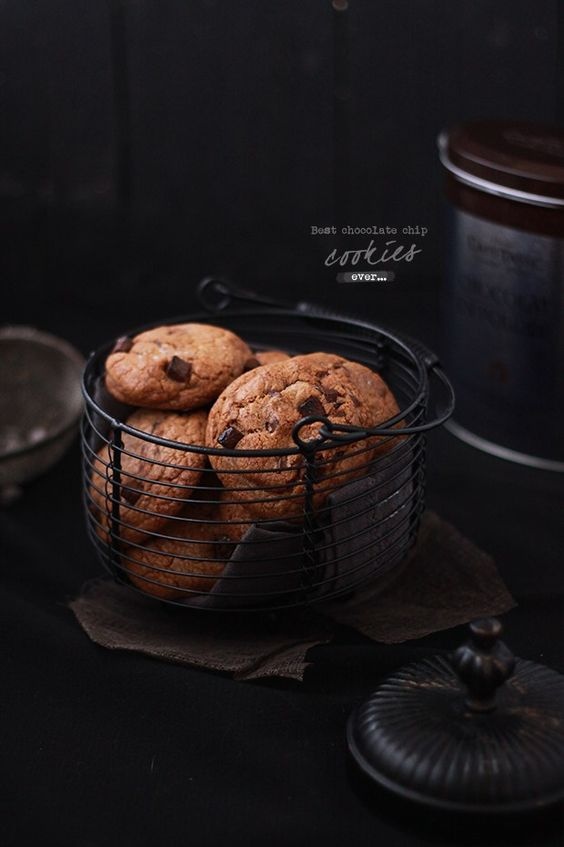
One of the famous drop cookies, “the chocolate chip cookie” had its’ origins in the early 1900s; wherein chocolate chips or choclate morsels were added to the regular cookie dough as the distinguishing ingredient. With a dough composed of butter, both brown and white sugar, semi-sweet chocolate chips and vanilla; the traditional recipe had evolved. Originally invented by the American chef Ruth Graves Wakefield and chef Sue Brides (1938) when the former owned the Toll House Inn (Whitman, Massachusetts); a popular restaurant that featured home cooking. Wakefield credited Brides with helping her make the famous chocolate chip cookie.

Over the years, variations with different varieties of chocolate, change of ingredients like nuts, oatmeal, raisins and the like paved way. Variations on the original recipe may add other types of chocolate, vegan substitutes as well as additional ingredients such as nuts or oatmeal. The ‘double’ or ‘triple’ chocolate chip cookies are so called when dough flavored with chocolate or cocoa powder are used before chocolate chips are mixed in. These variations of the recipe are often referred to as , depending on the combination of dough and chocolate types.

“If you can’t change the world with chocolate chip cookies, how can you change the world?” Pat Murphy

As the popularity grew, especially during WWII, soldiers from Massachusetts who were stationed overseas shared the cookies they received in care packages from back home with soldiers from other parts of the United States. Soon hundreds of soldiers asked their families to send them some Toll House cookies. Thus began the craze for the chocolate chip cookie with Wakefield receiving letters around the world requesting her recipe.

In proportion to the increased popularity of the choclate chip cookie, the sales of Nestlé’s semi-sweet chocolate used rose. Andrew Nestlé offered Ruth a deal to buy the rights to her recipe, as well as the rights to use her and the Toll House name when advertising his acquisition. The business proposal was accepted by Ruth for one whole dollar and a lifetime supply of Nestlé chocolate. Nestlé quickly launched a new marketing campaign that advertised the chocolate chips primarily as main ingredients for cookies, engraving the recipe for the Toll House Cookie on the package print.

“ One of the best things in life- warm chocolate chip cookies.” Anonymous

In an interview (2017), Sue Brides’ daughter, Peg shared the original recipe that was passed down to her.  The original Toll House cookie recipe, according to Peg:

1 1/2 cups of shortening
1 1/8 cups of sugar
1 1/8 cups of brown sugar
3 eggs
1 1/2 teaspoon of salt
3 1/8 cups of flour (Peg prefers King Arthur all purpose)
1 1/2 teaspoon of hot water
1 1/2 teaspoon of baking soda
1 1/2 teaspoon of vanilla
Chocolate chips (and walnuts)
Bake at 350 degrees for 12-13 minutes
[The Tried and True Recipes cook book specifies “2 bars (7 oz.) Nestlé’s yellow label chocolate, semi-sweet, which has been cut in pieces the size of a pea.”]
(Source:Stephanos, Maria (2017-06-21). “Secret’s out! Here’s the ‘real recipe’ for Toll House chocolate chip cookies”)

With Chocolate Chip Cookie Day being celebrated by foodimentarians tomorrow (August 4th), making similar or own variations of this delectable treat would be a lovely weekend surprise and fun event.

Posted in Daily, Family and Society, Life, Quotes, Stories Around the World

The Need to Listen

“We have two ears and one mouth, so we should listen more than we say.” Zeno of Citium, as quoted by Diogenes Laërtius

The visit to the retailers’ during the end season is marked with a slight wariness. Though the anticipation of rummaging through the variety on display and searching for the “good stuff” are the few of the many reasons that one enters the mall during the peak season; underlying is the feel that one may run into someone that one knows. When the acquaintance is one who has been in regular touch, it is a quick chat but if it is someone who has been out of town for a long time; there is the cup of coffee and a snack brunch or dinner to follow. On the latter encounters, what one later realizes was in the monologue; it was the trait of listening that was being developed.

“Not everyone with a problem needs you to solve it. Sometimes all a person needs is to feel like they’ve been heard. Listening without judging can be more effective than injecting your opinions or trying to solve a problem that doesn’t have an easy answer.” Zero Dean

For those people with a comfortable circle of friends and colleagues, it is the trait of listening that is highly valued. Many a time, when caught in a quandary, more people want to be simply listened to than being poured with advice. The art of listening is indeed a rare one. To be quiet, lend a ear and actually comprehend what one days builds up the relationship, self respect and harmony of both. It may be easy to judge, offer opinions or point out mistakes. Yet those things may be eventually felt by the speaker themselves, once they are allowed to sort out things by themselves. More than speaking, it is listening impartially, openly ans with an interest than builds not just relationships, but also gives insight, forethought as well as learning to be imparted and used in the future. Any relationship is always a coordination of speech, silence, listening, kindness and acceptance. When these seeds are first sown, the plant grows healthy. Only when one learns to listen, will they to be listened to.

“Wisdom is the reward you get for a lifetime of listening when you’d have preferred to talk.” Doug Larson

We all know what it’s like to get that phone call in the middle of the night. This night was no different. Jerking up to the ringing summons, I focused on the red, illuminated numbers of my clock. It was midnight and panicky thoughts filled my sleep-dazed mind as I grabbed the receiver. ‘Hello?’ My heart pounded, I gripped the phone tighter and eyed my husband, who was now turning to face my side of the bed. ‘Mum?’ The voice answered. I could hardly hear the whisper over the static. But my thoughts immediately went to my daughter. When the desperate sound of a young crying voice became clear on the line, I grabbed for my husband and squeezed his wrist.
‘Mum, I know it’s late. But don’t … don’t say anything until I finish. And before you ask, yes I’ve been drinking. I nearly ran off the road a few miles back and…’ I drew in a sharp, shallow breath, released my husband and pressed my hand against my forehead. Sleep still fogged my mind, and I attempted to fight back the panic. Something wasn’t right. ‘… and I got so scared. All I could think of was how it would hurt you if a policeman came to your door and said I’d been killed. I want to come home. I know running away was wrong. I know you’ve been worried sick. I should have called you days ago but I was afraid, afraid …’
Sobs of deep-felt emotion flowed from the receiver and poured into my heart. Immediately I pictured my daughter’s face in my mind, and my fogged senses seemed to clear, ‘I think …. ‘ ‘No! Please let me finish! Please!’ She pleaded, not so much in anger, but in desperation. I paused and tried to think what to say. Before I could go on, she continued. ‘I’m pregnant, Mum. I know I shouldn’t be drinking now … especially now, but I’m scared, Mum. So scared!’
The voice broke again, and I bit into my lip, feeling my own eyes fill with moisture. I looked up at my husband, who sat silently mouthing, ‘Who is it?’ I shook my head and when I didn’t answer, he jumped up and left the room, returning seconds later with a portable phone held to his ear. She must have heard the click in the line because she asked, ‘Are you still there? Please don’t hang up on me! I need you. I feel so alone.’
I clutched the phone and stared at my husband, seeking guidance. ‘I’m here, I wouldn’t hang up,’ I said. ‘I should have told you, mum. I know I should have told you. But, when we talk, you just keep telling me what I should do. You read all those pamphlets on how to talk about sex and all, but all you do is talk. You don’t listen to me. You never let me tell you how I feel. It is as if my feelings aren’t important. Because you’re my mother you think you have all the answers. But sometimes I don’t need answers. I just want someone to listen.’
I swallowed the lump in my throat and stared at the how-to-talk-to-your-kids pamphlets scattered on my nightstand. ‘I’m listening,’ I whispered.

‘You know, back there on the road after I got the car under control, I started thinking about the baby and taking care of it. Then I saw this phone booth and it was as if I could hear you preaching to me about how people shouldn’t drink and drive. So I called a taxi. I want to come home.’ ‘That’s good honey,’ I said, relief filling my chest. My husband came closer, sat down beside me and laced his fingers through mine. ‘But you know, I think I can drive now.’ ‘No!’ I snapped. My muscles stiffened and I tightened the clasp on my husband’s hand. ‘Please, wait for the taxi. Don’t hang up on me until the taxi gets there.’ ‘I just want to come home, Mum.’ ‘I know. But do this for your Mum. Wait for the taxi, please.’
I listened to the silence in fear. When I didn’t hear her answer, I bit into my lip and closed my eyes. Somehow I had to stop her from driving. ‘There’s the taxi now.’ Only when I heard someone in the background asking about a Yellow Cab did I feel my tension easing. ‘I’m coming home, Mum.’

There was a click, and the phone went silent. Moving from the bed, tears forming in my eyes, I walked out into the hall and went to stand in my 16-year-old daughter’s room. My husband came from behind, wrapped his arms around me and rested his chin on the top of my head. I wiped the tears from my cheeks. ‘We have to learn to listen,’ I said to him. He studied me for a second, and then asked, ‘Do you think she’ll ever know she dialed the wrong number?’ I looked at our sleeping daughter, then back at him. ‘Maybe it wasn’t such a wrong number.’
‘Mum, Dad, what are you doing?’ The muffled voice came from under the covers. I walked over to my daughter, who now sat up staring into the darkness. ‘We’re practicing,’ I answered. ‘Practicing what?’ she mumbled and laid back on the mattress, but her eyes already closed in slumber. ‘Listening,’ I whispered and brushed a hand over her cheek.

Author Unknown

“The art of conversation lies in listening.” Malcom Forbes