Posted in Daily, Food, Stories Around the World

Of Cheesecake, Origins, Style and Evolution

Pound the cheese until smooth and pasty. Mix the pounded cheese in a brass pan with honey and spring wheat flour. Heat the cheese cake “in one mass”, allow to cool and serve. ( Records from the oldest known Greek recipe, Athenaeus 230 A.D.)

One of the well loved desserts of “cheese cake” has its’ origins as early as the Greek civilizations of 6th century B.C. . Although it was believed that the first cheese cake may have been created on the Greek island of Samos, this mayn’t be exact. In fact, cheese and related products may have been there since the domestication of animals and use of milk by the primitive man. Th earliest evidence of cheese cake, was as per Greek records ( 5th century records of Greek physician Aegimus, Olympic records of 776 B.C. or Athenaeus writings of 230 A.D.) during sports and weddings (as the main wedding cake). Then the basic ingredients of flour, cheese, honey and wheat were taken in the right amounts and baked.

With the conquering of Greece by the Romans, the “cheesecake recipe” was modified to include crushed cheese and eggs. Either baked under a hot brick and served warm, or put into the pastry as a filling; the Roman cheesecake known as “libuma” was meant for special occasions. Cato the Elder’s De Agri Cultura accounts the earliest cheesecake recipes, which mentions three types; libum, savillum and placenta. The latter is almost like the modern cheesecake recipe with a crust that is separately prepared and baked.

“A dessert without cheese is like a beautiful woman with only one eye.” Anthelme Brillat

With the extension of Roman empire, later fall and rise of other civilization; cuisines and recipes were exchanged, experimented and evolved throughout Europe. From Great Britain to Eastern Europe, each region had their unique differences of ingredients, texture, method and presentation of cheesecake. The twelfth century had seen, a cheesecake recipe in the English cookbook, Forme of Curry (1390). Described as a flour based sweet food, various accounts also state cheesecake recipes as “cheese cut into very small pieces, soaked in milk for three hours; the mixture strained and eggs, butter and sugar being added (accounts of chef in employ of Henry VIII).”

Although the name “cheesecake” was used since the 15th century; the modern form of “cheesecake” had evolved around the 18th century. Then yeast was substituted with beaten eggs; thereby removing the overpowering yeast flavour and make it more “dessert-ish” and sweet. With immigration and migration to Americas, the recipes were further modified. The modern American cream cheese was developed in 1872 as an accidental discovery by William Lawrence (Chester, New York) as he tried to recreate the soft, French cheese Neufchâtel. Although he had made an “unripened cheese”, heavier and creamier than the regular; similar creations were made independently by other dairymen.

“New York means many different things to me. It certainly means cheesecake, more species of cheesecake than I ever knew existed: rum, orange, hazelnut, chocolate marble, Italian, Boston, and of course, New York.” David Frost

On a technical point, cheesecake today is more as a torte (based on number of eggs), tart or flan than being a “cake” as they have a separate crust, soft filling and the absence of flour in most recipes. In fact, modern cheesecake comes as two different types; of the baked cheesecake or cheesecakes made with uncooked cream-cheese on a crumbled-biscuit base.

With cheesecakes being broadly categorized as two basic types of baked or unbaked, each region or continent have their own versions or varieties. Like the most popular variety of South African made with whipped cream, cream cheese, gelatin filling, buttered digestive biscuit crust with Amarula liqueur, if not baked or the Asian style cheesecake of cornstarch and eggs (Japan) or cottage cheese, sugar and nuts ( Indian chhena poda, Odishan recipe) or the common unbaked Australian cheesecakes; one can modify the recipe for more fruit based or sweet (chocolate, vanilla or caramel) based flavouring.

“My favourite pudding is a toss-up between cheesecake – proper, New York cheesecake – and apple crumble and custard. Custard is very important, or dark chocolate mousse. Tea: probably Earl Grey, splash of milk.” Tom Hiddleston

For a more global cheesecake style, one can experiment and base recipes as per the French style (Neufchâtel cheese, gelatin), Italian-style (ricotta or mascarpone cheese, sugar, vanilla extract, small bits of candied fruit and sometimes barley flakes), Polish sernik, Russina vatrushka or like in the United Kingdom and Ireland.

The latter make their cheesecake typically with a base of crushed, buttered biscuits and often topped with a fruit compote. The usual filling is a mixture of cream cheese, sugar, cream and gelatin at times. Popular non fruit variations are banoffee, coffee, tea, chocolate, Irish cream, white chocolate, marshmallow flavors and even smoked salmon (Scotland). The New York style (heavy cream or sour cream based) and Chicago style (baked cream-cheese, fluffy with a shortbread based crust) cheesecakes are few of the popular American varieties.

The versatility, wide variety and variants, ease as well as simple ingredients of cheesecake are what makes them popular for quick occasions, simple desserts or more elaborate functions. To celebrate the National Cheesecake Day (July 30th), it would be fun to start a “cheesecake” tradition or recipe for family and friends. After all, cheese refines with age, in taste, flavours and texture. Intermixing recipes for new palatable combinations would be an interesting experimentation for the homemaker, artisan as well as the “chef’s eye”.

Posted in Daily, Food, Stories Around the World

Add “Milk” to “Chocolate”

Although this sweet, brown food preparation of roasted and ground cacao seeds have had their earliest evidence of use traced to the Olmecs of Mexico (1900 BC); adding milk to this creation has been a much later development, believed to be around the 19th century.

“Anything is good if it’s made of chocolate.” Jo Brand

Around the mid-17th century, milk was sometimes used as an addition to chocolate beverages. With drinking choclate gaining momentum and the Cadbury brothers (1820) had widely marketed it. In order to tackle the flood of chocolate that was entering the UK mainly from Switzerland and France, Fry and Son (1847) started to make tablets of roasted and ground beans, mixed with sugar which were sold as eating chocolate. With expansion of the new “eating chocolate market”, the Swiss chocolatier Daniel Peter (1876) working in conjunction with Nestlé, (who had a creamery was next door to his factory), formulated the first commercial milk chocolate recipe. Only a minuscule amount of moisture was used “condensed” milk. The final major manufacturing technique to produce the “modern milk” chocolate was developed three years later by Lindt (1879). He had discovered that when choclate was repeatedly rolled from side to side (in a stone vessel) a much smooth,er textured product could be made. This process, known as “conching” can go on for as long as five days. With the invention of the “conching machine”, the chocolate industry had grown further. Milk chocolate today has 20% cocoa solids as per the British regulations, while for the rest of the European Union, the minimum is 25%. In the US, concentration of chocolate liquor of ten percent is required.

Though proof of later historical details are present, there still exists some confusion as to the first use of milk in chocolate. As legend goes, it was believed that Sir Hans Sloane, founder of the British Museum and physician to Queen Anne and George II, had the brainwave of adding milk to drinking chocolate (1672). While on his travels to Jamaica, Sir Hans had recognized the therapeutic qualities of chocolate. On seeing malnourished, sickly babies being revived after being given a mixture of cocoa, spices and water; it was thought that he had introduced milk with cocoa, recognizing that milk had complimentary nutritional qualities. This recipe was regarded as purely for medicinal purposes.

“There are four basic food groups: plain chocolate, milk chocolate, dark chocolate, and white chocolate.” Jill Shalvis

While chocolate is for something special, the making of “milk chocolate” is a labour of love, with three main stages. First is to blend milk ingredients and sugar and gently mix them with chocolate liquor and cocoa powder. Secondly is to dry the mixture where it becomes a milk chocolate crumbly powder. The final stage is where milk chocolate gets its smooth and velvety taste and texture is by ‘conching’, which involves carefully mixing all the ingredients together. The traditional long conching process guarantees a rich, subtle flavour development. While this process starts at a low temperature; as the mixing starts, the temperature is raised very slowly to help it dry and develop new delicate flavours from the heat. Delicate care is taken to gently mix for long enough to full develop the chocolate flavours, to get the most silky way possible.

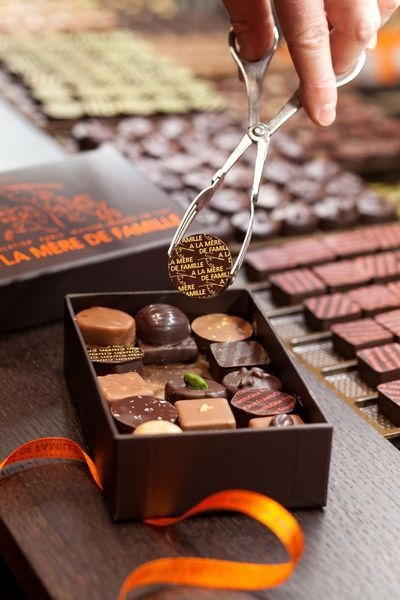
Besides being a ready indulgence for any time, milk chocolate when melted can add the exotic flavours of sweet and bitter, to the regular dessert, be it from ice cream and coffee, marshmallows, cupcakes, mousse, wafer biscuits or even a chocolate pizza; the list is endless. Little wonder then, that National Milk Chocolate Day (July 28th) is being celebrated by connoisseurs of chocolate, chocolatiers as well as chocolate lovers, both young and the old worldwide. Just like sugar, salt and spice, a little bit of “milk choclate” goes a long way.

Posted in Daily, Family and Society, Life, Quotes, Reflections, Stories Around the World

“Just Some Time”

“Love your family. Spend time, be kind & serve one another. Make no room for regrets. Tomorrow is not promised & today is short.” Unknown

Even after long hours at work and tackling the chores at home; the only thing that satisfies my children is time spent with them alone. From reading to them, simply sitting together in the lawn or watching the traffic together from the bench; all they want is time spent without any activities, gadgets, interference or constraints at that moment. The younger they are, they crave for such moments.

“Your children get only one childhood. Make it memorable.” Regina Brett

Although lifestyle today offers innumerable comforts, one thing that still is never sufficient is time. The root struggle in handling time is dividing it between work, family and for self. Being a family, as far as children are concerned, no amount of gadgets, toys, books or cartoons can substitute their bonding time with siblings and parents. Constant negligence and lack of the latter can lead to dependence on the former, which can have lasting implications on the education, personality as well as psychological traits of the child.

“ At the end of your life, you will never regret not having passed one more test, not winning one more verdict, or not closing one more deal. You will regret time not spent with a husband, a friend, a child, a parent.” Barbara Bush

Looking back to our childhood from the present today, the memories of fun, trips and experiences with parents, siblings, cousins, family and friends is what makes the hard and unhappy moments of today better. Besides these childhood memories and experiences to an extent, are what shaped us to the person of today. On reflecting, what matters more than worldly good or presents as well as gifts, is quality time with loved ones.

“If you want your children to turn out well, spend twice as much time with them and half as much money.” Abigail Van Buren

The acts of today, reflects in the future of tomorrow. No matter how busy working parents or guardians are, spending just ten minutes with their children makes all the difference in the world to them. Children always light up the adult lives, with their innocence, joyous nature and selfless thinking. The change in their behaviour and attitude is a reflection of the love that they perceive. Too much or too little of love, care and attention is dangerous. Remembering our childhood moments and experiences will aid us in making the childhood of our own children memorable.

“ Your children can be around you all day, but if you don’t spend quality time with them and you don’t pay attention to them and talk to them and listen to them, it doesn’t matter that they’re just around you.” Brandy Norwood

Once, a man returned home late from work, as always, tired and twitching, and saw that a five-year-old son was waiting for him at the door. “Dad, how much do you get? ” “That is none of your business!,” the father was indignant.”Why do you need it? “
– I just want to know. Please tell me how much you get per hour?
– Well, 100 rubles. Why?
“Dad …” the son looked up at him with very serious eyes. Dad, can you borrow me 50?
“You asked only so that I could give you money for some stupid toy?”, he shouted. “Immediately march to your room and go to bed! You can not be such an egoist! I work all day, I get tired, and you behave yourself so stupidly.”
The kid quietly went to his room and closed the door behind him. And his father continued to stand in the doorway and get angry at his son’s requests. But after a while he calmed down and began to reason sensibly: “Maybe he really needs to buy something very important.” When he entered the nursery, his son was already in bed.
– You are not sleeping, son? – he asked.
– No, Dad. Just lying down, answered the boy.
“I seem to be too rude to you,” said the father. “I had a hard day, and I just broke. Forgive me. Here, hold the money you asked for.”
The boy sat up in bed and smiled.
– Oh, father, thanks! he exclaimed happily.

Then he climbed under the pillow and took out some more crumpled banknotes. His father, seeing that the child already had money, became angry again. And the kid put all the money together, and carefully counted the bills, and then looked at his father again.
– Why did you ask for money if you already have it? – grumbled his father.
– Because I had not enough. But now I just have enough, – the child replied.
– Dad, there are exactly one hundred. Can I buy one hour of your time? Please come back tomorrow from work early, I want you to have dinner with us.

Moral: I just wanted to remind you that our life is too short to spend it at work. We should not allow it to flow through our fingers, and not give at least a tiny piece of it to those who really love us — our closest people. If we are not tomorrow, our company will very quickly replace us with someone else. And only for family and friends it will be a really big loss, which they will remember all their life. Think about it, because we spend much more time working than family.
Source: vk.com (translated to english)

“ I don’t think quantity time is as special as quality time with your family.”  Reba McEntire

Posted in Daily, Family and Society, Life, Quotes, Reflections, Stories Around the World

From “Being Helped” to “Helping”

“Those who are the happiest are those who do the most for others.” Booker T. Washington

Raising children is never easy. From the first child, parents or guardians have to devise a system which encompasses love, teaching, helping and guiding them to live a life rich in love, joy, of right values and principles. From infancy to toddler-hood, being too small to do the simple things like brushing their teeth, the morning routine, tying laces or filling a glass of water; these are done by elders, adults or even the bigger children. Yet along the way as they grow older, at times, the coddling doesn’t stop. When an adult puts on shoes for a healthy seven year old, something has gone wrong somewhere. When a healthy ten year old child refuses to make their bed, put their toys away or need to be fed their breakfast; the “coddling” may be a little overdone.

“You will discover that you have two hands. One is for helping yourself and the other is for helping others.” Audrey Hepburn

Every child needs their space to grow. Once they are let to do s, only then will they develop and learn to think. Basic life skills are necessary for any child. They start young, from being able to put on their shoes themselves, to dressing themselves and helping small in the household. When a child from school refuses to note their father’s tired face and demand to go out for shopping a new toy; alterations and right changes have to be made in the set routine to ensure that these children grow up to responsible and develop humaneness fr the society of tomorrow.

“Never get tired of doing little things for others, sometimes those little things occupy the biggest parts of their hearts.”  Unknown

As children are taught to help in the simple things of life, they bloom internally and learn to gain joy on helping others. Rightly said that, “Charity begins at home”; what these young minds learn, observe and undergo in their childhood are carried over to their adulthood and eventually, these same teachings, principles and feelings are carried down over to the generations that they raise. There’s an interesting post from one of my social network pages (translated to English), that goes on to show how children can be taught as “What can we do for you ?”

Being the “grownups” of today, we need to teach our children to “help after being helped when they were small”, so that the basic values of kindness, love, humaneness and service are always carried on, in the future society.

“Everybody can be great…because anybody can serve. You don’t have to have a college degree to serve. You don’t have to make your subject and verb agree to serve. You only need a heart full of grace, a soul generated by love.” Martin Luther King Jr.

Today I understood raising children correctly. The mother-in-law came to us, as always, brought a bunch of gifts to the children, as always, began her little aggressive concern:
– Let me smear you a sandwich! Let me wear you socks! Sit-sit, grandmother will wash the apple-clean-cut-lay!
As always, this is a bit annoying and even annoying for all of us. I have independent children, who clean their own sandwiches and smear apples. And then there was such a stunning stream of turbulent activity!
And a six-year-old son suddenly asked at dinner:
“Grandma, what can we do for you?”
– What? – Grandmother did not understand.
– You do so much for us! – Ilya explained, – You take care of us, care for us. So I ask, and what can WE do for YOU?
He so matured, so deliberately said it, that I felt myself at that moment, as if an angel from heaven had come down and handed me the medal for motherhood. All my pedagogical throwings, all my megawatts of energy and kilometers of nerves, piles of books on education, thousands of arms that fell, all came together today and crystallized into the phrase: “What WE can do for YOU.”
Ksenia Smyslova

“People will forget what you said, people may forget what you did, but they will never forget how you made them feel.” Maya Angelou

Posted in Daily, Food, Stories Around the World

Of Piña Colada, Origin and Evolution

“Blend or shake 6 ounces of pineapple juice, 3 ounces of coconut cream, 1½ ounces of white rum and crushed ice until smooth. Serve in chilled glasses, garnished with pineapple wedge and/or a maraschino cherry.” – Piña Colada (1954 recipe)

Proclaimed as the national drink by Puerto Rico (1978), this cocktail although steadily popular in all Spanish and Portuguese speaking countries, is widely enjoyed across the world. The popularity is affirmed by it being a part of the world of entertainment, from music, popular lyrics to cinemas. For instance, “Escape (The Piña Colada Song)” by American musician Rupert Holmes (1979) had reached the number one spot and stayed there for few weeks.

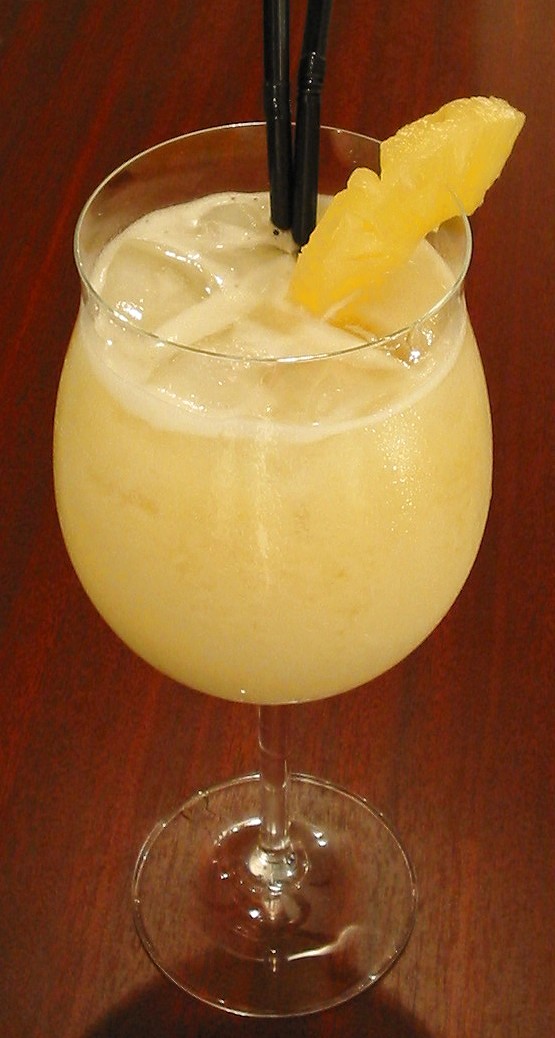
While the name piña colada literally means “strained pineapple” in Spanish; this sweet cocktail is made with rum, coconut cream or coconut milk and pineapple juice. Usually served either blended or shaken with ice, it may be garnished with either a pineapple wedge, maraschino cherry or both.

Legends abound the origin of this cocktail. The earliest known legend states that Puerto Rican pirate Roberto Cofresí, to boost his crew’s morale, gave them a beverage or cocktail that contained coconut, pineapple and white rum; what would be later known as the famous piña colada (19th century). This recipe was believed to be lost with his death (1825). Yet this story is widely disputed by food historians.

By popular belief, the creation of the piña colada was credited to bartender Ramon “Monchito” Marrero (1954). Working in the Beachcombers Bar of the Caribe Hilton, one of the premier luxury hotels in San Juan; he was asked by hotel management to create a signature drink that captured the flavors of the island. By his account, Marrero had spent three months experimenting with hundreds of combinations before perfecting his sweet, frothy concoction of rum, cream of coconut and pineapple juice. Once introduced it had gained mass popularity. Marrero mixed up and served his creation at the hotel for 35 years until his retirement (1989). Concurrently another barman, Spaniard Ricardo Gracia who had served drinks at the Caribe Hilton, had claimed that he invented the cool, creamy cocktail. As per the interview to the Coastal Living magazine (2005), a strike by a coconut-cutters union (1954) had prevented him from serving up the popular mixed drink of rum, cream of coconut and crushed ice in its traditional sliced coconut. When forced to improvise, Gracia had poured the drink into a hollowed-out pineapple. When the fruit’s added flavor proved popular, Gracia said he added freshly pressed and strained pineapple juice to the previous combination of rum and cream of coconut, to create the piña colada.

Concurrently two miles west of the Caribe Hilton, another San Juan hotspot stakes its claim as the birthplace of piña colada. As attested by the marble plaque outside the entrance of the Restaurant Barrachina ( established late 1850s), Ramon Portas Mingot, a Spanish mixologist who wrote cocktail books and worked in the top bars of Buenos Aires, had made the first piña colada (1963) inside its doors.

Although the piña colada, was born in Puerto Rican capital of San Juan; the identity of the bartender who first mixed up the iconic rum-based cocktail remains a point of contention. However the modern-day beach cocktail wouldn’t be possible until the invention of Coco Lopez, a pre-made cream of coconut (1954). Developed by Ramon Lopez-Irizarry, an agriculture professor at the University of Puerto Rico; he had blended cream from the hearts of Caribbean coconuts with natural cane sugar, which later became an integral part of the island’s piña coladas.

Over the years, different proportions of the core ingredients, as well as different types of rum, may all be used in the piña colada to create different and new signature varieties. While frozen piña coladas are also served today; other named variations like the Amaretto colada (amaretto substituted for rum),  Chi chi (vodka in place of rum), the Virgin piña colada or piñita colada ( non alcoholic, without the rum) or even the Soda colada (resembles the original recipe, but soda is used instead of coconut milk) to list a few. For the more resourceful or food connoisseurs and experimenters, piña colada can be blended into smoothies, milk shakes, cupcakes or even into cheesecake.

With National Piña Colada (July 10th) being celebrated tomorrow, it would be fun to experiment and create a similar based concoction, or simply enjoy the flavours of the original piña colada to mark special occasions.

CARIBE HILTON’S PIÑA COLADA RECIPE

2 ounces rum
1 ounce cream of coconut
1 ounce heavy cream
6 ounces fresh pineapple juice
1/2 cup crushed ice

Mix rum, cream of coconut, heavy cream and pineapple juice in a blender. Add ice and mix for 15 seconds. Serve in a 12-ounce glass and garnish with fresh pineapple and a cherry.

Posted in Daily, Family and Society, Life, Personal Musings, poetry, Quotes

Power of the “Little Things”

“Success in life is founded upon attention to the small things rather than to the large things; to the every day things nearest to us rather than to the things that are remote and uncommon.” Booker T. Washington

Of the many attributes that binds man, family, friends, community and neighbourhood in general, is the art of paying attention. Simply put, the secret of happiness, love, respect and kindness have a common subset of “attention”.

“Give whatever you are doing and whoever you are with the gift of your attention.” Jim Rohn

Excellence at work or the chosen field, lies in the art of doing it well and as per the targets or goals set. All this would be void without due attention being paid to each and every aspect.

Time spent for family and children can be sought only when attention is paid to what may seem trifle things, but can make the daily grind seem lighter. For instance, putting the breakfast dishes in the sink, putting toys on the play corner only, soiled clothes in the cloth basket (not on the floor) may seem trivial, but when done properly echoes to the other person that one does care.

Patiently listening to a colleague’s woes. Forgotten calls replied when possible. Due help given whenever possible, especially when requested. Being around for hospital visits with parents, as they grow old. Though these may seem trivial at that moment; for the other person it means big.

“Attention is vitality. It connects you with others. It makes you eager. Stay eager.” Susan Sontag

As far as family, friends and loved ones go; actions do speak louder than words. The essence of love, respect and kindness isn’t reflected in the big things, but the small things of life, that really matter the most. To seek happiness of home, family, friends or community is in the individual minutes of small, quickly forgettable pleasures of a hugs, smiles, kind look, heartfelt compliment and countless small, but kind thoughts and sincere feelings, all arising when one pays due attention to those who around them. Love, kindness, joy and peace also need their daily bread.

“I love you” in the family vocabulary.
Sounds in other kind words:
“I will hang the linen myself on the balcony”,
“Let’s go on a holiday to the dacha to mother”.

“Cool, dress warmly”,
“Let the angels lead you everywhere”,
“Didn’t work out this time? Come on bolder!”,
“Get some sleep, I will wash the dishes in a flash”.

We sometimes do not notice much, The
most important thing is not grasping the essence,
With honeyed tea served in bed,
“I love” and the native people say.

Inna Kucherova (Translated to English)

Posted in Christian, Family and Society, Life, Personal Musings, Quotes, Reflections

Words for “Tomorrow”

“There are only two lasting bequests we can hope to give our children. One of these is roots, the other, wings.” Johann Wolfgang von Goethe

For every newborn that is born, there are numerous hopes and dreams as well as love radiating in their parents’ eyes. Each newborn has their own story behind them. While some enter a loving home from birth; few others face a home of “differences” and some even face tragedy or misfortune from the cradle on. Yet for every child or newborn; there is a prayer and wishes running in the mind of the adults that they meet, from parents to guardians as well as grandparents, relatives, neighbourhood, community and society on the whole.

“Children are not casual guests in our home. They have been loaned to us temporarily for the purpose of loving them and instilling a foundation of values on which their future lives will be built.” James Dobson

Children are the roots of the society. Without them, the very root of the social and adult existence holds no meaning once when their own time runs out. For every child of the future, boy or girl; certain pertinent lessons are learnt directly or incidentally so as to brave the future society and world on the whole.

“When you hold your baby in your arms the first time, and you think of all the things you can say and do to influence him, it’s a tremendous responsibility. What you do with him can influence not only him, but everyone he meets and not for a day or a month or a year but for time and eternity.” Rose Kennedy

Earnestly hope for every young mind to master any craft, art or any undertaking that they love, regardless of their position, background or education received; so that their own hands can always feed, cloth and shelter them.

Hope that every young mind will see at least a little world in order to stop regretting their own land, understand that since the time of the fall everything is about the same as well as know that “the grass is not always greener on the other side”. What matters more is what one does with that grass or land; water to let the “green prosper” or let it stand still to wither from the elements of time, weather and season, without care or nurture.

“Each day of our lives we make deposits in the memory banks of our children.” Charles R. Swindoll

Patiently learn to endure and combat physical as well as mental pain; learning to handle it and temper them such that they are dealt with in the right manner; trying in the process to not inflict the same or as little as possible to cause pain for others.

Foresee that money though a necessity of life, doesn’t bring happiness and peace along with it, if it is made the central part of lives. Money has it’s worth as long as one can use it for harmony, peace and spread kindness through it, not for the lone purpose of one’s own selfish interests or betterment. Money when shared right an just, increases it’s value more, both as materialistic realities as well as mental happiness and peace of mind. The more attached we become to money, the more collared one becomes.

“Let parents bequeath to their children not riches, but the spirit of reverence.” Plato

Keep family and fellow beings as the highest priority. Happiness lives within and is encompassed of the simple things of life. The roots lie in the strong sense of love, respect, understanding and kindness that one holds for the other. Family, community and society is a network interlocked with the other and self. When one “standing block” stumbles, it will fall on the rest to hold it up so that the roots and the foundation can be set up again. Elements of nature and time will always weather one down; but when the lattice stays strong, the mind flourishes and the land prospers. For the grid to be strong, every element matters, including own and immediate others.

Hold deep respect for knowledge, sacrifice, history as well as forefathers of the past. On arrival at any prosperous event in life, to remember with grace, dignity and respect of the sacrifices, teachings as well as advice of the elders of generations past and senior. Whether they be better or worse than us during their times or even if they have lived their ways and days different, learning to be silent and listen does a lot of personal good for now and later. Listening with respect and learn to accept and regard advice wisely. While some may have been there readily, others have imperceptibly and subtly influenced the course of events.

“To be a good father and mother requires that the parents defer many of their own needs and desires in favor of the needs of their children. As a consequence of this sacrifice, conscientious parents develop a nobility of character and learn to put into practice the selfless truths taught by the Savior Himself.” James E. Faust

Most importantly and above all, hold true to the Faith, beliefs and ideals as per His Word. Doing right is and has always been as well as will be difficult. Wrong is wrong and sin is sin, no matter the way we project, clothe or explain it. True faith is never light. It involves a lot of self effort, introspection as well as humility to work towards one’s betterment and follow the right ideals of life. Diligence, loyalty, respect, love, faith, kindness, humility and generosity are few of the fruits of the Spirit which form a part of the core fulcrum to live one’s life to the fullest.

“Educate your children to self-control, to the habit of holding passion and prejudice and evil tendencies subject to an upright and reasoning will, and you have done much to abolish misery from their future and crimes from society.” Benjamin Franklin

Every parent, guardian and elder wishes that these were few of the lessons that children learned in life; so that they grow to lead independent, wise and life rich in worthiness, fullness and remain happy. Although one underlying fact stays strong and true;what one knows one will impart. Unless as adults, we learn to do the same; how can children be taught to do better. For every child to do well; as adults, guardians, parents and society as a whole should strive to improve each day in the right way, manner and principles that Faith, Time and Life teaches us again and again.

“It is easier to build strong children than to repair broken men.” Frederick Douglass.