Posted in Family and Society, Life, Reflections, Stories Around the World, Work

The Worth of Every Effort

“Knowing trees, I understand the meaning of patience. Knowing grass, I can appreciate persistence.” Hal Borland

Entering into the work zone every morning, is like walking into a different time frame. From childhood we have been told to take pride in doing our work, be it simple household chores, completing homework or assignments on time, getting involved in school sports, drama or musicals, working for college scholarships, the university Christmas choir and the like. The focus was laid on doing well so as to bear fruit. As we grow older one realizes that not everything bears fruit with immediate effect. By working hard, there is guarantee that the task would bear fruit to be the selected or winning project; or despite all the hard work, sales target mayn’t be met or more clients , may be lost than gained. Yet the underlying benefit of enjoying and working to one’s maximum potential, is knowing that one has tried their respective best. That mental satisfaction is worth every penny of one’s sweat.

“Indeed, this life is a test. It is a test of many things – of our convictions and priorities, our faith and our faithfulness, our patience and our resilience, and in the end, our ultimate desires.” Sheri L. Dew


Each one of us have our own difficult scales to balance. From managing family and work, to taking care of aged parents, managing the kids, night classes to attain the additional professional degree, juggling two jobs to repay the loans; each one knows their own struggle. Being discouraged and disheartened despite all the efforts is human. In those moments, it’s alright to take a breather, regroup, refocus and find the inner muse to get going. For once one decides not to drop the gauntlet, staying true to the efforts with the inner drive pushing one on; the ultimate outcome would be heartening, beyond one’s wildest hopes and dreams.

“Perseverance is not a long race; it is many short races one after the other.” Walter Elliot


The Other Side of the Wall

There was a young woman who took great pride in the growth and care of the flowers in her flower garden. She had been raised by her grandmother who taught her to love and care for flowers as she herself had done. Like her grandmother, her flower garden was second to none. One day while looking through a flower catalog she often ordered from, a picture of a plant immediately caught her eye. She had never seen blooms on a flower like that before. “I have to have it,” she said to herself, and she immediately ordered it.
When it arrived, she already had a place prepared to plant it. She planted it at the base of a stone wall at the back of her yard. It grew vigorously, with beautiful green leaves all over it, but there were no blooms. Day after day she continued to cultivate it, water it, feed it, and she even talked to it attempting to coax it to bloom. But, it was to no avail.
One morning weeks later, as she stood before the vine, she contemplated how disappointed she was that her plant had not bloomed. She was giving considerable thought to cutting it down and planting something else in its place. It was at this point that her invalid neighbor, whose lot joined hers, called over to her. “Thank you so much! You can’t imagine how much I have enjoyed the blooms of that vine you planted.” The young woman walked through the gate into her neighbor’s yard, and sure enough, she saw that on the other side of the wall the vine was filled with blooms. There were indeed the most beautiful blooms she had ever seen. The vine had crept through the crevices and it had not flowered on her side of the fence, it had flowered luxuriantly on the other side.

Just because you cannot see the good result of your labour does not mean that it bore no fruit.
Author: Randy Reynolds

“Every great dream begins with a dreamer. Always remember, you have within you the strength, the patience, and the passion to reach for the stars to change the world.” Harriet Tubman


Posted in Daily, Family and Society, Quotes, Reflections, Work

Language or Jargon

“It’s a strange world of language in which skating on thin ice can get you into hot water.” Franklin P. Jones

Living in a house with teenagers still in the family, one becomes an expert with short forms and abbreviations. In fact, one of the advantages (or disadvantages) of messaging and texting in the present day, is the use of less words, more of “emojis” and short forms that enable us to “save time”. Ironically what has happened is that we have forgotten how to spell correctly, speak in complete sentences or deliver a message without sounding garbled or hunting for the right words midway.

“When you lose a language and a language goes extinct, it’s like dropping a bomb on the Louvre.” Michael Krauss

Running through the official emails as well as personal ones’, the distinct difference in the style of writing, expression of words as well as use of “emoticons” highlight the official from the personal. Yet sometimes on rereading the mail, one has to very often guess the meaning behind the emoticons. Shifting between “smileys” and “dancing girls”, everything can be classified broadly into good or bad. In a way, words like adjectives, adverbs and similes have become almost extinct. Looking at the initial days of man, I guess we are back into the language of “expressions, hand signals, sounds, mono-, bi-or tri-syllables and garbles” just like the primitive ancestors.

“Losing the language means losing the culture. We need to know who we are because it makes a difference in who our children are.” Dottie LeBeau

Moving with the times is important. Hence striking a balance between the “cool” and “official language ” is a must, for us to convey complete and whole messages, before we lose out completely on our own sense of language, speech and words.

“At any one time language is a kaleidoscope of styles, genres and dialects.” David Crystal

“… once upon a time there were synonyms: “good, beautiful, valuable, positive, outstanding, excellent, wonderful, wonderful, wonderful, lovely, seductive, wonderful, cute, amazing, stunning, fantastic, magnificent, grandiose, irresistible attractive, fascinating, enticing, attractive, incomparable, unique, enticing, amazing, entrancing, divine “, and so on and so forth. And what? – left only “cool.” Less often – “cool” … ”  by T. Thick in “Hope and support”

Posted in Daily, Food

“Raisin” It Up

“Inject a few raisins of conversation into the tasteless dough of existence.” O. Henry

Being simply dried sweet grapes, raisins were the second in choice as a sweetener till the medieval times with honey being the top choice. The majority of the world’s supply of raisins comes from California, dried from Thompson seedless (95 percent), muscadine, or Black Corinth (Zante) grapes. Other main producers of Mosctael grapes are the USA, Turkey, Greece and Australia.

Originating from the Latin Racemus, from the ancient times raisins were in use. As evidence from history shows, raisins were an accidental discovery when they were found dried on the vines as early as 2000BC. The ancient Phoenicians and Armenians had taken the first steps in perfecting viticulture, the process of grape growing and selection.

While the Phoenicians started colonial vineyards in the areas of Malaga and Valencia of Spain and in Corinth (Greece)around 120-900BC; the Armenians founded their vineyards in Persia. These high yield growing areas had the perfect climate for making raisins and were also close to Greece and Rome, the first markets for raisins. Muscat raisins (over-sized with seeds and of fruity full flavor) were the primary crop in Malaga and Valencia. Corinth had grown the “Currants” which were tiny seedless, tangy raisins, where historians believe they got their name.

As the Phoenicians and Armenians began to trade raisins with the Greeks and the Romans who consumed them in large quantities; their popularity grew as well as their value. From being given as prizes to barter to trade or cure for ailments; raisins were always in demand. Raisins were a part of Hannibal’s troops rations when he had crossed the Alps.

“Raisins are a thing that lasts, they come in small boxes, and you always feel like eating raisins, even at six in the morning. A raisin is always an appropriate snack.” Fran Lebowitz

Although in popular demand, it wasn’t until the 11th century that raisins were seen in Europe. One of the reasons were the difficulty in maintaining the quality of the raisins for the long travel. By the 11th century, with improved packing and shipping techniques as well knights returning home from the crusades bringing back raisins with them, a huge market and demand was created.

By mid-14th century, the English cuisine included raisins and currants as it’s integral parts. As viticulture spread to France and Germany, grapes and raisins had entered the European cuisine spreading over to their colonial conquests. As viticulture had been perfected in Spain, grapes were being used to make products such as dry table wine, sweet dessert wines and Muscat raisins. With the colonization of the Americas and Mexico of today, their knowledge of viticulture had followed them there. By the 18th century, the Franciscan fathers had settled as far north as present-day Sonoma, California. Viticulture and its strong influence on California agriculture, was one of the enduring legacies left behind by the colonial rule. With the seedless grape variety (thin-skinned, seedless, sweet and tasty) being grown by the English immigrant William Thompson, newer variants of the products were created. By the late 1800s, once the Armenians (descended from the first founders of vineyards in Persia) began settling in the San Joaquin Valley, viticulture had progressed in California with supplies for raisins to nearly half the world, making it the largest producer anywhere.

“The wrinklier the raisin, the sweeter the fruit.” Alan Tudyk

Like most dried fruits, raisins can add the flavour to most recipes, ranging from the breakfast menu to elaborate meals as well as desserts. While buying raisins, their freshness can be determined by the containers being squeezable less hard and less rattling when shaken. Being blanched or plumped up (soak in hot water), sliced or chopped, added midway or at the end; the mode of introducing them into the recipes alters the flavours of the cooking giving a different effect at each step. Their popularity is marked by April holding two raisin days as National Raisin & Spice Bar Day (April 5th) and National Raisin Day (April 30th) celebrated by foodimentarians. Either way, into recipes or had directly, raisins spruce up the meal, both for the palate and nutrition wise.

“My indulgences are Skittles and rum raisin ice cream.” Sanya Richards-Ross

Posted in Daily, Family and Society, Life, Personal Musings, poetry, Quotes

Treasured Memories

“Childhood means simplicity. Look at the world with the child’s eye – it is very beautiful.” Kailash Satyarthi

The joyous days of fun, laughter and treasures are something that time or age can ever erase. For parents and guardians, having children around brings to mind and memory of their days. As children, they try to make out and see the best of everything. While it may be because they haven’t yet caught the cynicism and attitude of the world, the gentleness of children brings joy to the dark days.

“Imagination and invention go hand in hand. Remember how lack of resources was never a problem in childhood games? Shift a few pieces of furniture around the living room, and you have yourself a fort.” Alexandra Adornetto

Yet what happens when they grow up ? Caught in the modern paced world of consumerism, materialism as well as ambition; along the lines the simplicity of childhood is lost. As parents, care givers, guardians and nurturers of the future generations, care should be taken that in the modernism that we surround ourselves, children shouldn’t lose out on their best years of their life, their childhood. True that academics, cultural and sports do matter; cultivate their talents but let them do what they love. Forcing them into a mould from the very early days, breaks them from their very essence.

“One of the luckiest things that can happen to you in life is, I think, to have a happy childhood.” Agatha Christie

Roaming the lanes, exploring the backyard, learning how a frog leaps or why some plants creep and others grow tall, how the wind pane moves and the like are what engages their attention or interest. Their talents of dance, music and ball do matter; but let them pique their inquisitiveness as their minds grow. Draw the lines, set the limits but never curb their rightful curiosity. Let them grow and treasure the memories of their childhood; for its’ their right.

“If you carry your childhood with you, you never become older.” Tom Stoppard

In childhood, when we were immortal,
Were our wealth countless.
Each pebble was precious,
Life – well-dressed, as if on stage

Even fragments of broken dishes
Once again came to life in the mystery of a miracle.
There was no more beautiful doll rag,
It was not sweeter trickle krinynnoy.

Behind the wheel with an iron jump
into the future, boys ran away …
Old books, rare films
Were kept, were loved …

We, that we had a taste of the earthly paradise,
Were not surprised by the promise of another …
Believe me …
In childhood, when they were still immortal …

L. Znakovskaya

Posted in Family and Society, Personal Musings, Quotes, Stories Around the World

To Care and Nurture

“Never believe that a few caring people can’t change the world. For, indeed, that’s all who ever have.” Margaret Mead

During my early years of university, attending classes and taking care of my infant was difficult. Unwilling to put my infant son in a daycare so early, I had turned to my parents and in laws for help. Besides stepping in completely and covering during my classes and training schedules, as my child grew under their care; their happiness and joy were marked to be seen.

“A candle loses nothing by lighting another candle.” James Keller

One of the oldest concepts of family has been their since civilization. Besides belonging to a fold, family helps and takes care of each other. The sociological concept of “nurture” has been widely studied and debated with the “nature” concept. Real life examples are present in our daily encounters, once we look around and observe.

“To the world you may be one person, but to one person you may be the world.”
Unknown

Caring for someone or nurturing them helps not the nurtured but also the nurturer. Besides giving new dimensions to focus on, the health, happiness as well as life for both becomes more meaningful and joyous. On the days that one in bone-tired, dejected, weary and worried; taking care of someone decreases the problems and gives the fuel to move on. Caring for others brings many closer, not just relationships by blood but also fragile relationships which become stronger out of the mutual love, respect and care for the other.

“I feel the capacity to care is the thing which gives life its deepest significance.” Pablo Casals

An old fox lived its’ last days in the zoo. Old, decrepit and shabby. When a couple of young foxes were left without their mother. And the young foxes were hooked to the old fox, as they were left without a mother. The decrepit fox began to take care of the little ones. The caring instincts were involved. And the old fox became younger, fluffy and energetic. She gained new youth and health; lived very well for several years, until the foxes grew up and became independent. (Source: A.Kiryanova)

Posted in Christian, Family and Society, Food, Life, poetry, Stories Around the World

Of Easter,Tradition and Trends

“I still believe in Santa, the Easter Bunny, the Tooth Fairy and true love. Don’t even try to tell me different.” Dolly Parton

With Easter Sunday being celebrated tomorrow, preparations are quietly underway which would make the day special tomorrow primarily keeping the children in mind. Easter Sunday is the day signifying the love of God for man, a time for hope, renewal and resurrection through His Son. With the season of Lent coming to a close and breaking the Lenten fast involves special significance, especially when one has abstained from something dear to them through this period. Sacrificing something that one is fond of is never easy, but a whole new meaning and character is acquired when we abstain from the “materialistic” pleasure that we being man, often crave every now and then. Which is why, every Easter Sunday meal is something that the entire family and friends look forward to. Besides being a time for togetherness, it also signifies the breaking of the Lenten Fast.

“The blessing of food for the Easter Sunday meal is especially popular among people of Eastern European descent, especially those from Poland. Families prepare baskets with the food they will eat on Easter morning – decorated eggs, sausage, ham, bacon, a loaf of bread with a cross cut into the crust, cheese, salt, horseradish, and butter carved in the shape of a lamb.” Ken Untener, The Little White Book for Easter

Around the world, various traditions are there on Easter. While initially they were modeled after the spring celebrations, later the trends were modified to give new relevance with the basis of the last supper or “Passover” or “Passove Sedar” in mind. Among the Easter Lunch, the fast is often broken by the “star of Easter”; painted, dyed, gilded in various hues, hidden or hung on trees, found on the treasure hunt, bough to church or given as gifts are the “Easter Eggs”. Most of the legends state them to be “symbol of life”.

“I agree. You don’t want it to look boring. It’s [the Easter egg] got to look good otherwise it’s just like every other chocolate. And size does matter when it comes to the egg, as that’s what Easter eggs are all about.” Liam Tomassi

Previously believed by the Egyptian and few Persian civilization of the early times, eggs were considered to be symbolic of after life. Few traditions believe that Mary Magdalene and the Virgin Mary held eggs during the crucifixion or that they were eaten at the first meal after the Resurrection. In the Eastern Orthodox churches, the hard shell of the egg represents the stone walls of Jesus’ tomb, with the egg itself representing the new life of the Resurrection. Eggs also were the easiest, most economical and available foods to eat while breaking the Lenten Fast. This popularity has lead in the presence of “the Easter Egg” predominate every Easter celebration.

“The Easter eggs symbolizes our ability to break out of the hardened, protective shell we’ve surrounded ourselves with that limits our thoughts and beliefs. As we break open our hearts and minds we discover a transformation to new, life enhancing thoughts and beliefs.” Siobhan Shaw

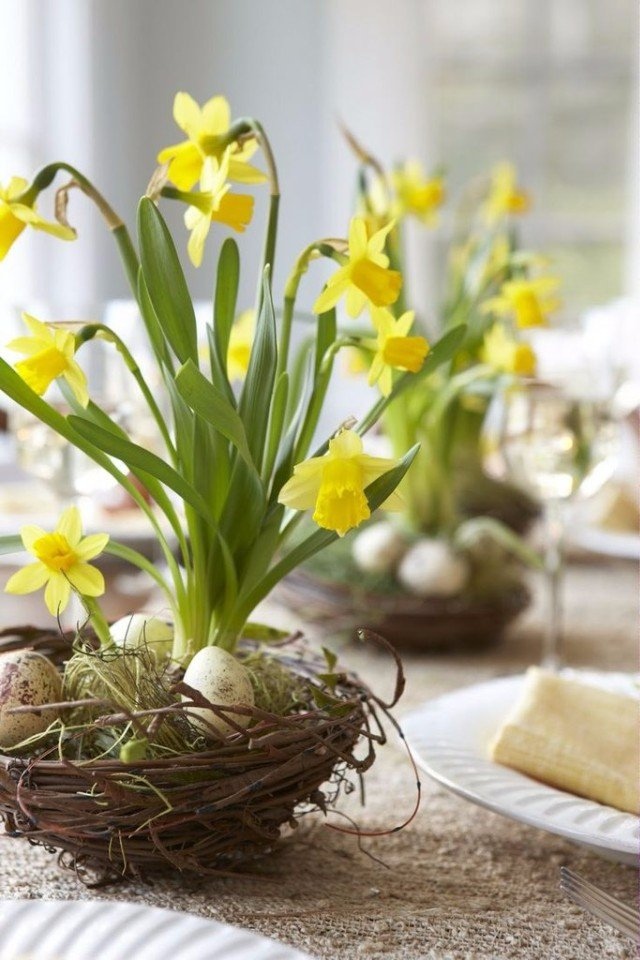
Another popular tradition was the Easter Basket, which was an “Easter Nest” originally. Arising from the concepts of fertility and springtime, Eastern basket was a German tradition which had gained mass popularity. Initially children would make “nests,” filled with grass, in hopes that Peter Cottontail would fill the nest with eggs. Later these nests evolved into baskets, which were bigger, less messier and easy to carry.

Amidst the Easter Eggs in the basket would be the “hollow chocolate bunnies”. While there is no historical or religious documentation on why the bunny represents Easter, the association would be more by the calendar. With Easter mostly during Spring, the month of April showered not only spring flowers but also signals the birth of baby rabbits. Thus spring time and bunnies symbolize birth and renewal. Coat the bunnies with chocolate and hollow them out to fill them with candies; voila the treat is irresistible for every kid in the block.

Other Easter traditions include eating ham or meat to the making of “Hot cross buns” and other breads marked with an X to symbolize the cross are a tradition on many Easter tables. From the “Choreg” of Armenia, Ukranian “Paska”, Polish “Babka” to Tsoureki of Greece, a wide varied variety of sweet breads are made around the world. With eggs being baked in most, these are conspicuously risen breads, quite different from the Passover tradition of unleavened bread.

As we get ready to break the Lenten Period and celebrate Easter, with all the food to be made ready, decorations to put up, church to be readied and tables to be set, the core message of renewal, togetherness and love shouldn’t be forgotten. One of the best ways to spread the message of love would be to share the delectable creations of Easter around.

The Easter Bunny came by today
and left surprises along his way.
Colorful eggs are all around.
With baskets in hand we search the ground.
Hiding in places here and there
Easter eggs are everywhere.
-Author Unknown

Posted in Daily, Food

Learning the “Animal Cracker’s” Way

Eyes closed with eagerness, a tiny little hand dives into a box. Grabbing one bit and clenching the fist so as not to lose that precious little thing, the little hand comes out and palm up, its’ a bear. With a gleeful shout, that little bear is raised up and chomped down. And the hunt for the next “animal cracker” begins.

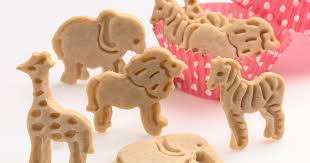
Almost every childhood has been marked by animal crackers or cookies and milk. These particular type of small cookies have been baked in the shape of animals ( zoo or circus), slightly sweet, made by a single layered dough like crackers.

Although the initial varieties were light coloured and slightly sweet; today darker chocolate flavoured or coloured frosted variants have made their way into the supermarket shelves. From the initial “Stauffer’s Biscuit Company produced animal crackers and Nabisco’s “Barnum’s Animals”, today other animal shaped crackers or cookies have gained popularity like Teddy Grahams, Goldfish, Hello Panda and Koala’s March. These differ from traditional animal crackers in flavor and assortment.

“Animal crackers, and cocoa to drink
That is the finest of suppers, I think
When I’m grown up and can have what I please,
I think I shall always insist upon these.”
-Christopher Morley (Founder of ‘Saturday Review’, 1924-1941)

Around 6th to 7th century, the custom of shaping cookies to resemble animals began from the Yule Tribe. During their times, it was common to sacrifice animals to the gods during the Julfest ceremonies, in hope that such offerings would bring a mild winter and an early spring. As the poor people couldn’t afford to kill any of their animals, they gave token sacrifices in the form of animal-shaped breads and cookies. Over the years, animal crackers became household or local bakery goods.

Yet the crisp animal crackers came from the 19th century Victorian England as attractive cookies or biscuits. The “crisp biscuits” (sweet and cookie-like biscuit) were very popular and the English called the ones that shaped like animals “Animals”. During the late 19th century, these “Animals” were imported from England to the United States. Due to their local popularity and high demand, local manufacture also began their own “Animals” making business. American businesses like Stauffer’s Biscuit Company, which still exists today, made their first animal crackers in 1871 York, Pennsylvania.

Around 1889 in England, animal crackers were manufactured as marketing promotions for popular entertainment, P.T. Barnum’s Circus. In 1902 animal cracker boxes designed for “Barnum’s Animals” (became “Barnum’s Animal Crackers” in 1948) were also designed for the Christmas season. The initial cracker boxes had a piece of string to hang them from the Christmas Trees as ornaments.

Almost 54 different animals crackers’ have been created in total, with 37 different animals have been featured into Animal Crackers ( Nabisco’s Barnum’s). The only ones survived the entire lifetime of the product are bears, elephants, lions and tigers. Interestingly among all their “cracker animals”, it’s only the monkey that wears pants. Also rabbits have never been a part of them even today (unlike portrayed in the Shirley Temple Song of 1935). Commemorating the 100th anniversary of Animal Crackers, the “name-our-next animal” contest in 2002 saw the koala bear became the latest addition by beating out the penguin, walrus and cobra in the customer survey.

Thus on National Animal Cracker Day (April 18th) it would remiss not to include the animal crackers on the menu. The range is varied from mini-sized treats to additions into soups, crunchy salads or even with ice-cream, fruit salads, custards or just with tea, having them the old, simple way. For a break from the “adult-life” going back into the childhood treats can be good physical and mental “calorie” breaks.

“Animal crackers in my soup Monkeys and rabbits loop the loop Gosh oh gee but I have fun Swallowing animals one by one In every bowl of soup I see Lions and Tigers watching me I make ’em jump right through a hoop Those animal crackers in my soup When I get hold of the big bad wolf I just push him under to drown Then I bite him in a million bits And I gobble him right down When their inside me where it’s dark I walk around like Noah’s ark I stuff my tummy like a goop With animal crackers in my soup.” Shirley Temple