Posted in Daily, Food

Of Rice, Steam and Cake

Add four parts uncooked rice (or parboiled rice) to one part whole white lentil (urad dal) are soaked separately overnight (at least four hours to six hours). Optionally spices like fenugreek seeds can be added at the time of soaking for additional flavour. After being soaked, the lentils are ground to a fine paste and the rice is separately coarsely ground and then combined. The mixture is left to ferment overnight during which its volume will more than double. The finished batter is put into trays of greased perforated moulds for steaming. The trays are held above the level of boiling water in a pot, and the pot is covered until done (about 10–25 minutes, depending on size).

Idli or idly are a type of savoury rice cake, originating from the Indian subcontinent, popular as breakfast foods. Made primarily from steaming a batter of fermented black lentils (de-husked) and rice, idlis are can be had at any time, most popularly with condiments like chutney and sambhar. Other variations include rava (semolina) idli, ragi idli, “tatte” idli varying to the local ingredients and flavour.

Several ancient Indian works mention the precursor of modern idli. Initial records mention soaking black gram in buttermilk, ground to a fine paste and mixed with the clear water of curd and spices. The three key aspects of the modern idli recipe; the use of rice (not just urad dal), the long fermentation of the mix and the steaming for fluffiness are left out. Popular belief is that the Indonesian influence on the cooks of those times may have let to the development of the modern idli. As of 2015, March 30 is celebrated as World Idli Day.

Besides known for its’ versatility of flavours and on the streets, idlis are nutritionally smart. In a single idli, one consumes 2 grams of protein, 2 grams of dietary fiber and 8 grams of carbohydrates, approximately 39 calories. In addition, it contains iron with trace amounts of calcium, folate, potassium and vitamin A. Spices like fenugreek, mustard seeds, chili peppers, cumin, coriander, ginger or sugar may be added to make them sweet instead of savory. Stuffed idli with filling of potato, beans, carrot and masala are popular. Leftover idlis can be cut-up or crushed and sauteed for a dish called idli upma. Creative fusion recipes like idly chicken, idly manchurian, idly fry, chilly idly and a lot of different ideas have been successfully experimented and recreated.

From the huge plate sized “thatte idlis” to the “Mangalorean Muday Idli” in steamed leaves or Goan Sannas and mini Sambhar idli, these dishes are travelling miles from the subcontinent and gaining popularity globally.


Posted in Daily, Family and Society, Life, Quotes, Reflections

Once Upon A Time

“…..And they lived happily after.”

One of the many endings often read; fairy tales and bed time classics have been going around for years, doing their fair share of imagination, creativity and togetherness during the childhood years. From the far-fetched tales of talking animals to almost realistic tales; fairy tale also known as magic tale or Marchen is a folklore genre, which typically features dwarfs, dragons, elves, fairies, giants to list a few. The common thread between various folklore tales across the globe is the “moral sense” of right and wrong being instilled in the young minds.

“Fairy tales are more than true: not because they tell us that dragons exist, but because they tell us that dragons can be beaten.” Neil Gaiman

As we grow up, we start cross examining these stories with reality. Then why do we need fairy tales? What are we seeking for in them? Do fairy-tales help us dream of good, affection, triumph over evil ? Are fairy-tales and classics a mirage that hide the true realities of life from children ?

“There is many a monster who wears the form of a man; it is better of the two to have the heart of a man and the form of a monster. ” -Jeanne-Marie Leprince de Beaumont, Beauty and the Beast

In the fairy tale, joy and love wins with everything being fair especially at the end. From the brave princes to Snow White and mermaids, kind old dwarf to naughty elves; fairy tales bring to life cozy home, adventures and dreams. Yet is the reality different or can we chose to make the best of the beginnings and endings that we receive ?

“Outside, on the bough of a tree, sat the living nightingale. She had heard of the emperor’s illness, and was therefore come to sing to him of hope and trust. And as she sung, the shadows grew paler and paler.” -Hans Christian Andersen, “The Nightingale”

Far from being extinct, fairy tales do have reasons to stay. The start of any fairy tale is one of adventure, inspiration and dreams. As the story unfolds and trials start; the fight against evil, the power of hope and reassurance that despite all odds things will turn out to be alright in the end when we believe in the true power of love, kindness, honesty and persevere for our dreams. Reassuring us to be ourselves, being honest and treasuring the gifts of life are few of the many subtle messages hidden in a fairy tale or the classics.

“You’re entirely bonkers, but I’ll tell you a secret, all the best people are.” Lewis Carroll, Alice in Wonderland

In the modern era of “smart technology”, preserving the art of reading aloud, bonding together and family time would go a long way into modeling our children for the future. So read them fairy tales once in a while. Give them stories to love, cherish and dream on. Maybe later in this world it would be easier for them to survive, cope, adapt and live life to their dreams.

“Every man’s life is a fairy tale written by God’s fingers.” Hans Christian Andersen

Posted in Daily, Food

Little “Bits” of Cake

“Cake on stick, once in a while, never hurts the diet.”

Baking a cake involves getting the right ingredients, weighing them and mixing them in the right proportions. For the more elaborate cakes, the icing, food colouring as well as the shapes of the base cakes needs to be set right. Ever tried making a “football field” cake without leftover crumbs. No matter how accurate and sharp the knife is, there are still inevitable crumbs of cake left behind.

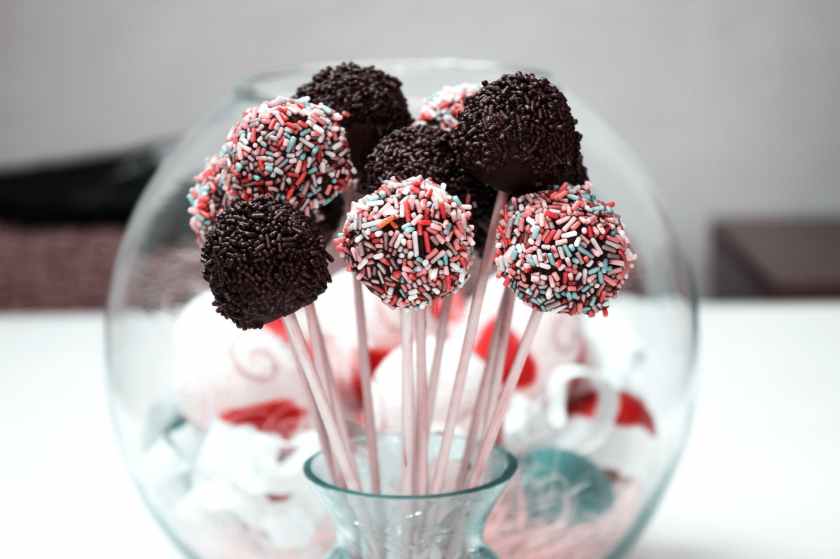
Gather all the crumbs, crush them and mixed them with the leftover icing and chocolate, shape them and coat them with sprinkles or gems depending on one’s choice. put them on sticks like lollipops and freeze. Voila, cake on sticks like candy or more popularly known as “cake pops” are ready.

Although there is no recorded date for the creation of cake pops, this confectionery craze took over the industry from 2009 to 2011. Often credited to “Bakerella” a baking blog, “cake pops” rose in popularity. While the regular “round or spherical shapes” of cake pops are easy to make, tools are needed for making various cartoon cake pops, cubes or emoticons. Add little notes or messages on them makes the routine more interesting and surprising, something like the fortune cookies. Variations of cake pops are cake balls, cakesicles (cake sand Popsicle), cupcake pops and cake-on-a-stick. The evidence of their popularity is globally felt with March 25th celebrated by foodimentarians as “National Cake Pops” Day. 

With the changing diet trends and necessity of sticking to “little dose of sugar”; the possibility of having these tiny delicacies puts the strong cravings to rest.

Posted in Daily, Food

Frozen to Last

One of the most common areas in the food mart where there is a constant flow of shoppers and at times, we do have to shove to get a leg space in between is near the frozen section. And if they are special offers then, its’ a constant rush of buyers checking the expiration dates with the discount offers.

Frozen foods have been in the system for quite some time. From the very early days of using simple techniques like crushed snow and ice for storage and the development of refrigerants, mechanical freezers to modern cryogenic or flash freezing techniques. Weighing the advantages and the demerits, certain foods are best frozen and especially to get the exotic vegetables, fruits, meat and desserts; freezing them is the option. Health wise, frozen foods aren’t dangerous once when we debunk the myths and get the facts and science straightened out.

” I’m obsessed with frozen yogurt because you don’t feel totally guilty eating it. It’s not as bad as ice cream, and during the hot summer months, it’s a great way to just refresh.” Caroline Sunshine

On buying frozen foods, fruits or vegetables; check the expiration dates. Technically these dates are given so as to recycle their use as well as to maintain their quality. Safety wise, unless the thawing process is wrong; generally frozen foods don’t get contaminated as long as the temperature requirements and settings are maintained.

Nutritionally speaking, fresh local produce is always better. Yet for recipes calling for the exotic ingredients, desserts or meat imported; frozen foods don’t lack the nutritional quality as long as the cold chain is maintained.

Thawed food once handled can be safe to refreeze as long as its’ been thawed in the fridge and not on the counter. Thawing frozen foods should never be done on the counter as it becomes a microbial plate then. Instead thaw it in the fridge compartment (from the freezer) or put it in cold water and change the water every half hour (USDA Recommendation). The shortcut technique of running hot water over frozen food could cause uneven cooking of the ingredients, in addition to safety issues.

After buying frozen foods, putting them directly in the freezer isn’t advisable as the air holes in the containers can deteriorate their taste and quality. Instead re-wrap the meat or fruits and vegetables (best to blanch the vegetables first) into air tight units pushing the maximum air out first. Quality wise, frozen foods have to be checked for added sodium; while frozen foods have to be nutritionally balanced with add on’s or side dishes for a balanced diet.

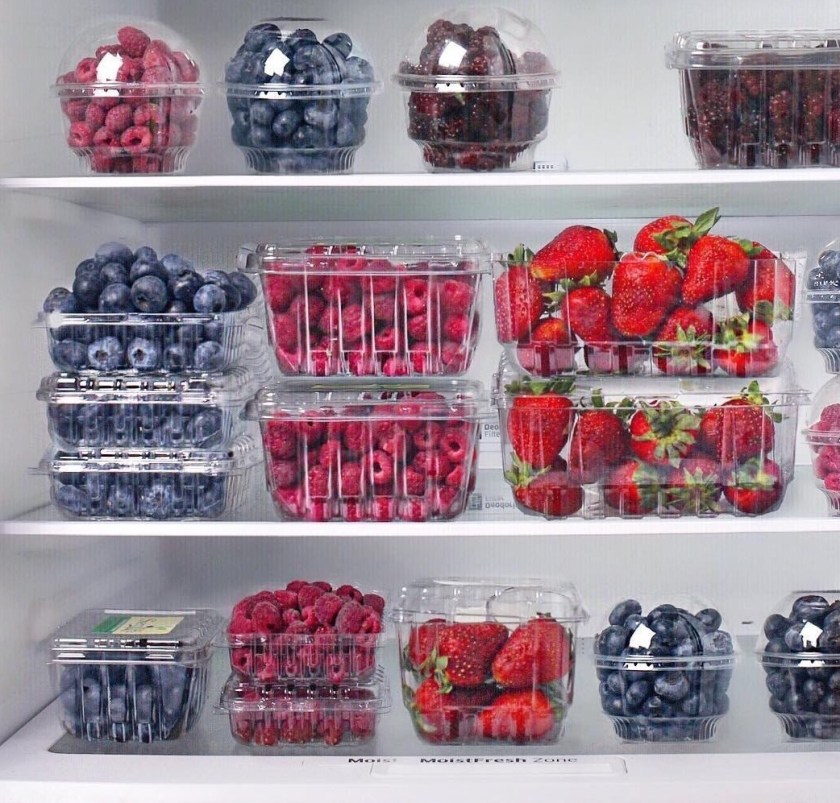
Frozen foods, on the whole isn’t a bad option to indulge in when required, as long as one maintains the temperature or cold chain and hygiene while handling them. For strawberries in winter, would give a pleasant surprise for the meal; besides enhancing the taste buds and flavouring the meal.

Posted in Daily, Family and Society, Life, poetry, Quotes, Reflections

W for “Water”

“Nothing is softer or more flexible than water, yet nothing can resist it.”  Lao Tzu

“Leave No One Behind”

On the occasion of the World Water Day, an annual UN observance day (March 22nd) marking the importance of freshwater, one is faced with the grave fact of the “rising scarcity” of the freshwater resources. Initially commemorated in 1993 by the United Nations, the theme changes every year, with the theme for 2019 being “Leave No One Behind”. The water crisis to be tackled this year, addresses why marginalized groups like women, children, refugees, disabled and indigenous people are often overlooked in their accessibility to save drinking water.

“Water is the driving force of all nature.” Leonardo da Vinci

Being a part of the global network and progressive species on earth, preserving the natural resources as well as attaining universal access to clean water, sanitation and hygiene (WASH) are in line with the target of the development goals across the world as outlined by the UN. While today, a variety of events ranging from educational, theatrical, musical, funding campaigns or lobbying are done to generate awareness and advocate sustainable management of freshwater resources; the realistic truth is that everyday is “water conservation day”. As they often say, habits made young are hard to break, advocating proper and conservative use of water should be initiated at family, school and community level. For conservation and preservation never happens overnight, but is always an ongoing process.

“We forget that the water cycle and the life cycle are one.” Jacques Yves Cousteau

The alarming misuse and wastage of natural resources is still at its’ peak. The sooner we reform, reuse, reduce and recycle; the longer we will be able to still avail benefits from what nature has provided us. Freshwater (2.5–2.75%) is needed for survival, more than saline water (around 97%). Thus conservation is mandatory by the hour. Else despite the presence of water, there would be not a drop to drink easy.

“If there is magic on this planet, it is contained in water.” Loren Eiseley

“Water, water, every where,
And all the boards did shrink;
Water, water, every where,
Nor any drop to drink.”
From “The Rime of the Ancient Mariner (text of 1834) “
By Samuel Taylor Coleridge (Part II)

“A river seems a magic thing. A magic, moving, living part of the very earth itself.” Laura Gilpin

Posted in Family and Society, Life, Personal Musings

Letters to Cherish

“PS, I Love You” the first novel written by Cecelia Ahern, published in 2004 was adapted as a film three years later. The book is based on a married couple Gerry and Holly, deeply in love with occasional fights, yet both are inseparable. When Gerry suddenly dies of a brain tumor, Holly is set adrift in despair and grief, unable to deal with his death and withdrawing from friends and family. One day her mother calls her informing her of a package addressed to her. It held a series of letters Gerry had left for her before he died, containing messages from him, all ending with “P.S. I Love You”. Each new message fills her with encouragement every month and with Gerry’s words as her guide, Holly slowly embarks on a journey of rediscovery.

Both the book and the movie are heart touching, though I preferred the former. Yet the underlying message beyond the fact that time is never predictable is that we should treasure the good moments to always fall back on. Waiting for a warning bell to strike and remind us of how everything can end in a matter of minutes, it is better to string the good memories for our family and friends as we go on our daily lives.

For our friends, once in a while write about what we love about them, the sorrows which they helped us to overcome, the celebrations that they were there for as well as the occasional clashes and better times. When we journal these events, we realize that we have lots to thank them for. Carry this trend into family, for our husband, kids and parents. There is nothing more precious than the written words of care, love and affection that the digital age can’t equalize. Till this day, I hold the letter that my mother and sister wrote to me when I was in college and they bring back fresh memories every time I feel like reading them.

Once a year, write a letter to your child, regaling the funny stories about what had happened to them that year; about the difficulties, mishaps, joys and fun times. Write down your thoughts concerning their future, your memories and emotions as they went about their days, the important events of that year for family and for each one of them. Add on to the letter with photos, postcards, little stick-ons, tiny notes and other memorabilia which would otherwise disappear later. In the end of the letter, don’t forget to tell them that you love them.

After closing the letter, put it in a binder and forget about it. Keep on writing a letter this every year till they reach the age of majority. On the day they reach the official age of adulthood, give them the folder. It will be an invaluable repository of parental love and memory of their childhood. These letters would be with them through joyful as well as difficult moments and trying times. Above all, it will be a reminder that your love will be with them always.


Posted in Daily, Food, Stories Around the World

Of Chips and Crisps

“No One Can Eat Just One”

Ask any school kid, most would know the famous tag line, “Betcha Can’t Eat Just One” of Lay’s® Potato Chip Slogan from the early 1960’s. Over the years, although the slogans have under gone a little modification with endorsers changing, the flavours still holds us captive.

Early recipes similar to the potato crisps of today, was in William Kitchiner’s cookbook “The Cook’s Oracle” (1817) with “Potatoes fried in Slices or Shavings”. The methodology reads to “peel large potatoes, slice them about a quarter of an inch thick, or cut them in shavings round and round, as you would peel a lemon; dry them well in a clean cloth, and fry them in lard or dripping”.

Yet legend attributes the first potato “chips” to George Crum, an American chef of African American and Native American heritage at Saratoga Springs, New York in 1853. Trying to appease an unhappy customer on August 24th, 1853 who had kept sending his French-fried potatoes back, complaining that they were too thick, too “soggy,” and/or not salted well enough. Frustrated, Crum personally sliced several potatoes extremely thin, fried them to a crisp, and seasoned them with extra salt. To Crum’s surprise, the customer loved them and soon came to be called “Saratoga Chips”. Food history truly appreciates Crum’s customer Cornelius Vanderbilt for triggering the innovation.

Since then packaging and production took over the regular potato chips to a mass commercial enterprise. In United Kingdom and Ireland, “Potato Chips” are referred to as “crisps” when eaten at room temperature, while when served hot and fried are “chips”. But in many places, largely these terminologies are interchangeable and not very specific.

“Did you know that when potatoes go to the barbers, they can either have a straight cut, a crinkle cut or a slice?” Anthony T. Hincks

The mass popularity of “potato chips” is evidenced by the regional varieties as well as local flavours and seasonings like dill pickle, ketchup. red paprika and so on. Additional variants like potato sticks, also known as shoestring potatoes; baked potato chips have been marketed. The “chips” craze has also been spread to corn, rice, arrowroot or cassava as well as root vegetables like carrots, parsnips and rutabagas. Though not known as chips, but crisps in some places, the snacking options are varied and plentiful.

“Every potato is just a chip waiting to get out.” Anthony T. Hincks

One can be quite innovative with potato crisps, besides having them direct from the packet, they can be tossed into salads or crushed to make spicy mixes for “party snacks”, as “chaats”, sandwich fillers “sweet, sour or spicy and hot” and the like.  Though not advisable on a regular basis, “potato chips” are here to stay. Better late than never, what better to celebrate “National Potato Chip Day” (March 14th) by indulging in a couple of them. As they say, all good things come in small packages; keeping “potato chips” in moderation would help us in indulging these cravings for snacking once in a while, for a longer time.