Posted in Christian, Daily, Stories Around the World

Setting Up the Tree

“Freshly cut Christmas trees smelling of stars and snow and pine resin – inhale deeply and fill your soul with wintry night.” John J. Geddes

Interestingly the concept of the using trees to celebrate festivals or major events have been there since the early days of civilization. Before the emergence of Christianity, trees and plants that stood the drought and force of winter, remaining green against the white canvas held a special meaning for the people in the cold winter. Believing that evergreen boughs hung over the doors and windows would keep away evil, ghosts and illness as well as remind one of the spring around the corner, Pagans used branches of it to decorate their homes during the winter solstice. Fir Trees were decorated in the Roman temples at the festival of Saturnalia. Similar practices were followed by Ancient Egyptians and Druids during their pagan festivals.

Although for Christians, the fir tree symbolizes as a sign of everlasting life with God; the initial origins are still doubtful. One of the earliest related stories is traced to Germany based on Saint Boniface. In the year 722 AD, he had encountered some pagans who were about to sacrifice a child at the base of a huge oak tree. To prevent the sacrifice, he had cut down the tree and a Fir tree grew up at the base of the oak. He then spread the message that this lovely evergreen, with its branches pointing to heaven, was a holy tree, the tree of the Christ child, and a symbol of His promise of eternal life.

Another legend from Germany of how the Christmas Tree came into being goes as a reminder of care and love for fellow beings. On a cold Christmas Eve night, a forester and his family were gathered gathered round the fire in their cottage to keep warm. Suddenly there was a knock on the door. When the forester opened the door, he found a ragged poor little boy standing on the door step, lost and alone. The forester welcomed him into his home and the boy was fed, washed and put to bed in the youngest son’s own bed. The next day which was Christmas Morning, the family were woken up by a choir of angels and the poor little boy had turned into Jesus, the Christ Child. The Christ Child went into the front garden of the cottage and broke off a branch of a Fir tree and gave it to the family as a present to say thank you for looking after him. Since then, people have remembered that night by bringing a Christmas Tree into their homes.

The Christmas tree tradition as we now know it in the 16th century when devout Christians brought decorated trees into their homes can be credited to Germans. They had built Christmas pyramids of wood and when wood was scarce, decorated them with evergreens and candles. Yet the popular belief is that Martin Luther, the 16th-century Protestant reformer, had first added lighted candles to a tree. In order to recapture the brilliant view of the twinkling stars amidst the evergreens, for his family; he erected a tree in his main family room and wired its branches with lighted candles. In 1846, the sketch of the then popular royals Queen Victoria and Prince Albert standing with their children around a Christmas tree; had resulted in widened popularity of the Christmas tree and its’ acceptance and appearance in many households. Since then the trend has caught on and stayed.

From Christmas lights to handmade ornaments, apples , nuts, marzipan cookies, Gingerbread men and so on, Christmas trees have been adorned in homes, neighbourhoods and communities. While the traditional fir tree has been replicated where ever possible; Christmas trees range from pine trees, spruce trees or even tall trees in their garden especially in tropical climates. Although the Christmas tree has been vastly popularized commercially or artistically; the true origin and concept still stands the same; adorning our homes, being the evergreen surviving the winter ice and snow.

Posted in Daily, Food, Musique

The Muffin Man

Do [or “Oh, do”] you know the muffin man,
The muffin man, the muffin man,
Do you know the muffin man,
Who lives on Drury Lane?

Yes [or “Oh, yes”], I know the muffin man,
The muffin man, the muffin man,
Yes, I know the muffin man,
Who lives on Drury Lane.
(Source: Opie and P. Opie, The Singing Game (Oxford: Oxford University Press, 1985), pp. 379-82))

One of the traditional nursery rhymes of English origin, “the muffin man” was recorded around the early nineteenth century as confirmed by British manuscripts circa 1820. Towards the mid-nineteenth century the rhyme as well as the game had spread over to other countries with regional variations in the lyrics as well as the game altering as a forfeit game, guessing game and a dancing game. Whichever style it may be in, as long as the children have fun, it doesn’t matter.

Interestingly, the muffins in the song were based on the English muffins, not the sweeter American cupcake shaped variety. The muffin is an individual-sized, baked product which refers to two distinct items, a part-raised flatbread or a cupcake-like quick-bread. The former i.e. the flatbread version is of British or European origin dating from at least the early 18th century or even earlier. While the latter i.e. the quick bread muffins originated in North America during the 19th century. Like all bread related products, muffins were an evolution over time with human ingenuity, local ingredients, sudden requirements, cultural expectations laced with technological advancement as well as creative baking styles.

I believe the world to be a muffin pan, and there certainly are a lot of muffins here. Aaron Funk

As far as the origins of the word “muffin” goes, it can be traced to old French word “moufflet” applied to bread meaning soft, or even Low German word “muffe” meaning cake. Initially it started off as small yeast cakes light textured roll, round and flat and commonly enjoyed during winter when they are slit, tasted, buttered and served hot with tea or jam. What initially started off as a basic recipe, towards the twentieth century, they varied from the type of flour (white, graham, rye and corn) to add-ons’ from handful of chopped dates or raisins to the base being of bran, blueberry, corn, apple, oatmeal as well as being bigger in size.

I’m all over the place with muffins. Carrots are great. Banana, chocolate chip, they rock, too. Shawn Mendes

Into the final month of this year, there has to be something special on the table once in a while. The beauty of muffins is that they are so quick and easy to make, particularly since the ingredients are only lightly mixed, not beaten smooth and can be made in a pressure cooker as well. Besides making a good snack while counting calories, the variety of tastes and mixes that can be experimented on are quite interesting. With today being the “National Oatmeal Muffin Day” in the west, it would be fun to give a try for some simple homemade muffins- cupcake style or the “English muffin way”.


Posted in Christian, Family and Society, Stories Around the World

String the Holly

Very gay they were with snow and sleigh-bells, holly-boughs, and garlands, below, and Christmas sunshine in the winter sky above. All faces shone, all voices had a cheery ring, and everybody stepped briskly on errands of good-will. ~Louisa May Alcott, “Seamstress,” Work: A Story of Experience, 1873

Although December signifies the beginning of Christmas festive; the setting of the holly boughs or wreaths on the door and the Christmas star on the porch signals the start of the season of love, joy and hope. The word ‘wreath’ is derived from the Old English word ‘writhen’ meaning to writhe or twist. The Romans used to hang them on their doors as sign of status or victory, or awarded during events like the Original Olympics held in Greece or worn by women at special occasions like weddings as headdresses. However the Christmas Wreaths of today may have started life as Kissing Boughs.

Before Christmas trees became popular, a more common mode of decoration at homes was “the kissing bough”. Made of five wooden hoops that made the shape like a ball ( four vertical hoops for the ball with one horizontal round the middle) were covered with holly, ivy, rosemary, bay, fir or other evergreen plants. Red apples from strings or red ribbons were hung from inside the hoop, with a candle inside the ball and a large bunch of mistletoe from the bottom of the ball.

Interestingly holly, ivy, mistletoe and the like were used in the pre-Christian era to celebrate the Winter Solstice Festival as well as ward off evil spirits. As Christianity came into Western Europe, Christian meanings were given to the “greenery”.

The prickly leaves of holly represent the crown of thorns f Christ with the red berries symbolized as drops of blood. The clinging nature of ivy to something in order to support itself signifies our need to lean on God for support at all times. In fact, sometimes a piece of ivy tied outside the church is supposed to protect the church from lightening.

Laurel worn as a wreath on the head symbolizes success and victory of God over the Devil. The evergreen of fir as well yew trees symbolize everlasting life . Rosemary also known as remembrance herb was connected with the Virgin Mary and believed to protect one from evil spirits.

Traditionally, the greenery is taken down after the Twelfth Night on Epiphany, to be packed and stored safely for the next year. Yet some homes keep it up till Candle-mas. While these traditions may not be significant for some, putting up these decorations bring a lot of cheer as well as welcoming Christmas time with a warm feeling.

“When the holly’s in the red
And the pine is in the green,
When the mornings all are frosty,
In a brilliant silver sheen
Then I love to go a’ walking
Rambling here and there, quite slow,
Plucking greenery and berries;
Wishing for a Christmas snow”
Rachel Heffington

Posted in Daily, Food, Quotes

Evolution of Pastry

“All food starting with p is comfort food: pasta, potato chips, pretzels, peanut butter, pastrami, Pizza, pastry.” Sara Paretsky

One of the most difficult comfort foods to master in the kitchen is the pastry. Unlike regular cuisine, all the measures have to be in exact precision, proportion as well as timing. Too much and too little handling damages it. Despite all this, mastering few types of pastry gives every “home kitchen cook” a profound sense of accomplishment as well as delightful treats on holidays for the entire family.

Pastry is different from cooking because you have to consider the chemistry, beauty and flavor. It’s not just sugar and eggs thrown together. I tell my pastry chefs to be in tune for all of this. You have to be challenged by using secret or unusual ingredients. Ron Ben-Israel

A dough of flour, water and shortening (solid fats, including butter) that may be savoury or sweetened is what encompasses pastry. From sweet to savoury, many kinds of baked products are made of ingredients such as flour, sugar, milk, butter, shortening, baking powder and eggs, although the sweeter version are often known as baker’s confectionery. Pies, tarts, quiches and pasties are the common pastry dishes with minor variations that come under their labeling. Today with ready-made pastry dough available, homemade pastry as become a little easy especially when schedules gets a bit hectic.

To make a full-blooded puff pastry, you need time, you need patience, and you need precision. It’s all about the lamination: it’s all about building up the layers of butter, dough, butter, dough; as the butter melts, it creates steam, and that brings up the layers of the two doughs apart from each other, and that’s what gives it the rise. Paul Hollywood

From shortcrust pastry to puff pastries, the evolution of various varieties has been synchronous with time, tradition, locale flavours and culture. Like many of the desserts, the tradition of pastry making started off as early as the era of Egyptians, Phoenicians, Greeks and Romans. Although the initial pastry covers over dishes were not meant to be eaten but used for baking to keep the juices in. The medieval cuisine of Europe had a breakthrough with pastry chefs using shortening and butter to make stiff pastries as well as newer techniques like the raised hot water crust initiated in the 14th century. Unlike the earlier processes which had used oil, causing the pastry to lose its stiffness. Towards middle of 16th century pastry recipes have been written, adopted and altered to the local flavour and availability.

I was drawn to bakery and pastry. It’s the same discipline you employ in dance – you take the instruction, and you keep on practicing, seeking perfection. You never achieve it, but you strive. Ron Ben-Israel

Although the pastry making traditions were different in the East and the West with different types of flour even rice flour going into the mix for the former. With the advent of travel and international cultural exchange, in the 19th century the trends of pastry making in Asia began to include a bit from the West. Once considered as a mere cover for dishes to be thrown away; today with a wide varied range pastry has become portable from creative miniature arts to eye-catching centerpieces as well as a culinary sheet for rich creative toppings and fillings of colourful, edible and delectable delights adding a bit of sparkle to make fusion varieties along with the classic recipes.

“The fine arts are five in number, namely: painting, sculpture, poetry, music, and architecture, the principal branch of the latter being pastry.” Marie-Antoine Careme

With a wide variety of cultural diversity and advancement of technology, Indian kitchens have been experimenting with sweet pies, tarts, Bougatsa of Greece, Danish pastry, Baklava, Apple strudel among the gulab jamuns, jalebis and Chatti pathiris that we have had since our childhood. Personally for me, I think tarts or sweet pies especially apple pies are way easier even with lack of oven, as a pressure cooker or crock pot on stove-tops can suffice. Although pastry making can lead to a kitchen disaster if not done with care, the satisfied feeling makes the experimentation worth the effort.

“A pastry usually tastes better if it looks nice. A cream pastry, now that looks nice – in fact, there is nothing I mind as long as it looks nice.” Arne Jacobsen

Posted in Daily, Food, Quotes

Treats like Cupcakes

“The little cakes were iced in white, with golden yellow icing roses on top, and instead of ice cream there was sherbet that was a rainbow of colors in each dish. Jane Louise Curry”

Uniquely suited for the modern food culture, cupcakes are known for its portion controlled size, easy baking, inexpensive, delightful as well as edible art which allows us to splurge on the calories without being guilty. With origins traced to early 19th century, the original cupcakes or fairy-cakes were simple cakes about the size of teacups though the fairy-cakes were made slightly bigger. Although the classic vanilla, chocolate flavoured or chocolate topped icing are standard, flavours as well as the topping designs have become more elaborate, decadent and even weird at times. that followed the basic rule of numbers with measurements as cups.

“In my mind, there was nothing better than a cupcake with a funny little twist. I liked bold pairings of fresh ingredients slathered high with decadent, old-fashioned waves of icing- organic pear and chai tea cake topped with vanilla-ginger buttercream was one of my current favorites. But Lolly St. Clair had more classic taste, and so I’d made an array of delicately flavored Meyer lemon, vanilla, and mocha cupcakes for the benefit.” ? Meg Donohue, How to Eat a Cupcake

There is cup cake and then there are cupcakes. No, both aren’t exactly the same. The “cup cake” refers to a cake whose ingredients were measured by volume (using a standard-sized cup) instead of being weighed. The recipes where the ingredients were measured using a standard-sized cup can also be baked in cups; but they were more commonly baked in tins as layers or loaves. Later as the use of volume measurements was firmly established in the home kitchens, these recipes became known as 1234 cakes or quarter cakes. They mainly have four ingredients: one cup of butter, two cups of sugar, three cups of flour, and four eggs; making them less rich and less expensive than pound cake.

“When you look at a cupcake, you’ve got to smile.” -Anne Byrn

The craze for cupcakes had picked up with the varying varieties available for many occasions besides having them at any time of the day as well as easily portable (remember rushing for the train with cupcake and coffee in hand). A quick office meeting or a tête-à-tête with friends; cupcakes and coffee go well with each having the freedom of their own topping. Elaborate cupcakes have graced receptions, wedding banquets as well as minor celebration parties. For weight watchers and chronic dieters, cupcakes are the answer to prayers for resolving the sugar cravings. Any kids parties, quick desserts or fast baking, cupcakes are life savers and yes, they can be made in pressure cookers too. Not to forget the designs and colours of cupcake toppings an icing, which have launched their own line of food photography art.

Cupcakes are like having life in delicious bite sizes. To quote Laurel Nakadate, “A cupcake is like a great pop song. The whole world in less than three minutes. And it’s impossible to have a bad cupcake. In New York you walk everywhere. So I’m always looking, always on the eternal search for the perfect cupcake. I take them very seriously. It’s like hunting and gathering for me.” As the best things in life come in small packages, cupcakes join my list of sweet delights. This makes promoting the Small Business Saturday with cupcakes worth the time and effort.

“Coffee makes it possible to get out of bed. Cupcakes make it worthwhile.” ~ Unknown Author

Posted in Daily, Family and Society, Reflections, Stories Around the World

Passbook Worth Fighting For

A WEDDING GIFT

She married him today. At the end of the wedding party, her mother gave her a newly opened bank savings passbook, with $1000 deposited in it. She told her, “My dear daughter, take this passbook. Keep it as a record of your married life. Whenever something happy and memorable happens in your new life, put some money in. Write down what it’s about next to the amount. The more memorable the event is, the more money you can put in. I’ve done the first one for you today. Do the others with your husband. When you look back after many years, you will know how much happiness you’ve both shared.’

She shared this with him after getting home. Both of them thought it was a great idea and couldn’t wait to make the next deposit. This is what the passbook looked like after a while: 7 Feb: $100, his first birthday celebration after marriage
1 Mar: $300, she gets a salary raise
20 Mar: $200, vacation
15 Apr: $2000, She’s pregnant!
1 Jun: $1000, He gets the big promotion and so on…However, as the years went by, they began fighting and arguing over trivial things. They didn’t talk much. They regretted that they had married the most nasty person in the world. There was no more love. One day she talked to her Mother. ‘Mom, we can’t stand it anymore. We have decided to divorce. I can’t imagine how I decided to marry this guy!’
Her mother replied, ‘Sure, that’s no big deal. Just do whatever you want, if you really can’t stand it. But before that, do one thing remember the savings passbook I gave you on your wedding day? Take out all money and spend it first. You shouldn’t keep any record of such a poor marriage.’ She agreed with her mother. So she went to the bank, and was waiting in the queue to cancel the account.

While she was waiting, she took a look at the passbook record. She looked, and looked, and looked. Then the memory of all the previous joyful moments came back to her. Her eyes were filled with tears. She left and went home. When she got home, she handed the passbook to her hubby and asked him to spend the money before getting divorced. So the next day, he went to the bank, and was waiting in the queue to cancel the account. While he was waiting, he took a look at the passbook record. He looked, and looked, and looked. Then the memory of all the previous joyful moments came back to him. His eyes were filled with tears. He left and went home. He gave the passbook back to her. She found a new deposit of $5000. And a line next to the record: ‘This is the day I realized how much I’ve loved you throughout all these years. How much happiness you’ve brought me.’ They hugged and cried, putting the passbook back into the safe.

Marriage is never a game, as there are no winners or losers. It is neither easy nor does it follow a strict code of unbending rules. Yet it is beautiful for the fact that two people live for each other with gentle understanding and kind love. As no two people will come from the same background or follow the exact same path from same homes, neither will one person think as a clone of the other, fights and arguments are inevitable. Even though we have our set of beliefs, opinion and requirements, it doesn’t give us the right to impose on the other under the pretext of being married. Both have to express their own ideas and air out opinions with both compromising to reach a mutually acceptable solution. For along with the shared interests, morals and love; it is the mutual respect and acceptance that binds us together and carry forward during the tough times as well as misunderstandings. Before we throw in the towel, give up and declare it over, think back to the good times and to what brought us together in the first place. If the knowledge and times are worth living again, the fight to save. If not and the distress outweighs the reasons and the love shared in the initial days, then finally close the chapters with mutual respect and start anew.

Posted in Daily, Reflections, Stories Around the World

Reality of the Gingerbread Man

Ever since my toddler had got his own storybook about “The Gingerbread Man”, he has been fascinated by the large cookie that can run. Little wonder then that he chose to read this book more than thrice a day at different sittings.

The story centers around an old woman who baked a gingerbread man which leapt from her oven and runs away. The woman and her husband give chase but are unable to catch him. The Gingerbread Man then outruns several farm workers and farm animals while taunting them, only to fall prey to the fox. The tale ends with the latter catching and devouring the gingerbread man.

Although he is too young to understand the hidden concepts, sometimes I do wonder if this tale is an underhand way to get at adults for our possessive streak, trust issues as well as the habitual lying we either weave ourselves or get caught in.

Just as every person or animal runs after the gingerbread claiming it,the question arises if the person has a right to claim it. We often reinforce it to children that just because we want it, doesn’t mean that it is ours or that we can have it. Isn’t true for adults too where our whims and tendencies trigger the possessive streak many a time. Second is the trust issue. Like the spider and the fly, we often fall prey to trickery as we see want we want to see or hear what we want to interpret. Though for the innocent children it is more important to know who to trust an when to call for help; this lesson doesn’t change as we become adults. The world is an ocean, filled with delights and sharks. To experience the former, one has to steer clear of the latter. The third is about the lies. Black or grey or white, lies are lies and fibs are fibs. While sometimes we engage them with good intentions, the dangers of being caught makes one uneasy at any point of time. For a man without credibility and honesty is like an unreliable car or gadget.

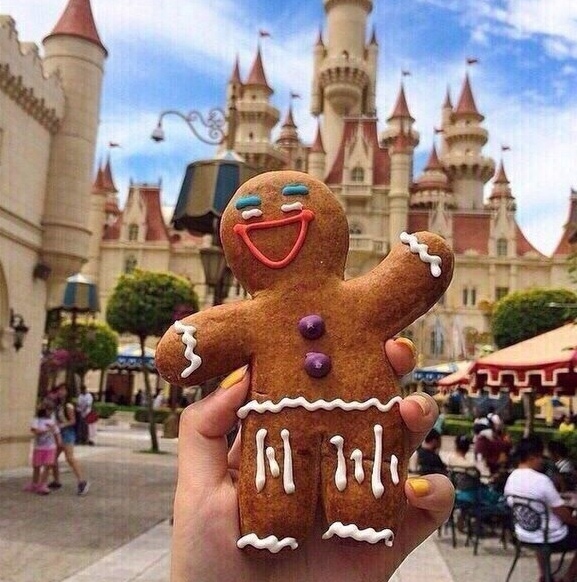
Setting aside the story, there is something special about gingerbread, either shaped as a doll, cookies or even the houses. One chunk at a time, they not only add colour to the flavours but also add to fun times in the kitchen with delicious batter to sample.