Posted in Family and Society, Food

Culture of Fast Food

The rise of the urban development has been directly proportional to the growth of fast food culture.

In 1951 Merriam-Webster had recognized the term “Fast food” as “of, relating to or specializing in food that can be prepared and served quickly” or ” designed for ready availability, use or consumption and with little consideration given to quality or significance (adj.)(noun)”. Although contrary to popular belief, fast food has been there since the times of the Romans. The cities of the Roman empire had marketplaces like the Forum with food vendors who sold baked goods and cured meats to the urban population living in “the insulae” (similar to multi-story apartment blocks). Functioning more or less like a simple eating establishment, bread soaked in wine, cooked vegetables and stews later on were available. The trends continued through the ages and the civilizations as seen in China of the 12th century where fried dough, soups and stuffed buns were snack foods. Meanwhile the markets of their contemporaries in Persia (now Baghdad) sold processed legumes, purchased starches and even ready-to-eat meats. Moving ahead during the Middle Ages, large towns and major urban places like London and Paris had numerous vendors with stalls of ready to eat dishes such as pies, pasties, flans, waffles, wafers, pancakes and cooked meats. With the rapid industrial revolution, booming of towns, progresses in the food and science industry, the ready to eat meals underwent rapid changes, for better then but worse now. Along with the era of colonization, wars, immigration and emigration , the fast paced food industry had picked up in leaps and bounds.

Not everyone necessarily needs new things all the time and creative designs. It’s good to have luxury restaurants and fast-food restaurants. You need both. Rei Kawakubo

From prepackaged food sold at convenience stores, street vendors, filling stations to fast food outlets, the entire scenario revolves around quick service when “on the go” preferring finger food to “the cutlery food”. “Take-away” or “take-out” with “drive-through” options, all started off as the fast-paced life took over with people working two to three jobs, lack of provisions or money or time to cook the regular meals. Of late, the development of technology has allowed one to order food through the smart phone applications.

You can do good work simply staying up all night and eating nothing but junk food, but probably not in the long term. John Mulaney

Despite the popular assumption that fast food and junk food are the same, they are not. True although there is an overlap between the terms, they are not entirely substitute terms. Fast food refers to the fast assembly process for the preparation of the food, where food is ready in a matter of minutes. Junk food is labelled based on the little nutritional value of the food which is high calorie, high sodium with or without high saturated fat, sugar or salt content.

I follow my own advice: eat less, move more, eat lots of fruits, vegetables, and grains, and don’t eat too much junk food. It leaves plenty of flexibility for eating an occasional junk food. Marion Nestle

While the taste buds are tempted and cravings are fulfilled, on the downside the price to pay on the long run with risk of colorectal cancer, obesity, high cholesterol and depression to list a few. As good things always come in small packages, to downsize the portions, space out the intake and nutritionally substitute the fast food as well as retaining the taste are the few of the tricks to tackle the constant pull to it.

“The problem is when that fun stuff becomes the habit. And I think that’s what’s happened in our culture. Fast food has become the everyday meal.” Michelle Obama

As we mark any occasion or dining out with fast or junk food, keeping it in moderation makes us guilt-free to enjoy the pleasures once in a while. As been proven time and again, too much of anything spoils the fun.

Posted in Daily, Life, Photography Art, Random Thoughts

Switch to Outdoors

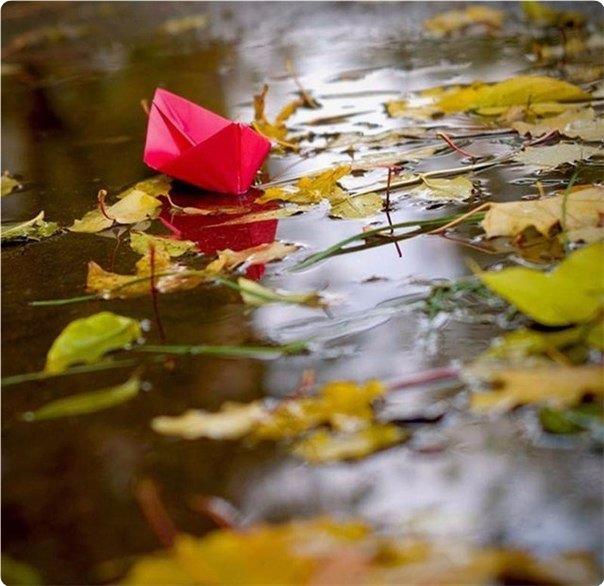
With the autumn winds and rains in full swing, the outdoors offer a walk filled with an array of colours. For the children, non rainy days of autumn are spent outside for they beckon them like beacons of joy and fun. To experience days like these, living in the country is better than the cities. There’s nothing better than the fields, the green and the beauty of nature to revamp and rejuvenate ourselves after a long day. Although it is true that the cities afford to give us the modern living, but the daily existence gets mundane and boring after a while. In fact the growth of modern technology to the feasibility of internet or app based food and groceries delivery, online shopping deals, excessive indoor entertainment options and increased working hours with limited breaks have all contributed its’ fair share to the humdrum existence. Even worse is when the regular childhood hours of outside play is substituted with gadgets and indoor toys.

The aftermath was that the entire focus shifted to living within the walls of our homes, to the point of limiting our daylight exposure. The recent report released by VELUX has highlighted the statistics and data researched about the “indoor generation”. The consequences are alarming not only to our physical well being but emotional and mental health too of the present and future generations.

To break from the daily routine of work-home-work cycle isn’t easy, especially for the city dwellers. The options though limited are feasible. First is to get outdoors as frequently possible especially during office breaks. If that is limited, try walking through a public park before joining the regular commute. Second, bring nature and daylight into our homes. Although we live smack in the city, the bigger the windows, the greater amount of sunlight in our homes Third, bring nature into our house with indoor plants, rooftop or balcony wall gardens and increase the ventilation. Fourth give allotted time for outside play especially for the kids. It would be great if the entire family spends some quality time outdoors. Fifth and the best option is to get out of the town over the weekend at least fortnightly or monthly and rejuvenate with nature. With many bed and breakfast establishments open all over the countryside, the break would be worth it. And for those of us who have extended family living in the country, it pays to visit them once in a while.

Despite all the modern conveniences that man has invented, it is the soothing and peaceful presence of nature that offers peace and brings not just physical wellness but emotional and mental sanity.

Posted in Daily, Photography Art, Random Thoughts

Ripe not Sour

Yesterday night, the bedtime story was Aesop’s Fable of the Fox and The Grapes. As I was explaining the story and it’s morals to my toddler, the first question he asked was why didn’t the fox try shaking the branches so that the big fat grapes fall down. To answer, I had tried one explanation that the vine was too strong and second the fox was too tired. Unfortunately he didn’t believe it.

Late night, the moral of the story was going around in my head like clockwork. It’s so easy to speak ill of the things we can’t attain. Why do we do it ? May be it helps to distance ourselves from our failures, of what we couldn’t or can’t have. May be it does help us to dissociate ourselves between our ideas, beliefs or thoughts against what has happened. Yet the reality is by calling the ripe “sour” doesn’t change anything.

Life is full of goals, desires, ambitions and temptations. Some of them are within grasp but the rest we have to let go, either by choice or by circumstances. Though at times we do regret that the may-haves would have been possible if we gave a little extra push from our side. Although by blinding our eyes and declaring the true, false may bring momentary gratification but it doesn’t change the situation. Instead we miss out on another attempt for something better. For unless we pluck up the courage to admit and determine what went wrong, we will continue on the path of disappointment and disillusionment, eluding the “ripe grapes” repeatedly.

The fox who longed for grapes, beholds with pain
The tempting clusters were too high to gain;
Grieved in his heart he forced a careless smile,
And cried, ‘They’re sharp and hardly worth my while
(a quatrain by Aphra Behn in Francis Barlow’s illustrated edition of the fables (1687))

Posted in Daily, Food, Stories Around the World

Cakes of Rainbow

For any celebratory or ceremonial occasion (some festive ones too), the setting is incomplete without the main dessert of “cake”. Originating from the Old Norse word “kaka”, among the desserts which has been adapted to the history of that era, cakes were initially started off as modifications to the regular flat breads. Gradually the breads became more elaborate and softer as evidenced by the origin of phrase, “Qu’ils mangent de la brioche” (Let them eat cake) where brioche was a luxury bread enriched with butter and eggs. Since then it has been through a lot of history, transitioning in make through the era of the world wars, civil revolutionary years and even the great depression. It has even became a part of the superstitions, like for instance an old English belief of putting a fruit cake under your pillow would make you dream about the person you will marry.

The entertainment industry also felt it’s presence, basing a number of songs and few movies on it (even in the vernacular languages). However what fascinated me was the myth of Joan’s rainbow cake which I had recently seen in the movie “Salt and Pepper”. Here the protagonists in the movie bond over food and both of them bake the Joan’s rainbow cake simultaneously as the movie progresses.

As per the narrative, the cake is baked by a French lady Joan, who awaits the return of her husband who was in the army at war during the WWII(1939-1945). The soldier informed Joan about his arrival. To surprise her love on the day of his arrival, she baked a delicious strawberry cake and waited for him, but he never turned up. Although she was little disappointed, the next day Joan baked a pistachio cake, anticipating her love would return at least today, but the soldier did not return. She joined the cakes together with some whipped cream. Her wait continued into the third day when she made an orange cake. He still did not come. That night, she went to bed with a heavy heart. Next morning her love arrived bearing a gift of chocolates for his lady. She combined all the cakes she baked with cream. She then melted the chocolate and poured it over the cake, and then served it to her loved one. They ate it together in celebration of his return and their never ending love.

Despite the fact I am unable to ferret out and ascertain the proof of authenticity behind this tale, the whole idea of having a three layered cake with whipped cream and a chocolate dripping is nevertheless an irresistible delectable feast for all. Moreover, it’s the feeling that goes behind that cake that makes it special.

There have been many versions of the rainbow cake and many a time we come up with our own style during the baking. All the same, for every cake the pot of gold at the end of the baking is worth every attempt to create a masterpiece.

Posted in Daily, Food, Photography Art

Squash-Fun with Jam-Art

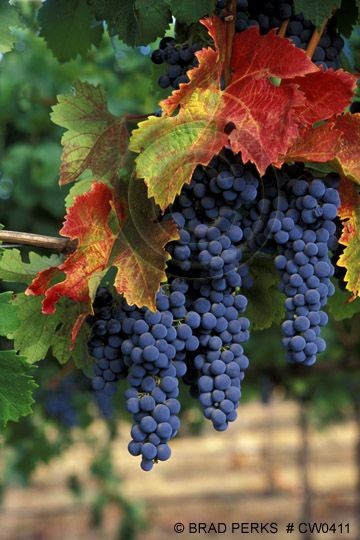
Last weekend we had a charity auction at church, consequence of which I had landed with two crates of black grapes i.e. about 20 kg. Nevertheless two days, everyone was sick of grapes even mixed with oatmeal, pancakes or desserts. Hence, it was a unanimous decision to make grape squash yesterday.

So towards late noon yesterday, the kitchen counters were grape stained and I ended with four big bottles of grape squash. The trick in making them right was to proportionate the grape extract to the sugar in a 1:2 proportion with the entire water required being equal to the amount of grape extract. In three simple steps;it was ready. First wash the grapes and boil them in just sufficient water so it gets cooked and while boiling continuously mash the grapes till it becomes thoroughly juicy. Strain the mix to get the grape extract and measure it. Second is to take the sugar (keep the amount twice the extract), add to it a minimal amount of lemon juice (1 tsp for 2.5 pounds sugar) and water (the entire water used should be equal to amount of grape extract) in a pan; and heat it till the sugar dissolves and bubbles up. To prevent charring of sugar, you make to intermittently stir the mix. Third, let the sugar syrup cool till room temperature and mix it with the grape extract to form a good consistent liquid. One can add grape extract (tonovin, 1 tsp for 2 pints or 1 litre of grape extract) or sodium benzoate (almost same measure as tonovin) if preferred. Since even refrigerated squash gets over fast at home, I had avoided the latter.

On the whole, it was a fun experience for everyone including my two year old son who loved getting grape-stained. As for the remaining grapes, I had decided to make them into jam. Although making jam looks arduous, it’s actually easy and almost similar to squash, with few differences. Here the measure of grapes to the sugar is 2:1. It’s the same for all sweet fruits like strawberries, apricots but for bitter fruits like lemon and oranges we need a slightly higher amount of sugar ( I prefer a 2:1.5 ratio). 

There’s nothing better than having hot dripping homemade jam especially on cakes and in pies or cold jam layered on bread. Besides making jam keeps the kids from getting into mischief indoors especially on cold, rainy days of autumn. As Sandra Dallas said, “Jam on a winter took away the blue devils. It was like tasting summer. ”  Here are some pictures of jam-art to get inspired.