
Posted in Daily, Family and Society, Personal Musings, poetry, Quotes, Reflections, Work

Strain of the Indisposition

On the days when the work schedule drags, the events then on tend to go on in a discordant manner. Eventually on reaching home, with the usual things not done like dinner late, homework hours not supervised and the like; the entire mood sours down and the evenings end on an unhappy or dissatisfied note. While journalling such days and reading them later on, at times it’s how one learns to behave when things go beyond the expectation (especially when in a negative manner) that makes the biggest difference in the long run.

“The greatest joys of life are happy memories. Your job is to create as many of them as possible.” Brian Tracy

Emotional infection is a deadly thing. A chain effect triggered by it can have far reaching consequences; avoidable, unnecessary with a significant negative impact, spoiling relationships and makes the daily hours unpleasant, of discontent as well as unhappy. As the scales of the balance go awry, the urge to initiate the “blame game” and point fingers start soon, as compared to making efforts to try and reschedule to get back on track. Guarantee for everything or anything never exists in reality. There is always a chance of a miss or an error present even in the best laid plans, schedules or goals. When one lets their emotions fly unchecked, the consequences can go deadly and far reaching, be it on the professional, personal or domestic front. To keep the inner peace best within, learning how to handle the unexpected is necessary skill. Though this may take time and plenty of effort, they are all worth when the impact is taken into account. For words and memories have a far lasting effect, than targets or achievements as scored on paper.

“I am convinced that the greatest legacy we can leave our children are happy memories: those precious moments so much like pebbles on the beach that are plucked from the white sand and placed in tiny boxes that lay undisturbed on tall shelves until one day they spill out and time repeats itself, with joy and sweet sadness, in the child now an adult.” Og Mandino

No matter how many precautionary measures one may take; when things go haywire, take a quick breathe and continue on. The art of learning to manage any curve-ball lies in the way we behave to these sudden turns. Instead of fretting and getting dejected on the “why me, why now” aspect, settling and finding effective be it temporary or permanent solutions may help make the days (or evenings) end better. More than achievements, goals or occasions, what stays etched in the mind are “feelings”. The feeling of calm and happiness in the children as their parents return from work, the approach that another person feels or learns as the crisis period is sorted and the cumulative efforts taken to settle any environment are just few of the better emotional memories that linger and stay on as the years pass through.

“I’d like the memory of me
to be a happy one.
I’d like to leave an afterglow
of smiles when life is done.
I’d like to leave an echo
whispering softly down the ways,
Of happy times and laughing times
and bright and sunny days.
I’d like the tears of those who grieve,
to dry before the sun
of happy memories
that I leave when life is done.”
Helen Lowrie Marshall

Posted in Food, Stories Around the World

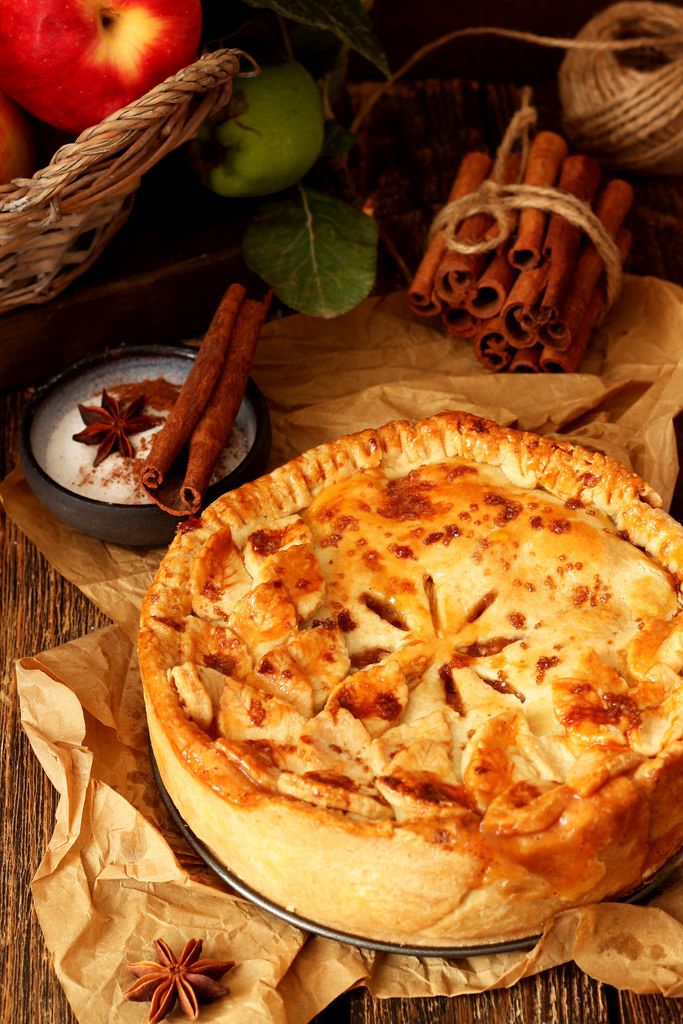
A Slice of Crust, Filling and History

“Things that really matter are the things that gold can’t buy, so let’s have another cup o’ coffee and let’s have another piece o’ pie.” Irving Berlin

In the initial years of domestication, life in the kitchen revolved around one step meals. From casseroles to pasta and pie, homemade food was simple, basic and hassle free. One of the first recipes to attempt with the oven were the pie recipes, something that our grandmother used to to do on a weekend basis. Today with dessert pies being the classic in any restaurant, it makes for a welcome change from the usual simple desserts for the weekend lunch.

Interestingly the concept of pie making can be traced to as early as the Neolithic era of Egyptians. Pie essentially meant anything edible encased in a tough pastry shell mainly served as a baking dish, storage container or serving vessel, initially too hard to actually eat. As historical evidence points out, these early forms of pies are known as galettes, which essentially are rustic free-form pies. These pie-like treats were made with oat, wheat, rye or barley; then filled with honey and the dish was baked over hot coals. As Egyptian hieroglyphics and drawings show that the bakers to the pharaohs incorporated nuts, honey, and fruits in bread dough, a primitive form of pastry.

As the Greeks carried over the tradition of galettes; they had modified the pies during their period by making a flour-water paste wrapped around the meat, which served to cook the latter and seal their juices. When the Romans had conquered Greece, they had used various types of meat including oysters, mussels, lampreys, fish in every course of meal, sometimes even dessert . As written in the records of De Agricultura by the Roman Statesman Marcus Porcius Cato (234-149 B.C.), the recipe most popular during his era was known as the “Placenta” or “libum”. They were made more like a cheesecake, baked on or sometimes inside a pastry base, these were the initial pie/cake.

Through the gateways of the Roman cuisine, the trend of pie making made it’s inroads into the European cuisine, adapting itself to the local customs and imbibing itself with the traditional cuisine. The initial pies were known as “coffins” or “coffyns” (the word actually meant a basket or box). There were savory meat pies with the crusts or pastry being tall, straight-sided with sealed-on floors and lids. The open-crust pastry (no tops or lids) were known as “traps.” Holding an assortment of meat and sauce components, these pies were baked more like a modern casserole with the crust being the pan, its pastry tough and inedible. The crust was often made several inches thick to withstand many hours of baking. The initial pie prototypes were more savoury than sweet and were a mix of top-cased than open ones (known as tarts today). The sweet pies were more of the “tart” variety.

“Tak gode Applys and gode Spycis and Figys and reysons and Perys and wan they are wel brayed colourd wyth Safroun wel and do yt in a cofyn and do yt forth to bake wel.” (Recipe for apple tart, 1379) Source:The Forme of Cury, A Roll Of Ancient English Cookery, Compiled, about A.D. 1390, by the Master-Cooks of King Richard II.

As to the etymology of the word “pie”, the source may be traced to the magpie, a bird that was known for collecting odds and ends especially the shiny ones and storing them in it’s nest (visualize the similarity). Considering that the Medieval pies also contained many different animal meats including chickens, crows, pigeons and rabbits, the possibility rests on that similarity for the modern word of “pie”.

The modern pies are baked dish, with a pastry dough casing that completely contains a filling of various sweet or savoury ingredients and meant to be eaten. From sweet pies with fillings of fruit, nuts, brown sugar or sweetened vegetables like rhubarb or the savoury pies like the steak pie, Jamaican patty with plain meat, eggs and cheese (quiche) or a mix of the vegetables and meat (pot pie(, pies today are meant to be edible as a whole. And the crusty cover can be made from the typical shortcrust pastry meant for pies or even substituted by powdered biscuits, mashed potatoes, bread crumbs to give a soft or strong edible base or cover.

Modern pies carry a whole lot of tradition and history behind each dish typical of a particular cuisine. Knowing that and adding on to those ingredients, giving the pie making a special flavour and zing tot he final dish. After one of the best places to experiment, experience and recreate the flavours of history is the kitchen.

Posted in Daily, Food, Stories Around the World

Third Wave and On…

“Coffee is a hug in a mug.” Anonymous

On a long postponed visit to the extended family line, we had to put in a three hour journey to-and-back. While waiting in the traffic and not being in the principal driver’s seat was an added incentive for window shopping. Naturally the sign of “discount” had your truly squinting to make out the deals. But it was the special offer of “The Flying Squirrel” (exclusively bought online) and Seven Beans that had snared my attention. After seconds of hedging, my husband had the car in park while I made a quick dash for it. With our luck in alignment, the buy didn’t take much time and we were on back homeward bound.

“It’s amazing how the world begins to change through the eyes of a cup of coffee.” Donna A. Favors

Interestingly “The Flying Squirrel” or “Seven Beans” is but two of the many brands caught in the “wave of coffee”. Entering into the artisanal food category, the third wave coffee movement is a retrospective entry of coffee wherein both coffee lovers and manufacturers share the joy and appreciation of high quality coffee. Like fine varieties of wine and cheese, the third wave of coffee explores the connoisseur-ship, stimulation of the senses and exploration of taste in a simple but buoyant cup of coffee. The unique characteristics of that simple coffee bean are highlighted, ranging from the diverse methods of growing, cultivation, processing, roasting as well as the practices and salient variables among the coffee bean cultivars and beverage preparation.

“The first wave of American coffee culture was probably the 19th-century surge that put Folgers on every table, and the second was the proliferation, starting in the 1960s at Peet’s and moving smartly through the Starbucks grande decaf latte, of espresso drinks and regionally labeled coffee. We are now in the third wave of coffee connoisseurship, where beans are sourced from farms instead of countries, roasting is about bringing out rather than incinerating the unique characteristics of each bean, and the flavor is clean and hard and pure.” Jonathan Gold, LA Weekly. (March 2008, Pulitzer Prize winning food critic on the third wave of coffee)

Technically the terminology of “third wave coffee” was most widely attributed to Trish Rothgeb, a coffee professional in an article for the Roasters Guild newsletter titled “Norway and Coffee,” (2003) with the first mainstream media mention in an National Public Radio piece about barista competitions. Although there is a lesser known reference in an obscure trade publication called “Tea & Coffee Trade Journal Asia” (1999) by specialty coffee pioneer Timothy Castle obliquely referring to the same. While the first and second waves dealt in the ready availability and highlight the countries of origin with (or not) of their signature dark roast profile (respectively), the third wave coffee is often associated with the concept of ‘specialty coffee’ with reference to the specialty grades of green (raw and unroasted) coffee beans (distinct from commercial grade coffee) or specialty coffee beverages of high quality and craft. Though coined earlier (1974), “specialty coffee” was meant to refer to high-quality beans scoring 80 points or more on a 100-point scale.

“It doesn’t matter where you’re from – or how you feel… There’s always peace in a strong cup of coffee.” Gabriel Bá

There is something in a cup of coffee that is dearly enjoyed across all age groups, from different countries, professions and cultures. To add to one’s own special highlight to that cup of coffee, along with the coffee wave, the addition of a tinge of vanilla, whisky, chocolate, cinnamon, cardamom or hot chocolate, can do wonders. Not to forget the ice-cream for the kids. Little wonder then, one would chose to miss an opportunity to ride “that coffee wave”.

Posted in Family and Society, Life, Personal Musings, poetry, Reflections

On the Canvas

“Real generosity towards the future lies in giving all to the present.” Albert Camus (Notebooks 1935-1942)

One of the best things about entertaining a group of toddlers, is their spontaneity. Following their flow of energy, children are more keen on dwelling in the “now”. What about the adult “nows”? More or less, they do happen more in the professional sphere than the personal zone. Eventually some “now” never happens, neither does “the later”.

As each of us “adult” reserve their time and energy for the tomorrow, those proposed plans mayn’t happen. Time has it’s own flow. At times the tomorrows may work out, at times it mayn’t be so. If it was done at the “now” of then, then maybe it would be have happened or done only. Time has and always will be contrary. Sometimes as the toddlers say “let’s play tent” or “play with us” maybe some of the most precious memories made as one unwinds from work than catching up with “the telly”.

“It’s being here now that’s important. There’s no past and there’s no future. Time is a very misleading thing. All there is ever, is the now. We can gain experience from the past, but we can’t relive it; and we can hope for the future, but we don’t know if there is one.” George Harrison

Time has a beginning and ending, but those moments in between are what fills up the blank canvas. It may be filled by phases of dark hues, spots of brightness scattered in the dark template or hues of varying colours depending on own choice. As one decides on how the space on the canvas needs to be made so for the future days, take care that the spaces of now don’t go void.

Hymn to Time

Time says “Let there be”
every moment and instantly
there is space and the radiance
of each bright galaxy.

And eyes beholding radiance.
And the gnats’ flickering dance.
And the seas’ expanse.
And death, and chance.

Time makes room
for going and coming home
and in time’s womb
begins all ending.

Time is being and being
time, it is all one thing,
the shining, the seeing,
the dark abounding.

Ursula K. Le Guin (1929-2018)
(From Late in the Day: Poems 2010-2014 (PM Press, 2015). Copyright © 2015 by Ursula K. Le Guin.).

Posted in Daily, Food, Stories Around the World

Simple, Smoked and Short

One of the downsides of having to work far from home, is to not only the commute but also getting the meals right. With lunch packed and breakfast a tight run, getting the right share of calories is a constant battle. While fruit and salad can be quite easy and handy; for unexpected long hours it keeps the hunger pangs at bay only for a short while. While vending machines, cafes and delis are there plenty around, they cause significant hurt to the wallet as well as physique. Which is why short quick healthy meals get highlighted and tagged, to be learnt as soon as feasible.

One of the first endeavors was to modify the healthy combination of carbs and proteins right, by the basic sandwiches. The first to be subjected was “pastrami on rye”, making it to own adaptation and specifications. Technically of Romanian origin, pastrami is a meat product usually made from beef brisket, lamb or turkey. The raw meat is brined, partially dried, seasoned with herbs and spices, then smoked and steamed. Etymologically, the name “pastrami” can be traced to Roamnian pastrama; the latter being traced to the Bulgarian pastrija or Turkish pastirma or “bastirma” meaning pressed meat.

While earlier meat shops used to process them, these days they are readily available in the commercial chain grocers or supermarkets, commonly made as per the norms of the locality, either from lamb, turkey or meat. One of the advantages of the “pressed meat” is that it can be cut into thin wafer slices, medium cuts or slices or a really large filled sandwich of choice. The best part is there is no frying or oil involved.

As the sandwich chains and delis got onto the trend, serving meat sandwiches especially pastrami sandwiches became a novelty. For all sandwich lovers, it is a must. While for school or office lunches, this makes a good change from the routine and a break form the elaborate morning kitchen preparations. That one hour of lunch break can be made into a light, wholesome and healthy meal.

“You sit down at Katz’s and you eat the big bowl of pickles and you’re eating the pastrami sandwich, and halfway through you say to yourself, I should really wrap this up and save it for tomorrow. But the sandwich is calling you: Remember the taste you just had.” Mario Batali

Posted in Food, Stories Around the World

Gooey, Sweet and Special

One of the advantages of the cellular networks is that news travels fast. Work promotions, kindergarten winnings, new projects or ideas accepted and launches as well as new family additions are few of the positive news that spreads fast. Some surprises call for impromptu celebrations which essentially involves something sweet. While instant baked goods mayn’t be available at hand round the clock, there is something about marzipan that can do wonders for the most basic of desserts.

Primarily consisting of sugar or honey and almond meal, marzipan is a confection with a wide array of uses. While it is often made into chocolate covered (or plain) sweet treats or as imitations of fruits, vegetables, cars, toys and the like; it can also be used as glazing for icing cake, biscuits or shaped into small figurines atop cakes especially meant for personalizing celebrations. It can also be added as a baking ingredient to the traditional recipes ( like the stollen, banket, king cake).

Tracing the origins, marzipan was believed to have originated through two different, though converging routes. One was via the Northeast Mediterranean line, introduced to Eastern Europe through the Turks, while the other possible origin was the Iberian Peninsula line, predominantly from the Al-Andalus area of Spain. With it’s widespread popularity, marzipan has numerous variations. While in Germany sugar and almonds are ground into a paste, syrup can be used to sweeten the mixture (France) while Middle East marzipan may include a dash of rosewater. Almonds may be replaced by apricot or peach kernels, to make a similar product known as the “persipan”. Other alternatives include substitution with soy paste or almond essence.

Homemade marzipan comes ready with very basic ingredients of almond paste (or freshly made almond meal), egg whites and sugar. Besides getting creative with marzipan made edible animals, figurines or delectable icing and decorative ideas; chunks of marzipan when added to cookie dough or cake batter make for an interesting twist to the taste. Wit marzipan, something simple can be made into simply amazing with basic ingredients, whole lot of creativity and plenty of ideas.

“Madre Carmela’s favorite nuts were almonds. Not only did she like the way they tasted the best among all nuts, but she loved the flavor they imparted to Sicilian desserts from cakes to biscotti, and her favorite of all, Frutta di Martorana- the perfect fruit-shaped confections made from pasta reale, or marzipan, which required plenty of almonds. Who would have thought that the base for an elegant, regal dessert like marzipan came from such a simple ingredient as the almond?”
― Rosanna Chiofalo, Rosalia’s Bittersweet Pastry Shop

Posted in Daily, Family and Society, poetry, Reflections

Series of the “Little”…

“Great things are not done by impulse, but by a series of small things brought together.” George Eliot

After the long two hour commute was dragged to three hours by being held up in the traffic, the mental list of “things to do” kept on going longer than the usual. Consequently while walking into home after doing the daily grocery shopping, instead of the expected mess in the kitchen, it was a pleasant surprise to witness the orderliness at the domestic front. With my “better half” in charge, the kids had instructed me to put my feet and to enjoy the hot steaming cup of joe. Though eventually the domestic front had to be tackled, the few minutes of silence and solitude improved the frame of mind.

“The small things of life were often so much bigger than the great things . . . the trivial pleasure like cooking, one’s home, little poems especially sad ones, solitary walks, funny things seen and overheard.” Barbara Pym

One never realizes the importance of the little events of the day that stay etched in the mind. The recollections turn up at the most unusual moments. For the inner strength during difficult moments, the support when the temporary setbacks mount up and the drive to go ahead, all have few of their rots in the little moments of life, which now become among the treasured memories of happiness to give comfort and light for the rainy days.

“It has long been an axiom of mine that the little things are infinitely the most important.” Sir Arthur Conan Doyle, The Memoirs of Sherlock Holmes

The Little Things
Mary Dawson Hughes

It really is the little things
That mean the most of all…
The “let me help you with that” things
That may seem very small
The “I’ll be glad to do it” things
That make your cares much lighter,
The “laugh with me, it’s funny” things
That make your outlook brighter…

The “never mind the trouble” things,
The “yes, I understand,”
The interest and encouragement
In everything you’ve planned
It really is the little things,
The friendly word or smile,
That add such happiness to life
And make it more worth while.