Posted in Daily, Food, Stories Around the World

Yorkshire, Pudding and a Twist

Flour. Eggs. Milk.

On one quiet Sunday afternoon, these four staple ingredients in the pantry brought out the urge to try something different for the Sunday dinner. As the option of sweet or savoury were being considered, the experimentation ran into attempts at making Yorkshire pudding.

One of the most favoured English dishes, Yorkshire pudding is a baked pudding which can be served in numerous ways. From being a main course dish served with meat and gravy or filled with banger and mash or made into dessert with fillings of chocolate, the options keep on changing depending on the choice of ingredients, the size of the pudding, and the accompanying components of the dish.

“Make a good batter as for pancakes; put in a hot toss-pan over the fire with a bit of butter to fry the bottom a little then put the pan and butter under a shoulder of mutton, instead of a dripping pan, keeping frequently shaking it by the handle and it will be light and savoury, and fit to take up when your mutton is enough; then turn it in a dish and serve it hot.
– A recipe for “a dripping pudding” as published in the book “The Whole Duty of a Woman” by Lady A; Kenrick, William (1737).

While the exact origins of this dish aren’t traced to any particular era, the recipe in records was seen in the sixteenth century. Originally this dish was believed to be served as first course to dull the appetite for the main meat and vegetables served as the second course. In poorer households, the pudding was often served as the only course. As to the name “Yorkshire”, the probability lies in the crispier batter of the pudding in this region, made so by the higher temperatures produced by the coal.

One of the reasons of its’ popularity lies in the ease of cooking. By pouring the batter made from milk (or water), flour and eggs ( basic ratio of 1/3rd cup flour and 1/3rd liquid per egg), into preheated, oiled, baking pans, ramekins or muffin tins (in the case of miniature puddings), they can be made steamed, in the pan or ovens. A steamed recipe involves covering the pudding with grease proof paper to steam it and then serve with jam and butter (1926).

“It is an exceeding good pudding, the gravy of the meat eats well with it,” states Glasse. “…. To set your stew-pan on it under your meat, and let the dripping drop on the pudding and the heat of the fire come to it, to make it of a fine brown.” (recipe as recorded in The Art of Cookery Made Plain and Easy by Hannah Glasse (1747)).

The versatility of the Yorkshire pudding can be felt across the various cuisines. With Laplanders (also known as popovers) of the American cuisine, these are light rolls made from an egg batter similar to that of Yorkshire pudding, typically baked in muffin tins or dedicated popover pans (straight-walled sides rather than angled). Similar dishes ( batter based savoury dishes) include the French gougère (a savoury choux pastry mixed with cheese), Bismarck or Dutch baby pancakes, takoyaki (a Japanese puff batter dumpling with octopus) or the more elaborate dish of “Toad in the Hole”. Traditional variants with local flours like sago, split gram flour, gluten free or palaeo based Yorkshire puddings and the like have been tried. The beauty of experimentation of the different recipes lies in simple adaptation, palatability and above all, bringing a bit of another culture to the table.

Half a pound of flour
1 ounce of butter
2 eggs
Milk to mix
Put the half-pound of flour into a basin and rub in the butter. Make a hollow in the centre of the mixture and break in the egg, beat well adding the milk gradually until all is mixed. Then beat for a further fifteen minutes, when the mixture coats a spoon it is ready. Grease a pudding basin and pour in the mixture, cover with greaseproof paper and steam for one and a half hours. Serve with jam, butter and sugar. [Note, for cooking the water should only come half way up the dish.
Source: Recipes Past and Present. A Wootton Bridge Historical website

Posted in Food, Photography Art, Stories Around the World

Shape in Style

“Life is a cake and love is the icing on top of it. Without love, it becomes difficult to swallow life.” Mehek Bassi

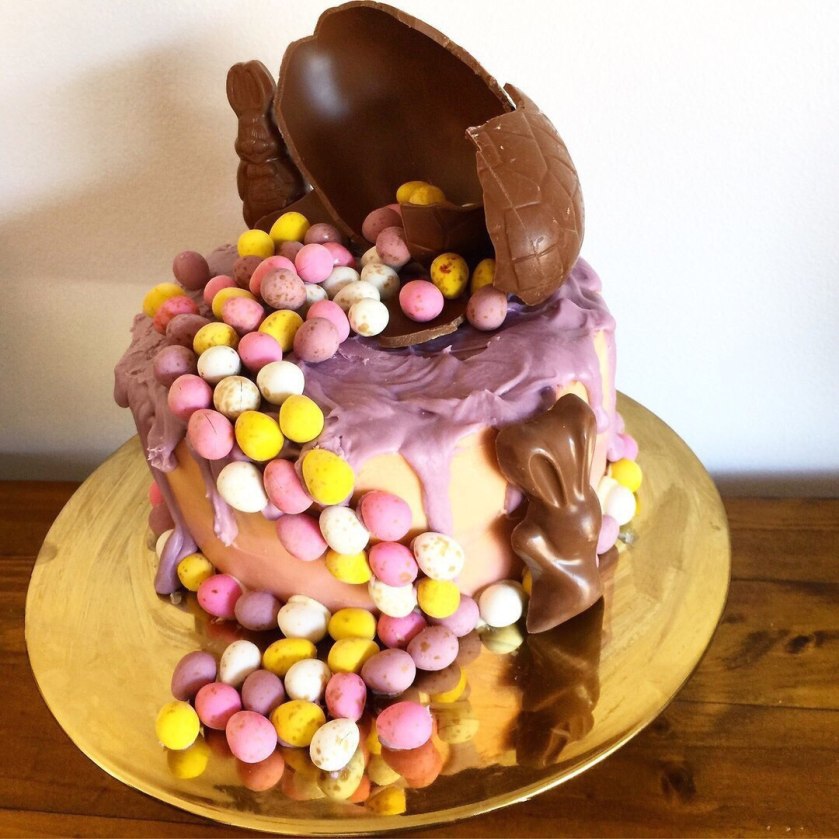
Accompanying my cousin to the bakery was an enlightening event yesterday. With the twins birthday approaching in two weeks time, it was time for the placing the order for the cake. Like all to-be-four year old minds, they had very specific ideas for their cake; from the “Cars” based theme to the Disney’s “Frozen” theme, the possibility of getting one big cake design was the heart of the discussion with the main baker.

While waiting, scanning through the cake design books and available cakes on display was a feast for the artistic eye. While my childhood consisted mostly of cream with icing birthday cakes, these days fondant designed and themed cakes are the rage. Today, the early methods akin to construction of a structure by cutting shapes out of cake and piecing them together have been superseded by preformed character based designs and the shaping of cakes out of fondant and different forms of marzipan. From fondant (sugar paste or ready roll icing), royal icing, marzipan, modeling chocolate, gum paste and latest of few, edible ink printing, the design over cake has been transformed greatly.

Cake decorating had originated in Europe around the 17th century. With the production of baking powder and temperature controlled ovens (1840s), baking cakes became easy and the presentation more elaborate. The exact origins of cake decorating was believed to from a French bakery (1840s) when prices were increased on their cakes as the latter were decorated. With decorative shapes, cakes were adorned with icing, formed into patterns, flowers and food colouring was used to accent the frosting or layers of cake. Over the years depending on the occasions, cake decorating styles have been enhanced along with the ornamentation being more artistic.

These days even homemade cakes are being embellished with something simple as powdered icing, chocolate layer with sprinkles or the good old coloured icing. With the numerous designs and models of 2-D or 3-D made, no wonder that cake shows and related artistry are the all time rage not just for the special occasions or celebrations but also for avid dessertarian, dessert chefs or simply for the love of baking and art. 

“Whether you’re a bride or a birthday boy, your options are much the same. Cake comes in chocolate, yellow, or white. Frosting comes in chocolate or vanilla buttercream, or you can opt for whipped cream. Fillings are either chocolate or vanilla custard, fresh bananas, or strawberries or raspberries in season. For birthday cakes, you can have either flowers or balloons in your choice of colors. For wedding cakes, you can add either fondant or marzipan covering, or either smooth or basket-weave buttercream, in white or ivory, with either pearl-like dots or ribbony swags made of frosting, and fondant faux flowers are extra.” Stacey Ballis ( author of Wedding Girl)

Posted in Daily, Food, Photography Art, Stories Around the World

Of Cheese and Blue Streaks

While cleaning out the larder over last weekend, I had chanced upon a blue veined gooey stuff enclosed tight in a packet. On closer inspection, apparently it was a piece of cheese misplaced post the local grocery shopping and was out of sight for a month, resulting in the mold setting in. Seeing the blue green veins streaking across the white; what came to mind was the difference between blue and bad cheese.

Blue cheese was believed to be an accidental discovery. As legend says of the making of Roquefort cheese by a young boy who had abandoned his meal of bread and ewes’ milk cheese (on seeing a beautiful girl) returned back months later to find his old cheese soft, crumbly, blue veined and with a tangy flavour transformed so by the mold (Penicillium roqueforti). Similar legends have been heard with the drunken man and his cheese. The early years saw that cheeses were stored in natural temperatures and moisture-controlled caves which happen to be favorable environments for many varieties of harmless mold.

Over the years, many varieties of blue cheese have been created with few having their own stories. For instance, the Gorgonzola one of the oldest known blue cheeses, having been created around AD 879, is said that to have its blue veins only around the 11th century. Stilton cheese, an English cheese (popular since the 1700s) was set in the modern shape and style by Frances Pawlett (or Paulet), a “skilled cheese maker” of Wymondham, Leicestershire. Thus with strict codes, only the three counties of Derbyshire, Leicestershire and Nottinghamshire had market the cheese as Stilton. Later varieties(20th century) of blue cheese like the Danablu and Cambozola (cow’s milk cheese of a combination in style of a French soft-ripened triple cream cheese and Italian Gorgonzola) were made with few variations from the original. Danablu was made from full fat cow’s milk and homogenized cream with copper wires or rods used to pierce the formed curds to distribute the mould (Penicillium roqueforti) evenly through the cheese and then the cheese is aged for eight to twelve weeks.

With blue cheese varieties, one must know to differentiate between the good and bad mold. If mold grows on soft cheeses like cottage cheese, cream cheese or ricotta; or on shredded, crumbled and sliced cheese, it is best to be discarded. As far as hard and semi-soft cheese like cheddar, Colby, Parmesan or Swiss are concerned, the moldy part with an inch extra around it can be removed and the rest of the cheese can be used. With moldy cheese one has to be careful with its’ use and storage.

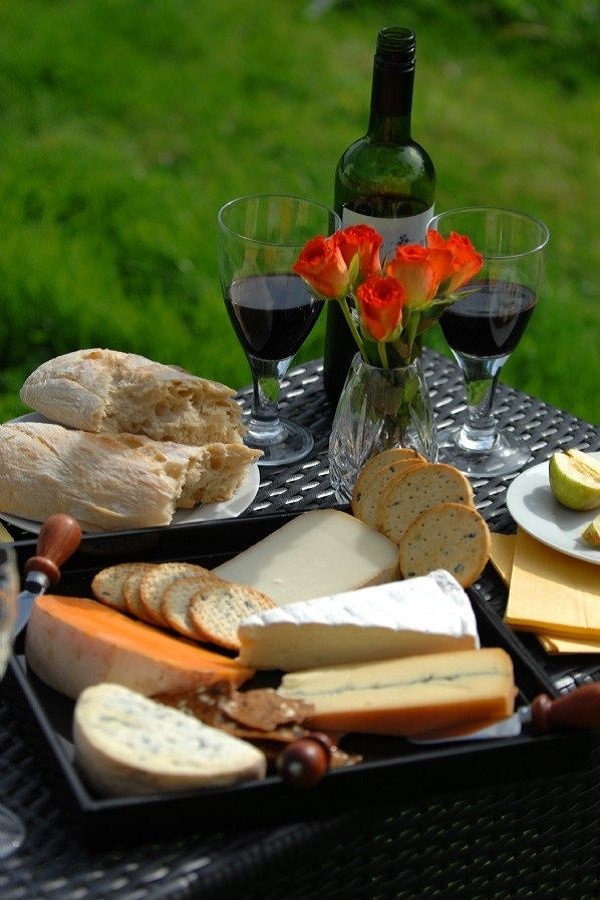
For foodimentarians with a special love of desserts, home food or for that quick added or unique touch to the regular meals, cheese (be it from cow, goat or sheep milk or homemade, local store bought, cheese market special or blue cheese varieties) is a pantry must. With a change from the regular, cheese gives an option of taking Stilton sandwiches to work, Gronozola on toast, shredded Brie or Danablu on salads, dressings or crumbled and used in cheesecake recipes, cheese themed parties or simply the change from the sweet dessert to the cheese platter with wine for afters.

Posted in Daily, Food, Stories Around the World

Of Coffee, Iced and “Frapped”

Some of the best things of life occur not when everything goes by plan, or by mere accidental occurrences. Adding to the list, is the delightful flavours of coffee, chilled, icy and sweet; though meant or the hot summer days can be had at any occasion, day or time. Though the 19th century saw a variety of cold coffee drinks as “café frappé (à la glace)”, some were like iced coffee and others similar to slushes. Although special mention of the iced coffee drink, known as Frappé coffee (or Greek frappé or café frappé, frapés), has to be made as it became ingrained into the coffee culture.

“Iced coffee, on a hot day, can perform miracles.” Lish McBride

Although frappé with etymological origins from French means “chilled in crushed ice”; the discovery of the café frappé  using instant coffee happened in Greece. As the narrative goes, at the Thessaloniki International Fair (1957), Giannis Dritsas (the Nestlé company representative) was exhibiting a new chocolate beverage produced instantly by mixing it with milk and shaking it in a shaker. With Dritsas’ employee Dimitris Vakondios looking for a way to have his usual instant coffee during his break and for the lack of hot water, he mixed the coffee with cold water and ice cubes in a shaker. With this experimentation, frappé was born and established with it’s Greek finish.

The Greek frappé in Greece is available in various varieties depending on their degrees of sweetness and the amount of sugar used. These are mainly glykós (“sweet”, 2 teaspoons of coffee and 4 teaspoons of sugar); métrios ( “medium” with 1:1 ratio of coffee and sugar) and a skétos (“plain”) without sugar). The chocie of serving can be with evaporated milk, then known as frapógalo or “frappé-milk” or without any milk. At times water is substituted by milk for a very thick, milky coffee frappé (mostly a Cyprian variation). Over the years, further flavours like Kahlúa, Baileys Irish Cream or other liqueurs are used, along with a ball of vanilla ice-cream (not milk) or made blended with spoon. With the spread of frappé from Greece, further variations have been according to the local choice like the “hladen nas” (Serbian) made with milk or ice-cream and whipped cream often added on top or the Danish version of using cold milk on crushed ice with coffee in the shaker.

“I was taken by the power that savoring a simple cup of coffee can have to connect people and create community.” Howard Schultz

With the experimentation streak running high, homemade frappé can be had for a change from the regular. With a hand mixer or cocktail shaker, the homemade blend would be a welcome change from the regular sweet coffee. Moreover, it could be a start to a new frappé tradition of own  choice, ingenuity and memorable moments.

One or two teaspoons of instant coffee (traditionally Nescafe), sugar (to taste) and a little water are blended (with a cocktail shaker or an appropriate mixer like the hand mixer) to form a foam, which is poured into a tall glass. To this is added cold water and ice cubes, and, optionally, milk (typically evaporated milk). The glass is served with a drinking straw.


Posted in Daily, Family and Society, Personal Musings, Stories Around the World, Work

Sing the Song, Paint the Picture

“You were given your gift for the joy you may give in return.” Cornelius Elmore Addison

During the earlier years of childhood, painting was a hobby and an art at which my sibling had excelled in. Her talent was exploited at most events at both school, church and college level. Yet over the years, it had taken a backseat initially due to the working hours, then later as family and home took over. Of recent, the creeping dissatisfaction and unrest within was silenced by her return to the canvas, oil, paints and brushes. Thinking back, the heart is most happy when it gets to do what one loves and does best.

“Hide not your talents. They for use were made. What’s a sundial in the shade?” Benjamin Franklin

Each one of us have been given different, interesting and beautiful talents. While some may help us earn the regular bread and butter daily; the other talents mayn’t be so. Yet even the innate creative and talented side gets silenced for long, then the unrest begins slowly building up within, reaching to the boiling and overflow point at the later stage. Whether the talent be at simple music, embroidery, poetry, cooking or the garden; time taken with them will soothe the mental unrest and settle the negative emotions that one will sooner or later experience in life.

“Use what talents you possess; the woods would be very silent if no birds sang there except those that sang best.” Henry Van Dyke

An enchanting story about violinist Fritz Kreisler tells how he once came across a beautiful instrument he wanted to acquire. When he finally raised the money for the violin, he returned to buy it and learned that it had already been sold to a collector.  He went to the new owner’s home in order to try to persuade him to sell the violin. But the collector said it was one of his prized possessions and he could not let it go. The disappointed Kreisler turned to leave, but then asked a favour. ‘May I play the instrument once more before it is consigned to silence?’ Permission was granted and the great musician began to play. The violin sang out a quality of music so beautiful that the collector himself could only listen in wonderment. ‘I have no right to keep that to myself,’ he said after the musician finished. ‘The violin is yours, Mr. Kreisler. Take it into world, and let people hear it.’

“What I think we need to do is infuse everyday and every action with the kind of values we hope will be in the future, with kindness, with nurturing, with dreams, ambition, using your talents, not resorting to violence, other forms of conflict resolution, with humor, with poetry, with music.” Gloria Steinem

While life is indeed a journey, it involves the use of the special gifts given or hidden within each of us. The world needs all of the people. Whether the primary work is at business, teaching, in science or health, administration and so on; using the given gifts or skill is necessary in order to maintain the mental and emotional balance. While the gift may not sustain as far as the monetary security is concerned, it will help us balance the busy schedules and the hectic lives that one lives. At the end of the day, inner happiness is not just in the abilities, but also the knowing that one’s life has been lived to the fullest, doing what one loves at some point whenever and where ever they can.

“Life is a journey.  Part of that journey is not just using your talents, but trying to decide what is your gift and then directing your talents to support your gift so you can soar to new heights.” Daniel Burrus

Posted in Daily, Food

Of Colours and Flavours, Simple and Sweet

One of the necessities of having a good meal family, besides sitting down together and enjoying home cooking is to close the meal with the “sweet finish”. Preparing the big family luncheon, even though it may be a pot luck dinner at times; getting the final finish right is what makes the meal complete. With a big joint family, dessert includes something sweet for the children, sweet and healthy for the adults, balanced dessert for the diabetics, health conscious and the ultimate dish for the professed dessertarian.

“Dessert is probably the most important stage of the meal, since it will be the last thing your guests remember before they pass out all over the table.” William Powell

Originating from the French word “desservir” ( means to clear the table), dessert as a term was in known use in the 1660s. Although this term may have been in use from the 14th century, the present meaning may have arose around the beginning of the 20th century as the setting a variety of dishes on the table at the same time (service à la françaisee) was replaced with the serving of a meal in courses (service à la russe). As described in A History of Dessert (2013), Krodnl states that dessert was served after the table had been cleared of other dishes. While sweet were a part of the Mesopotamian era, Persian Empire, the Greeks, ancient India and other civilizations; dried fruits and honey were perhaps the first sweeteners used. With the spread of sugar and trade, the modern dessert dishes slowly began taking shape.

“I am starting to think that maybe memories are like this dessert. I eat it, and it becomes a part of me, whether I remember it later or not.” Erica Bauermeister

Contrary to expectations, desserts doesn’t necessary have to be of very high standards or made of expensive ingredients. Neither does it always need to indulged in with the sense of guilt and foreboding. Desserts can be had not just to statisfy the sweet cravings or close a meal, but also to enjoy the right mix of sugar, nutrients and taste at the end of the meal. From cheese board, parfait of berries, nuts and yogurt, cinnamon on ice cream and biscuits or bananas slices and covered in dark chocolate and crushed nuts to the elaborate fairy cakes or mousse; desserts can be had elaborate or whipped out of thin air with basic ingredients, creativity and an artistic eye. At times, desserts need to sticky sweet and loaded with calories for that little bit of sugar high or as basic as fruits with a sprinkling of the sweet stuff. Either way, there is always plenty of variety to choose from.

“There is no better way to bring people together than with desserts.” Gail Simmons

With the colours of autumn slowly setting in, what better way to ring in October than to get the sweet tooth going in a healthy manner. With the National Dessert Month setting in and the fall harvest closing in, it would be easy to stock on the fruit preserves, enlist creative ideas and set a traditional family dessert trend.

Posted in Daily, Food, Uncategorized

Of the “Mocha”….

With the heavy downpour being tempered down, the cold winds still bring forth the occasional morning chill. Little wonder then, as the rainy blues slowly creep in, with piles of unfinished work piling about; the morning combination of coffee and choclate keeps the day and the evening going fine.

“Suave molecules of Mocha stir up your blood, without causing excess heat; the organ of thought receives from it a feeling of sympathy; work becomes easier and you will sit down without distress to your principal repast which will restore your body and afford you a calm, delicious night.” Charles Maurice de Talleyrand

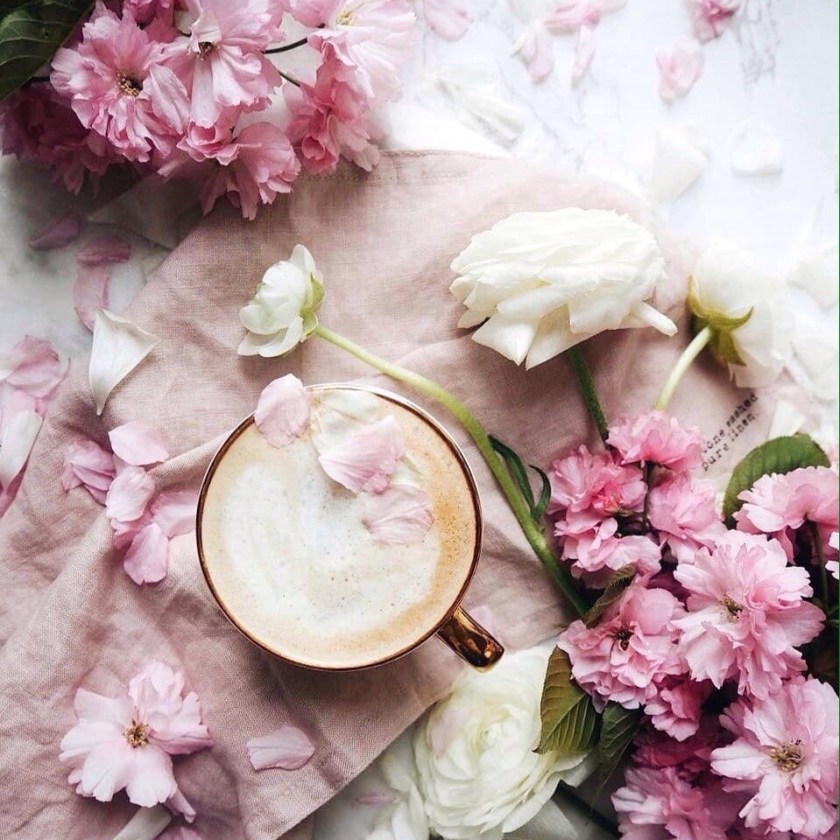
Though the caffè mocha or mocaccino ( or mochaccino, mochachino) is in fact a chocolate-flavored variant of a caffè latte; it can also mean a simple mix of hot choclate and coffee. Essentially caffè mocha is based on espresso and hot milk but with added chocolate flavoring and sweetener, typically in the form of cocoa powder and sugar. Many varieties, at times signature style of certain cafes’, use chocolate syrup, may contain dark or milk chocolate, with distinctive milk froth on top or with whipped cream, cinnamon or cocoa powder. For the more artistic coffee connoisseurs, marshmallows plain or coloured, nutmeg powder, bits of sprinkles with cream and the like may be added on top.

Interestingly, the word “mocha” didn’t have anything to do with chocolate. Originating in the 1770s’, the word “mocha” referred to a variety of coffee beans, named after the the port of Mocha (Al Mokha) in Yemeni (or Yemen), where the beans were shipped from. As their popularity increased in Europe, these beans became a part of the coffee culture. Today, these beans are commonly referred as Arabica beans, with “mocha” being the mix of coffee and chocolate.

“Coffee and chocolate—the inventor of mocha should be sainted.” Cherise Sinclair

Over the years, mocha variants like white caffè mocha (made with white chocolate), as well as more exotic sounding names like black and white mocha, marble mocha, tan mocha, tuxedo mocha or zebra; all varying as per as the amount of choclate (dark or milk) and coffee mixed in. Variant as an espresso shot (double) with either a combination of steamed milk and cocoa powder or chocolate milk is known as mochaccino. Another variant on the caffè mocha is to use a coffee base instead of espresso with the combination be coffee, steamed milk and the added chocolate ( akin to sip of coffee with a shot of hot choclate).

No matter the way it is made, cafe mocha is essentially a drink that can be made in the kitchens of all coffee lovers. For keen experimenters, nothing would be better than the National Mocha Day (September 29th) to indulge in the crazy but delightful combinations and enjoy the flavours of the two C’s, chocolate and coffee.