Posted in Daily, Food, Stories Around the World

Of Sponge Cake, Styles and Flavours

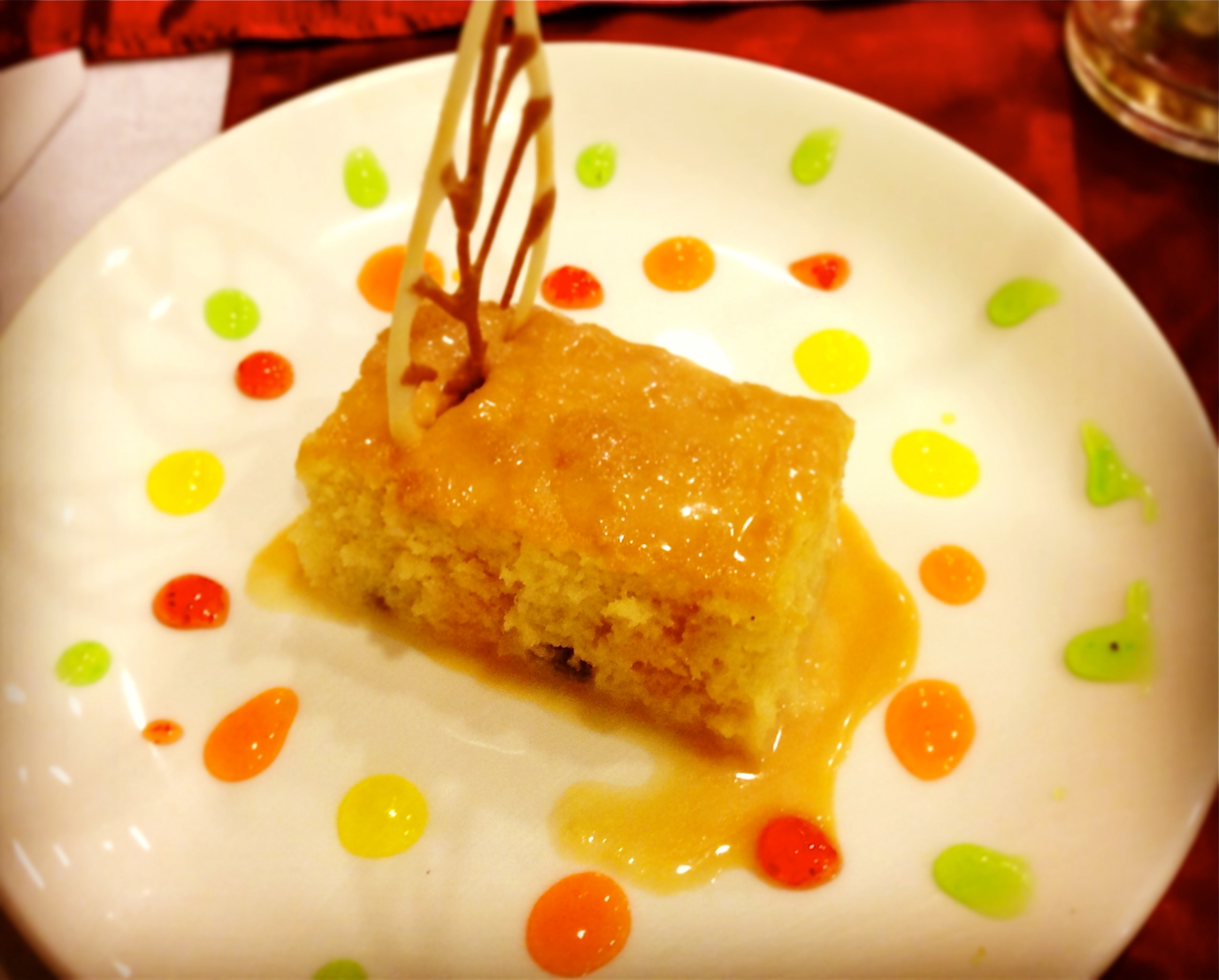
One of the very basic cakes, known to most kitchens and tea times; made of the very basic ingredients of flour, sugar, butter and eggs, mostly made as the non-yeasted cakes but leavened with beaten eggs are the “sponge cakes”.

With the roots tracing back to Spain of the early Renaissance period; the forerunner of sponge cake was initially believed to be have made more as a biscuit, flat and thin. The brainchild recipe was believed to be by the Italian pastry chef Giovan Battista Cabona (called Giobatta), at the court of Spain with his lord, the Genoese marquis Domenico Pallavicini, approximately around the middle of the 16th century. In fact the earliest original and attested sponge cake recipe was seen in English poet, Gervase Markham’s “The English Huswife, Containing the Inward and Outward Virtues Which Ought to Be in a Complete Woman (1615).” The thin crisp cookie like cake became it’s present form when bakers started using beaten eggs as the rising agent (mid 18th century). With baking powder (Victorian period, Alfred Bird, 1843), sponge cakes became higher and lighter.

The British sponge cake is produced using the batter method, with the layered Victorian sponge cake and the Madeira cake being popular in the high tea menu; these cakes made using the batter method are known as butter or pound cakes in US. The typical Victoria sponge filling consists of strawberry jam and whipped double cream sandwiched between two sponge cakes with the top of the cake layered with a dusting of icing sugar.

While sponge cakes are made using the batter method; cakes made using the trapped are known as “foam cakes”. Cakes made based on the technique of using trapped air to life the cake, partially or wholly, existed in most European patisseries. Like the Anglo-Jewish “plava”, pan di Spagna (Italy), génoise (Italian), pão-de-ló (Portugese) to mention a basic few.

The derivatives of the basic sponge cake idea include the American chiffon cake, the Mawa cake (Indianized British sponge cake from Mumbai) and the Latin American tres leches cake. The latter is a sponge cake soaked in three kinds of milk: evaporated milk, condensed milk, and heavy cream. From the simple sponge cake, before it has cooled, the creation of rolled cakes as in the Swiss rolls, trifles, Madeleine and ladyfingers are possible. Little wonder then, this basic cake has been a part of the kitchens over the centuries. With the National Sponge Cake (August 23rd) being recognized by foodimentarians today; experimenting and indulging in the basic cakes of the childhood days would make way for a change fr the usual.

“Kai slices the cake, his version of the banana cake I have always talked about. He has made a vanilla sponge cake, soaked in vanilla simple syrup, and layered with sliced fresh bananas and custard. There is a central layer of dark chocolate ganache with bits of crispy pecans and toffee, and the whole thing is covered in chocolate buttercream, with extravagant curls of chocolate and chocolate-dipped banana slices piled in the middle. I accept a thin slice, savoring the flavors, both of the cake, and of simple joy.” Stacey Ballis (Good Enough to Eat)

Posted in Daily, Food

Sweet, Flavoured and Iced

“After scalding the teapot, put into it one quart of boiling water and two teaspoonfuls green tea. If wanted for supper, do this at breakfast. At dinner time, strain, without stirring, through a tea strainer into a pitcher. Let it stand till tea time and pour into decanters, leaving the sediment in the bottom of the pitcher. Fill the goblets with ice, put two teaspoonfuls granulated sugar in each, and pour the tea over the ice and sugar. A squeeze of lemon will make this delicious and healthful, as it will correct the astringent tendency.” (Marion’s recipe for “Ice Tea” (1879))
– The oldest sweet tea recipe (ice tea) in print from the community cookbook “Housekeeping in Old Virginia”, by Marion Cabell Tyree (1879 publication)

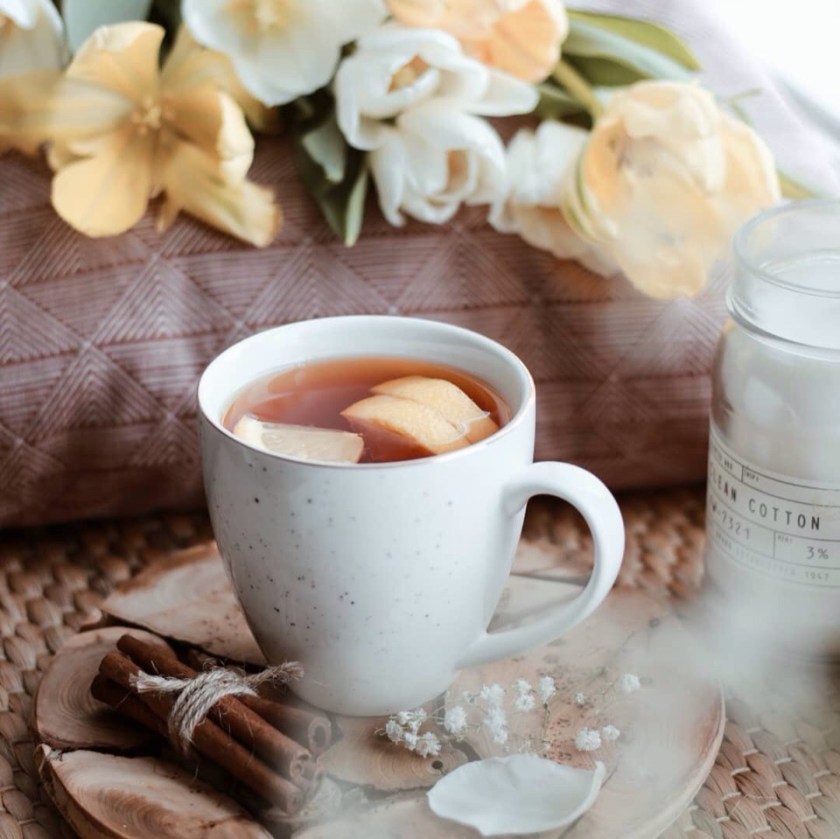
Although summer heat has given way to the rain, tea especially the iced and sweetened versions have almost a year round presence. Despite the rains, each week has it’s fair share of afternoon heat, best felt when one spends the muggy hours on foot. While iced or cool water has their benefits, there is the something about iced tea and sweet tea that prompts every cool drink enthusiast to indulge in them once a while.

With trade and colonial conquests, tea was introduced to Europe and then on to the Americas, where it had gained widespread popularity especially in the southern parts. By the 1900s, black tea became more accepted than green tea, especially when taken with ice. With scorching heat, the sweetened and iced version had more support than simply the iced version. Yet it was the World Fair (1904) that had made iced tea a popular summertime drink. This popularity had catapulted with the Prohibition ( 1920-1933) wherein beer, wine and alcohol was declared illegal then.

The technical difference between “sweet” and “iced tea” lies in the sugar. The former is taken as “sweetened and iced” whereas the latter i.e. iced tea, may be served unsweetened or black. Either way, learning to make sweet tea is a must for any afternoon social especially when the age of soft drinks may have been passed. With National Sweet Tea Day tomorrow (August 21st), it’s time to go recipe hunting and come with a flavoured and tacky sweet tea recipe.

Posted in Daily, Food, Stories Around the World

The “Meringue” Way

“To make white bisket bread.
Take a pound & a half of sugar, & an handfull of fine white flower, the whites of twelve eggs beaten verie finelie, and a little annisseed brused, temper all this together, till it be no thicker than pap, make coffins with paper, and put it into the oven, after the manchet is drawen.”
– Recipe for the “white biskit bread” in the book of recipes started (1604) by Lady Elinor Poole Fettiplace (c.1570 – c.1647) of Gloucestershire.
(Fettiplace, Eleanor Poole (1994). Hilary Spurling (ed.). Elinor Fettiplace’s Receipt Book. Translated by John Spurling. Bristol (U.K.): Stuart Press. Volume 1, page 23) noted by Muster (ref.)

Made from egg whites and sugar, whipped up to a finesse with a binding agent (salt, cornstarch or gelatin) and an occasional acidic ingredient (lemon, vinegar or cream of tartar) or flavorings of vanilla, coconut or almond; meringue had graced the dessert menu especially to highlight a special occasion or simply enjoy the pleasures of an exquisite delight. The origin till date, is a point of contention for food historians.

The name “meringue” had first appeared in cookbook by François Massialot (1692) (“XXVIII: Des Meringues & Macarons”. Nouvelle instruction pour les confitures, les liqueurs et les fruits (in French). Paris: Charles de Sercy. pp. 186–188). While the word “meringue” had first appeared in English in an English translation of Massialot’s book (1706); two considerably earlier seventeenth-century English manuscript books of recipes give instructions for confections known as “white bisket bread” and “pets” of what are today are recognizable as meringue. The other claim was that meringue was invented in the Swiss village of Meiringen and improved by an Italian chef named Gasparini between the end of the 17th century and the beginning of the 18th century.

“To make Pets
Take a pownd of Drye fine searsed [sifted] suger, & beat the whites very wel then take off froutgh [froth] & put your suger, bye litle & litle in to it — contineually stiring it & beating it with a spoone ore laydle, and when it is exceedingly well beaten, then have some pye plates ready buttred & wipe the buter of because the lesse buter it hath the beter, then drope them upon the plate & put in to every drope a carieway seede or coriander then let your oven be very temparate and watch them with a candle all the while & if they be right they will rise and looke very white, it is good at the first to set a scilet [skillet] of water, with them in to the oven,& when they be thowrow [thoroughly] drye then take them out, you must in the mixing of them put 12 graines of muske & 12 of Abergrisse [Ambergris] which you must bruse with suger before you stire it in to the egge & suger.”
– Recipe for a baked beaten-egg-white-and-sugar confection (1630) is given in a manuscript of collected recipes written, by Lady Rachel Fane (1612/13 – 1680) of Knole, Kent. (Barry, Michael (1995). Old English Recipes. Jarrod (archived at the Centre for Kentish Studies, Maidstone, Kent). p. 64f.)

The faster they are beaten, the better is the flavour. The key to the formation of a good meringue is the formation of stiff peaks by denaturing the protein of egg whites by pure mechanical shear force. Today these light, airy and sweet confections are made at home (more chewy and soft, and crisp exterior), though the commercial ones still thrive. Interestingly, meringues were traditionally shaped between two large spoons (still done so at the home kitchens) till Antonin Carême piped the “meringue through a pastry bag”.

Over the years, various techniques have been improvised to bring forth the French or basic meringue, Italian, Swiss and even the vegan meringue. From biscuits, desserts to embellishment, each meringue based recipe like the lemon meringue pie, baked Alaska, dacquoise, Esterházy torte to mention a few, all have a story and art of their own to tell. With meringue taking the form of whimsical shapes such as mushrooms; or piped into a crisp basket that is baked and filled with cake, fruit, or flowers are few of the many reasons why these delicacies are here to stay and transform the art and flavours of dessert.

Posted in Daily, Food

Of Panini, Origin and Evolution

Meaning small bread or bread rolls as derived from the Italian panini [paˈniːni] or panino; these sandwiches are made with Italian bread (such as ciabatta and michetta), usually served by grilling or toasting. While the modern panini may have baguette as the bread; the deli ingredients of the horizontally cut bread can be filled with one’s own choice. From salami, cheese, ham, vegetables sliced or pickled; the choices are aplenty.

“[Panini] are said to have originated in Lombardy, Italy, in response to the demand among Milanese office workers for a quick lunch without sacrifice in flavor and quality. In both Italy and the United States, panini are eaten for lunch and as snacks and appetizers. In Italy, sandwich shops traditionally wrap the bottom of the panino in a crisp white paper napkin, providing a practical solution to drips while enhancing aesthetics. Quality Italian bread is an absolute must for a killer panini, and most sandwich chefs will opt for a relatively thin artisan bread like grooved focaccia or ciabatta, slicing it in half horizontally. Panini are always grilled, so most restaurants and cafes have invested in professional grooved sandwich presses that flatten and heat the sandwich while creating a crunch, buttery outer crust.” -American Sandwich: Great Eats from all 50 States, Becky Mercuri [Gibbs Smith:Salt Lake City UT] 2004 (p. 81)

The earliest precursor of panini was believed to be in the 16th century Italian cookbook; food historians have traced these sandwiches to the trendy Milanese bars, called paninoteche (1960s). As their popularity had crossed the Atlantic in the mid-1970s, the first American reference to panini dates to 1956. With each city having their own distinctive version of panini, variation were developed in plenty. During the 1980s, “paninaro” had evolved which was the youngsters’ culture typical of teenagers to enjoy a meet and eat place like the sandwich bars, such as Milan’s Al Panino. These had later evolved to the initial style of fast food restaurants opened in Italy.

Over time, panini had evolved to more flavours and texture with the bread changing type along with the mix. As their popularity spread across the seas to the Asian continent and the Orient, the portability, easy preparatory, individual taste and choice have contributed to their fair share in the menus across the globe. Little wonder, why then August had been dedicated as the month of the panini  by experimental foodimentarians, for every kitchen of theirs would have made or had the “panini” at some point of time.

Posted in Daily, Life, Personal Musings, poetry

Reality of the Frequent “Cannot”

“Opportunities will come and go, but if you do nothing about them, so will you.” Richie Norton

One of the most frequently encountered on assigning any project at the high school age group is the word “can’t”. Those “cannot”s revolve around the excuses of lack of time, to increased work load, less fun time, more effort required and so on. The resonance of “cannot”s increases almost in proportional to the effort or inconvenience caused. While in school life, “the cannot”s are heard maximum when asked to help in household chores, baby sit, accompany on hospital visits or grocery shopping; adult life “cannot”s echo almost a similar vein albeit largely increasing the responsibility level.

“Whenever you are asked if you can do a job, tell ’em, ‘Certainly I can!’ Then get busy and find out how to do it.” Theodore Roosevelt

Little does one realize the potential havoc caused by that word or emotion “can’t”. From an opportunity to learn or do something new, grow in responsibility, bond together, chance on new avenue of opportunities and so on; are all lost at that single word “can’t”. While can’t may be really necessary at certain points in life; frequently indulging them will result in more loss than gain in the long run.

“Never say that you can’t do something, or that something seems impossible, or that something can’t be done, no matter how discouraging or harrowing it may be; human beings are limited only by what we allow ourselves to be limited by: our own minds. We are each the masters of our own reality; when we become self-aware to this: absolutely anything in the world is possible. Master yourself, and become king of the world around you. Let no odds, chastisement, exile, doubt, fear, or ANY mental virii prevent you from accomplishing your dreams. Never be a victim of life; be it’s conqueror.” Mike Norton

Can’t
Can’t is the worst word that’s written or spoken;
Doing more harm here than slander and lies;
On it is many a strong spirit broken,
And with it many a good purpose dies.
It springs from the lips of the thoughtless each morning
And robs us of courage we need through the day:
It rings in our ears like a timely sent warning
And laughs when we falter and fall by the way.

Can’t is the father of feeble endeavour,
The parent of terror and half hearted work;
It weakens the efforts of artisans clever,
And makes of the toiler an indolent shirk.
It poisons the soul of the man with a vision,
It stifles in infancy many a plan;
It greets honest toiling with open derision
And mocks at the hopes and the dreams of a man.

Can’t is a word none should speak without blushing;
To utter it should be a symbol of shame;
Ambition and courage it daily is crushing;
It blights a man’s purpose and shortens his aim.
Despise it with all of your hatred of error;
Refuse it the lodgement it seeks in your brain;
Arm against it as a creature of terror,
And all that you dream of you someday shall gain.

Can’t is the word that is for to ambition,
An enemy ambushed to shatter your will;
Its prey is forever the man with a mission
And bows but to courage and patience and skill.
Hate it, with hatred that’s deep and undying,
For once it is welcomed ’twill break any man;
Whatever the goal you are seeking, keep trying
and answer this demon by saying: ‘I can.’
-Edgar A. Guest

Posted in Daily, Food

Flavoured, Creamy and Soft

“My idea of a perfect day is a frozen custard at Shake Shack and a walk in the park.” Nora Ephron, I Remember Nothing: and Other Reflections

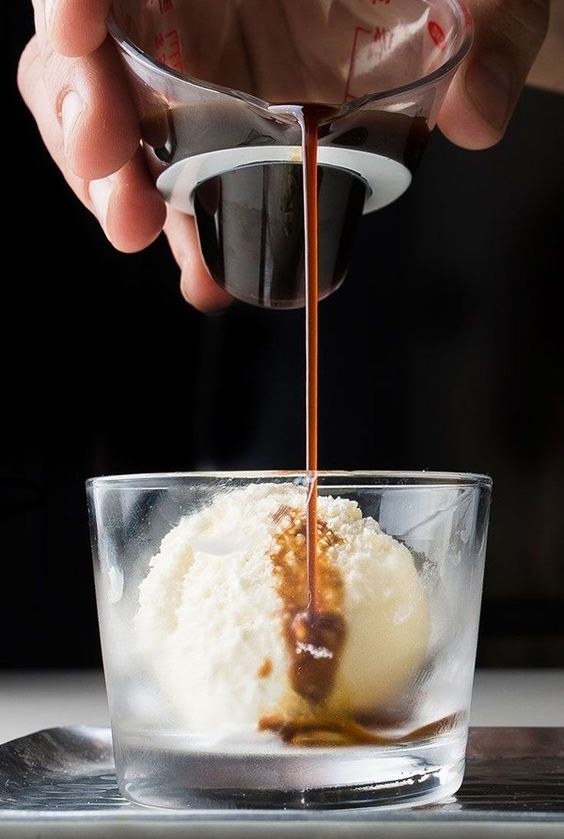
Similar to ice cream, but denser and containing higher percentage of egg in addition to cream and sugar; frozen custard has been of late in rage, especially when one wants a break from the regular cold dessert of ice-cream.

Since the 1690s, experimentally egg yolks were tried for the ice cream recipe, the percentage was very low and the popularity stayed strong with ice-cream as such. Yet when vendor Archie C. Kohr had increased the concentration of egg yolk to the regular ice cream; not only was the texture improved, it became more denser and didn’t melt quickly. Thus, “frozen custard” was invented in Coney Island (1919). Later this frozen custard was introduced at the Chicago World’s Fair. From then on, it had gained the hearts of dessert lovers. As this silky product is extruded through the huge metallic contraptions (sometimes known as “iron lungs”), into the bucket and then scooped into cups or wafer cones; the smooth, cream coloured texture is rich but not cloying on the taste buds.

As per the U.S. FDA, the distinction between ice-cream and frozen custard is very fine with the latter to consist of at least 10 percent milk fat and 1.4 percent egg yolk solids. The true or original frozen custard is a very dense dessert. Air is not pumped into the mix, nor is it added as an “ingredient” but gets into the frozen state by the agitation of liquid similar to whisking a meringue. The high percentage of butterfat and egg yolk gives frozen custard a thick, creamy texture and a smoother consistency than ice cream.

For the experimenters, there is always homemade frozen custard to be made with the added fun of an ice-cream social. Also the store bought or a good deli frozen custard can spice up the regular Sunday brunch desserts as add-ons to cake, regular shakes or prepped up with nuts, crushed almonds or m&m’s. All said, with foodimentarians gearing up to celebrate the National Frozen Custard Day(August 8th), it would be a good time to try out this cold dessert.

Posted in Daily, Food, Stories Around the World

Chip it In, Bake It

Whitman, Massachusetts, 1938

“We had been serving a thin butterscotch nut cookie with ice cream. Everybody seemed to love it, but I was trying to give them something different. So I came up with Toll House cookie. Add up chopped up bits from from a Nestlé semi-sweet chocolate bar into a cookie. The original recipe is called “Toll House Chocolate Crunch Cookies.”
– American Chef Ruth Graves Wakefield, Toll House Inn
(Wakefield, Ruth Graves (1942). Ruth Wakefield’s Toll House Tried and True Recipes. M. Barrows & Company, Inc.)

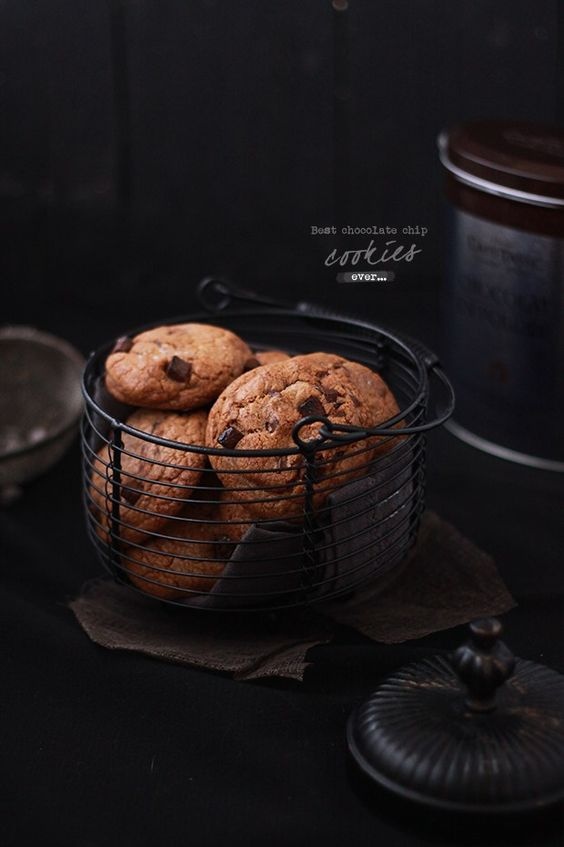
One of the famous drop cookies, “the chocolate chip cookie” had its’ origins in the early 1900s; wherein chocolate chips or choclate morsels were added to the regular cookie dough as the distinguishing ingredient. With a dough composed of butter, both brown and white sugar, semi-sweet chocolate chips and vanilla; the traditional recipe had evolved. Originally invented by the American chef Ruth Graves Wakefield and chef Sue Brides (1938) when the former owned the Toll House Inn (Whitman, Massachusetts); a popular restaurant that featured home cooking. Wakefield credited Brides with helping her make the famous chocolate chip cookie.

Over the years, variations with different varieties of chocolate, change of ingredients like nuts, oatmeal, raisins and the like paved way. Variations on the original recipe may add other types of chocolate, vegan substitutes as well as additional ingredients such as nuts or oatmeal. The ‘double’ or ‘triple’ chocolate chip cookies are so called when dough flavored with chocolate or cocoa powder are used before chocolate chips are mixed in. These variations of the recipe are often referred to as , depending on the combination of dough and chocolate types.

“If you can’t change the world with chocolate chip cookies, how can you change the world?” Pat Murphy

As the popularity grew, especially during WWII, soldiers from Massachusetts who were stationed overseas shared the cookies they received in care packages from back home with soldiers from other parts of the United States. Soon hundreds of soldiers asked their families to send them some Toll House cookies. Thus began the craze for the chocolate chip cookie with Wakefield receiving letters around the world requesting her recipe.

In proportion to the increased popularity of the choclate chip cookie, the sales of Nestlé’s semi-sweet chocolate used rose. Andrew Nestlé offered Ruth a deal to buy the rights to her recipe, as well as the rights to use her and the Toll House name when advertising his acquisition. The business proposal was accepted by Ruth for one whole dollar and a lifetime supply of Nestlé chocolate. Nestlé quickly launched a new marketing campaign that advertised the chocolate chips primarily as main ingredients for cookies, engraving the recipe for the Toll House Cookie on the package print.

“ One of the best things in life- warm chocolate chip cookies.” Anonymous

In an interview (2017), Sue Brides’ daughter, Peg shared the original recipe that was passed down to her.  The original Toll House cookie recipe, according to Peg:

1 1/2 cups of shortening
1 1/8 cups of sugar
1 1/8 cups of brown sugar
3 eggs
1 1/2 teaspoon of salt
3 1/8 cups of flour (Peg prefers King Arthur all purpose)
1 1/2 teaspoon of hot water
1 1/2 teaspoon of baking soda
1 1/2 teaspoon of vanilla
Chocolate chips (and walnuts)
Bake at 350 degrees for 12-13 minutes
[The Tried and True Recipes cook book specifies “2 bars (7 oz.) Nestlé’s yellow label chocolate, semi-sweet, which has been cut in pieces the size of a pea.”]
(Source:Stephanos, Maria (2017-06-21). “Secret’s out! Here’s the ‘real recipe’ for Toll House chocolate chip cookies”)

With Chocolate Chip Cookie Day being celebrated by foodimentarians tomorrow (August 4th), making similar or own variations of this delectable treat would be a lovely weekend surprise and fun event.