Posted in Daily, Food, Stories Around the World

Of Cheesecake, Origins, Style and Evolution

Pound the cheese until smooth and pasty. Mix the pounded cheese in a brass pan with honey and spring wheat flour. Heat the cheese cake “in one mass”, allow to cool and serve. ( Records from the oldest known Greek recipe, Athenaeus 230 A.D.)

One of the well loved desserts of “cheese cake” has its’ origins as early as the Greek civilizations of 6th century B.C. . Although it was believed that the first cheese cake may have been created on the Greek island of Samos, this mayn’t be exact. In fact, cheese and related products may have been there since the domestication of animals and use of milk by the primitive man. Th earliest evidence of cheese cake, was as per Greek records ( 5th century records of Greek physician Aegimus, Olympic records of 776 B.C. or Athenaeus writings of 230 A.D.) during sports and weddings (as the main wedding cake). Then the basic ingredients of flour, cheese, honey and wheat were taken in the right amounts and baked.

With the conquering of Greece by the Romans, the “cheesecake recipe” was modified to include crushed cheese and eggs. Either baked under a hot brick and served warm, or put into the pastry as a filling; the Roman cheesecake known as “libuma” was meant for special occasions. Cato the Elder’s De Agri Cultura accounts the earliest cheesecake recipes, which mentions three types; libum, savillum and placenta. The latter is almost like the modern cheesecake recipe with a crust that is separately prepared and baked.

“A dessert without cheese is like a beautiful woman with only one eye.” Anthelme Brillat

With the extension of Roman empire, later fall and rise of other civilization; cuisines and recipes were exchanged, experimented and evolved throughout Europe. From Great Britain to Eastern Europe, each region had their unique differences of ingredients, texture, method and presentation of cheesecake. The twelfth century had seen, a cheesecake recipe in the English cookbook, Forme of Curry (1390). Described as a flour based sweet food, various accounts also state cheesecake recipes as “cheese cut into very small pieces, soaked in milk for three hours; the mixture strained and eggs, butter and sugar being added (accounts of chef in employ of Henry VIII).”

Although the name “cheesecake” was used since the 15th century; the modern form of “cheesecake” had evolved around the 18th century. Then yeast was substituted with beaten eggs; thereby removing the overpowering yeast flavour and make it more “dessert-ish” and sweet. With immigration and migration to Americas, the recipes were further modified. The modern American cream cheese was developed in 1872 as an accidental discovery by William Lawrence (Chester, New York) as he tried to recreate the soft, French cheese Neufchâtel. Although he had made an “unripened cheese”, heavier and creamier than the regular; similar creations were made independently by other dairymen.

“New York means many different things to me. It certainly means cheesecake, more species of cheesecake than I ever knew existed: rum, orange, hazelnut, chocolate marble, Italian, Boston, and of course, New York.” David Frost

On a technical point, cheesecake today is more as a torte (based on number of eggs), tart or flan than being a “cake” as they have a separate crust, soft filling and the absence of flour in most recipes. In fact, modern cheesecake comes as two different types; of the baked cheesecake or cheesecakes made with uncooked cream-cheese on a crumbled-biscuit base.

With cheesecakes being broadly categorized as two basic types of baked or unbaked, each region or continent have their own versions or varieties. Like the most popular variety of South African made with whipped cream, cream cheese, gelatin filling, buttered digestive biscuit crust with Amarula liqueur, if not baked or the Asian style cheesecake of cornstarch and eggs (Japan) or cottage cheese, sugar and nuts ( Indian chhena poda, Odishan recipe) or the common unbaked Australian cheesecakes; one can modify the recipe for more fruit based or sweet (chocolate, vanilla or caramel) based flavouring.

“My favourite pudding is a toss-up between cheesecake – proper, New York cheesecake – and apple crumble and custard. Custard is very important, or dark chocolate mousse. Tea: probably Earl Grey, splash of milk.” Tom Hiddleston

For a more global cheesecake style, one can experiment and base recipes as per the French style (Neufchâtel cheese, gelatin), Italian-style (ricotta or mascarpone cheese, sugar, vanilla extract, small bits of candied fruit and sometimes barley flakes), Polish sernik, Russina vatrushka or like in the United Kingdom and Ireland.

The latter make their cheesecake typically with a base of crushed, buttered biscuits and often topped with a fruit compote. The usual filling is a mixture of cream cheese, sugar, cream and gelatin at times. Popular non fruit variations are banoffee, coffee, tea, chocolate, Irish cream, white chocolate, marshmallow flavors and even smoked salmon (Scotland). The New York style (heavy cream or sour cream based) and Chicago style (baked cream-cheese, fluffy with a shortbread based crust) cheesecakes are few of the popular American varieties.

The versatility, wide variety and variants, ease as well as simple ingredients of cheesecake are what makes them popular for quick occasions, simple desserts or more elaborate functions. To celebrate the National Cheesecake Day (July 30th), it would be fun to start a “cheesecake” tradition or recipe for family and friends. After all, cheese refines with age, in taste, flavours and texture. Intermixing recipes for new palatable combinations would be an interesting experimentation for the homemaker, artisan as well as the “chef’s eye”.

Posted in Daily, Food, Stories Around the World

Add “Milk” to “Chocolate”

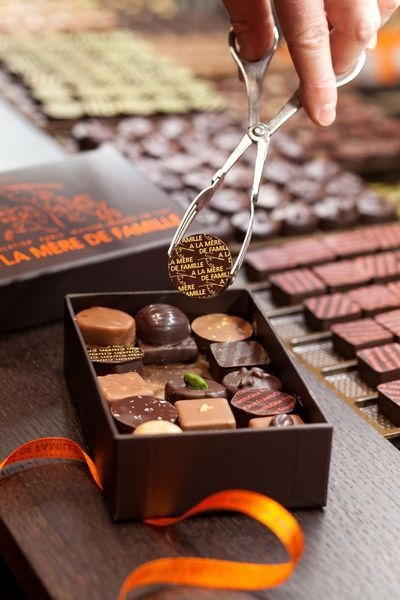
Although this sweet, brown food preparation of roasted and ground cacao seeds have had their earliest evidence of use traced to the Olmecs of Mexico (1900 BC); adding milk to this creation has been a much later development, believed to be around the 19th century.

“Anything is good if it’s made of chocolate.” Jo Brand

Around the mid-17th century, milk was sometimes used as an addition to chocolate beverages. With drinking choclate gaining momentum and the Cadbury brothers (1820) had widely marketed it. In order to tackle the flood of chocolate that was entering the UK mainly from Switzerland and France, Fry and Son (1847) started to make tablets of roasted and ground beans, mixed with sugar which were sold as eating chocolate. With expansion of the new “eating chocolate market”, the Swiss chocolatier Daniel Peter (1876) working in conjunction with Nestlé, (who had a creamery was next door to his factory), formulated the first commercial milk chocolate recipe. Only a minuscule amount of moisture was used “condensed” milk. The final major manufacturing technique to produce the “modern milk” chocolate was developed three years later by Lindt (1879). He had discovered that when choclate was repeatedly rolled from side to side (in a stone vessel) a much smooth,er textured product could be made. This process, known as “conching” can go on for as long as five days. With the invention of the “conching machine”, the chocolate industry had grown further. Milk chocolate today has 20% cocoa solids as per the British regulations, while for the rest of the European Union, the minimum is 25%. In the US, concentration of chocolate liquor of ten percent is required.

Though proof of later historical details are present, there still exists some confusion as to the first use of milk in chocolate. As legend goes, it was believed that Sir Hans Sloane, founder of the British Museum and physician to Queen Anne and George II, had the brainwave of adding milk to drinking chocolate (1672). While on his travels to Jamaica, Sir Hans had recognized the therapeutic qualities of chocolate. On seeing malnourished, sickly babies being revived after being given a mixture of cocoa, spices and water; it was thought that he had introduced milk with cocoa, recognizing that milk had complimentary nutritional qualities. This recipe was regarded as purely for medicinal purposes.

“There are four basic food groups: plain chocolate, milk chocolate, dark chocolate, and white chocolate.” Jill Shalvis

While chocolate is for something special, the making of “milk chocolate” is a labour of love, with three main stages. First is to blend milk ingredients and sugar and gently mix them with chocolate liquor and cocoa powder. Secondly is to dry the mixture where it becomes a milk chocolate crumbly powder. The final stage is where milk chocolate gets its smooth and velvety taste and texture is by ‘conching’, which involves carefully mixing all the ingredients together. The traditional long conching process guarantees a rich, subtle flavour development. While this process starts at a low temperature; as the mixing starts, the temperature is raised very slowly to help it dry and develop new delicate flavours from the heat. Delicate care is taken to gently mix for long enough to full develop the chocolate flavours, to get the most silky way possible.

Besides being a ready indulgence for any time, milk chocolate when melted can add the exotic flavours of sweet and bitter, to the regular dessert, be it from ice cream and coffee, marshmallows, cupcakes, mousse, wafer biscuits or even a chocolate pizza; the list is endless. Little wonder then, that National Milk Chocolate Day (July 28th) is being celebrated by connoisseurs of chocolate, chocolatiers as well as chocolate lovers, both young and the old worldwide. Just like sugar, salt and spice, a little bit of “milk choclate” goes a long way.

Posted in Daily, Food, Stories Around the World

Of Pickles, Beyond the “Pickled Peppers”

Peter Piper picked a peck of pickled peppers,
A peck of pickled peppers Peter Piper picked;
If Peter Piper picked a peck of pickled peppers,
Where’s the peck of pickled peppers Peter Piper picked?
-“Peter Piper” Lyrics (Roud Folk Song Index number 1945)

With a preschool child in the family, the tunes of nursery rhymes runs through out most of the time. Consequently the well-known alliteration tongue-twister English rhyme was a challenge for both the child and the parents, especially the latter.

Interestingly although John Harris (1756-1846) had published the earliest version of this tongue twister in Peter Piper’s Practical Principles of Plain and Perfect Pronunciation (London,1813); this rhyme was apparently known at least a generation earlier. The subject of the rhyme as asserted by few authors was Pierre Poivre, an eighteenth-century French horticulturalist and government administrator of Mauritius, who once investigated the Seychelles’ potential for spice cultivation.

Following the train of words and thoughts, “pickles” was the food-based research over the weekend. The food preparation technique of “pickling” is the process of preserving or extending the lifespan of food by either anaerobic fermentation in brine or immersion in vinegar or vinaigrette. Typically changing the texture, taste and flavour, there are a wide variety of vegetables, fruits, meats, fish (and even eggs) which can be pickled and varying methods to chose from. Preserving perishable foods for months, the pH of pickles are maintained at 4.6 or less, which kills most bacteria. Additional antimicrobial herbs and spices like mustard seeds, garlic, cinnamon or cloves, may be added. The flavours of the final product of “pickle” depends mainly on the acidity or salinity of the solution, the temperature of fermentation, and the exclusion of oxygen. Although used in moderation for the fear of acidity and spiciness linked to carcinogenic properties, pickles have been a part of the food culture from the beginning.

As far as origins are traced, “pickles” or similar forms had made their appearance as early as 2400 BC with archaeological evidence from the area of Mohenjo Daro civilization (Tigris Valley) of northwest Indian Subcontinent. From being Cleopatra’s prized beauty secrets or in popular writings, “pickles” were the earliest foods considered as a necessity for long sea voyages, road travels, for soldiers or simply to preserve food for the harsh seasons or periods of time.

Though “pickle” had early roots, from an etymology point, this late Middle English word (c.1400) came probably from the Middle Dutch of pekel or East Frisian päkel or German pökel, all meaning “brine”. Going further beyond, the word is of uncertain origin or original meaning.

Pickles aren’t limited to being salty or spicy alone, they can be sweet, sour, hot or a combination of them. Each area has their own method of pickling, most handed down from one generation to the next, as a family tradition. South Asian pickles (popularly known as achar or achaar in most areas, term of ?Persian origins) are varied in their making, include seasonal vegetables, fruits and meats, generally mixed with salt, spices and vegetable oils; set to mature in a moistureless medium. Moving on to Southeast Asia (Singapore, Indonesian and Malaysian) pickles, or “acar” were typically made of cucumber, carrot, bird’s eye chilies, shallots, papaya and pineapple; seasoned with vinegar, sugar and salt. Further east, Koreans have kimchi while the Japanese pickled plums and daikon.

Whereas in the Middle East pickles from peppers, olives to lemons; while in mst of Western Asia pickles (called torshi in Persian, tursu in Turkish and mekhallel in Arabic) are commonly made from turnips, peppers, carrots, green olives, cucumbers, cabbage, green tomatoes, lemons and cauliflower. Eastern Europeans introduced various forms of lacto-fermented cabbage, known as sauerkraut. In Russia, the leftover brine (called rassol in Russian) is used for cooking traditional soups, like shchi, rassolnik and solyanka. When the English and the Europeans had arrived in the Americas; they brought their method for creating sweet pickles with vinegar, sugar and spiced syrup. Pickled cucumbers (most often referred to simply as “pickles”), olives and sauerkraut are most commonly seen in the United States and Canada.

Combining all these methods, “pickling” is indeed an art, with each area, region, country or community having their own special technique of making them. Little wonder that although the National Pickle Day is celebrated by foodimentarians ( primarily in US) on November 14th, the National Pickle Month (July) is indeed to explore and recreate these “global” pickles dishes. With rain on and off, there’s nothing more creative than “recreating historical foods” diverse and variant in their own style.\

Posted in Daily, Food, Stories Around the World

From Sundae to “Cones”

With the Ice cream month of July, coming to a near end; indulging in the various combinations and food innovations with ice cream being a primary ingredient is a must. Although summer was never an excuse to indulge in the delights of ice cream, the latter is a good enough reason to beat the intermittent summer heat as well as the monsoon blues.

“Always serve too much hot fudge sauce on hot fudge sundaes. It makes people overjoyed, and puts them in your debt.” Judith Olney

Going creative to serve and enjoy ice cream was what lead to the origin of the ice cream sundae as well as the ice cream cone. Regarding the legends leading to the creation of the ice cream sundae, the frequent underlining factor was that, it was a variation of the popular ice cream soda. Made towards the 20th century, one factor that played a role in it’s creation was the banning of soda on Sundays in Illionis. Quite soon, it’s popularity took over with ice cream sundae becoming the weekend semi-official confection. As accounted by the Ice Cream Trade Journal (1909) along with plain or French sundae, other exotic varieties were listed like Robin Hood sundae, Cocoa Caramel sundae, Black Hawk sundae, Angel Cake sundae, Cinnamon Peak sundae, Opera sundae, Fleur D’Orange sundae, Tally-Ho Sundae, Bismarck and George Washington sundaes, to list a few.

Besides the ice cream, partially what lures some, is the fascinating cone that comes with it. The soft crunchiness adds to the flavours of the ice cream. The ice cream cone, poke (Ireland and Scotland) or cornet is usually made of a wafer similar in texture to a waffle, as a dry pastry which enables ice cream to be had held in the hand. From wafer (or cake) cones, waffle cones to sugar cones, there are different types of ice cream cone; styled also as pretzel cones, chocolate-coated cones or even double wafer cones. From the regular conical, pointed base to flat shaped base, cones can be shaped as the latter to stay upright by self.

As early as 1825, edible cones were mentioned in the French cookbooks with Archambault’s description of rolling a cone from little waffles. Towards the 19th century, English cook A.B.Marshall’s (1888) recipe for “Cornet with Cream” said that “the cornets were made with almonds and baked in the oven, not pressed between irons”. While edible cones were patented independently by two Italian entrepreneurs(1902-03), the fashion of the ice cream cone had gained momentum at the St. Louis World’s Fair (1904). There Arnold Fornachou, a concessionaire who was running an ice cream booth had ran short on paper cups. Buying waffles from Ernest Hamwi, a waffle vendor nearby; Fornachou rolled the waffles into cones to hold the ice cream.

Although this was the most widely circulated story, much dispute is still laid as to where ice-cream cones became mainstream. Credit for the ice cream cone was also claimed by Abe Doumar and the Doumar family can also claim credit for the ice cream cone. Likewise Doumar had also created rolled up the waffles with a scoop of ice cream on top. He began by selling the cones at the St. Louis Exposition which became an instant success. In fact he had set up the Doumar’s Drive In, Norfolk, Virginia (1907). Even today it operates at the same location established initially, making it a Hampton Roads landmark.

“I doubt whether the world holds for anyone a more soul-stirring surprise than the first adventure with ice cream.” Heywood Broun

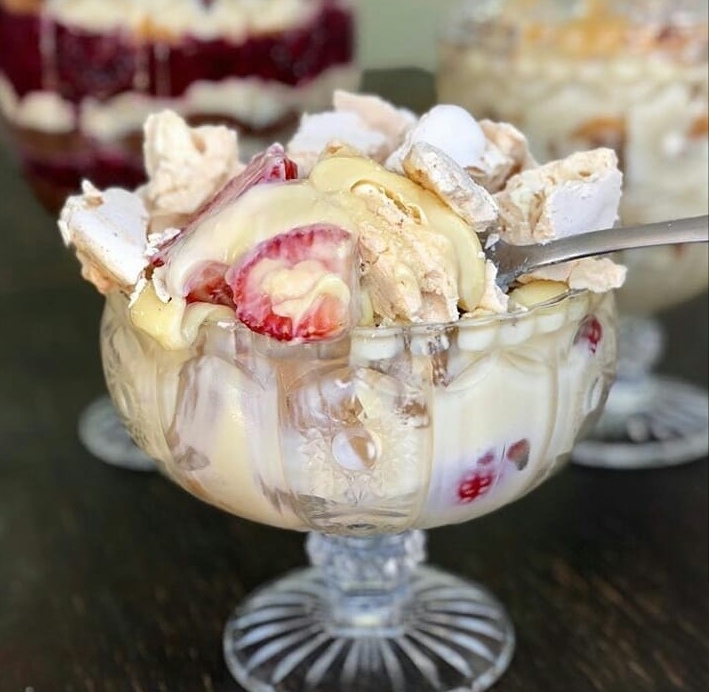
To complete the ice cream experience; mixing the different styles of ice cream soda, sundae, toppings, flavours served in waffles or cones would add to the fun as well as palatable experimentation, bringing delight not just to the taste cravings or as comfort food, but also as an artistic rendering to the eye. After all ice cream lifts not just the taste cravings but the mood as a whole experience, which is what a part of life is about.

Posted in Daily, Food, Stories Around the World

Of Ice-cream, Soda and Evolution…

“Summer would not be summer without Ice-cream. Ice-cream is the favorite currency of love.” Puck

For my kids, summer translates into picnics, beaches, barbecues and of course, never to forget it, “the ice-cream“. Being in the National Ice cream Month (July) with the end of the week marking the National Ice cream Day (third Sunday of July), the truce between the “young ones” and their “veggies” was an ice cream a day for dessert. As a part of improvisation of the existing recipes and combinations, delving into the evolution and progress of ice cream makes for an interesting read.

Although the origins of this “summer dessert” have been rough traced back to the 4th century B.C.; the modern day versions with the wide variety of flavours as well as presentations were made feasible only by the 18th century. Early records of it’s popularity include the Roman emperor Nero (37-68 CE) who ordered ice to be brought from the mountains and combined with fruit toppings and King Tang (618-97 CE) of Shang, China who had a method of creating ice and milk concoctions. While “Ice cream” may have been likely brought to Europe from China. As legends go, when Italian duchess Catherine de’ Medici married the Duke of Orléans (1533), the French court had few Italian chefs who had recipes for flavored ices or sorbets. A century later, Charles I of England was impressed by the “frozen snow” that he offered his own ice cream maker a lifetime pension in return for keeping the formula a secret, so that ice cream could be a royal prerogative. While there is no historical evidence to support these legends, the recipes for ices, sherbets and milk ices had evolved gradually over time and were usually served in the fashionable royal courts or in the upper class society.

“Without ice cream, there would be darkness and chaos.” Don Kardong

As recipes for flavoured ices began to be published for the household cooks and ice storing became more feasible, flavoured ices were enjoyed by the middle class society. Towards the early 19th century, Augustus Jackson had created several popular ice cream flavours, packed them into tin cans and distributed them to the ice cream parlours of Philadelphia. Credited with inventing an improved method for manufacturing of ice cream, he is technically considered as the modern day father of ice cream.

Going years ahead, the Franklin’s Institute semi-centennial celebration (1874) saw the creation of the ice cream float by Robert McCay Green, Pennsylvania. The traditional account was on that particularly hot day, Mr. Green ran out of ice for the flavored drinks he was selling and used vanilla ice cream from a neighboring vendor, thereby inventing a new drink. As published by his own account in the Soda Fountain magazine (1910), states that after some experimenting (after effect of competition with nearby vendors), he had decided to combine ice cream and soda water. During the celebration, he sold vanilla ice cream with soda water and a choice of 16 flavored syrups. Although there are at least three other claimants for the invention of ice cream float, namely Sanders, Mohr and Guy; wherein the latter is said to have absentmindedly mixed ice cream and soda (1872), to his customer’s delight. However may the legends go, the combination of ice cream and soda have stayed on.

“Sometimes life is just what it is, and the best you can hope for is ice cream.”  Abbi Waxman

From being in a boxed container to served with soda, sprinkles, toppings and more, ice cream has evolved from being a simple street or roadside treat to an artistic rendering for functions. Ice cream with its’ many variants like ice lolly, Malyasian Ais kacang, Turkish dondurma, gelato, kulfi and the like; are all here to stay and evolve, changing the “sweet trends” of dessert over time.


Posted in Daily, Food, Stories Around the World

OF Fries, Origin and Evolution

Thin or thick, served hot, soft or crispy and had as snack food or in accompaniment to main course of lunch or dinner; french fries or just fries (known as chips or finger fries) are batonnet or allumette-cut deep fried potatoes. An all time favourite especially for children, foodies, surprise occasions; they can be had salted or plain, or with ketchup, vinegar, mayonnaise, local specialty sauces and dips, or even be topped more heavily as chilli cheese fries, poutine and the like.

“Even if I’m eating healthy, I let myself indulge with french fries. That’s my favorite thing. You only live once!” Kate Mara

Like all the best things in the “food dictionary”, the origin or creator of these “golden strips” aren’t exactly known. Although the general consensus is that the “French Fry” is more of “Belgian origin than French.”

Potatoes were first introduced to Europe through the Spanish. On the Spanish exploration of Americas, they had encountered potatoes among the native food supply. As accounts of Jimenez de Quesada and the Spanish forces ( 1537) detail the discovery of potatoes among the native villages of Colombia, where they were called as “truffles” initially. When potatoes were brought back to Spain and introduced to Italy too. Then these potatoes were quite small, bitter and didn’t grow well in both places. Over time, larger and less bitter varieties were cultivated and gradually accepted elsewhere in Europe. Spain then controlled much of the modern day Belgium. While historical accounts indicate that Belgians were frying up ( or sauteing) thin strips of potatoes ( 17th to 18th century) in the Meuse Valley between Dinat and Liege. This idea could possibly arise from the original Belgian cuisine which usually fried small fish as part of their staple meals. With shortage of fish in winter, potatoes were an alternative.

“I try to have no absolute nos. I love french fries, I like a good burger, and I like pie. And that’s okay.” Michelle Obama

To explain the “French” of the French fries would be possible when two historical events are taken into account. What once the French had considered as hog feed or cause of various diseases, the change in their opinion due to potatoes was largely credited to the French Army medical officer Antoine-Augustine Parmentier, who was a captive of the Seven Years War and had survived on potatoes as a part of his prison rations. On his return back to France, he had aggressively campaigned as well as cultivated potatoes, promoting it’s benefits to the upper classes as well.

Also during the Franco-Austrian War, which had taken place near around the modern day Belgium, the possibility that French soldiers were introduced to the potato fries by the Belgians exists. Although gradually potato was accepted and cultivated in France; the famine of 1785 made potatoes popular in France. Slowly newer recipes and modes of cooking these spuds were tried. Once discovered or invented or improvised (from Belgian fries?), these fries became popular, especially in Paris, where they were known as “frites” and sold by push-cart vendors on the streets.

“Show me a person who doesn’t like french fries and we’ll swap lies.” Joan Lunden

Whether from Belgium or France, once these “frites” became popular, through colonization, migration as well as wars; they had become a much loved food on the menus across Europe, Britain and Americas. With the spread of fast food chains, these “frites” began to be introduced to the world largely as “French Fries”.

“If I could eat French fries every day of my life, I would.” Adrienne C. Moore

The modern day french fries, though best loved when salted, spiced and fried in oil; for more healthier options can be baked (or even grilled) with seasonings, toppings and all. From the various types of cut fries (crinkle-cut or wavy, curly, shoestring, steak, tornado, waffle) to different preparations like french fry sandwiches, chilli cheese fries, chorrillana to mention a few as well as alternatives like sweet potatoes or potato wedges; one can go creative with these frites. To celebrate the National French Fry day ( July 13th) it would be fun to go on a limb and try the regular to the different combination of the modern fries. For the more experimental ones, it would be interesting to combine fries to the regular dishes. For those of us who dislike potatoes or want healthier options, try baking sweet potatoes, thinly sliced carrots or beetroot with seasoning and all. After all the whole point of food is to relish various flavours, experiment, enjoy and simply have fun.

Posted in Daily, Food, Stories Around the World

Of Piña Colada, Origin and Evolution

“Blend or shake 6 ounces of pineapple juice, 3 ounces of coconut cream, 1½ ounces of white rum and crushed ice until smooth. Serve in chilled glasses, garnished with pineapple wedge and/or a maraschino cherry.” – Piña Colada (1954 recipe)

Proclaimed as the national drink by Puerto Rico (1978), this cocktail although steadily popular in all Spanish and Portuguese speaking countries, is widely enjoyed across the world. The popularity is affirmed by it being a part of the world of entertainment, from music, popular lyrics to cinemas. For instance, “Escape (The Piña Colada Song)” by American musician Rupert Holmes (1979) had reached the number one spot and stayed there for few weeks.

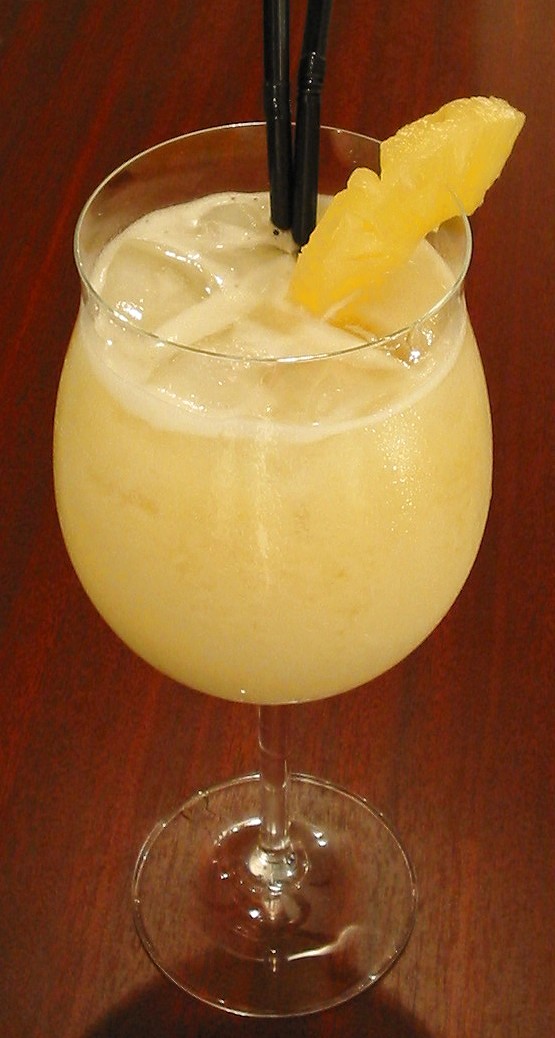
While the name piña colada literally means “strained pineapple” in Spanish; this sweet cocktail is made with rum, coconut cream or coconut milk and pineapple juice. Usually served either blended or shaken with ice, it may be garnished with either a pineapple wedge, maraschino cherry or both.

Legends abound the origin of this cocktail. The earliest known legend states that Puerto Rican pirate Roberto Cofresí, to boost his crew’s morale, gave them a beverage or cocktail that contained coconut, pineapple and white rum; what would be later known as the famous piña colada (19th century). This recipe was believed to be lost with his death (1825). Yet this story is widely disputed by food historians.

By popular belief, the creation of the piña colada was credited to bartender Ramon “Monchito” Marrero (1954). Working in the Beachcombers Bar of the Caribe Hilton, one of the premier luxury hotels in San Juan; he was asked by hotel management to create a signature drink that captured the flavors of the island. By his account, Marrero had spent three months experimenting with hundreds of combinations before perfecting his sweet, frothy concoction of rum, cream of coconut and pineapple juice. Once introduced it had gained mass popularity. Marrero mixed up and served his creation at the hotel for 35 years until his retirement (1989). Concurrently another barman, Spaniard Ricardo Gracia who had served drinks at the Caribe Hilton, had claimed that he invented the cool, creamy cocktail. As per the interview to the Coastal Living magazine (2005), a strike by a coconut-cutters union (1954) had prevented him from serving up the popular mixed drink of rum, cream of coconut and crushed ice in its traditional sliced coconut. When forced to improvise, Gracia had poured the drink into a hollowed-out pineapple. When the fruit’s added flavor proved popular, Gracia said he added freshly pressed and strained pineapple juice to the previous combination of rum and cream of coconut, to create the piña colada.

Concurrently two miles west of the Caribe Hilton, another San Juan hotspot stakes its claim as the birthplace of piña colada. As attested by the marble plaque outside the entrance of the Restaurant Barrachina ( established late 1850s), Ramon Portas Mingot, a Spanish mixologist who wrote cocktail books and worked in the top bars of Buenos Aires, had made the first piña colada (1963) inside its doors.

Although the piña colada, was born in Puerto Rican capital of San Juan; the identity of the bartender who first mixed up the iconic rum-based cocktail remains a point of contention. However the modern-day beach cocktail wouldn’t be possible until the invention of Coco Lopez, a pre-made cream of coconut (1954). Developed by Ramon Lopez-Irizarry, an agriculture professor at the University of Puerto Rico; he had blended cream from the hearts of Caribbean coconuts with natural cane sugar, which later became an integral part of the island’s piña coladas.

Over the years, different proportions of the core ingredients, as well as different types of rum, may all be used in the piña colada to create different and new signature varieties. While frozen piña coladas are also served today; other named variations like the Amaretto colada (amaretto substituted for rum),  Chi chi (vodka in place of rum), the Virgin piña colada or piñita colada ( non alcoholic, without the rum) or even the Soda colada (resembles the original recipe, but soda is used instead of coconut milk) to list a few. For the more resourceful or food connoisseurs and experimenters, piña colada can be blended into smoothies, milk shakes, cupcakes or even into cheesecake.

With National Piña Colada (July 10th) being celebrated tomorrow, it would be fun to experiment and create a similar based concoction, or simply enjoy the flavours of the original piña colada to mark special occasions.

CARIBE HILTON’S PIÑA COLADA RECIPE

2 ounces rum
1 ounce cream of coconut
1 ounce heavy cream
6 ounces fresh pineapple juice
1/2 cup crushed ice

Mix rum, cream of coconut, heavy cream and pineapple juice in a blender. Add ice and mix for 15 seconds. Serve in a 12-ounce glass and garnish with fresh pineapple and a cherry.