Posted in Daily, Food

Of “Portable Pies”

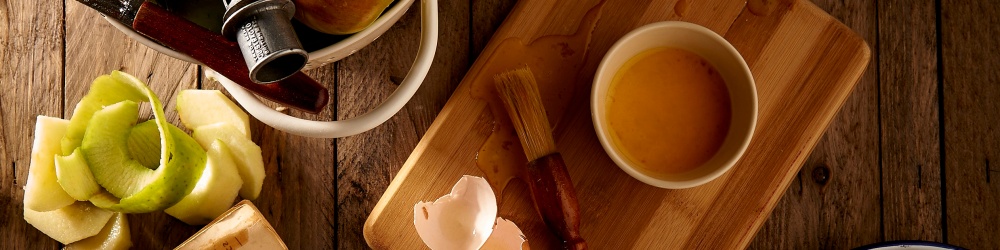
Although the modern lifestyle had attracted the tradition of “having food on the go” ranging from well wrapped portable sandwiches, cupcakes, tarts, salads to mention a few; portable pies were in existence since ancient times. Popularly known as “turnovers”, these portable pies were made by placing a filling on a piece of dough, folding the dough over, sealing, and baking it. Made sweet or savory, “turnovers” are often made as a sort of portable meal or dessert, similar to a sandwich; had for breakfast, snacks, desserts or quick picnics. From being baked to fried, fillings include fruits (apples, blueberries and cherries), meats ( chicken, beef and pork), vegetables (sweet potatoes, carrots, peas), eggs or even cheese. Specialty versions are made with fillings of wild rabbit and leek.

Traditionally turnovers are usually sweet, with popular pastry being the classical puff pastry. Known as sweet tarts initially, the term turnovers had come to reference around the eighteenth century. Made then as a sort of small, typically individual pie or pasty, in which the filling is placed on one side of a piece of rolled-out pastry and the other side is then turned over’ to cover it, forming a semicircular shape (Sporting Magazine, 1798).

Though these “turnovers” may have been there across different cuisine, albeit under other popular names. From the empanada of South and Central America (mixture of chopped meats, hard-boiled eggs, minced vegetables, olives, raisins, highly seasoned), the Russian pirozhki (meat, fish, cabbage, mushrooms or cheese), the famous Cornish pasties (large turnovers filled with beef, onions, turnips), Chinese dimsum (meat, fish, vegetables), Indian Samosas (chickpeas, potatoes, spices), Polish Pierogies, Middle Eastern Sanbousic (cheese and dill) and the Greek Spanokopitas (fillings of spinach, cottage and feta cheese with olives) are few among the many “global turnover” choices to experiment with as “quick meals or snacks” on the go.

With arising global popularity, little wonder then Turnovers have their own days. To mark celebrated food days of the National Apple Turnover Day (July 5th) as well as the World Chocolate Day (July 7th), sweet apple turnovers drizzled with chocolate may be a good way to mark them. For kitchen chefs, experimenting with turnovers may be a change from the regular desserts or savoury versions can be stuffed with meat leftovers, vegetables or just sweet fillings, depending on the mood of the hour. From sweet, savoury to spicy or cheesy; “turnover pies” have a variety of taste to offer, besides being a “quick solution” for sudden brunches, high teas or simply cravings.

Posted in Daily, Food, Photography Art

Cooking to Culinary Arts

“Tell me what you eat, and I will tell you what you are.” Jean Anthelme Brillat-Savarin

For most gastronomes, culinary specialists, chefs, nutritionists as well as home cooks, food being cooked, served or even eaten reflects a lot of the “mood within”. For instance, if one is extremely tired after a long day, the easiest meal to make in a jiffy for a home cook is pasta and cheese followed by ice cream for the sweet end. On the other hand, to mark any special occasion, the requirement of a full three course meal (salad or appetizer, main course and meat) completed by a splendid (if not necessarily elaborate) dessert is a must. When in an angry mood, every chef at heart will go with their inner basic meal, not tuning to art of the eye, but just ensuring that the basic taste is palatable. Too irritated or bothered to cook, it will be pizza or “Chinese order” on the house. And when the mood is sad, it will be the comfort food , homemade, with a striking resemblance to one’s childhood or mother’s style, or the fast food version.

“The preparation of good food is merely another expression of art, one of the joys of civilized living.” Dione Lucas

Essentially, cooking is a very sensitive art. While one mayn’t have the intensive training or qualification to be a chef of Michelin three or five star rated restaurant, but if one can make a complete wholesome meal for self, family and friends, that alone is enough. In fact, cooking is an expression of love. For every ingredient which balances the meal, it is a reflection of the care, precision and the basics of science behind it.

“Anybody can make you enjoy the first bite of a dish, but only a real chef can make you enjoy the last.” Francois Minot

The “effective cooking” of today, is a balance of food and fun, of taste, experimentation and readily available ingredients. While baking involves following the written or “handed down” instructions to the point; cooking involves a little experimentation of ingredients, spices as well as art. The evolution of cooking into “culinary arts” over the years, has resulted in a whole new range of varied dishes blended together with taste, nutrition, quality, tradition, serving, managing as well as visual presentation to complete the effect.

“The discovery of a new dish confers more happiness on humanity, than the discovery of a new star.” Jean Anthelme Brillat-Savarin

Entering into the month of “culinary arts” (July); the professional cooks and chefs who bring innovative cuisine from their kitchens to our tables every day are being recognized not just for their talent but devotion as well as contribution to cooking as an art form. For the home cook to experiment with technique and style, vast differences can be made by the order of adding the ingredients, plating as well as trying and blending the new recipes with the old ones. To start off, experimenting in small amounts can be tried. While most of the time, home cooking involves the regular, to celebrate this month, it would be good to plate the regular different or try something new altogether. For every cook, is indeed a chef with a hidden artistic side.

“Culinary tradition is not always based on fact. Sometimes it’s based on history, on habits that come out of a time when kitchens were fueled by charcoal.” Alton Brown

“In the abstract art of cooking,
ingredients trump appliances,
passion supersedes expertise,
creativity triumphs over technique,
spontaneity inspires invention,
and wine makes even the worst culinary disaster taste delicious.”
Bob Blumer

Posted in Daily, Food, Stories Around the World

Mix Them as “Mock” or “Cocktails”

One of the social necessities of being a part of a bigger, corporate or franchise based workforce, is attending the social or business social networking, popularly under the banner of “cocktail” evenings. At times, the conversations are silently laced with hunger pangs after a long day or the stress of the day filtering through the thoughts, which can be quite dangerous especially when thoughts and words don’t really gel well with the situation. While primarily the whole purpose is to extend the social “work based” or business connections, one can hardly ignore the “hors d’oeuvre” or appetizers as well as the baseline of the gathering, “cocktails or mocktails”.

“If it’s a cocktail party, I generally make five or six different things, and I try to choose recipes that feel like a meal: a chicken thing, a fish or shrimp thing, maybe two vegetable things, and I think it’s fun to end the cocktail party with a sweet thing.” Ina Garten


While the inventor of the cocktail evenings is quite a controversial topic, with some believing it to be Alec Waugh of London or Mrs. Julius S. Walsh Jr. of St. Louis, Missouri (May 1917). The former had detailed that the Alec Waugh noted that the first cocktail party in England was hosted by war artist Christopher Nevinson (1924) while Mrs. Walsh invited 50 guests to her house on a Sunday at high noon for a one-hour affair. The St. Paul’s Pioneer Press newspaper had declared that “The party scored an instant hit,” and stated that within weeks cocktail parties had become “a St. Louis institution”.

“A cocktail done right can really show your guests that you care.” Danny Meyer

Whether purely alcoholic or fruit based, a cocktail is essentially both palate satisfying as well as a work of “art”. As defined, “cocktail” is an alcoholic mixed drink, which is either a combination of spirits, or one or more spirits mixed with other ingredients such as fruit juice, lemonade, flavored syrup, or cream. Technically it contains alcohol, sugar and a bitter or citrus. While there are various types of cocktails, based on the number and kind of ingredients added; their origins are debated.


Also, when a mixed drink contains only a distilled spirit and a mixer, such as soda or fruit juice, it is a highball. When it contains only a distilled spirit and a liqueur, it is a duo. On adding a mixer to the duo, it becomes a “trio”. The additional ingredients may be sugar, honey, milk, cream, and various herbs. Mixed drinks without alcohol that resemble cocktails are known as “mocktails” or “virgin cocktails”.

“A cocktail can be made by the bartender. But the cocktail also can be made by the chef.” Jose Andres

The first use of the term “cocktail” is highly debatable. As per The London Telegraph, a satirical newspaper article (March 20, 1798) about what must have been a hell of a party had accounted the drinks imbibed by William Pitt (the younger) which included “L’huile de Venus,” “parfait amour,” and “‘cock-tail (vulgarly called ginger.)’” The challenge was whether “cocktail” in this article truly referred to an alcoholic drink, or something else. Another record was the article from The Farmer’s Cabinet ( Vermont, April 28, 1803), where to drink a cocktail was claimed to be “excellent for the head.” By 1806, the word “cocktail” had reached it’s current meaning as defined by the newspaper, Balance and Columbian Repository( May 13, 1806), the editor defined a cocktail as: “a stimulating liquor composed of spirits of any kind – sugar, water, and bitters.”


The exact derivation is attributed to multiple origins. One origin of “cocktail” is as a mispronunciation of the French word for eggcup “coquetier” (said as cocktay in English). In the late 18th century, apparently Antoine Amédée Peychaud, a New Orleans apothecary and inventor of Peychaud bitters had served brandy mixed with his bitters in eggcups. The second belief states that the name is derived from the term “cock tailings,” which was the practice of tavern owners combining the dregs (tailings) of nearly empty barrels together into a single elixir that was sold at bargain prices. In those days, the spigot of a barrel was sometimes referred to as a “cock.” Another reference was from the “cock tail” of regular “adulterated” horses entered into the races with the thoroughbred horses of docked tails, which during the early 17th century. As Liquor and races go hand in hand, this theory states that “mixed or adulterated drinks” were likened to the “cocktail” of the regular ( non-thoroughbred) horses in the race.

Whatever and however the origin may be, from mocktail to cocktails, the evenings for social or business purposes need them to keep the conversations flowing, mixing work with comparatively less stress of the regular work schedule. With summer in full swing, it would make these occasions more entertaining as well as in demand.


Posted in Daily, Food

Puddings..of Chocolate and More

[1730]
“Chocolate Puddings. To a Pint of Cream take eight Eggs, the Whites of four, beat them well together, and mingle with your Cream; put in some Nutmeg, Cinnamon, and Ginger, a quarter of a Pound of Naples Bisket, and a quarter of a Pound of Chocolate grated very fine, put in a little Orange-Flower Water, and a little Citron minc’d; mingle it mighty well together, and if you bake it, put a Sheet of Puff-paste in your Dish, and raise a little Border in the Rim, put in your Pudding and cross-bar it, and ice it with thick Butter and Sugar, and bake it in a gentle Oven, and when bak’d serve it away, or you may boil it if you please.”
—The Complete Practical Cook, Charles Carter, facsimile 1730 edition [Gale Ecco Print Edition:Detroit] (p. 106)

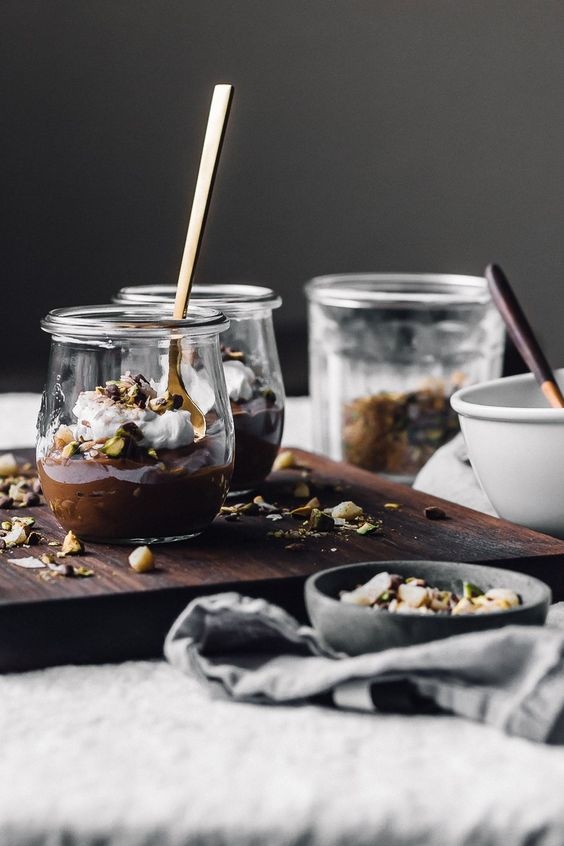
One of the highlights of having warm weather is when impromptu visits are possible, especially on chance meeting of old friends or neighbours. With plenty of delivery services available at ” the fingertips or touch of thumb pads”; it’s often the desserts that need to be made or created in a jiffy. Which is why, certain desserts especially custard, ice cream, puddings to name few easy ones are one of the necessary knows for every “fledgling” cook.


One of the easiest desserts to make with the ingredients of cornstarch or flour, cream, milk, butter and vanilla for the most simple and basic puddings. Adding in cocoa, bananas, battered breadcrumbs and even eggs are the small variations that make an entirely new recipe and flavour of the “new pudding”. Few “pudding pointers” to keep in mind include:

  • Although easy to make, complete and whole attention is required from making the batter to setting it to chill or baking it.
  • Constant stirring is needed while cooking the pudding to avoid lumps or burning.
  • The flavours, texture and consistency is very adaptable, so don’t be afraid of experimenting.
  • Make sure the flour is sieved properly because no matter how it is whisked, if the flour is not smooth it will give you a lumpy texture.
  • To store it, cover it with a plastic wrap to avoid the formation of a layer. The same applies while chilling the pudding too.
  • For baked puddings, grease the tin with butter and then refrigerate it for few minutes. This will form a layer and avoid it from sticking to the base.


With National Chocolate Pudding Day tomorrow, one can go a step further with whole or shots of “pudding cakes” or “pudding shakes” with whipped cream, sprinkles and M &M’s to add on; not to forget the ice cream too.

“Life’s a pudding full of plums.” 
W.S. Gilbert (1836-1911)


Posted in Daily, Food, Stories Around the World

“Canna” with the “petite duchesse”

Ever had “flashes of lighting” alongside “tubes of rich goodness” ? If the answer is in the negative or a query; with the month of June nearing to an end, it would be a good time to take up on the celebratory days of the éclair (choclate éclair, to be very specific, June 22nd) as well as the cannoli (June 16th), respectively. With the local deli’s and bakers’ going on full swing of celebratory discounts as well as interesting combinations to mark these days for foodists; delving a little bit into their food history would be quite interesting.

Originating from the 19th century France, also known as sweet baguette, an éclair was an oblong pastry made with choux dough filled with a cream and topped with chocolate icing. Typically piped into an oblong shape, the dough is baked until it becomes crisp and hollow within. When cooled, the pastry can be filled with a wide range of flavours, like vanilla, coffee or chocolate-flavoured custard (crème pâtissière), with whipped or chiboust cream and then iced with fondant icing. More exotic fillings include pistachio and rum flavoured custard, fruit-flavoured fillings or chestnut purée. If the icing is of caramel, the dessert is known as “a bâton de Jacob.”

Etymology speaking, the pastry title comes from French éclair “flash of lightning”, named so because it is eaten quickly (in a flash). Initially known as “pain à la Duchesse” or “petite duchesse” til the 1850. Towards the 1860s the word eclair took over, both in English and French. Historically the speculation was that this little delight was first made by Antonin Carême (1784–1833), the famous French chef of grande cuisine.

“Leave the gun. Take the cannolis.” Clemenza, in ‘The Godfather’

Moving across to the Sicilian and the Italian-American cuisine, delicate “tube-shaped shells of fried pastry dough”, usually with a sweet, creamy filling (most commonly containing ricotta) have been quite popular especially in the island of Sicily. Known as “cannoli”, they range from sizes of cannulicchi (smaller than finger sized) to the fist-sized proportions typically found south of Palermo, Sicily, in Piana degli Albanesi.

With its roots tracing back to the Middle Ages; this best known Sicilian pastry takes its’ name “cannolo (cannoli in English)” from the long tubular shape, as a diminutive of canna (a cane like reed) like sugar cane stalk. Back in the ninth centruy, Arabs had introduced sugar cane into the Sicilian cooking, thereby replacing honey as the sweetener of Sicilian confectionary to sugar. Similar desserts from the Middle East include Zainab’s fingers (filled with nuts) and qanawāt which were deep fried dough tubes filled with various sweets.

During the medieval years, the tubular shell shape was formed by rolling the paste into a flat, circular shape, then wrapping it around a sugar cane stalk. Legends abound but among them, most lead to the origin from western Sicily, probably in Palermo or nearby. Made often as a springtime item, most commonly associated when sheep produced more milk for ricotta around the Fat Tuesday (Carnevale).

Summer still going strong and picnics in full swing, for the first timers it would be a good time to experiment the sweet delicacies for a change. As for the kitchen experimenters and part time chefs, getting creative with homemade eclairs and cannoli would be a good change from the routine desserts.


Posted in Family and Society, Life, Musique, Stories Around the World

Of Summers and Picnics

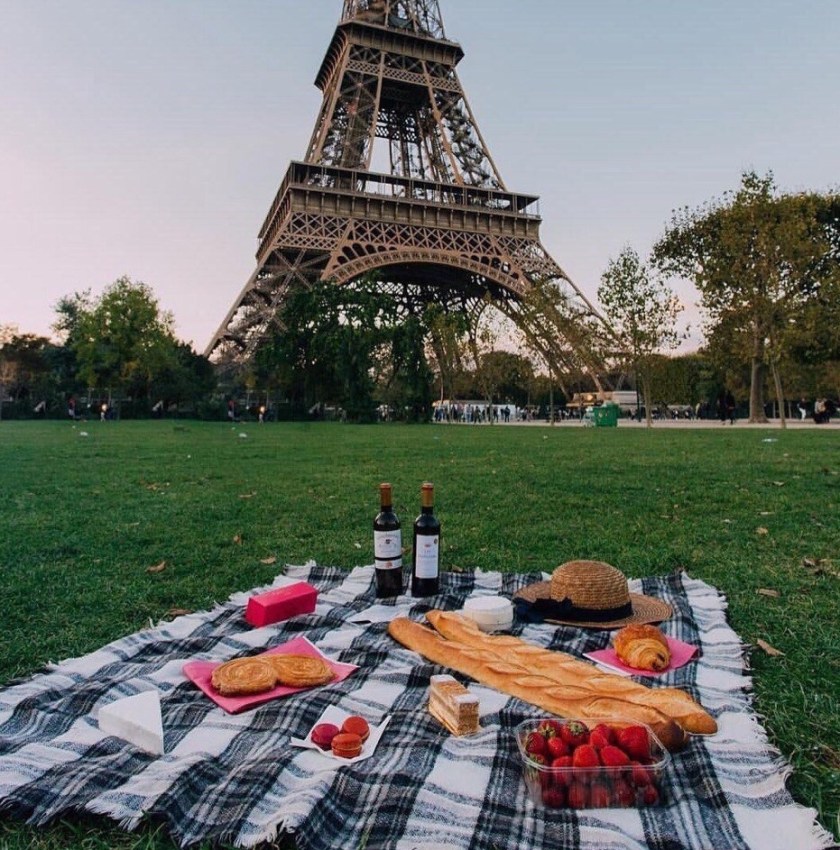
Although “eating outdoors” may have been a part of civilization since the beginning, the concept of enjoying a picturesque relaxed lunch were in fad post French revolution (1789) when the royal parks were opened to the French public. This concept saw a gradual evolution with hunting parties, Renaissance era country feasts and Victorian garden parties, especially the latter as grand occasions complete with tables, chairs, linens, crystals, catering and gourmet food to top it. Known as “pique-nique” (France, 1794) then, this event turned out to be a social calendar earmarked occasion, catching the trend across Europe and became officially known as “picnic”.

The tales of Robin Hood are one of the first accounts of picnicking when Robin with his band of Merry Men would dine informally under the shelter of trees. The concept of “picnicking” once started had caught on with picnic societies, long picnics as well as “picnic fashion” and “themed social picnics” being created. With International Picnic Day today (June 18th) and to get the most reluctant picnic goers out there, here are a few picnic trivia around the world to get one started.

To have a superb picnics with cushions, rugs and furniture, one would have to go to Turkey, where the trend was initiated. Along with comfort, games and string lighting; a potluck-style selection of stuffed veggies, grilled meats and desserts are often brought. Towards nightfall, picnics still going on turn into bonfires complete with music, dancing and raki (Turkish licorice-flavored alcohol).

Enjoying the National Picnic Week held each June in Britain, it would be incomplete without the Scotch Egg. One of the most iconic picnic foods created towards the late 18th century, these fried sausage-wrapped boiled eggs were easy to be eaten on the road. Other choices like pasta salad, fish and chips, potato salad, deviled eggs, cheese, brownies, cookies, sandwiches, subs and many more form form the huge list of picnic foods which taste good when served cold.

Picnics in the French outdoors especially Bastille Day involves fine dining especially as far as wines are concerned. Plastic cups spoil the flavour and aroma of wine with fresh air. On a personal front, keeping plastic to a minimum and enjoying reusable Tupperware will make the outdoor dining more enjoyable and nature safe.

To enjoy Christmas picnics, the Argentinian beaches would be good place to start. Holidays outdoors are celebrated complete with roasted or barbecued turkey or goat. Going north, Americans enjoy picnics specially on the Fourth of July where along with competitive races, three legged races and other picnic games; speed eating contests of pies, watermelons, burgers and the like have become the major “game attraction”.

While cherry blossoms or “hanami” announce the Japanese picnicking season; the Italians prefer Easter Monday, known as Angel’s Monday or Pasquetta as picnic time. One of the most iconic picnics was the Pan-European Picnic (August 19, 1989) where picnics were held with hundreds of East Germans grabbed the opportunity to cross into Austria. Weeks later Hungary had opened the border, the Iron Curtain had been breached, and on 9th November the Berlin Wall came down. While croquet, soccer, and badminton are common picnic games; kubb is a regular game in Denmark, Finland and Sweden. This lawn game is a mix between bowling and chess, where players attempt to knock over wooden blocks called kubbs with wooden batons.

With the great outdoor weather, it would be remiss to lose out on the opportunity to go back to childhood, capture the bliss of the summer skies and comfort food, while finding peace in the midst of nature. The only catch is to enjoy, being nature safe and eco-friendly. As the best things of life are captured by moments and memories; the essence to living is to make more and enjoy them too.

“If you go down in the woods today, you’re sure of a big surprise
If you go down in the woods today, you’d better go in disguise
For every bear that ever there was will gather there for certain
Because today’s the day the teddy bears have their picnic

Every teddy bear who’s been good is sure of a treat today
There’s lots of marvellous things to eat and wonderful games to play
Beneath the trees where nobody sees they’ll hide and seek as long as they please

That’s the way the teddy bears have their picnic “

….The Teddy Bear’s Picnic by Henry Hall

Posted in Daily, Food, Musique, Stories Around the World

Evolution of the “Accidental Fudge”

“Sandra turned to the page with the title “Toklas’ Hashich Fudge.” The original hashish brownies. ‘Peppercorns, nutmeg, cinnamon, coriander, stone dates, dried figs, shelled almonds, peanuts,… A bunch of canibus sativa can be pulverized. This along with the spices should be dusted over the mixed fruit and nuts… it should be eaten with care. Two pieces are quite sufficient…” – Allegra Goodman, The Cookbook Collector

Like most of the “delectable sweet pleasures of the palate “, this sugar candy made flavoured with choclate, fruits, nuts and other flavours; had hot or cold has made its’ own mark in the sweet world. These days, various flavours of “fudge” are made, giving them a vibrant as well as visual appeal to the eyes and the palate.

Technically, fudge is made by mixing sugar, butter and milk, heating it to the soft-ball stage and then beating the mixture while it cools down to get a smooth, creamy consistency with fruits, nuts, chocolate, caramel, candies and other flavoring agents being added either inside or on top. Yet the true origins of “fudge” can’t be exactly traced, though it’s believed to have been originated and gained popularity in late 19th century America. However popular belief among food historians was that the first batch was an accidental “fudged” batch of caramels; hence the name “fudge”.


A letter in the archives of Vasser College (1921) written by Emelyn Battersby Hartridge reveals the first documentation of “fudge”. Emelyn wrote that her schoolmate’s cousin made fudge in Baltimore (1886) and sold it for 40 cents a pound. This was the first known sale of fudge. In 1888, Miss Hartridge asked for the fudge recipe, and made 30 pounds of fudge for the Vassar Senior Auction. The recipe was very popular at the school from that point forward. The diary of another student mentions making “fudges” in 1892.

What is it that we love the best,
Of all the candies east or west,
Although to make them is a pest?
Fudges. **


An 1893 letter from another Vassar College student describes “fudges” as containing sugar, chocolate, milk and butter. “Fudges at Vassar” was a recipe printed in The Sun (1895) describing the confections as “Vassar chocolates”, which comprises of sugar, milk, butter and vanilla extract. Fudge became a new confection after word spread to other women’s colleges of the tasty delight. Later, Smith and Wellesley schools each developed their own recipe for fudge. Later fudge-making evolved a variety of flavors and additives as it grew beyond its popularity at colleges.

What perches us upon a chair
To stir a sauce-pan held in air,
Which, tipping, pours upon our hair —
Fudges. **

While the first recipe specified butter, milk and sugar, today, American fudge often differs with whipped cream instead of butter and the addition of chocolate flavouring. There are different types of similar recipes to “fudge” across the globe with the Indian “Barfi”, Polish “Krówki” ( Polish fudge, semi-soft milk toffee candies), the Italian “Penuche” which is a fudge-like candy made from brown sugar, butter, milk and vanilla flavouring; as well as the Scottish “Tablet” (taiblet in Scots). Tablet is a medium-hard, sugary confection made from sugar, condensed milk and butter, brought boiled to a soft-ball stage and allowed to crystallise. It is often flavoured with vanilla or whisky, and sometimes has nut pieces in it.

The versatility of fudge is that it can be had alone cold, or served on top of sundaes,  ice cream and even cakes as hot fudge. With various assortment, variety and fun in the process of fudge making; little wonder then that “a set of ditties”  (**) were made by the college girls during and for the “fudge making process”. On the occasion of National Fudge Day (June 16th), it would be time for some fun, rhymes and sweet cooking for all the “home kitchen chefs” or tasting for the food connoisseurs.

What needs more stirring than oat-mush,
And more still when we’re in a rush,
But what’s e’en sweeter than a “crush”?
Fudges.

What subtle odor doth recall,
To artless minds that “long-owed call,”
On the sweet maiden up the hall?
Fudges. **