Posted in Daily, Food

Evolution of the “Salad”

“A salad is not a meal, it is a style.” Fran Lebowitz

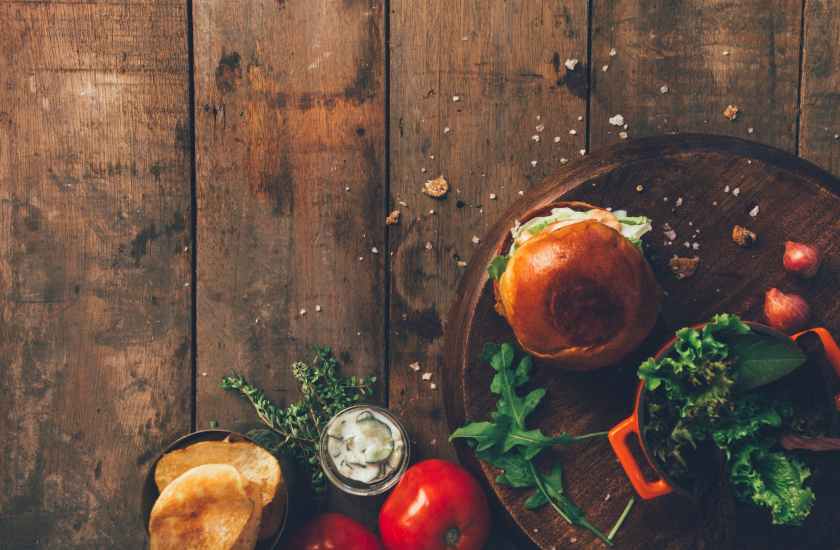
Originating from the Latin sal (means salt) to the Provençal “salada”, later as the Old French salade to finally the late Middle English “sallet” of 14th century or the modern day “salad” which it is now known by, salads have gradually evolved over the years. From simply starting a meal to being the main meal by itself, salads have been redefined both in content, style and flavours. With summer in full swing, fresh produce available and kids at home, salads can be both fun, entertaining and creative.

“Salad can get a bad rap. People think of bland and watery iceberg lettuce, but in fact, salads are an art form, from the simplest rendition to a colorful kitchen-sink approach.” Marcus Samuelsson

Salads were favored since the early Babylonian Era, where the greens were dressed with oil and vinegar. Likewise Egyptians made salad dressed with oil, vinegar and Asian. Even the Romans and ancient Greek Era saw mixed greens with dressing, a type of mixed salad. With imperial expansions, these layered and dressed salads were favourites in the menus of the European courts. Royal chefs often combined many ingredients in one enormous salad bowl including exotic greens as well as flower petals. The favourite salad of King Henry IV was a tossed mixture of new potatoes (boiled and diced), sardines and herb dressing, where as Mary, Queen of Scots, preferred boiled celery root diced and tossed with lettuce, creamy mustard dressing, truffles, chervil and hard-cooked egg slices.

“To make a good salad is to be a brilliant diplomatist – the problem is entirely the same in both cases. To know exactly how much oil one must put with one’s vinegar.” Oscar Wilde

Today salads are made in two classical manners of being artfully arranged or “composed” to ingredients being mixed with dressings or “tossed”. At any point of time on the meal salads may be served; as appetizers or side salads, as well as main course salads with high protein foods (like meat, eggs or fish), or as dessert salads. The latter version is one of the most popular with these sweet versions containing fruit, gelatin, sweeteners or whipped cream.

“It takes four men to dress a salad: a wise man for the salt, a madman for the pepper, a miser for the vinegar, and a spendthrift for the oil.” Anonymous

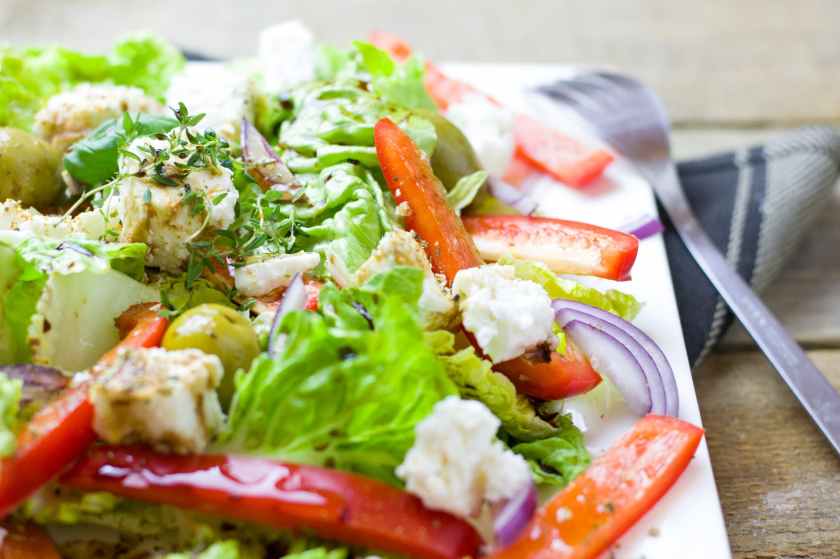
Technically there are five types of salads. Starting with the green salad or garden salad, consisting mostly of leafy greens with a healthy mix of coloured vegetables. If the latter are more, it is termed as a “vegetable salad”. From olives, artichokes as well as beans, celery or nuts, berries and seeds; these salads can be made in a colourful array. When made on a lettuce leaf, the “wedge salad” is created. When thick sauces are added to salads, they become “bound salads”, the second category of salads. Most types include those with mayonnaise like tuna salad, chicken salads, potato salad or egg salad, which can be served as “scoops” or sandwich fillers, making it a popular necessity for picnics and barbecues.

“As long as mixed grills and combination salads are popular, anthologies will undoubtedly continue in favor.” Elizabeth Janeway

The remaining three types include the “dinner salads” or main course salads, fruit and dessert salads. The former is made with meat, seafood or even eggs like the Cobb salad, Caesar salad and the Chinese chicken salad. With culinary fruits, a quick “fruit salad” can be made to complete the meal or a more elaborate “dessert salad” like jello salad, pistachio salad or ambrosia can answer the sweet cravings. Fancier creations like cookie salads, rice crispies salad, snickers salad or glorified rice salad. Finally topping the salads are the dressings which can be vinaigrette, creamy dressings as well as honey mustard or Italian dressing to mention a few. Dressing a salad depends on the final flavour that one wants to have.

Either for fun or for hunger, salad making can be an entertaining as well creative art, giving ample pleasure for both the taste buds, hunger pangs and health goals. With June being the foodimentarian ” National Month of Salads”, it would be fun to give few fancy salads a try.

“Kids in aprons appeared, putting tureens of vegetable soup on the tables and plates of boiled eggs, potatoes and lentils, bowls of endive-and-radish salad, small rounds of cheese and loaves of brown bread, all looking quite delicious, in Zoe’s opinion.” Christine Brodien-Jones, The Glass Puzzle

Posted in Food, Life, Quotes, Reflections

Slices of “Strawberry” Summer

“Happiness, I have grasped, is a destination, like strawberry fields. Once you find the way in, there you are, and you’ll never feel low again.” Rachel Simon

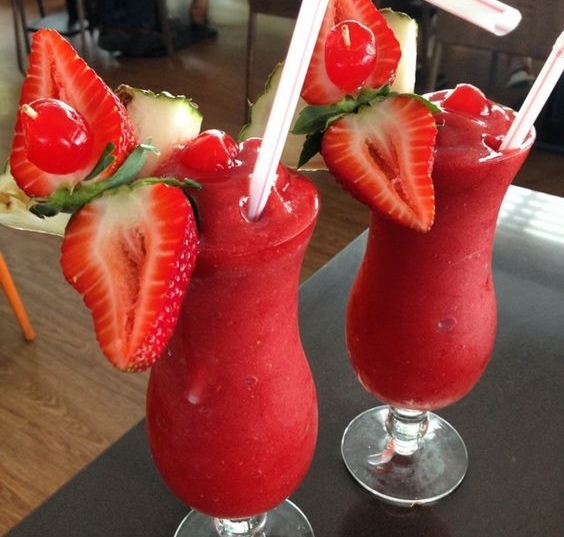
With the scent of summer still in the air, one wouldn’t miss the scent of wild strawberries in the fields. With lazy weekends beckoning a walk, it would be a perfect time for some family bonding as well as strawberry picking.

“You can pick wild strawberries with your eyes closed, locating them by smell, for they are two parts perfume to one part taste. An hour of searching might yield a handful if you’re lucky. Wild strawberries can’t be encouraged, nor can they be discouraged: They come to you unbidden and unearned. They appear, or do not, by the grace of the sun.” Hope Jahren

During this impromptu excursion, certain moments get engraved silently in the mind. The rapid passing of time, children growing up fast as well as hectic weeks leaving very less time to unwind, converse as well as simply relax; all highlight the significance in shutting down the media and heading back to nature.

“Each moment is just what it is. It might be the only moment of our life; it might be the only strawberry we’ll ever eat. We could get depressed about it, or we could finally appreciate it and delight in the preciousness of every single moment of our life.” Pema Chodron

With plenty of fresh strawberries to go around, it would be fun to go artsy, creative and add some sweetness to the regular meals as well as desserts. Browsing through the old recipes and brushing them with some “taste of summer” would make the strawberries as well as moments and memories to capture for the later years.

“As our lives speed up more and more, so do our children’s. We forget and thus they forget that there is nothing more important than the present moment. We forget and thus they forget to relax, to find spiritual solitude, to let go of the past, to quiet ambition, to fully enjoy the eating of a strawberry, the scent of a rose, the touch of a hand on a cheek…” Michael Gurian

“It is the sweet, simple things of life which are the real ones after all.” — Laura Ingalls Wilder

Posted in Daily, Food, Stories Around the World

“Hoagie” from Scratch

“I love a sandwich that you can barely fit in your mouth because there’s so much stuff on it. The bread should not be the main thing on a sandwich.” Adrianne Palicki

Little did John Montagu, the fourth Earl of Sandwich (1718-92) realize that his “sandwich” invention would become even bigger, longer and filled up with more varieties than before. Known popularly by the name of sub, hoagie, hero, grinder or Italian sandwich, the “submarine sandwich” has become one of the fastest growing sandwiches, adapted by many into a complete meal for the busy days or a healthier diet. Consisting of a length of bread or roll split lengthwise, filled with a variety of meats, cheeses, vegetables and condiments, this sandwich has no standardized name and has a dozen varieties and combinations globally. In fact those submarine sandwiches longer in length or filled with greater quantities of ingredients than usual, are known as battleship, flattop or destroyer sandwiches.

This sandwich is believed to have originated in the various Italian American communities from the late 19th to mid-20th centuries. The most widespread term of term “submarine” or “sub” is believed to have been after the resemblance of the roll to the shape of a submarine. Various theories have been put forward to the origin of the name. While one theory states that “the submarine” was brought by Dominic Conti (1874–1954), an Italian immigrant who came to New York (1900s) named it after seeing the recovered 1901 submarine called Fenian Ram in the Paterson Museum of New Jersey in 1928.

As per his granddaughter had accounted : “My grandfather came to this country circa 1895 from Montella, Italy. Around 1910, he started his grocery store, called Dominic Conti’s Grocery Store, on Mill Street in Paterson, New Jersey where he was selling the traditional Italian sandwiches. His sandwiches were made from a recipe he brought with him from Italy, which consisted of a long crust roll, filled with cold cuts, topped with lettuce, tomatoes, peppers, onions, oil, vinegar, Italian herbs and spices, salt, and pepper. The sandwich started with a layer of cheese and ended with a layer of cheese (this was so the bread wouldn’t get soggy).”

Eventually while the “submarine” had caught on; it would seem that the “hoagie” was already in vogue. Originating in the World War I era shipyard in Philadelphia known as Hog Island, where emergency shipping was produced for the war effort; Italians working there introduced the sandwich by putting various meats, cheeses, and lettuce between two slices of bread. This later was known as the “Hog Island” sandwich; shortened to “Hoggies”, then the “hoagie”.

“It’s like making a sandwich. I start with the bread and the meat. That’s the architecture. Add some cheese, lettuce and tomato. That’s character development and polishing. Then, the fun part. All the little historical details and the slang and the humor is the mayonnaise. I go back and slather that shit everywhere. The mayo is the best part. I’m a bit messy with the mayo.” Laini Giles

However, the Philadelphia Almanac and Citizen’s Manual states attributed this creation to the early-twentieth-century street vendors called “hokey-pokey men”. They had sold antipasto salad, meats, cookies and buns with a cut in them. When bakeries produced a long loaf called the pinafore(1879); Entrepreneurial “hokey-pokey men” sliced the loaf in half, stuffed it with antipasto salad, and sold the world’s first “hoagie”. Whereas another explanation is that the word “hoagie” arose in the late 19th to early 20th century, among the Italian immigrant community in South Philadelphia. Deli owners would give away scraps of cheeses and meats in an Italian bread-roll known as a “hokie”, but pronounced by the Italian immigrants as “hoagie”. After the WWII, the term “hoagie” had caught on and stayed.

There are numerous variants of these “submarine sandwiches” which have been named so based on the mix of ingredients or bread type like the New York “Hero”, New England “grinder” (a hot submarine sandwich (meatball; sausage; etc.) or a oven toasted hoagie) or Gatsby of Cape Town, South Africa. Come by whichever name, “submarine” or “hoagies” are here to stay. With National Hoagie Day (May 5th), it would be a time for some food fun.

Posted in Daily, Food

“Raisin” It Up

“Inject a few raisins of conversation into the tasteless dough of existence.” O. Henry

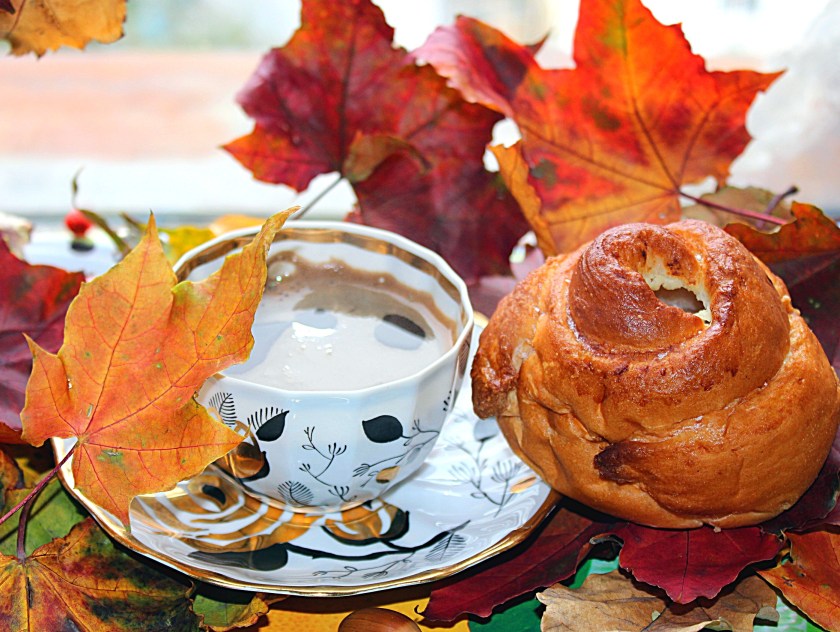
Being simply dried sweet grapes, raisins were the second in choice as a sweetener till the medieval times with honey being the top choice. The majority of the world’s supply of raisins comes from California, dried from Thompson seedless (95 percent), muscadine, or Black Corinth (Zante) grapes. Other main producers of Mosctael grapes are the USA, Turkey, Greece and Australia.

Originating from the Latin Racemus, from the ancient times raisins were in use. As evidence from history shows, raisins were an accidental discovery when they were found dried on the vines as early as 2000BC. The ancient Phoenicians and Armenians had taken the first steps in perfecting viticulture, the process of grape growing and selection.

While the Phoenicians started colonial vineyards in the areas of Malaga and Valencia of Spain and in Corinth (Greece)around 120-900BC; the Armenians founded their vineyards in Persia. These high yield growing areas had the perfect climate for making raisins and were also close to Greece and Rome, the first markets for raisins. Muscat raisins (over-sized with seeds and of fruity full flavor) were the primary crop in Malaga and Valencia. Corinth had grown the “Currants” which were tiny seedless, tangy raisins, where historians believe they got their name.

As the Phoenicians and Armenians began to trade raisins with the Greeks and the Romans who consumed them in large quantities; their popularity grew as well as their value. From being given as prizes to barter to trade or cure for ailments; raisins were always in demand. Raisins were a part of Hannibal’s troops rations when he had crossed the Alps.

“Raisins are a thing that lasts, they come in small boxes, and you always feel like eating raisins, even at six in the morning. A raisin is always an appropriate snack.” Fran Lebowitz

Although in popular demand, it wasn’t until the 11th century that raisins were seen in Europe. One of the reasons were the difficulty in maintaining the quality of the raisins for the long travel. By the 11th century, with improved packing and shipping techniques as well knights returning home from the crusades bringing back raisins with them, a huge market and demand was created.

By mid-14th century, the English cuisine included raisins and currants as it’s integral parts. As viticulture spread to France and Germany, grapes and raisins had entered the European cuisine spreading over to their colonial conquests. As viticulture had been perfected in Spain, grapes were being used to make products such as dry table wine, sweet dessert wines and Muscat raisins. With the colonization of the Americas and Mexico of today, their knowledge of viticulture had followed them there. By the 18th century, the Franciscan fathers had settled as far north as present-day Sonoma, California. Viticulture and its strong influence on California agriculture, was one of the enduring legacies left behind by the colonial rule. With the seedless grape variety (thin-skinned, seedless, sweet and tasty) being grown by the English immigrant William Thompson, newer variants of the products were created. By the late 1800s, once the Armenians (descended from the first founders of vineyards in Persia) began settling in the San Joaquin Valley, viticulture had progressed in California with supplies for raisins to nearly half the world, making it the largest producer anywhere.

“The wrinklier the raisin, the sweeter the fruit.” Alan Tudyk

Like most dried fruits, raisins can add the flavour to most recipes, ranging from the breakfast menu to elaborate meals as well as desserts. While buying raisins, their freshness can be determined by the containers being squeezable less hard and less rattling when shaken. Being blanched or plumped up (soak in hot water), sliced or chopped, added midway or at the end; the mode of introducing them into the recipes alters the flavours of the cooking giving a different effect at each step. Their popularity is marked by April holding two raisin days as National Raisin & Spice Bar Day (April 5th) and National Raisin Day (April 30th) celebrated by foodimentarians. Either way, into recipes or had directly, raisins spruce up the meal, both for the palate and nutrition wise.

“My indulgences are Skittles and rum raisin ice cream.” Sanya Richards-Ross

Posted in Daily, Food

Jelly with the Beans

“You can tell a lot about a fellow’s character by his way of eating jelly beans.”  Ronald Reagan

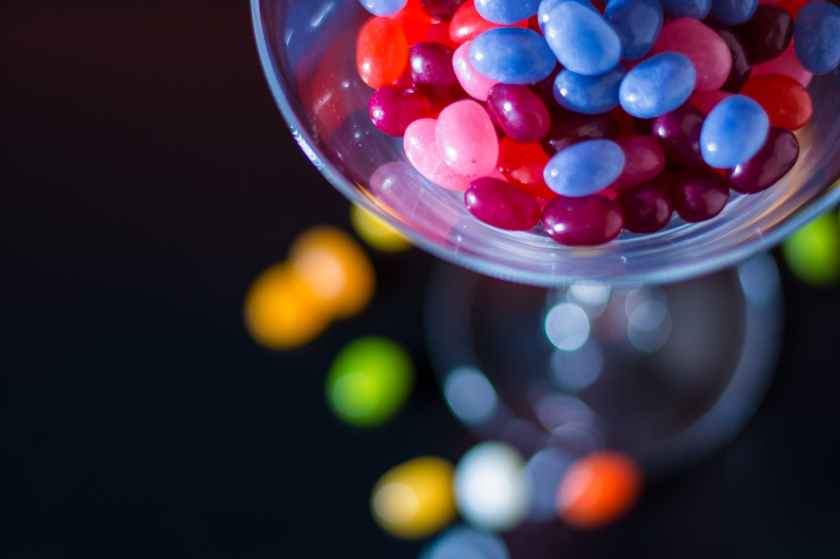
What happens on hybridization of Turkish Delights ( sweet, chewy candy with powdery sugar coating) and Jordan almonds ( almonds encased in a crunchy sugar shell) ? Possibly it may lead to the creation of “the classic candy with a soft chewy center and thin crunchy coating” , famously known as “jelly beans”. For avid Harry Potter readers, “Bertie Botts” may sound familiar with flavours of Banana, Black Pepper, Blueberry, Booger, Candyfloss, Cherry, Cinnamon, Dirt, Earthworm, Earwax, Grass, Green Apple, Marshmallow, Rotten Egg, Sausage, Lemon, Soap, Tutti-Frutti, Vomit and Watermelon.

The exact origins of jelly beans aren’t known. While the Mid Eastern confection of Turkish delight has been there since B.C.; the shell coating process known as “panning” can be traced to the cooks of the Royal Court in 17th century France. Over time, as the two process made its’ way to the Americas and the earliest known appearance of Jelly Beans has been credited there. One commonly cited but unconfirmed proof was an advertisement (1861) for William Schrafft (Boston) promoting the delivery of jelly beans to soldiers in the Union Army duting the Civil War.

Initially, (late 1800s, early 1900’s) jelly beans were sold by weight as penny candy in general stores and taken home in paper bags. By 1930s, jelly beans became part of the Easter holiday partially as it fit in well with its’ round egg-like shape, which was a symbol of the renewal of spring.

Why “jelly” and “bean” ? With candy-makers trying out novelty shapes for candy, the Goelitz family candy-makers has archive lists with candies as vegetables, chestnuts, carrots and turnips as well as bunnies for Easter. Once the bean shaped soft jelly came with shell that won’t let them stick, the name “Jelly beans” have stayed on.

Ever since 1976, there have been two types of jelly beans, gourmet (smaller, softer with shell and middle both flavoured) and traditional (only shells are flavoured). Their basic ingredients include sugar, tapioca or corn syrup, pectin or starch with relatively minor amounts of the emulsifying agent lecithin, anti-foaming agents, an edible wax (carnauba wax, beeswax), salt, confectioner’s glaze and flavouring agents. Depending on the type and flavours, jelly beans take approximately six to ten days to be made. National Jelly Bean Day has been celebrated (April 22nd) by foodimentarians worldwide. With endless flavour possibilities available as well as satisfying the palate and creating edible works of modern art, their popularity still holds true today.

“Jelly beans! Millions and billions of purples and yellows and greens and licorice and grape and raspberry and mint and round and smooth and crunchy outside and soft-mealy inside and sugary and bouncing jouncing tumbling clittering clattering skittering fell on the heads and shoulders and hardhats and carapaces of the Timkin works, tinkling on the slidewalk and bouncing away and rolling about underfoot and filling the sky on their way down with all the colors of joy and childhood and holidays, coming down in a steady rain, a solid wash, a torrent of color and sweetness out of the sky from above, and entering a universe of sanity and metronomic order with quite-mad coocoo newness. Jelly beans!” ? Harlan Ellison (“Repent, Harlequin!” Said the Ticktockman)

Posted in Christian, Family and Society, Food, Life, poetry, Stories Around the World

Of Easter,Tradition and Trends

“I still believe in Santa, the Easter Bunny, the Tooth Fairy and true love. Don’t even try to tell me different.” Dolly Parton

With Easter Sunday being celebrated tomorrow, preparations are quietly underway which would make the day special tomorrow primarily keeping the children in mind. Easter Sunday is the day signifying the love of God for man, a time for hope, renewal and resurrection through His Son. With the season of Lent coming to a close and breaking the Lenten fast involves special significance, especially when one has abstained from something dear to them through this period. Sacrificing something that one is fond of is never easy, but a whole new meaning and character is acquired when we abstain from the “materialistic” pleasure that we being man, often crave every now and then. Which is why, every Easter Sunday meal is something that the entire family and friends look forward to. Besides being a time for togetherness, it also signifies the breaking of the Lenten Fast.

“The blessing of food for the Easter Sunday meal is especially popular among people of Eastern European descent, especially those from Poland. Families prepare baskets with the food they will eat on Easter morning – decorated eggs, sausage, ham, bacon, a loaf of bread with a cross cut into the crust, cheese, salt, horseradish, and butter carved in the shape of a lamb.” Ken Untener, The Little White Book for Easter

Around the world, various traditions are there on Easter. While initially they were modeled after the spring celebrations, later the trends were modified to give new relevance with the basis of the last supper or “Passover” or “Passove Sedar” in mind. Among the Easter Lunch, the fast is often broken by the “star of Easter”; painted, dyed, gilded in various hues, hidden or hung on trees, found on the treasure hunt, bough to church or given as gifts are the “Easter Eggs”. Most of the legends state them to be “symbol of life”.

“I agree. You don’t want it to look boring. It’s [the Easter egg] got to look good otherwise it’s just like every other chocolate. And size does matter when it comes to the egg, as that’s what Easter eggs are all about.” Liam Tomassi

Previously believed by the Egyptian and few Persian civilization of the early times, eggs were considered to be symbolic of after life. Few traditions believe that Mary Magdalene and the Virgin Mary held eggs during the crucifixion or that they were eaten at the first meal after the Resurrection. In the Eastern Orthodox churches, the hard shell of the egg represents the stone walls of Jesus’ tomb, with the egg itself representing the new life of the Resurrection. Eggs also were the easiest, most economical and available foods to eat while breaking the Lenten Fast. This popularity has lead in the presence of “the Easter Egg” predominate every Easter celebration.

“The Easter eggs symbolizes our ability to break out of the hardened, protective shell we’ve surrounded ourselves with that limits our thoughts and beliefs. As we break open our hearts and minds we discover a transformation to new, life enhancing thoughts and beliefs.” Siobhan Shaw

Another popular tradition was the Easter Basket, which was an “Easter Nest” originally. Arising from the concepts of fertility and springtime, Eastern basket was a German tradition which had gained mass popularity. Initially children would make “nests,” filled with grass, in hopes that Peter Cottontail would fill the nest with eggs. Later these nests evolved into baskets, which were bigger, less messier and easy to carry.

Amidst the Easter Eggs in the basket would be the “hollow chocolate bunnies”. While there is no historical or religious documentation on why the bunny represents Easter, the association would be more by the calendar. With Easter mostly during Spring, the month of April showered not only spring flowers but also signals the birth of baby rabbits. Thus spring time and bunnies symbolize birth and renewal. Coat the bunnies with chocolate and hollow them out to fill them with candies; voila the treat is irresistible for every kid in the block.

Other Easter traditions include eating ham or meat to the making of “Hot cross buns” and other breads marked with an X to symbolize the cross are a tradition on many Easter tables. From the “Choreg” of Armenia, Ukranian “Paska”, Polish “Babka” to Tsoureki of Greece, a wide varied variety of sweet breads are made around the world. With eggs being baked in most, these are conspicuously risen breads, quite different from the Passover tradition of unleavened bread.

As we get ready to break the Lenten Period and celebrate Easter, with all the food to be made ready, decorations to put up, church to be readied and tables to be set, the core message of renewal, togetherness and love shouldn’t be forgotten. One of the best ways to spread the message of love would be to share the delectable creations of Easter around.

The Easter Bunny came by today
and left surprises along his way.
Colorful eggs are all around.
With baskets in hand we search the ground.
Hiding in places here and there
Easter eggs are everywhere.
-Author Unknown

Posted in Daily, Food

Learning the “Animal Cracker’s” Way

Eyes closed with eagerness, a tiny little hand dives into a box. Grabbing one bit and clenching the fist so as not to lose that precious little thing, the little hand comes out and palm up, its’ a bear. With a gleeful shout, that little bear is raised up and chomped down. And the hunt for the next “animal cracker” begins.

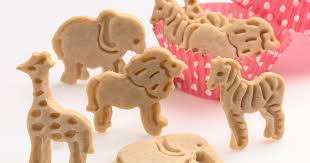
Almost every childhood has been marked by animal crackers or cookies and milk. These particular type of small cookies have been baked in the shape of animals ( zoo or circus), slightly sweet, made by a single layered dough like crackers.

Although the initial varieties were light coloured and slightly sweet; today darker chocolate flavoured or coloured frosted variants have made their way into the supermarket shelves. From the initial “Stauffer’s Biscuit Company produced animal crackers and Nabisco’s “Barnum’s Animals”, today other animal shaped crackers or cookies have gained popularity like Teddy Grahams, Goldfish, Hello Panda and Koala’s March. These differ from traditional animal crackers in flavor and assortment.

“Animal crackers, and cocoa to drink
That is the finest of suppers, I think
When I’m grown up and can have what I please,
I think I shall always insist upon these.”
-Christopher Morley (Founder of ‘Saturday Review’, 1924-1941)

Around 6th to 7th century, the custom of shaping cookies to resemble animals began from the Yule Tribe. During their times, it was common to sacrifice animals to the gods during the Julfest ceremonies, in hope that such offerings would bring a mild winter and an early spring. As the poor people couldn’t afford to kill any of their animals, they gave token sacrifices in the form of animal-shaped breads and cookies. Over the years, animal crackers became household or local bakery goods.

Yet the crisp animal crackers came from the 19th century Victorian England as attractive cookies or biscuits. The “crisp biscuits” (sweet and cookie-like biscuit) were very popular and the English called the ones that shaped like animals “Animals”. During the late 19th century, these “Animals” were imported from England to the United States. Due to their local popularity and high demand, local manufacture also began their own “Animals” making business. American businesses like Stauffer’s Biscuit Company, which still exists today, made their first animal crackers in 1871 York, Pennsylvania.

Around 1889 in England, animal crackers were manufactured as marketing promotions for popular entertainment, P.T. Barnum’s Circus. In 1902 animal cracker boxes designed for “Barnum’s Animals” (became “Barnum’s Animal Crackers” in 1948) were also designed for the Christmas season. The initial cracker boxes had a piece of string to hang them from the Christmas Trees as ornaments.

Almost 54 different animals crackers’ have been created in total, with 37 different animals have been featured into Animal Crackers ( Nabisco’s Barnum’s). The only ones survived the entire lifetime of the product are bears, elephants, lions and tigers. Interestingly among all their “cracker animals”, it’s only the monkey that wears pants. Also rabbits have never been a part of them even today (unlike portrayed in the Shirley Temple Song of 1935). Commemorating the 100th anniversary of Animal Crackers, the “name-our-next animal” contest in 2002 saw the koala bear became the latest addition by beating out the penguin, walrus and cobra in the customer survey.

Thus on National Animal Cracker Day (April 18th) it would remiss not to include the animal crackers on the menu. The range is varied from mini-sized treats to additions into soups, crunchy salads or even with ice-cream, fruit salads, custards or just with tea, having them the old, simple way. For a break from the “adult-life” going back into the childhood treats can be good physical and mental “calorie” breaks.

“Animal crackers in my soup Monkeys and rabbits loop the loop Gosh oh gee but I have fun Swallowing animals one by one In every bowl of soup I see Lions and Tigers watching me I make ’em jump right through a hoop Those animal crackers in my soup When I get hold of the big bad wolf I just push him under to drown Then I bite him in a million bits And I gobble him right down When their inside me where it’s dark I walk around like Noah’s ark I stuff my tummy like a goop With animal crackers in my soup.” Shirley Temple