Posted in Daily, Food, Stories Around the World

Madeleine for holidays

Entering into the last month of the year, the delight of enjoying the twilight mornings with the warm cup of tea in the bitter chill of the air, would be better with a little of the small crunchy or tiny delights to add to the tea. In fact with holidays round the corner, a regular stock of the ready homemade sweet dry desserts especially cakes, cookies and biscuits would come in handy.

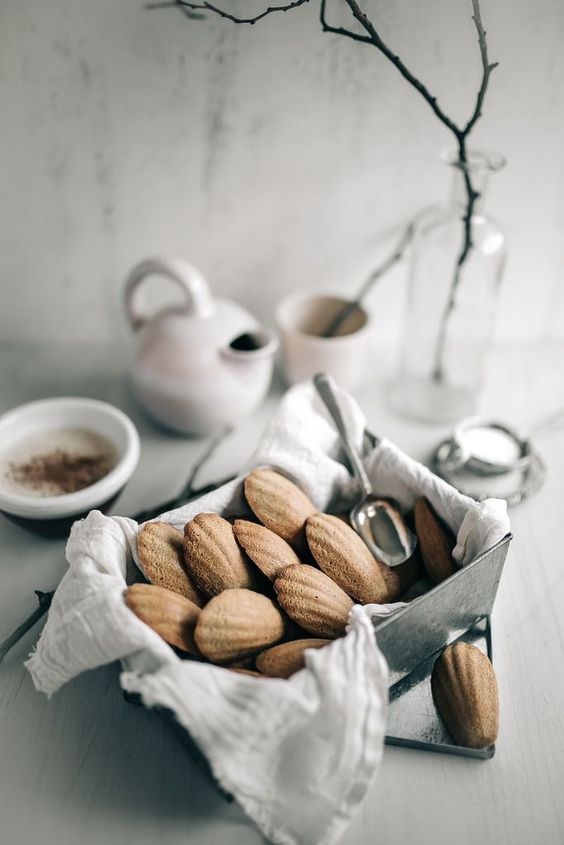
Among them are the treats of small sponge cakes with their distinctive shell-like shape, baked in pans and can be made with the basic ingredients. Known as the madeleine or petite madeleine, these traditional small cakes trace their origins to the Lorraine region in northeastern France. By legend these cakes have been there in the 17th century French cusine, although the increased use of metal moulds (18th century) had led to their increased use. By the end of the 19th century, the madeleine is considered a staple of the diet of the French bourgeoisie.

By etymology, the term madeleine describes “a small cake”. Made from génoise cake batter (with the suspended air in the mixed batter giving the volume to the cake) with traditional recipes adding on finely ground almonds, nuts or lemon zest for their special lemony flavour. In Britain, similar cakes are baked in dariole molds, they are coated in jam, desiccated coconut and topped with glacé cherry.

“On a pound of flour, you need a pound of butter, eight egg whites & yolks, three fourths of a pound of fine sugar, a half glass of water, a little grated lime, or preserved lemon rind minced very finely, orange blossom praliné; knead the whole together, & make little cakes, that you will serve iced with sugar.”
“Cakes à la Madeleine”. Menon, Les soupers de la Cour ou L’art de travailler toutes sortes d’aliments, p.282 (1755)

The madeleine has been mentioned by the culinary writers during the Napoleonic era, especially in the recipe books of Antonin Carême and Grimod de la Reynière. One record of the first recipe traces to the “cakes à la Madeleine and other small desserts” (1758) of a French retainer of an Irish Jacobite refugee, Lord Southwell. Tracing the roots of “Madeleine”, there are several interesting legends pertaining to the origin of the cake. While one considers the name centered from a female character of Lorraine, probably a chef with the patron being Paul de Gondi (17th century cardinal), owner of a castle in Commercy. Another legend consider the inventor to be Madeleine Paulmier, cook for Stanislaus I, duke of Lorraine and exiled King of Poland (18th century). As the legend goes, Louis XV (son-in-law of the duke) charmed by the little cakes prepared by Madeleine Paulmier (1755), named them after her and Maria Leszczyńska, his wife had introduced them soon afterward to the court in Versailles which soon became a favoured French recipe. Two legends link the cake with the pilgrimage to Compostela (Spain) where Madeleine, a pilgrim is said to have brought back the recipe from her voyage or a cook named Madeleine is said to have offered little cakes in the shape of a shell to the pilgrims passing through Lorraine. While another legend states that Madeleine was the creation from the kitchens of Prince Talleyrand by the pastry chef Jean Avice (19th century) who is said to have baked little cakes in Aspice moulds.

Not just in the kitchen, but Madeleine have made their significant impact in literature with Proust’s “episode of the madeleine” as an instance of involuntary memory in his book In Search of the Lost Time. Similar to the madeleine are the “financiers” or the Malaysian Bahulu. One of the benefits of getting down to making Madeleine for the holidays is the ease in its’ preparation, variability of ingredients as well as the versatility of it being a part of the small and the large holiday get-togethers. As for the simplicity in style, a little of “food art” will make the difference. Adding to the festive spirit, madeleine can indeed spice up the holiday season this year.

Posted in Daily, Food, Photography Art

Art in the Jar

“The wonder of imagination is this: It has the power to light its own fire.” John Landis Mason

Rummaging through the church sale, there were numerous purchases, not just the clothes and books sections, but also collectibles ranging from the funny shaped lanterns to glass bottles and finally the mason jars. Speaking of the latter, these were a staple of the kitchens during the prime years of my grandmother and the generations before her. Without the existence of modern day refrigerators, the winter supply was primarily contributed by canning and preservation techniques.

Though the technique of preservation of food were in many rudimentary forms, it was the French chef Nicolas Appert who had brought about the method of preserving food by enclosing it in sealed containers. Among the earliest glass jars used for home canning were wax sealers (named so as attributed to the sealing wax poured into a channel around the lip to secure the tin lid). Although this process was complicated and error-prone, the wax sealing process was largely in popular use. As this method got slowly modified with screw on cap, till John Landis Mason took over with his innovative twist.

For every canning enthusiast, antique collector or simply any collector, the Mason Jar is a must on the list. A Mason jar, named after John Landis Mason, is a molded glass jar used in home canning to preserve food. From the first patented form of 1857, to the present, Mason jars have had hundreds of variations in shape and cap design. Although the collector’s treasure is the “Patent Nov 30th 1858,” signifying the date of Mason’s patent, as embossed on thousands of jars, which were made in many shapes, sizes, and colors well into the 1900s.

Today mason jar aren’t confined to the “canning section” alone, but form a big part of many aspects. From the aesthetic turn to food art, serving jars as well as “healthy shakes”, party essentials to leaflet holder, coin jars or quote jars, gift ideas and many more, owning the original one is a collector’s dream. Over the years though technology as well as modern science has progressed in leaps and bounds; there are certain “antique” things in life which still remain in the personal favourite or choice list.

Posted in Daily, Food, Uncategorized

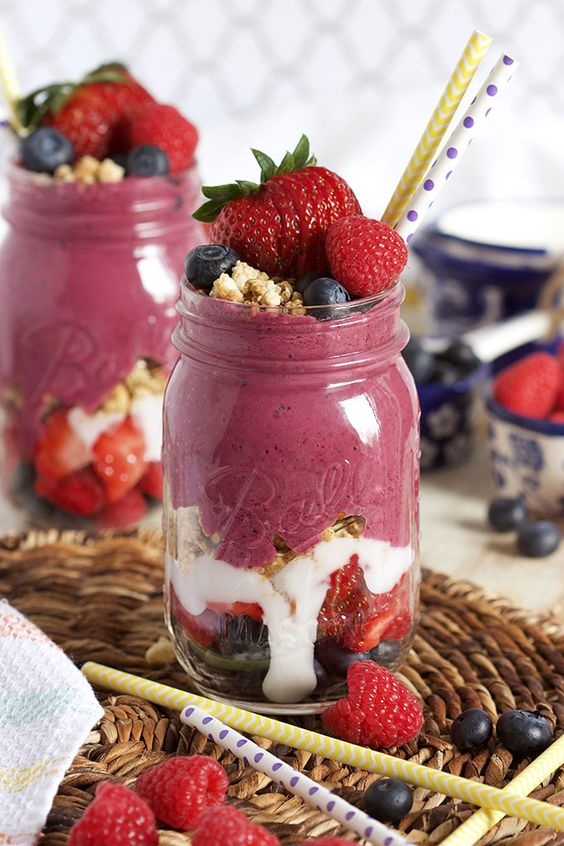
Of Parfait, Choice and Style

For any meal, the finale is marked by that delightful bit of sweetness. With the rising awareness of eating healthy and right, the right balance has to be struck at times between the temptation of the sugar craving to close the meal and to stay on the low healthy calorie counter too. Which is why “parfait” has evolved since it’s inception to the present day.

The oldest known recipe can be traced to 1894, of French origin where it had started off as a frozen dessert. While the French prefer to make the base from cream, egg, sugar and syrup creating a perfect custard-like puree, known as “the parfait”; whereas the American counterpart includes an artful layering of varied ingredients like granola, nuts, yogurt, liqueurs with a topping of fruits or whipped cream layered and served in a tall glass.

Of recent, with new trends and various experimentation, parfaits have been introduced without the cream and liqueurs. Instead they are made by simply layering the fresh fruits ranging from berries, cut peaches, strawberries with yogurt , granola or nuts; served as a healthy snack, breakfast option or a light meal, as a change from the regular. Which ever way it may be, the popularity of the parfait lies not only in it’s ease of preparation and the delectable indulgence but also in the appealing art it holds in itself.

Posted in Food, Stories Around the World

Of Milk, Flour and Flavours

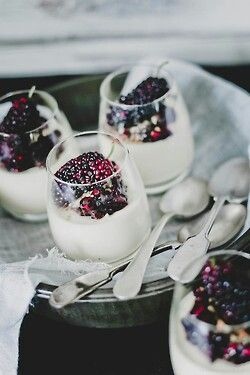
With the sweet tooth running pretty strong in the family genes, the question “what’s for dessert?” comes first, even before the table is laid. When the baking comes to a lull, the ever ready alternative comes as long as milk is plenty and available. From the Spanish Arroz Con Leche to the Muhalabieh of the Middle East or malabi (Israeli milk pudding), French Teurgoule, British Blancmange to the Indian Kheer or Persian Firni, there are countless variations and possibilities to the regular recipes of milk based puddings and desserts. Interestingly each dish in this vast list has their own history and legend behind them.

Milk. Rice flour ( of recent cornstarch). Sugar. Rosewater. Vanilla extract. Chopped nuts.

With legendary origins dating to Sassanid Persia (224-651), the milk based pudding Mhallabiyeh ( or Muhalabieh in Middle East, Israeli malabi) has been often made with the basic ingredients of rice, sugar, rice flour and milk. Although in the Middle Ages, muhallebi and blancmange (European counterpart) were made with shredded chicken.

As the legend goes, Muhallebi was first served by a Persian cook (late seventh century) to an Arab general, Al-Muhallab ibn Abi Sufra who had liked the dish and named it after him. Thereby this dish had entered the Arab cuisine. The initial recipes (10th century) were based on three versions of the basic dish: milk thickened with ground rice, milk with rice grains and chicken and an egg custard (without rice). Records from two 13th-century Arab cookbooks (one by al-Baghdadi, another from Andalusia) have recipes of a spiced pudding variation made with mutton instead of chicken. The Ottoman Empire has written records of two versions of muhallebi: a version with shredded chicken (tavuk gögsü) served during the reign of Mehmed the Conqueror and a later recipe(1530) for a meatless version flavored with rose water. Later records give a recipe for muhallebi named as “Ramazan cakes” (19th century English cookbook). This recipe records of boiling milk together with rice flour and sugar until the mixture reduces followed by which the pudding is then flavored with rose or jasmine extract and allowed to cool before it is sprinkled with powdered sugar.

Modern variations of the initial recipe has been seen in the substitution of the rice flour (or addition at times) by cornstarch or wheat starch depending on the thickness, consistency and creaminess required. The Israeli “malabi” is made from cream and milk cooked with corn starch and rose syrup, the latter being used primarily for flavouring. It is often topped with chopped pistachios, desiccated coconut, almond slivers as well as orange water flavorings. On the other hand, the Cyprian mahalebi (or mahalepi or muhallebi) is devoid of milk. Instead it is made from water, sugar, nisete flour ( or cornstarch/corn flour), rose water and when it is set, they add. When the muhallebi is set the Cypriots add rose called triantafyllo (rose squash /cordia/syrup) on top of it.

While making Muhallebi at home, various alternatives and add-ons to the classical recipe may be tried. More elaborate concoctions can be tried, like layering this pudding on a biscuit base for a chewy feel to balance out the sweet milky taste; or modify it as a drink based dessert. No matter what, with the sweetness of the milk (cream added as per preference) to balance out the taste of cereal and additional flavourings with various toppings and garnishes, this dessert will be a well loved addition to the list of no bake desserts.

Posted in Daily, Food, Stories Around the World

Splash of White

“I had some dreams, they were clouds in my coffee.” Carly Simon

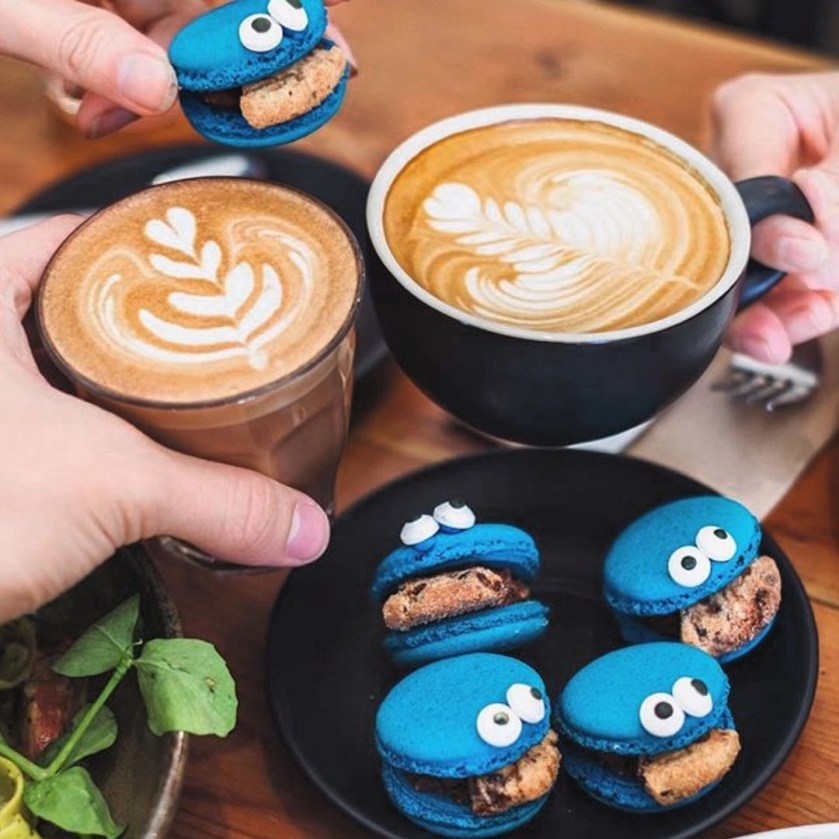
For coffee connoisseurs around the globe, knowing the exact coffee-lingo is a must. Following the dictum of “When in Rome, do as the Romans do”, coffee lingo too changes as per place. Be it the espresso macchiato or the Caffè macchiato (not the latte macchiato) or the “café pingado”, all routes lead to another coffee concoction.

Known as espresso macchiato or Caffè macchiato (latter in Italy), it is essentially an espresso coffee drink with a small amount of milk (usually foamed) in it. The origin of this drink could be possibly attributed to the baristas which needed to show their serving waiters the difference between an espresso and the effect to it after a little bit of milk was added to it. The purpose was to just mark or stain the espresso. In Italian, macchiato means “stained” or “spotted” so the literal translation of caffè macchiato is “stained” or “marked coffee.” Moving over to the Portuguese version of this drink where it is renamed as “café pingado” literally translated to coffee with a drop. Although in Mexico, it is called a cortada, the latter terminology mayn’t be used in other countries as it meant for another coffee beverage with a higher amount of milk in it as compared to the macchinato.

“Black as the devil, hot as hell, pure as an angel, sweet as love.” Charles Maurice de Talleyrand

As compared with any other similar coffee drink with milk, the caffè macchiato has the highest ratio of espresso to milk. The key to a perfect macchiato lies in getting the quantities right. As the name suggests, this coffee should contain just a splash of milk, which is added to pure espresso. The traditional macchiato is about one and a quarter ounce that is one ounce of espresso with a small amount (around one to two teaspoons) of milk, the latter is mostly steamed with slight foam so there is a visible mark. The purpose of the milk is to enhance in moderation (rather than being overwhelming), preserving the bold flavour and the taste of the coffee while adding a delicate touch of sweetness (as an alternative to added sugar).

For coffee cognoscente attention to details are required for the preferred coffee. While an average cappuccino has an 1:2 ratio and latte has a 1:3 ratio of espresso to milk, the average size espresso macchiato has a 2:1 ratio. To prepare the drink at home or in a semi-professional barista set-up, a single shot of espresso is poured into a demitasse (a small espresso cup) and then a splash of hot milk is added. Few recipes suggest adding 1–2 teaspoons (approx. 5 to 10 grams) of milk heated to 140 to 150°F (60–66°C). Heating the milk so, would introduce steam into the milk causing the fats to expand and develop a layer of little bubbles like a “micro-foam.” This is most often done using an espresso machine and a steam wand.

For a change, as the autumn showers run by and the cold wintry winds approaching soon, the scent and flavours of coffee maybe enjoyed the “macchiato” way. As any javaphile would agree, those little beans can liven up the day at any hour or moment of time.

“To espresso or to latte, that is the question…whether ’tis tastier on the palate to choose white mocha over plain…or to take a cup to go. Or a mug to stay, or extra cream, or have nothing, and by opposing the endless choice, end one’s heartache.” Jasper Fforde


Posted in Daily, Food, Stories Around the World

As Basic as Bread

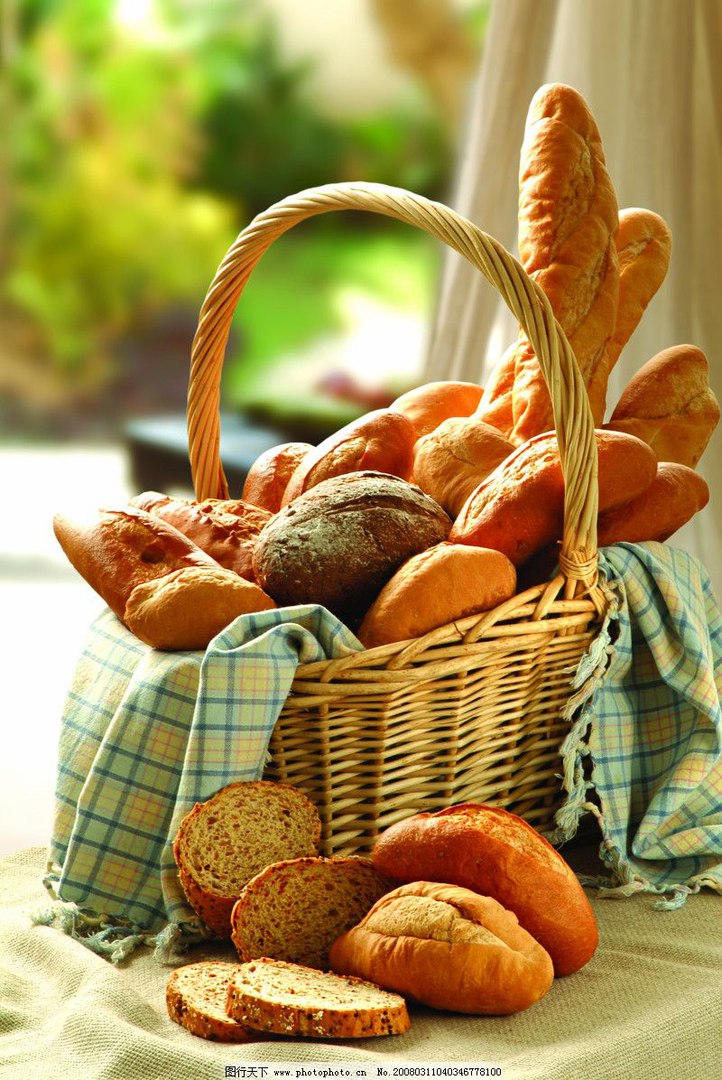
One of the after-effects of mixing flour, water and yeast which was later baked had resulted in the preparation of the one of the most staple foods had across different countries of the globe. With the dawn of civilization and agriculture leavened (or in certain areas the unleavened form) bread has become a part of the local cuisine and culture, such that existence without it for a couple of days would be quite unthinkable.

Etymology tracing the roots, the word “bread” originally meant “broken piece” or “morsel”, as evidenced by the appearance of West Frisian brea, Dutch brood, German Brot, Swedish bröd, Norwegian and Danish brød; all a part of the Gemanic languages which had transferred few of it’s roots to the Middle and Modern English. Although “hlaf” was the old English name for bread (hlaifs in Gothic: modern English loaf).

One of the earliest prepared foods, archaeological evidence shows starch residue on rocks. Possibly roots of certain plants (possibly cattails and ferns)were pounded on these rocks for their starch extract, then placed over a fire and cooked, which would be the earliest primitive form of flatbread. With the rise of agriculture ( Neolithic Age) and cultivation of certain plants, cereal may have then been the mainstay of bread making.

“Good bread is the most fundamentally satisfying of all foods; and good bread with fresh butter, the greatest of feasts.” James Beard

Leavening of the bread in the early years may have happened through multiple sources. One possibility would be that leaving the uncooked dough exposed to air for sometime would result in the airborne yeast spores falling in. Another fact is that many yeast spores are naturally found on the surface of cereal grains, so if any dough is left to rest, it may leaven naturally. Records of Pliny the Elder report that the Gauls and Iberians used barm (the foam skimmed from beer) to produce “a lighter kind of bread than other peoples” such as barm cake. Other parts of the ancient world used their knowledge of wine to find a source of yeast, either by making a paste composed of grape juice and flour that was allowed to begin fermenting or wheat bran steeped in wine. Another common source of leavening was to retain a piece of dough from the previous day to use as a form of sourdough starter.

Modern methods of bread making was initiated by the Chorleywood bread process (1961) which uses the intense mechanical working of dough to dramatically reduce the fermentation period and the time taken to produce a loaf. Mostle used on a factory scale, this resulted in bread being easily available on a large scale and in the commercial market.

Alternative to the regular wheat bread, bread may be made from other wheat species like spelt, emmer, einkorn and kamut or made from non-wheat cereals like rye, barley, corn, oats, sorghum, millet and rice have been used to make bread. Although only rye bread can be made exclusive of wheat, others may need a little of wheat flour for binding process. Although for the purpose of preparing gluten-free breads, ground flours from various alternatives like almonds, rice, sorghum, corn, legumes (like besan), tubers (cassava) maybe used. As these flours mayn’t hold their shape as they rise and hence may be dense without the aeration, additives such as corn starch, eggs, xanthan gum and the like are used to compensate for the lack of gluten.

From sliced bread to sourdough loaves, there are a variety of breads being made pertaining to each locality and region like the yeast based anadama bread, hoppers, Scottish bannock, cottage loaf, Austrian kifli, Spanish mollete or the Swiss Zopf to mention a few. There is nothing more satisfying than making own bread once in a while. From the regular bread to short bread, the choice of recipes and methods are plenty. Giving the sweet tooth a rest, it would be an interesting experience to give bread baking a try, may be adding a more individual, experimental and creative touch to it.

“The smell of good bread baking, like the sound of lightly flowing water, is indescribable in its evocation of innocence and delight… [Breadmaking is] one of those almost hypnotic businesses, like a dance from some ancient ceremony. It leaves you filled with one of the world’s sweetest smells… there is no chiropractic treatment, no Yoga exercise, no hour of meditation in a music-throbbing chapel. that will leave you emptier of bad thoughts than this homely ceremony of making bread.” M.F.K. Fisher, The Art of Eating

Posted in Daily, Food, Stories Around the World

The “Petit Four” Story

“It was the best first kiss in the history of first kisses. It was as sweet as sugar. And it was warm, as warm as pie. The whole world opened up and I fell inside. I don’t know where I was, but I didn’t care. I didn’t care because the only person who mattered was there with me.” Sarah Addison Allen (author of The Sugar Queen)

Craving for a snack between meals, especially during office hours wherein it is a situation between the need for the sugar versus the knowing that control is a must (mind vs. body), the deli across the road offers a relief during the short breaks. With the variety of mignardises of petit four on display, these cravings can be satisfied when their effect runs too hard.

Known more commonly as petit four than mignardises, the former word when literally translated from French means “small oven”. These small bite sized single piece confectionery or savoury appetizer arose in the 18th and 19th century French cuisine.

Before the gas ovens had been invented, those years saw the large brick ovens (more common Dutch design) being used. The latter used to take a long time to heat up (especially to the bread baking temperatures) as well as cool down. Taking advantage of the stored heat, bakers used these ovens to bake pastry during the cooling process which was known as baking à petit four (literally “at small oven”).

Walking into any French patisserie, these assorted small desserts are usually called mignardises; whereas the hard, buttery biscuits are called petits fours. Similar to the petit four is the classical Austrian confection of pastry known as Punschkrapfen or Punschkrapferl (punch cake), which has a legend of it’s own.

These petits fours come in three main varieties, as Petit Fours Glacé (“glazed”) predominantly served as iced or decorated tiny cakes topped with marzipan covered in fondant or icing. The second category includes savoury bite-sized appetizers usually served at cocktail parties or buffets known as Salé (“salted”). The third category are the Sec (“dry”) which encompasses dry cookies, dainty biscuits, baked meringues, macarons, sable beurre, palmiers, duchesses and puff pastries, all baked at low temperatures for a long time. Other categorizations also include the Petits fours frais which are any small pastries like sponge cakes like madeleine, financiers, creme filled pastries like eclairs or tartlets, all these must be eaten the same day they are made for the quality is lost if they sit longer. On the healthier front, there is the “Petits fours Deguises”, made of fresh or dried fruit dipped in a sweet coating such as chocolate or cooked sugar.

Homemade petit fours can be made on a more simple and creative way with plenty of icing sugar, fondant, candied bit and pieces as well as the good old chocolate to add to the flavours and sparkle it to a work of art. With this wide assortment of treats, petit fours are indeed a delightful to enjoy that little bit of sugar, the concentrated way or slightly less or simply be savoury for a change.