Posted in Daily, Family and Society, Personal Musings, Quotes, Stories Around the World

Balance the Scales

“All that we see or seem is but a dream within a dream.” Edgar Allan Poe

The day before the weekends or sometimes the weekends themselves, bring out the cleaning spree in me. Bitten by the “cleaning bug”, from the curtains to the upholstery as well as furnishings including all the mats and the carpets are brought out, aired, sun dried and brought in, especially before the dark clouds start hovering around. When bitten bu the bug, the entire household tip toes around fearing the retribution of a spilled cup of water on the floor or even those muddy footprints around. Yet by sun down, the shining and polished furniture starts showing a scrape of grime brought by little hands after their outdoor (or attic) fun. While slowly the red fiery steam starts rising within, a heavy dose of temperance is brought out from within to quench the flames, lest the gleeful smiles and childhood memories are lost for the day.

“Be thankful for what you have; you’ll end up having more. If you concentrate on what you don’t have, you will never, ever have enough.” Oprah Winfrey

There will be days in each of our lives, where one goes out of the way to do everything in the right manner. Despite all the efforts, there would be no returns but regrets and inner unrest. Those days, when one learns to take events in stride and move on, those perceived unhappy moments turn into blessed ones. In the light of the events of those days, the attitude that one chooses and the perceptions used to colour the day brightens up the gloomy mood, bringing forth the inner light.

“To change ourselves effectively, we first had to change our perceptions.” Stephen R. Covey

Each one is in the rush to lead their own lives. While each one may seem to measure the other, in the end it is the personal happiness and the inner peace that each one strives and craves for. Knowing when to remove the dust, leave it on or capture the muddy prints makes the difference in the day. To redefine the angry moments of the day by changing the perceived notions is important. Finding the balance between the “to do”, would like to do and long to do, is important to live our lives to the potential that one was born to.

“Dream delivers us to dream, and there is no end to illusion. Life is like a train of moods like a string of beads, and, as we pass through them, they prove to be many-colored lenses which paint the world their own hue. . . . ” Ralph Waldo Emerson

Dust if you must, but wouldn’t it be better to paint a picture or write a letter, bake a cake or plant a seed, or even ponder the difference between want and need?
Dust if you must, but there’s not much time, with rivers to swim and mountains to climb, music to hear and books to read, friends to cherish and life to lead.
Dust if you must, but the worlds out there with the sun in your eyes, the wind in your hair, a flutter of snow, a shower of rain. This day will not come around again.
Dust if you must, but bear in mind, old age will come and it’s not kind. And when you go – and go you must, you, yourself will make more dust! It’s not what you gather, but what you scatter that tells what kind of life you have lived … and remember, a layer of dust protects the wood beneath it.
Author Unknown

Posted in Daily, Personal Musings, poetry, Reflections

Power within Self

“I alone cannot change the world, but I can cast a stone across the waters to create many ripples.” Mother Teresa

Unlike the monsoon rains of each year, this time the town had witnessed less amount of water clogging on the roads. May be the reason can be attributed to the spaced out rains as compared to the previous years or less plastic logging the drains, non clogged roadside drain outlets and the like. Whatever the reason maybe, the final result was better for all. Who was responsible for this difference? Whether it was the awareness combined with effort and environment humaneness, of the municipal workers to keep the roads clean and drains unclogged or less dumping of plastic roadside by the public, numerous cleanliness drives by schools, organizations, town corporations; better road maintenance by the public works or other campaigns; each one had a role to play. Each one made a difference in their own way. Ultimately, each one of us has the power to make a difference.

“Never doubt that a small group of thoughtful, committed citizens can change the world; indeed, it’s the only thing that ever has.” Margaret Mead

Very often, one undermines their own power, potential and ability to make a vast impact in the future outcome. A little child who is taught and does throw their trash in the proper bin subtly teaches a host of unseen observers environmental humaneness. An adolescent who is polite at the grocers’ brightens the day for the cashier and the customers in queue. A simple thank you to the waitress or the security manning the apartment block entrance brings a lightness to their weary burdens.

“The purpose of life is not to be happy. It is to be useful, to be honorable, to be compassionate, to have it make some difference that you have lived and lived well.” Ralph Waldo Emerson

One doesn’t need to start big or huge, need a huge barrage of resources, conveniences, fortunes or luck their way to make a difference. Being nice, doing the right and just thing doesn’t require a lot of effort or hurt the doer. Instead it sets off a chain of events which brightens the days of those around them.

“Never forget that you are one of a kind. Never forget that if there weren’t any need for you in all your uniqueness to be on this earth, you wouldn’t be here in the first place. And never forget, no matter how overwhelming life’s challenges and problems seem to be, that one person can make a difference in the world. In fact, it is always because of one person that all the changes that matter in the world come about. So be that one person.” R. Buckminster Fuller

The Power of One
One SONG can spark a moment
One FLOWER can wake the dream
One TREE can start a forest
One BIRD can herald spring
One SMILE begins a friendship
One HANDCLASP lifts a soul
One STAR can guide a ship at sea
One WORD can frame the goal
One VOTE can change a nation
One SUNBEAM lights a room
One CANDLE wipes out darkness
One LAUGH will conquer gloom
One STEP must start each journey
One WORD must start a prayer
One HOPE will raise our spirits
One TOUCH can show you care
One VOICE can speak with wisdom
One HEART can know what is true
AND
One LIFE can make a difference
– Author Unknown
(Source:vk.com)

Posted in Daily, Family and Society, Life, Quotes, Reflections, Stories Around the World, Work

Of Choices, Time and Priorities

“Things which matter most must never be at the mercy of things which matter least.” Johann Wolfgang von Goethe

No matter how hard one tries to stretch the allotted time of twenty hours each day; there are bound to be a few things from the mental task list, still left undone. One of the earliest habits drilled during the school days was to prioritize and get the tasks completed for the day. While the initial years saw the assigned tasks being prioritized from somewhere around middle school onward; later on it became a daily must for most days of high school, college and later on in the adult world.

Prioritize.

Almost the whole of the adult lives revolve around prioritizing events scheduled around the planners, from big ones to the small ones. The scales have to be struck in a very fine manner between work, relationships, personal growth, hobbies or interests, family life and personal time. Too much of one focus results in the undermining of the others which may or mayn’t have consequences in the later years.

“Most of us spend too much time on what is urgent and not enough time on what is important.” Stephen R. Covey

Prioritizing is as much an art, dependent on the way how one perceives the important facets of life. When one realizes that the focus has been on certain direction for quite some time, it may be too late to turn things around as time has already run out in those spheres. Learning not to step into those lines is a special talent. Priorities are shaped by the choices, desires, interests as well as the purpose that we grow within ourselves. Until one defines what they want out of their respective lives, the prioritization mayn’t work out right. One’s priorities should eventually bring completeness as well as pleasant emotions in life. Once when those aspects are met, the time spent for the prioritized tasks is time well spent; worth the treasure chest of memories, lessons and happiness that it brings along.

“Desires dictate our priorities, priorities shape our choices, and choices determine our actions.” Dallin H. Oaks

Priorities
So many things to do, I’m always rushing ’round
I wish that I had time to just sit still
I’ll get done all the things I need to do today
I promise then I’ll stop a while, I will

And so I start to tackle the list of chores I made
I’ll make this house look really spick and span
I’ll tidy up and wash the floor and vac and dust as well
Clean the bathrooms, clean the house – I know I can

A friend rings up. She’s feeling down. She wants to come around
She asks if I have time to talk a while
I stop to make a coffee and lend a listening ear
I have nothing to give except my smile

Then, when she’s feeling better and she knows that she’s been heard
She thanks me and then she goes on her way
I look around my house and continue with my chores
For I am going to get somewhere today

The telephone then rings. My son’s teacher’s on the phone
She wants me to come down and get him now
I go down to the school and I bring my sick child home
I’ll clean this house up later on somehow

And later when the kids are home; ‘Mum, I need to talk’
And so I stop to listen for a while
My daughter tells me how she feels, she opens up her heart
Then, when she knows I’ve heard her, she can smile

When the night has come, I wonder, ‘what did I achieve?’
And, then I look back on all I have done
The house is still not tidy and there’s still so much to do
Just like it was when I had first begun

But, then I stop and realise my priorities are right
For when someone’s in need then, I am there
I give to them the time they need and help them where I can
I let them know how much I really care

For when the years have passed and my kids have all moved out
They will feel the love and warmth I had to give
And I know that they’ll remember the lessons that they learnt
In self-worth and in how they choose to live

Written by Michelle Tetley
©2005

Posted in Daily, Family and Society, Life, Personal Musings, Quotes, Stories Around the World, Work

Of Own Niche

“Don’t set your goals by what other people deem important.” Jaachynma N.E. Agu

Leafing through the high school year book and the annual school magazine, recollections of the younger days resurface to mind. From photographs with class teachers, medal winners of sports, academic and cultural snaps to the articles written by juniors, seniors and classmates bring out the nostalgia. Those days the aspirations were to be successful in life, have fun and do what we love to do.

“What we love to do in life”

Many a time, the daily grind forces us to be something that one doesn’t want to be, especially career wise. Whether it be an artist trapped in accounting, a writer trapped in the office network, a musician taking salesman post for a living; all these are required when one needs to earn their bread and butter. However, the gifted talents should never be wasted. Yet pursuing something that is completely out of one’s league is alarmingly dangerous not only to them, but to other colleagues. While attaining a basic education and graduation is important; let it not drive one to kill their own originality and become something that one never was. Each one is gifted with a special talent. While it may necessary to engage in the working network to earn the daily living; let those God-given talents never be wasted but worked on, no matter how small the progress be and let one’s work shine and speak for themselves.

“Every man has a specific skill, whether it is discovered or not, that more readily and naturally comes to him than it would to another, and his own should be sought and polished. He excels best in his niche – originality loses its authenticity in one’s efforts to obtain originality.” Criss Jami

Call him Johnnie Martin, a young Canadian boy. He was the son of a carpenter, and his mother worked as a housekeeper. They lived frugal lives, saving their money for the day when they could send their son to college. Johnnie had reached the second year in high school when the blow fell. A psychologist attached to the school called the young man, just reached sixteen, into his private office and this is what he said. ‘Johnnie, I’ve been studying your marks and I’ve gone over your various tests in motor and sensory impressions – your physical examination. I’ve made a very careful study of you and your achievements.’ ‘I’ve been trying hard,’ put in Johnnie. ‘That’s just the trouble.’ said the psychologist. ‘You have worked very hard indeed – but it has not helped. You just don’t seem able to get ahead in your studies. You’re just not cut out for it, and for you to remain in high school would, in my opinion, be a waste of time.’ The boy buried his face in his hands. ‘This will be hard on my mother and father,’ he said. ‘Their one idea is for me to be a college man.’ The psychologist laid his hand on the boy’s shoulder. ‘People have different kinds of talents, Johnnie,’ he said. ‘There are painters who were never able to learn the multiplication table, and engineers who can’t sing on key. But every one of us has something special – and you are no exception. Some day you will find what your special gift is and when you do, you will make your parents very proud of you.’ Johnnie never went back to school. Jobs were scarce in town, but he managed to keep busy mowing the lawns of the householders and puttering in their flower-beds. And then a curious thing happened. Before long his customers began to notice that Johnnie had what they called a ‘green thumb’. The plants he tended grew and blossomed, and the rose trees blossomed. He fell into the habit of making suggestions for re-arranging the tiny front-yard landscapes. He had an eye for colour and could make surprising combinations that pleased the eye.

One day while he was down town he happened to notice a stretch of unused land behind the city hall. Chance or fate or whatever you may like to call it brought one of the town’s alderman round the corner just at that moment. Impetuously the boy said, ‘I can make a garden out of this dump, if you’ll let me.’ ‘The town’s got no money for frills,’ said the alderman. ‘I don’t want any money for it,’ said the boy – ‘I just want to do it.’
The alderman, being a politician, was astounded to find anyone who did not want money, under any and all circumstances. He took Johnnie into an office, and when the young man came out he had the authority to clean up the public eyesore. That very afternoon he borrowed extra tools and seeds and soil. Someone gave him a few young trees to plant. When others heard of it they offered rose-bushes and even a hedge. Then the town’s leading manufacturer heard of it, and volunteered to supply some benches. Before long the dreary old dump had become a little park. There were grassy lawns and little curving walks and restful seats and little house for birds. All the towns people were talking about what a lovely improvement the young man had made. But it was also a kind of show window for Johnnie. People saw the result of his skill and knew him for a natural landscape gardener.

That was twenty five years ago. Today Johnnie is the head of a prosperous business in landscape gardening. His customers extend into neighbouring provinces. Johnnie still cannot speak French or translate Latin, trigonometry is unknown to him. But colour and light and lovely prospects are his bread and butter. His aging parents are proud of Johnnie, for he is not only a success – a man of affairs and a member of the best clubs in town – he has also made his part of the world a lovelier place to live in. Where ever he and his men go, they spread beauty before the eyes of people.
Source – Modern Parables by Fulton Oursler. First published in 1951

Posted in Daily, Food, Quotes

Lessons from the Kitchen

“Find something you’re passionate about and keep tremendously interested in it.” Julia Child

The second week of August always results in a tussle for the television remote, especially during the evening hours, before dinner. Eventually one gets to watch the latest sports round up or the current political scenes; while the other ends up watching You Tube for the vintage episodes of Julia Child’s shows namely “The French Chef”. Marking the birth week of Julia Child who had made French cooking sound feasible, few shows presenting her famous recipes, episodes or the iconic movie Julie & Julia (2009), paying a tribute to this legendary chef. Though one mayn’t be an avid chef or interested in the art of cooking, there are a couple of lessons on the kitchen front that Julia Child had taught her viewers over the years.

“You’ll never know everything about anything, especially something you love.” Julia Child

“…no one is born a great cook, one learns by doing.” Julia Child, My Life in France

The first few years away from the home environment results in one learning the basic few cooking skills. As the years move on, with the intermixing of cuisines and experimentation, taste buds refine and the likes develop. Entering into relationships and the adult life of the family, cooking for loved ones including making or recreating dishes as per their taste. As one’s own family evolves, cooking comes from the heart. In sequence, what comes from the heart is born out of love, care and interest for the loved ones. Such purpose will conquer the fear of “the dish going bad or wrong”. Along with finesse, it is the dash of love that matters the most.

“The only real stumbling block is fear of failure. In cooking you’ve got to have a what-the-hell attitude.” Julia Child

“You don’t have to cook fancy or complicated masterpieces – just good food from fresh ingredients.” Julia Child

During the early years, kitchens were fun especially during the rainy days. Learning to mix the flour, knead it and make flatbread was more about fun and doing, than understanding what happens. Then as home science begins during the middle school and science is explored further, one begins to comprehend the science in the kitchen. Later once alone, cooking becomes an experimentation of flavours, mix of colours, interest and imagination. Eventually cooking evolves into a form of art and science, spiking the interest of the mind as well as the senses.

“The more you know, the more you can create. There’s no end to imagination in the kitchen.” Julia Child via Lynn Gilbert, Particular Passions: Talks With Women Who Have Shaped Our Times

“One of the secrets, and pleasures, of cooking is to learn to correct something if it goes awry; and one of the lessons is to grin and bear it if it cannot be fixed.” Julia Child, My Life in France

Over the years from a novice to learning to master the meals for family and friends, there have been epic disasters, emergency restaurant bookings, late night takeaways and unplanned visits for the family homestead dinners. Yet through the mess, mistakes have been understood and corrected. New recipes and cuisines experimented, modified and old, tested or tried recipes redone with one’s own signature style. Through the uphills and downhills in the kitchen, it is still the fun that stays in the memories made for the self, with children, family and friends around. Man mayn’t live by bread alone, but making it in style, from scratch and with own flavours gives a full sense of accomplishment, happiness within and fun memories to hold onto for a lifetime.

“This is my invariable advice to people: Learn how to cook- try new recipes, learn from your mistakes, be fearless, and above all have fun!” Julia Child, My Life in France

Posted in Daily, Life, Personal Musings, poetry

Reality of the Frequent “Cannot”

“Opportunities will come and go, but if you do nothing about them, so will you.” Richie Norton

One of the most frequently encountered on assigning any project at the high school age group is the word “can’t”. Those “cannot”s revolve around the excuses of lack of time, to increased work load, less fun time, more effort required and so on. The resonance of “cannot”s increases almost in proportional to the effort or inconvenience caused. While in school life, “the cannot”s are heard maximum when asked to help in household chores, baby sit, accompany on hospital visits or grocery shopping; adult life “cannot”s echo almost a similar vein albeit largely increasing the responsibility level.

“Whenever you are asked if you can do a job, tell ’em, ‘Certainly I can!’ Then get busy and find out how to do it.” Theodore Roosevelt

Little does one realize the potential havoc caused by that word or emotion “can’t”. From an opportunity to learn or do something new, grow in responsibility, bond together, chance on new avenue of opportunities and so on; are all lost at that single word “can’t”. While can’t may be really necessary at certain points in life; frequently indulging them will result in more loss than gain in the long run.

“Never say that you can’t do something, or that something seems impossible, or that something can’t be done, no matter how discouraging or harrowing it may be; human beings are limited only by what we allow ourselves to be limited by: our own minds. We are each the masters of our own reality; when we become self-aware to this: absolutely anything in the world is possible. Master yourself, and become king of the world around you. Let no odds, chastisement, exile, doubt, fear, or ANY mental virii prevent you from accomplishing your dreams. Never be a victim of life; be it’s conqueror.” Mike Norton

Can’t
Can’t is the worst word that’s written or spoken;
Doing more harm here than slander and lies;
On it is many a strong spirit broken,
And with it many a good purpose dies.
It springs from the lips of the thoughtless each morning
And robs us of courage we need through the day:
It rings in our ears like a timely sent warning
And laughs when we falter and fall by the way.

Can’t is the father of feeble endeavour,
The parent of terror and half hearted work;
It weakens the efforts of artisans clever,
And makes of the toiler an indolent shirk.
It poisons the soul of the man with a vision,
It stifles in infancy many a plan;
It greets honest toiling with open derision
And mocks at the hopes and the dreams of a man.

Can’t is a word none should speak without blushing;
To utter it should be a symbol of shame;
Ambition and courage it daily is crushing;
It blights a man’s purpose and shortens his aim.
Despise it with all of your hatred of error;
Refuse it the lodgement it seeks in your brain;
Arm against it as a creature of terror,
And all that you dream of you someday shall gain.

Can’t is the word that is for to ambition,
An enemy ambushed to shatter your will;
Its prey is forever the man with a mission
And bows but to courage and patience and skill.
Hate it, with hatred that’s deep and undying,
For once it is welcomed ’twill break any man;
Whatever the goal you are seeking, keep trying
and answer this demon by saying: ‘I can.’
-Edgar A. Guest

Posted in Daily, Food, Stories Around the World

Chip it In, Bake It

Whitman, Massachusetts, 1938

“We had been serving a thin butterscotch nut cookie with ice cream. Everybody seemed to love it, but I was trying to give them something different. So I came up with Toll House cookie. Add up chopped up bits from from a Nestlé semi-sweet chocolate bar into a cookie. The original recipe is called “Toll House Chocolate Crunch Cookies.”
– American Chef Ruth Graves Wakefield, Toll House Inn
(Wakefield, Ruth Graves (1942). Ruth Wakefield’s Toll House Tried and True Recipes. M. Barrows & Company, Inc.)

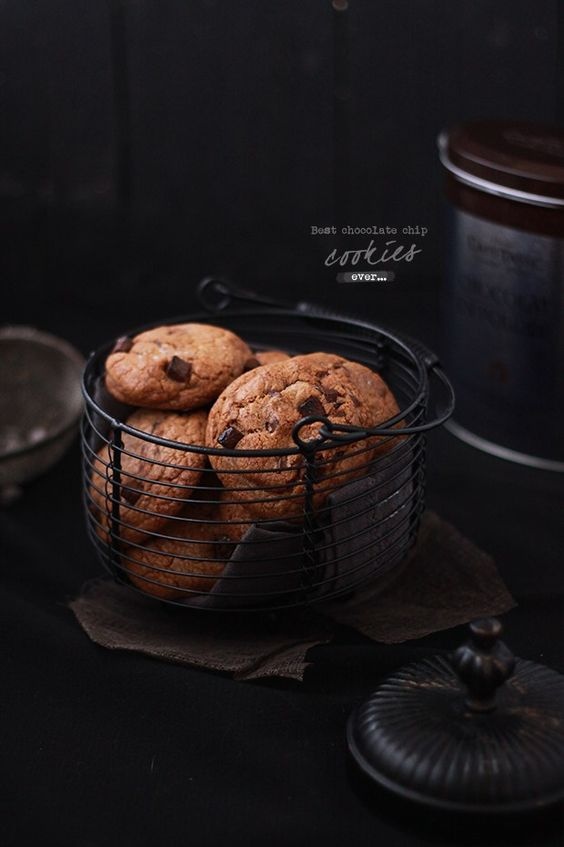
One of the famous drop cookies, “the chocolate chip cookie” had its’ origins in the early 1900s; wherein chocolate chips or choclate morsels were added to the regular cookie dough as the distinguishing ingredient. With a dough composed of butter, both brown and white sugar, semi-sweet chocolate chips and vanilla; the traditional recipe had evolved. Originally invented by the American chef Ruth Graves Wakefield and chef Sue Brides (1938) when the former owned the Toll House Inn (Whitman, Massachusetts); a popular restaurant that featured home cooking. Wakefield credited Brides with helping her make the famous chocolate chip cookie.

Over the years, variations with different varieties of chocolate, change of ingredients like nuts, oatmeal, raisins and the like paved way. Variations on the original recipe may add other types of chocolate, vegan substitutes as well as additional ingredients such as nuts or oatmeal. The ‘double’ or ‘triple’ chocolate chip cookies are so called when dough flavored with chocolate or cocoa powder are used before chocolate chips are mixed in. These variations of the recipe are often referred to as , depending on the combination of dough and chocolate types.

“If you can’t change the world with chocolate chip cookies, how can you change the world?” Pat Murphy

As the popularity grew, especially during WWII, soldiers from Massachusetts who were stationed overseas shared the cookies they received in care packages from back home with soldiers from other parts of the United States. Soon hundreds of soldiers asked their families to send them some Toll House cookies. Thus began the craze for the chocolate chip cookie with Wakefield receiving letters around the world requesting her recipe.

In proportion to the increased popularity of the choclate chip cookie, the sales of Nestlé’s semi-sweet chocolate used rose. Andrew Nestlé offered Ruth a deal to buy the rights to her recipe, as well as the rights to use her and the Toll House name when advertising his acquisition. The business proposal was accepted by Ruth for one whole dollar and a lifetime supply of Nestlé chocolate. Nestlé quickly launched a new marketing campaign that advertised the chocolate chips primarily as main ingredients for cookies, engraving the recipe for the Toll House Cookie on the package print.

“ One of the best things in life- warm chocolate chip cookies.” Anonymous

In an interview (2017), Sue Brides’ daughter, Peg shared the original recipe that was passed down to her.  The original Toll House cookie recipe, according to Peg:

1 1/2 cups of shortening
1 1/8 cups of sugar
1 1/8 cups of brown sugar
3 eggs
1 1/2 teaspoon of salt
3 1/8 cups of flour (Peg prefers King Arthur all purpose)
1 1/2 teaspoon of hot water
1 1/2 teaspoon of baking soda
1 1/2 teaspoon of vanilla
Chocolate chips (and walnuts)
Bake at 350 degrees for 12-13 minutes
[The Tried and True Recipes cook book specifies “2 bars (7 oz.) Nestlé’s yellow label chocolate, semi-sweet, which has been cut in pieces the size of a pea.”]
(Source:Stephanos, Maria (2017-06-21). “Secret’s out! Here’s the ‘real recipe’ for Toll House chocolate chip cookies”)

With Chocolate Chip Cookie Day being celebrated by foodimentarians tomorrow (August 4th), making similar or own variations of this delectable treat would be a lovely weekend surprise and fun event.