Posted in Daily, Food, Musique, Stories Around the World

Evolution of the “Accidental Fudge”

“Sandra turned to the page with the title “Toklas’ Hashich Fudge.” The original hashish brownies. ‘Peppercorns, nutmeg, cinnamon, coriander, stone dates, dried figs, shelled almonds, peanuts,… A bunch of canibus sativa can be pulverized. This along with the spices should be dusted over the mixed fruit and nuts… it should be eaten with care. Two pieces are quite sufficient…” – Allegra Goodman, The Cookbook Collector

Like most of the “delectable sweet pleasures of the palate “, this sugar candy made flavoured with choclate, fruits, nuts and other flavours; had hot or cold has made its’ own mark in the sweet world. These days, various flavours of “fudge” are made, giving them a vibrant as well as visual appeal to the eyes and the palate.

Technically, fudge is made by mixing sugar, butter and milk, heating it to the soft-ball stage and then beating the mixture while it cools down to get a smooth, creamy consistency with fruits, nuts, chocolate, caramel, candies and other flavoring agents being added either inside or on top. Yet the true origins of “fudge” can’t be exactly traced, though it’s believed to have been originated and gained popularity in late 19th century America. However popular belief among food historians was that the first batch was an accidental “fudged” batch of caramels; hence the name “fudge”.


A letter in the archives of Vasser College (1921) written by Emelyn Battersby Hartridge reveals the first documentation of “fudge”. Emelyn wrote that her schoolmate’s cousin made fudge in Baltimore (1886) and sold it for 40 cents a pound. This was the first known sale of fudge. In 1888, Miss Hartridge asked for the fudge recipe, and made 30 pounds of fudge for the Vassar Senior Auction. The recipe was very popular at the school from that point forward. The diary of another student mentions making “fudges” in 1892.

What is it that we love the best,
Of all the candies east or west,
Although to make them is a pest?
Fudges. **


An 1893 letter from another Vassar College student describes “fudges” as containing sugar, chocolate, milk and butter. “Fudges at Vassar” was a recipe printed in The Sun (1895) describing the confections as “Vassar chocolates”, which comprises of sugar, milk, butter and vanilla extract. Fudge became a new confection after word spread to other women’s colleges of the tasty delight. Later, Smith and Wellesley schools each developed their own recipe for fudge. Later fudge-making evolved a variety of flavors and additives as it grew beyond its popularity at colleges.

What perches us upon a chair
To stir a sauce-pan held in air,
Which, tipping, pours upon our hair —
Fudges. **

While the first recipe specified butter, milk and sugar, today, American fudge often differs with whipped cream instead of butter and the addition of chocolate flavouring. There are different types of similar recipes to “fudge” across the globe with the Indian “Barfi”, Polish “Krówki” ( Polish fudge, semi-soft milk toffee candies), the Italian “Penuche” which is a fudge-like candy made from brown sugar, butter, milk and vanilla flavouring; as well as the Scottish “Tablet” (taiblet in Scots). Tablet is a medium-hard, sugary confection made from sugar, condensed milk and butter, brought boiled to a soft-ball stage and allowed to crystallise. It is often flavoured with vanilla or whisky, and sometimes has nut pieces in it.

The versatility of fudge is that it can be had alone cold, or served on top of sundaes,  ice cream and even cakes as hot fudge. With various assortment, variety and fun in the process of fudge making; little wonder then that “a set of ditties”  (**) were made by the college girls during and for the “fudge making process”. On the occasion of National Fudge Day (June 16th), it would be time for some fun, rhymes and sweet cooking for all the “home kitchen chefs” or tasting for the food connoisseurs.

What needs more stirring than oat-mush,
And more still when we’re in a rush,
But what’s e’en sweeter than a “crush”?
Fudges.

What subtle odor doth recall,
To artless minds that “long-owed call,”
On the sweet maiden up the hall?
Fudges. **


Posted in Daily, Family and Society, Life, Reflections, Stories Around the World

Do we need these “stickers” ?

“Be a good human being, a warm hearted, affectionate person. That is my fundamental belief.”  Dalai Lama

A car ahead was moving like a turtle and not giving me way in-spite of my continuous honking! I was on brink of losing my cool when I noticed the small sticker on the car’s rear!
“Physically challenged; Please be patient.”
And that changed everything!! I immediately went calm & slowed down!! In fact, I got a little protective of the car & the driver!!! I reached home a few minutes late, but it was ok! And then it struck me. Would I have been patient if there was no sticker? Why do we need stickers to be patient with people!? Will we be more patient & kind with others if people had labels pasted on their foreheads?
Labels like “ Lost my job” , “Fighting cancer”, “Going through a bad divorce”,
“Suffering Emotional abuse “, “Lost a loved one”, “Feeling worthless”,
“Financially broken” and more like these!!
Everyone is fighting a battle we know nothing about. The least we can do is to be patient ,kind & compassionate. Let us respect the Invisible Labels !!!????
Have a Great day.

-CA Devanand Jethanandani ( Read more at: https://www.caclubindia.com /forum/ let-us-respect-the-invisible-labels-461171.asp )

This was one of the posts that had popped up on one of my social network services. Reading the above message had set me thinking for quite some time. The underlying question that the author had asked, “Do we need “stickers” to remind us to be human, empathetic and compassionate” continues to remain unanswered. Very often when stuck in traffic jams as well as the regular traffic, the car in front of us holds labels so that the driver behind remains aware of the situation within the vehicle at front. More as a precaution, these stickers help all to remain safe and above, to practice patience and stay calm on the road. Keeping them will save a number of lives. For putting the fickle nature of man into perspective, not everyone will take heed of caution or realize that their actions will have a drastic, immediate consequence on others’ lives.

“We think too much and feel too little. More than machinery, we need humanity; more than cleverness, we need kindness and gentleness. Without these qualities, life will be violent and all will be lost.” Charles Chaplin

When the society reforms to be the Utopian concept of being compassionate, patient and obeying the laws, keeping the calm and staying sane; then no reminders are needed to stay safe. To reach this, each one should respect the other, their struggles and practice a little patience laced with kindness. Although this may sound simple, this is quite a remarkable feat to achieve remembering the practical difficulties as well as the innate fickle and impatient human nature. Yet to try and fill each day with love, kindness, compassion and empathy would be good, for one never knows which day, hour or moment is going to be their respective last.

Keeping the very fragile aspect of life in mind, trying to change for the better would make the journey and time in this world more fulfilling leaving us both happy and satisfied.

“Each of us must work for his own improvement, and at the same time share a general responsibility for all humanity.” Marie Curie

Posted in Daily, Food, Stories Around the World

Of Falafel, Vada and Beyond…

Soak the raw chickpeas (with or without baking soda) overnight. Ground them with parsley, scallions, garlic as batter and add spices coriander or cumin, if needed. Instead of chickpeas, dried fava beans can be used similarly. They are stone ground and mixed with leek, parsley, coriander, cumin and dry coriander. Shape the mixture into balls or patties. Serve deep fried or oven baked. Falafel from the original Levantine cuisine is ready. Have them alone, wrapped (within lafa) or stuffed (into a hollow pita) with tahini and garnishes of tomatoes, cucumber, lettuce or even pickles.

One of the basic things of life, that brings together different cultures, places, and origins to a common area of interest is “food”. As one explores the different resources and basic ingredients; varieties are made, experienced and experimented with subtle differences across the cultures and cuisines. With International Falafel Day being held tomorrow (June 12th), it would be quite interesting to learn of similar recipes and try a few in the home kitchens or experiment with local ingredients making subtle changes.

Soak the legumes in water. Ground them for the batter. Season the batter with cumin seeds, onions, curry leaves ( sauteed or plain), salt, chillies, black pepper with or without minced or sauteed vegetables for more taste or nutrition. Add ginger or baking soda for large batch fermentation or more fluffiness respectively. Shape the mixture and deep fry. The Indian “Vada” is ready. Alternatives to legumes (pigeon pea, chickpea, black or green gram) are sago or potatoes. Serve hot or crunchy with or without dip.

Served as savoury fried snacks or even for breakfast; “Vada” also known as wada, vade, vadai, wadeh or bara have been a staple of South Indian cuisine as early as 12th century. There are varied types of vadas described as fritters, cutlets, doughnuts or dumplings. Popular ones include the medu vada of South India, batata vada of West India or mixed as food preparations like dahi vada or vada pav.

Season cooked and mashed black eyed peas with salt and chopped onions. Mould the mix as a large scone and deep fry in palm oil. Serve split in half and stuff with spicy pastes of vatapa, caruru made of shrimps, ground cashew, palm oil, okra, coconut milk and more. For vegans, serve with paste of hot peppers and green tomatoes. Acarje of West African and Brazilian cuisine are ready. Boil the basic ingredients (instead of frying) and abara is ready.

Derived from the Yoruba language, Àkàrà is a generic word meaning “bread” or “pastry” or the dish itself. “Acarajé” (brazilian) is derived from either the Yoruba word combinations “àkàrà” (bread) and “onje” (food) or “àkará” (a round pastry) and “je” (to eat). Popular in West Africa and a part of their culture; akara (rice flour, mashed banana, baking powder, sugar) was often fried and prepared for major occasions like childbirth, weddings, parties or funerals. When sold on the street with addition of ingredients like fried beef, mutton, dried shrimp, coconut among others; acarje was created and struck mass popularity since then on. Various similar combinations like acaca (steamed corn mush) have also coexisted.

Thus for a break from the “known dishes”, it would be fun to attempt newer simple recipes for a little different, spicy and healthy combination to keep the palate as well as “the kitchen experimentation spirit” going. With varied and subtle variations of familiar ingredients, it would be interesting to create a new family or home masterpiece or tradition to carry over to the next generations.

Posted in Daily, Family and Society, Life, Personal Musings, poetry, Quotes

Of Skies, Clouds and Serenity

“It is the individual who knows how little they know about themselves who stands the most reasonable chance of finding out something about themselves before they die.” S. I. Hayakawa

The perils of being an adult with a large family, primarily involves lack of alone time for oneself. Either a homemaker or an employer or employee, the hours and days are swallowed up by work, commute, schedules or basic activities for the daily sustenance. As the weekend approaches, eagerness slowly occupies the mind for the possibility of some self time. On Sunday mornings, post church and Sunday luncheon, there’s nothing more blissful than packing up the household, with kids, pets and essentials for a quick trip to the fields, park or even the far reaches of the gardens and lying under the shade of the trees with the noon sun throwing it’s rays. For parents, the lazing around brings around some much needed quiet and downtime with nature and her elements calming the chaos within. For children it’s freedom to explore what nature has hidden.

“I went to the woods because I wished to live deliberately, to front only the essential facts of life, and see if I could not learn what it had to teach, and not, when I came to die, discover that I had not lived.” Henry David Thoreau

Finding oneself and refreshing the spirits may be difficult but not impossible as one long as one makes time and takes advantage of the options at hand. Nature has the best cure and healing approach for the chaos that man often lands into. While a trip to the distant lands for a long break may be somewhere on the bucket list and not feasible for the present, taking time off within the presence of nature of today may be a viable option. The days of summer, vast fields and green lawns often brings to mind the beauty of daffodils. While carpets of yellow daffodils may be absent in the tropics, the greenness of nature calms the soul and brings rest to weary minds and souls. After all, nature is God’s way of telling us to rest and let Him shoulder the burdens of the day.

“When we were in the woods beyond Gowbarrow park we saw a few daffodils close to the water side, we fancied that the lake had floated the seed ashore and that the little colony had so sprung up – But as we went along there were more and yet more and at last under the boughs of the trees, we saw that there was a long belt of them along the shore, about the breadth of a country turnpike road. I never saw daffodils so beautiful they grew among the mossy stones about and about them, some rested their heads upon these stones as on a pillow for weariness and the rest tossed and reeled and danced and seemed as if they verily laughed with the wind that blew upon them over the Lake, they looked so gay ever glancing ever changing. This wind blew directly over the lake to them. There was here and there a little knot and a few stragglers a few yards higher up but they were so few as not to disturb the simplicity and unity and life of that one busy highway – We rested again and again. The Bays were stormy and we heard the waves at different distances and in the middle of the water like the Sea.”
—Dorothy Wordsworth, The Grasmere Journal Thursday, 15 April
(Wordsworth ed. Woof (2002) p. 85)

Posted in Daily, Food

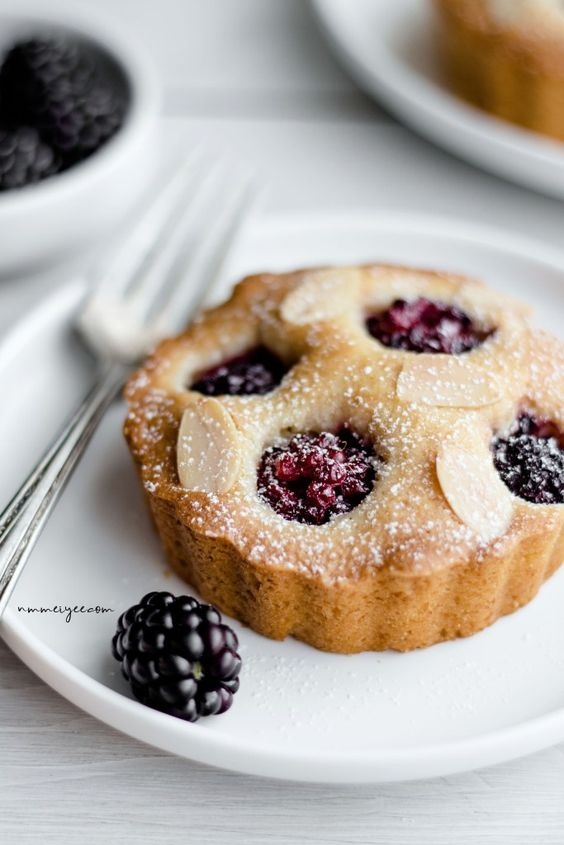
Origin, Evolution and Art of “Tarte”

“The Queen of Hearts, she made some tarts,
All on a summer day:
The Knave of Hearts, he stole those tarts,
And took them quite away!” – Lewis Carroll

As echoed by the words of Lewis Carroll, the association of “tarts” to the upper ranks of pastries has been there since the medieval ages. Fast forward to the present, their popularity hasn’t diminished by any means with more than three food holidays for tarts like the raspberry tart day (May 3rd), Cherry Tart Day (June 18th), Butter Tart Day (June 1st) and even National Milk Tart Day (February 27th) as declared and celebrated by “foodimentarians” around the world.

Tart is basically a baked dish with filling over a pastry base with the top left open. While the pastry is usually of shortcrust, the filling can vary from sweet to savoury; although modern tarts are fruit-based with or without custard. Miniature tarts known as tartlets like egg tarts are also gaining widespread popularity as they can essentially substitute for a complete breakfast for the “busy fast paced” world out there.

Originating from the Old French “tarte” or Medieval Latin “tarta”; the distinction of tart with flan, quiche and pie are often blurred with differentiation on the basis of the covering over the pastry or the filling type being sweet, savoury or meat and vegetable based. the categories of “tart”, “flan”, “quiche”, and “pie” overlap, with no sharp distinctions.

“Unless you are a professional, you will find the tart to be a high-maintenance, unforgiving whistle-blower of a pastry.” Sloane Crosley

On tracing the origins of tart, most food historians believe that they came about from the tradition of layering food or “putting things on top of other things” especially over notably round, flat pieces of bread or bread based crusts. Over time, the base was pastry type and then tarts had come about. Another line of thought maintains that tarts spring from the Medieval pie-making tradition, as a kind of flat, open-faced pie. Dating to at least mid 15th century, one of the earliest tarts was “the Italian crostata”, described as a “rustic free-form version of an open fruit tart” or “an open-faced sandwich or canape” due to its’ crusted appearance.

With the arrival of enriched dough around the 1550s, pies took a setback of being a common man’s way of recycling offal and table scraps, while tarts were made with fillings of “high cuisine” often made artistic and pleasing to the eye as well as palate. Often custard-based, a large, open tart presented a broad canvas upon which an artistic chef might compose a work of edible art with brightly-colored fruits, vegetables and spices added onto or into them, mostly being sweet than savoury, or a little of both.

Typically free-standing with firm pastry base of dough, itself made of flour, thick filling, and perpendicular sides; tarts have been made with varied fillings including jam, Treacle tart, meringue tart, tarte Tatin and Bakewell tart.

In fact, the “tarte Tatin”, named after the hotel (originated in France) serving it as its signature dish, is an upside-down pastry in which the fruit (usually apples) are caramelized in butter and sugar before the tart is baked. Over the years, this version as spread to other countries over the years with the filling upside-down being of not just apples or other fruit but also onions, tomatoes and other vegetables.

With savoury tarts getting their own special niche of “quiches”, German Zwiebelkuchen ‘onion tart’ or Swiss cheese tart (Gruyere); tarts and their related varieties are here to stay, especially for quick, comfortable, fun and artistic cooking. With June being the month of outdoors and picnics, tarts and pies are very much here to stay.

“I’m really a scientist. I follow recipes exactly – until I decide not to. And then I’ll follow something else exactly. I may decide I could turn this peach tart into a plum tart, but if I’m following a recipe, I follow it exactly.” Ina Garten

Posted in Christian, Daily, Family and Society, Life, Personal Musings, Stories Around the World

Of the White Handkerchief

” We must develop and maintain the capacity to forgive. He who is devoid of the power to forgive is devoid of the power to love. There is some good in the worst of us and some evil in the best of us. When we discover this, we are less prone to hate our enemies.” Martin Luther King, Jr.

Many of us, during our school or college days, may have those “friends” who were a part of needless teasing and mocking group who had often made days miserable, troublesome and quite depressing, in those times. Fast forward years later, when emails and contact with them were kept to a bare minimum or ignored to prevent emotional setbacks, thinking of those days. Suddenly out of the blue, a phone call or an appointment with the very same people who were directly or indirectly involved then. Will it be within each one of us to forgive them or not ? The old adage, “let bygones be bygone” may sound simple; but when faced with reality, it will never be easy.

“13 Bear with each other and forgive one another if any of you has a grievance against someone. Forgive as the Lord forgave you.” (Colossians 3:13)

As life and time teaches us again and again; there would be nothing good in fostering the hatred, regrets or dark memories. While those may have happened, it’s how we move on ahead that matters.

” 31 Get rid of all bitterness, rage and anger, brawling and slander, along with every form of malice. 32 Be kind and compassionate to one another, forgiving each other, just as in Christ God forgave you.” ( Ephesians 4:31-32)

On abetting the bad memories, we often lose out on enjoying and gaining our own happiness in life. When one part of us says, “forgive and move on” and the other holds us back with “the memories”; learn to chose the right one.

” 3 So watch yourselves. “If your brother or sister sins against you, rebuke them; and if they repent, forgive them. 4 Even if they sin against you seven times in a day and seven times come back to you saying ‘I repent,’ you must forgive them.” ( Luke 17:3-4)

All of us have been bad in someone’s books; which we may or mayn’t know about. When given a chance or opportunity to “do good”, do so without letting the memories of “what has happened with them” keep us from doing the right thing. We all need forgiveness from somebody at some point of our life, be it at the resent, in the past or the future. As life and the scriptures teach us, unless we learn to hold the olive branch; no one will lend us one or share the one in our hand. Above all what goes around, comes back to us; so despite all the setbacks and disappointments or dark memories of people, be kind, forgive and do good; if not for their happiness but for our happiness as well as one’s own peace of mind.

“25 And when you stand praying, if you hold anything against anyone, forgive them, so that your Father in heaven may forgive you your sins.” (Mark 11:25)

White Handkerchief

Freed from imprisonment, he returned home by train. The railway ran through their native places, and approaching its station, it would certainly pass by its native home. But the closer the house came, the more restless it became in his heart. It was hard for him to realize; how much grief he brought to his parents.
Despite the fact that the separation lasted for many years, he loved his parents and dreamed of meeting with them. The fact that he often neglected the love of his parents was even more his than the crime he committed.
He was not at all sure whether they would accept him at home or not. Therefore, he wrote home a letter in advance asking; hang a white handkerchief in the yard if parents are ready to take it. If the scarf will not …
However, the closer the house came, the stronger the heart beats. The house is still far away, but he does not take his eyes off, looks intently into the distance, to the place where people endlessly close to him live.
They are waiting for me at home, or I, the outcast, have to roam the world; for many days these thoughts have not given him peace.
As slowly as this train goes, it seems that it deliberately intensifies its suffering with its slow speed.
And in the distance they appeared at home. Soon will be his home. There is a white handkerchief in the courtyard of the house or not …
And suddenly … tears gushed from his eyes. He saw his home and yard, which was covered with large white sheets … ( Translated from Russian)

This above story may have been shared with similar versions across the world, either by word of mouth or in some forgotten book or been told an acquaintance or friends as “real stories” to those known by them. Maybe this story is one of those that emerge every few years, told new in one form or another. Even though the setting and the people may shift; the message endures. The feeling that it did happen, somewhere and at sometime helps one to believe int he spirit of forgiveness as well as the kindness, love and humaneness of man and society.

“When you forgive, you in no way change the past – but you sure do change the future.” Bernard Meltzer

Posted in Daily, Family and Society, Life, Personal Musings, poetry, Quotes, Stories Around the World

The “Air” That We Breathe

“The environment is where we all meet; where we all have a mutual interest; it is the one thing all of us share.” Lady Bird Johnson

As the world gears up to acknowledge the environment today as World Environment Day (June 5th); the focus for this year is on “the air around us”. For the basic survival of man, the dependence on nature and her elements are huge. Since the beginning many things have been taken for granted, from the earth forests for shelter; water to drink; other living resources as food to the availability of air for existence. Unfortunately over time, the trend has changed from use to misuse and abuse. For those of us who live thoughtless of the future, little do we realise how much the present affects us. The rise of air pollution based diseases creeping early into childhood years to early phases of “bad lungs” from young adulthood; the impact is vast and huge.

“The ultimate test of man’s conscience may be his willingness to sacrifice something today for future generations whose words of thanks will not be heard.” Gaylord Nelson

Although this focus is on the “air” for now; gradual understanding and implementation of measures to address the core issues of climate change and pollution have to be done on small scale as well large scale to repair the significant damage done and avoid more harm. As the saying goes, “little drops of water make rivers and lakes, finally leading into seas and oceans.”

“Away, away, from men and towns,
To the wild wood and the downs, —
To the silent wilderness,
Where the soul need not repress its music.”
—Percy Bysshe Shelley

Habits started young, stay for life. Hence start small measures for now, keeping it up to slowly add on and lead to big changes. With children at home, from using water wisely, replenishing water back into the soil, recycling old toys and reusing the plastic around for school projects are few of the many measures to start off. For adolescents and young adults, options for changes act at a more significant level like carpooling, cleanliness and planting drives as well taking significant measures to reduce and reuse plastic, switch to conserve electricity as well as power use are few of the many efforts that can be made for helping to sustain the environment that we live on.

Growing older, sticking to these measures and putting them into the daily practical life is what matters the most. The clash is always between convenience, comfort, essential and effort. To “reduce, reuse and recycle”, use wisely or even sustain and conserve, is never easy but requires tremendous care, foresight and planning from one. After all, to maintain the best things in life, it was never easy. The environment is never ours alone but to be shared across all species and it has the potential to sustain us when used wise and destroy us when the balance is harmed.

The Brook
By Alfred Tennyson

I come from haunts of coot and hern,
I make a sudden sally
And sparkle out among the fern,
To bicker down a valley.

By thirty hills I hurry down,
Or slip between the ridges,
By twenty thorpes, a little town,
And half a hundred bridges.

Till last by Philip’s farm I flow
To join the brimming river,
For men may come and men may go,
But I go on for ever……