Posted in Life, Quotes, Random Thoughts

Still in the Works

The irony of matter being multi-dimensional is not confined to physical entities alone.

Here metaphorically speaking, the reference is to people in general. If you ever tried doing anything good or a favour, rest assured that among the three people who have heard of it, at least one would have thought about whether the good part would have benefits. On the other hand, how many times have we refused innocuous favours as we feel they come with strings attached ? Honest answers though bitter would make us realize the multidimensional facet of human nature.

Having said this, we still love each other. Despite the tussles with our respective better half, altercations with family, disagreements with friends and hassles with colleagues and work authorities; nothing would make us change our world in our hearts. While we consider some unreasonable in our books, we might be the same for somebody else in their pages. As nobody is ever perfect, everyone has their unique mould with its own fair share of flaws and the cracks that makes every person a work of art.

Yes, people are unreasonable, inconsistent and selfish. And still love them. If you do good, people will accuse you of hidden self-interest and self-love. And still do good. If you are accompanied by success, you will find secret and obvious enemies. And yet strive for success. The good that you have done today will be forgotten tomorrow. And still do good. Sincerity and openness will make you vulnerable. And yet be sincere and open. What you have built over the years can collapse in an instant. And yet build. People will ask you for help, but they will blame you for it. And still help people. Give the world the best that you have and you will receive a cruel blow. And yet give the best that you have. – Mother Teresa

Posted in Life, Reflections, Stories Around the World

When the Water Boils

Everyone has their own batch of problems popping all over the place. Some we solve whereas we sleep on others. While some of us emerge from it stronger, others succumb to it and few get buried under them. The challenge to living is trying to get past the neon signs which flash “trouble ahead”. Armed with a cavalier attitude and fortitude, most glitches can be fought down to reach the temporary goal posts we have set up.By maintaining our perspectives and perseverance, eventually all adversities can be overcome. For life in a flat plane would hold no discoveries or memories. It’s how we react to the boiling water that makes all the difference.

Although I don’t know the source of the story, read on to find which one we would be.

The carrot, the egg and the coffee bean

A young woman went to her mother and told her about her life and how things were so hard for her. She did not know how she was going to make it and wanted to give up. She was tired of fighting and struggling. It seemed that, as one problem was solved, a new one arose. Her mother took her to the kitchen. She filled three pots with water and placed each on a high fire. Soon the pots came to a boil. In the first, she placed carrots, in the second she placed eggs, and in the last she placed ground coffee beans. She let them sit and boil, without saying a word. In about twenty minutes, she turned off the burners. She fished the carrots out and placed them in a bowl. She pulled the eggs out and placed them in a bowl. Then she ladled the coffee out and placed it in a bowl. Turning to her daughter, she asked, “Tell me, what do you see?”

“Carrots, eggs, and coffee,” the young woman replied. The mother brought her closer and asked her to feel the carrots. She did and noted that they were soft. She then asked her to take an egg and break it. After pulling off the shell, she observed the hard-boiled egg. Finally, she asked her to sip the coffee. The daughter smiled as she tasted its rich aroma. The daughter then asked, “What does it mean, mother?”

Her mother explained that each of these objects had faced the same adversity – boiling water – but each reacted differently. The carrot went in strong, hard and unrelenting. However, after being subjected to the boiling water, it softened and became weak. The egg had been fragile. Its thin outer shell had protected its liquid interior. But, after sitting through the boiling water, its inside became hardened! The ground coffee beans were unique, however. After they were in the boiling water, they had changed the water. “Which are you?” the mother asked her daughter. “When adversity knocks on your door, how do you respond? Are you a carrot, an egg, or a coffee bean?” Think of this: Which am I? Am I the carrot that seems strong but, with pain and adversity, do I wilt and become soft and lose my strength? Am I the egg that starts with a malleable heart, but changes with the heat? Did I have a fluid spirit but, after a death, a breakup, or a financial hardship, does my shell look the same, but on the inside am I bitter and tough with a stiff spirit and a hardened heart? Or am I like the coffee bean? The bean actually changes the hot water, the very circumstance that brings the pain. When the water gets hot, it releases the fragrance and flavour. If you are like the bean, when things are at their worst, you get better and change the situation around you. When the hours are the darkest and trials are their greatest, do you elevate to another level? How do you handle adversity? Are you a carrot, an egg, or a coffee bean?

Posted in Family and Society, Life, Reflections, Stories Around the World

Choose the Shades

With the advent of technology, there is a whole world of information out there. Along with it comes a slew of ideas, thoughts and opinions for the various events we find ourselves surrounded by. Consequently there is always a tussle between what is true or correct and what is wrong or falsified. Unfortunately not everything is in black or white, there are shades of gray that are far too many to differentiate. It becomes quite difficult to decide on the final course of action or words to reach an outcome.

Many claim on bringing the truth to light. Yet the truth can be tinged by the shades of relativity, haziness to opaqueness, lack or inaccessibility of information, communication deficits and sometimes varies as per one’s perspective. So how to discern the right and the wrong ? That’s when we remove the filters in our mind and look at the bare bones of basic facts.

Then we can imagine a blank page and then try drawing on it. With our senses finely attuned and instincts honed in, we can get the picture as long as all preconceived notions and perceptions are thrown out of mind. For besides misinterpretation, the latter clouds our individual thinking and judgement. Instead we lean on our strong sense of morality, honour and humanness to highlight the right colours to blend in as we draw the lines or curves. In such a scenario, the picture we draw would make us feel satisfied.

As an old Indian folklore goes, every blind man had felt the elephant but in parts, for none of them could step back and see the bigger picture. In real life, there may be situations where we have to decide an outcome or relay information, which would consequently lead to a chain of events which can be disastrous for some while positive for others. Then instead of clouding our minds with what we know, it’s easier to take a fresh page, write in the lines and then put in all the facts and knowledge that we have gleaned through our travels of life. For then even though perspectives may vary, the decisions will be based in a complete context on hard facts, certainty and true events not on speculation, hearsay or filtered imaginations. What’s good for one may be bad for others, but in the long run if both benefit then it is worth the change.

The Blind Men and The Elephant

A long time ago in the valley of the Brahmaputra River in India there lived six men who were much inclined to boast of their wit and lore. Though they were no longer young and had all been blind since birth, they would compete with each other to see who could tell the tallest story. One day, however, they fell to arguing. The object of their dispute was the elephant. Now, since each was blind, none had ever seen that mighty beast of whom so many tales are told. So, to satisfy their minds and settle the dispute, they decided to go and seek out an elephant. Having hired a young guide, Dookiram by name, they set out early one morning in single file along the forest track, each placing his hands on the back of the man in front. It was not long before they came to a forest clearing where a huge bull elephant, quite tame, was standing contemplating his menu for the day.
The six blind men became quite excited; at last they would satisfy their minds. Thus it was that the men took turns to investigate the elephant’s shape and form.

As all six men were blind, neither of them could see the whole elephant and approached the elephant from different directions. After encountering the elephant, each man proclaimed in turn:
“O my brothers,” the first man at once cried out, “it is as sure as I am wise that this elephant is like a great mud wall baked hard in the sun.”
“Now, my brothers,” the second man exclaimed with a cry of dawning recognition, “I can tell you what shape this elephant is – he is exactly like a spear.”
The others smiled in disbelief.
“Why, dear brothers, do you not see,” said the third man, “this elephant is very much like a rope,” he shouted.
“Ha, I thought as much,” the fourth man declared excitedly, “this elephant much resembles a serpent.”
The others snorted their contempt.
“Good gracious, brothers,” the fifth man called out, “even a blind man can see what shape the elephant resembles most. Why he’s mightily like a fan.”
At last, it was the turn of the sixth old fellow and he proclaimed, “This sturdy pillar, brothers, mine, feels exactly like the trunk of a great areca palm tree.”
Of course, no one believed him.

Their curiosity satisfied, they all linked hands and followed the guide, Dookiram, back to the village. Once there, seated beneath a waving palm, the six blind men began disputing loud and long. Each now had his own opinion, firmly based on his own experience, of what an elephant is really like. For after all, each had felt the elephant for himself and knew that he was right!And so indeed he was. For depending on how the elephant is seen, each blind man was partly right, though all were in the wrong.

Posted in Daily, Photography Art, Random Thoughts

Ripe not Sour

Yesterday night, the bedtime story was Aesop’s Fable of the Fox and The Grapes. As I was explaining the story and it’s morals to my toddler, the first question he asked was why didn’t the fox try shaking the branches so that the big fat grapes fall down. To answer, I had tried one explanation that the vine was too strong and second the fox was too tired. Unfortunately he didn’t believe it.

Late night, the moral of the story was going around in my head like clockwork. It’s so easy to speak ill of the things we can’t attain. Why do we do it ? May be it helps to distance ourselves from our failures, of what we couldn’t or can’t have. May be it does help us to dissociate ourselves between our ideas, beliefs or thoughts against what has happened. Yet the reality is by calling the ripe “sour” doesn’t change anything.

Life is full of goals, desires, ambitions and temptations. Some of them are within grasp but the rest we have to let go, either by choice or by circumstances. Though at times we do regret that the may-haves would have been possible if we gave a little extra push from our side. Although by blinding our eyes and declaring the true, false may bring momentary gratification but it doesn’t change the situation. Instead we miss out on another attempt for something better. For unless we pluck up the courage to admit and determine what went wrong, we will continue on the path of disappointment and disillusionment, eluding the “ripe grapes” repeatedly.

The fox who longed for grapes, beholds with pain
The tempting clusters were too high to gain;
Grieved in his heart he forced a careless smile,
And cried, ‘They’re sharp and hardly worth my while
(a quatrain by Aphra Behn in Francis Barlow’s illustrated edition of the fables (1687))

Posted in Family and Society, Life, Personal Musings, Photography Art

Happy by Berries

“..it is a corpse, and not man, which needs these six feet. . . . It is not six feet of earth, not a country-estate, that man needs, but the whole globe, the whole of nature, room to display his qualities and the individual characteristics of his soul.” (Ivan Ivanovich)

These were the lines told by the character Ivan Ivanovich in the story “Gooseberries” by Anton Chekhov. One of the most noted Russian playwright and short-story writer who brought early modernism into theatre, Anton Pavlovich Chekhov practiced as a medical doctor throughout most of his literary career. Gooseberries was written towards the end of Chekhov’s life and this tale explores the themes of social injustice, the quest for fulfillment and happiness as well as our perceptions of what makes us happy.

In short, Ivan Ivanovich, tells the story of his younger brother Nikolai Ivanovich. The latter is a government official who is possessed by the desire to return to the country where he had spent his early years with happiness and carefree joy. The sign of this cherished dream was owning land with a gooseberry bush. Finally his aspiration came true. Ivan Ivanovich tells of his visit to Nikolai, who has become now idle, stingy, mean and apparently happy living in what he imagined to be his earthly paradise. Ivan Ivanovich then contemplates about the nature of human happiness, which according to him is the result of any man’s views within the walls of the narrow world he’d built for himself.

For me, the beauty of this story lies in the measures by which we define our happiness. Each one has their own concept of being happy. While one labels being happy in the creature comforts and the luxuries confined within the four walls or one’s estate neglecting the outside world, the other feels happy by engaging in social activities and routines with other fellow beings.

The pursuit of happiness does lie in what we want in our lives. Fame, riches, material gains versus being free of spirit, enjoying social works and community, morality or spirituality; we get to decide what we want. One fact that is glaringly obvious is that happiness is a perspective that is temperamental. Happiness can be an illusion or a reality. Either by living a life of a buoyant pragmatic approach realism or by a vacuous bourgeois existence, we get to chose how to be happy. Just as no man is an island, our happiness increases when we share it. The approach for happiness might be different for each one of us, but if the path to one’s happiness lies in the complete destruction of another person, then that view of happiness is not only distorted but is dangerous and disastrous as well.


Posted in Family and Society, Reflections, Stories Around the World, Work

Plant the Worry Tree

In the present day, almost everyone holds a job. For instance, in a family of four, many a time both the husband and wife may be employed (or sometimes just the husband) or teenagers would be working part-time in order to contribute to their college fund. Even stay-at-home mothers have enough and more on their plate. Which or how ever may be the scenario or the reason, most of us hold jobs for certain hours everyday, after which we each return to our respective homes, either back to our families or shared quarters. The pressing question is how many of us bring our work with it’s own share of problems, back to our home ?

If we honestly answer, it would be an affirmative reply for many of us. Some of us may bring back our physical or actual work, others may bring back the problems and the mental as well as emotional difficulties faced that day, back with them while others may bring back both. Either way we lose out in our time at home with the family or our relaxation time for a whole load of stress again. The worst part  is that we get up the next day to start the whole cycle of “work-stress-work” again. For those of us who work in the areas that we like or have a keen interest in may disagree with the stress, by saying that work for them was never stressful. However, the fact is by bringing the work with or without the problems home; we are losing “family time” or “me-time” to recoup.

In my early days of college, there was a story told in one of my lectures, which I would like to share.

The carpenter who was hired to help a man restore an old farmhouse had just finished his first day on the job and everything that could possibly go wrong went wrong. First of all, on his way to work he had a flat tire that cost him an hour’s worth of pay, then his electric saw broke, and after work his old pickup truck refused to start. His new boss volunteered to give him a lift home and the whole way to his house the carpenter sat in stone silence as he stared out his window. Yet on arriving, he invited his boss in for a few minutes to meet his family. As they walked toward the front door, he paused briefly at a small tree, touching the tips of the branches with both hands. When he opened the door, he underwent an amazing transformation. His tanned face was one big smile as he hugged his two small children and kissed his wife. 

Afterwards, the man walked his boss to his car to say thank you. Now on their way out of the house, the boss’ curiosity got the best of him so he had to ask the man about the tree on the front porch. He said, I noticed when you came up on the porch before going into your house you stopped and touched the tree, why? “Oh, that’s my trouble tree,” he replied. “I know I can’t stop from having troubles out on the job, but one thing’s for sure – my troubles don’t belong in the house with my wife and children. So I just hang them up on the tree every night when I come home. Then in the morning I pick them up again.” “Funny thing is,” he smiled, “when I come out in the morning to pick ‘em up, they aren’t nearly as many as I remember hanging up the night before.”

We all have encountered  our own share of troubles and struggles, some of us deal with it by bringing them with wherever we go, some might ignore it hoping it would go away somehow while others try to deal with their problems while their heads are still above water. The idea of hanging the problems on a “worry tree” or a ‘‘trouble tree” outside the door isn’t a bad one, in fact we can find our own modifications on dealing with the stresses. I have been successful in dealing with my own share of problems and worries by laying them down at the feet of the Lord. “Cast your cares on the LORD and he will sustain you; he will never let the righteous be shaken. (Psalm 55:22)”

Posted in Christian, Life, Personal Musings, Reflections

Freedom of The Spirit

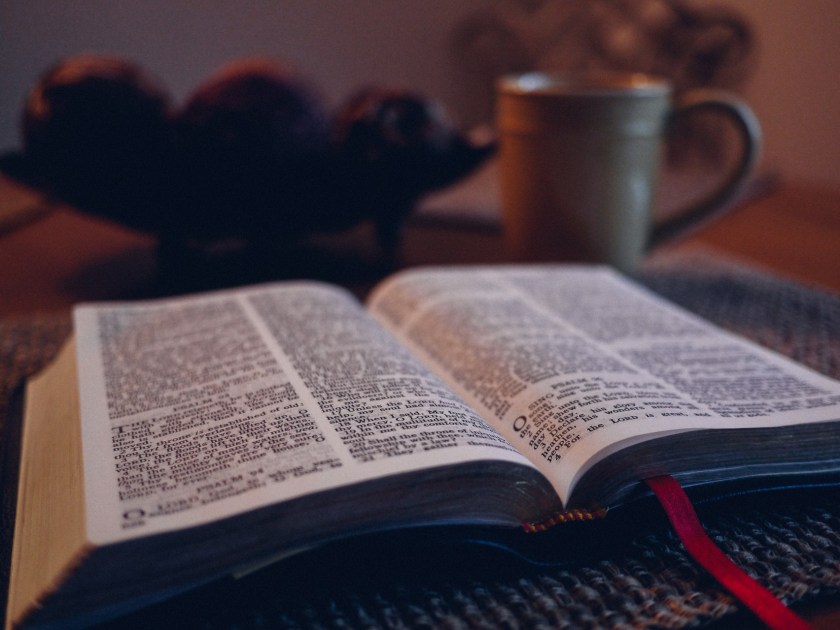
“The Lord is the Spirit; and where the Spirit of the Lord is, there is freedom ” (II Corinthians 3:17), New International Version

This message from the Bible has been haunting my mind for the past few days. Each time I review the verse, a persistent question is what is the freedom we are talking about here and whether I am free ?

To understand this better, I had to go into the chapter of II Corinthians,  wherein St. Paul talks about the pursuit of Holiness. The Lord is the Spirit, St. Paul writes. He could be referring to the Holy Spirit is God or the Lord (Jesus) is Spirit, even as God is Spirit or St.Paul could be saying that Jesus is the true meaning of God’s law. St. Paul then speaks about the freedom that God’s Spirit gives us. 

On reading the first letter to Corinthians (I Corinthians 11:2-16), he writes about misconception that because the Holy Spirit was working in their lives; they consider themselves free to do whatever they wanted.

It is here that we understand what “freedom” really is. True freedom is not the right to do whatever we want. True freedom is when we turn to Christ; the Holy Spirit frees us from our evil deeds and from the devil’s power. However, that is just the beginning of God’s work in our lives. By His Spirit, God has given his people the freedom to become his children, to understand His Word and removes the veils covering our mind. God’s spirit frees us from the sticky web of sin which entangles us, trapping and blinding those who live in it.

So, the answer to what is freedom is clear ? Now, to find it, we have to change so as to embrace the Spirit of the Lord and be free to serve God to our capability.

15 Even to this day when Moses is read, a veil covers their hearts. 16 But whenever anyone turns to the Lord, the veil is taken away. 17 Now the Lord is the Spirit, and where the Spirit of the Lord is, there is freedom.18 And we all, who with unveiled faces contemplate[a] the Lord’s glory,are being transformed into his image with ever-increasing glory, which comes from the Lord, who is the Spirit. – 2 Corinthians 3:15-18, Holy Bible, New International Version®, NIV® Copyright ©1973, 1978, 1984, 2011 by Biblica, Inc.® Used by permission. All rights reserved worldwide.