Posted in Life, Personal Musings, Reflections

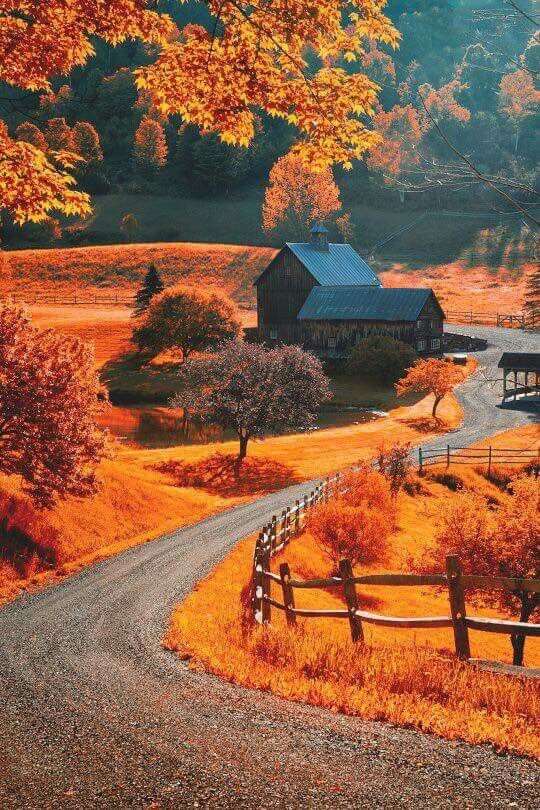
Roads that Curve

While visiting university friends who had relocated to another city, getting to the city wasn’t an issue but finding their residence was. With Google giving directions, the traffic being routed by the city police and previously gotten directions, we eventually got there but it was an enlightening experience.

The entire journey reminds one of how similar our lives get to be. As one goes through the days, there would be plenty of instructions, chaotic thoughts, previous knowledge, creative ideas and misled information to sort through before nightfall or the eventual end. Amidst all the hullabaloo, to take control or discernment of the right isn’t easy.

“A highly developed values system is like a compass. It serves as a guide to point you in the right direction when you are lost.” Idowu Koyenikan

While on some days, following set instructions maybe easy other days it isn’t as direct. Along the process one makes plenty of errors, experience more downhills than uphills and redefine own understanding. Amidst all this chaos one learns to direct the self with the help of inner values, instincts, conscience, humaneness and Faith. These are few of the many factors that take the lead in finding a way out through the pandemonium thoughts and situations. Letting them all lead in solo may’t help us, but together, the mayhem settles and the terminus maybe in sight.

“Your beliefs become your thoughts,
Your thoughts become your words,
Your words become your actions,
Your actions become your habits,
Your habits become your values,
Your values become your destiny.”
― Gandhi

Posted in Daily, Family and Society, Personal Musings, Quotes, Reflections

Trails to Track

With the schools staying closed for the first week of the year, holiday mood was still going strong at the home front. As a consequence the family homestead was filled with occasional bouts of uproarious running feet. The holiday favourite of “Hide and Seek” was on, with a twist of the “I Dare” to the caught to avoid being the next seeker. As the seeker was rooting out the “hidden”, the constant lookout for any traces or clues to their whereabouts was on. This game of “Hide and Seek” reminds one a lot of the different trails and marks that each one of us leave behind.

“No memory is ever alone; it’s at the end of a trail of memories, a dozen trails that each have their own associations.” Louis L’Amour

For each one of us, we have our own hidden cache of trails, some pleasant some not so, of memories and instances where one event lead to the next making way for a pleasant change; and then again may a series of unpredictable or nerve-wrecking series of changes which may be still going on. All of us leave traces behind, but whether one chooses to leave those to be of the good kind, or the negative type, is of own choosing. The state of affairs may never be of own choice many a time. The difference always lies in how we respond to them. At the end of the day, the traces we leave behind will always reflect a part of ourselves, maybe in an overt way or a silent subtle manner. Yet whether the feeling of negativism or positivism from those vibes, that feel from the traces we leave behind are ours alone.

“Every person has the power to make others happy.
Some do it simply by entering a room
others by leaving the room.
Some individuals leave trails of gloom;
others, trails of joy.
Some leave trails of hate and bitterness;
others, trails of love and harmony.
Some leave trails of cynicism and pessimism;
others trails of faith and optimism.
Some leave trails of criticism and resignation;
others trails of gratitude and hope.
What kind of trails do you leave?”
— William Arthur Ward

Posted in Food, Stories Around the World

The “Brownie” Way

“And I’ve just pulled a new brownie out of the oven: a deep, dark chocolate base with a praline pecan topping, sort of a marriage of brownie and that crispy top layer of a good pecan pie.” Stacey Ballis (author of Wedding Girl)

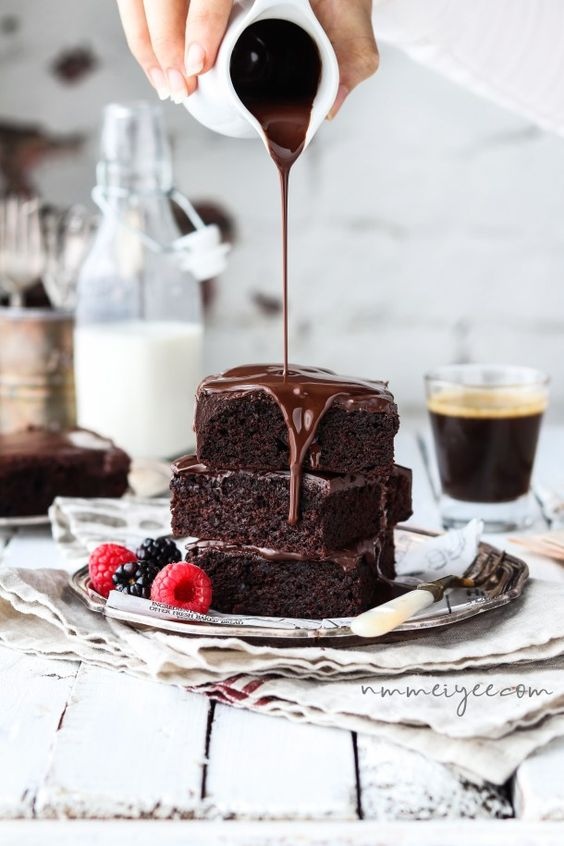
Something quick, easy and delectable are few of the pre-requisites required for adding to the list of holiday baking. If chocolate is added in, the better. It would be something that blend in with other well loved and basic desserts. That something would be square, baked or frozen cut choclate cake pieces, more popularly known as the “brownie”. Coming in a variety of forms, from fudgey to cakey with nuts, fudge, frosting, cream cheese, chocolate chips and the favourites included in the batter; the brownie is an all-time favourite of many. Like sheet cookies, they may eaten by self or with milk, ice cream (a la mode), topped with whipped cream or sprinkled with powdered sugar and fudge.

Like all delectable treats, brownies have their own share of legends. As one legend credits the brownie to the creative ingenuity of Palmer House Hotel pastry chef (1893) for the Palmer House Brownie with walnuts and an apricot glaze made for the Chicago World’s Columbian Exposition on the request of the owner’s socialite wife Bertha Palmer. The first-known printed use of the word “brownie” was to describe a dessert in the Boston Cooking-School Cook Book by Fannie Farmer (1896 version) in reference for a cookie-type confection that was colored and flavored with molasses and made in fluted marguerite molds. Later further publications like The Boston Cooking-School Cook Book (1906) edited by the same Fannie Merritt Farmer records a recipe brownie as an adaptation of her chocolate cookie recipe to a bar cookie baked in a rectangular pan. Another well record as written in the Baking Classics (Betty Crocker) is of a housewife who was making a chocolate cake but forgot to add baking powder. When her cake didn’t rise properly, instead of tossing it out, she cut and served the flat pieces (Bangor, Maine) which would probably account for the Bangor Brownies.

As food historians try to still trace the exact inventor of the “brownie” while the legends credit it to added melted chocolate to a batch of biscuits (added by mistake) or the cook who didn’t have enough flour while baking a cake; brownie are one of the simple things that can be made quite elaborate for the festive season. For instance consider the sandwich brownie (with an ice-cream, cream, icing sugar, meringue or peanut butter as the filling in the middle) or the layered brownie with double chocolate chip at the base, then the layer of Oreos and finally brownie batter on billows of cream cheese, a delight for the wintry holidays. As for the mix, add a scent of cinnamon, essence of the vanilla (blondie twist), sprinkle of the flavours of star-anise, honey or even a little of the cayenne for that extra “hot” to the sweet; brownie can be made as to own choice, flavours and twists. A platter of homemade special brownie can give an extra zest to the holidays. So set, get and go experimenting for a new family festive tradition.

1907
Lowney’s Cook Book
Boston, Massachusetts

Bangor Brownies (p 261)
¼ cup butter
1 cup brown sugar
3 squares chocolate
1 egg
½ to ¾ cup flour
1 cup nut meats
¼ teaspoon salt

“cut in strips”
Source: New England Recipes 

Posted in Daily, Food

Back to “Mush Meal”

Spooning the porridge into my nephew’s mouth; while doing a short stint of baby-sitting at the family home, was indeed a remarkable experience. The mush meal of ragi with jaggery had lead to early memories of feeding my toddler and creative ways that were tried to mash the cereals, convert them into an exciting enticing gooey mush and trying to prevent the “spit battle” with these young people. While most of the gooey mesh landed in the little mouth (more than on the bib); surprisingly the porridge pot was emptied by the adults ranging from twelve years to fifty. Though it was not just gooey creamy mush but laced with a couple of raisin, honey, dried cranberries and dates as a post luncheon quick dessert.

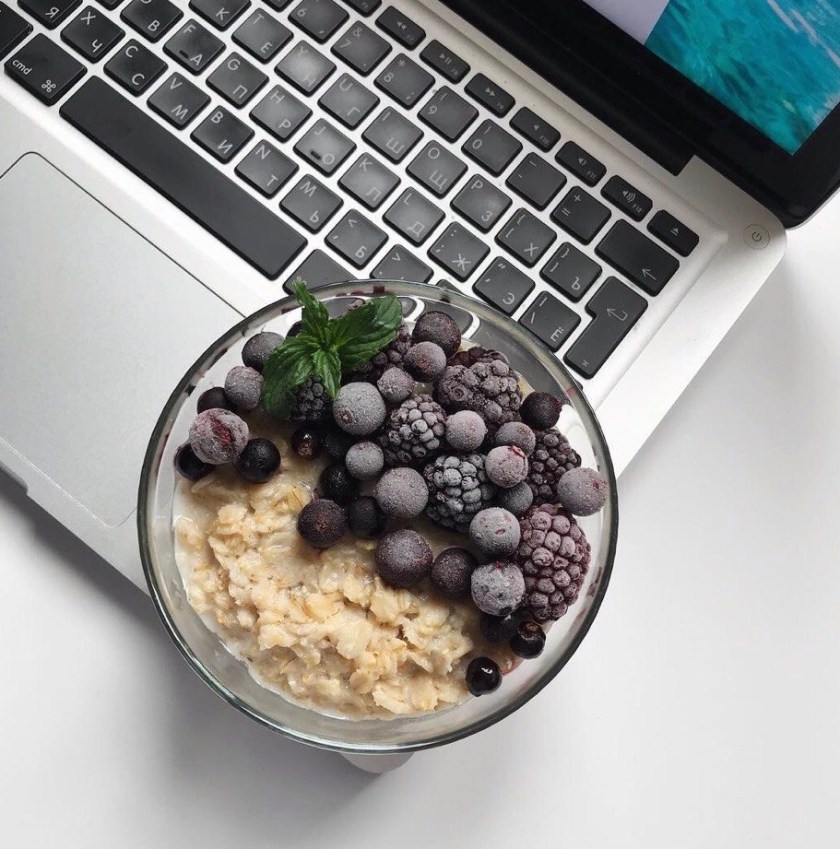
And for anyone who thinks that these mush meals are just for these infants, think twice before refusing the wholesome meal of grits (ground corn meal), semolina and milk porridge or the good old oats or wheat porridge laced with plenty of fresh berries, treacle on top and caramelized sugar to go, all complete with an omelette and bread to satisfy the morning hunger pangs, especially when meals have to quick, simple, wholesome and varied.

From the very early days of primitive cooking, the making of these mush meals was what sustained them especially during the lean periods when meat was scare or inedible. Besides requiring very basic preparatory time, these meals could be prepared anywhere and everywhere as long as one had a supply of grains, water, a pan and the fire. Add-ons of sugar, wild berries, honey, vegetables and meat were something that had evolved over the years.

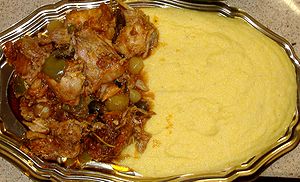
As for the good old porridge, there are plenty of varieties to be tried. From the South American Avena (drink prepared with stewed oatmeal, milk, water, cinnamon, clove and sugar), Malaysian and Indonesian preparation of Bubur ayam (rice congee with shredded chicken meat), Italian Polenta (cornmeal boiled into a porridge, eaten directly or baked, fried, grilled) and the Swedish or Finnish “Vispipuuro” ( sweet, wheat semolina (manna) dessert porridge made with berries) are just a few of the numerous varieties and styles of these mush meals or porridge.

If one still feels that these mush meals as breakfast are off the menu; modify them a bit and serve them as sweet puddings. Besides being quick and basic, these desserts have an easy way of keeping everyone, (small or big), happy and second helpings are often a battle, especially the more sweeter they get. For a change of breakfast scene, getting a start with porridge may bring back memories of the early childhood years, quick meals and less dish up effort and time.

Posted in Life, Personal Musings, Quotes, Reflections, Stories Around the World, Work

The Real Skill

“Real knowledge is to know the extent of one’s ignorance.” Confucius

With a fundraiser planned as part of the community projects at the work place; each one was designated a special set of tasks based on individual choices and skills. Some were forefront with the raising funds sections, while others were allotted in projects from cooking to art, designing posters and so on. Amidst all this, comparisons and remarks were found in the conversations regarding the ability or lack of special talents or skills. The truth is each one is skilled in their own way. While one may excel at baking, the other may be better at managing events or designing the vent posters. Each one has their special own skills.

“Attitude is more important than the past, than education, than money, than circumstances, than what people do or say. It is more important than appearance, giftedness, or skill.” Charles R. Swindoll

Beyond the skills that define one, it is the mind and the attitude behind them that reflects the real self within. Each one is skilled or can excel at certain tasks; but knowing one better than the other, doesn’t imply that one person is better than the other. Believing that one is defined by their skills alone, is a foolhardy thought. Each one is gifted in a way of their own. Yet beyond that, it is the mind that matters more. One can always outshine the other at the same or similar art; but keeping a kind, humane and gentle approach will leave a characteristic individualized hand-print behind, for the rest of the world to observe, reflect and learn from.

“The only person who is educated is the one who has learned how to learn and change.” Carl R. Rogers

After winning several archery contests, the young and rather boastful champion challenged a Zen master who was renowned for his skill as an archer. The young man demonstrated remarkable technical proficiency when he hit a distant bull’s eye on his first try, and then split that arrow with his second shot. ‘There,’ he said to the old man, ‘see if you can match that!’

Undisturbed, the master did not draw his bow, but rather motioned for the young archer to follow him up the mountain. Curious about the old fellow’s intentions, the champion followed him high into the mountain until they reached a deep chasm spanned by a rather flimsy and shaky log. Calmly stepping out onto the middle of the unsteady and certainly perilous bridge, the old master picked a far away tree as a target, drew his bow, and fired a clean, direct hit. ‘Now it is your turn,’ he said as he gracefully stepped back onto the safe ground.

Staring with terror into the seemingly bottomless and beckoning abyss, the young man could not force himself to step out onto the log, no less shoot at a target. ‘You have much skill with your bow,’ the master said, sensing his challenger’s predicament, ‘but you have little skill with the mind that lets loose the shot.’
Author Unknown

“The only true wisdom is in knowing you know nothing.” Socrates

Posted in Daily, Family and Society, Personal Musings, poetry, Reflections, Work

Special Role of Own

“Unless you try to do something beyond what you have already mastered, you will never grow.” Ronald E. Osborn

During the pre-college days, holding a summer job was a necessity. Whether the job was for a few weeks or the entire summer, each experience taught something new. One of the jobs was to assist in a day care centre meant for special needs children. Majority of these children were diagnosed with autism, Down’s syndrome or cerebral palsy. The days were filled with music, assisted play and activities centered around them. Working in their environment, interacting and playing with them, one learns to admire their spirit,resilience and talent. Although these children realize the fact that they are different; it doesn’t stop them from playing their own special role in life, making a difference to those around them.

“Every mind was made for growth, for knowledge, and its nature is sinned against when it is doomed to ignorance.” William Ellery Channing

Each one of us, have a special talent, gift or ability that many a time, may be deemed as normal by us, but special for others. The receptionist manning the entrance enjoys the daily morning greeting and simple talk, the neighbour next door enjoys an impromptu tête-à-tête, the colleague whom unknown gentle words help to settle their inner storms and similar instances, are all special memories for some people. The role that one plays in this world is never small. Every person, the roles that they play , the mark they leave behind and the memories that they become a part of; all have their own significance. The entire truth is known by The Creator and Time alone. While man may waste his own time in unnecessary speculations, calculation and interpretations; instead finding or doing their own role and purpose in life, may make their life as well lives of those around them more beautiful, meaningful and treasured.

“Change is the end result of all true learning.” Leo Buscaglia

A special place
There is a special place in life, that needs my humble skill,
a certain job I’m meant to do, which no one else can fulfil.

The time will be demanding and the pay is not too good
and yet I wouldn’t change it for a moment – even if I could.

There is a special place in life, a goal I must attain,
a dream that I must follow, because I won’t be back again.

There is a mark that I must leave, however small it seems to be,
a legacy of love for those who follow after me.

There is a special place in life, that only I may share,
a little path that bears my name, awaiting me somewhere.

There is a hand that I must hold, a word that I must say,
a smile that I must give for there are tears to blow away.

There is a special place in life that I was meant to fill,
a sunny spot where flowers grow upon a windy hill.

There’s always a tomorrow and the best is yet to be,
and somewhere in this world, I know there is a place for me.

Author Unknown

Posted in Family and Society, Life, Musique, Stories Around the World

Of Summers and Picnics

Although “eating outdoors” may have been a part of civilization since the beginning, the concept of enjoying a picturesque relaxed lunch were in fad post French revolution (1789) when the royal parks were opened to the French public. This concept saw a gradual evolution with hunting parties, Renaissance era country feasts and Victorian garden parties, especially the latter as grand occasions complete with tables, chairs, linens, crystals, catering and gourmet food to top it. Known as “pique-nique” (France, 1794) then, this event turned out to be a social calendar earmarked occasion, catching the trend across Europe and became officially known as “picnic”.

The tales of Robin Hood are one of the first accounts of picnicking when Robin with his band of Merry Men would dine informally under the shelter of trees. The concept of “picnicking” once started had caught on with picnic societies, long picnics as well as “picnic fashion” and “themed social picnics” being created. With International Picnic Day today (June 18th) and to get the most reluctant picnic goers out there, here are a few picnic trivia around the world to get one started.

To have a superb picnics with cushions, rugs and furniture, one would have to go to Turkey, where the trend was initiated. Along with comfort, games and string lighting; a potluck-style selection of stuffed veggies, grilled meats and desserts are often brought. Towards nightfall, picnics still going on turn into bonfires complete with music, dancing and raki (Turkish licorice-flavored alcohol).

Enjoying the National Picnic Week held each June in Britain, it would be incomplete without the Scotch Egg. One of the most iconic picnic foods created towards the late 18th century, these fried sausage-wrapped boiled eggs were easy to be eaten on the road. Other choices like pasta salad, fish and chips, potato salad, deviled eggs, cheese, brownies, cookies, sandwiches, subs and many more form form the huge list of picnic foods which taste good when served cold.

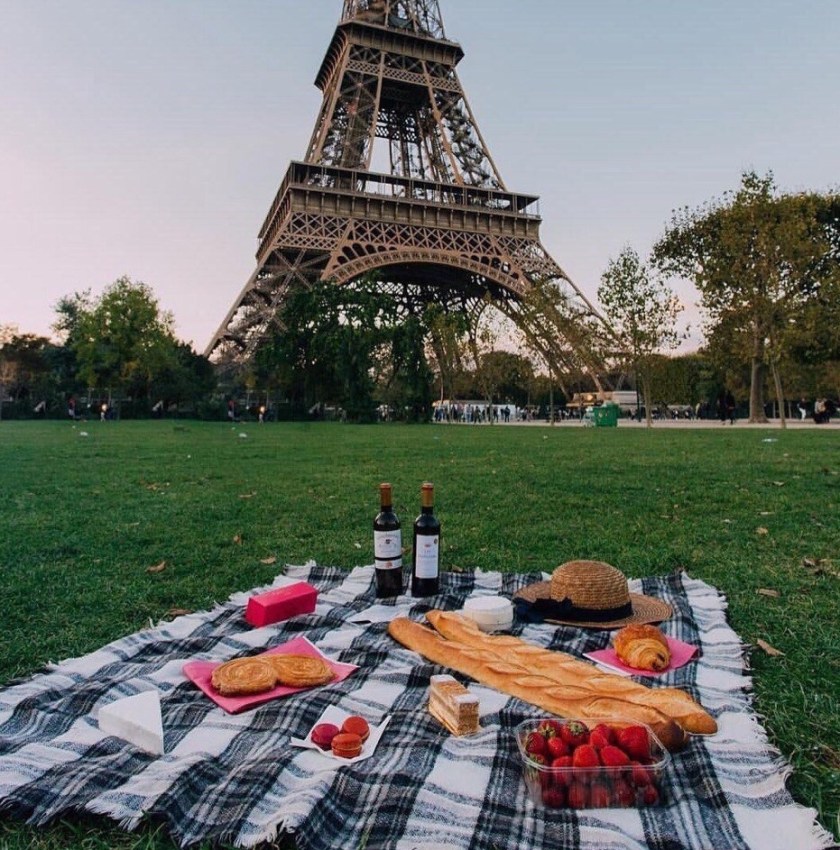
Picnics in the French outdoors especially Bastille Day involves fine dining especially as far as wines are concerned. Plastic cups spoil the flavour and aroma of wine with fresh air. On a personal front, keeping plastic to a minimum and enjoying reusable Tupperware will make the outdoor dining more enjoyable and nature safe.

To enjoy Christmas picnics, the Argentinian beaches would be good place to start. Holidays outdoors are celebrated complete with roasted or barbecued turkey or goat. Going north, Americans enjoy picnics specially on the Fourth of July where along with competitive races, three legged races and other picnic games; speed eating contests of pies, watermelons, burgers and the like have become the major “game attraction”.

While cherry blossoms or “hanami” announce the Japanese picnicking season; the Italians prefer Easter Monday, known as Angel’s Monday or Pasquetta as picnic time. One of the most iconic picnics was the Pan-European Picnic (August 19, 1989) where picnics were held with hundreds of East Germans grabbed the opportunity to cross into Austria. Weeks later Hungary had opened the border, the Iron Curtain had been breached, and on 9th November the Berlin Wall came down. While croquet, soccer, and badminton are common picnic games; kubb is a regular game in Denmark, Finland and Sweden. This lawn game is a mix between bowling and chess, where players attempt to knock over wooden blocks called kubbs with wooden batons.

With the great outdoor weather, it would be remiss to lose out on the opportunity to go back to childhood, capture the bliss of the summer skies and comfort food, while finding peace in the midst of nature. The only catch is to enjoy, being nature safe and eco-friendly. As the best things of life are captured by moments and memories; the essence to living is to make more and enjoy them too.

“If you go down in the woods today, you’re sure of a big surprise
If you go down in the woods today, you’d better go in disguise
For every bear that ever there was will gather there for certain
Because today’s the day the teddy bears have their picnic

Every teddy bear who’s been good is sure of a treat today
There’s lots of marvellous things to eat and wonderful games to play
Beneath the trees where nobody sees they’ll hide and seek as long as they please

That’s the way the teddy bears have their picnic “

….The Teddy Bear’s Picnic by Henry Hall