Posted in Daily, Food, Stories Around the World

Of Falafel, Vada and Beyond…

Soak the raw chickpeas (with or without baking soda) overnight. Ground them with parsley, scallions, garlic as batter and add spices coriander or cumin, if needed. Instead of chickpeas, dried fava beans can be used similarly. They are stone ground and mixed with leek, parsley, coriander, cumin and dry coriander. Shape the mixture into balls or patties. Serve deep fried or oven baked. Falafel from the original Levantine cuisine is ready. Have them alone, wrapped (within lafa) or stuffed (into a hollow pita) with tahini and garnishes of tomatoes, cucumber, lettuce or even pickles.

One of the basic things of life, that brings together different cultures, places, and origins to a common area of interest is “food”. As one explores the different resources and basic ingredients; varieties are made, experienced and experimented with subtle differences across the cultures and cuisines. With International Falafel Day being held tomorrow (June 12th), it would be quite interesting to learn of similar recipes and try a few in the home kitchens or experiment with local ingredients making subtle changes.

Soak the legumes in water. Ground them for the batter. Season the batter with cumin seeds, onions, curry leaves ( sauteed or plain), salt, chillies, black pepper with or without minced or sauteed vegetables for more taste or nutrition. Add ginger or baking soda for large batch fermentation or more fluffiness respectively. Shape the mixture and deep fry. The Indian “Vada” is ready. Alternatives to legumes (pigeon pea, chickpea, black or green gram) are sago or potatoes. Serve hot or crunchy with or without dip.

Served as savoury fried snacks or even for breakfast; “Vada” also known as wada, vade, vadai, wadeh or bara have been a staple of South Indian cuisine as early as 12th century. There are varied types of vadas described as fritters, cutlets, doughnuts or dumplings. Popular ones include the medu vada of South India, batata vada of West India or mixed as food preparations like dahi vada or vada pav.

Season cooked and mashed black eyed peas with salt and chopped onions. Mould the mix as a large scone and deep fry in palm oil. Serve split in half and stuff with spicy pastes of vatapa, caruru made of shrimps, ground cashew, palm oil, okra, coconut milk and more. For vegans, serve with paste of hot peppers and green tomatoes. Acarje of West African and Brazilian cuisine are ready. Boil the basic ingredients (instead of frying) and abara is ready.

Derived from the Yoruba language, Àkàrà is a generic word meaning “bread” or “pastry” or the dish itself. “Acarajé” (brazilian) is derived from either the Yoruba word combinations “àkàrà” (bread) and “onje” (food) or “àkará” (a round pastry) and “je” (to eat). Popular in West Africa and a part of their culture; akara (rice flour, mashed banana, baking powder, sugar) was often fried and prepared for major occasions like childbirth, weddings, parties or funerals. When sold on the street with addition of ingredients like fried beef, mutton, dried shrimp, coconut among others; acarje was created and struck mass popularity since then on. Various similar combinations like acaca (steamed corn mush) have also coexisted.

Thus for a break from the “known dishes”, it would be fun to attempt newer simple recipes for a little different, spicy and healthy combination to keep the palate as well as “the kitchen experimentation spirit” going. With varied and subtle variations of familiar ingredients, it would be interesting to create a new family or home masterpiece or tradition to carry over to the next generations.

Posted in Family and Society, Life, Personal Musings, Random Thoughts, Reflections

Paradoxes of Time

“Silentium est aureum”

Over the weekend, with the entire family in the neighbourhood; it was quite refreshing and entertaining to exchange the various events, stories and happenings over the past few months. Listening to my cousins as they had regaled us the best parts of their college life; it brought back the memories of the younger days. From the days of classes, fun, music, dance, parties, sleepovers and all nighters to the present day of work, colleagues, time schedules, planners, pending household work and rambunctious toddlers running around the house; brings to mind the sharp contrast between the two lives. While in the younger days one had longed for the company of friends and fun; the older we grow, one longs for the occasional or frequent peace, quiet and solitude for a while. As the famous Latin proverb goes; Silence is indeed golden.

“We sit silently and watch the world around us. This has taken a lifetime to learn. It seems only the old are able to sit next to one another and not say anything and still feel content. The young, brash and impatient, must always break the silence. It is a waste, for silence is pure. Silence is holy. It draws people together because only those who are comfortable with each other can sit without speaking. This is the great paradox.” Nicholas Sparks

Time has a huge list of paradoxes. Remember the younger days of sleep overs, gate crashing parties, Goobers, lemonade sprees, stuffing one self with kachoris, pizzas and the long list of the “forbidden” as well as movie nights over the weekends. These days, although one has the freedom to enjoy food, friends, parties, music and entertainment to the maximum, without the constant nagging and laying down of the rules; when in excess life feels mundane.

Over time, as our personal trends, habits and favorites change, alter or get refined; certain relationships tend to get overlooked. The ships that once had anchored us, may be lost due to bad navigation or the storms that we encounter. One might put them down to “growing up” or the transition phase. Unfortunately when caught up in the silence later; the feeling of guilt, regret and remorse run through as common thread leaving behind fond memories laced with guilt.

“If you look the right way, you can see that the whole world is a garden.” Frances Hodgson Burnett

To not let the set-down of remorse, guilt and incompleteness happen, one has to only look around and view the world from far. To enjoy the pleasures of nature, we need both the new and the old. The presence of the ever present flowers, plants and the green with comfort of our friends, family and good shoes making our walk through life more comfortable and memorable. To enjoy the garden, one needs both company and solace at the right time. Learning to put the situation to use at the given time is one of the arts that life has taught us and will keep on teaching us through its’ own time.

Posted in Personal Musings, Quotes, Stories Around the World

Rekindle the Dying Embers

One of the prerequisites of camping in the woods (or even large backyards) or during nature nights is to start and maintain the fire. Once started, the flames keep the light coming and conversation going, as long as the flames are fed alongside. As the flames of the fire die down, unless the dying embers are stoked back the fire won’t serve it’s purpose.

Since the beginning of time, man has been fascinated by fire and its’ effects. What sometimes we fail to realize, is that we all have a fire in ourselves too. Like the dying embers, we need to be stoked once in a while. The spark within us often fights to stay alive especially during personal tragedy or when the situations get beyond our control. Unless the sparks stays to restart the fire, the fight goes out from within. Some days, the struggling sparks are ours, other times they belong to the sparks of others who are going through a difficult patch. Those times, we need to set the spark with words of encouragement and courage as tinder and kindling to relight the flame again.

Like how Paige Hunter had rekindled the flame of many with her “notes of hope” attached to the Wearmouth Bridge in Sunderland, England, the latter which is notorious for its suicides; we can bring back someones spark by kind words and gentle understanding. One doesn’t have to go far to look to do something, when it things are happening around them right under their nose. It might not take much effort from our part, but will make a huge difference for someone else. For even one dying spark, when revived will bring back the light and spread warmth in this cold world.

Posted in Daily, Life, Personal Musings, Photography Art

Actions mirror Thoughts

“Mirror mirror on the wall”

This line had first made its appearance in the “Snow White”, a 19th-century German fairy tale first published by The Brothers Grimm published in the first edition of their collection of Grimms’ Fairy Tales. After being translated to English, it has found its’ way into various works of art, entertainment and literature.

While in the story we deal with a magic mirror who gives answers, in reality mirrors reflect what is there. There is no addition or subtraction involved unless if the mirrors are concave or convex where they become distorted or multiple mirrors which cause way too many images. Likewise our actions and feelings mirror our thoughts. It is like a two way street. If we think good, we feel good and do good. Then the question arises of how do we get rid of the bad or unwanted thoughts lurking in our mind. The cluster of bad or depressing feelings we encounter in our interactions with others can’t be easily suppressed by flipping a switch. By sweeping these emotions under the carpet, we gather them as dust which finally will accumulate to a point when it will cause a drastic slip when we least expect it. These are triggers of what will lead to even worse situations down the time frame.

The only way out is to address them. Just as our thoughts and feelings mirror our actions, eventually we will succumb to the former unless we resolve to tackle them. Sometimes to find a solution is difficult, then we reach an acceptance and search for alternatives for a way out so that those emotions are dealt with or faced. While some of us may take the physical form of de-stressing our thoughts, others will turn to creative art or faith to seek answers or simply express. Whatever may it be, find a way out before we get locked in the trap of mirroring our thoughts positive and negative into actions which may later lead to regret. Time and again, the old adage “what goes around, comes around” has been proved, so instead of refuting it with mirrors of our negative emotions, find something to vent the latter and turn the mood to optimism coated with realism.

Posted in Daily, Food, poetry, Quotes

Art of Tisane

“There is something in the nature of tea that leads us into a world of quiet contemplation of life.” -Lin Yutang

One of the concoctions of the millennial which is slowly catching up is the herbal tea, otherwise known as tisanes. Quite popular in certain places especially the Orient, herbal teas have been often been intertwined with the local tradition of indigenous medicines which is not only for enhancing the overall health, but also addresses specific health related issues. As a matter of fact, herbal tea can be made from a long list of ingredients which start with every letter of the alphabet except the letters “I” and “X”. There is little wonder why then, this trend is slowly catching as the soothing sips of nature’s remedies answers many aliments of man brought on as a consequence to his existence in this modern world.

“The outsider may indeed wonder at this seeming much ado about nothing. What a tempest in a tea-cup! he will say. But when we consider how small after all the cup of human enjoyment is, how soon overflowed with tears, how easily drained to the dregs in our quenchless thirst for infinity, we shall not blame ourselves for making so much of the tea-cup.” ~Okakura Kakuzo

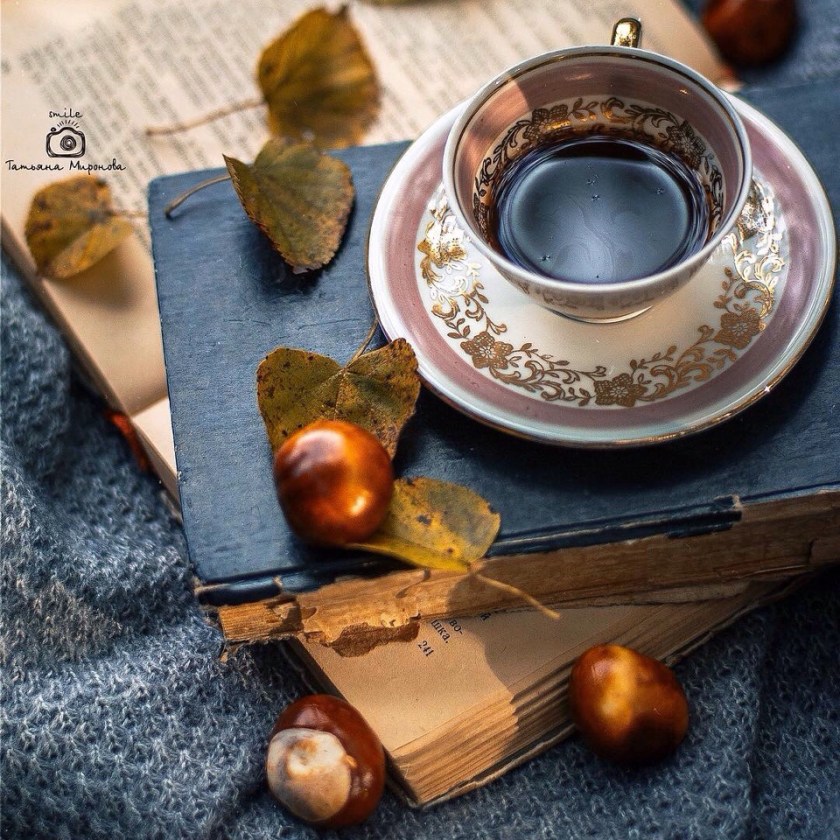
As the tantalizing aroma of the brew hits, the memories of the past, present and the future swirl as the leaves seeped in the china cup. Although along with the health benefits, the very act of making and pouring the tisane is calming, like an art true to its’ form. A cup of herbal tea makes a pretty picture with colours borrowed from the autumn leaves interlaced with summer skies and spring air chasing away not only the winter chills but also the coldness and stress within. The warm cup floods the senses comforting the nerves; unsettles, raw and tender by chaos of the day.

While each one of us have our own blend to break in the day, it makes no difference as all finally help to start a new page with optimism in this cynical world that we find ourselves in.

“Teaism is a cult founded on the adoration of the beautiful among the sordid facts of everyday existence. It inculcates purity and harmony, the mystery of mutual charity, the romanticism of the social order. It is essentially a worship of the Imperfect, as it is a tender attempt to accomplish something possible in this impossible thing we know as life.” -Kakuzo, Okakura

With Every Sip We Take

There is a little ray of sunshine
in every single steeping cup
bringing the sweetest smile with each sip we take.
These leaves do warm us deep inside
it’s such pleasure on a freezing night
the wistful scent of joy to ease your tired eyes.
Your mind now wrapped around the china
only one thing in those thoughts
a delicious trip to savory distant lands.
Choices staring at you in numbers
which destination shall you choose
it doesn’t matter as each one will tell its tale.
Bosiar

Posted in Christian, Quotes, Reflections, Work

Head-to-head or Not ?!

One of the hardest parts of social conversations especially in a public venue like the market with the vendors, at workplaces, in schools, social functions and even long-held traffic queues is the art of avoiding a confrontation or the brouhahas or the run-ins, however one wants to call it. Worse is to escape one even especially when it is inevitable.

It is very tricky to avoid pointing a finger and saying “Thy fault is thine own” especially when the hard fact is that the trouble didn’t start with us but has affected us in some manner or the other. Eventually we feel angry, irritated, upset and sometimes even feel like giving back either as strong words or by actions. And the more upsetting part is when we realize that whatever happened was the sole responsibility of the other person.

Human nature has few upsetting facets, one of them being that we tend to throw stones at others, especially when we ourselves stays in a glasshouse.

There are few easy ways to avoid these confrontations that I usually try using. First and the most trickiest one is to try and run away before eyes lock, heads turn and voices get heated up. If that doesn’t work and there is no nearest exit, then the other option is to try to change the subject or the topic of conversation.  One of the other strategies that often works for me is to try and let the other person rant and rave, let off some steam and move off graciously and inconspicuously. Fourth is to avoid voicing an opinion unless asked pointedly or if we have absolutely and strongly no choice but to say. This is when silences is really golden. Yet the most important of all is to stay away from such people. This is the most hardest of all, especially when we have to interact with such people either at work or in the community. But this is the most safest.

Our Scriptures also has multiple references about conflicts and confrontations. As per Mathew 18:15-17 “If your brother sins against you, go and tell him his fault, between you and him alone. If he listens to you, you have gained your brother. But if he does not listen, take one or two others along with you, that every charge may be established by the evidence of two or three witnesses. If he refuses to listen to them, tell it to the church. And if he refuses to listen even to the church, let him be to you as a Gentile and a tax collector.”

Though many a time, it may not be possible especially in public places to quietly correct any offense against us. In those moments, the words from 2 Timothy grant solace,”Have nothing to do with foolish, ignorant controversies; you know that they breed quarrels (2 Timothy 2:23).”

All said, the most important thing is to not let our nature or peace of mind be affected. “You shall not hate your fellow countryman in your heart; you may surely reprove your neighbor, but shall not incur sin because of him. (Leviticus 19:17)”

Just like blind cannot lead the blind, neither can we overcome evil by doing or being evil. But we can overcome evil with good. For let not others spoil what we can achieve today or any day in our journey through life.

Posted in Food, Photography Art, Quotes

Ice Cream-Art

Among the priceless knowledge that has survived centuries of time, there is nothing that can bring forth joy like ice cream. Originally named as iced cream or cream ice, the roots of ice cream began in the first Persian empire (as early as 500 BC). Since then it has been modified with addition of fruits, honey, even rice and has been made into various versions such as sorbets, flavored sorbets and so on. Today ice cream has been added to sundaes, cakes, milkshakes and even can be baked. Although in the present day,ice cream is often sold in carts and local delis, at one point of time it was expensive and considered a privilege to the upper class. Since the mid-18th century it has been popularized and accessible to middle-class homes especially with Agnes Marshall’s recipe books.

All said, ice cream elicits an emotional response. In spite of the simplicity of ice-cream, each scoop brings forth its own flavours. Eating ice-cream is like an emotional and palatial feast. Maybe it’s because of the love and care that goes in with each scoop or maybe it’s because it just makes everyone happy. Even now if a drop of ice cream falls or scoop of ice cream spills over, brings deep disappointment.

At home, being with my two year old son who is resistant to anything nutritious especially vegetables,fruits and even cereals; ice cream is an all time buffer. Like in most homes, on certain days ice cream is a treat or a reward for eating all the vegetables and fruits (though we limit it to 1 scoop). Other times, it’s a medium for various fruits and vegetables, ranging from diced kiwis, boiled baby carrots or corns, sliced berries or dates to even boiled rice, vermicelli, wheat and even oats.

Though the most important role to play is when surprise guests come over and I’m out of pie or cake for desserts. Then ice cream is the answer. Delicious treats can be made by adding hot chocolate or fudge, chopped peanuts or almonds, whipping cream, sprinkles or even candied fruit to a scoop of ice-cream and voila, dessert is ready. One can even reverse the combinations and add ice cream to pies, waffles coffee, biscuits and even doughnuts, depending on the mood for the day.

Be it summer or winter, ice cream is always stocked up in the freezer. I usually scour the net for various pictures of ice cream art which have inspired me to re-create, simulate or improvise. As too much of sugar is bad; a delicate balance has to be struck.

To quote Charles M. Schulz, best known for the comic strip Peanuts, “Life is like an ice-cream cone, you have to lick it one day at a time.”