Posted in Food

Crisp, Light to Thick, Buttery

Being in the phase, where the quiet routine prevails; shaking up things a bit is required every now and then, to prevent the monotonous run. Which is when the flour along with a couple of eggs and a pack of butter with other staples and add-ons come to the rescue. To add a change to the regular, few recipes around the world were trudged and substituted a little, when being made.

Most of our childhood is stored not in photos, but in certain biscuits, lights of day, smells, textures of carpet.” Alain de Botton

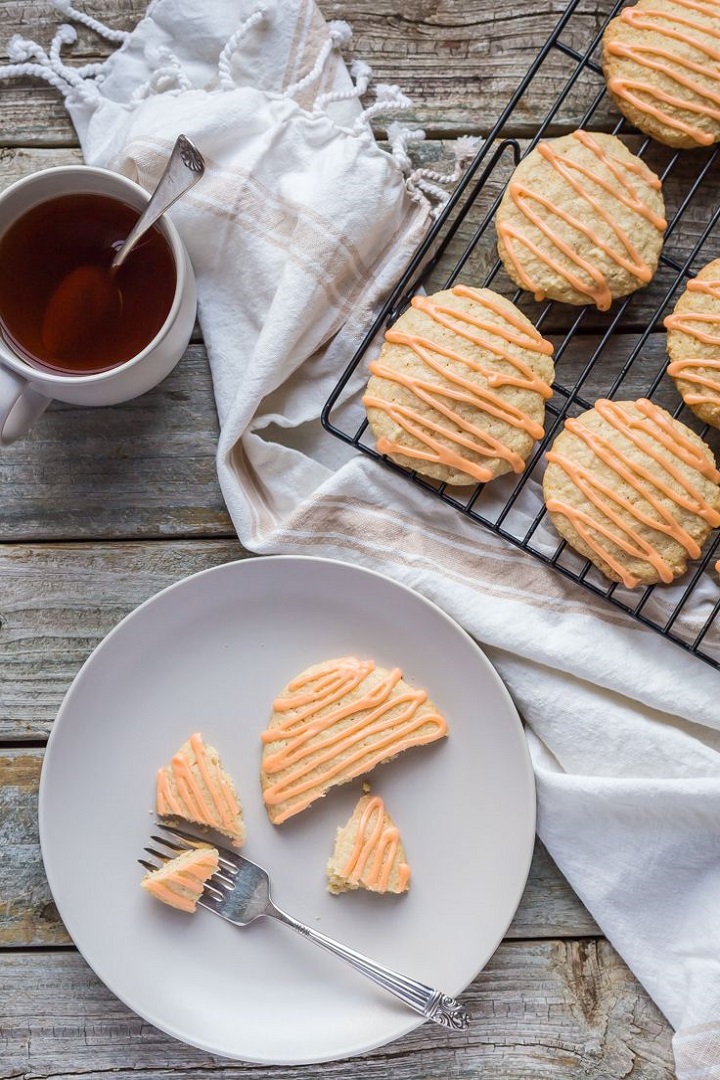
Sticking to the basics, first was the attempt to make homemade biscochitos. Also known as bizcochitos, these crisp butter (or lard) based cookies, are made from the traditional biscuit dough, flavoured with cinnamon and anise. With minimum handling, the dough is rolled and cut into the traditional shapes of stars and crescent moons, and then baked. Served with a fine icing of sugar and sparkles, these were brought over to the New Mexico area from the first Spanish colonists centuries ago. For a change, one can cut into the dough and filled the cavity with homemade jam, making it a little like a tart.

Alternatively, these cookies, or even the regular cookie can be given “an apple cider finish”. To make a change to the regular batch, the usual cookie dough can have a little of apple cider added to the typical ingredients of flour, brown sugar, butter, spices and baking soda. For an added “apple touch” one can put in dried or chopped apples along with dates, nuts and a little of vanilla essence to bring a touch of varied flavours. For those who just want a subtle feel of the apple or keep it to a minimum, apple cider can be used as a glaze or icing to he baked biscuits or cookie. To get a more chewy feel to the regular biscuits, one can substitute a share of the wheat flour by almonds crushed, powdered to make the traditional Turkish “Acıbadem kurabiyesi” or a version of the traditional Italian amaretto cookie. Preferring to keep the taste of almonds on a lighter note, a touch of the almond essence gives an almost similar effect.

“The symmetry was perfect, each triangle a perfect replica of its neighbor. Cashews, hazelnuts, and blanched almonds peeked out of their baptism in caramel jam, a sea of creamy browns punctuated by green pistachios. The tart shell formed a precise circle of pastry around the caramel and nuts.” Kimberly Stuart

Interestingly, biscuits made are not all baked. Originally from the Central Asian, Mongolian and Middle East cuisine, the ” boortsog or bawïrsaq” are a type of fried dough food that gives a feel similar to the tea-time biscuits. Made from flour based dough, simple to a sweeter crispier version, the latter is flattened and cut into pieces. In some areas, these pieces are bent and knotted into various shapes, from triangles to spheres or decorated with crisscross patterns, before being fried. Not simply as a tea-snack, but also as a dessert, boortsog can be had as a dessert eaten with sugar, butter, jam or honey. Though similar to doughnuts, they are dipped into tea and are an essential tea-time accompaniment.

Another traditional recipe is that of ” Reshteh khoshkar”, a Persian cookie made from the rice flour along with wheat flour, sugar, almonds, walnuts and cinnamon. What makes it interesting is the way they are prepared. This rice-flour based batter is poured into a sieved container such that the rice batter runs out of it as a fountain Making a pattern on the hot skillet with rice batter running through, a thin patterned sheet of rice pastry is made. Then a filling of crushed walnuts, sugar and other toppings are placed inside the pastry, rolled securely and then fried in oil.

“Powdermilk biscuits: Heavens, they’re tasty and expeditious! They’re made from whole wheat, to give shy persons the strength to get up and do what needs to be done.” Garrison Keillor

Making cookies is always something special. A fresh batch of cookies always brings to mind the childhood memories of staying with grandmother in the kitchen, sneaking up into the jar for the occasional biscuit and the feel of being a child all over again. The best part is, the biscuit dough with all its’ different shapes, can keep the young hands busy for sometime. With plenty of indigenous and local recipes at hand, the regular can be spiced up with a little experimentation whenever the mood strikes for the same.

Posted in Food, Photography Art

In the “Or-e-o Craze”

“I need to go for a two day trainers workshop. Debbie has fallen sick with flu, so I am her replacement. Mom is coming to stay in for those two days. Rachel is coming too, she’s on study break at home; so don’t worry about the kids or anything else.” 

Before pressing the send icon near the above message, there were mixed emotions running through my mind. First thoughts were on the huge amount of pending office work to complete and the workshop preparation required, second the cleaning up chores required before I leave and the third, stocking up of the pantry.

As far as cooking is concerned, worries are less because not only their grandmother knows how to turn them around but with my cousin Rachel alone, it would be quite a chocolaty bribe. Knowing her fondness for anything chocolate and quick meals, her kitchen preparations especially in dessert area well loved by all. With physique never being a problem, her dinner revolves around a tub of ice-cream and a couple of Oreos. Which is why, I had to make a new shopping list, one with plenty of sugar on it.

“Oreos come in packages. Otherwise known as a gift. Cherish it.” Oreo Queen

Speaking of Oreos, there is something about them, which makes them a favourite. Whether had direct or as an add-on, Oreos provide a wonderful accompaniment to most desserts and even breakfast pancake batter, smoothies and summer shakes. Keeping nutrition and dietary restriction aside, Oreos are a lifesaver. When the breakfast cereal gets boring, it is those crushed Oreos that make the welcome change. When the groans surface at “dosa again for breakfast!!”, the added crushed Oreos to the batter make way for the change in their minds and the scramble for more.

Above all, like everything with chocolate, Oreos help to make bad days bearable. With plenty of happy moments, these biscuit sandwiches would occupy their fair share of the grocery list.

“Of course, that rationalization didn’t work at all. It would have helped if I’d had some Oreo cookie ice cream to eat that the same time. I’ve learned that self-delusion is much easier when there’s something sweet in your mouth.” Lee Goldberg

Posted in Food, Photography Art, Quotes, Random Thoughts, Stories Around the World

Green, Leap and Fun

“Please send something green for snack time during the first break tomorrow.”
(School diary, as read on February 28,2020)

On seeing the note above, the eyebrows went up and a quick glance at the clock ensured a quick browse through the recipes. As night was approaching, a solution had to be reached before the shops were shut for the day. The quick trip downtown resulted in meeting a couple of parents rushing in. With the queue being long, a quick round of talk and news exchange, left me feeling grateful that my task was just in the food arena. To mark the leap year, the kinder-gardeners and primary schoolers were tasked with bringing something green for snack hour and “the world around us” hour; while the middle schoolers had to present projects, fun facts and presentations to mark the history, science and special for the Leap Day.

Leap Day, technically was first observed by those who followed the Gregorian calendar marking the extra-revolutionary hours of six, cumulatively every four years by making it a special day, marked at the end of February. While popular folk traditions first used to mark this day as Bachelor’s Day, various traditions and customs were added on over the years. The concept of “leap day” has been associated with frogs (re-read as leaping frogs) or as to do something “green”. More popular towards the early 21st century, the latter “green” was meant as an initiative by multinational companies so that employees could use the extra day to improve the environment. Those added twenty four hours were meant for change to energy efficient measures, create compost heaps, going green, a “no” to plastic as well as practicing the concept of “reuse, reduce and recycle”.

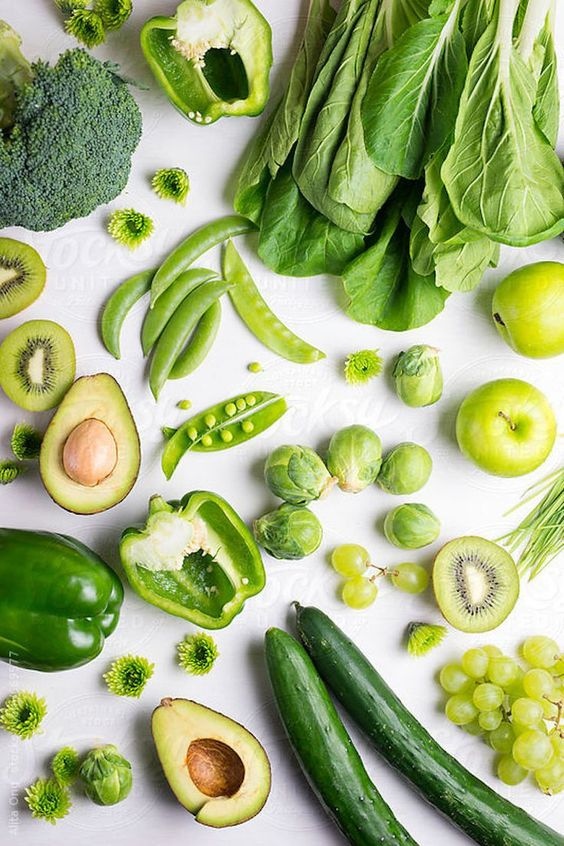
Moving over to the kitchen preparations for leap day, it was thin brown mint sandwiches, couple of cucumbers and a green apple that made my morning light, quick and green.

For others out there on the same boat of experimentation with something “green and edible”, there are numerous options ranging from green coloured cupcakes to crepes with a heavy dose of crushed mint, coriander or even basil in the batter, the green smoothies, the green cookies, pistachio flavoured ice-cream or even the good old pickles and peas for lunch.

Either way leap day is meant to that extra-something not done previously. As for “the non-edible going-green” process, sticking to it for this year and on, would be wonderful step to enjoy more future leap years on this land that we live on.

“Today is an ephemeral ghost… A strange amazing day that comes only once every four years. For the rest of the time it does not “exist.” In mundane terms, it marks a “leap” in time, when the calendar is adjusted to make up for extra seconds accumulated over the preceding three years due to the rotation of the earth. A day of temporal tune up! But this day holds another secret—it contains one of those truly rare moments of delightful transience and light uncertainty that only exist on the razor edge of things, along a buzzing plane of quantum probability…
A day of unlocked potential.
Will you or won’t you? Should you or shouldn’t you?
Use this day to do something daring, extraordinary and unlike yourself. Take a chance and shape a different pattern in your personal cloud of probability!”
Vera Nazarian, The Perpetual Calendar of Inspiration

Posted in Food, Stories Around the World

Delicious, Simplified

“Kindly send 100gms of cereal preferably rice krispies, corn flakes or cocoa pops along with snack meal for tomorrow”.
(Note from the class teacher in the kindergarten diary)

Enrolling my toddler in kindergarten resulted in all of us learning a couple of things along the way. First thing was that we all experienced school again. From getting the paper cuttings of fishes for the “ocean project” to helping him gather stones, twigs and leaves for the “village project” to sending specific things (like rice crispies, cut vegetables, diced fruits) for the home science project; we parents got into the school mode as well. Second important fact, for which it was greatly appreciated was that home science especially involving ingredients, basic mixing and appreciating cooking in general saw no gender specification. In fact there was no “it’s a girl stuff” or “it’s a boy stuff” classification. Children loved to learn and all this was a part of their experimentation.

Coming back to the initial note, the trip back home involved detailed description of their chocolate treats. Known as chocolate crackles (or choclate bubble cakes in certain areas), this popular confection had originated from Australian and New Zealand schools, especially for school fetes and birthday parties (Australian Women’s Weekly, December 1937). Predominantly these are one of the few recipes, not requiring an oven, baking or any tough steps, especially when meant as an activity for young children.

With the basic ingredients of cereal (rice bubble, rice krispies, cocoa pops, corn flakes or crispy fried noodles), vegetable shortening, icing sugar, cocoa and desiccated coconut. First the hydrogenated oil is melted and then combined with the dry ingredients. This mixture is then split into portions, either placed in cupcake pans (within cupcake papas or just as is) and made to set in the refrigerator. The hydrogenated oil re-sets to give each cake its form without baking. To add a little zing to the simple recipe, variations include addition of raisins, chocolate chips, mini-marshmallows or peanut butter. Substitutions for hydrogenated oil include melted chocolate or non-hydrogenated coconut oil.

As these simple recipes comes to life during school hours, recreating those moments, adding new recipes and photographing them creates a memorable album for the rainy days as these young minds mature into the adults in the future.

Posted in Food, Stories Around the World

A Slice of Crust, Filling and History

“Things that really matter are the things that gold can’t buy, so let’s have another cup o’ coffee and let’s have another piece o’ pie.” Irving Berlin

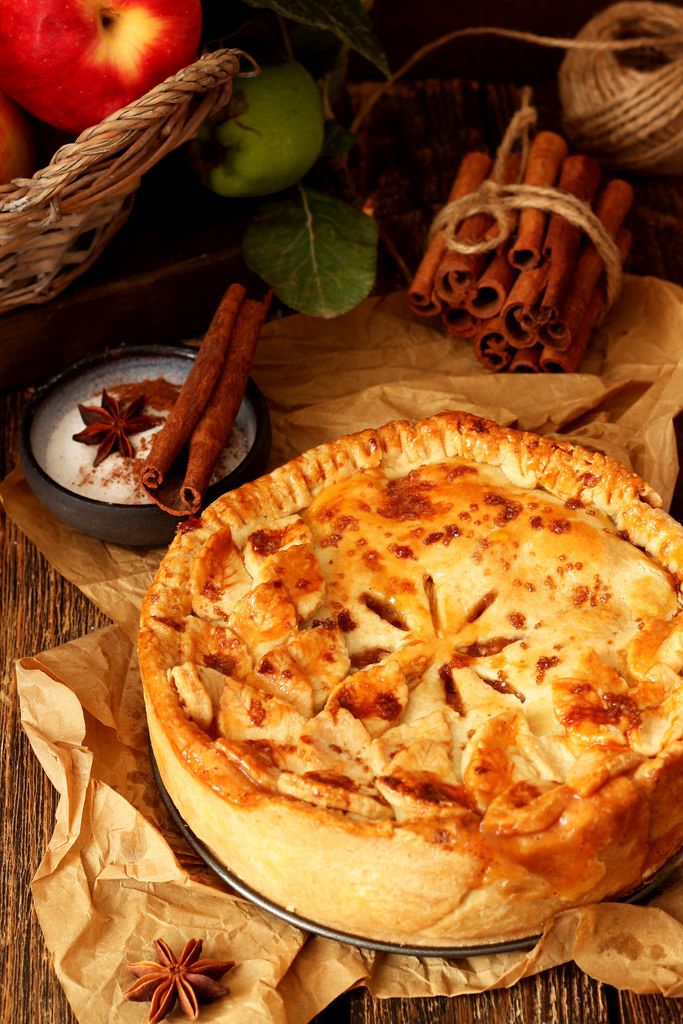
In the initial years of domestication, life in the kitchen revolved around one step meals. From casseroles to pasta and pie, homemade food was simple, basic and hassle free. One of the first recipes to attempt with the oven were the pie recipes, something that our grandmother used to to do on a weekend basis. Today with dessert pies being the classic in any restaurant, it makes for a welcome change from the usual simple desserts for the weekend lunch.

Interestingly the concept of pie making can be traced to as early as the Neolithic era of Egyptians. Pie essentially meant anything edible encased in a tough pastry shell mainly served as a baking dish, storage container or serving vessel, initially too hard to actually eat. As historical evidence points out, these early forms of pies are known as galettes, which essentially are rustic free-form pies. These pie-like treats were made with oat, wheat, rye or barley; then filled with honey and the dish was baked over hot coals. As Egyptian hieroglyphics and drawings show that the bakers to the pharaohs incorporated nuts, honey, and fruits in bread dough, a primitive form of pastry.

As the Greeks carried over the tradition of galettes; they had modified the pies during their period by making a flour-water paste wrapped around the meat, which served to cook the latter and seal their juices. When the Romans had conquered Greece, they had used various types of meat including oysters, mussels, lampreys, fish in every course of meal, sometimes even dessert . As written in the records of De Agricultura by the Roman Statesman Marcus Porcius Cato (234-149 B.C.), the recipe most popular during his era was known as the “Placenta” or “libum”. They were made more like a cheesecake, baked on or sometimes inside a pastry base, these were the initial pie/cake.

Through the gateways of the Roman cuisine, the trend of pie making made it’s inroads into the European cuisine, adapting itself to the local customs and imbibing itself with the traditional cuisine. The initial pies were known as “coffins” or “coffyns” (the word actually meant a basket or box). There were savory meat pies with the crusts or pastry being tall, straight-sided with sealed-on floors and lids. The open-crust pastry (no tops or lids) were known as “traps.” Holding an assortment of meat and sauce components, these pies were baked more like a modern casserole with the crust being the pan, its pastry tough and inedible. The crust was often made several inches thick to withstand many hours of baking. The initial pie prototypes were more savoury than sweet and were a mix of top-cased than open ones (known as tarts today). The sweet pies were more of the “tart” variety.

“Tak gode Applys and gode Spycis and Figys and reysons and Perys and wan they are wel brayed colourd wyth Safroun wel and do yt in a cofyn and do yt forth to bake wel.” (Recipe for apple tart, 1379) Source:The Forme of Cury, A Roll Of Ancient English Cookery, Compiled, about A.D. 1390, by the Master-Cooks of King Richard II.

As to the etymology of the word “pie”, the source may be traced to the magpie, a bird that was known for collecting odds and ends especially the shiny ones and storing them in it’s nest (visualize the similarity). Considering that the Medieval pies also contained many different animal meats including chickens, crows, pigeons and rabbits, the possibility rests on that similarity for the modern word of “pie”.

The modern pies are baked dish, with a pastry dough casing that completely contains a filling of various sweet or savoury ingredients and meant to be eaten. From sweet pies with fillings of fruit, nuts, brown sugar or sweetened vegetables like rhubarb or the savoury pies like the steak pie, Jamaican patty with plain meat, eggs and cheese (quiche) or a mix of the vegetables and meat (pot pie(, pies today are meant to be edible as a whole. And the crusty cover can be made from the typical shortcrust pastry meant for pies or even substituted by powdered biscuits, mashed potatoes, bread crumbs to give a soft or strong edible base or cover.

Modern pies carry a whole lot of tradition and history behind each dish typical of a particular cuisine. Knowing that and adding on to those ingredients, giving the pie making a special flavour and zing tot he final dish. After one of the best places to experiment, experience and recreate the flavours of history is the kitchen.

Posted in Food, Stories Around the World

Gooey, Sweet and Special

One of the advantages of the cellular networks is that news travels fast. Work promotions, kindergarten winnings, new projects or ideas accepted and launches as well as new family additions are few of the positive news that spreads fast. Some surprises call for impromptu celebrations which essentially involves something sweet. While instant baked goods mayn’t be available at hand round the clock, there is something about marzipan that can do wonders for the most basic of desserts.

Primarily consisting of sugar or honey and almond meal, marzipan is a confection with a wide array of uses. While it is often made into chocolate covered (or plain) sweet treats or as imitations of fruits, vegetables, cars, toys and the like; it can also be used as glazing for icing cake, biscuits or shaped into small figurines atop cakes especially meant for personalizing celebrations. It can also be added as a baking ingredient to the traditional recipes ( like the stollen, banket, king cake).

Tracing the origins, marzipan was believed to have originated through two different, though converging routes. One was via the Northeast Mediterranean line, introduced to Eastern Europe through the Turks, while the other possible origin was the Iberian Peninsula line, predominantly from the Al-Andalus area of Spain. With it’s widespread popularity, marzipan has numerous variations. While in Germany sugar and almonds are ground into a paste, syrup can be used to sweeten the mixture (France) while Middle East marzipan may include a dash of rosewater. Almonds may be replaced by apricot or peach kernels, to make a similar product known as the “persipan”. Other alternatives include substitution with soy paste or almond essence.

Homemade marzipan comes ready with very basic ingredients of almond paste (or freshly made almond meal), egg whites and sugar. Besides getting creative with marzipan made edible animals, figurines or delectable icing and decorative ideas; chunks of marzipan when added to cookie dough or cake batter make for an interesting twist to the taste. Wit marzipan, something simple can be made into simply amazing with basic ingredients, whole lot of creativity and plenty of ideas.

“Madre Carmela’s favorite nuts were almonds. Not only did she like the way they tasted the best among all nuts, but she loved the flavor they imparted to Sicilian desserts from cakes to biscotti, and her favorite of all, Frutta di Martorana- the perfect fruit-shaped confections made from pasta reale, or marzipan, which required plenty of almonds. Who would have thought that the base for an elegant, regal dessert like marzipan came from such a simple ingredient as the almond?”
― Rosanna Chiofalo, Rosalia’s Bittersweet Pastry Shop

Posted in Food, Stories Around the World

Biscuits, Crumbs and Milk

With plenty of biscuits left over from the holiday baking safely enclosed in their tins, it was their crumbs which had to be called to an order. After all the holiday cakes and ice-cream, evening desserts had to be something light, easy on the sugar and simple to make. What would be an easier solution for all the crumbs than the good old “biscuit pudding”.

Interestingly biscuit pudding is something that has evolved over time. With the British cuisine evolving the pudding from dumplings, the former had to be either in the meals or dessert category. More steamed than bakes, they were the savoury ones like steak and kidney pudding, haggis, pease pudding and the dessert ones (steamed in a basin and for afters) like the Christmas pudding, sticky toffee pudding and so on. Though essentially centuries on, pudding is more of a dessert than savoury. Dessert puddings like bread and butter pudding, biscuit pudding or simply with fruit.

“The proof of the pudding is in the eating.” Miguel de Cervantes, Spanish author. (1547-1616) ‘Don Quixote de la Mancha’

One of the very basic biscuit pudding recipes that resulted in the first stained smock of preschooler was the Chocolate biscuit pudding. Though claimed to be a Sri-Lankan dessert pudding introduced by the British during the colonial era; it may have been in the kitchens of the west long before then. To make it requires layers of a prepared chocolate pudding or icing mixture alternated in a serving dish with layers of biscuits (plain ones preferred) dipped in warm milk. Served cold (not baking or steaming) with chopped nuts as garnish, cutting through would see five to seven layers of biscuit and chocolate. An easy dish to keep bored children busy on cold days.

The old-fashioned biscuit pudding, usually handed over in the set of family recipes, the basic ingredients would be vanilla, eggs, milk and plenty of leftover biscuits. This moist pudding is usually had cold, garnished with ground cinnamon, raisins, candied fruit and with maple syrup. With fond memories, it puts the cracked biscuits and their crumbs to good use.