Posted in Daily, Food

“Mix” Along the “Trail”

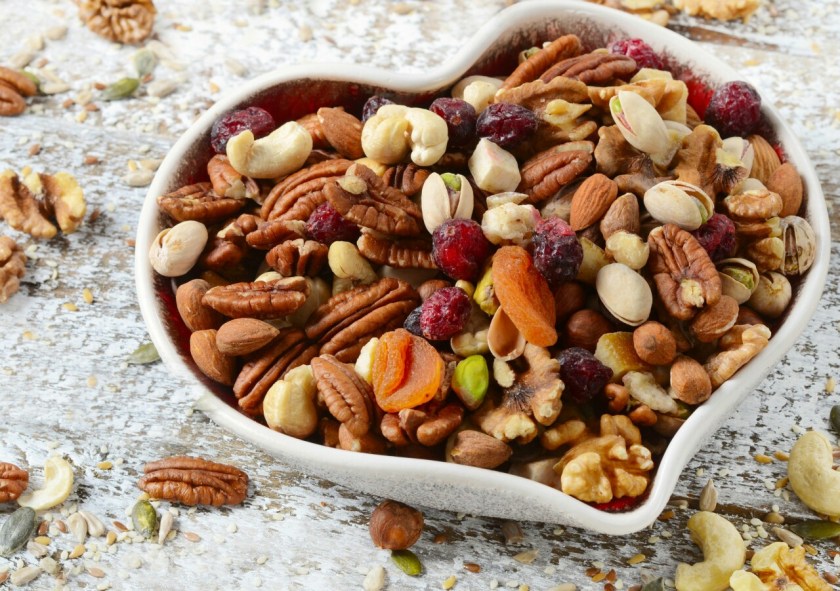
Couple of almonds or cashews. Legumes (peanuts or baked soybeans). Dried fruits like cranberries, raisins, apricots, apples pieces, gooseberries or candied orange peel. Throw in a few chocolate chips, chunks, and M&M’s or pretzels along with crystallized ginger. One is good to go.

Early morning and sugars low. Throw in dry breakfast cereal for the sugary crunch. More salty feel or crunchy feel, add in banana chips or carob chips. For high fibre effect, add in the rye chips. Enrich the antioxidant feel with pumpkin, chia or sunflower seeds.

Little did hiker and outdoors-man Horace Kephart, know that recommendation of “scroggin” or “trial mix” in his popular camping guide (1910s), would lead to the snack becoming ever popular or more varied over time. The original “trail mix” was more of a combination of granola, dried fruit, nuts, and sometimes chocolate developed as a food to be taken along on Besides being quick and easy to carry along, the wide variety of mixes as per as own personal choice makes it’s popularity still stay.

Interestingly, the name “scroggin” or “schmogle” as used in New Zealand may have arose as an acronym from it’s ingredients of sultanas, carob, raisins, orange peel, grains, glucose, imagination(?) and nuts or alternatively sultanas, chocolate, raisins and other goody-goodies including nuts; although these facts are up to debate. Across continents, America’s gorp ( acronym for “good old raisins and peanuts” or common ingredients “granola, oats, raisins, peanuts) and Europe’s “student fodder”, “student oats” or “student mix” in the local languages show essentially how the same thing stays across the different cultures.

For snackers globally, the National Trail Mix Day (August 31st) would give a reason to go the extra mile for an exotic, unusual trail mix style ( cranberries, gooseberries, gummy bears and cornflakes dried anyone ?)

Posted in Daily, Food, Stories Around the World

Of “Petit Pots”

“Heat the milk and cream. Make it a bit bubbly. Add the flavours, mix it into the whisked eggs and egg yolks. Strain the mixture and pour into cups. Bake these cups in a water bath at low heat. Depending on taste, one can flavour this dessert with pieces of broken or melted choclate, rum, add a base of crunchy texture or garnish with almond slivers, sliced berries, cinnamon, colorful sugar or sprinkles; all leading to a piece of art as well as of delectable taste.”

The above simple dessert similar to a lightly set baked custard, known as “Pot de crème” or “petit pots” was believed to have originated from France during the 17th century. While the name means “pot of custard” or “pot of cream”,referring to the porcelain cups which were used to make and serve the dessert; the latter concept may have evolved from the from English Syllabub.

Usually looser than other custards, crème brulee, flans or crème caramel; it requires minimal preparatory time and can be made with the ingredients at hand. Such that it can be prepared without milk or had frozen. Hardly surprising that, this delight has got its’ own special place and day (August 27th) in the foodimentarian’s heart. For all the dessert connoisseurs, it would be time to experiment the taste buds with the varieties of preparations. While for the experimental chefs, let the steps to make an artful and palatable creation begin.

Posted in Daily, Food, Stories Around the World

The “Meringue” Way

“To make white bisket bread.
Take a pound & a half of sugar, & an handfull of fine white flower, the whites of twelve eggs beaten verie finelie, and a little annisseed brused, temper all this together, till it be no thicker than pap, make coffins with paper, and put it into the oven, after the manchet is drawen.”
– Recipe for the “white biskit bread” in the book of recipes started (1604) by Lady Elinor Poole Fettiplace (c.1570 – c.1647) of Gloucestershire.
(Fettiplace, Eleanor Poole (1994). Hilary Spurling (ed.). Elinor Fettiplace’s Receipt Book. Translated by John Spurling. Bristol (U.K.): Stuart Press. Volume 1, page 23) noted by Muster (ref.)

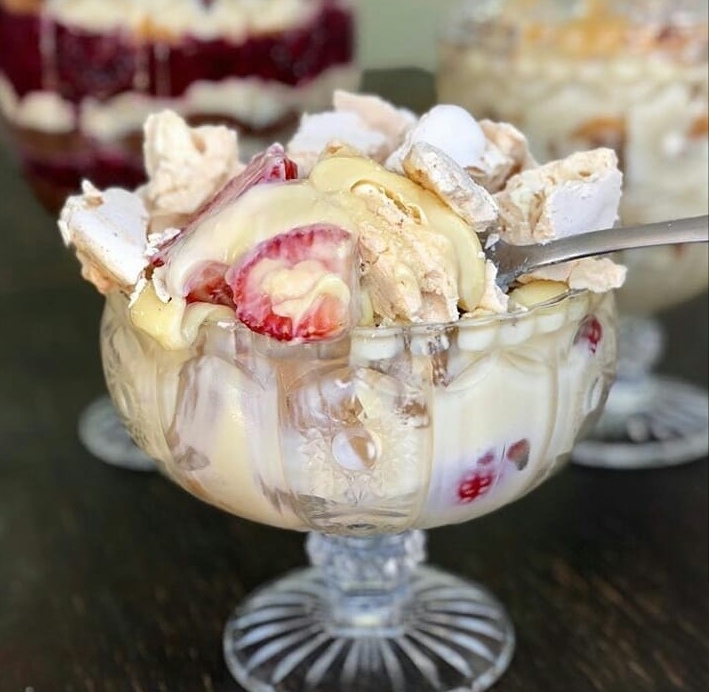
Made from egg whites and sugar, whipped up to a finesse with a binding agent (salt, cornstarch or gelatin) and an occasional acidic ingredient (lemon, vinegar or cream of tartar) or flavorings of vanilla, coconut or almond; meringue had graced the dessert menu especially to highlight a special occasion or simply enjoy the pleasures of an exquisite delight. The origin till date, is a point of contention for food historians.

The name “meringue” had first appeared in cookbook by François Massialot (1692) (“XXVIII: Des Meringues & Macarons”. Nouvelle instruction pour les confitures, les liqueurs et les fruits (in French). Paris: Charles de Sercy. pp. 186–188). While the word “meringue” had first appeared in English in an English translation of Massialot’s book (1706); two considerably earlier seventeenth-century English manuscript books of recipes give instructions for confections known as “white bisket bread” and “pets” of what are today are recognizable as meringue. The other claim was that meringue was invented in the Swiss village of Meiringen and improved by an Italian chef named Gasparini between the end of the 17th century and the beginning of the 18th century.

“To make Pets
Take a pownd of Drye fine searsed [sifted] suger, & beat the whites very wel then take off froutgh [froth] & put your suger, bye litle & litle in to it — contineually stiring it & beating it with a spoone ore laydle, and when it is exceedingly well beaten, then have some pye plates ready buttred & wipe the buter of because the lesse buter it hath the beter, then drope them upon the plate & put in to every drope a carieway seede or coriander then let your oven be very temparate and watch them with a candle all the while & if they be right they will rise and looke very white, it is good at the first to set a scilet [skillet] of water, with them in to the oven,& when they be thowrow [thoroughly] drye then take them out, you must in the mixing of them put 12 graines of muske & 12 of Abergrisse [Ambergris] which you must bruse with suger before you stire it in to the egge & suger.”
– Recipe for a baked beaten-egg-white-and-sugar confection (1630) is given in a manuscript of collected recipes written, by Lady Rachel Fane (1612/13 – 1680) of Knole, Kent. (Barry, Michael (1995). Old English Recipes. Jarrod (archived at the Centre for Kentish Studies, Maidstone, Kent). p. 64f.)

The faster they are beaten, the better is the flavour. The key to the formation of a good meringue is the formation of stiff peaks by denaturing the protein of egg whites by pure mechanical shear force. Today these light, airy and sweet confections are made at home (more chewy and soft, and crisp exterior), though the commercial ones still thrive. Interestingly, meringues were traditionally shaped between two large spoons (still done so at the home kitchens) till Antonin Carême piped the “meringue through a pastry bag”.

Over the years, various techniques have been improvised to bring forth the French or basic meringue, Italian, Swiss and even the vegan meringue. From biscuits, desserts to embellishment, each meringue based recipe like the lemon meringue pie, baked Alaska, dacquoise, Esterházy torte to mention a few, all have a story and art of their own to tell. With meringue taking the form of whimsical shapes such as mushrooms; or piped into a crisp basket that is baked and filled with cake, fruit, or flowers are few of the many reasons why these delicacies are here to stay and transform the art and flavours of dessert.

Posted in Daily, Food, Stories Around the World

Of Ice-cream, Soda and Evolution…

“Summer would not be summer without Ice-cream. Ice-cream is the favorite currency of love.” Puck

For my kids, summer translates into picnics, beaches, barbecues and of course, never to forget it, “the ice-cream“. Being in the National Ice cream Month (July) with the end of the week marking the National Ice cream Day (third Sunday of July), the truce between the “young ones” and their “veggies” was an ice cream a day for dessert. As a part of improvisation of the existing recipes and combinations, delving into the evolution and progress of ice cream makes for an interesting read.

Although the origins of this “summer dessert” have been rough traced back to the 4th century B.C.; the modern day versions with the wide variety of flavours as well as presentations were made feasible only by the 18th century. Early records of it’s popularity include the Roman emperor Nero (37-68 CE) who ordered ice to be brought from the mountains and combined with fruit toppings and King Tang (618-97 CE) of Shang, China who had a method of creating ice and milk concoctions. While “Ice cream” may have been likely brought to Europe from China. As legends go, when Italian duchess Catherine de’ Medici married the Duke of Orléans (1533), the French court had few Italian chefs who had recipes for flavored ices or sorbets. A century later, Charles I of England was impressed by the “frozen snow” that he offered his own ice cream maker a lifetime pension in return for keeping the formula a secret, so that ice cream could be a royal prerogative. While there is no historical evidence to support these legends, the recipes for ices, sherbets and milk ices had evolved gradually over time and were usually served in the fashionable royal courts or in the upper class society.

“Without ice cream, there would be darkness and chaos.” Don Kardong

As recipes for flavoured ices began to be published for the household cooks and ice storing became more feasible, flavoured ices were enjoyed by the middle class society. Towards the early 19th century, Augustus Jackson had created several popular ice cream flavours, packed them into tin cans and distributed them to the ice cream parlours of Philadelphia. Credited with inventing an improved method for manufacturing of ice cream, he is technically considered as the modern day father of ice cream.

Going years ahead, the Franklin’s Institute semi-centennial celebration (1874) saw the creation of the ice cream float by Robert McCay Green, Pennsylvania. The traditional account was on that particularly hot day, Mr. Green ran out of ice for the flavored drinks he was selling and used vanilla ice cream from a neighboring vendor, thereby inventing a new drink. As published by his own account in the Soda Fountain magazine (1910), states that after some experimenting (after effect of competition with nearby vendors), he had decided to combine ice cream and soda water. During the celebration, he sold vanilla ice cream with soda water and a choice of 16 flavored syrups. Although there are at least three other claimants for the invention of ice cream float, namely Sanders, Mohr and Guy; wherein the latter is said to have absentmindedly mixed ice cream and soda (1872), to his customer’s delight. However may the legends go, the combination of ice cream and soda have stayed on.

“Sometimes life is just what it is, and the best you can hope for is ice cream.”  Abbi Waxman

From being in a boxed container to served with soda, sprinkles, toppings and more, ice cream has evolved from being a simple street or roadside treat to an artistic rendering for functions. Ice cream with its’ many variants like ice lolly, Malyasian Ais kacang, Turkish dondurma, gelato, kulfi and the like; are all here to stay and evolve, changing the “sweet trends” of dessert over time.


Posted in Daily, Food, Musique, Stories Around the World

Evolution of the “Accidental Fudge”

“Sandra turned to the page with the title “Toklas’ Hashich Fudge.” The original hashish brownies. ‘Peppercorns, nutmeg, cinnamon, coriander, stone dates, dried figs, shelled almonds, peanuts,… A bunch of canibus sativa can be pulverized. This along with the spices should be dusted over the mixed fruit and nuts… it should be eaten with care. Two pieces are quite sufficient…” – Allegra Goodman, The Cookbook Collector

Like most of the “delectable sweet pleasures of the palate “, this sugar candy made flavoured with choclate, fruits, nuts and other flavours; had hot or cold has made its’ own mark in the sweet world. These days, various flavours of “fudge” are made, giving them a vibrant as well as visual appeal to the eyes and the palate.

Technically, fudge is made by mixing sugar, butter and milk, heating it to the soft-ball stage and then beating the mixture while it cools down to get a smooth, creamy consistency with fruits, nuts, chocolate, caramel, candies and other flavoring agents being added either inside or on top. Yet the true origins of “fudge” can’t be exactly traced, though it’s believed to have been originated and gained popularity in late 19th century America. However popular belief among food historians was that the first batch was an accidental “fudged” batch of caramels; hence the name “fudge”.


A letter in the archives of Vasser College (1921) written by Emelyn Battersby Hartridge reveals the first documentation of “fudge”. Emelyn wrote that her schoolmate’s cousin made fudge in Baltimore (1886) and sold it for 40 cents a pound. This was the first known sale of fudge. In 1888, Miss Hartridge asked for the fudge recipe, and made 30 pounds of fudge for the Vassar Senior Auction. The recipe was very popular at the school from that point forward. The diary of another student mentions making “fudges” in 1892.

What is it that we love the best,
Of all the candies east or west,
Although to make them is a pest?
Fudges. **


An 1893 letter from another Vassar College student describes “fudges” as containing sugar, chocolate, milk and butter. “Fudges at Vassar” was a recipe printed in The Sun (1895) describing the confections as “Vassar chocolates”, which comprises of sugar, milk, butter and vanilla extract. Fudge became a new confection after word spread to other women’s colleges of the tasty delight. Later, Smith and Wellesley schools each developed their own recipe for fudge. Later fudge-making evolved a variety of flavors and additives as it grew beyond its popularity at colleges.

What perches us upon a chair
To stir a sauce-pan held in air,
Which, tipping, pours upon our hair —
Fudges. **

While the first recipe specified butter, milk and sugar, today, American fudge often differs with whipped cream instead of butter and the addition of chocolate flavouring. There are different types of similar recipes to “fudge” across the globe with the Indian “Barfi”, Polish “Krówki” ( Polish fudge, semi-soft milk toffee candies), the Italian “Penuche” which is a fudge-like candy made from brown sugar, butter, milk and vanilla flavouring; as well as the Scottish “Tablet” (taiblet in Scots). Tablet is a medium-hard, sugary confection made from sugar, condensed milk and butter, brought boiled to a soft-ball stage and allowed to crystallise. It is often flavoured with vanilla or whisky, and sometimes has nut pieces in it.

The versatility of fudge is that it can be had alone cold, or served on top of sundaes,  ice cream and even cakes as hot fudge. With various assortment, variety and fun in the process of fudge making; little wonder then that “a set of ditties”  (**) were made by the college girls during and for the “fudge making process”. On the occasion of National Fudge Day (June 16th), it would be time for some fun, rhymes and sweet cooking for all the “home kitchen chefs” or tasting for the food connoisseurs.

What needs more stirring than oat-mush,
And more still when we’re in a rush,
But what’s e’en sweeter than a “crush”?
Fudges.

What subtle odor doth recall,
To artless minds that “long-owed call,”
On the sweet maiden up the hall?
Fudges. **
 

Posted in Daily, Food, Photography Art

For the Love for Oreo

Speaking of cookies, there is one word that any two year old would say and that is “Oreo”. And like the quote says, “Taking pictures is like tiptoeing into the kitchen late at night and stealing Oreo cookies- Diane Airbus”.

To quote Jonathan Mayberry ” I’m not sure I could trust a man who would bypass an Oreo in favour of vanilla wafers. It’s a fundamental character flaw, possibly a sign of true evil.”

Here are some shots below of how creative can the Oreo cookies go.

Posted in Daily, Food, Photo Captions

Nuts over Nutella

“Without pain, how could we know joy?’ This is an old argument in the field of thinking about suffering and its stupidity and lack of sophistication could be plumbed for centuries but suffice it to say that the existence of broccoli does not, in any way, affect the taste of chocolate.” 
― John Green, The Fault in Our Stars

Chocolate is one of the best luxuries of life. If broken love tears you apart, try asking what hurt’s more to the foodie trying to stay away from “Nutella”.

Below are some shots I found and that’s what I plan to do with my jar of Nutella.