Posted in Family and Society, Life, Photography Art, Reflections

True from Fake

My daughter once asked my mother how to distinguish true love from fake.
“It’s very simple,” the mother replied.
“… because I love!” Is true love.
“I love because …” is a fake.

This little snippet of conversation which I had read in my social pages has a profound meaning in today’s conditional world. These days everything comes with strings attached. With biased opinions and comments scouring the review pages, consumer markets and even job opportunities, nothing seems fair in the world of today. Add to it, relationships are getting soured as each took the other for granted, and forgetting basic respect and humaneness. With the many weddings and “I do” often said, as well as the friendship bonds made, where does “the love” go as time flies.

While we profess our declarations of undying love, when it is followed by “because” it is wise to suppose that this love will not last as the features so loved will change like the weather. For those of us who have our own close knit of friends and family, have you ever wondered about the care and concern of a loved one ? They keep a watch over us, doing things without asking and many a time, forcing us to wake up and move ahead during roadblocks. They never loved us because of our assets of fun, frolic and gaiety or having an eye on the benefits that their relationship with us would bring them in the future. The commitment and care they gave us was because they loved us. They are in the circle that we should fight to protect, cherish and honour as they put actions and deeds above words because they love us. So while we try to ascertain “the real” love, never forget to remember them as the guidelines of what selfless love should be like.

Posted in Daily, Family and Society, Photography Art, Quotes

Enjoy the Wave

“The story is about a little wave, bobbing along in the ocean, having a grand old time. He’s enjoying the wind and the fresh air-until he notices the other waves in front of him, crashing against the shore. “My God, this is terrible,” the wave says. “Look what’s going to happen to me!” Then along comes another wave. It sees the first wave, looking grim, and it says to him, “Why do you look so sad?” The first wave says, “You don’t understand! We’re all going to crash! All of us waves are going to be nothing! Isn’t it terrible?” The second wave says, “No, you don’t understand. You’re not a wave, you’re part of the ocean.” Mitch Albom

One of the constraints of man is we focus a lot on our own issues forgetting that our existence is not by being alone but as a part of a bigger network. We devote our time and energy towards the end goal, little realizing that one day we will all crash just like everyone else. That is why the joy of the ride should be more important than reaching the final post. Although it is imperative to set down life goals for oneself, on the way to achieving them it would be best not to not forget that our journey is one among the billion other journeys taking place. During the intersections and the temporary stops, it would do good to greet others and smell the flowers, for although our destination is predetermined, we never control the entire route or the final stop.

Posted in Daily, Family and Society, Food

Origins of Pain Perdu

“Dip a slice of bread in batter. That’s September: yellow, gold, soft and sticky. Fry the bread. Now you have October: chewier, drier, streaked with browns. The day in question fell somewhere in the middle of the french toast process.” — Tom Robbins

To add on to the quote above, add a little sugar before you fry the bread and with a glass of milk to go, November has come and almost gone.

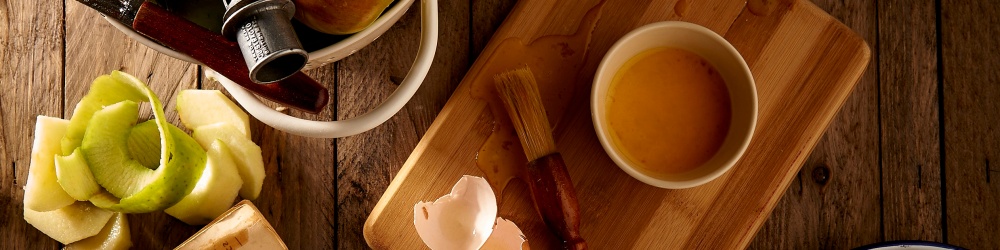
In the morning chaos, one of the easiest options for a quick breakfast (besides cereal, oatmeal, eggs and bread) is the french toast. French toast is a dish made of bread soaked in eggs and milk, then fried. Alternative names and variants include eggy bread, Bombay toast, German toast to name a few. Yet the name is a misnomer as the recipe didn’t originally come from France. The Apicus, a collection of Latin recipes dating to the 4th or 5th century have the earliest reference to French Toast where it is labelled as simply aliter dulcia (“another sweet dish”) which breaks down the steps of the recipe to “slice fine white bread, remove the crust, and break it into large pieces. Soak these pieces in milk and beaten egg, fry in oil, and cover with honey before serving.” This recipe has been modified and carried to German, England, Nordic areas as well as Italy.

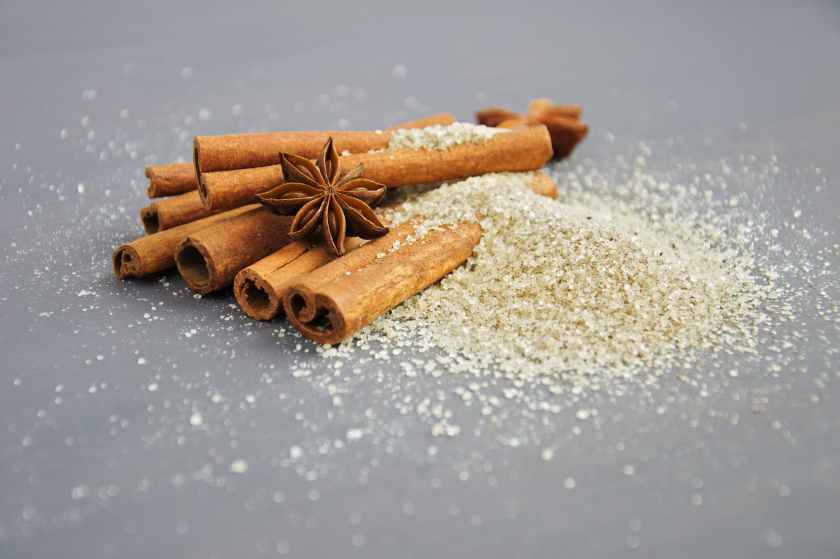
The usual French name is pain perdu translated as “lost bread”, reflecting its use of stale bread. Known for its ease in making and simplicity; sugar, cinnamon, nutmeg and vanilla can be also added to the mix. Alternatively, the bread may be soaked in wine, rosewater, or orange juice either before or after cooking. The bread is then fried in butter or olive oil until browned and cooked through. Day-old bread is often used, both for its thrift and because it will soak up more egg mixture without falling apart.

“The things that you did with parents, whether it was spending every Sunday morning with your dad and eating French toast and watching Popeye, or decorating the Christmas tree with our mother – these are memories that help you be happy.” ~ Leonardo DiCaprio

All said, bringing breakfast to the table from different parts of the world makes the morning light, quick and interesting; in addition to the fact that the kids will love the change once in a while.

Posted in Daily, Family and Society, Stories Around the World, Work

Scarred by Words

The pen is mightier than the sword or vice-versa as some believe. This ongoing tussle between the pen and sword has been going on for quite some time. Yet there is something that we fail to realize that has an ever bigger presence. Words and Actions, but more importantly words. Words have the potency to cause more harm as it inflects a change on both the listener as well as the speaker. It would be an understatement to mention that many times “we speak before we think, instead of think before we speak.”

“The good man brings good things out of the good stored up in his heart, and the evil man brings evil things out of the evil stored up in his heart. For out of the overflow of his heart his mouth speaks.”  Luke 6:45

Many words that we say are a result of our erroneous tongue and less thinking. Some of us shrug it off and say it was in the heat of the moment or that one didn’t mean it so. While the rest of us may apologize or pretend to forget. Unfortunately, once the words have been said, they linger in the subconscious mind and strike the hardest when we least expect it. Eventually the same words can lead to regrettable actions and irreversible consequences. Although it is true that we should express ourselves honest, take heed to not to say anything in the heat of emotion of either anger, sorrow or excessive joy. For we never know the extent of harm these words can cause or when the same words may bite us back. Once damaged, the dent will stay no matter how minor it may seem.

“Be mindful when it comes to your words. A string of some that don’t mean much to you, may stick with someone else for a lifetime.” -Rachel Wolchin

Nails on The Fence

Once there was one very quick-tempered and unrestrained young man. Then one day his father gave him a bag of nails and punished, whenever he did not contain his anger, to drive one nail into the fence post. On the first day there were several dozen nails in the pole. The other week, he learned to restrain his anger, and every day the number of nails driven into the pole began to decrease. The young man realized that it was easier to control his temperament than to drive nails. Finally, the day came when he never lost his temper. He told this to his father, and he said that this time every day, when his son can control himself, he can pull a nail out of the pole. As time went on, the day came when he could tell his father that not a single nail was left in the pole. Then the father took his son by the hand and led him to the fence: – You did quite well, but do you see how many holes are in the pole? He will never be the same. When you say something evil to a person, he has the same scar as these holes. No matter how many times you apologize after that, the scar will remain.

Posted in Christian, Family and Society, Quotes, Reflections

Gratitude for the Blessings

“Give thanks to the Lord, for he is good. His love endures forever.” Psalm 136:1

With one half of the world soon sitting down to give thanks for the blessings of  this year, the tradition of thanksgiving is primarily set in its’ origins as a time of gratitude and togetherness to thank God for a bountiful harvest. This practice is prevalent throughout the world from the New Yam Festival (Iwa Ji) in Nigeria to the Tsukimi celebrated in Japan and the Flores de Mayo in Philippines. While the Jewish harvest festivals are Sukkot and Shavuot, Germany and Russia celebrate Oktoberfest and Oseniny respectively. In the India, from Akhatrij in the west India to Lohri and Holi in North India and Monti Fest, Onam, Vishu and Pongal in South India as well as Dree Festival, Vasant Panchami and Tokhu Emong in Eastern India; harvest is a time for thanksgiving for the bountiful crop akin as God’s blessings.

“So once in every year we throng
Upon a day apart,
To praise the Lord with feast and song
In thankfulness of heart.” – Arthur Guiterman

The reason justified for holding the Thanksgiving Day or Harvest Festivals is so that man doesn’t forget to thank for the blessings and when it is introduced as a part of the tradition and culture, then it will be ingrained in him for the years and generations to come. Though amidst all the celebrations of the holidays with its due share of commercialization, time should be taken out for prayer and sharing the faith that we believe in. There should be a balance between the physical or material things and the spiritual aspect as well. Too much of either doesn’t do us any good. Hyper-physicality is when gratitude for the physical is there but the spiritual part is neglected. On the hand, hyper-spirituality is when we can be prone to tune out God’s physical goodness to us out of the fear that appreciation for that would lose us our spiritual blessings.

From miracles to partaking in meals, our Lord had always given thanks to His Father before the meal. To quote the scriptures, before raising Lazarus from the dead the Lord had said, John 11:41: “…they took away the stone. And Jesus lifted up his eyes and said, ‘Father, I thank you that you have heard me.’” Matthew 15:36 says: Jesus “took the seven loaves and the fish, and having given thanks he broke them and gave them to the disciples … ” In Corinthians I 11:23–24: Our “Lord Jesus on the night when he was betrayed took bread, and when he had given thanks, he broke it… ”

“Thanksgiving is one of my favorite days of the year because it reminds us to give thanks and to count our blessings. Suddenly, so many things become so little when we realize how blessed and lucky we are. Joyce Giraud”

Also evident in the apostle Paul’s letters, Christians are encouraged to to have lives characterized by thanksgiving. In Colossians 3:15–17 : “And let the peace of Christ rule in your hearts, to which indeed you were called in one body. And be thankful. Let the word of Christ dwell in you richly, teaching and admonishing one another in all wisdom, singing psalms and hymns and spiritual songs, with thankfulness in your hearts to God. And whatever you do, in word or deed, do everything in the name of the Lord Jesus, giving thanks to God the Father through him.” In Ephesians 5:20: “… giving thanks always and for everything to God the Father in the name of our Lord Jesus Christ.” And Thessalonians I, 5:18: “Give thanks in all circumstances; for this is the will of God in Christ Jesus for you.”

Gratitude can transform common days into thanksgivings, turn routine jobs into joy, and change ordinary opportunities into blessings. William Arthur Ward

We shouldn’t limit ourselves to give thanks for His Grace and His Blessings for a day or couple of days in the year, but rather every day should be counted as a blessing. Unfortunately amidst the busy days we find ourselves, we often forget to do that. As this year end approaches, let us resolve to keep in mind the gratitude and kindness we have received either as material gifts, relationships or random acts of kindness and blessings ( what some of us may call as “luck”).

“As we express our gratitude, we must never forget that the highest appreciation is not to utter words, but to live by them.” – John Fitzgerald Kennedy

Posted in Daily, Family and Society, Reflections, Stories Around the World

Passbook Worth Fighting For

A WEDDING GIFT

She married him today. At the end of the wedding party, her mother gave her a newly opened bank savings passbook, with $1000 deposited in it. She told her, “My dear daughter, take this passbook. Keep it as a record of your married life. Whenever something happy and memorable happens in your new life, put some money in. Write down what it’s about next to the amount. The more memorable the event is, the more money you can put in. I’ve done the first one for you today. Do the others with your husband. When you look back after many years, you will know how much happiness you’ve both shared.’

She shared this with him after getting home. Both of them thought it was a great idea and couldn’t wait to make the next deposit. This is what the passbook looked like after a while: 7 Feb: $100, his first birthday celebration after marriage
1 Mar: $300, she gets a salary raise
20 Mar: $200, vacation
15 Apr: $2000, She’s pregnant!
1 Jun: $1000, He gets the big promotion and so on…However, as the years went by, they began fighting and arguing over trivial things. They didn’t talk much. They regretted that they had married the most nasty person in the world. There was no more love. One day she talked to her Mother. ‘Mom, we can’t stand it anymore. We have decided to divorce. I can’t imagine how I decided to marry this guy!’
Her mother replied, ‘Sure, that’s no big deal. Just do whatever you want, if you really can’t stand it. But before that, do one thing remember the savings passbook I gave you on your wedding day? Take out all money and spend it first. You shouldn’t keep any record of such a poor marriage.’ She agreed with her mother. So she went to the bank, and was waiting in the queue to cancel the account.

While she was waiting, she took a look at the passbook record. She looked, and looked, and looked. Then the memory of all the previous joyful moments came back to her. Her eyes were filled with tears. She left and went home. When she got home, she handed the passbook to her hubby and asked him to spend the money before getting divorced. So the next day, he went to the bank, and was waiting in the queue to cancel the account. While he was waiting, he took a look at the passbook record. He looked, and looked, and looked. Then the memory of all the previous joyful moments came back to him. His eyes were filled with tears. He left and went home. He gave the passbook back to her. She found a new deposit of $5000. And a line next to the record: ‘This is the day I realized how much I’ve loved you throughout all these years. How much happiness you’ve brought me.’ They hugged and cried, putting the passbook back into the safe.

Marriage is never a game, as there are no winners or losers. It is neither easy nor does it follow a strict code of unbending rules. Yet it is beautiful for the fact that two people live for each other with gentle understanding and kind love. As no two people will come from the same background or follow the exact same path from same homes, neither will one person think as a clone of the other, fights and arguments are inevitable. Even though we have our set of beliefs, opinion and requirements, it doesn’t give us the right to impose on the other under the pretext of being married. Both have to express their own ideas and air out opinions with both compromising to reach a mutually acceptable solution. For along with the shared interests, morals and love; it is the mutual respect and acceptance that binds us together and carry forward during the tough times as well as misunderstandings. Before we throw in the towel, give up and declare it over, think back to the good times and to what brought us together in the first place. If the knowledge and times are worth living again, the fight to save. If not and the distress outweighs the reasons and the love shared in the initial days, then finally close the chapters with mutual respect and start anew.

Posted in Family and Society, Food

Culture of Fast Food

The rise of the urban development has been directly proportional to the growth of fast food culture.

In 1951 Merriam-Webster had recognized the term “Fast food” as “of, relating to or specializing in food that can be prepared and served quickly” or ” designed for ready availability, use or consumption and with little consideration given to quality or significance (adj.)(noun)”. Although contrary to popular belief, fast food has been there since the times of the Romans. The cities of the Roman empire had marketplaces like the Forum with food vendors who sold baked goods and cured meats to the urban population living in “the insulae” (similar to multi-story apartment blocks). Functioning more or less like a simple eating establishment, bread soaked in wine, cooked vegetables and stews later on were available. The trends continued through the ages and the civilizations as seen in China of the 12th century where fried dough, soups and stuffed buns were snack foods. Meanwhile the markets of their contemporaries in Persia (now Baghdad) sold processed legumes, purchased starches and even ready-to-eat meats. Moving ahead during the Middle Ages, large towns and major urban places like London and Paris had numerous vendors with stalls of ready to eat dishes such as pies, pasties, flans, waffles, wafers, pancakes and cooked meats. With the rapid industrial revolution, booming of towns, progresses in the food and science industry, the ready to eat meals underwent rapid changes, for better then but worse now. Along with the era of colonization, wars, immigration and emigration , the fast paced food industry had picked up in leaps and bounds.

Not everyone necessarily needs new things all the time and creative designs. It’s good to have luxury restaurants and fast-food restaurants. You need both. Rei Kawakubo

From prepackaged food sold at convenience stores, street vendors, filling stations to fast food outlets, the entire scenario revolves around quick service when “on the go” preferring finger food to “the cutlery food”. “Take-away” or “take-out” with “drive-through” options, all started off as the fast-paced life took over with people working two to three jobs, lack of provisions or money or time to cook the regular meals. Of late, the development of technology has allowed one to order food through the smart phone applications.

You can do good work simply staying up all night and eating nothing but junk food, but probably not in the long term. John Mulaney

Despite the popular assumption that fast food and junk food are the same, they are not. True although there is an overlap between the terms, they are not entirely substitute terms. Fast food refers to the fast assembly process for the preparation of the food, where food is ready in a matter of minutes. Junk food is labelled based on the little nutritional value of the food which is high calorie, high sodium with or without high saturated fat, sugar or salt content.

I follow my own advice: eat less, move more, eat lots of fruits, vegetables, and grains, and don’t eat too much junk food. It leaves plenty of flexibility for eating an occasional junk food. Marion Nestle

While the taste buds are tempted and cravings are fulfilled, on the downside the price to pay on the long run with risk of colorectal cancer, obesity, high cholesterol and depression to list a few. As good things always come in small packages, to downsize the portions, space out the intake and nutritionally substitute the fast food as well as retaining the taste are the few of the tricks to tackle the constant pull to it.

“The problem is when that fun stuff becomes the habit. And I think that’s what’s happened in our culture. Fast food has become the everyday meal.” Michelle Obama

As we mark any occasion or dining out with fast or junk food, keeping it in moderation makes us guilt-free to enjoy the pleasures once in a while. As been proven time and again, too much of anything spoils the fun.