Posted in Daily, Food, Photography Art, Stories Around the World

Little like the “Donut”

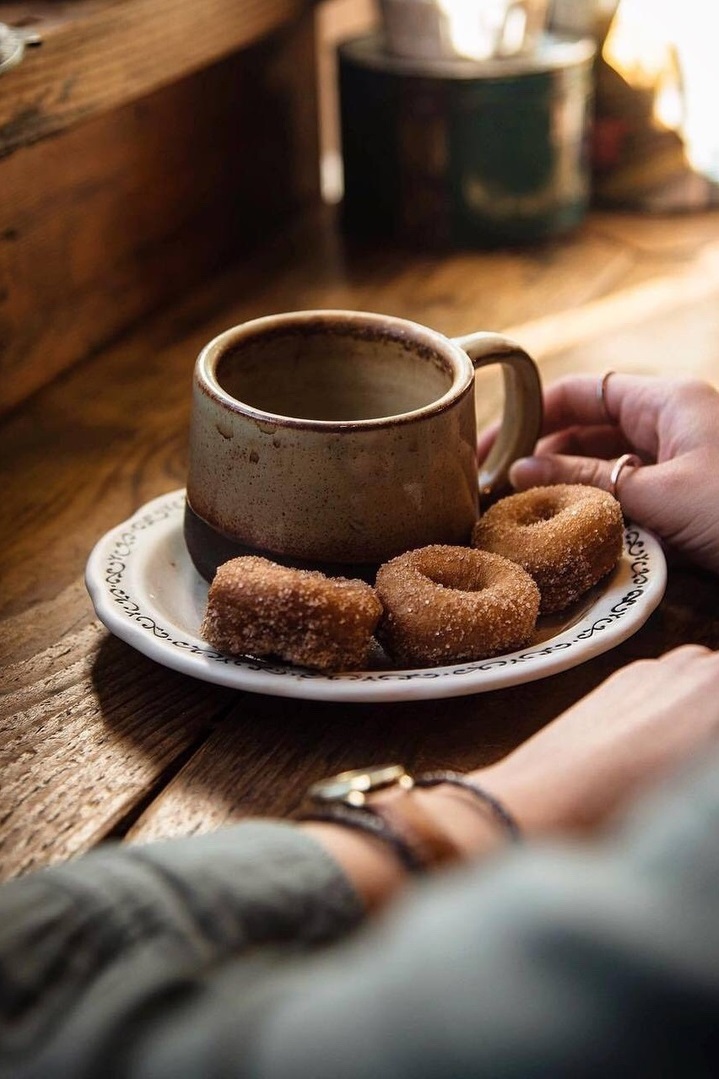
Deeply fried, made from flour dough, typically ring shaped with a hole or similar round shaped (without the hole), or filled with various toppings and flavourings, this sugar delight goes by the more popular name of “donut”. While donut may be considered more of an 18th century preparation with their origin more likely from the Dutch oliekoek, fried dough based confectionery has been there for quite some time in the various indigenous cuisines across the globe. The tradition of frying foods in edible oils have been evidenced to the era of Ancient Greece and Rome. As other cultures began to adapt their own methods over time, different variations came into the local cuisines, though the roots may trace back to common ground.

Made usually from flour (can include finely milled or regular variety) with a mix of water, eggs, milk, sugar, oil, shortening or leavening agents as well as flavourings added to the dough which is then shaped(or not) and deep fried. While doughnuts may be based on their shapes as rings, filled, balls, flattened spheres or twists; other variants include the cake type (like old fashioned doughnut) and the yeast-risen doughnuts. Exploring the indigenous variants to the modern “doughnuts” based on the indigenous cuisines, there a huge number of delicacies that fill the list with legends of their own.

“New mysteries. New day. Fresh doughnuts.” David Lynch

What happens when a baker accidentally drops a ball of dough into a pan of hot oil ? The resulting culinary experimentation would result in a light, spongy ring of dough fried in oil, when had in the Maghrebi cuisine, is known as “Sfenj” (translated as sponge). Also known as Khfaf (Algeria) or bambalouni (Tunisia), Sfenj is usually had for breakfast or tea, had plain or sprinkled with sugar or dipped to drizzled in honey or sweet syrup. Originating in the Al-Andalus era (8th to 10th century), the accidental drop of dough, had evolved to be an important part of the Andalusi cuisine, spreading over to the Banumarin dynasty (Morocco, 1270-1465) and then onto the France (13th century) where it had inspired beignets. Making homemade Sfenj, all depends on how long one wants the dough to rise and temperature of the oil while frying. Of recent, there have been recent variations to the regular sfenj, that is “Sfenj matifiyya” (sfenj pounded flat and fried a second time) and the “Sfenj matifiyya bil-baydh” (sfenj matifiyya with an egg added before refrying).

Moving across to the French Beignet (almost similar to the English fritter), these are basically a type of deep-fried pastry. Although beignets were more popular in the medieval French cuisine, the earliest similar forms may have been there in Ancient Rome. With the basic ingredients of flour, granulated sugar, evaporated milk, shortening agents and confectioner’s sugar; beignets can be made in various varieties depending on the pastry type used. While the French-style beignet is essentially deep fried choux pastry, beignets made with yeast pastry ( boules de Berlin) or those made with chestnut flour (Corsica, beignets de farine de châtaigne) with the latter being known as fritelli, are just few of the variants made. While making at home, many variations, add-ons or substitutes to the usual dough mix may be made, starting with the flour or adding of mashed bananas (plantains) or berries just to start off a few changes. Beignets may be served either as sweet desserts or breakfast food, the choice is own.

There are countless styles and variations to the various forms of “deep-fried dough” across the globe. While exploring and experimenting with the various cuisines, absorbing those recipes into the home kitchen and indigenous cuisine makes the fun part of cooking. Food is essential to life. Imbibing a litte bit of the food culture into the usual mix would not only excite the cooking bug or the palatal buds, but also start off a pleasant home and family tradition. After all, experiences are the what fills the treasure chests of life.

“Frosting was his favorite. He liked to eat doughnuts at every meal. Because it was healthier to eat six small meals a day than three large ones, he restricted himself: jellied for breakfast, glazed for brunch, cream-filled for lunch, frosting for linner, chocolate for dinner, and powdered sugar for 2 a.m. supermarket stakeout. Because linner coincided with the daily crime peak, he always ate his favorite variety to ease him. Frosting was his only choice now, and upsetting his routine was a quiet thrill.” Benson Bruno ( author of A Story That Talks about Talking Is Like Chatter to Chattering Teeth, and Every Set of Dentures Can Attest to the Fact That No..)

Posted in Daily, Personal Musings, poetry, Quotes, Reflections

End of the Trail

To experience the feeling of happiness after any difficult situation is indeed a blessing. The feeling running across the family with a member suffering from a grave illness, the joy of getting a job after constant rejection, the success of an idea which was first viewed with skepticism or the clearing of exams in the midst of personal issues are few of the many ways wherein the initial adverse moments have been diminished with the final outcome.

“What seems to us as bitter trials are often blessings in disguise.” Oscar Wilde

As each one crosses each stage of life, the manner and range of adversities vary. Yet what runs common across them all, is the strong will to categorize the various opinions, behaviour, words and emotions; sift them and take up what is progressive for the task at hand and let the wind blow the rest away. More than the circumstances; it is how one reacts to them, that matters the most. The potential of each one of us is never completely tapped, for each day one has the capacity to learn new different matter, master diverse talents and achieve the hidden dreams which float in the corners of the mind.

“Life is ten percent what you experience and ninety percent how you respond to it.” Dorothy M. Neddermeyer

We Made It

We made it.
Despite the fear and predictions of doom.
We made it.
Even though there were days when we were tired
and there were days when we forgot who we were.
We made it.
And we must thank the stars for this.
And the birds for their beautiful songs.
And the strangers who were careful to smile.
We made it.
– Ron Atchison

“When the awareness of what is achievable brushes your life, your journey has begun.” Lorii Myers

Posted in Life, Personal Musings, poetry, Random Thoughts

Start the Change

“The world as we have created it is a process of our thinking. It cannot be changed without changing our thinking.” Albert Einstein

Of recent, two of my childhood friends had quit their careers based on their training. While one switched their passion from advertising to pure art; the other switched from business administration to the kitchen, where the flavours of various cuisines and the science of cooking were learnt on professional lines. These decisions of theirs had given the thought of “dream career” a new meaning.

“Everyone thinks of changing the world, but no one thinks of changing himself.” Leo Tolstoy

Each one of us have been blessed with a different skill, the passion towards an art or learning from within. While society may define certain careers as grand or of higher social standing; the reality is that simply pursuing them for the sake of “the social fame” will leave one depressed and dejected in the long run. During my stint as a career adviser during few of the school and adolescent counselling meet, what comes to mind is the words of my professor, “Do what you love, for that is what you will excel in”. If the road towards that dream isn’t feasible now, don’t let the skill die but nurture it, not just so to lose it but to regain own peace of mind, while engaging in it at times. It is never late to make a change in any form. For doing something that one loves, is thousand times far better than not doing it at all.

“For what it’s worth: it’s never too late or, in my case, too early to be whoever you want to be. There’s no time limit, stop whenever you want. You can change or stay the same, there are no rules to this thing. We can make the best or the worst of it. I hope you make the best of it. And I hope you see things that startle you. I hope you feel things you never felt before. I hope you meet people with a different point of view. I hope you live a life you’re proud of. If you find that you’re not, I hope you have the courage to start all over again.” Eric Roth, The Curious Case of Benjamin Button Screenplay

It’s Not Too Late
Ron Atchison

It’s not too late… the angel said.
Even though the world’s a mess…
Even though you’re not that young…
Even though you’ve made mistakes and have been afraid
It’s not too late…
And then I saw the world through the angel’s eyes…
I saw the colors I could paint
The bridges I could build
The lives that I could touch
The dreams that could still come true
And it became very clear to me…
That it’s not too late.

Posted in Daily, Food, Stories Around the World

As Simple as “Sandwich”

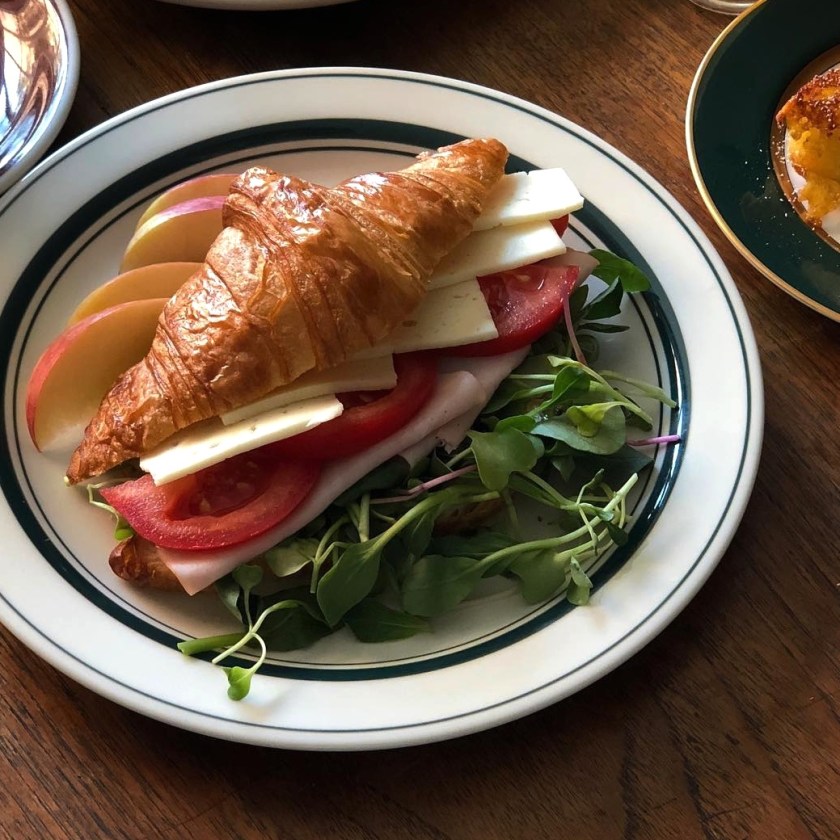
Typically there in almost every household menu, whether it be a snack meal, lunch or dinner or simply a flash picnic meal, ranging from being savoury to sweet or deli made as well as simple and loaded with plenty of fillings, sandwiches have been undeniably had by the old and the young, at some point of time. The popularity lies in it’s ease in making it as well as having it, tapering each menu as per own individual choice.

“The idea of a sandwich as a snack goes back to Roman times. Scandinavians perfected the technique with the Danish open-faced sandwich, or smorroebrod, consisting of thinly sliced, buttered bread and many delectable toppings.” DeeDee Stovel ( author of Picnic: 125 Recipes with 29 Seasonal Menus)

Fillings of either a savoury kind (vegetables, sliced cheese, meat and the like) or simply something sweet and buttery placed on or between slices of bread (two or more) make up the basic sandwich. Although in general, if two or more pieces of bread serve as a wrap or container holding in a set of fillings, which can be had as finger foods, constitute “the sandwich”. Though the name “sandwich” is attributed to John Montagu, 4th Earl of Sandwich, this basic combination has been there quite earlier.

The use of bread (including flat-breads) or bread-like staple to lie over and under or simply cover up or used to scoop up, enclose or wrap up another mix of ingredients was used in such a fashion in various cultures across the continents. Throughout Western Asia and northern Africa areas, the indigenous cuisine had the use of flat-breads ( bread baked in flat rounds, contrasted tot he European loaf), whih were used to scoop or wrap small amounts of food (in a spoon like fashion) while having the meal.

As per records, Hillel the Elder (ancient Jewish sage) had wrapped meat from the Paschal lamb and bitter herbs in a soft matzah—flat, unleavened bread—during Passover (like a modern wrap). The European Middle Ages saw “trenchers” (thick slabs of coarse and usually stale bread) being used as plates. After the meal, these food-soaked trenchers were fed to dogs. Seventeenth century Netherlands had the immediate culinary precursor (with a direct connection to the English sandwich)as recorded by the naturalist John Ray that in the taverns beef hung from the rafters “which they cut into thin slices and eat with bread and butter laying the slices upon the butter”, which were served as the Dutch “belegde broodje” an open-faced sandwich.

“It’s like making a sandwich. I start with the bread and the meat. That’s the architecture. Add some cheese, lettuce and tomato. That’s character development and polishing. Then, the fun part. All the little historical details and the slang and the humor is the mayonnaise. I go back and slather that shit everywhere. The mayo is the best part. I’m a bit messy with the mayo.” Laini Giles

Moving forwards to the eighteenth century England, the popularity of the sandwich arose as the popular myth that bread and meat sustained Lord Sandwich at the gambling table (as recorded in Tour to London by Pierre-Jean Grosley). As legend goes Lord Sandwich ( being a very conversant gambler and into many portfolios for the government) didn’t take the time to have a meal during his long hours playing at the card table. Instead he would ask his servants to bring him slices of meat between two slices of bread. This habit (well known among his gambling friends) enticed them to order as “the same as Sandwich!”. Thus the terminology “sandwich” was born. Alternative account as written by N.A.M.Rodger (Sandwich’s biographer), who suggests that Sandwich’s commitments to the navy, politics and the arts meant that the first sandwich was more likely to have been consumed at his work desk. As per records the original sandwich was a piece of salt beef between two slices of toasted bread.

What was initially perceived as food that men shared while enjoying a game or drink as social nights, the sandwich slowly began appearing in polite society as a late-night meal among the aristocracy. With the rise of the industrial era and the working classes as well as the ease of making and inexpensive ingredients, the popularity of the sandwich rose in the nineteenth century. The street vendors had popularized the sandwich sales (London, 1850). Also typically serving liver and beef sandwiches, sandwich bars were set up (especially in western Holland). The sandwich was first promoted as an elaborate meal at supper, in the United States. As bread became a staple of the American diet (early 20th century), the sandwich became the same kind of popular, quick meal following the widespread trend of the Mediterranean and European cuisine.

“I love sandwiches. Let’s face it, life is better between two pieces of bread.” Jeff Mauro

By itself, sandwich has a wide range of varieties, from the simple PB&J sandwich to the more complicated fillings. Broadly mentioning the major types of sandwich include those with the two slices of bread (or halves of a baguette or roll) with other ingredients between; more complex sandwiches like club, hero, hoagie or submarine sandwich, open-faced sandwich and the pocket sandwiches. Based on the fillings as well as type of sandwich, there is the BLT, cheese sandwich, French dip, hamburger, Monte Cristo, muffuletta, pastrami on rye, peanut butter and jelly sandwich, cheese-steak, Reuben and sloppy joe to mention a few.

Few misnomers include the sandwich cookies and ice cream sandwiches, named by analogy not because of them being bread containing food are generally not considered sandwiches in the sense of a bread-containing bits. Another variant is the layer cake or sandwich cake, made of multiple stacked sheets of cake, held together by frosting or another filling type like such as jam or other preserves.

“Enjoy every sandwich.” Warren Zevon

Sandwiches, today can be filled with a variety of fillings, ingredients based on choice, availability, ingenuity and locality. From the Baloney salad sandwich to the Vietnamese Bánh mì or the Chilean Churrasco, French croque-madam, Chinese Rou jia mo, Southeast Asian Roti john, Finnish Ruisleipä and Hunagrian Zsíroskenyér to mention a few, the sandwich culture has evolved in a way. Keeping in a more creative manner fillings can range from the more bizarre like popcorn or marshmellows to Oreo cookies or the more intricate and spicy curry for a change. So when in a flurry for time, getting creative with a sandwich can o wonders for the body, mind and soul.

“I put some flour, salt, and spices in a freezer bag and then put the pieces of lamb in and then went shake-shake-shake. The lamb was nicely covered with the flour. I browned the lamb and then put it aside. Then I fried some onion with cinnamon, cloves, and cardamom, added some tomatoes and then the lamb, and cooked until the lamb was all flaky. I mixed chopped lettuce, pieces of avocado, and pomegranate seeds, along with a little bit of lemon juice. I cut the pita bread open, put the lamb curry in, and then the lettuce-avocado mixture. All done!” Amulya Malladi (author of Serving Crazy with Curry)


Posted in Daily, Family and Society, Personal Musings, poetry, Quotes

Find Thyself First

“Love yourself first and everything else falls into line. You really have to love yourself to get anything done in this world.” Lucille Ball

When my cousin had joined university, it was a tough time for her. With an innate shy nature, she was the quietest and youngest in the family, babied by the elder cousins, siblings and family. Staying away from the family network for the first time was difficult. For she had to not only settle in the campus, but also make a new circle of friends, shift into a totally different surroundings and lifestyle from that at the farm. The first few months saw frequent late night phone calls, worried texts and harried emails. Later on their frequency slowly died down. As we kept in regular touch, I had asked her how she manage to cope with the academics, social life and the new city. Her reply that, “She had found herself” was something to think about.

“If you want to be happy, be.” Leo Tolstoy

All of us have our own floundering moments; where in one is lost and bewildered. Those times, seeking out the inner self is more important than just moving on daily. All of us g through new situations in life. For personal, professional, physical and social growth, one does indeed need to step out of the comfort zone. Before doing so, one needs to make certain promises to oneself. Unless one tends to put them put mentally first, though not on grounds of pure personal gain at another’s expense; one will later break down and find it difficult to move ahead. We all have our dreams to fulfill, ships to sail, winds to catch and rainbows to see. However, unless we make promises true to ourselves deep within; finding that phase of happiness, joy and serenity would be an improbable reality.

“Sing like no one’s listening, love like you’ve never been hurt, dance like nobody’s watching, and live like its heaven on earth.” Mark Twain

Promise yourself
To be so strong that nothing can disturb your peace of mind.
To talk health, happiness, and prosperity to every person you meet.
To make all your friends feel that there is something in them.
To look at the sunny side of everything and make your optimism come true.
To think only the best, to work only for the best, and to expect only the best.
To be just as enthusiastic about the success of others as you are about your own.
To forget the mistakes of the past and press on to the greater achievements of the future.
To wear a cheerful countenance at all times and give every living creature you meet a smile.
To give so much time to the improvement of yourself that you have no time to criticize others.
To be too large for worry, too noble for anger, too strong for fear; and too happy to permit the presence of trouble.
To think well of yourself and to proclaim this fact to the world, not in loud words, but in great deeds.
To live in the faith that the whole world is on your side so long as you are true to the best that is in you.
C.D. Larson

Posted in Daily, Family and Society, Random Thoughts, Reflections

Of Puddles, Mud and Joy

“All animals, except man, know that the principal business of life is to enjoy it.” Samuel Butler

With the autumn rains coming slowly into full swing, maintaining the lawn is a full swing activity as the children gather up the dead leaves, jump in and out of the puddles, save up the coloured leaves for their scrapbook or blow the white fluff before uprooting them. Playtime involves making paper boats, building up dams and forts with the mud, pebbles and water. Watching them reminds me of the real fun moments of life.

“A man is getting old when he walks around a puddle instead of through it.” R.C. Ferguson

At times, adult life takes the toll on one. Full time jobs, basic material things to own, responsibilities piling up, family to raise, budgets to maintain oneself as well as the general things of life; all of them offer more stress now. Seeing the carefree joys of childhood in the small things of life, reminds one that happiness never lies in what is achieved but in how one perceives it. Although out-station trips, expensive gifts or treats have been a source of fun and enjoyment; real happiness can be found in open fields, long walks, quiet time with loved ones, engaging the kids in baking the cake or even dancing to the popular beats and making up own tune. The simple things have a great deal to offer. Let the breeze of the wind mess up our hair, fly with it to feel the smell of earth and the seasons it carries.

“A little nonsense now and then is cherished by the wisest men.” Roald Dahl

One doesn’t need to dance to the beat in perfect synchronous manner. Each one of us ave our own tune. Instead of staying in the sidelines, getting up to dance and sing out of tune brings more joy. More than keeping the moments for the future; each day brings forth something new or better in us. Bucket lists are important; yet the little things of life have their own special treasures to offer. Learning to do them, like the little children, helps one to face life with it’s gifts, lessons, downhills and uphills; all as they come.


Posted in Daily, Life, Personal Musings, poetry, Reflections

Through the Aftermath

“One of the greatest discoveries a man makes, one of his great surprises, is to find he can do what he was afraid he couldn’t do.” Henry Ford

The ordeal of getting involved in the wrong is horrible. Speaking for those who face it on a daily basis or see violence from a professional view point, in the health sector where people come beaten, injured or batter to the emergency room, the police who has to assess the horrible crime scene, the rape victim and their family of loved ones who have to collectively face the ordeal of coming out of their nightmare, the court which handles gross unjust cases or event he teachers at school who have to tackle he silent bullying in a very subtle way. Above all, all those who return from war, tying to make sense of the entire event, what had be done and the impact. The after effect is more mind numbing than the event itself. Each and similar situation to the lines above, reflects a little of the post traumatic stress that one goes through. Whether it be profession related, the inner mental trauma or the ongoing social, verbal or physical violence that one has to endure, witness or handle; the negative side of humanity has a crippling effect long after the actual event has happened.

“I learned that courage was not the absence of fear, but the triumph over it. The brave man is not he who does not feel afraid, but he who conquers that fear.” Nelson Mandela

Coming out of the aftermath is the most difficult part. Facing the stress long after the situation has been done and over, is the most traumatic part. Each one of us have our sets of traumatic moments. The fear of being alone after being mugged or violated, the battle within to come out of the vice of smoking, the handling of daily life after the war or facing school for a bully-victim, all these need one to find their own reserve of courage and strength to brave the situation and face the day. It takes immense will to come out of the quagmire of negative emotions from the past that may bombard one and collapse the day.

“You gain strength, courage, and confidence by every experience in which you really stop to look fear in the face. You are able to say to yourself, ‘I lived through this horror. I can take the next thing that comes along.'” Eleanor Roosevelt

Walking through those painful feelings and recollections isn’t done in a huge leap, but in baby steps. Yet once started to cope, one discovers that each one has it within themselves to face the fear and learn to brave the storm. Whether the steps made be big or small ones, those hardly matters more than the fact that one has resolved to move on and address their fears, than dwell in them. We are all survivors in our own way. Finding the light and purpose in life, is what matters the most. Once we draw out the strength and courage hidden deep within, one discovers that life is more beautiful now than before.

“I’m not afraid of storms, for I’m learning how to sail my ship.” Louisa May Alcott

Strength and Courage

It takes strength to be certain,
It takes courage to have doubts.

It takes strength to fit in,
It takes courage to stand out.

It takes strength to share a friend’s pain,
It takes courage to feel your own pain.

It takes strength to hide your own pain,
It takes courage to show it and deal with it.

It takes strength to stand guard,
It takes courage to let down your guard.

It takes strength to conquer,
It takes courage to surrender.

It takes strength to endure abuse,
It takes courage to stop it.

It takes strength to stand alone,
It takes courage to lean on a friend.

It takes strength to love,
It takes courage to beloved.

It takes strength to survive,
It takes courage to live.

Written by David L. Griffith