Posted in Daily, Food, Stories Around the World

Twist in the “Cup”

Quiet mornings are high on the wish-list these days, so when the weekend rolls over; the lure of the peace is strengthened by a hearty cuppa. With the new trend of butter to bulletproof coffee, yours truly did a couple of twist after intense research and experimentation to give a different flavour to each weekend of the month. As the new saying may be like something new, something old and then an extra something borrowed (not blue) gives a new vibe for the coming week.

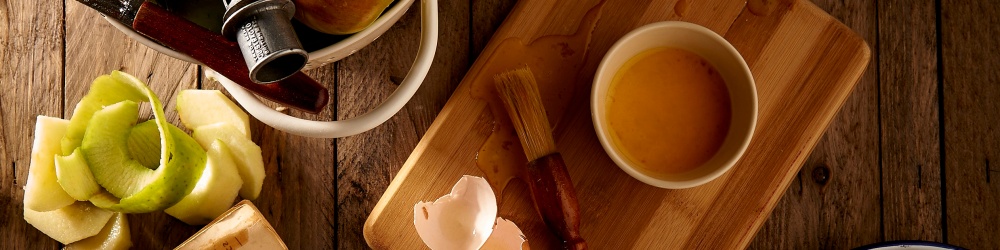
Coming to coffee trend across the continents, the Austrian Kaisemelange can keep one guessing the ingredients. Traditionally made by mixing the egg yolk and honey, and adding strong black coffee while stirring gradually; the flavours give a different meaning for the day. Doing it at home, it took quite a number of tries to get all the proportions in sync.
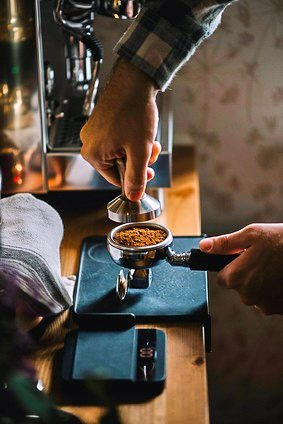
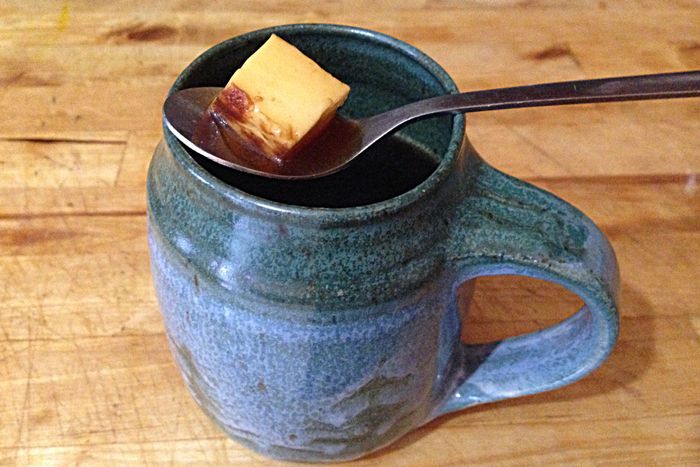
On the other hand, the traditional Finnish “Kaffeost” combines the cheese to the coffee. Into the birch burl carved mug, a cube of cheese (originally juustoleipä from reindeer milk, leipäjuusto or juusto; recipe variations mention about bread cheese) is placed at the bottom and boiling black coffee is poured into it. As the coffee is being sipped, the softened chunks can be spooned out or left behind as dregs. This coffee flavoured cheese and the nutty buttery coffee flavour, gives off a dessert-ish vibe and especially enrich the morning routine.

“Like a symphony, coffee’s power rests in the hands of a few individuals who orchestrate its appeal. So much can go wrong during the journey from soil to cup that when everything goes right, it is nothing short of brilliant! After all, coffee doesn’t lie. It can’t. Every sip is proof of the artistry – technical as well as human – that went into its creation.” Howard Schultz
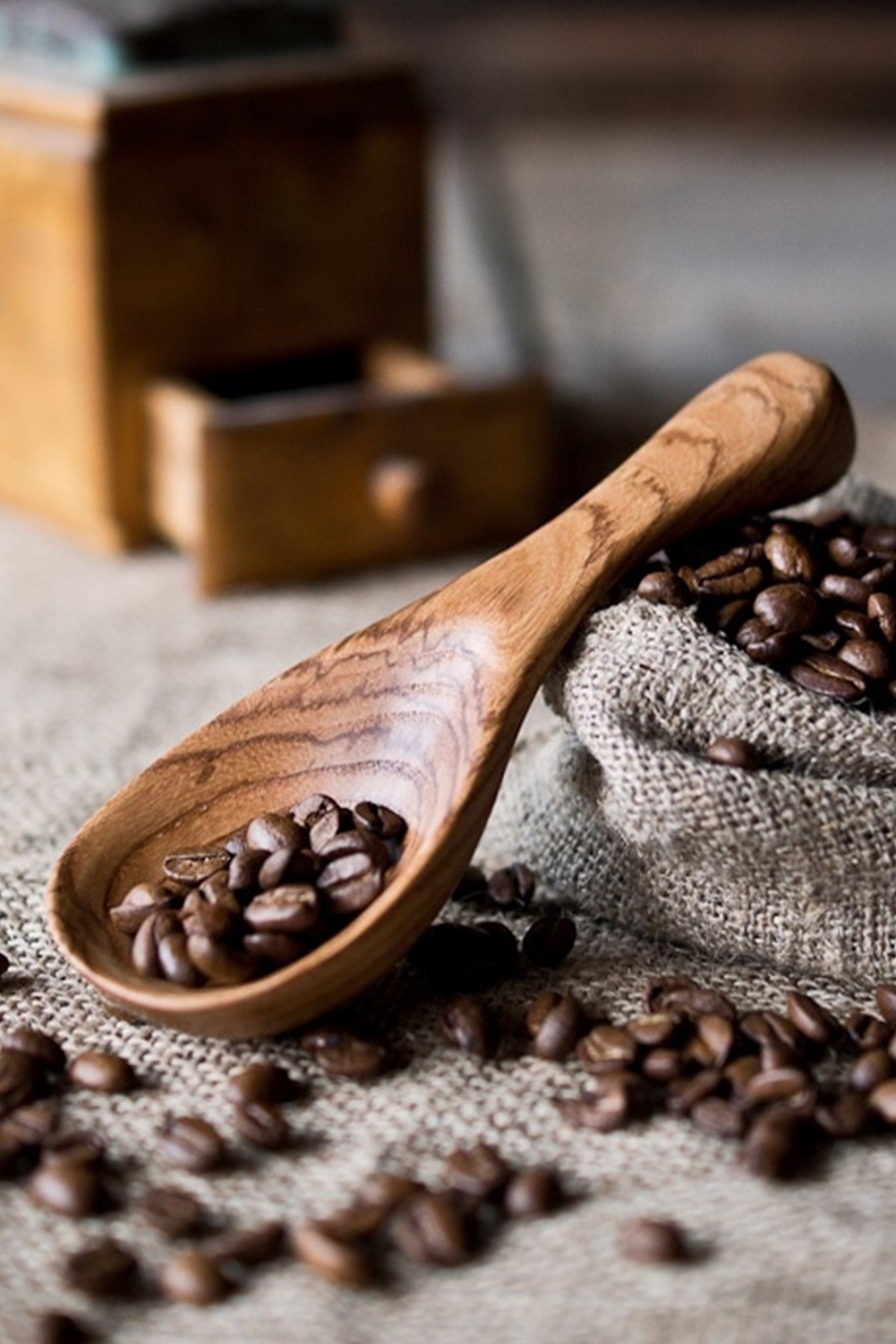
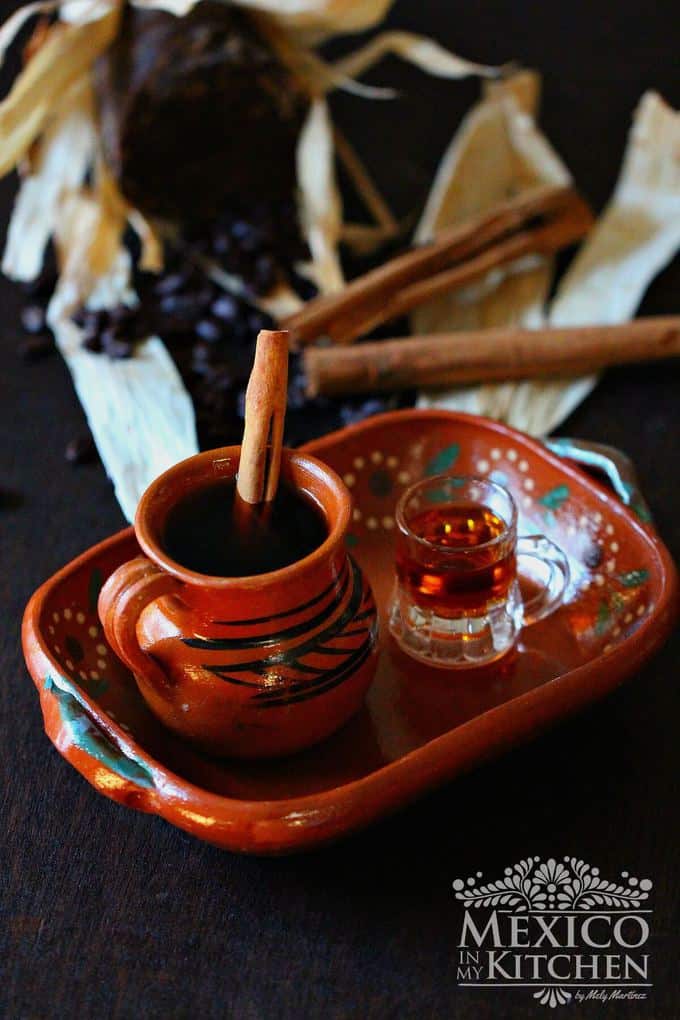
Going across to the next continent, the traditional Malaysian “Ipoh White Coffee” is made by roasting the coffee beans with margarine and no added sugar. Roasting the beans with wheat, sugar and margarine gives the other popular Malaysian ‘black’ coffee roast (Kopi-O). Coming to the Indian kitchen, the ever popular spice rack holds a special position there. Which is why the Mexican Café de Olla was on the “to try” list. Made traditionally in the earthen clay pot, the basic ingredients include ground coffee, cinnamon and piloncillo (unrefined whole cane sugar or dark brown sugar); served with optional ingredients like orange peel, anise, and clove to spice it up. pot brewed coffee with raw sugar and spices. The coffee is prepared in a stainless steel saucepan with water, brown sugar, cinnamon and dark roasted ground coffee and served in a cup with an orange peel.

All in all, the different “coffee trends” around the globe makes for an interesting experience, whether it be in the popular cafe or in the comfort of our kitchen. Each “cuppa joe” has its’ own special story, to share, experience and relish in; a voyage even in the these times.

Posted in Food

To Whisk, Pour and Savour

Staying at home, one can savour the taste of caffeine or theophylline when the thought takes over the mind. With going to the cafe’ out of question, bringing the cafe home is an alternative. As long as milk, cream and sugar are at hand; there are a couple of concoctions that can be attempted and recorded in the “annals of the kitchen experiments”. After a couple of days with black tea and espresso shots, it was time to tone down a bit of them both.

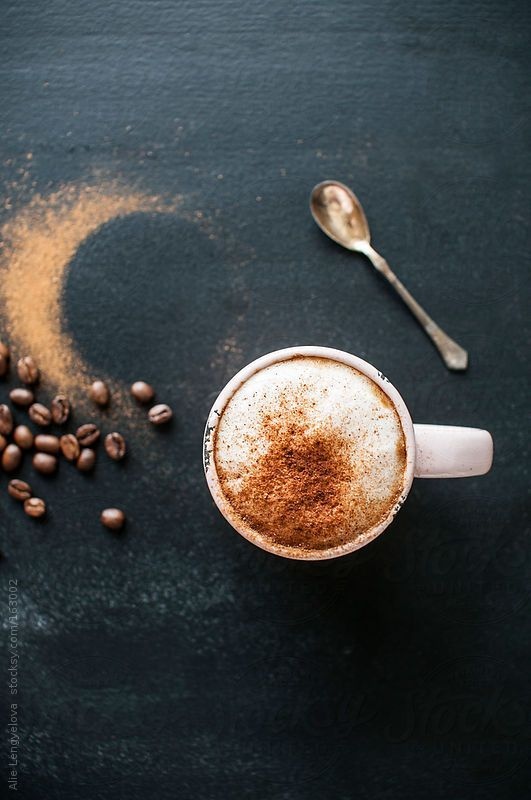
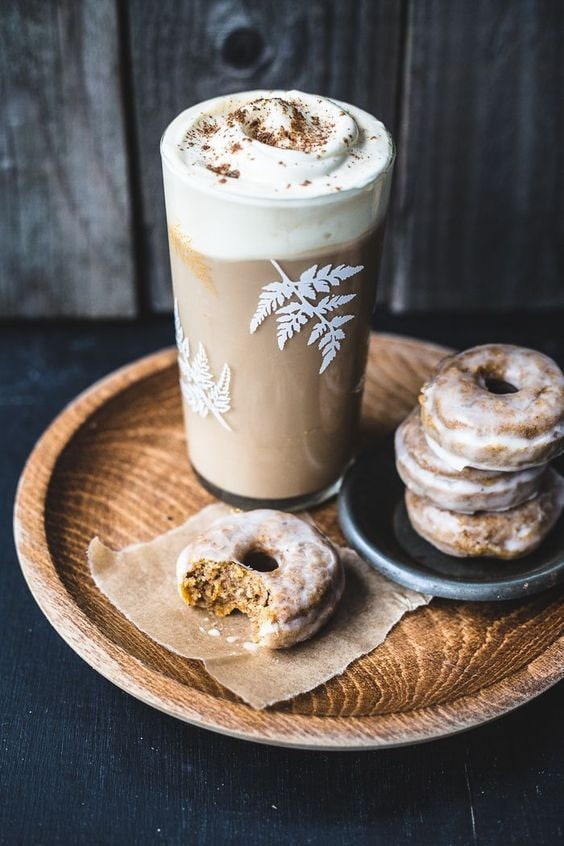
Taking a break from all the caffeine, today was a soft coffee day. Also known as “desi-coffee” or whipped coffee, this is akin to a hand-beaten Indian home-style version of the cappuccino. Taking a spoon of instant coffee and sugar with just a spoonful of milk, beat the mix vigorously to bring out a light fluffy paste-like froth. Add a few drops of milk, getting the froth thick, creamy and rich. With the final froth coming after a minimum of five minutes of vigorous whisking; one can add the warm (or cold) milk to the mix, either at a go or in a layered manner. The best part is each glass of beaten coffee brigs out not just an array of flavours, but a special smell, feel and texture of the coffee.

In the scattered attempts to recreate the different styles of coffee, one interesting point lies in the sequence and the amount in which each proportion is added. When the milk is stirred or beaten and then added to the single concentrated shot of black coffee or the vice versa, it doesn’t result in them both being the same. While trying out the popular quarantine coffee challenge doing its’ rounds on social media, it felt like making this hand-beaten Indian cappuccino or desi-whipped coffee in a reverse manner. While the latter involves milk being added to the mix to get the thick froth on top; the former involves added the whipped instant coffee powder, sugar and hot water (in equal proportions) to the creamy texture and adding that to the milk (hot or cold). Done either way, both styles have a varied feel of their own.

Continuing in the same, vein of making the evening tea session interesting for both the kids and the rest of us, the experiments will be on the creation of homemade chai latte, seven layer chai or the noon tea with the story behind them to add the finishing touch. Experimenting with these simple and uncomplicated variations helps one to not just bring a spark to these trying days; but also to savour and fun the lightness of each day in life.

“I wake up some mornings and sit and have my coffee and look out at my beautiful garden, and I go, ‘Remember how good this is. Because you can lose it.” Jim Carrey

Posted in Daily, Food, Stories Around the World

Third Wave and On…

“Coffee is a hug in a mug.” Anonymous

On a long postponed visit to the extended family line, we had to put in a three hour journey to-and-back. While waiting in the traffic and not being in the principal driver’s seat was an added incentive for window shopping. Naturally the sign of “discount” had your truly squinting to make out the deals. But it was the special offer of “The Flying Squirrel” (exclusively bought online) and Seven Beans that had snared my attention. After seconds of hedging, my husband had the car in park while I made a quick dash for it. With our luck in alignment, the buy didn’t take much time and we were on back homeward bound.

“It’s amazing how the world begins to change through the eyes of a cup of coffee.” Donna A. Favors

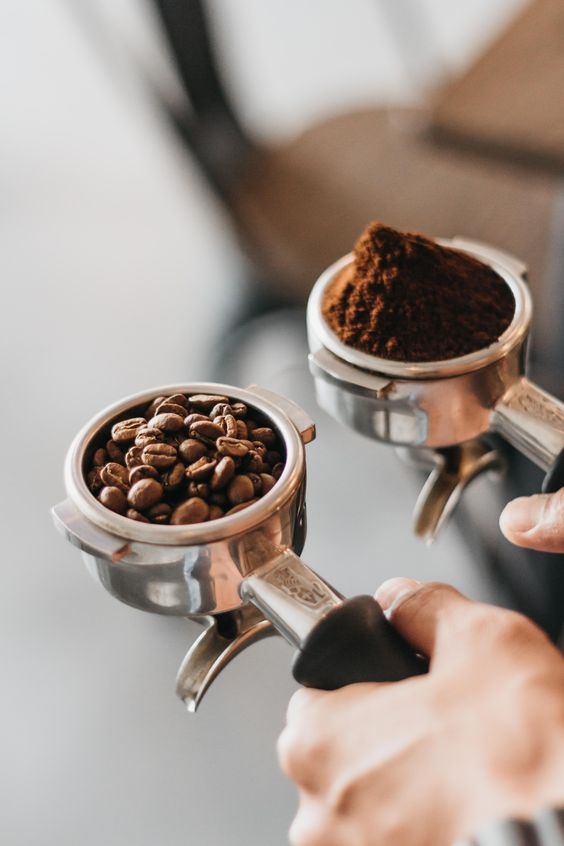
Interestingly “The Flying Squirrel” or “Seven Beans” is but two of the many brands caught in the “wave of coffee”. Entering into the artisanal food category, the third wave coffee movement is a retrospective entry of coffee wherein both coffee lovers and manufacturers share the joy and appreciation of high quality coffee. Like fine varieties of wine and cheese, the third wave of coffee explores the connoisseur-ship, stimulation of the senses and exploration of taste in a simple but buoyant cup of coffee. The unique characteristics of that simple coffee bean are highlighted, ranging from the diverse methods of growing, cultivation, processing, roasting as well as the practices and salient variables among the coffee bean cultivars and beverage preparation.

“The first wave of American coffee culture was probably the 19th-century surge that put Folgers on every table, and the second was the proliferation, starting in the 1960s at Peet’s and moving smartly through the Starbucks grande decaf latte, of espresso drinks and regionally labeled coffee. We are now in the third wave of coffee connoisseurship, where beans are sourced from farms instead of countries, roasting is about bringing out rather than incinerating the unique characteristics of each bean, and the flavor is clean and hard and pure.” Jonathan Gold, LA Weekly. (March 2008, Pulitzer Prize winning food critic on the third wave of coffee)

Technically the terminology of “third wave coffee” was most widely attributed to Trish Rothgeb, a coffee professional in an article for the Roasters Guild newsletter titled “Norway and Coffee,” (2003) with the first mainstream media mention in an National Public Radio piece about barista competitions. Although there is a lesser known reference in an obscure trade publication called “Tea & Coffee Trade Journal Asia” (1999) by specialty coffee pioneer Timothy Castle obliquely referring to the same. While the first and second waves dealt in the ready availability and highlight the countries of origin with (or not) of their signature dark roast profile (respectively), the third wave coffee is often associated with the concept of ‘specialty coffee’ with reference to the specialty grades of green (raw and unroasted) coffee beans (distinct from commercial grade coffee) or specialty coffee beverages of high quality and craft. Though coined earlier (1974), “specialty coffee” was meant to refer to high-quality beans scoring 80 points or more on a 100-point scale.

“It doesn’t matter where you’re from – or how you feel… There’s always peace in a strong cup of coffee.” Gabriel Bá

There is something in a cup of coffee that is dearly enjoyed across all age groups, from different countries, professions and cultures. To add to one’s own special highlight to that cup of coffee, along with the coffee wave, the addition of a tinge of vanilla, whisky, chocolate, cinnamon, cardamom or hot chocolate, can do wonders. Not to forget the ice-cream for the kids. Little wonder then, one would chose to miss an opportunity to ride “that coffee wave”.

Posted in Daily, Food, Stories Around the World

Splash of White

“I had some dreams, they were clouds in my coffee.” Carly Simon

For coffee connoisseurs around the globe, knowing the exact coffee-lingo is a must. Following the dictum of “When in Rome, do as the Romans do”, coffee lingo too changes as per place. Be it the espresso macchiato or the Caffè macchiato (not the latte macchiato) or the “café pingado”, all routes lead to another coffee concoction.

Known as espresso macchiato or Caffè macchiato (latter in Italy), it is essentially an espresso coffee drink with a small amount of milk (usually foamed) in it. The origin of this drink could be possibly attributed to the baristas which needed to show their serving waiters the difference between an espresso and the effect to it after a little bit of milk was added to it. The purpose was to just mark or stain the espresso. In Italian, macchiato means “stained” or “spotted” so the literal translation of caffè macchiato is “stained” or “marked coffee.” Moving over to the Portuguese version of this drink where it is renamed as “café pingado” literally translated to coffee with a drop. Although in Mexico, it is called a cortada, the latter terminology mayn’t be used in other countries as it meant for another coffee beverage with a higher amount of milk in it as compared to the macchinato.

“Black as the devil, hot as hell, pure as an angel, sweet as love.” Charles Maurice de Talleyrand

As compared with any other similar coffee drink with milk, the caffè macchiato has the highest ratio of espresso to milk. The key to a perfect macchiato lies in getting the quantities right. As the name suggests, this coffee should contain just a splash of milk, which is added to pure espresso. The traditional macchiato is about one and a quarter ounce that is one ounce of espresso with a small amount (around one to two teaspoons) of milk, the latter is mostly steamed with slight foam so there is a visible mark. The purpose of the milk is to enhance in moderation (rather than being overwhelming), preserving the bold flavour and the taste of the coffee while adding a delicate touch of sweetness (as an alternative to added sugar).

For coffee cognoscente attention to details are required for the preferred coffee. While an average cappuccino has an 1:2 ratio and latte has a 1:3 ratio of espresso to milk, the average size espresso macchiato has a 2:1 ratio. To prepare the drink at home or in a semi-professional barista set-up, a single shot of espresso is poured into a demitasse (a small espresso cup) and then a splash of hot milk is added. Few recipes suggest adding 1–2 teaspoons (approx. 5 to 10 grams) of milk heated to 140 to 150°F (60–66°C). Heating the milk so, would introduce steam into the milk causing the fats to expand and develop a layer of little bubbles like a “micro-foam.” This is most often done using an espresso machine and a steam wand.

For a change, as the autumn showers run by and the cold wintry winds approaching soon, the scent and flavours of coffee maybe enjoyed the “macchiato” way. As any javaphile would agree, those little beans can liven up the day at any hour or moment of time.

“To espresso or to latte, that is the question…whether ’tis tastier on the palate to choose white mocha over plain…or to take a cup to go. Or a mug to stay, or extra cream, or have nothing, and by opposing the endless choice, end one’s heartache.” Jasper Fforde


Posted in Daily, Food, Stories Around the World

Of Coffee, Iced and “Frapped”

Some of the best things of life occur not when everything goes by plan, or by mere accidental occurrences. Adding to the list, is the delightful flavours of coffee, chilled, icy and sweet; though meant or the hot summer days can be had at any occasion, day or time. Though the 19th century saw a variety of cold coffee drinks as “café frappé (à la glace)”, some were like iced coffee and others similar to slushes. Although special mention of the iced coffee drink, known as Frappé coffee (or Greek frappé or café frappé, frapés), has to be made as it became ingrained into the coffee culture.

“Iced coffee, on a hot day, can perform miracles.” Lish McBride

Although frappé with etymological origins from French means “chilled in crushed ice”; the discovery of the café frappé  using instant coffee happened in Greece. As the narrative goes, at the Thessaloniki International Fair (1957), Giannis Dritsas (the Nestlé company representative) was exhibiting a new chocolate beverage produced instantly by mixing it with milk and shaking it in a shaker. With Dritsas’ employee Dimitris Vakondios looking for a way to have his usual instant coffee during his break and for the lack of hot water, he mixed the coffee with cold water and ice cubes in a shaker. With this experimentation, frappé was born and established with it’s Greek finish.

The Greek frappé in Greece is available in various varieties depending on their degrees of sweetness and the amount of sugar used. These are mainly glykós (“sweet”, 2 teaspoons of coffee and 4 teaspoons of sugar); métrios ( “medium” with 1:1 ratio of coffee and sugar) and a skétos (“plain”) without sugar). The chocie of serving can be with evaporated milk, then known as frapógalo or “frappé-milk” or without any milk. At times water is substituted by milk for a very thick, milky coffee frappé (mostly a Cyprian variation). Over the years, further flavours like Kahlúa, Baileys Irish Cream or other liqueurs are used, along with a ball of vanilla ice-cream (not milk) or made blended with spoon. With the spread of frappé from Greece, further variations have been according to the local choice like the “hladen nas” (Serbian) made with milk or ice-cream and whipped cream often added on top or the Danish version of using cold milk on crushed ice with coffee in the shaker.

“I was taken by the power that savoring a simple cup of coffee can have to connect people and create community.” Howard Schultz

With the experimentation streak running high, homemade frappé can be had for a change from the regular. With a hand mixer or cocktail shaker, the homemade blend would be a welcome change from the regular sweet coffee. Moreover, it could be a start to a new frappé tradition of own  choice, ingenuity and memorable moments.

One or two teaspoons of instant coffee (traditionally Nescafe), sugar (to taste) and a little water are blended (with a cocktail shaker or an appropriate mixer like the hand mixer) to form a foam, which is poured into a tall glass. To this is added cold water and ice cubes, and, optionally, milk (typically evaporated milk). The glass is served with a drinking straw.


Posted in Daily, Food, Uncategorized

Of the “Mocha”….

With the heavy downpour being tempered down, the cold winds still bring forth the occasional morning chill. Little wonder then, as the rainy blues slowly creep in, with piles of unfinished work piling about; the morning combination of coffee and choclate keeps the day and the evening going fine.

“Suave molecules of Mocha stir up your blood, without causing excess heat; the organ of thought receives from it a feeling of sympathy; work becomes easier and you will sit down without distress to your principal repast which will restore your body and afford you a calm, delicious night.” Charles Maurice de Talleyrand

Though the caffè mocha or mocaccino ( or mochaccino, mochachino) is in fact a chocolate-flavored variant of a caffè latte; it can also mean a simple mix of hot choclate and coffee. Essentially caffè mocha is based on espresso and hot milk but with added chocolate flavoring and sweetener, typically in the form of cocoa powder and sugar. Many varieties, at times signature style of certain cafes’, use chocolate syrup, may contain dark or milk chocolate, with distinctive milk froth on top or with whipped cream, cinnamon or cocoa powder. For the more artistic coffee connoisseurs, marshmallows plain or coloured, nutmeg powder, bits of sprinkles with cream and the like may be added on top.

Interestingly, the word “mocha” didn’t have anything to do with chocolate. Originating in the 1770s’, the word “mocha” referred to a variety of coffee beans, named after the the port of Mocha (Al Mokha) in Yemeni (or Yemen), where the beans were shipped from. As their popularity increased in Europe, these beans became a part of the coffee culture. Today, these beans are commonly referred as Arabica beans, with “mocha” being the mix of coffee and chocolate.

“Coffee and chocolate—the inventor of mocha should be sainted.” Cherise Sinclair

Over the years, mocha variants like white caffè mocha (made with white chocolate), as well as more exotic sounding names like black and white mocha, marble mocha, tan mocha, tuxedo mocha or zebra; all varying as per as the amount of choclate (dark or milk) and coffee mixed in. Variant as an espresso shot (double) with either a combination of steamed milk and cocoa powder or chocolate milk is known as mochaccino. Another variant on the caffè mocha is to use a coffee base instead of espresso with the combination be coffee, steamed milk and the added chocolate ( akin to sip of coffee with a shot of hot choclate).

No matter the way it is made, cafe mocha is essentially a drink that can be made in the kitchens of all coffee lovers. For keen experimenters, nothing would be better than the National Mocha Day (September 29th) to indulge in the crazy but delightful combinations and enjoy the flavours of the two C’s, chocolate and coffee.

Posted in Daily, Food

Ice, Cream and Coffee

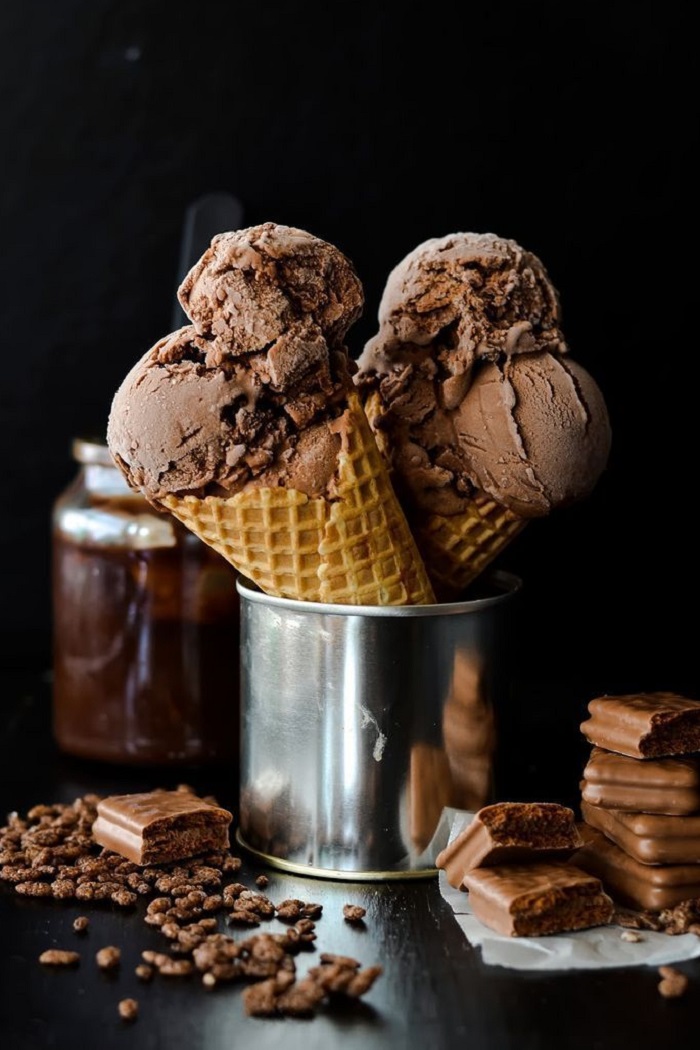
An impromptu get-together of classmates and families over the weekend, makes for a memorable time. With potluck lunch being the norm, cooking was never a hassle. Though the matter of settling the desserts takes up more time. Considering the higher proportion of sweet tooth among the adults and children alike, there was a huge batch of ice-cream, not just any but homemade coffee ice-cream to follow.

“There were some problems only coffee and ice cream could fix.” Amal El-Mohtar

There are few recipes and tricks that are handed down from one generation to the next. Among them desserts, especially those which can be made with regular ingredients; coffee ice cream along with the regular tarts, puddings, gulab jamuns and the like which require basic ingredients or minimum preparatory time are saved for the “dessert quandary“.

Interestingly, early records show that coffee ice cream (1869) was first used in the making of parfait. Few cookbooks (1919) had the recipe of an Egg Coffee consisting of cream, crushed ice and coffee syrup. By late 1900s, coffee ice-cream slowly rose to fame having it’s own secure place on the menu in the ice cream parlours.

While vanilla still is the most popular ice cream, with a regular supply often stocked up in the freezer; coffee ice cream makes way for a delicious change. With many recipes found online, subtle changes like adding beaten egg yolks to the cooling coffee/milk/cream mix and using dark-roast beans makes for the changing flavours each time coffee ice-cream is made at home. Though the longer the ice cream is frozen, the better it is; morning preparations are ready by noon with a minimum freeze time of four hours. The next time an impromptu meet is there, sprucing up the regular ice cream can make for more deliciously happy and fun memories.

“Personally, I like to mix and match–I prefer to get a couple of milk shakes, a banana split … a sundae or two. Then I top it off with a mocha chip in a cone. I don’t know why. I guess that’s like the dinner mint at the end of a meal to me. Know what I mean?” J.R. Ward, The Beast