Posted in Daily, Food

Of Pie and Beyond

“Sing a song of sixpence,
A pocket full of rye.
Four and twenty blackbirds,
Baked in a pie.”….Sing a Song of Sixpence (Roud Folk Song Index 13191)

On the basis of etymology, “Pie” came from “pastry” of middle 14th century or older “piehus” referring to bakery (12th century) or the Medieval Latin of pie or pia of meat or fish enclosed in pastry. The popularity of pie can be attested by its’ use in nursery rhymes to popular holiday or pot luck dinners as well as references to slap stick humour, pie-throwing contests and the like.

“Georgie Porgie, pudding and pie,
Kissed the girls and made them cry,
When the boys came out to play,
Georgie Porgie ran away.”….Georgie Porgie ( Roud Folk Song Index number 19532)

From the very early days of man’s existence, With long travels, difficult storage and introduction of baking, reliable food sources were needed. This lead to the Egyptians “dhourra cake” (flat brittle bread loaf of millet bread) and Romans biscuit known as “buccellum” being in popular use especially among the sailors. Yet the Ancient Greeks were believed to have first made use of the pie pastry concept. From then on, Romans slowly evolved the art of pie making which later spread over to Medieval Europe and hence has stayed on.

“Little Jack Horner
Sat in the corner,
Eating his Christmas pie…” from Little Jack Horner ( Roud Folk Song Index number 13027)

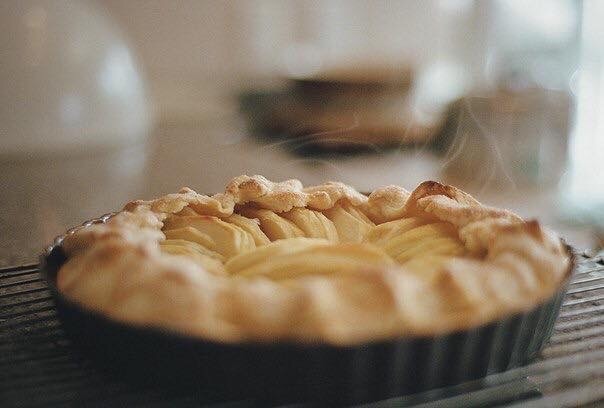
From being savory or sweet, pies were the answer for middle, working class people for besides being easy to make, they can be made with the locally available ingredients based on the locality, weather and the time of the year. For pie enthusiasts, any filling can be put into a pie from meat fillings to fruits, cheese and even the basic vegetables. Sometimes, porcelain ornaments have graced the top of pies, primarily to release steam, identify the contents as well being an eye-catcher. With the lack of time and need for quick homemade meals and ready made pie pastry, pies are an answer for quick, healthy, nutritious meals or delectable desserts. Above all, pies encompass feelings of homeliness, togetherness and experimentation laced with traditions, experiences and nostalgia.

Doing projects really gives people self-confidence. Nothing is better than taking the pie out of the oven. What it does for you personally, and for your family’s idea of you, is something you can’t buy. Martha Stewart

Posted in Daily, Food

To Say “Cheese”

The early bird may get the worm, but its the second mouse that gets the cheese. Jeremy Paxman

Cheese is one of the oldest foods of man, existed since the domestication of animals began. It was used in the ancient times of Egyptians as evidenced in their tombs and hieroglyphics. The Romans had built up “cheese making” as a very profitable industry. Besides being a rich source of calories, proteins and minerals as well as a great supplement to meals, certain types of cheese(Roquefort blue cheese) have benefits for cardiovascular health as well anti stress benefits of tryptophan.

The word cheese comes from Latin “caseus”, from which the modern word casein is also derived. The word cheese can be traced to chese (in Middle English) and ciese or cese (in Old English). Similar words are shared by other West Germanic languages—West Frisian tsiis, Dutch kaas, German Käse, Old High German chasi—all from the reconstructed West-Germanic form *kasi, which in turn is an early borrowing from Latin.

For every pound of cheese, ten pounds of milk are required. On the record the biggest and heaviest cheese produced weighed 57,518 pounds and was 32 feet long. It was cheddar and came from a Canadian cheese maker who used 540,000 pounds of milk to make it.With different ways of making cheese, there are around 500 different varieties recognized by the International Dairy Federation although there are more than 1,000 varieties approved by Sandine and Elliker. There is no single method to classify or group cheese. Various criteria like length of ageing, texture, methods of making, fat content, animal milk, country or region of origin, etc. are used either singly or in combination.

Nothing says holidays, like a cheese log. Ellen DeGeneres

Cheese has its’ own share of history and legends. By legend, blue cheese was invented when a young boy was eating a sandwich near a cave and abandoned his lunch to pursue her. When he returned a few days later, the sandwich was covered with mold, but he still ate it and well, the rest is blue cheese history. People who love cheese are called turophiles. Yet cheese was relatively unheard of or less popular in east Asian cultures and pre-Columbian Americas to name a few. With the spread of European imperialism, and later of Euro-American culture and food, cheese has gradually become known and increasingly popular worldwide.

Culture and tradition have to change little by little. So ‘new’ means a little twist, a marriage of Japanese technique with French ingredients. My technique. Indian food, Korean food; I put Italian mozzarella cheese with sashimi. I don’t think ‘new new new.’ I’m not a genius. A little twist. Masaharu Morimoto

Posted in Daily, Food, Personal Musings

All in Moderation

“If we could give every individual the right amount of nourishment and exercise, not too little and not too much, we would have the safest way to health.” – Hippocrates

One of the most conflicting emotions that often run in the mind, especially the woman’s mind is whether one is fat or thin ? To be honest, fat is essential to diet and all products or diets that state to eliminate fat is dangerous. Besides being good energy sources and cushioning the internal body organs, certain fats are essential to the brain cells, nerves as well as to fight infection and inflammation. The key lies in moderation and to recognize the bad fats namely “trans-fat” and “saturated fats”. Besides these highlights to look for in the food labels, remember that the more processed, the more sparingly we should eat it. Yet that doesn’t mean we have to avoid the occasional splurge once in a while, not daily.

“These small things – nutrition, place, climate, recreation, the whole casuistry of selfishness – are inconceivably more important than everything one has taken to be important so far.” – Friedrich Nietzsche

When the USDA declared January as the “fat free living month”, it was a little weird decision to make as we can’t live without fats. Yet we can regulate the fat intake especially the bad types. Unfortunately weight loss, fad diets and abstinence from fat doesn’t solve our problems unless we find out what makes us unhappy or dissatisfied or triggers the emotional eating binge.

“Weight loss is not the key to your dreams. The truth is there is no lock and the door is flimsy.” Golda Poretsky

We are all beautiful the way we are. Healthy doesn’t mean thin sized nor does it mean running between the goalposts of diet and binge eating. The easiest way to healthy eating is to be mentally happy and enjoy the food. Food serves to sustain and to revel in the tastes offered, but too much of anything honey or salt spoils the beauty.

Posted in Daily, Food, Stories Around the World

Winter, Soup and Holidays

“What a marvelous resource soup is for the thrifty cook – it solves the ham-bone and lamb-bone problems, the everlasting Thanksgiving turkey, the extra vegetables.” Julia Child

With the season’s celebrations underway, one of the ideal ways to put the extra meat and vegetables to good use is to make them into soup. From the clear soups ( bouillon, consomme) to thick (purees, bisques, veloutes) soups are a consistent favourite with many. Its origins can be traced back to the Roman Era as evidenced by use of the middle English word “soup” from the Old French “soupe” which in turn is derived from “suppa” of Late Latin of Germanic roots. Additionally evidence of existence of soup can be found to as early as 20,000 BC with the discovery of the technique of “boiling” and waterproof jars. Yet since then, soup has been revolutionized to the traditions, customs, flavours, taste as well as style of the local cuisine to the extent that soup is not simply a starter or appetizer but also eaten as dessert or with fruit, as well as being served hot or cold.

“Soup is a lot like a family. Each ingredient enhances the others; each batch has its own characteristics; and it needs time to simmer to reach full flavor.” Marge Kennedy

Come December with the cold and snow, there’s nothing more apt than having pepper pot soup. This soup made from scraps meat and peppercorn had gained mass popularity during the Revolutionary War days in Colonial America. As the legend goes, during the battle of Valley Forge in an exceptionally cold harsh winter of 1777-78, food was often scarce and conditions deplorable. The soldiers were low on food and Christopher Ludwick, a baker general of the Continental Army, gathered whatever food he could scrounge together to feed the cold and frail soldiers. Gathering scraps of tripe, meat, and some peppercorn, he mixed the ingredients together with some other seasonings and created the hot, thick, and spicy soup we now know as pepper pot soup. It quickly became known as “the soup that won the war” as the soup gave the soldiers the warmth and strength that they needed to push the enemies back through the harsh winter weather.

It is impossible to think of any good meal, no matter how plain or elegant, without soup or bread in it. M. F. K. Fisher

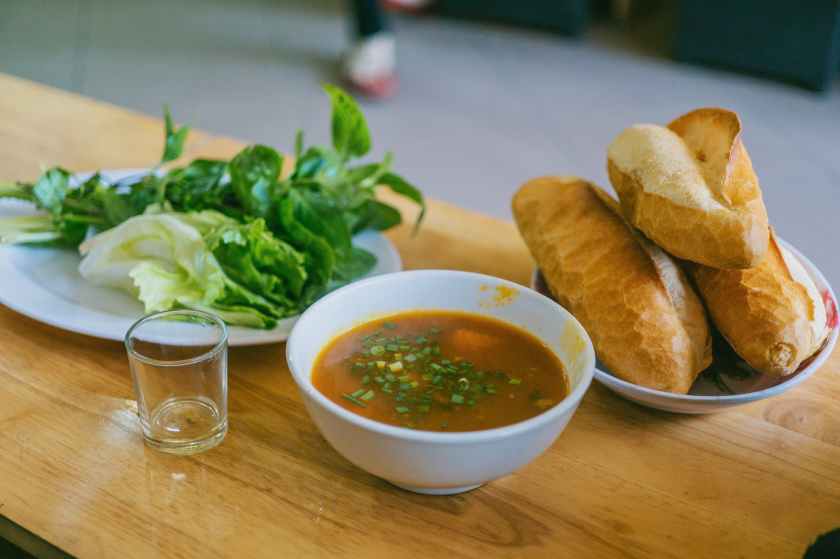
From the Belgian Waterzool to the Russian Solyanka, Vietnamese Pho, Partan bree of Scotland; each country, place and local cuisine have their own version of soup of meat and vegetables. Whichever name it may be by, essentially soups ward off the wintry chill satisfying not just the palate and hunger, but also keep us simply warm, comfortable and nice.

Posted in Daily, Food, Quotes

Cozy with Comfort Foods

“Some foods are so comforting, so nourishing of body and soul, that to eat them is to be home again after a long journey. To eat such a meal is to remember that, though the world is full of knives and storms, the body is built for kindness. The angels, who know no hunger, have never been as satisfied.” Eli Brown in Cinnamon and Gunpowder

After a tiring week or even on long weary days, there’s nothing more satisfying that indulging  in something that calms the nerves, bringing memories of the best days of our life, as children or even as adults. No matter how “grown up”we may claim to be, everyone has their own brand of comfort or go-to food. Ranging from fried chicken to rice, french fries, bread pudding or caramel custard to scrambled eggs on toast, fish and chips or fried pakoras with ketchup to nutella on pancakes to simply ice cream; sweet, spicy or savoury the list is endless and varied. Yet there’s nothing more welcoming that digging into food that reminds us of good times, home or our mother’s kitchen, sunny skies and fun moments.

Food is a lot of people’s therapy – when we say comfort food, we really mean that. It’s releasing dopamine and serotonin in your brain that makes you feel good. Brett Hoebel

While the usual taste of comfort might trend towards the homemade cuisine, each one of us have our own eclectic tastes. Contrary to popular belief, not all women love only chocolate and ice-cream while all men indulge in steaks, casseroles and soups. Each to their own is what I believe in. As long as that food provides a nostalgic or sentimental value, its’ worth having it in both the happy as well as the sad phase.

You can’t go wrong with relatively simple comfort food. It’s also about ease. Some cook to impress. I cook for people to enjoy the food. Al Roker

Although the downside of the comfort food is its high calories, it is worth the carbohydrate load as long as it is once in a while. That is one of the reasons why a long list of comfort foods is particularly satisfying. Whether the preparation is simple or complicated, as long as the feeling of nostalgia is attached to it; it fits the criteria depending on the mood at that moment. The blissful feeling after indulging the cravings can be better experienced than said.

Sometimes a little comfort food can go a long way. – Benjamin Bratt