Posted in Food

To Whisk, Pour and Savour

Staying at home, one can savour the taste of caffeine or theophylline when the thought takes over the mind. With going to the cafe’ out of question, bringing the cafe home is an alternative. As long as milk, cream and sugar are at hand; there are a couple of concoctions that can be attempted and recorded in the “annals of the kitchen experiments”. After a couple of days with black tea and espresso shots, it was time to tone down a bit of them both.

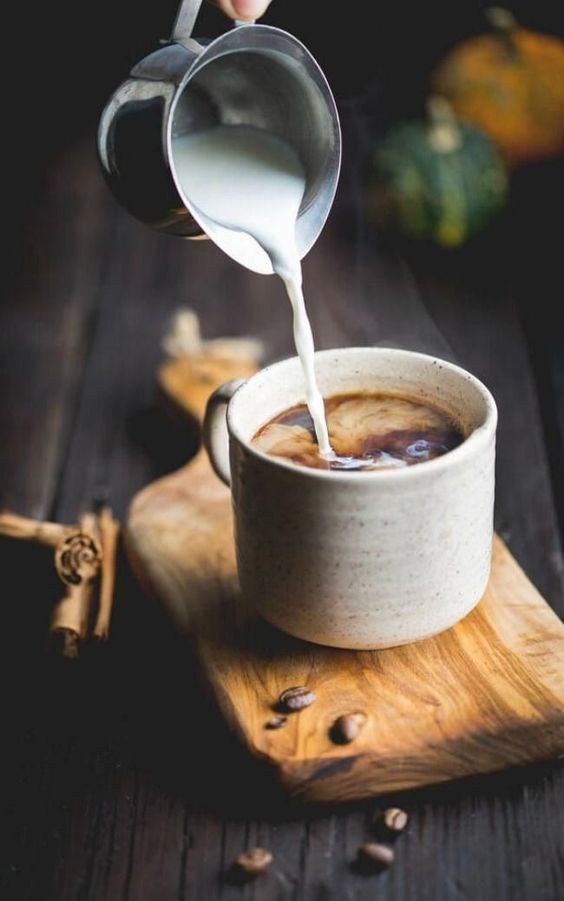
Taking a break from all the caffeine, today was a soft coffee day. Also known as “desi-coffee” or whipped coffee, this is akin to a hand-beaten Indian home-style version of the cappuccino. Taking a spoon of instant coffee and sugar with just a spoonful of milk, beat the mix vigorously to bring out a light fluffy paste-like froth. Add a few drops of milk, getting the froth thick, creamy and rich. With the final froth coming after a minimum of five minutes of vigorous whisking; one can add the warm (or cold) milk to the mix, either at a go or in a layered manner. The best part is each glass of beaten coffee brigs out not just an array of flavours, but a special smell, feel and texture of the coffee.

In the scattered attempts to recreate the different styles of coffee, one interesting point lies in the sequence and the amount in which each proportion is added. When the milk is stirred or beaten and then added to the single concentrated shot of black coffee or the vice versa, it doesn’t result in them both being the same. While trying out the popular quarantine coffee challenge doing its’ rounds on social media, it felt like making this hand-beaten Indian cappuccino or desi-whipped coffee in a reverse manner. While the latter involves milk being added to the mix to get the thick froth on top; the former involves added the whipped instant coffee powder, sugar and hot water (in equal proportions) to the creamy texture and adding that to the milk (hot or cold). Done either way, both styles have a varied feel of their own.

Continuing in the same, vein of making the evening tea session interesting for both the kids and the rest of us, the experiments will be on the creation of homemade chai latte, seven layer chai or the noon tea with the story behind them to add the finishing touch. Experimenting with these simple and uncomplicated variations helps one to not just bring a spark to these trying days; but also to savour and fun the lightness of each day in life.

“I wake up some mornings and sit and have my coffee and look out at my beautiful garden, and I go, ‘Remember how good this is. Because you can lose it.” Jim Carrey

Posted in Food

Of Stuffed, Rolled and Creativity

If anyone had ever said that working from home would be a must for the next couple of weeks; that would be one of the sole reasons to go royally insane. When those little minds are hungry or craving for a snack, the clocked in “office hours” go for a six as the whines of “snack time” reach the grey and white matter. Which is why after repeated snacks of various creations with biscuits, cake (made earlier), fritters and ready to eat snacks, being “boring”; the need to spice things up becomes a necessity. So out goes the rolling pin, a plate of stuffing mix (meat and herbs) and we are good to go.

Interestingly, there are many recipes which can be tweaked a bit to provide their entry into the snack hour. One of the favorites and easy to work with is the “wrapped in the blanket concept”. The popularity is summarized by one of the most favoured recipes for cocktail parties or large luncheons to serve as an appetizer, are the “pigs in blankets” or “franks in blanks”. Essentially made of a frank rolled in a piece of bread -bun or pastry, this can range from a small snack to a large jumbo sized meal. While the rule is to put in small franks or breakfast sausages in a bit of dough, one can spice up the dish by own choice.

Delving into the global variations through various cuisines, the sausage can be wrapped up in a tortilla and deep fried in vegetable oil, going by the name “salchitaco” by the Mexican cuisine. Or one can prepare it as Moshe Ba’Teiva (Moses in the basket), an Israeli dish made by rolling up the kosher hot dog in a ketchup-covered sheet of puff pastry or phyllo dough and serve it baked. On similar lines, Argentinians wrap up the sausage topped with ketchup and bake it. For those who want to keep on the far side of added calories, the sausage wrapped in pastry can be steamed to; like the Chinese Lap Cheong Bo. For the home kitchen, one can simply use puff pastry or a tortilla to just wrap up the filling and fry or bake it.

Another popular snack food is the Italian arancini. Made of a ball of rice coated with bread crumbs and then deep-fried; these snack food can be prepared in raw and stored in the fridge, to be made on demand and as required. The fillings can be made of meat (minced slow-cooked with spices), cheese (mozarella or caciocavallp) or filled with both (like ham and mozarella).

One of the advantages of knowing these different styles, is that they come to the rescue especially when caught unawares. The plus part lies in the fact that they use the simple ingredients available in the pantry, which may be modified as per own requirement. As always said, the fun part of “kitchen experimentation” lies when tweaking old recipes a bit and adding a little imagination and creativity to the mix.

Posted in Food

Airy, Sweet and Light

Being in the “work from home” phase doesn’t result in fulfilling the work targets especially when the kids are still in holiday mode, getting bored with the stability of routine. Which is why, an attempt was made to channel their energy in the culinary style. A few blocks of dark chocolate, plenty of eggs from the farm, a quart of milk with the recipe for homemade mousse at hand and and we were good to go.

Going by their French origins, “mousse” which means foam, is a dish with plenty of air in it, giving it’s soft, light and fluffy or soft, creamy and thick texture. Made both as a sweet or savoury dish, mousse has been an integral part of many recipes (primarily desserts) since the 18th century. With the little documented history that is available, food historians quote recipes of savoury mousse, followed by fruit mousse and then the dessert mousse (especially choclate towards the mid-19th century) which increased their popularity.

“Mousses. These are a go-between souffles and ordinary iced creams. They are lighter and more spongy than the latter, on which account they are often better liked. They have the further advantage of needing no freezing before they are moulded. The mixture is first thickened over the fire like a custard, then put in the mould and set in an ice cave until firm enough to turn out. A cave is a necessity for the proper concoction of these dishes. To ensure success they need great care in the preparation.” Cassell’s New Universal Cookery Book, Lizzie Heritage [Cassell and Company:London] 1894 (p. 966-7)

Made typically with whipped egg whites or cream, or both; flavoured with chocolate, coffee, caramel, fruit purees or vanilla; sweet mousses are often had chilled to give a dense airy and soft texture. To give a richer feel, egg yolks may be stirred and beaten as well. Sweetened mousse also makes for a good filling between layers of thin cut sponge cakes or simply mixed between layers or onto cupcakes. Such preparations may need for the addition of gelatin into the mousse. Savoury mousse may be made from meat, fish, shellfish, foie gras, cheese or vegetables pureed and beaten. These hot mousse often get their light texture from the well beaten egg whites.

While many food historians often relate to mousse as one of the varied desserts made with whipped cream. The latter was often poured into the mixture or on top especially on preparations of coffee, liqueur, fruits to form the foam of simple to complex pyramidal shapes. Often known as crème en mousse (cream in a foam), crème mousseuse (foamy cream) or mousse ‘foam’, these recipes were there in the late 1760s. Though food historians largely believe that it was the experimentation with chocolate that lead to the rise of the new set of dessert recipes.

Early American dessert mousse recipes (as seen in the cookbooks) were often classified with ice-creams; wherein it was almost similar to parfait. What make the mousse different, is the four components that needed to be checked off, in the ingredient mix. First is the base (chocolate, strawberry puree, passion-fruit or even chicken), the binder (egg whites, gelatin) and the lightening agent or aerator (beaten egg whites, whole eggs, egg yolks or whipped cream). Some recipes call for specific flavouring agents or like extracts, liqueurs or spices, as per choice.

The difference in the mousse lies not only in it’s ingredients but also on how well the lightening agent is prepared and the folding. If there may more than one type of aerator, fold it in the order of most stable to least stable. On folding, too much of mixing will cause the aerator to be deflated, losing the soft feel of the mousse.
Which is why plenty of tiny hands do help in the making of the mousse. From the beating of the egg whites to licking the bowl well, it gives them a fun way to expend their energy. With the ingredients being mainly of the pantry type and plenty of time on hand; making mousse gives an added touch to the post-lunch dessert of ice-cream on the hot afternoons.

[1897]
“Chocolate Mousse
Take four strips of chocolate, 1 quart of milk, 6 eggs and 1 tablespoon of cornstarch, dissolve the chocolate in a little warm milk, put the quart of milk on to boil and stir in the chocolate gradually. Set the saucepan where it will cook slowly. Beat the eggs well, mix in the cornstarch and add to the milk and chocolate. Sweeten to taste and boil gently until smooth and thick, stirring until done. Flavor with vanilla and pour into a glass dish. Serve cold with sweetened whipped cream heaped upon it.”
—“Housekeepers’ Column,” Boston Daily Globe, March 16, 1897 (p. 8)

Posted in Food

Thin or Thick, Stuffed or Impressed

With the Lenten period still on and more hours at home, the breakfast menu has been varied depending on the choice of each as well as the helping hands available on deck. Which is why there is plenty of batter made in the morning. From pancakes to waffles, there is plenty of fun and chaos to welcome the mornings.

Interestingly waffles aren’t a recent recipe, but can be traced to the ancient Greeks. Believed to have descended from the Ancient Greek obleios, it was flat cakes made by baking batter between two hot irons. For the impressed patterns, exclusive to places or establishments, had originated in the middle ages. The early Middle Ages (9th to 10th century) saw the simultaneous emergence of communion wafer irons (fer à hosties or hostieijzers) and the wafer irons (moule à oublies). While the former depicted typically the imagery of Jesus and His crucifixion; the latter had impressions of more trivial Biblical scenes or just simple impressed designs often serving as emblems.

Both the communion wafer and the oublie, was mostly made of grain flour and water. From the 11th century onward, flavorings like orange blossom water, sourced honey and other ingredients came to being and establishing themselves firmly in the list of ingredients. Eaten piping hot, the initial waffles were sold on great religious feasts days with the best quality waffles known as metiers.

“The ancient Greeks used to cook very flat cakes, which they called obleios, between two hot metal plates. This method of cooking continued to be used in the Middle Ages by the obloyeurs who made all sorts of oublies, which were flat or rolled into coronets. The oublie became the waffle in the 13th century, when a craftsman had the idea of forging some cookie plates reproducing the characteristic pattern of honeycombs, which at that time were called gaufres (from the Old French wafla).” Larousse Gastronomique, Completely Revised and Updated [Clarkson Potter:New York] 2001 (p. 1285)

Though the initial waffles had originated on one side of the world, it had crossed the continents to entrench themselves into the local cuisine. Exploring the flavour of waffles, the subtle or gross changes have been made in the various ingredients going into the batter.

Known locally as “grid cake” or “grid biscuits”, the Hong Kong style waffles are usually made on the streets. Large, round and divided into four quarters; these waffles served as snacks with peanut butter, butter and sugar spread on it. Sweetened by the addition of eggs, evaporated milk; these waffles have the rich flavour of yolk, chocolate or honey melon. Changing the pattern to the ball-shaped form, these waffles are then known as eggette or gai daan jai. Adding a little of pandan (herbaceous tropical plant) and coconut milk into the batter, Vietnamese pandan waffles gives the distinctive green and chewy feel inside, though brown and crispy look outside; often best eaten plain. Keeping the batter a little more spicy, one can add a little of wasabi to give the touch of Japanese cuisine. Coming to a more variant style are the Thailand hot-dog waffles. With the hot dog cooked within the long waffles, they bear their similarity to the corn dogs. Otherwise the essential batter remains the same.

At home, while adding the South East Asian flavour to the waffles, a little of fine chopped spring onion greens, couple of coriander chopped, a bit of mashed carrot and beets gave the waffles a burst of colour. With plenty of jam, honey and sugar; the colorful waffles may have found favour with the young eaters. If not, there are always plenty of pancake batter to go around.

[1849]
“Waffles
Put two pints of rich milk into separate pans. Cut up and melt in one of them a quarter of a pound of butter, warming it slightly; then, when it is melted, stir it about, and set it away to cool. Beat eight eggs till very light, and mix them gradually into the other pan of milk, alternately with half a pound of flour. The mix it by degrees the milk that has the butter in it. Lastly, stir in a large table-spoonfull of strong fresh yeast. Cover the pan and set it near the fire to rise. When the batter is quite light, heat your waffle-iron, by putting it among the coals of a clear bright fire; grease the inside with butter tied in a rag, and then put in some batter. Shut the iron closely, and when the waffle is done on one side, turn the iron on the other. Take the cake out by slipping a knife underneath; and then heat and grease the iron for another waffle. Send them to table quite hot, four or six on a plage; having buttered them and strewed over each a mixture of powdered cinnamon, and white sugar. Or you may send the sugar and cinnamon in a little glass bowl.” 
-Directions for Cookery in its Various Branches, Miss Leslie [Philadelphia, 1849]. (p. 359)

Posted in Daily, Food

Thin, Crisp and Variant

Ever since kids come off their high-chair, they tend to tag along especially when it involves leaving the house and going grocery shopping. If it weren’t for the lure of riding the shopping cart, the aisle of the crisps would be the first stop for the tantrum of “give me more”. Like every other new age family, we do have our share of the “snack food” (translate it as the junk food) in the pantry. From the big bag of chips to the frozen rolls, the selection is highly variable and variant.

Coming back to these crisps, the origin could actually be means of making something nutritious and simple. Essentially crisps are nothing but are thin slices of potato that may have been deep fried or baked until crunchy. The early 19th century saw recipes involving potatoes fried in slices or shavings. Under various recipes titles like “Pommes de frites” these thinly sliced potatoes were fried in clarified butter or lard drippings. Across the Atlantic, these British and French recipes found their way into the common household kitchen.

Potatoes fried in Slices or Shavings. — (No. 1 04.)
Peel large Potatoes, slice them about a quarter of an inch thick, or cut them in shavings round and round as you would peel a lemon ; dry them well in a clean cloth, and fry them in lard or dripping. Take care that your fat and frying:pan are quite clean ; put it on a quick fire, watch it, and as soon as the lard boils, and is still, put in the slices of potatoe, and keep moving them till they are crisp ; take them up and lay them to drain on a sieve ; send them up with a very little salt sprinkled over them. (The Cook’s Oracle: Containing Receipts for Plain Cookery on the Most. By William Kitchiner. Pg. 208)

As with all snacks with wide acceptance, legends were associated with the creation of potato crisps, the favourite being the “Saratoga Springs legend” As the retelling goes, George Crum, a cook at Moon’s Lake House (Saratoga Springs, New York) was trying to appease an unhappy customer (August 24,1853). As the customer kept sending back his French-fried potatoes, with complaints of them being too thick, too “soggy” or not salted enough. In frustration, Crum fried several extremely thin slices of potatoes to a crisp, and seasoned them with extra salt. To his surprise, the customer loved them and they were known as “Saratoga Chips”.

Over the years, these chips were refined, processed and packaged to the numerous brands of crisps of today, though the original brand of saratoga chips or Smiths Potato Crisps (1950s) still exists today. Commonly served as snack, side dish or appetizers; these chips from being simple and salted are now manufactured in variant flavourings and topped with ingredients like herbs, spices, cheese and other natural or artificial flavours. Besides had direct, they are now as sandwiches between the bread and spreads, found in the cookie mix or on the crispy zuchinni coating. Looks like those bag of crisps can inspire creativity beyong the imagined.

[1946]
“Potato Chip Cookies
Don’t put up your hands and your hands in awe because we recommend potato chips in cookies. Crush one cup of them. Buy a package of prepared pudding mix of butterscotch flavor, sift one cup flour, any kind that you can get, be sparing on the salt, just a pinch will do. Sift it with the flour and one-half teaspoon each of soda and baking powder. Put pudding mix into a bowl, add the chips and the flour mixture. Add one beaten egg and one-half cup shortening, melted. Form a dough in a roll and chill until firm. Slice one-fourth inch thick and arrange on a lightly greased cooky sheet. Bake at 325 degrees for from 10 to 12 minutes, or until done or drop from a spoon on to a cooky sheet, flatten to one-fourth inch thickness and bake as suggested.”
—Freeport Journal-Standard [IL], August 5, 1946 (p. 14)

Posted in Daily, Food, Stories Around the World

A Pound and Two

Coming back from school, there is a flurry of running feet. Keeping aside their bags, lunch kits back in the kitchen, a quick wash and the most expectant question, “What’s for tea?” While most days, it’s the simple bread, butter and jam that rocks the tiny kitchen table; some days it’s an elaborate snack meal. Well yesterday it was pound cake added to the simple mix. The difference was in it being elaborate and homemade.

Made from the traditional ingredients of flour, butter, eggs and sugar, the pound cake gets it’s name from the measure of one pound of each. Baked in either a loaf pan or a Bundt mold, dusted with powdered sugar, lightly glazed or layered with a coat of icing on or between the slices; these cakes have been dates back to the early 17th century. Early variations involved the replacement of the flour with cornmeal made from dried corn (maize), the creation then being known as Indian meal.

While for the English it is a pound, for the French it is “quatre-quarts”, means four quarters. With equal weights present in each of the four quarters, the same quantity of four ingredients are used. Depending on the occasion, certain areas use rum (Christmas Eve), mashed bananas or the addition of choclate or lemon juice, simply for flavour.

Moving ahead to the German cuisine, the Eischwerteig mit Fett (roughly “egg-weight dough with fat”) is a recipe very similar to the pound cake, but referenced in multiples of the weight of the average egg used. The recipe calls for measures for such a cake to be baked in a spring form tin (26 cm) as four eggs, 3 egg-weights of butter, 4 egg-weights of sugar, three egg weights of flour and one egg-weight of starch. Adding it up, it makes a close English pound of each or the French four equal quarters. With terms of measures being in base egg-weight, scaling it up or down helps not just in the quantity but addition of ingredients for the added variation like the Falscher Rehrücken (fake venison saddle with bitter chocolate and almonds) or the Nußkuchen (hazelnut cake).

With numerous variations on the traditional pound cake and certain countries and regions having their own signature and distinctive styles, one can stretch their creativity and imagination. From the inclusion of vanilla, almond or orange extracts to the incorporation of dried fruit as well as proportionate alteration to the measures, tea-time can turn out to be an anticipated wait , creative expression and simply, an indulgence after a tiring or busy day.

“Pound Cake.
The old rule–and there is none better–calls for one pound each of butter, sugar and flour, ten eggs and a half wine glass of wine and brandy. Beat the butter to a cream and add gradually a pound of sugar, stirring all the while. Beat ten eggs without separating until they become light and foamy. Add gradually to the butter and sugar and beat hard. Sift in one pound sifted flour and add the wine and brandy. Line the cake pans with buttered paper and pour in the well beaten mixture. Bake in a moderate oven. This recipe may be varied by the addition of raisins, seeded and cut in halves, small pieces of citron or almonds blanched and pounded in rose water. Some old fashioned housekeepers always add a fourth of a teaspoon of mace. The mixture may be baked in patty tins or small round loaves, if preferred, putting currants into some, almonds or raisins in the rest. Pound acake is apt to be lighter baked in this way. The cakes may be plain or frosted, and they will grow richer with the keeping in placed in stone jars.”
—The New York Evening Telegram Cook Book, Emma Paddock Telford [Cupples & Leon:New York] 1908 (p. 126)

Posted in Daily, Food

Food, Flame and Wine

When the major Sunday luncheon is hosted at home, cooking for the week seems like a drag, especially when it includes packing school lunches. While lunch is managed by sandwiches, with esurient appetites dinner isn’t so light an affair. Moreover when one has an unexpected surprise when good old family friends pop over for a visit long overdue; the topic of dinner has to be a quick, palatable meal with few but good dishes. That’s when a couple of wine bottles ( in lieu of the holiday season), rice and chicken came in handy. The adding of wine to the flavours of food is like a sharp edged sword. Wine has the potential to enhance a meal or completely ruin it with a debatable concoction of flavours.

“If you do not have a good wine to use, it is far better to omit it, for a poor one can spoil a simple dish and utterly debase a noble one.” Julia Child

As far as wine is concerned, the drinking wine is good enough to be added to the cooking process instead of solely investing in cooking wine. In short if you like to drink it, then use it in meals. Else, just don’t. The drinkable wine should be clean, fresh and if it’s stored in the refrigerator uncorked even for two weeks, it can be used as long as long it is drinkable wine. Sweeter the wine, better in sauces and recipes, even desserts as well.

Wine acts as a partial substitute for the use of oil in cooking. While the usual method is to saute vegetables in butter or oil (good for kids); a smaller amount of oil with some wine for flavor and moisture can do a subtle twist to the regular flavour. For marinades, most of the times decreasing the oil to half of the regular and replacing that amount with wine makes a good substitute for the dietary fat watchers.

As wine connoisseurs know, there are different types of drinking wines. They are the light and dark ones, the white and red wines as well as the sweet wines and dry ones as well. All these wines make their difference to the regular meals by their subtle flavours. Which is why, some wines are paired with certain foods. For instance, white wine works best with dishes based on melon, apple, mushrooms, pineapples, citrus and the vanilla flavoured desserts, whereas red wine goes well with cherries, peaches, plums, chocolate and coffee.

Another general rule is that a light-flavored wine is paired best with delicately flavored foods. As far as meat is concerned, white wine works well dishes of chicken, turkey, fish or veal; white dark coloured wines especially red wine goes well with highly seasoned foods like beef, pork, duck or even goose. For the main course rice or pasta, it is question of light (or white) or dark (like red) wines, though the latter is best for heavier or spicier preparations. A less good wine is better for slow cooking recipes like stew than quick pan meals when deglazing which happens in minutes is the final touch. Another technique used by seasoned chefs is to add a small dash of better wine at the end of a long braise. The quandary in choosing which is the better wine will be solved when the entire recipe is taken into consideration.

As far as desserts are concerned, the cake batter can be given a more airy sweeter feel when a cup of white wine is added to it, replacing a little of the regular proportion of oil. Only concern with wine based desserts or even meals, is that it’s off limits for children, pregnancy and non-alcohol drinkers. In short, wine provides a delicious twist to the regular meal. Learning through experimentation during the quiet meals, helps one keep wine as a handy measure to add the twist when required. Which is why wine has a role in the simple, basic dishes of the kitchen to the major role between, before and after meals as well.