Posted in Daily, Food

Of Pie and Beyond

“Sing a song of sixpence,
A pocket full of rye.
Four and twenty blackbirds,
Baked in a pie.”….Sing a Song of Sixpence (Roud Folk Song Index 13191)

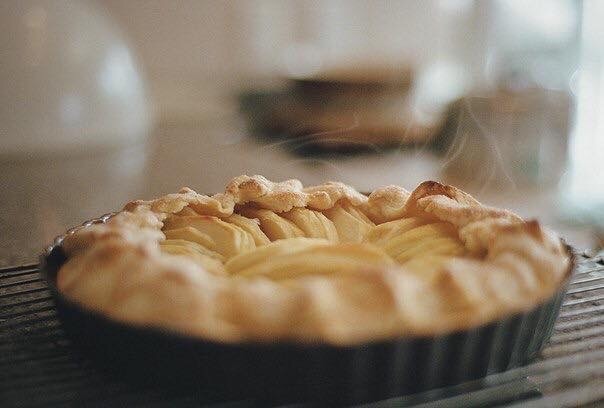
On the basis of etymology, “Pie” came from “pastry” of middle 14th century or older “piehus” referring to bakery (12th century) or the Medieval Latin of pie or pia of meat or fish enclosed in pastry. The popularity of pie can be attested by its’ use in nursery rhymes to popular holiday or pot luck dinners as well as references to slap stick humour, pie-throwing contests and the like.

“Georgie Porgie, pudding and pie,
Kissed the girls and made them cry,
When the boys came out to play,
Georgie Porgie ran away.”….Georgie Porgie ( Roud Folk Song Index number 19532)

From the very early days of man’s existence, With long travels, difficult storage and introduction of baking, reliable food sources were needed. This lead to the Egyptians “dhourra cake” (flat brittle bread loaf of millet bread) and Romans biscuit known as “buccellum” being in popular use especially among the sailors. Yet the Ancient Greeks were believed to have first made use of the pie pastry concept. From then on, Romans slowly evolved the art of pie making which later spread over to Medieval Europe and hence has stayed on.

“Little Jack Horner
Sat in the corner,
Eating his Christmas pie…” from Little Jack Horner ( Roud Folk Song Index number 13027)

From being savory or sweet, pies were the answer for middle, working class people for besides being easy to make, they can be made with the locally available ingredients based on the locality, weather and the time of the year. For pie enthusiasts, any filling can be put into a pie from meat fillings to fruits, cheese and even the basic vegetables. Sometimes, porcelain ornaments have graced the top of pies, primarily to release steam, identify the contents as well being an eye-catcher. With the lack of time and need for quick homemade meals and ready made pie pastry, pies are an answer for quick, healthy, nutritious meals or delectable desserts. Above all, pies encompass feelings of homeliness, togetherness and experimentation laced with traditions, experiences and nostalgia.

Doing projects really gives people self-confidence. Nothing is better than taking the pie out of the oven. What it does for you personally, and for your family’s idea of you, is something you can’t buy. Martha Stewart

Posted in Daily, Food

To Say “Cheese”

The early bird may get the worm, but its the second mouse that gets the cheese. Jeremy Paxman

Cheese is one of the oldest foods of man, existed since the domestication of animals began. It was used in the ancient times of Egyptians as evidenced in their tombs and hieroglyphics. The Romans had built up “cheese making” as a very profitable industry. Besides being a rich source of calories, proteins and minerals as well as a great supplement to meals, certain types of cheese(Roquefort blue cheese) have benefits for cardiovascular health as well anti stress benefits of tryptophan.

The word cheese comes from Latin “caseus”, from which the modern word casein is also derived. The word cheese can be traced to chese (in Middle English) and ciese or cese (in Old English). Similar words are shared by other West Germanic languages—West Frisian tsiis, Dutch kaas, German Käse, Old High German chasi—all from the reconstructed West-Germanic form *kasi, which in turn is an early borrowing from Latin.

For every pound of cheese, ten pounds of milk are required. On the record the biggest and heaviest cheese produced weighed 57,518 pounds and was 32 feet long. It was cheddar and came from a Canadian cheese maker who used 540,000 pounds of milk to make it.With different ways of making cheese, there are around 500 different varieties recognized by the International Dairy Federation although there are more than 1,000 varieties approved by Sandine and Elliker. There is no single method to classify or group cheese. Various criteria like length of ageing, texture, methods of making, fat content, animal milk, country or region of origin, etc. are used either singly or in combination.

Nothing says holidays, like a cheese log. Ellen DeGeneres

Cheese has its’ own share of history and legends. By legend, blue cheese was invented when a young boy was eating a sandwich near a cave and abandoned his lunch to pursue her. When he returned a few days later, the sandwich was covered with mold, but he still ate it and well, the rest is blue cheese history. People who love cheese are called turophiles. Yet cheese was relatively unheard of or less popular in east Asian cultures and pre-Columbian Americas to name a few. With the spread of European imperialism, and later of Euro-American culture and food, cheese has gradually become known and increasingly popular worldwide.

Culture and tradition have to change little by little. So ‘new’ means a little twist, a marriage of Japanese technique with French ingredients. My technique. Indian food, Korean food; I put Italian mozzarella cheese with sashimi. I don’t think ‘new new new.’ I’m not a genius. A little twist. Masaharu Morimoto

Posted in Daily, Food, Photography Art

Of Gourmet Coffee

“Coffee in Brazil is always made fresh and, except at breakfast time, drunk jet black from demitasses first filled almost to the brim with the characteristic moist, soft coffee sugar of the country, which melts five times as fast as our hard granulated,” wrote Bob Brown and Cora Rose in the 1939 South American Cook Book, adding “For breakfast larger cups are used, and they’re more than half filled with cream. This cafe con leite doesn’t require so much sugar as cafe preto – black coffee.”

The brewed drink prepared from roasted beans and the seeds of berries from certain Coffea species have grown to worldwide acclaim. Initially the genus Coffea was native to tropical Africa and certain areas like Madagascar, the Comoros, Mauritius; coffee plants are now cultivated in over 70 countries. The two most commonly grown varieties are C. arabica and C. robusta. Once ripe, coffee berries are picked, processed, and dried. Dried coffee seeds or “beans” are roasted to varying degrees, depending on the desired flavor. Roasted beans are ground and then brewed with near-boiling water to produce the beverage known as coffee.

“The morning cup of coffee has an exhilaration about it which the cheering influence of the afternoon or evening cup of tea cannot be expected to reproduce.” Oliver Wendell Holmes, Sr.

Gourmet coffee has been in vogue now. They are coffees grown by a specific country which can also refer to a specific grade or region of a country. For example Dejardin Supremo Colombian refers to the region: Dejardin, the grade: Supremo and the country: Colombian.

“No one can understand the truth until he drinks of coffee’s frothy goodness. Sheik Abd-al-Kadir”

Regardless of the type, what matters most is how coffee tastes, smells, and whether or not it makes you feel alert and happy. There are quite a lot of different types of coffee beverages with more than thirty on my count with most popular being Cappucino, Cafe au lait, Caffe Americano, Espresso, Mocchacino and Irish Coffee available at most coffee outlets.

“Among the numerous luxuries of the table…coffee may be considered as one of the most valuable. It excites cheerfulness without intoxication; and the pleasing flow of spirits which it occasions…is never followed by sadness, languor or debility.” Benjamin Franklin

Posted in Daily, Food

Flavoured Hot and Spicy

“Great cooking is about being inspired by the simple things around you – fresh markets, various spices. It doesn’t necessarily have to look fancy.” G. Garvin

The Latin root “spec” became Old French of espice or epice, what we now commonly call as “spice”. Add to it the original Nahuatl “chilli” of today and voila, we are ready for the International Hot and Spicy Food Day tomorrow. The origins of both happened quite exclusive of each other, although when we blend the hot and spicy, a whole new palatal feast is experienced.

“Once you get a spice in your home, you have it forever. Women never throw out spices. The Egyptians were buried with their spices. I know which one I’m taking with me when I go.” Erma Bombeck

Spice trade had developed in Middle East, South and East Asia as early as 2000 BCE with predominant use of cinnamon, black pepper and herbs. As the Egyptians practised mummification, the constant demand for imported spices and herbs kept the “spice trade” alive. The earliest written records from the Egyptian, Chinese and Indian cultures connect spices with magic, medicine, religion and tradition. On the other hand, capsicum and chilli peppers were originally in wide spread use in the Americas primarily, Central and South America as well as Mexico around 6000 to 7500 years ago. With the advent of Portuguese trade and spread of the chilli peppers to Asia around the 15th century, the cooking of hot and spicy food took onto newer shores.

“A good spicy challenge strikes a balance between flavour and fear.” Adam Richman

For every food enthusiast, celebrating ” International Hot and Spicy Food Day” ( January 16th) is different every year as each spicy cuisine ranging from the Indian masala to spicy Mexican tortas or Vietnamese Bun bo Hue to Cajun cooking and so on; no cuisine mimics the taste of the other. As for those who have been challenged to enter the hot and spicy waters on this day, keeping the spice to low numbers as per the Scoville scale ( the spiciness or heat scale) helps to ace the test. An additional tip would be to keep starch rich food like bread or “naan” with cold water to combat the heat and spice. Hot and spicy can be tuned to one’s own taste bud, for the beauty lies in experience, experimentation, fun and art of cooking and dining.

“From a young age, I understood the idea of balanced flavor – the reason you put ketchup on a hamburger. I was that kid who wouldn’t eat something if there was something missing. I never really understood it until I began cooking professionally, balancing acids, sweets, spicy flavors and fat.” Michael Mina

Posted in Daily, Food

Origin of “Curry”

On experimenting with various recipes, one interesting fact I had realized that there are so many things about “curry” that we take for being true or ascertained facts, when they may not be so.

Curry applies to dishes with gravy, spicy origins and can range to a variety of South Asian as well as South East Asian dishes, based on the type of spices. Curry technically is not a word actually used in most vernacular Indian languages. Each of the Indian states have their own terminology for “curry” ranging from “shaak” of Gujarat to “saaru” in Karnataka and “jhol” of Bangal. Historians noted that the word had been into common use when the British had tasted and brought the South Asian dishes to the west.

Curry is not a spice but a mixture of spices (often sold grounded as curry powder, mostly of turmeric, cumin, coriander, chilli and ginger) which can used with a variety of vegetables or meat, even seafood to make a variety of dishes, each having their own name in the region. Depending on the addition of water, milk or even curd, the base can be liquid or kept dry.

Curry powder has been one of the world’s oldest medicinal and cooking mixtures ranging back to Mesopotamian era (1700 BC). Although the roots of curry powder may be traced to Asia, documents and books on English cooking as early as 1300s mention the use of this concoction.

“Curreier” vs. “kari” The word “curry” has different meanings when used as a verb and noun. The Vulgar Latin “conredare”, Middle English “currayen” or Old French word “correier” had given roots to the Anglo-French “curreier” which later gave rise to the verb of “currying” meaning to seek favour by flattery or attention. Whereas, the noun “curry” was derived from Tamil “kari” (or a cognate word in a Dravidian language) as states in the Marrian-Webster dictionary. Another derivation I had read online was that the word curry was derived from a South-Asian word “Kori”; a sauce with cooked meat or fish.

Another reasoning behind everything “stew based being called curry” was based on the first English cookbook. In the 1300?s, King Richard II had summoned several cooks and philosophers to produce the first English cookery book known as ‘The Forme of Cury’ (1390). The old English word “Cury” was used to describe cuisine based on French ‘cuire’ meaning: to cook, boil or grill. The word “Cury” became associated with stew.

Either way, “curry” has come a long way especially with the advent of trade and later on travel, led to the exchange of cuisines, culinary ideas as well mixing of flavours with local available ingredients. Soon the indigenous recipes became globalized. Whichever dish it may be especially today as National Curried Chicken Day (January 12th); for an exotic, spicy and different blend of curried chicken; try making the sauce with ghee (clarified butter), onions, garlic, cumin, coriander, cinnamon and turmeric powder with a dash of ginger or just add the right amount of “curry powder” and get the taste buds going.

Posted in Daily, Food, Photography Art

Art of Chantilly Cream

Whipped cream also known as Chantilly cream or crème chantilly, is one of those discoveries whose origins have been lost in obscurity. From being attributed to accidental discovery in the ancient times, to whipping instead of churning the cream for butter or the common folk tale of a fast horse ride with a half filled container of cream, whipped cream has become an answer to transform the boring mundane to fresh, new and exciting view.

Essentially whipped cream is made by whipping the cream by a whisk or mixer until it is light and fluffy. It is often sweetened and flavored with vanilla, coffee, chocolate, orange to mention a few. The colder the equipment, ingredients and the cream, the easier to whip and better the results. Cream must be below 50 degrees to whip, for at 50 degrees or above it gets churned into butter. From whipping siphons to food processors and electric mixers, the hand whipped cream has progressed with time and technology.

Popularized from the 16th century onward, whipped cream became aromatized and sweetened. Then it was added to various desserts from pyramidal shapes with coffee, liqueurs, chocolate, fruits and so on, to make either as a mixture or poured on top known as crème en mousse (‘cream in a foam’), crème fouettée, crème mousseuse and fromage à la Chantilly. Modern mousses including “mousse au chocolat” have continued this tradition. As written, “Mousses are made with sweet cream, not very thick; one whips it, which makes it foam, and it is this foam that one uses: one may give it whatever flavor one wants, with aromatics, flours, fruits, wines, or liqueurs.” M. Emy, 1768

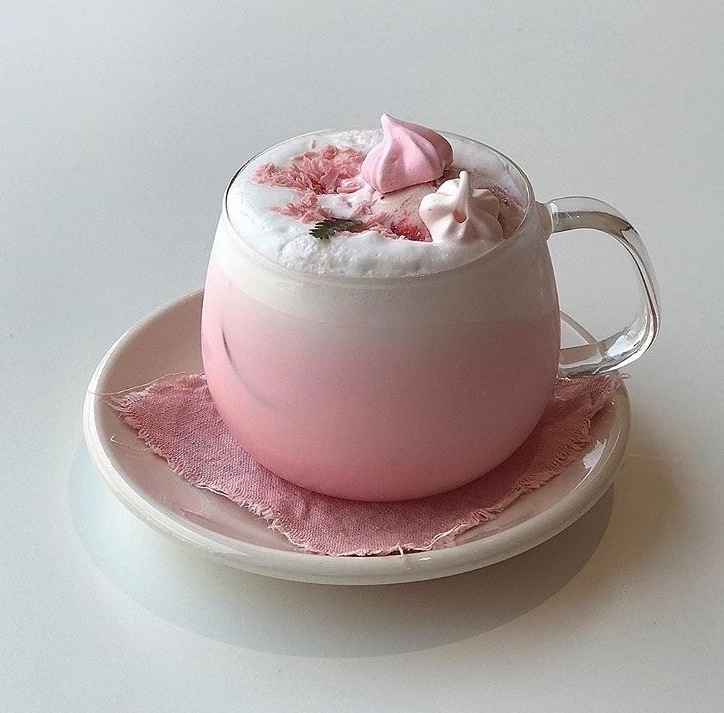
Continuing through the years, whipped cream still remains a popular topping from fruit to desserts of pie, ice cream, cake, puddings, waffles and even to beverages ranging from coffee to milk or plain hot chocolate. These days imitations of whipped cream, for those with milk allergies or vegan diets, extended shelf life and convenience have been made available as whipped topping or squirty cream. Although the original whipped cream is the best, whichever way it may be made, whipped cream makes a good treat for the eyes as well as the palate. So in honour of National Whipped Cream Day (January 5th), I’m planning to shut down the inner calorie counter, to have whipped cream on any topping like, cake, pie or even coffee for a delicious weekend splurge.

Posted in Daily, Food, Photography Art

Oatmeal Art

“The oat is the Horatio Alger of cereals, which progressed, if not from rags to riches, at least from weed to health food.” Waverley Root, ‘Food’ (1980)

From being a weed, oats has been transformed to being one of the essential health foods, so much so as to declare January as the month of oatmeal as per “foodimentarians”. From its’ origin as early as 3000 years ago, oats were a common occurrence among the cultivation of other crops. Greeks and Romans considered oats to be a diseased form of wheat. Though most of the Scottish and the Germanic tribes would disagree with that thought.

Slowly over the years, oats has been embraced as a part of dining, especially for breakfast. The slow acceptance can be attributed to the fact that oats was and still is a primary fodder as pasturage and hay crops especially for cattle and horses. Additionally oats can turn rancid pretty quickly if not processed immediately after harvesting.

It truly amazes me all the things you can add and mix in to truly transform a plain old bowl of oatmeal. Ayesha Curry

Nevertheless the acceptance of oats especially as oatmeal (made of hulled oat grains, groats which have either been milled or ground, steel-cut or rolled) is on the rise. From the least to most processed oatmeal can be prepared from oat groats or whole oats, oat bran, steel cut (Irish) oats, rolled oats ( known as old fashioned oats), quick oats as well as instant oats and oat flour. From simple oatmeal to protein bars, brownies, oatmeal bread and cakes; the experimentation with oats is endless.

Oats are great – you can make meatloaf and use oats instead of bread as the binder, or you can make oatmeal cookies, my husband’s favorite. Ree Drummond

Besides being wonderful art decor for foodists, oats can be mixed with an “n” number of ingredients to make weird combination like oats dosa, oats and chicken salads, oats “upma”, to shakshuka, medley of vegetable or meat and even into stuffed bell peppers or spicy seasoned stuffed bitter-gourds. Try an online search, there would be numerous recipes including the addition of oats.

There is no doubt that some plant food, such as oatmeal, is more economical than meat, and superior to it in regard to both mechanical and mental performance. Such food, moreover, taxes our digestive organs decidedly less, and, in making us more contented and sociable, produces an amount of good difficult to estimate. Nikola Tesla