Posted in Daily, Family and Society, Life, Personal Musings, poetry, Quotes, Stories Around the World

The “Air” That We Breathe

“The environment is where we all meet; where we all have a mutual interest; it is the one thing all of us share.” Lady Bird Johnson

As the world gears up to acknowledge the environment today as World Environment Day (June 5th); the focus for this year is on “the air around us”. For the basic survival of man, the dependence on nature and her elements are huge. Since the beginning many things have been taken for granted, from the earth forests for shelter; water to drink; other living resources as food to the availability of air for existence. Unfortunately over time, the trend has changed from use to misuse and abuse. For those of us who live thoughtless of the future, little do we realise how much the present affects us. The rise of air pollution based diseases creeping early into childhood years to early phases of “bad lungs” from young adulthood; the impact is vast and huge.

“The ultimate test of man’s conscience may be his willingness to sacrifice something today for future generations whose words of thanks will not be heard.” Gaylord Nelson

Although this focus is on the “air” for now; gradual understanding and implementation of measures to address the core issues of climate change and pollution have to be done on small scale as well large scale to repair the significant damage done and avoid more harm. As the saying goes, “little drops of water make rivers and lakes, finally leading into seas and oceans.”

“Away, away, from men and towns,
To the wild wood and the downs, —
To the silent wilderness,
Where the soul need not repress its music.”
—Percy Bysshe Shelley

Habits started young, stay for life. Hence start small measures for now, keeping it up to slowly add on and lead to big changes. With children at home, from using water wisely, replenishing water back into the soil, recycling old toys and reusing the plastic around for school projects are few of the many measures to start off. For adolescents and young adults, options for changes act at a more significant level like carpooling, cleanliness and planting drives as well taking significant measures to reduce and reuse plastic, switch to conserve electricity as well as power use are few of the many efforts that can be made for helping to sustain the environment that we live on.

Growing older, sticking to these measures and putting them into the daily practical life is what matters the most. The clash is always between convenience, comfort, essential and effort. To “reduce, reuse and recycle”, use wisely or even sustain and conserve, is never easy but requires tremendous care, foresight and planning from one. After all, to maintain the best things in life, it was never easy. The environment is never ours alone but to be shared across all species and it has the potential to sustain us when used wise and destroy us when the balance is harmed.

The Brook
By Alfred Tennyson

I come from haunts of coot and hern,
I make a sudden sally
And sparkle out among the fern,
To bicker down a valley.

By thirty hills I hurry down,
Or slip between the ridges,
By twenty thorpes, a little town,
And half a hundred bridges.

Till last by Philip’s farm I flow
To join the brimming river,
For men may come and men may go,
But I go on for ever……

Posted in Daily, Family and Society, Personal Musings, Quotes, Stories Around the World

To Say Something

“If you can’t say something nice, don’t say nothing at all”.

For avid animation film viewers or parents of children, Bambi may have made an appearance on their screens or watch list. As the original movie Bambi (1942) revolves around the life of a fawn, who would be the future guardian of the forest; one of his close friends was an eager, energetic rabbit named Thumper.

When Bambi, newly born, was being presented to all the forest creatures as the future young prince of the glen, Thumper remarks accurately that he is “kinda wobbly” whereupon his own mother inquired if he remembered what his father had impressed upon him earlier that day. Thumper, drawing circles with his hind left foot, says haltingly, “If you can’t say something nice… don’t say nothing at all.” Also known as the “Thumperian principle”, “Thumper’s rule” or “Thumper’s law”; this principle holds true then and even now.

“Be nice. And if you can’t do that, just don’t be mean.” Richelle E. Goodrich

When looking deeply into the growing society, one often sees unkindness, thoughtless words, bullying and impolite talk becoming more rampant day by day, especially towards those on less social standing than oneself. In order to instill a sense of pleasantness, kind thoughts and gracious behaviour; Mayor Keith Summey of North Charleston proclaimed June 1st as “Say Something Nice Day” (2006). Joined by Dr. Mitchell Carnell, the author of Say Something Nice: Be a Lifter at Work, the South Baptist Convention and the Charleston-Atlantic Presbytery; this day was recognized to remember and celebrate people who provide society with a variety of services from bus drivers, teachers, healthcare workers, law and order. Additionally it was marked as a day to be kind to the special people in our lives, like children, grandparents and the elderly. Above all, this day offers a great opportunity to apologize to people that one may have wronged or hurt them through one’s behaviour, especially when done intentionally be it when in range or fit of anger.

“Be nice to each other. You can make a whole day a different day for everybody.” Richard Dawson

To one’s surprise and perhaps the biggest truth, is that, it doesn’t take much to be nice for a day. True that each one has their own share of likes, dislikes, opinions, understanding, perceptions, assumptions, expectations and thoughts, and so on. Yet the beauty of coexistence as a humane society is that there is place for all. From appreciation of others, noticing or acknowledging their presence by kind words or simple courtesy greetings to complimenting personality traits to styles, or simply greeting others with pleasant words are few of the many ways to be spread ” the happy feel” around oneself. While each one of us may have our own personal inner struggles, it doesn’t give a leeway to be rude or obnoxious to others. Life has always it’s curves and it’s how we navigate the choppy waters and narrow hard beaten roads that makes all the difference during the travel. These roads that we take are what matters more than somehow just reaching the final destination.

“The main thing that you have to remember on this journey is, just be nice to everyone and always smile.” Ed Sheeran

Posted in Daily, Food

Of “Burger” and Origins

“Fashion is like food! Some people like sushi, others think hamburgers are divine! People like different things!” Michael Kors

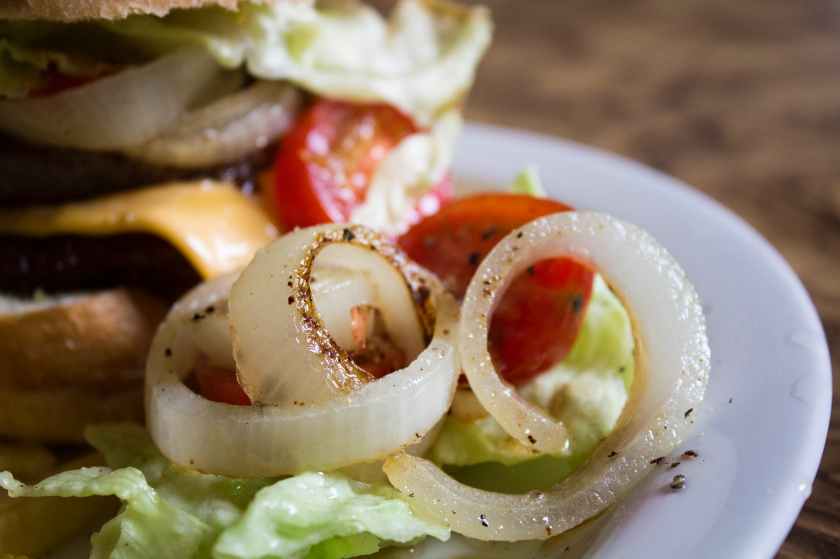
One of the most popular comfort foods, snack foods or a complete meal to splurge occasionally, or for fun and festive, is the hamburger or burger. Essentially a sandwich consisting of one or more cooked patties (pan fried, grilled or flame broiled) of meat placed inside a sliced bread roll or bun and often served with cheese, lettuce, tomato, onion, pickles and other adds ons, as well as condiments like ketchup, mayonnaise, mustard, relish, or “special sauce”, these sandwiches or “burgers” have stormed the food industry ever since their introduction. While today, the patties can range from meat, fish, egg or vegan; hamburgers or burgers have evolved from being that of fast food joints or the regular diners to specialty or high end restaurants. Like all sandwiches, its’ what goes in and the entire taste and texture that counts.

“It requires a certain kind of mind to see beauty in a hamburger bun.” ~ Ray Kroc


Although the term, “hamburger” is originally derived from Hamburg, Germany’s second-largest city; its’ origins have been subject to much dispute, claim and uncertainty. Before the “disputed invention” of the hamburger in the United States, similar foods already existed in the culinary tradition of Europe. As recorded in The Apicius cookbook, a collection of ancient Roman recipes that may date to the early 4th century, “isicia omentata” preparation is detailed as a baked patty in which meat is mixed with pine kernels, black and green peppercorns, and white wine, considered to be the earliest precursor to the hamburger. Later on with various conquests, civilizations and trade, similar recipes were made with various varieties of the meat available then, like the “steak tartare” made of minced horse-meat of the 12th century.

The evolution of the name “Hamburg” came as the town was known for its’ ports famous for trade with the “New World” as well as then ” Old Europe”. With immigrants reminiscing about home, various dishes made with steak came to known with the name “Hamburg” added along side the dish name on the various menus especially when at sea or the ports, like the Hamburg-style American fillet.


However the exact origin of the hamburger may never be known with any certainty. While most historians believe it was invented by a cook who placed a Hamburg steak between two slices of bread in a small town in Texas; few others credit the founder of White Castle for developing the “Hamburger Sandwich.” With records being scarce, the stories and claims still remain as “legends”. With most claims for the invention occurring towards the early 19th century, common factors include large crowds like fairs, festivals, amusement parks as well as street vendors, who for simplicity, ease and increased sales had placed the steak between two buns filed with few vegetables to get the taste and the sales” going.

Yet by whichever origin, the “burgers” have been evolved across the globe adapting to the taste, local ingredients, culture and essence of the locality like the Vietnamese rice-burger. Varied experimentation with the ingredients can be made with ease, to give rise to a style or art with home cooking the “burgers” especially on the International Burger Day (May 28th). Depending on the mood or scene, from barbecues to cook-outs various combinations can be made, traded and shared with fun memories to treasure. Or one can ordering the good old regular “burger” for not just satisfying the hunger pangs but also for comfort in the memories of the good old times. As the old saying goes, “moderation is the key to having fun while eating”.


Posted in Daily, Family and Society, Life, Personal Musings, Stories Around the World, Work

Cups, Perfection or Happiness

“Folks are usually about as happy as they make their minds up to be.” Abraham Lincoln

As per the recent health surveys, the growing levels of stress are increasing steadily, not only among white collar workers, but also among young adults, adolescents and even at school level. In 2016, an estimate of over 1.1 billion people worldwide ( 1 in 6 or 15-20%) had mental or substance use disorder with around 4 percent of population had anxiety disorder ( Source: Institute for Health Metrics and Evaluation, Global Burden of Disease study). As per the Cigna 360 Well Being Survey (2018), around 9 in 10 Indians suffer from stress. With all this statistical evidence and data of mental as well physical health correlations, the glaring fact or query is whether happiness or health is defined by the boundaries of pre-defined standardized success or by the quiet inner serenity of “being successful within”.

“You will never be happy if you continue to search for what happiness consists of. You will never live if you are looking for the meaning of life.” Albert Camus

One of the reasons why we often sink into the pits in our journey in life, is because we are too busy looking around to notice our own. One becomes too busy in concentrating on how “our coffee cup” is shaped, styled and modeled in comparison to others either by wealth, career, assets or other parameters. Unfortunately in doing so, we fail to enjoy to taste, flavours and pleasure of indulging in the freshly brewed coffee in our own cup. Wouldn’t it be better if we enjoyed our own cup in the short time that we have?

“Success is not the key to happiness. Happiness is the key to success. If you love what you are doing, you will be successful.” Albert Schweitzer

To attain the happiness in life, doesn’t imply to concentrate only on the cup that we have. Perfection doesn’t define happiness. Rather define what is important to one and find comfort and peace of mind in those. The choice to remain at peace and serene lies within us and our thoughts. Choose to stay calm, happy and content by finding the value and worth in things that really matter to us and our inner peace.

“Happiness depends upon ourselves.” Aristotle

A Cup and Coffee

A group of highly established alumni got together to visit their old university professor. The conversation among them soon turned into complaints about their stressful work and life. The professor went to his kitchen and returned with a large pot of coffee and an assortment of cups, including porcelain, plastic, glass, crystal, some plain-looking, some expensive and some exquisite. The professor told them to help themselves to the coffee. After all the students had a cup of coffee in their hands, the professor said: “ Did you notice all the nice looking cups are taken and only the plain inexpensive ones are left behind. While it is normal for everyone to want the best for themselves, but that is the source of problems and stress in your life. “ “ The cup itself adds no quality to the coffee. In most of the cases, it’s just more expensive and hides what we drink.”, the professor continued. “What all of you really wanted was coffee, not the cup, but all of you consciously went for good looking expensive cups and then began eyeing on each other’ s cups.”
“Let’s consider that life is the coffee and the jobs, houses, cars, things, money and position are the cups. The type of cup we have, does not define or change the quality of our lives.”

Posted in Daily, Food

Staying “Summer” Fresh

“If life gives you lemons, make apple juice and make people wonder how the hell you did it.” Gurbaksh Chahal

With summer reaching it’s peak, staying hydrated is quite important. Add holidays, children, get together weekends or picnics as well as spending time with friends and family; getting creative is a necessity. With plenty of fruits available this season as well the vegetable garden thriving, it would be fun to experiment and serve something more than chilled lemonade this summer.

“If life gives you lemons, make some kind of fruity juice.” Conan O’Brien


Before getting started, few practical tips would make the experimentation more fun and feasible as well as palatable. As per most nutrition experts and chefs, carrots can be juiced with any fruit and apples can be mixed with any vegetables. Cabbage, kale or collard greens shouldn’t be juiced. A little of mint, basil or rosemary gives a distinct flavour to the regular fruit juices. Adding a little of parsley or watercress will not only cleanse the blood but also give a distinct flavour.

Before juicing, washing the vegetables and fruits is a must. A quick tip to clean the berries would be to soak them for a few minutes in a solution of vinegar and water of one cup to ten, respectively and dry them completely. Not only will they remain fresh mould free but also be cleansed. Have fruit juices fresh and early in the morning would ease the health for the day. Fruit juice once made, should be consumed fresh as they may turn too sweet when kept in the fridge for long, or turn rancid or sour when kept outside. T have it cold, add a few ice cubes which can contain a hint of crushed mint in the water frozen as ice cubes.


Before juicing, rough skins like those of pineapple and avocado as well as pits and seeds should be removed. An exception to the peels are apple skin and citrus (not oranges) peels which are edible and anti-oxidant rich. And the removed pulp can be added to mayonnaise for a delicious mock salad, or to pancakes, cookies, and even hummus. Not all seeds and greens can be added to food as some can cause gastric upsets as well as food allergies. Few of the more vibrant juices, as seen by their colours fall into the category of :
Big RED: Beetroot, Carrot, Celery, Apple, Pomegranate.
Yummy Carrot: Carrots, Apple, Ginger, Turmeric or Parsley and Lemon.
Green: Kale, Spinach, Cucumber, Parsley, Celery, Apple.
The Detoxifier: Beets, Carrots, Lemon, Ginger, Apple
The Vision: Carrots, Oranges, Ginger with or without turmeric

If the taste of the juice isn’t sweet enough to the palate initially, try adding some stevia or things like cucumber, beetroot and carrot, which can make the juices easier to drink for a newbie. Also although lemonade is one of the summer drinks since school, a dash of lime any juice would spruce it up a bit.


Posted in Daily, Life, Reflections

Time for “Own”

“Knowing yourself is the beginning of all wisdom.” Aristotle

With the current pace of today, finding “alone time” takes a backseat. Multiple reasons can be attributed to the lack of “me-time”. Professional, person or family and even community obligations always take up a few more precious seconds. Yet once in a while, it feels wonderful to leave everything to get some quiet time.

Research has shown that at least ten minutes per day to indulge in self time really helps. Speaking from a personal viewpoint, taking time for one, be it a whole day or couple of hours, depends on one’s choice. A few minutes of indulging in one’s personal interests to a whole day of the same; should both serve the same purpose. Of being happy and finding a sense f calmness and peace of living in the daily melee.

Be sure to leave at least one day for yourself. Get up when you want.
Take your time to drink fragrant mint tea or aromatic coffee.
Leisurely walk. Confused tracks among the favorite streets of the city.
Or maybe spend the whole day at home, in soft beloved pajamas,
leafing through the pages of your favorite book.
At last, to do what one had long dreamed of.
Pick up a camera, and maybe a brush and paint.
Bake a cake for a new recipe. Learn the first words in French.
Just live the day the life you dream about.
Just be yourself. Just be happy …
Anna Koryagova

Posted in Daily, Food

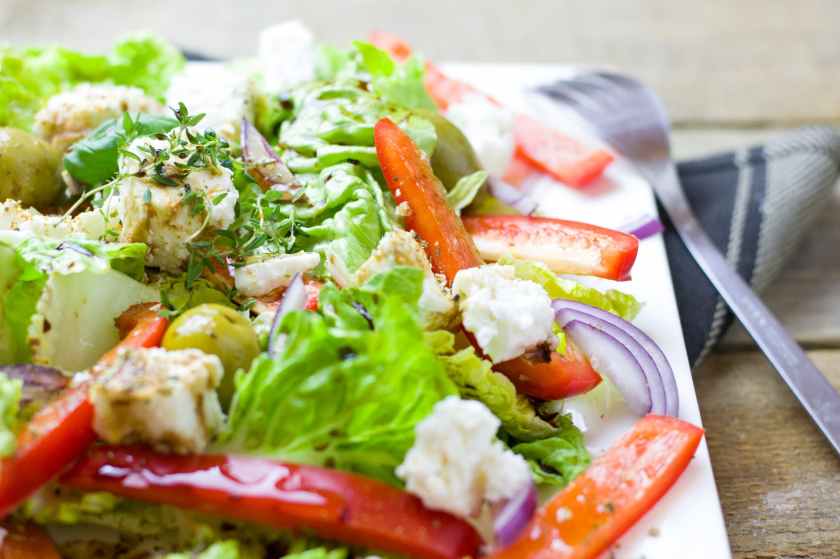
Evolution of the “Salad”

“A salad is not a meal, it is a style.” Fran Lebowitz

Originating from the Latin sal (means salt) to the Provençal “salada”, later as the Old French salade to finally the late Middle English “sallet” of 14th century or the modern day “salad” which it is now known by, salads have gradually evolved over the years. From simply starting a meal to being the main meal by itself, salads have been redefined both in content, style and flavours. With summer in full swing, fresh produce available and kids at home, salads can be both fun, entertaining and creative.

“Salad can get a bad rap. People think of bland and watery iceberg lettuce, but in fact, salads are an art form, from the simplest rendition to a colorful kitchen-sink approach.” Marcus Samuelsson

Salads were favored since the early Babylonian Era, where the greens were dressed with oil and vinegar. Likewise Egyptians made salad dressed with oil, vinegar and Asian. Even the Romans and ancient Greek Era saw mixed greens with dressing, a type of mixed salad. With imperial expansions, these layered and dressed salads were favourites in the menus of the European courts. Royal chefs often combined many ingredients in one enormous salad bowl including exotic greens as well as flower petals. The favourite salad of King Henry IV was a tossed mixture of new potatoes (boiled and diced), sardines and herb dressing, where as Mary, Queen of Scots, preferred boiled celery root diced and tossed with lettuce, creamy mustard dressing, truffles, chervil and hard-cooked egg slices.

“To make a good salad is to be a brilliant diplomatist – the problem is entirely the same in both cases. To know exactly how much oil one must put with one’s vinegar.” Oscar Wilde

Today salads are made in two classical manners of being artfully arranged or “composed” to ingredients being mixed with dressings or “tossed”. At any point of time on the meal salads may be served; as appetizers or side salads, as well as main course salads with high protein foods (like meat, eggs or fish), or as dessert salads. The latter version is one of the most popular with these sweet versions containing fruit, gelatin, sweeteners or whipped cream.

“It takes four men to dress a salad: a wise man for the salt, a madman for the pepper, a miser for the vinegar, and a spendthrift for the oil.” Anonymous

Technically there are five types of salads. Starting with the green salad or garden salad, consisting mostly of leafy greens with a healthy mix of coloured vegetables. If the latter are more, it is termed as a “vegetable salad”. From olives, artichokes as well as beans, celery or nuts, berries and seeds; these salads can be made in a colourful array. When made on a lettuce leaf, the “wedge salad” is created. When thick sauces are added to salads, they become “bound salads”, the second category of salads. Most types include those with mayonnaise like tuna salad, chicken salads, potato salad or egg salad, which can be served as “scoops” or sandwich fillers, making it a popular necessity for picnics and barbecues.

“As long as mixed grills and combination salads are popular, anthologies will undoubtedly continue in favor.” Elizabeth Janeway

The remaining three types include the “dinner salads” or main course salads, fruit and dessert salads. The former is made with meat, seafood or even eggs like the Cobb salad, Caesar salad and the Chinese chicken salad. With culinary fruits, a quick “fruit salad” can be made to complete the meal or a more elaborate “dessert salad” like jello salad, pistachio salad or ambrosia can answer the sweet cravings. Fancier creations like cookie salads, rice crispies salad, snickers salad or glorified rice salad. Finally topping the salads are the dressings which can be vinaigrette, creamy dressings as well as honey mustard or Italian dressing to mention a few. Dressing a salad depends on the final flavour that one wants to have.

Either for fun or for hunger, salad making can be an entertaining as well creative art, giving ample pleasure for both the taste buds, hunger pangs and health goals. With June being the foodimentarian ” National Month of Salads”, it would be fun to give few fancy salads a try.

“Kids in aprons appeared, putting tureens of vegetable soup on the tables and plates of boiled eggs, potatoes and lentils, bowls of endive-and-radish salad, small rounds of cheese and loaves of brown bread, all looking quite delicious, in Zoe’s opinion.” Christine Brodien-Jones, The Glass Puzzle