Posted in Daily, Food, Uncategorized

With regards,From Italy

“L’uomo è ciò che mangia” (a man is what he eats)- Ludwig Feuerbach

For those of us who know Italian or in love with Italian food, these words would sound familiar and seen sometimes across the menu cards. One of the most popular global cuisines apart from the American snack industry, French cuisine or Indian “curries” would be the Italian cuisine, which is actually in popular demand, ranging from the “pizza” to pasta, panini, lasagne, risottos, tortelinni. Although most would be familair with a selct few, Italian cusine offers a whole range and variety of meals which is quite simple to cook, especially for those of us who want a change from the regular.

“Italian food is all about ingredients and it’s not fussy and it’s not fancy.” Wolfgang Puck

Like with most European cuisines, the Italian cuisine developed over centuries with its’ roots primarily spreading and growing with the fall of the Roman Empire. With traces from Athens as well, the Sicilian cuisine was initially well liked and many believe it to be the first real Italian cuisine; especially in the Middle Ages. A lot of the cuisine varies from region to region primarily because of the Mediterranean and Arab influences in South compared to the Germanic and Roman roots of the north. In fact each area has its’ own specialty like cuisines from Basilicata, Lomabarde, Saridinia or Tuscany to list a few.

“In the 20th century, the French managed to get a death on the myth that they produce the world’s best food. The hype has been carefully orchestrated, and despite the fact that the most popular food in the last quarter has undoubtedly been Italian, the French have managed to maintain that mental grip.” Clarissa Dickson Wright, English Chef and Author

The versatility of Italian cooking lies in the explicit use of vegetables, cheese as well as meat along with the ease and simplicity in its’ making. For novice Italian cooking, the pasta and risotto are quite easy to make. With many recipes available online, its’ not that hard to bring a change to the menu once in a while and gives a healthy break from fast food and restaurant dinners.

Anche l’occhio vuole la sua parte (The eyes want their part – in the sense that something has to be pleasing to the eyes – apart from having other qualities)…An Italian Saying

Posted in Christian, Family and Society, Life, poetry, Stories Around the World

Making of the Family

The institution of marriage is one of the most sacred things of life. For two people to trust each other and share their lives, requires a magnanimous amount of courage, love and sacrifice. This journey involves the active and equal participation of two individuals, “give and take” from both sides and sharing of both sorrows and joys. Marriage then on leads to family.

Family is the place where a person should always be comfortable, understood, supported and heard. Family is the one place where one can hide from the whole world. Family has no envy, rivalry and controversy. Each person is understood almost without words. Family is where happiness lies in just being together.

The bond that links your true family is not one of blood, but of respect and joy in each other’s life. Richard Bach

Being part of a family involves strength,respect, understanding and most of all love in order to flourish. Unless mutual effort lies in everyone’s part, family can never be complete and whole. Society has its’ own share of happy and broken families. Yet as long as we can help it, giving a try to keep the family going is a must. If all avenues and paths fail, then its’ time to break off the unit.

Below is a poem I found on one my social networking pages. Unfortunately it doesn’t have a title nor the author’s name. Yet these simple lines bring out the sweet essence of family.

Real happiness nests in simple:
In the way he comes from work every evening,
How she fills their home with comfort,
And how together they are every Saturday evening.

How she worries, whether he ate at dinner,
How he wonders what she is writing about,
How she permits not to turn off the light,
And how he agrees to turn it down.

How they make plans for the day and for the year,
How they sometimes do not interfere with each other,
How everything, in general, is going slowly
In one easy circle.

What is so wonderful about it? … It’s life! …
Here the pots rattle and the floorboards creak …
Yes! … but it is here that it is possible to love
And to read each other – to the last page …

Posted in Daily, Family and Society, Life, Quotes, Reflections

Screen “Timed”

The other day, my colleague and I were sitting at a cafe during our break hours. While enjoying our coffee, it was interesting to note that couples or groups at various tables were mostly on their phones. In the case of singlets, I would be able to understand but for couples to be mostly on phones felt strange. Late that day, during my drive back to home, the similar situations were seen among the students waiting for or on the bus, passengers on the bus, at the grocers’ – everyone were on their “screen time mode” be it phones, iPads or tablets. The question that popped in my mind was “how much of screen time do we attend to each day ?”

The sad fact is we all live in our screens. Trips are taken to showcase photos as proof of fun, not vice versa. If one disagrees, then why do we cram up so much sights in one day to see when we go on a break instead of enjoying each hour that we spend.

Sometimes you have to disconnect to stay connected. Remember the old days when you had eye contact during a conversation? When everyone wasn’t looking down at a device in their hands? We’ve become so focused on that tiny screen that we forget the big picture, the people right in front of us. Regina Brett

Screen time has cost us our ability to talk. We lack communication primarily, because we are too busy staring at the screens, or tired from staring at the screen all day or we are too caught up on thinking about what is happening on the screen. Each one of us have our own coat of interests, acquaintances offline and online, yet when they interfere with our social bonding, family ties, relationships and health; its’ time to re-evaluate.

The drawback of modern communication is that we “message, chat or pictorize” but we don’t communicate or really know how one is feeling or understand and listen to each other. Consequently we lose out on real love, kinship and bonds; instead we get swamped by bouts or periods of loneliness, inattention, superficiality and emptiness. There are many instances in families, communities or campuses, where individuals live under the same roof but know squat about each other. Privacy should be respected, but knowing basics of whether you like tea or coffee, vegan or not, healthy or unwell, address or one’s dislikes and likes is essential to forge and maintain bonds.

“It’s not just about limiting screen time; it’s about teaching kids to develop good habits in real life As well as managing their screen time.” Cynthia Crossley

The worst hit from excessive screen time are families. They live together but sit in their gadgets, completely oblivious to each other speaking “different languages”. Parents and children forget to talk to each other. There are exchange of words but no connection, intimacy, enjoyment or relaxation to just be together. “The key is to teach them how to be safe with technology, because ultimately, we want our children to be in charge of technology, rather than feeling technology is in charge of them,” as said by Elaine Halligan, London director of The Parent Practice

Knowing to delegate screen time is necessary, as each year in life happens only once. Adults can’t relive their childhood years like their children. Each one will grow up quickly and time will fly. Kids will grow up quickly, and we will not be able to sit with them, read books or just have some fun. We adults might find it late to spend time with someone dear, because life in general is lived quickly. We need to distribute our time to one another. When “screen time” becomes “screen life”, its’ time to change before we too get swiped by a tap.

Posted in Daily, Food

Of Pie and Beyond

“Sing a song of sixpence,
A pocket full of rye.
Four and twenty blackbirds,
Baked in a pie.”….Sing a Song of Sixpence (Roud Folk Song Index 13191)

On the basis of etymology, “Pie” came from “pastry” of middle 14th century or older “piehus” referring to bakery (12th century) or the Medieval Latin of pie or pia of meat or fish enclosed in pastry. The popularity of pie can be attested by its’ use in nursery rhymes to popular holiday or pot luck dinners as well as references to slap stick humour, pie-throwing contests and the like.

“Georgie Porgie, pudding and pie,
Kissed the girls and made them cry,
When the boys came out to play,
Georgie Porgie ran away.”….Georgie Porgie ( Roud Folk Song Index number 19532)

From the very early days of man’s existence, With long travels, difficult storage and introduction of baking, reliable food sources were needed. This lead to the Egyptians “dhourra cake” (flat brittle bread loaf of millet bread) and Romans biscuit known as “buccellum” being in popular use especially among the sailors. Yet the Ancient Greeks were believed to have first made use of the pie pastry concept. From then on, Romans slowly evolved the art of pie making which later spread over to Medieval Europe and hence has stayed on.

“Little Jack Horner
Sat in the corner,
Eating his Christmas pie…” from Little Jack Horner ( Roud Folk Song Index number 13027)

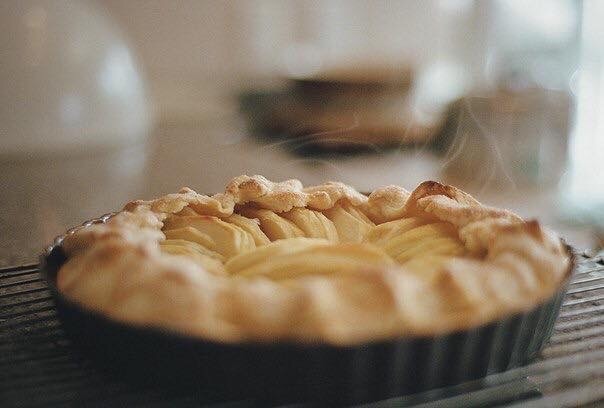
From being savory or sweet, pies were the answer for middle, working class people for besides being easy to make, they can be made with the locally available ingredients based on the locality, weather and the time of the year. For pie enthusiasts, any filling can be put into a pie from meat fillings to fruits, cheese and even the basic vegetables. Sometimes, porcelain ornaments have graced the top of pies, primarily to release steam, identify the contents as well being an eye-catcher. With the lack of time and need for quick homemade meals and ready made pie pastry, pies are an answer for quick, healthy, nutritious meals or delectable desserts. Above all, pies encompass feelings of homeliness, togetherness and experimentation laced with traditions, experiences and nostalgia.

Doing projects really gives people self-confidence. Nothing is better than taking the pie out of the oven. What it does for you personally, and for your family’s idea of you, is something you can’t buy. Martha Stewart

Posted in Daily, Food

Flavoured Hot and Spicy

“Great cooking is about being inspired by the simple things around you – fresh markets, various spices. It doesn’t necessarily have to look fancy.” G. Garvin

The Latin root “spec” became Old French of espice or epice, what we now commonly call as “spice”. Add to it the original Nahuatl “chilli” of today and voila, we are ready for the International Hot and Spicy Food Day tomorrow. The origins of both happened quite exclusive of each other, although when we blend the hot and spicy, a whole new palatal feast is experienced.

“Once you get a spice in your home, you have it forever. Women never throw out spices. The Egyptians were buried with their spices. I know which one I’m taking with me when I go.” Erma Bombeck

Spice trade had developed in Middle East, South and East Asia as early as 2000 BCE with predominant use of cinnamon, black pepper and herbs. As the Egyptians practised mummification, the constant demand for imported spices and herbs kept the “spice trade” alive. The earliest written records from the Egyptian, Chinese and Indian cultures connect spices with magic, medicine, religion and tradition. On the other hand, capsicum and chilli peppers were originally in wide spread use in the Americas primarily, Central and South America as well as Mexico around 6000 to 7500 years ago. With the advent of Portuguese trade and spread of the chilli peppers to Asia around the 15th century, the cooking of hot and spicy food took onto newer shores.

“A good spicy challenge strikes a balance between flavour and fear.” Adam Richman

For every food enthusiast, celebrating ” International Hot and Spicy Food Day” ( January 16th) is different every year as each spicy cuisine ranging from the Indian masala to spicy Mexican tortas or Vietnamese Bun bo Hue to Cajun cooking and so on; no cuisine mimics the taste of the other. As for those who have been challenged to enter the hot and spicy waters on this day, keeping the spice to low numbers as per the Scoville scale ( the spiciness or heat scale) helps to ace the test. An additional tip would be to keep starch rich food like bread or “naan” with cold water to combat the heat and spice. Hot and spicy can be tuned to one’s own taste bud, for the beauty lies in experience, experimentation, fun and art of cooking and dining.

“From a young age, I understood the idea of balanced flavor – the reason you put ketchup on a hamburger. I was that kid who wouldn’t eat something if there was something missing. I never really understood it until I began cooking professionally, balancing acids, sweets, spicy flavors and fat.” Michael Mina

Posted in Daily, Food

Origin of “Curry”

On experimenting with various recipes, one interesting fact I had realized that there are so many things about “curry” that we take for being true or ascertained facts, when they may not be so.

Curry applies to dishes with gravy, spicy origins and can range to a variety of South Asian as well as South East Asian dishes, based on the type of spices. Curry technically is not a word actually used in most vernacular Indian languages. Each of the Indian states have their own terminology for “curry” ranging from “shaak” of Gujarat to “saaru” in Karnataka and “jhol” of Bangal. Historians noted that the word had been into common use when the British had tasted and brought the South Asian dishes to the west.

Curry is not a spice but a mixture of spices (often sold grounded as curry powder, mostly of turmeric, cumin, coriander, chilli and ginger) which can used with a variety of vegetables or meat, even seafood to make a variety of dishes, each having their own name in the region. Depending on the addition of water, milk or even curd, the base can be liquid or kept dry.

Curry powder has been one of the world’s oldest medicinal and cooking mixtures ranging back to Mesopotamian era (1700 BC). Although the roots of curry powder may be traced to Asia, documents and books on English cooking as early as 1300s mention the use of this concoction.

“Curreier” vs. “kari” The word “curry” has different meanings when used as a verb and noun. The Vulgar Latin “conredare”, Middle English “currayen” or Old French word “correier” had given roots to the Anglo-French “curreier” which later gave rise to the verb of “currying” meaning to seek favour by flattery or attention. Whereas, the noun “curry” was derived from Tamil “kari” (or a cognate word in a Dravidian language) as states in the Marrian-Webster dictionary. Another derivation I had read online was that the word curry was derived from a South-Asian word “Kori”; a sauce with cooked meat or fish.

Another reasoning behind everything “stew based being called curry” was based on the first English cookbook. In the 1300?s, King Richard II had summoned several cooks and philosophers to produce the first English cookery book known as ‘The Forme of Cury’ (1390). The old English word “Cury” was used to describe cuisine based on French ‘cuire’ meaning: to cook, boil or grill. The word “Cury” became associated with stew.

Either way, “curry” has come a long way especially with the advent of trade and later on travel, led to the exchange of cuisines, culinary ideas as well mixing of flavours with local available ingredients. Soon the indigenous recipes became globalized. Whichever dish it may be especially today as National Curried Chicken Day (January 12th); for an exotic, spicy and different blend of curried chicken; try making the sauce with ghee (clarified butter), onions, garlic, cumin, coriander, cinnamon and turmeric powder with a dash of ginger or just add the right amount of “curry powder” and get the taste buds going.

Posted in Family and Society, Life, Personal Musings, Quotes

Where Did The Time Go

One of the most sought after requirement for doing any task, buying any gadget or engaging in any short term or long term event is either “quick or fast or rapid or time-saving.” The modern era relies on saving or using time to do as much as possible, to the extent of forgetting that time like all other gifts of nature can’t be saved but only prioritized.

“The supposed great misery of our century is the lack of time.” John Fowles

For time is getting less day by day. We don’t have enough time to read books or newspapers, to write long letters that people once wrote to each other. We struggle to make time to love, communicate with our family and friends, simply talk to our children or even to admire the sunsets and sunrises or just mindlessly walk through the fields and woods. Where did all the time go? Where did this growing trouble of “less time” come from? We do everything in our power to save time, yet it is never enough.

“Quit saying you don’t have time. You have time for what you make time for in life.” Bryant H. McGill

To find time, is not easy but possible. If we take it upon ourselves to enlist our schedule for a week or even a day, we can figure out where the time went. After that, it is up to us to cut off activities that take up our precious hours and leave us with more headaches than ever. The inner query of “do I really need to do this” helps a lot. For instance, checking our email, Facebook or Instagram every hour, news by every hour (unless it is a professional requirement), numerous hours of television doesn’t really help us grow.

“Lack of direction, not lack of time, is the problem. We all have twenty-four hour days.” Zig Ziglar

We need to find time to manifest ourselves, the nature around us, our abilities, plans and dreams. Tracking down what is important is needed because once gone, time never returns but only moves forward.