Posted in Daily, Food

Delights of “Oreo”daphne

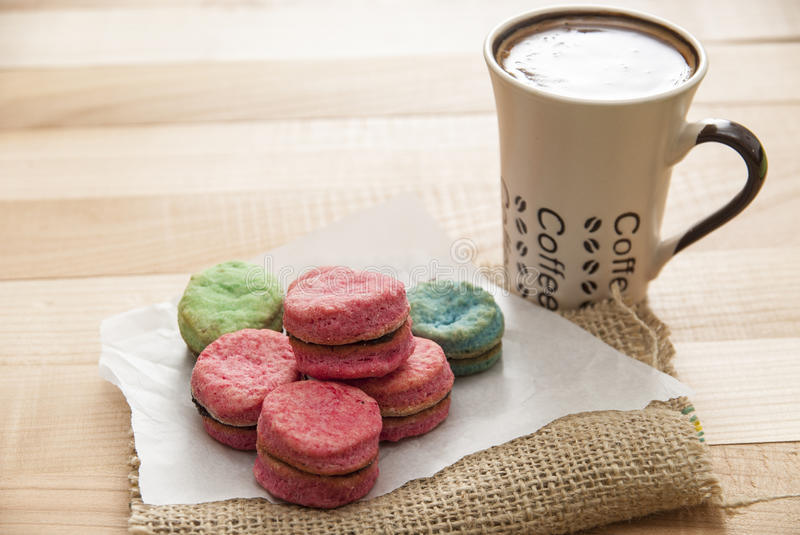
The first week of March is awaited by foodimentarians globally, from peanut butter to banana cream pie and ending with pound cake, cheese doodles, Oreo and cereal; there is absolutely nothing better to start and end the week with. At least one favourite of each person is there to indulge in, as part of observing the food holidays.

“Health food may be good for the conscience but Oreos taste a hell of a lot better.” Robert Redford

One of the most favored foods (for comfort or mini-sized treats) Nabisco’s “Oreo” have taken the world by storm. Interestingly, the origin of the word “oreo” (cookies or biscuits) can be traced to the French word “or” (means gold) or “ωραίο” from Greek meaning tasty, beautiful, nice or well done. Or from the Latin Oreodaphne, a genus of the laurel family evidenced by the design of “the laurel wreath” on the cookies, as noted by food writer Stella Parks.

From the on, Oreo biscuits to pancakes, cakes, sandwiches and ice-cream have been on the food trends, landing its’ own special place on the table, ranging from breakfast, snacks to desserts.

For an interesting “kid or adult” twist to the routine, add oreo crumbs and cheese doodles to pancake batter, cereal or cake, ice-cream or simply milk and enjoy a “foodimentarian” week of desserts or mini-treats and splurge.

Posted in Daily, Food, Quotes

Of Wine and Flavours

“Wine is a living liquid containing no preservatives. Its life cycle comprises youth, maturity, old age, and death. When not treated with reasonable respect it will sicken and die.” Julia Child

Made initially from fermented grapes, wine is one of the alcoholic beverages that is most widely used accepted. Historical evidence of the earliest known traces of wine are from Georgia as early as 6000 BC. Although there is evidence of a similar alcoholic beverage being consumed earlier in China around?7000 BC. The 6,100-year-old Areni-1 winery in Armenia is the earliest known winery as evidenced by archaeological remains. Additionally besides being a leisure and recreational drink, wine has its’ own religious importance as well as culinary and artistic value.

“The discovery of a wine is of greater moment than the discovery of a constellation. The universe is too full of stars.” Benjamin Franklin

From the early wine, as the human civilization expanded southward, westward and into the Mediterranean, the wine grapes spread. With sea and road travel, cultivation of wine grapes spread throughout Western Europe. With each new region that was planted, the grapes slowly mutated and adapted to their unique environments. The slow divergence and evolution over thousands of years resulted in the incredible diversity of the wine varieties of today.

“A gourmet meal without a glass of wine just seems tragic to me somehow.” Kathy Mattea

Wine have now been popularly divided as the Old World Wines, named after the region where the grapes grow and the New World Wines, frequently named after the type of grapes used. To keep matters simple, wines can be broadly classified as Dessert wines, Red, Rose, White or Sparkling. Ranging from dinners to celebratory as well as medicinal purposes, each wine is specific for their type.

“Accept what life offers you and try to drink from every cup. All wines should be tasted; some should only be sipped, but with others, drink the whole bottle.” Paulo Coelho

Popularly wine is made from grapes, but other fruit wines especially berries, gooseberries and apples, aren’t far behind. In fact, Mead or honey wine was produced in ancient history throughout Europe, Africa and Asia and was known in Europe before grape wine. Other starch-based “wine” like barley or rice wine (sake) are closer to beer based on the alcohol concentration. Gearing up for the next winter season, now would be an ideal time to start the preparation for homemade wine. For a start, beginning with the local fruit, (like Indian Gooseberry here) would be best. The longer it ferments, the better the wine.

“Age appears to be best in four things; old wood best to burn, old wine to drink, old friends to trust, and old authors to read.” Francis Bacon
Posted in Daily, Food

Trend of “Break-the-Fast”

“Breakfast is everything. The beginning, the first thing. It is the mouthful that is the commitment to a new day, a continuing life.” A. A. Gill

After the regular morning tea or cup of joe; the bustle of the day starts off with “breakfast” what was previously known as “morgenmete” (Old English) i.e. “morning meal”.On the wintry or cold February mornings, there is nothing more delightful than being warmed by breakfast; which is maybe why the month of February has been dedicated to warm breakfast.

The ancient man, from the Neolithic age believed in the concept of baking cereals and consuming them in the morning, especially among peasants as light repast to start the day’s labour. While the Ancient Greek (ariston or akratisma) and Rome (jentaculum or ientaculum) carried on this tradition, the morning meal bacme more lighter, giving way to a more rich midday meal.

Towards the Middle Age, breakfast was frowned on by the nobility believing it to be a meal for the lower or working class. Yet towards the 15th and 16th century, with the introduction of meat and caffeine as well as tea; the morning repast became a necessary indulgence for the nobility as well. From then on breakfast time encourages one to indulge in a heavy or light glucose intake for the day depending on the mood.

From the continental breakfast to English breakfast or simply pancakes, waffles, dosa or muffins; the variety of food served at breakfast can never be termed boring. And for those of us who dread cooking in the mornings, there’s always a warm bowl of cereal or cupcakes to kick-start the day.

“All happiness depends on a leisurely breakfast.” John Gun

Posted in Daily, Food

Being Chocolaty, Peanuts

“‘Peanuts’ is a life-long influence, going back to before I could even read.” Adrian Tomine

INGREDIENTS
1 package semi-sweet or bittersweet chocolate chopped
Salted peanuts, no skin
Both ingredients in equal measure.

Taxonomic classified as Arachis hypogaea, popularly known as groundnuts, goober, monkey nuts or peanuts (not the comic strip); they are a favored snack among all ages. With the above ingredients, there’s nothing more befitting than experimenting in a little mix of the all time favourites; i.e. chocolate and peanuts.

“Chocolate is one of the world’s most beloved discoveries, and when we need a quick boost of energy and endorphins, chocolate is the go-to treat.” Marcus Samuelsson

Commercially chocolate coated peanuts ere earliest sold and marketed under the brand ‘Goobers” in 1925. Later other companies like M & M’s too made them. Interestingly, the name “Goober” is probably derived from the Gullah language (African Americans who live in the Low-country region of the U.S. states of Georgia and South Carolina), word guber (meaning “peanut”), which is in turn derived from the KiKongo (or Kongo) word n’guba. Keeping with the rising vegan trend, “Vegan chocolate-coated peanuts” are made of non-refined sugar, cocoa mass, cocoa butter and vanillin.

Being all time snack and culinary favourite; peanuts can be artfully and tastefully served as “ants on a log”, the traditional roasted “chikki”, deep fried or coated and roasted, or the all time sauce thickener to bring a change to the regular stew and curry ( Kare-kare, mirchi ka salan, peanut chutney). With winter drawing to a close and the peanut season coming to an end, there’s nothing better to celebrate the end of the season than with “peanuts”.

“Ants on a log : a snack made by spreading peanut butter, cream cheese, ricotta cheese or any number of spreads on celery and placing raisins on top”

Posted in Daily, Food, Uncategorized

With regards,From Italy

“L’uomo è ciò che mangia” (a man is what he eats)- Ludwig Feuerbach

For those of us who know Italian or in love with Italian food, these words would sound familiar and seen sometimes across the menu cards. One of the most popular global cuisines apart from the American snack industry, French cuisine or Indian “curries” would be the Italian cuisine, which is actually in popular demand, ranging from the “pizza” to pasta, panini, lasagne, risottos, tortelinni. Although most would be familair with a selct few, Italian cusine offers a whole range and variety of meals which is quite simple to cook, especially for those of us who want a change from the regular.

“Italian food is all about ingredients and it’s not fussy and it’s not fancy.” Wolfgang Puck

Like with most European cuisines, the Italian cuisine developed over centuries with its’ roots primarily spreading and growing with the fall of the Roman Empire. With traces from Athens as well, the Sicilian cuisine was initially well liked and many believe it to be the first real Italian cuisine; especially in the Middle Ages. A lot of the cuisine varies from region to region primarily because of the Mediterranean and Arab influences in South compared to the Germanic and Roman roots of the north. In fact each area has its’ own specialty like cuisines from Basilicata, Lomabarde, Saridinia or Tuscany to list a few.

“In the 20th century, the French managed to get a death on the myth that they produce the world’s best food. The hype has been carefully orchestrated, and despite the fact that the most popular food in the last quarter has undoubtedly been Italian, the French have managed to maintain that mental grip.” Clarissa Dickson Wright, English Chef and Author

The versatility of Italian cooking lies in the explicit use of vegetables, cheese as well as meat along with the ease and simplicity in its’ making. For novice Italian cooking, the pasta and risotto are quite easy to make. With many recipes available online, its’ not that hard to bring a change to the menu once in a while and gives a healthy break from fast food and restaurant dinners.

Anche l’occhio vuole la sua parte (The eyes want their part – in the sense that something has to be pleasing to the eyes – apart from having other qualities)…An Italian Saying

Posted in Daily, Food

The “Snack” Cravings

“The road to enlightenment is long and difficult, and you should try not to forget snacks and magazines.” Anne Lamott

No matter how old we grow, there’s always time to grab a snack in between, either when still or on the go. Remember the childhood treat of “cookies or biscuits and milk”, “vada with chai” or “fritters after school” and so on, with the best being around the “midnight ice-cream or chocolate teat”. As time moved on and we grew up, “snacking” became a must especially during college, university and struggling between jobs when cooking a full meal was a rarity. Slowly as the years evolved, being healthy declined and we got out of shape, “snacking” became a struggle for the mind and body between “should I or should I not.”

“Some people wonder why they can’t have faith for healing. They feed their body three hot meals a day, and their spirit one cold snack a week.” F. F. Bosworth

From childhood and school days, the focus has been on having three healthy meals a day; the occasional decline in the sugar levels as well as the temptation of the taste buds prompted the occasional snack. On a scientific note, research has recommended that “small snacks” does indeed life up the metabolism, boosting mental work and triggers satiety. On the other hand, as we overdo it; the scales tip and we find ourselves in a continuous cycle of frustration and over-snacking.

“Everyone I know is looking for solace and a tasty snack.” Maira Kalman

Yet the balance between “healthy and unhealthy snacking” is very fine. Keeping all snacks portion controlled, mixed range and on balanced nutrient density helps us to continue snacking on “legal celery sticks and granola bars” as well as the “delicious cheesy pretzels and chocolate rich gooey globs of goodness” for some occasions. Sticking to “wise snacking”, varied options and balancing between both, keeps the interlude between the three meals interesting not just for the palate but creativity, mind, mood, emotions, body and soul; making “happy snacking” a trend.

“All of life is a continuous state of wonder interrupted by bedtime and light snacks.” Joyce Rachelle

Posted in Daily, Food, Stories Around the World

Nutella from Gianduja

Sugar, Modified Palm Oil, Hazelnuts, Cocoa, Skimmed Milk Powder, Whey Powder, Lecithin and Vanillin.

The correct proportion of the above ingredients with “some plus and minus” gives the final “new-tell-uh” or as written as “Nutella”, gluten free, Kosher but not vegan.

The origin of Nutella can be traced to the Piedmont chocolatiers of Italy who had made blocks of chocolate. With the Napoleanic Wars and shortage of chocolate; chocolatiers of Turin added chopped hazelnuts to the chocolate trying to stretch the supply. Thus was born the “gianduja”, a fateful paste. Later on with the World Wars and high expense with scarcity of chocolate; Pietro Ferrero an Italian pastry maker made the “Pasta Gianduja” a block of cocolate laced with hazelnut which was made spreadable as a creamy version “Supercrema Gianduja” over the years. In 1954, it was rechristened as “Nutella”.

The versatility of Nutella being used as a spread is not confined to bread alone but to a variety of crepes, drinks and so on. Adding Nutella to the recipe gets the creativity into flow and new food art takes shape. Simply delicious, this calorie laden treat should be indulged in high moderation. Although nutella has a fair share of hazelnuts, this choclate spread is calorie laden and not to be on the regular menu for weight watchers, diabetics and the like. The old adage that “all things are better enjoyed in moderation” holds specially true in this case.

Today various brands like “Cadbury’s Dairymilk”, “Pilsbury” as well as similar spreads like “Nocilla”, “Nugatti” and so on have stormed the chocolate world. Yet Nutella still retains its’ special position on the shelves and breakfast table.