Posted in Food

Of Bread, Soupy and Homemade

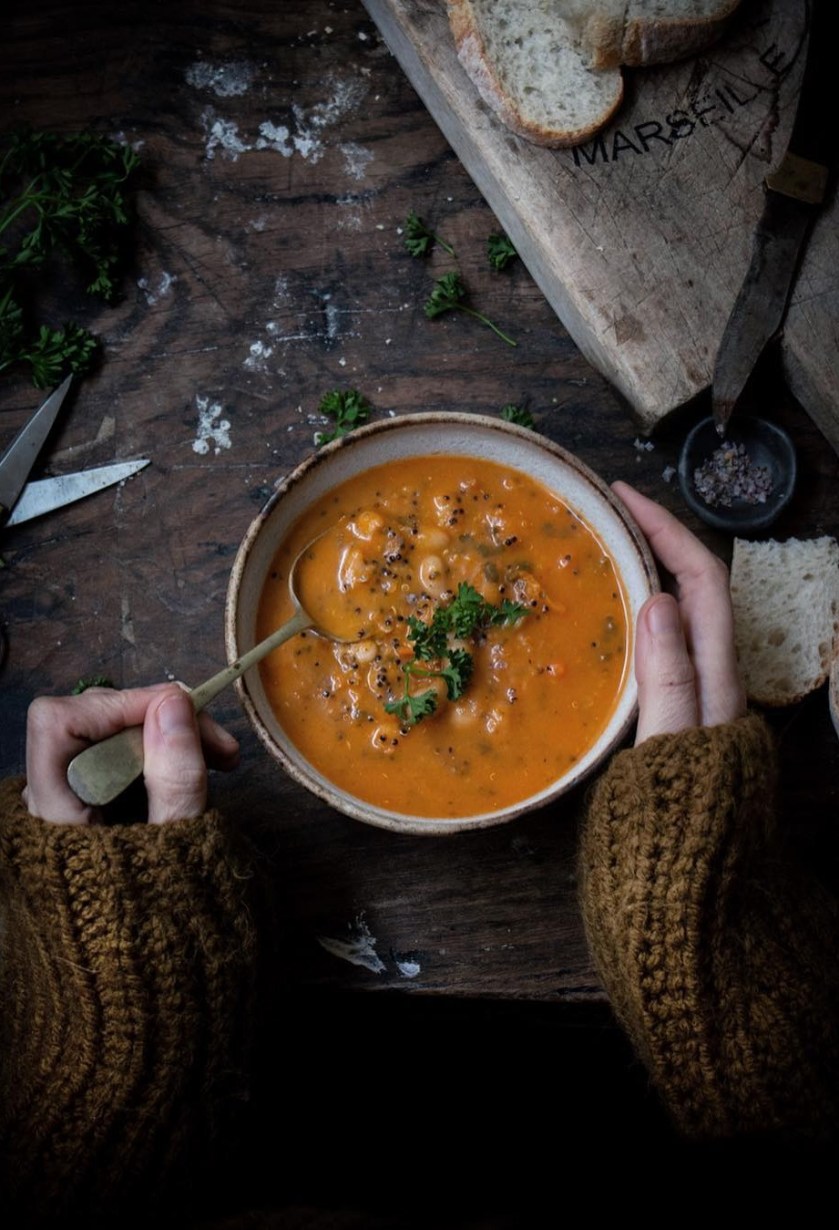
Staying at home, meal hours have been shifted earlier with the children demanding a bit of variety from the regular meals. The catch is to keep it simple, nutritious and wholesome without using sugar as a lure. Which is why when there is an excess of bread going dry, soon added to the menu is bread soup.

As the namesake goes, “Bread soup” is essentially a simple soup mainly made of bread (stale preferred, white or brown) with the base being either as a meat or vegetable broth and the bread being either cut into pieces and then into the broth, or those little pieces being cooked with onions and spices in a broth and pureed. While scouring for new recipes, it was interesting to note that there were plenty of varied styles depending on the country and the local cuisine. While the origin may be traced to the Lenten days, it is no longer confined to them or even the cold winters. Bread soup is a welcome add to the menu, for quick dinners or light repast.

One of the famed bread soups is the, Acquacotta. A hot broth based bread soup with primary ingredients of water, stale bread, onions, various vegetables, leftovers and olive oil which came into the early local cuisuine of Maremma (southern Tuscany and northern Lazio). Records mention of agresto (juice derived from half ripened grapes) used in the earlier 1800s, till tomatoes took their place in the recipe.

Another famed Tuscan bread soup is the Ribollita. Originally dating back to the Middle Ages, this soup was originally made by reheating the leftover minestrone or vegetable soup from the previous day. Later on, this hearty pottage was made with leftover bread along with cannellini beans, kale, cabbage, carrots, beans, chard, celery, potatoes, onions or other vegetables of choice. For all those who love tomato in any form, there is the “Pappa al pomodoro” literally translated as tomato mush. This thick bread soup is prepared with fresh tomatoes, bread, olive oil, garlic, basil and various other fresh ingredients, served hot or chilled.

Bread soup per se, can include the addition of bacon, egg or cream. Millefanti, an Itlaian variation uses egg and Parmesan cheese. Certain recipes include wine and more rustic version, include addition of malt or beer. One of the specialities of Portuguese cuisine especially in the Alentejo region, is the Açorda. Made typically of thinly sliced bread with garlic, lots of finely chopped coriander, olive oil, vinegar, water, white pepper, salt and poached eggs. First a mashed coarse paste of garlic, coriander, salt are mixed with olive oil and vinegar; then poured over the bread. The poached eggs are then placed over the bread with the salted water used poured over with chicken stock added. Left to steam for a few minutes, the final dish may have a bright green touch. Other variations include the açorda are the açorda de marisco or camarão (made with shrimp) or açorda de bacalhau (codfish).

While one can go with the exotic touch for bread soup, keeping it simple gives its’ own rustic flavour. With the purchase of groceries being limited in the present locked down state, stretching provisions with inventiveness is the need of the hour. Which is why in the hunt of simple new recipes, sprucing up old ones and keeping to home grown ingredients get an upper hand. With all these in mind and the summer fruit slowing coming through, inventiveness and resourcefulness help to give sparkle to the stay-at-home days. For these occasions give photographic memories and moments for the next generation, realized in retrospection over the span of time.

Posted in Food

Of Crunch or Munch on a Stick

With summer slowly climbing it’s peak, school on vacation mode and indoors being stifling, impromptu midday lawn picnics followed by the noon siesta is what cools down the hot days. While packing for picnics, the whole concept is to keep it simple, less messy, wholesome and in own backyard. When almost every other day, mid-day becomes a family picnic or tree house lunch for the kids, getting innovative is what makes lunch hour fun for them.

Up the tree house, where plates and cutlery are out of question; it will be something dry, in bite-sized pieces or filling but in neat pieces which can be had at one go and less mess. On days like these, one can borrow plenty of ideas from the favoured street vendors and summer stand owners. From the caramels pops to candy apples on sticks, corn dogs, funnel cake swirls, hot dogs on sticks or swirls of saratoga chips on sticks. Fusing a bit of common ideas with their favoured list of foods or snacks; the mid-day picnic basket contains plenty of surprises.

From waffles on sticks (stuffed or plain), bite sized peanut butter and jelly sandwiches on sticks, solled pizza slices, marshmallows interlaced with crackers and cinnamon squares melted on the stick or corn dogs with pieces of hot dogs or bacon in between, assorted fruit salad or vegetable pasta salad, donuts and rolls in bite-sized servings to the more elaborate “nuggets on sticks”; these are just few of the many ideas that can go into the menu for “food on sticks”. The most recent addition to the kids’ recipe book was “macarons melted in chocolate, dipped in sprinkles and a small stick at the base”. From toothpicks to full or half sized skewers, one can go into the full blast of creativity.

Interestingly the concept of using sticks or skewers can be dated back to the prehistoric years of the Lower Palaeolithic Era. Archaelologial excavation have unearthed stone “fire dogs” used in the early 17th century BCE. Writings of the Greek classic Iliad mention the obeliskos, a small spit or skewer with pieces of meat roasted on it. Legends and tales often passed over the centuries, mention of medieval soldiers especially Middle Eastern, who cooked meat skewered on their swords. In fact, one of the most well loved skewered foods, the shish kebab may well have an evolution of the earlier skewered meat. As per the records of Mahmud of Kashgar (11th century), the shish (Turkish şiş) was used as a skewer and ‘tool for arranging noodles’. As the years progressed, wars fought, mixing of cuisines, modernization and social revolution leads to the occasion of small to large scale celebrations, leading to the need of a set of recipes with minimal fast, large scale access and widespread acceptance as far as taste and ingredients are concerned. Which is maybe why the social gatherings of today, have their special set of “food on stick” recipes.

While these ideas have always made their entry into cocktail parties and cookouts, bringing them into the family picnic menu with minimum work is what makes cooking and experimentation fun. Even better would be to try something new, exotic or wildly different taking the special national “Food on a Stick” Day (March 28th) into consideration. As all foodimentarians believe, sustenance isn’t for mere existence, but is an art to the eye and creative buds, beyond the wildest imagination.

Posted in Food

Thin or Thick, Stuffed or Impressed

With the Lenten period still on and more hours at home, the breakfast menu has been varied depending on the choice of each as well as the helping hands available on deck. Which is why there is plenty of batter made in the morning. From pancakes to waffles, there is plenty of fun and chaos to welcome the mornings.

Interestingly waffles aren’t a recent recipe, but can be traced to the ancient Greeks. Believed to have descended from the Ancient Greek obleios, it was flat cakes made by baking batter between two hot irons. For the impressed patterns, exclusive to places or establishments, had originated in the middle ages. The early Middle Ages (9th to 10th century) saw the simultaneous emergence of communion wafer irons (fer à hosties or hostieijzers) and the wafer irons (moule à oublies). While the former depicted typically the imagery of Jesus and His crucifixion; the latter had impressions of more trivial Biblical scenes or just simple impressed designs often serving as emblems.

Both the communion wafer and the oublie, was mostly made of grain flour and water. From the 11th century onward, flavorings like orange blossom water, sourced honey and other ingredients came to being and establishing themselves firmly in the list of ingredients. Eaten piping hot, the initial waffles were sold on great religious feasts days with the best quality waffles known as metiers.

“The ancient Greeks used to cook very flat cakes, which they called obleios, between two hot metal plates. This method of cooking continued to be used in the Middle Ages by the obloyeurs who made all sorts of oublies, which were flat or rolled into coronets. The oublie became the waffle in the 13th century, when a craftsman had the idea of forging some cookie plates reproducing the characteristic pattern of honeycombs, which at that time were called gaufres (from the Old French wafla).” Larousse Gastronomique, Completely Revised and Updated [Clarkson Potter:New York] 2001 (p. 1285)

Though the initial waffles had originated on one side of the world, it had crossed the continents to entrench themselves into the local cuisine. Exploring the flavour of waffles, the subtle or gross changes have been made in the various ingredients going into the batter.

Known locally as “grid cake” or “grid biscuits”, the Hong Kong style waffles are usually made on the streets. Large, round and divided into four quarters; these waffles served as snacks with peanut butter, butter and sugar spread on it. Sweetened by the addition of eggs, evaporated milk; these waffles have the rich flavour of yolk, chocolate or honey melon. Changing the pattern to the ball-shaped form, these waffles are then known as eggette or gai daan jai. Adding a little of pandan (herbaceous tropical plant) and coconut milk into the batter, Vietnamese pandan waffles gives the distinctive green and chewy feel inside, though brown and crispy look outside; often best eaten plain. Keeping the batter a little more spicy, one can add a little of wasabi to give the touch of Japanese cuisine. Coming to a more variant style are the Thailand hot-dog waffles. With the hot dog cooked within the long waffles, they bear their similarity to the corn dogs. Otherwise the essential batter remains the same.

At home, while adding the South East Asian flavour to the waffles, a little of fine chopped spring onion greens, couple of coriander chopped, a bit of mashed carrot and beets gave the waffles a burst of colour. With plenty of jam, honey and sugar; the colorful waffles may have found favour with the young eaters. If not, there are always plenty of pancake batter to go around.

[1849]
“Waffles
Put two pints of rich milk into separate pans. Cut up and melt in one of them a quarter of a pound of butter, warming it slightly; then, when it is melted, stir it about, and set it away to cool. Beat eight eggs till very light, and mix them gradually into the other pan of milk, alternately with half a pound of flour. The mix it by degrees the milk that has the butter in it. Lastly, stir in a large table-spoonfull of strong fresh yeast. Cover the pan and set it near the fire to rise. When the batter is quite light, heat your waffle-iron, by putting it among the coals of a clear bright fire; grease the inside with butter tied in a rag, and then put in some batter. Shut the iron closely, and when the waffle is done on one side, turn the iron on the other. Take the cake out by slipping a knife underneath; and then heat and grease the iron for another waffle. Send them to table quite hot, four or six on a plage; having buttered them and strewed over each a mixture of powdered cinnamon, and white sugar. Or you may send the sugar and cinnamon in a little glass bowl.” 
-Directions for Cookery in its Various Branches, Miss Leslie [Philadelphia, 1849]. (p. 359)

Posted in Food

From Corn, Tacky and Baked

Entering the Lenten period, experimentation and going innovative is what makes the cooking in the kitchen interesting. As a part of bringing the Mexican cuisine home, yesterday evening was all about quesadilla.

Typically different from the famous Mexican dish of tacos, quesadilla consists of a Mexican tortilla (usually corn) filled primarily with cheese, with addition of beans, vegetables, spices or meats, depending on choice and then cooked on a griddle. Made into a full cheesy version (as two tortilla with a layer of cheese between them) or a half moon griddles version, the former is a dinner favourite.

With origins in colonial Mexico, this dish has evolved and adapted with plenty of variations. Though the usual typical filling is cheese, one can go with purred vegetables or meat fillings like chicharron or tinga. In addition they can be had with toppings of guacamole, salsas, chopped onion, tomatoes, serrano chillies or cilantro being most commonly used.

With slight twists on the preparation, one variation includes the entire package of cheese and additional ingredients sandwiched between two flour tortillas grilled on the oiled griddle and flipped so that both sides are cooked and the cheese is melted fusing it like a sealed pie, often cut into wedges and served.

“Cooking is at once child’s play and adult joy. And cooking done with care is an act of love.” Craig Claiborne

The quesadilla sincronizada, often found in the traditional Mexican recipes is a tortilla-based sandwich made by placing ham, re-fried beans or chorizo with a portion of cheese ( preferably Oaxaca) between two flour tortillas. Grilled or even lightly fried; these tortillas become crispy as the cheese melts. They are then cut into halves or wedges and served, usually with other toppings and condiments like salsa, pico de gallo, avocado or guacamole.

Served as a snack meal, main course or even as appetizers; each recipe calls for a subtle change depending on the chef’s choice. One variation is the pizzadilla, which has the ingredients and cooking technique of quesadilla, complete with pizza toppings. As for the tortilla base, with corn flour readily available; making the base is no longer a harried process. Giving the quesadilla a sweet touch with ingredients of chocolate, butterscotch or caramel; makes the dessert variant a beautiful addition to the regular bowl of ice-cream.

With plenty of recipes to choose from, home cooking in the holidays is what keeps the mischief makers at bay. As for family traditions, there is a new one to create for every holiday season. And the latter is what makes life fun, a little of variety with or without the spice.

Posted in Food

Being Sloppy, Fun and Creativity

One of the benefits of having out-of-town meetings is that lunch is of the local flavour. Experimenting at the local delis gives burst to a whole new set of flavours. The other point in favour of delis is that one can indulge in that occasional binge food, quite popular in the college days but lost out in the later years. Maybe this would account for the lunch order of sloppy joes with plenty of fries alongside.

Sloppy joe is basically just a loose meat sandwich, often going by fancier names like Toasted Deviled Hamburgers, Chopped Meat Sandwiches or Hamburg a la Creole. Originating somewhere around the mid-20th century, these sandwiches came into popularity as they were both filling and economical. Meat was stretched by the addition of bread crumbs, tomato paste, eggs, sweet peppers, minced onions, Worcestershire sauce, bottled horseradish, pickle relish and the like; which was then served between bread or as meatballs, meat loaves or hamburger stew. The trend of these loose meat sandwiches caught on. Alternate meat substitutes of late include canned tuna, diced chicken, ground turkey or soyabean mash.

“The origins of this dish are unknown, but recipes for the dish date back at least to the 1940s. It dates in print to 1935. There is probably no Joe after whom it is named–but its rather messy appearance and tendency to drip off plate or roll makes “sloppy” an adequate description, and “Joe” is an American name of proletarian character and unassailable genuineness. There are many individual and regional variations on the dish. In Sioux City, Iowa, a dish of this type is called a “loose meat sandwich,” created in 1934 at Ye Olde Tavern Inn by Abraham and Bertha Kaled.” Encyclopedia of American Food & Drink, John F. Mariani [Lebhar-Friedman:New York] 1999 (p.297).

Varied recipes of sloppy joe, include the pain à la viande and pain fourré gumbo (Quebec) wherein the stewed ground meat are usually served on hot dog buns. Around the Woonsocket area (Rhode Island) the addition of onions, bell peppers and sometimes celery makes it “the dynamite” sandwich. One of the distinction of sloppy joe from the traditional loose meat or tavern sandwiches is the tomato-based sauces used lavishly as the base. Similar meat sandwiches are found in the Chinese cuisine with rou jia mo ( steamed meat on a steamed bun) and the Indian Keema pav which is minced, stewed and curried meat (keema) served in the bread roll (latter known as pav).

Either these loose meat sandwiches are a good substitute for having lunch on the go, or simply a saving tip for student days. Adapting it to the later adult life, these sandwiches can have the meat and mix of choice, the only point is to keep it saucy enough for the sloppy feel. With plenty of ingredients and flavours to choose from, the creativity of the taste buds can go for a ride.

“Sloppy Joes…I remember eating these in the 1940s and suspect they may have been a way of stretching precious ground beef during World War II. Apparently not. My friend and colleague Jim Fobel tells me that in his own quest to trace the origin of the Sloppy Joe, he talked to Marilyn Brown, Director of the Consumer Test Kitchen at H.K. Heinz in Pittsburgh (the Heinz “Joe,” not surprisingly, is reddened with ketchup). Brown says their research at the Carnegie Library suggests that the Sloppy Joe began in a Sioux City, Iowa, cafe as a “loose meat sandwich” in 1930, the creation of a cook named Joe…” The American Century Cookbook: The Most Popular Recipes of the 20th Century, Jean Anderson [Clarkson Potter:New York] 1997 (p. 349)

Posted in Daily, Food

Thin, Crisp and Variant

Ever since kids come off their high-chair, they tend to tag along especially when it involves leaving the house and going grocery shopping. If it weren’t for the lure of riding the shopping cart, the aisle of the crisps would be the first stop for the tantrum of “give me more”. Like every other new age family, we do have our share of the “snack food” (translate it as the junk food) in the pantry. From the big bag of chips to the frozen rolls, the selection is highly variable and variant.

Coming back to these crisps, the origin could actually be means of making something nutritious and simple. Essentially crisps are nothing but are thin slices of potato that may have been deep fried or baked until crunchy. The early 19th century saw recipes involving potatoes fried in slices or shavings. Under various recipes titles like “Pommes de frites” these thinly sliced potatoes were fried in clarified butter or lard drippings. Across the Atlantic, these British and French recipes found their way into the common household kitchen.

Potatoes fried in Slices or Shavings. — (No. 1 04.)
Peel large Potatoes, slice them about a quarter of an inch thick, or cut them in shavings round and round as you would peel a lemon ; dry them well in a clean cloth, and fry them in lard or dripping. Take care that your fat and frying:pan are quite clean ; put it on a quick fire, watch it, and as soon as the lard boils, and is still, put in the slices of potatoe, and keep moving them till they are crisp ; take them up and lay them to drain on a sieve ; send them up with a very little salt sprinkled over them. (The Cook’s Oracle: Containing Receipts for Plain Cookery on the Most. By William Kitchiner. Pg. 208)

As with all snacks with wide acceptance, legends were associated with the creation of potato crisps, the favourite being the “Saratoga Springs legend” As the retelling goes, George Crum, a cook at Moon’s Lake House (Saratoga Springs, New York) was trying to appease an unhappy customer (August 24,1853). As the customer kept sending back his French-fried potatoes, with complaints of them being too thick, too “soggy” or not salted enough. In frustration, Crum fried several extremely thin slices of potatoes to a crisp, and seasoned them with extra salt. To his surprise, the customer loved them and they were known as “Saratoga Chips”.

Over the years, these chips were refined, processed and packaged to the numerous brands of crisps of today, though the original brand of saratoga chips or Smiths Potato Crisps (1950s) still exists today. Commonly served as snack, side dish or appetizers; these chips from being simple and salted are now manufactured in variant flavourings and topped with ingredients like herbs, spices, cheese and other natural or artificial flavours. Besides had direct, they are now as sandwiches between the bread and spreads, found in the cookie mix or on the crispy zuchinni coating. Looks like those bag of crisps can inspire creativity beyong the imagined.

[1946]
“Potato Chip Cookies
Don’t put up your hands and your hands in awe because we recommend potato chips in cookies. Crush one cup of them. Buy a package of prepared pudding mix of butterscotch flavor, sift one cup flour, any kind that you can get, be sparing on the salt, just a pinch will do. Sift it with the flour and one-half teaspoon each of soda and baking powder. Put pudding mix into a bowl, add the chips and the flour mixture. Add one beaten egg and one-half cup shortening, melted. Form a dough in a roll and chill until firm. Slice one-fourth inch thick and arrange on a lightly greased cooky sheet. Bake at 325 degrees for from 10 to 12 minutes, or until done or drop from a spoon on to a cooky sheet, flatten to one-fourth inch thickness and bake as suggested.”
—Freeport Journal-Standard [IL], August 5, 1946 (p. 14)

Posted in Food

Simple, Boxed and Wholesome

Living the life of a college student teaches one many of the practicalities of life. Shuffling between books, part-time jobs for that extra inflow of cash, managing expenses on a very stringent budget and encountering unexpected emergencies, be it on the social, academic or family fronts; teaches one to gear up for many situations. On a personal note, it was the budget which had lead to the culinary experimentation at a very basic level.

“You don’t have to cook fancy or complicated masterpieces—just good food from fresh ingredients.” Julia Child

After too many peanut-butter and jelly sandwiches, repeated lunches of sandwiches or rice lead to a search for recipes with basic and minimal ingredients and plenty of experimentation. One of the first attempts was to make kathi rolls for lunch. Essentially a kathi roll is a skewer-roasted kebab wrapped in a paratha bread. Homemade variants essentially imply any wrap containing a filling enfolded in an Indian flatbread (roti). With the fillings being highly varied from chutney, vegetable salad, roasted or sauteed vegetables, egg or chicken, one can be extremely creative and go with whatever is available at hand. Though similar to the burrito, the difference lies essentially in the bread that is used.

Technically the burrito is a flour tortilla wrapped into a sealed cylindrical shape with various fillings. The former may be lightly grilled or steamed, softening it or making it more pliable. Often eaten by hand as the tight wrapping keeps the filling together. As for the fillings, they are usually savoury with ingredients ranging from cooked rice or beans, vegetables (especially the salad types like lettuce, tomatoes), condiments like salsa or guacamole, meat of choice (as salad mix or diced and curried) or simply cheese. Newer styles of serving burritos include the wet style (covered with savoury sauces), spicy types, or even a mix of both. The only catch is they are all had with the cutlery at hand. .

“You don’t have to eat less, you just have to eat right.” Unknown

Turning towards the adult years, especially when rapidly approaching the two scores; counting calories becomes the norm. Which is why the morning melee doesn’t simply involve packing lunch for the kids, but also two additional lunch boxes grace the counter. While packing lunch for the two of us, the setting is kept simple and basic with plenty of protein to kill the hunger pangs and care is taken to keep the meals less greasy, fussy or spicy. Besides it is a good change from the elaborate dinner preparations. Having lunch at the work-space beats heading out for the midday meal on many levels. Not only does one get to portion out the calorie intake; the swapping of recipes, sharing of simple meals and a chance to interact beyond the work-front provides a soothing touch to the hectic or mundane tune of the morning hours. As for getting creative, this is the best opportunity to charge ahead with experimentation and palatability; keeping things simple, rich and enticing. For any food connoisseur, these are the challenges which perk up the recipe corner and discovering the fun and joy of simple and balanced meals.