Posted in Daily, Family and Society, Personal Musings, Quotes, Stories Around the World, Work

Ignite the Spark

“Potential is a priceless treasure, like gold. All of us have gold hidden within, but we have to dig to get it out.” Joyce Meyer

Trying to reason with a preschooler or a primary school child isn’t easy. When the word “no” appears in any manner, directly or very subtly, the effect and chaos created is quite remarkable. For instance, telling a toddler to not climb and sit on the table as he may pull the tablecloth and spill the milk may sound like a challenge. After trying to give many more reasons or distractions, the best way out as few of us parents have discovered is the way through. That is, spoil the fun of the climb by lifting him on to the table, distract and then take him to the sturdy outdoor table for a climb. At times, these similar “way out” may be a better alternative than the screaming, mutinous expression and tantrums courtesy of the “essential no’s”.

“To pay attention, this is our endless and proper work.” Mary Oliver

One of the innate elements of children is their ability to experiment and do things different. While handling the antics of a toddler, one is reminded of how similar techniques may have to apply while reasoning with adults. Whether they be siblings, extended family, friends, neighbours or even colleagues, motivating or reasoning out with someone involves a wide range of means to get the point across. From scientific reasoning, display of facts to emotional cajoling and threatening ways in order to change of a set thinking or behaviour may be attempted. Some ways may work, other don’t.

“We can see through others only when we can see through ourselves.” Bruce Lee

Among the better ways to incite a change in attitude, behaviour, manners or thoughts; is to stimulate their curiosity, project out the possible sequence of events and excite their sense of accomplishment. The challenge to change is half done when one realizes how important the change is, in order to be a part of something great. To quote the words of Antoine de Saint-Exupery,”If you want to build a ship, don’t drum up the men to gather wood, divide the work, and give orders. Instead, teach them to yearn for the vast and endless sea.” By exploring their dreams, aligning a little bit of it to the bigger goals and stimulating their interest, the potential of what can be achieved when the right changes are made, is immense. When the true and just vision of one person joins with similar dreams of those around him, it isn’t just the society that becomes better but life in general, becomes more beautiful, meaningful and of purpose.

“There is no man living who isn’t capable of doing more than he thinks he can do.” Henry Ford

There was once a small boy who banged a drum all day and loved every moment of it. He would not be quiet, no matter what anyone else said or did. Various attempts were made to do something about the child. One person told the boy that he would, if he continued to make so much noise, perforate his eardrums. This reasoning was too advanced for the child, who was neither a scientist nor a scholar. A second person told him that drum beating was a sacred activity and should be carried out only on special occasions. The third person offered the neighbours plugs for their ears; a fourth gave the boy a book; a fifth gave the neighbours books that described a method of controlling anger through biofeedback; a sixth person gave the boy meditation exercises to make him placid and docile. None of these attempts worked. Eventually, a wise person came along with an effective motivation. He looked at the situation, handed the child a hammer and chisel, and asked, ‘I wonder what is inside the drum?’ No more problem.
-Author Unknown


Posted in Christian, Family and Society, Life, Personal Musings, Random Thoughts

From the Past, To the Present

“God is our refuge and strength, an ever-present help in trouble. Therefore we will not fear, though the earth give way and the mountains fall into the heart of the sea, though its waters roar and foam and the mountains quake with their surging.” Psalm 46:1-3

Driving back to my ex-workplace, courtesy of a regional seminar to attend; there was a sense of wonder at how things have shaped over the past few months. On the first outlook, any change from the comfortable zone always involves a trepidation of whether the choice made, is the right one or not. Besides the fear of the loss of the routine, the loss of control on the outcome is what discourages any movement out of the comfort zone. The unfortunate part about opportunity is that, one will never know it till they try.

“The Lord is a refuge for the oppressed, a stronghold in times of trouble.” Psalm 9:9-10

In those moment of doubt and fear, the best options is put our trust in the Lord. As one prays and gives their best efforts, the rest things will fall in line. Like seasons that change, live will move forward. Before any life changing decisions, one does list the pros and cons. Yet at times, it mayn’t be enough. If one steps and sees that things weren’t in the right place, don’t stop but continue the efforts. With prayer and grit, eventually things will fall into place. For His Love and His Mercy is true and endures forever.

“For You have been my help, And in the shadow of Your wings I sing for joy.” Psalm 63:7

I Told You
Ella Wheeler Wilcox

I told you the winter would go, love,
I told you the winter would go.
That he’d flee in shame when the south wind came,
And you smiled when I told you so.
You said the blustering fellow
Would never yield to a breeze,
That his cold, icy breath had frozen to death
The flowers, and birds, and trees.

And I told you the snow would melt, love,
In the passionate glance o’ the sun;
And the leaves o’ the trees, and the flowers and bees,
Would come back again, one by one.
That the great, gray clouds would vanish,
And the sky turn tender and blue;
And the sweet birds would sing, and talk of the spring,
And, love, it has all come true.

I told you that sorrow would fade, love,
And you would forget half your pain;
That the sweet bird of song would waken ere long,
And sing in your bosom again;
That hope would creep out of the shadows,
And back to its nest in your heart,
And gladness would come, and find its old home,
And that sorrow at length would depart.

I told you that grief seldom killed, love,
Though the heart might seem dead for awhile,
But the world is so bright, and so full of warm light
That ‘twould waken at length, in its smile.
Ah, love! was I not a true prophet?
There’s a sweet happy smile on your face;
Your sadness has flown – the snow-drift is gone,
And the buttercups bloom in its place.

Posted in Uncategorized

A Bit of “Punch”

“It is known to almost every one how punch is made; but, that it may be observed for the future where it is made to its greatest perfection, I will mention the true proportion of its constituent parts. To a quart of boiling water, half a pint of arrack is taken, to which one pound of sugar, and five or six lemons, or instead of them as many tamarinds as are necessary to give it the true acidity, are added: a nutmeg is likewise grated into it. The punch, which is made for the men in our ship was heated with red hot iron balls which were thrown into it. Those who can afford it, make punch a usual drink after dinner. While we stayed in China, we drunk it at dinner instead of wine which the company allowed the first table.”

(An early recipe for arrack punch as recoreded in “A Voyage to China and the East Indies” (1771) written by Pehr Osbeck, Olof Torén, and Carl Gustaf Ekeberg)

Through the years of college and work, one may have attended any meet or party with the ever present “punch” popularly served in large, wide bowls at the parties. Essentially punch refers to a wide assortment of drinks, both non-alcoholic and alcoholic, generally containing fruit or fruit juice. Though on American grounds, federal regulations define the word “punch” to label commercial artificially flavoured beverages, with or without natural flavourings or absent of fruit juice or their concentrates in significant proportions. While serving to a larger community group, punch is expected to be of a lower alcohol content than a typical cocktail.

The origins of punch can be traced to the Indian subcontinent. As the sailors and employees of the British East India Company (the early 17th century) discovered that the beers held in the cargo bay of their ships had grown rancid and flat; they had turned to seek out the local distilleries who already had their arrack based drinks. Consequently there were new drinks created out of the ingredients indigenous to their destinations: rum, citrus and spices. These drinks were introduced from their travels to the U.K. and from therein, to other countries of the western sphere.

The word punch may have a Sanskrit relation from the word “pañca”, which translates to five for the drink in the Indian subcontinent had five main ingredients consisting of alcohol, sugar, lemon, water, and tea or spices. Another theorization was that the word had originated from the English “puncheon” (15th century word for a large cask of varying capacity) previously used to transport alcohol on ships in set volumetric capacity sized barrels.

As per the British documents (1632), most punches were similarly to wassail with a wine or brandy base. As Jamaican rum came into use, the modern punch emerged. During the Victorian Era, strong alcoholic punches fell out of favour to the frothy egg white-based and sherbet versions popular until the 1950s. As the cocktail culture grew in full effect, punch fell in popularity. It was given an entire makeover by the 21st century.

With both non-alcoholic (lemon lime-soda, Tiki Punch, Kool-Aid) and alcoholic recipes, punch has still formed a major part of the gathering or party beverages. With each locality or region having their indigenous recipes, like the Barbados Bajan Punch (rum, lime juice, cane sugar, nutmeg, bitters), Central European Jagertee (alcoholic punch of “Inländer-Rum” with spiced black tea), Korean Sujeonggwa (traditional punch of dried persimmons, cinnamon, and ginger), Mexican Agua loca ((“crazy water”) sweet punch of fermented sugarcane, mezcal or tequila mixed with “aguas frescas”) and the famous American Planter’s Punch or Southern Bourbon punch (sweet variety includes sweet tea, citrus flavors and bourbon whiskey) to mention a few.

This recipe I give to thee,
Dear brother in the heat.
Take two of sour (lime let it be)
To one and a half of sweet,
Of Old Jamaica pour three strong,
And add four parts of weak.
Then mix and drink. I do no wrong —
I know whereof I speak.
(The first known print reference to Planter’s Punch in the August 8, 1908 edition of The New York Times. These recipes of Planter’s Punch varies with the combination of rum, lemon juice, pineapple juice, lime juice, orange juice, grenadine, soda water, curaçao, Angostura bitters and cayenne pepper.)

In fact, each family may have their own traditional punch recipes handed down from one generation to the other, especially meant for family gatherings, celebrations or festive occasions. What better way to celebrate the National Punch Day (September 20th) by indulging in new concoctions or making one of own.

Posted in Daily, Life, Random Thoughts, Stories Around the World, Work

Find the Lighter Side

“I think the next best thing to solving a problem is finding some humor in it.” Frank A. Clark

Time was running to the final minutes at the end of the shift, as one was rushing to complete the daily plans or work scheduled for the day. With barely few minuted left, imagine a quick pop up messages or call, resulting in the loss of those precious minutes. Consequently by the time the “urgent call or task” ends, the daily work scheduled is still yet to be completed.

Amidst all the melee’ there is one person that occasionally arises from the entire crowd, who asks the most obvious question; like the listener who asks the speaker at the end of the story, who was “X” where the latter was the central character all along. On some days, the question might irritate the running mood; on other days it lightens the load and provides a much needed stress breaker. Such questioners may arise on purpose to diffuse the stress of the crowd. Those times, when taken in the right spirit and manner, can provide a heavy dose of hearty humour.

“Through humor, you can soften some of the worst blows that life delivers. And once you find laughter, no matter how painful your situation might be, you can survive it.” Bill Cosby

Finding the lighter side of life is a necessity for survival in today’s world. While one may be bogged down by the lists of to-do’s or must-have’s; finding humour on cloudy days may provide the gap for the scarce sun rays to shine through. After all, life is a never ending game. Learning to not forfeit but being a sporty loser as well as a gracious winner is what makes the days, moments and seconds count.

“A sense of humor… is needed armor. Joy in one’s heart and some laughter on one’s lips is a sign that the person down deep has a pretty good grasp of life.” Hugh Sidey

A barber Shop was filled with customers when a little boy walks into the shop. Looking at the little boy, the barber whispers to his customer, “This is the most foolish kid in the world. Watch while I prove it to you.” The barber puts a dollar bill in one hand and two quarters in the other, then calls the boy over and asks, “Which do you want, son?” The boy takes the quarters and leaves. “What did I tell you?” said the barber. “That kid never learns!” the barber said laughing. Later, when the customer leaves the shop, he sees the same young boy coming out of the ice cream store.
“Hey, son! May I ask you a question? Why did you take the quarters instead of the dollar bill?” asked the man. The boy licked his favorite ice-cream and replied,“Because the day I take the dollar, the game is over.”

“A person without a sense of humor is like a wagon without springs. It’s jolted by every pebble on the road.” Henry Ward Beecher

Posted in Daily, Life, Personal Musings, poetry, Work

Sustain, Build and Create

“The adventure of life is to learn. The purpose of life is to grow. The nature of life is to change. The challenge of life is to overcome. The essence of life is to care. The opportunity of like is to serve. The secret of life is to dare. The spice of life is to befriend. The beauty of life is to give.” William Arthur Ward

One of the most dreaded encounters is when meeting the “do-you-what-they-are-doing” acquaintances especially from the junior high network or the college group, that one selectively chooses to keep in touch with. Although one desperately tries to avoid it, inadvertently tidbits of information from the long chat are floating around in the head. What stays the longest are those achievements of the then perceived adversaries of junior high or college, whom internally longs one to put them to shame in the various aspects like career, achievements, accolades or life in general. Yet sometimes one realizes that they themselves are stuck in the drifts of life, floating in the middle.

“Challenges are what make life interesting and overcoming them is what makes life meaningful.”Joshua J. Marine

In those “drifting moments” when one realizes that their dreams, aspirations and desires in life are nowhere near the achievement mark; know that as long as the will stays firm, time will help you find a way through the hassles. Many a time, dreams are put on hold, not because of lack of trying but because certain other priorities come first. To expound further, the single mother puts their inner dream of writing a book but instead holds two jobs to make ends meet, the father who puts his “start up business ideas” on the wait-list as earning a steady income for the family is more important for now, or the teenager who longs to study law but for lack of tuition fee ends up doing another course altogether. There may be many instance of similar events when what one really wants to do takes a backseat to what one has to do for the present.

“Life is not a matter of holding good cards, but of playing a poor hand well.” Robert Louis Stevenson

Despite the dreams being put on hold, not letting them go is of utmost importance. Each one of us have been given a gift at doing something par excellence. No matter what form of art, talent or skill it may be; to not try and engage them in any manner at any point of time in one’s life is unforgivable. Not letting go of our dreams is essential. Over time, slowly build on them side by side; nurture them and let it grow gradually. Eventually it will prosper at the right time. As the refrain always goes, “Where there is a will, there is a way.” While comparing with those around oneself, never lose heart. Every masterpiece is made in it’s own time. Grow the dream over time, one by one and finally one will reach there.

Take one dream
Dream it in detail.
Put it into your own hands.
See its final outcome clearly in your mind.
Then mix it with a little effort and add a generous portion of ambition.
Stir briskly with confidence until the mixture becomes clear, the doubt separated from the resolution.
Then bake at an even temperature in a moderate mind until the dream rises and is firm to the touch.
Decorate with individuality.
Cut into generous portions and serve with justifiable pride.
Approached in this manner, life is a piece of cake.
-Bryce Courtenay

Posted in Daily, Family and Society, poetry, Quotes, Reflections

Eyes That Watch Us

“Children learn more from what you are than what you teach.” W.E.B. DuBois

As the little toddler grows up in the family, certain mannerisms and phrases have been coming along too quickly for his age. From putting into place a cushion seat for his tiny legs during the allotted television time to aligning his shoes, experimenting with his father’s hair gel and picking up phrases of “Wipe your feet”, “no phone during meal times” and the like; highlights how much more they learn as they watch and observe the adults around them.

“What we are teaches the child far more than what we say, so we must be what we want our children to become.” Joseph Chilton Pearce

As time flies, being parents or guardians of these little wonders, one never realizes how much they significantly imbibe more from the world around them, than what they have been taught in the kindergarten or later even in school. Like the old adage goes, family is the first teacher of a child; the little things that children pick have an immense effect on their future. Whether it be the physical, emotional, mental or social aspects of their life, parents and elders are their first educators.

“Children or babies learn to mimic the vibration of the adults who surround them long before they learn to mimic their words.” Abraham-Hicks

For adults knowing this matters the most; for this silent teaching is what determines the future of those little ones. The errors of the present would require a huge effort in the future to be corrected then, instead of now. Realizing this significance in the present would shape their future thinking, behaviour and character. Time will always go ahead as always. Let the present memories not be those of regret and guilt; but treasured ones as they move ahead in their future lives.

“Your children will see what you’re all about by what you live, rather than what you say.” Wayne Dyer

When You Thought I Wasn’t Looking

When you thought I wasn’t looking, I saw you hang my first painting on the refrigerator and I immediately wanted to paint another one.

When you thought I wasn’t looking I saw you feed a stray cat, and I learned that it was good to be kind to animals.

When you thought I wasn’t looking, I saw you make my favourite cake for me and I learned that the little things can be the special things in life.

When you thought I wasn’t looking I heard you say a prayer, and I knew there is a God I could always talk to and I learned to trust in God.

When you thought I wasn’t looking, I saw you make a meal and take it to a friend who was sick, and I learned that we all have to help take care of each other.

When you thought I wasn’t looking, I saw you give of your time and money to help people who had nothing and I learned that those who have something should give to those who don’t.

When you thought I wasn’t looking, I saw you take care of our house and everyone in it and I learned we have to take care of what we are given.

When you thought I wasn’t looking, I saw how you handled your responsibilities, even when you didn’t feel good and I learned that I would have to be responsible when I grow up.

When you thought I wasn’t looking, I saw tears come from your eyes and I learned that sometimes things hurt, but it’s alright to cry.

When you thought I wasn’t looking, I saw that you cared and I wanted to be everything that I could be.

When you thought I wasn’t looking, I learned most of life’s lessons that I need to know to be a good and productive person when I grow up.

When you thought I wasn’t looking, I looked at you and wanted to say, ‘Thanks for all the things I saw when you thought I wasn’t looking.’

– Mary Rita Schilke Korzan

Posted in Daily, Food

Add the “Cheese”

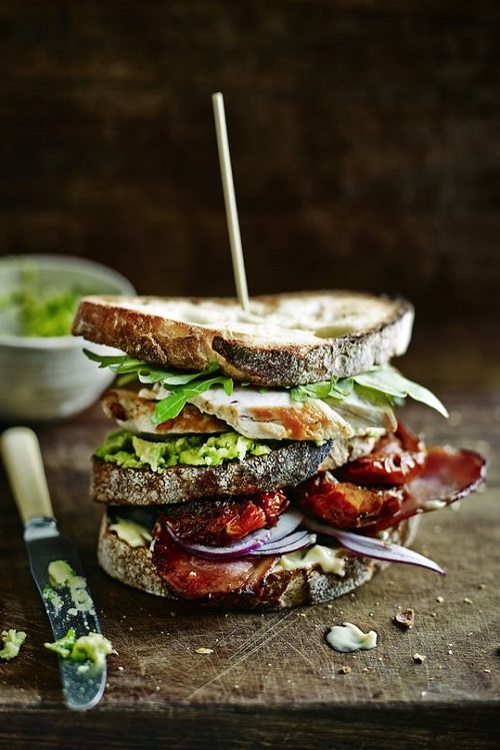
Being the lone one in the house, as a result of over time and off hours being allotted accordingly, enough and more time was spent on the ads section and advertisements were marked. Imagine when the leaflet advertising the discounted cheeseburger rates for the whole week ( in lieu of the national cheeseburger day, Sept 18th) were seen. As the hunger cravings rose to a peak by noon, the big lunch was foregone with the craving for cheeseburger. With a sparsely stocked larder and takeaway not an option in the downpour (besides being miles away from the town roads), creative cooking was the only option. Considering the leftovers and the supplies in the fridge, it was time to make something light. What happens when one places two mince meat patties with sliced tomatoes, crisp onion rings with a nice helping of cheese between two bread slices (out of buns). Voila, the homemade version of cheese burger is ready.

“Man who invented the hamburger was smart; man who invented the cheeseburger was a genius.” Matthew McConaughey

Essentially, a cheeseburger is a hamburger topped with cheese. Although the slice of cheese is added to the cooking hamburger patty shortly before serving, which allows the cheese to melt; variations exist depending on choice of having it melted solid or double extra. As for the cheese, from processed to melt-able cheese, options range from cheddar, Swiss, mozzarella, blue Cheese or pepper jack being the popular ones.

With the rise of cattle ranching, fast food chains, commercialization of food industry and rise of fast food; hamburgers had risen in popularity. The late 1920s saw the adding of cheese to hamburgers. Though several competing claims exist as to who created the first cheeseburger. Records repute that Lionel Sternberger (1926) had introduced the cheeseburger at the age of 16 when he was working as a fry cook at his father’s sandwich shop (Pasadena, California) “The Rite Spot” and “experimentally dropped a slab of American cheese on a sizzling hamburger.” Another similar mention of a cheeseburger smothered with chili for 25 cents was listed on the menu of O’ Dell’s restaurant (Los Angeles, 1928). However the trademark for the name “cheeseburger” was awarded to Louis Ballast of the Humpty Dumpty Drive-In in Denver, Colorado.

“You dont have to eat a whole cheeseburger, just take a piece of the cheeseburger.” Guy Fieri

Variations like steamed cheeseburger, soy cheese and vegan versions have been seen across the globe, with the ingredients adapting to the local cuisine and customs. All said and done, the cheese part has stayed on. There’s something fun about indulging in the occasional cheese burger ( homemade, fast food franchise made or deli made) once in a while. No matter how old or busy one is, the delights of the cheeseburger do stay strong.

“I take pleasure in the little things. Double cheeseburgers, those are good, the sky ten minutes before it rains,the moment your laugh turns into a cackle. And I sit here, and smoke my Camel straights, and I ride my own melt.” Ethan Hawke