
Posted in Daily, Food, Quotes

Evolution of Baking

Baking may be regarded as a science, but it’s the chemistry between the ingredients and the cook that gives desserts life. Baking is done out of love, to share with family and friends, to see them smile. Anna Olson

Since the existence of man, the very first instances of baking was believed to have occurred when wild grass grains were soaked in water, mixed together and mashed into a kind of broth-like paste which was cooked by pouring it onto a flat, hot rock, resulting in a bread-like substance. After the experimentation and mastery of fire, the paste was roasted on hot embers which made bread-making easier. To date the world’s oldest oven was credited to the evidence in Croatia dating it back 6500 years ago. The Ancient Egyptians had baked bread using yeast.In Ancient Greece (600 BC) bread making had lead to the invention of enclosed ovens. Baking flourished further during the Roman Empire with professional pastry cooks being in vogue. Rome saw the establishment of the bakers’ guild with an wide variety of breads being available like the libum (sacrificial cakes made with flour), spira (modern day flour pretzels), savaillum (sweet cake) to name a few. Ovens with their own chimneys and mills to grind grain into flour were common features in Roman towns.

Cooking involves a deadline and hungry people and ingredients that expire in a week. It’s stressful. Cooking happens on the stove and on the clock. Baking happens with ingredients that last for months and come to life inside a warm oven. Baking is slow and leisurely. Regina Brett

Over time and with travel, the Roman technique of baking spread throughout Europe and to eastern areas of Asia. Towards the 13th century, commercial baking started off in London with strict regulations being enforced. Yet it was only by early 19th century that alternate leavening agents (besides yeast) like baking soda were more common. Slowly baked goods were available on the streets as handcarts or in downtown cafes (first being in Paris) or stores. With the advent of automated machinery, the commercialization of baking grew by leaps and bounds.

Baking can be done with a few simple ingredients, so it’s about simplicity and nostalgia – people are reminded of their childhood. Paul Hollywood

The technique of baking is not confined to bread alone, but ranges from biscuits to cakes, casserole to pudding and pies as well as roast, tarts and viennoiserie to list a few. Each country has their own set of baked goods. Adobe bread of southwest US, Barley bread in England, Baozi of China, pan de vapor of Mexico, Naan of India are a few of the baked breads that vary across various regions and countries. In fact a bread variety can be named for every letter of the alphabet.

If baking is any labor at all, it’s a labor of love. A love that gets passed from generation to generation. Regina Brett

Fast forwarding to today, baking has become an art with more flavours, designs and artful masterpieces being created. From cultural as well as religious significance to high teas, daily food, party events and even nursery rhymes (pat-a-cake, bakers’ man) the art of baking has always been an integral part of man’s subsistence and lifestyle. A day at home or any festive season, (especially Christmas) without baked goods would be like missing important pieces of the puzzle, not to forget the pleasant memories as well as burst of flavours and taste lost. As Lidia Bastianich said, “Make gifts meaningful by putting the time in creating them, whether baking and cooking, or in making arts and craft. It will all have more meaning for the giver and receiver.” Baking is a labour of love and something that brings rest to a tired, wandering or lost soul with a plate of freshly baked bread, whichever style of type it may be.

Posted in Christian, Daily, Stories Around the World

Colours to White Christmas

“I’m dreaming of a white Christmas,
Just like the ones I used to know,
Where the tree tops glisten
And children listen
To hear sleigh bells in the snow.” ~ Irving Berlin

Christmas brings forth its’ own hue of colours with each colour bringing its own significance. Ranging from prosperity and year round presence of “green” to “red” which depicts the fall of Adam, blood of Christ or Santa’s coming; these two form the predominant hues of the season. Other major colours include blue denoting the sky and heaven, purple for the altar and the coming of the light and presence of sun in cold months of winter as denoted by the colour “gold”. Yet the most evasive of all is the pristine colour of white, which represents purity, spotless, goodness and peace; akin to the birth of the Lord.

Trending through the Christmas cards, pictures, stories and carols is the scene of “White Christmas”. While this is the case of the wintry lands, the rest of the world may see a little to hardly any snow. Yet the dream of White Christmas lurks for many reasons ranging from beauty, artistry to the pristine pureness of Christmas. For those of us who can’t experience the snow; the closest we can get to “White Christmas” is by engaging in the spirit of love, sharing, kindness and generosity. Whichever colour it may be, Christmas season is here for all.


Posted in Daily, Life, Reflections, Stories Around the World

Attain Peace of Mind

“Sit down before fact as a little child, be prepared to give up every preconceived notion, follow humbly wherever and to whatever abysses nature leads, or you shall learn nothing. I have only begun to learn content and peace of mind since I have resolved at all risks to do this.” Thomas Huxley

Very often we feel that our minds are too restless, filled with disturbing thoughts of “what-ifs”, “whys”, “hows” and “when”. Yet the reality is that all these are suppositions of things that have yet to happen or sequence of events that we are trying to predict. The truth is man by nature is restless and in trying to alleviate this feeling, we dwell in unnecessary chaos. Finally we claim that the peace is disturbed.

“If you want peace of mind, stop fighting with your thoughts.” Anonymous

Peace of mind revolves around a state of calmness both mental and emotional, not harbouring thoughts of no worries, fears or stress. Then the mind is quiet and one experiences a sense of happiness with freedom. Although such peaceful moments are not rare, they are hard to attain unless we empty our thoughts once in a while. Once we practice the art of “let it be, let go” and putting our stress in a jar to hand over to God, we then discover that the weight of jar has reduced after sometime. Slowly over time, the peace within returns and the days don’t become dreary anymore.

Once Buddha was walking from one town to another town with a few of his followers. This was in the initial days. While they were travelling, they happened to pass a lake. They stopped there and Buddha told one of his disciples, “I am thirsty. Do get me some water from that lake there.” The disciple walked up to the lake. When he reached it, he noticed that some people were washing clothes in the water and, right at that moment, a bullock cart started crossing through the lake. As a result, the water became very muddy, very turbid. The disciple thought, “How can I give this muddy water to Buddha to drink!” So he came back and told Buddha, “The water in there is very muddy. I don’t think it is fit to drink.” After about half an hour, again Buddha asked the same disciple to go back to the lake and get him some water to drink. The disciple obediently went back to the lake. This time he found that the lake had absolutely clear water in it. The mud had settled down and the water above it looked fit to be had. So he collected some water in a pot and brought it to Buddha. Buddha looked at the water, and then he looked up at the disciple and said, “See what you did to make the water clean. You let it be and the mud settled down on its own and you got clear water. Your mind is also like that. When it is disturbed, just let it be. Give it a little time. It will settle down on its own. You don’t have to put in any effort to calm it down. It will happen. It is effortless.”

What did Buddha emphasize here? He said, “It is effortless.” Having ‘peace of mind’ is not a strenuous job; it is an effortless process. When there is peace inside you, that peace permeates to the outside. It spreads around you and in the environment, such that people around start feeling that peace and grace.

Posted in Christian, Daily, Stories Around the World

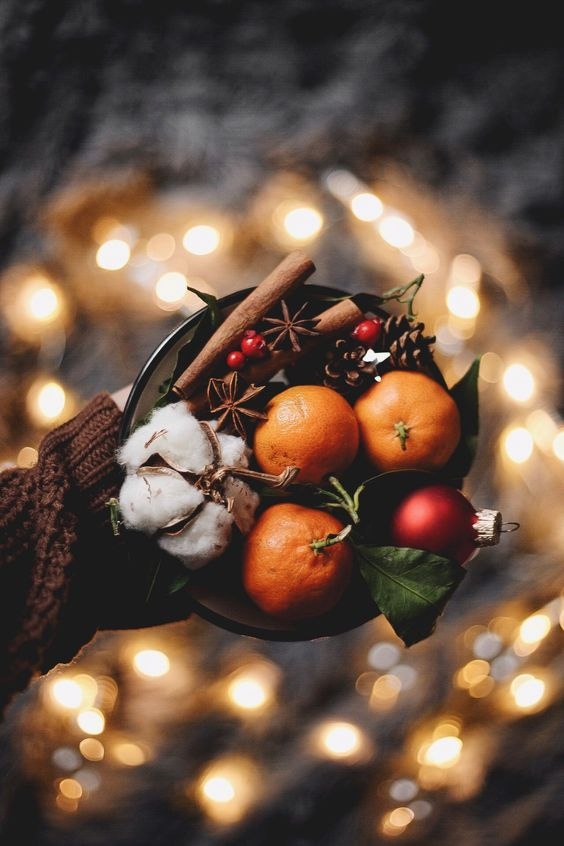
Christmas and Oranges

For those of us who are involved in Christmas-time festive, the link between oranges and Christmas will perplex unless we have heard the story connecting them. In fact for “Christmas historians”, oranges originated with St. Nicholas, stockings and gold.

The legend is traced to (and the most popular explanation) St. Nicholas, an early Christian bishop of the ancient Greek city of Myra during the time of the Roman Empire who was a wealthy man and spent his life helping others. According to the legend, he had learnt of a poor shopkeeper who couldn’t afford wedding dowries for his three daughters. As the father was reluctant to accept any gifts, in order to help the family, St. Nicholas went to the town at night and tossed three sacks of gold through the window (or down the chimney as some narrate). The gold had landed in the girls’ stockings, which were drying by the fire. In the morning by the time the family had woken up, the gold had condensed into balls in the toes of the stockings.

Following St. Nicholas’ example, oranges were given and shared at Christmas time, as representations of gold and a way to celebrate generosity and caring for those in need.

Others reasons for handing oranges at Christmas can be traced to the fact there were once considered as luxurious items and scarce commodities; hence considered as rare treats when received. During the Great Depression and the wars, oranges were rarity in the markets and homes.

Another theory behind the tradition is that orange segments signify the ability to share what one has with others, symbolizing “the season of giving” of December. Reminding us of the taste of summer, oranges are indeed a “must” gift in the stockings.

“I pretended like all the oranges rolling everywhere were her happy memories and they were looking for a new person to stick to so they didn’t get wasted.” Stephen Kelman

Posted in Family and Society, Life, Reflections, Stories Around the World

Firefly among the Butterflies

In a playground, a crowd of children will be involved in a game with one or two kids coordinating the game. Some days sitting a little apart, one would find a child scribbling away on a piece of paper, few would be just watching while one would be trying to climb a tree instead and the other may be watching a ladybug crawl in the ground.

Fast forward a few years ahead, among the bunch of college goers, few would shine at the events, some behind the scene to make the event happen while others watch the show. Yet there will few who prefer to curl up with a good book, or sketch their dreams and designs or enjoy creating what they fancy in the kitchen.

As the college goers grow, some become the life of the party, some become the charismatic leader who can make things happen by encouraging others to scale the wall while others enter the groups of people who follows the order so that the final outcome would be beneficial to all. And yet among all of group, there would be a few who would be silently lost in their world of books, poetry, art, animation, photography, writing indulging in what they love and glowing there. Yet if they are stuck in the mould of the world for long, the light in them dies.

“I had a dream about you last night. I was alone on a dark night and you came to me as a firefly. I knew it was you because you were the brightest.” Crystal Hudson

We label one group of people introverts and other as extroverts. Yet the author Rachel Stafford refers to them as fireflies and butterflies. She discovered these terms during a conversation with her 7 year old daughter. Her daughter had described a school activity that day where the teacher asked, “What is Your Favorite Insect?” Stafford’s daughter said that her favorite insect was the firefly even though the other students in the class chose the butterfly. She admitted to her mother that sometimes she fills different at school as a firefly. Stafford told her daughter that she agreed that her little girl was very much a firefly because she shines from within. She assured her daughter that Stafford’s role as a mother was to protect that light and asked her daughter to let her know when others at school tried to dim her light.

The world does not need a large number of “successful people” or extroverts alone. The planet desperately needs peacekeepers, restorers, storytellers, writers, dreamers and thinkers. She needs all people to live well with. There are a lot of fireflies among us, in our family and at our workplaces as well as daily interactions. The world needs both the butterflies and fireflies. Extinction of one will affect the other and surplus of one will imbalance the entire ecosystem. While fireflies will shine when it’s their time, it’s important to not kill their light.

“Don’t be anyone’s firefly in a jar! A lot of people are attracted to the light. Some are also intimidated by it. They selfishly try to keep it for themselves. Sometimes it happens so fast, you don’t even realize you’re being captured. There is magic within you that will suffocate in a jar. If you wake up one morning and realize there’s a lid above you, do whatever it takes to free yourself. Life is much better beyond the jar. The world needs your light! Shine, Baby, shine!” Sheri Fink

The fireflies among our children, family and friends have to be encouraged, cared and helped instead of being suppressed, laughed on and imprisoned or remodeled into another frame. Each firefly has their own special light or spark that brings the magic to the night and add little light to the dark. As for the fireflies out there, keep of on shining, singing and creating the special light, knowing that each courageous firefly is special with their own light and own area to shine. Remember, no butterfly can shine like the firefly.

Posted in Christian, Daily, Stories Around the World

Setting Up the Tree

“Freshly cut Christmas trees smelling of stars and snow and pine resin – inhale deeply and fill your soul with wintry night.” John J. Geddes

Interestingly the concept of the using trees to celebrate festivals or major events have been there since the early days of civilization. Before the emergence of Christianity, trees and plants that stood the drought and force of winter, remaining green against the white canvas held a special meaning for the people in the cold winter. Believing that evergreen boughs hung over the doors and windows would keep away evil, ghosts and illness as well as remind one of the spring around the corner, Pagans used branches of it to decorate their homes during the winter solstice. Fir Trees were decorated in the Roman temples at the festival of Saturnalia. Similar practices were followed by Ancient Egyptians and Druids during their pagan festivals.

Although for Christians, the fir tree symbolizes as a sign of everlasting life with God; the initial origins are still doubtful. One of the earliest related stories is traced to Germany based on Saint Boniface. In the year 722 AD, he had encountered some pagans who were about to sacrifice a child at the base of a huge oak tree. To prevent the sacrifice, he had cut down the tree and a Fir tree grew up at the base of the oak. He then spread the message that this lovely evergreen, with its branches pointing to heaven, was a holy tree, the tree of the Christ child, and a symbol of His promise of eternal life.

Another legend from Germany of how the Christmas Tree came into being goes as a reminder of care and love for fellow beings. On a cold Christmas Eve night, a forester and his family were gathered gathered round the fire in their cottage to keep warm. Suddenly there was a knock on the door. When the forester opened the door, he found a ragged poor little boy standing on the door step, lost and alone. The forester welcomed him into his home and the boy was fed, washed and put to bed in the youngest son’s own bed. The next day which was Christmas Morning, the family were woken up by a choir of angels and the poor little boy had turned into Jesus, the Christ Child. The Christ Child went into the front garden of the cottage and broke off a branch of a Fir tree and gave it to the family as a present to say thank you for looking after him. Since then, people have remembered that night by bringing a Christmas Tree into their homes.

The Christmas tree tradition as we now know it in the 16th century when devout Christians brought decorated trees into their homes can be credited to Germans. They had built Christmas pyramids of wood and when wood was scarce, decorated them with evergreens and candles. Yet the popular belief is that Martin Luther, the 16th-century Protestant reformer, had first added lighted candles to a tree. In order to recapture the brilliant view of the twinkling stars amidst the evergreens, for his family; he erected a tree in his main family room and wired its branches with lighted candles. In 1846, the sketch of the then popular royals Queen Victoria and Prince Albert standing with their children around a Christmas tree; had resulted in widened popularity of the Christmas tree and its’ acceptance and appearance in many households. Since then the trend has caught on and stayed.

From Christmas lights to handmade ornaments, apples , nuts, marzipan cookies, Gingerbread men and so on, Christmas trees have been adorned in homes, neighbourhoods and communities. While the traditional fir tree has been replicated where ever possible; Christmas trees range from pine trees, spruce trees or even tall trees in their garden especially in tropical climates. Although the Christmas tree has been vastly popularized commercially or artistically; the true origin and concept still stands the same; adorning our homes, being the evergreen surviving the winter ice and snow.

Posted in Daily, Food, Musique

The Muffin Man

Do [or “Oh, do”] you know the muffin man,
The muffin man, the muffin man,
Do you know the muffin man,
Who lives on Drury Lane?

Yes [or “Oh, yes”], I know the muffin man,
The muffin man, the muffin man,
Yes, I know the muffin man,
Who lives on Drury Lane.
(Source: Opie and P. Opie, The Singing Game (Oxford: Oxford University Press, 1985), pp. 379-82))

One of the traditional nursery rhymes of English origin, “the muffin man” was recorded around the early nineteenth century as confirmed by British manuscripts circa 1820. Towards the mid-nineteenth century the rhyme as well as the game had spread over to other countries with regional variations in the lyrics as well as the game altering as a forfeit game, guessing game and a dancing game. Whichever style it may be in, as long as the children have fun, it doesn’t matter.

Interestingly, the muffins in the song were based on the English muffins, not the sweeter American cupcake shaped variety. The muffin is an individual-sized, baked product which refers to two distinct items, a part-raised flatbread or a cupcake-like quick-bread. The former i.e. the flatbread version is of British or European origin dating from at least the early 18th century or even earlier. While the latter i.e. the quick bread muffins originated in North America during the 19th century. Like all bread related products, muffins were an evolution over time with human ingenuity, local ingredients, sudden requirements, cultural expectations laced with technological advancement as well as creative baking styles.

I believe the world to be a muffin pan, and there certainly are a lot of muffins here. Aaron Funk

As far as the origins of the word “muffin” goes, it can be traced to old French word “moufflet” applied to bread meaning soft, or even Low German word “muffe” meaning cake. Initially it started off as small yeast cakes light textured roll, round and flat and commonly enjoyed during winter when they are slit, tasted, buttered and served hot with tea or jam. What initially started off as a basic recipe, towards the twentieth century, they varied from the type of flour (white, graham, rye and corn) to add-ons’ from handful of chopped dates or raisins to the base being of bran, blueberry, corn, apple, oatmeal as well as being bigger in size.

I’m all over the place with muffins. Carrots are great. Banana, chocolate chip, they rock, too. Shawn Mendes

Into the final month of this year, there has to be something special on the table once in a while. The beauty of muffins is that they are so quick and easy to make, particularly since the ingredients are only lightly mixed, not beaten smooth and can be made in a pressure cooker as well. Besides making a good snack while counting calories, the variety of tastes and mixes that can be experimented on are quite interesting. With today being the “National Oatmeal Muffin Day” in the west, it would be fun to give a try for some simple homemade muffins- cupcake style or the “English muffin way”.