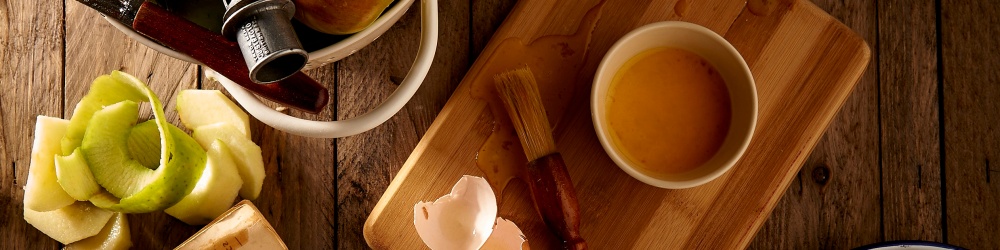

If today’s entry went into the kitchen journal, it would be under the set of “kitchen disasters nearly rescued.” With the lock-down still in effect, the demand for dessert is quite strong. So with a share of the pineapple crop from home, going for an pineapple pie was a quick and easy solution. Yet has anyone wondered what happens next, when one has planned to make the puree for an apple pie, but got the cuts turned to the near brown-black? While on one hand, the litany of “not now” goes on and the contents get thrown out; the other side is to improvise and make it into a palatable dessert.
Entering into the scenes behind one of the famous dishes, history teaches that some of the best creations happen with quick thinking, courage, improvisation and a whole dash of creativity, all occurring in a short span of time. One such dish, is the Tarte Tatin.
As the records go, the 188os saw a special dish created at the Hôtel Tatin, Lamotte-Beuvron, Loir-et-Cher which is south of Paris, which was run by two sisters, Stéphanie and Caroline Tatin. Records of the popular legend state that, Stephanie Tatin had left the apples cooking in butter and sugar for a long time, beyond the required effect meant for an apple pie. To salvage the dish, the pastry base was put on top of the pan of apples and then the whole set into the oven. The dish when turned out as an upside down tart was a welcome addition to the menu, which stayed on since then.


Not known as the Tarte Tatin of now, these upside down dishes were a specialty of the Sologne region. Whether it was the forerunner of the recipe of today’s, food historians still debate on these points, especially with the lack of historical evidence at hand. Regardless, it is adventures like these that give one inspiration to salvage the contents at hand, and make a dish for the love of cooking and for own pleasure.
Keeping to the upside theme, one dessert cake would be the “pineapple upside down”cake. The cake is baked in a single pan with toppings, which can range from chopped or sliced (glazed, plain or caramelized) apples, cherries peaches or pineapple placed at the bottom of the pan. When served, the upside-down cake is de-panned, thus righting it to the “right-side up”. The fruits form a baked topping after the cake is inverted. Sticking to the traditional upside-down desserts, the choice ranges form the regular American pineapple upside-down cake to the French Tarte Tatin or the Brazilian or Portuguese bolo de ananás.
While many local cuisines may have their own set of similar dishes or recipes, getting inventive sure helps one to savour the other side of the globe. When travelling is out of the question, creating the dish is a voyage worth embarking on.


 Sugar And Spice... Among Other Things